

×

Kenya🇰🇪 | hikesMount Kenyaalpine peaks, glaciers, Afro-alpine flora, multi-day ascent | things to do and best time to go

Explore Aberdare RangeExplore Mount Longonot

Backpacking in Mount Kenya
🏆 Top pickhike ranked #1
By Johan Kruseman 🇳🇱 | Updated June 7, 2026

Forget the idea that Mount Kenya is just Kilimanjaro’s quieter cousin—this mountain is a beast in its own right, and it doesn’t hand out summit selfies for free. Sitting almost dead-center in Kenya, just north of Nairobi, Mount Kenya’s jagged peaks punch through the clouds with a kind of raw, volcanic swagger. The hike is a full-body commitment: you’ll slog through bamboo forests slick with dew, scramble over ancient lava flows, and feel the altitude claw at your lungs as you push above 4,000 meters. The scenery flips from lush rainforest to lunar rock gardens, with sunbirds flashing like neon warnings and the odd colobus monkey heckling from the treetops. It’s longer and tougher than most Kenyan treks—think four to six days if you’re aiming for Point Lenana, the highest trekkable summit. Public transport gets you to the trailheads, but expect a dusty, bumpy ride. Compared to the Aberdares or Hell’s Gate, Mount Kenya is less a stroll and more a rite of passage—painful, unpredictable, and absolutely worth every blister when you finally see the sun break over the peaks.

Discover everything you want to know in the 📖 Kenya Travel Guide.
Best time to go: June - October, December - March
Duration: 4 to 7 days
Distance: 80 to 100 kilometers
Total ascent: 1,000 to 1,200 meters


Get your Kenya guide
114 ranked highlights, routes & tips, works offline (429 pages)
Loading the map 🌍
CLICK TO FILTER
cities
towns
landmarks
national parks
hikes
beaches
attractions
festivals
regions
SHOW COUNTRY’S BESTSHOW ALL

✨ Why go?
Ranked #1 hike in Kenya
What makes this hike worth hiking

Mount Kenya draws backpackers like moths to a flame. The scenery-to-effort ratio is off the charts. You’ll find yourself surrounded by jagged peaks, lush forests, and alpine meadows that feel like a different world. The trails offer a mix of challenges, from gentle slopes to steep ascents, allowing you to choose your own adventure.

Getting there is a breeze. Public transport access is solid, with matatus whisking you from Nairobi to Nanyuki, the gateway to the mountain. It’s budget-friendly, too. You can tackle this trek without breaking the bank, making it a perfect fit for the thrifty traveler.

What’s more, the flexible distances mean you can customize your hike. Whether you’re up for a quick two-day summit or a more leisurely five-day trek, you can tailor your experience.

And let’s … read more 👉
Mount Kenya draws backpackers like moths to a flame. The scenery-to-effort ratio is off the charts. You’ll find yourself surrounded by jagged peaks, lush forests, and alpine meadows that feel like a different world. The trails offer a mix of challenges, from gentle slopes to steep ascents, allowing you to choose your own adventure.

Getting there is a breeze. Public transport access is solid, with matatus whisking you from Nairobi to Nanyuki, the gateway to the mountain. It’s budget-friendly, too. You can tackle this trek without breaking the bank, making it a perfect fit for the thrifty traveler.

What’s more, the flexible distances mean you can customize your hike. Whether you’re up for a quick two-day summit or a more leisurely five-day trek, you can tailor your experience.

And let’s not forget how seamlessly it fits into a longer backpacking route. After conquering Mount Kenya, you can easily head to the Savannah plains or the coastal beaches. The burn in your legs will fade, but the views and the cold beer waiting at the end will linger long after you’ve returned to civilization.
Want to include Mount Kenya in your Kenya route?
Create a personalized Kenya itinerary that includes Mount Kenya and the places that fit your trip — based on your travel style, budget, and available time. Get your route in seconds.

Generate my trip

💡 HighlightsKey sights and experiences for travelers

  • Point Lenana (4,985 m) — the non-technical summit most trekkers aim for; a pre-dawn scramble rewarded by a brutal, beautiful sunrise over the rift valley and the serrated granite of Batian and Nelion. It’s the classic “I did it” photo-op without needing ropes.
  • Batian and Nelion — the twin granite spires that make Mount Kenya’s skyline instantly recognizable. They’re technical climbs (think real rock climbing), but even from the trekking routes their sheer faces and towers give the mountain a dramatic, alpine character you don’t get on ordinary hikes.
  • Alpine moorland with giant groundsels and lobelias — surreal, slow-growing plants that look like something from another planet. These Afro-alpine giants dominate the high zones and create strange silhouettes at dawn and dusk; it’s a botanical
read more 👉
  • Point Lenana (4,985 m) — the non-technical summit most trekkers aim for; a pre-dawn scramble rewarded by a brutal, beautiful sunrise over the rift valley and the serrated granite of Batian and Nelion. It’s the classic “I did it” photo-op without needing ropes.
  • Batian and Nelion — the twin granite spires that make Mount Kenya’s skyline instantly recognizable. They’re technical climbs (think real rock climbing), but even from the trekking routes their sheer faces and towers give the mountain a dramatic, alpine character you don’t get on ordinary hikes.
  • Alpine moorland with giant groundsels and lobelias — surreal, slow-growing plants that look like something from another planet. These Afro-alpine giants dominate the high zones and create strange silhouettes at dawn and dusk; it’s a botanical show you won’t find on temperate treks.
  • The Gorges Valley and glacial tarns — deep U-shaped cirques, cliff faces, waterfalls and bright mountain lakes carved by ancient glaciers. The Chogoria route in particular threads dramatic cliffs and emerald pools — almost alpine, but greener and wilder in character.
  • Afromontane forest, wildlife and local culture — lower forested slopes are full of colobus monkeys, baboons, hyraxes and a riot of birds. Trails pass through Kikuyu farmland and grazing areas; the mountain is sacred to local communities (Kirinyaga), so you get nature, wildlife and real cultural context in one trip.
Spotted a mistake or missing something? Contact us.

Things to do around Mount Kenya

Ratings based on Tripadvisor reviews. When you book through this link, you support our work at no extra cost to you.

🌤️ When to go?Weather, crowds, and seasonal trade-offs


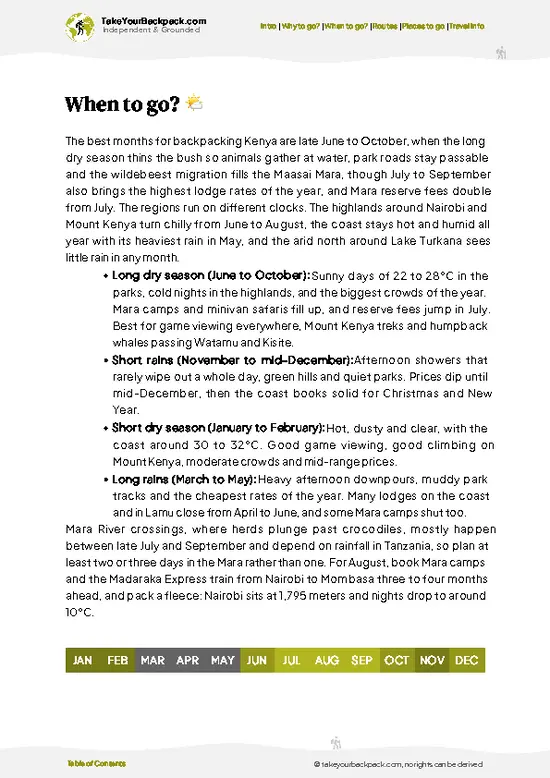
  • Weather: The dry seasons, January to March and July to September, are your best bets. Trails firm up, and rain won’t turn your boots into mud magnets. Expect crisp mornings and clear skies that sharpen every ridge and valley.

  • Temperature: Daytime highs hover around 15-20°C (59-68°F), but nights plunge below freezing near the summit, often hitting -5°C (23°F) or colder. Layering is non-negotiable—prepare for a thermal rollercoaster.

  • Daylight Hours: Near the equator, daylight stays steady year-round, roughly 12 hours. Early starts are essential to beat afternoon clouds and maximize summit time before dusk.

  • Crowds: Peak trekking months (July-September) draw more hikers, especially on weekends. For solitude, aim for January-March or midweek climbs, when the trail feels more like your
read more 👉

  • Weather: The dry seasons, January to March and July to September, are your best bets. Trails firm up, and rain won’t turn your boots into mud magnets. Expect crisp mornings and clear skies that sharpen every ridge and valley.

  • Temperature: Daytime highs hover around 15-20°C (59-68°F), but nights plunge below freezing near the summit, often hitting -5°C (23°F) or colder. Layering is non-negotiable—prepare for a thermal rollercoaster.

  • Daylight Hours: Near the equator, daylight stays steady year-round, roughly 12 hours. Early starts are essential to beat afternoon clouds and maximize summit time before dusk.

  • Crowds: Peak trekking months (July-September) draw more hikers, especially on weekends. For solitude, aim for January-March or midweek climbs, when the trail feels more like your own rugged playground.

  • Seasonal Activities: Dry seasons coincide with local wildlife migrations and blooming alpine flora, adding unexpected bursts of life to the stark mountain landscape.

  • Price Fluctuations: Expect higher rates for guides and permits during peak months. Booking off-peak can save cash and snag you a more personalized experience.


Pro-tip: Start your climb just before dawn during dry months to catch the sunrise from Point Lenana—nothing beats that first light burning off the cold and revealing the vast Kenyan plains below.


source: climatestotravel.comJANJanuary: excellent for travelingFEBFebruary: excellent for travelingMARMarch: excellent for travelingAPRApril: fair for travelingMAYMay: fair for travelingJUNJune: good for travelingJULJuly: excellent for travelingAUGAugust: excellent for travelingSEPSeptember: excellent for travelingOCTOctober: good for travelingNOVNovember: fair for travelingDECDecember: good for traveling
when-to-go

✈️ The backpacker research shortcutKenya Travel Guide

An offline-friendly backpacking guide with optimized travel routes, ranked highlights, transport advice, and the best areas to stay.
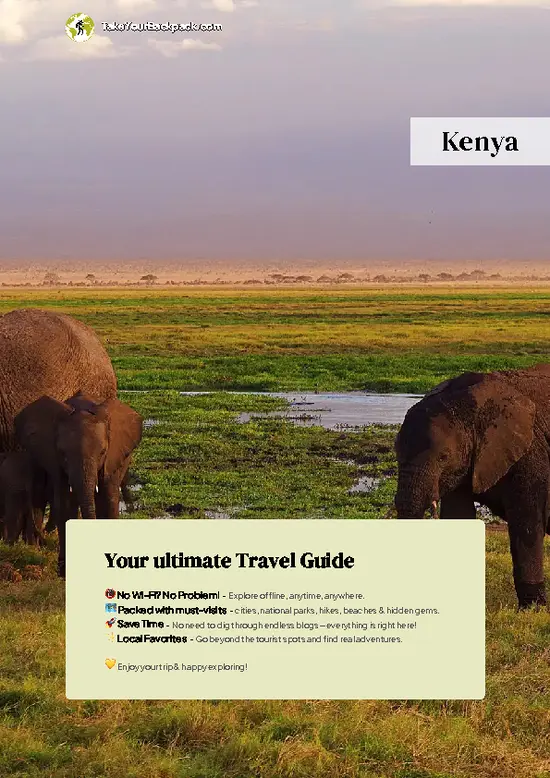
example page 0 from our offline Travel Guide for Kenya
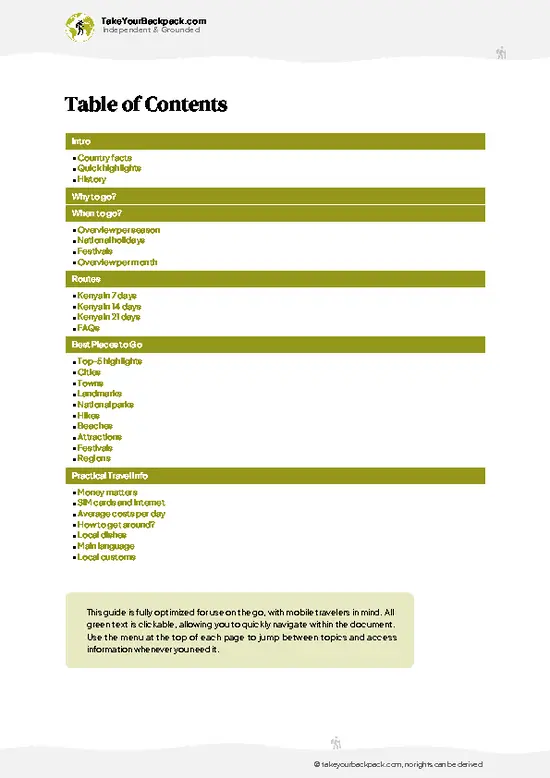
example page 1 from our offline Travel Guide for Kenya
example page 2 from our offline Travel Guide for Kenya
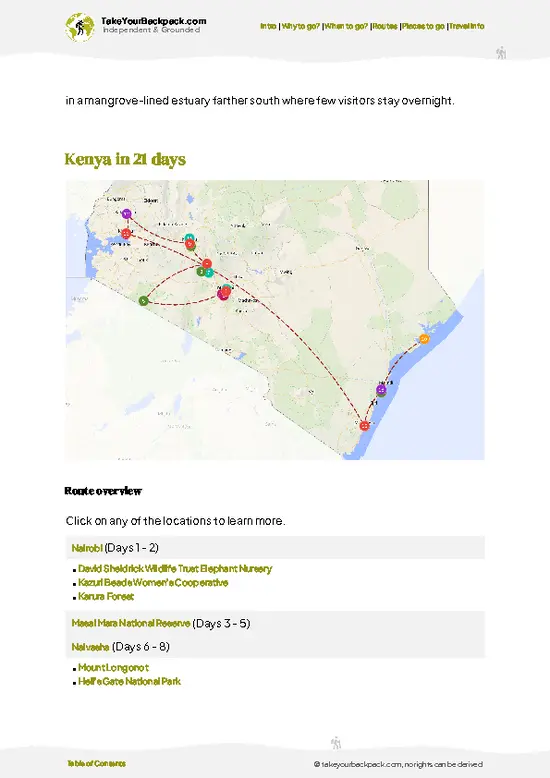
example page 3 from our offline Travel Guide for Kenya
example page 4 from our offline Travel Guide for Kenya
example page 5 from our offline Travel Guide for Kenya
example page 6 from our offline Travel Guide for Kenya
example page 7 from our offline Travel Guide for Kenya
The digital guide (429 pages) contains:
114 highlights, ranked by travel appeal
Optimized 7, 14 & 21-day travel routes
Cities, national parks, landmarks, beaches
How to get around
Offline-friendly for travel without Wi-Fi
👉 Click to see all 30+ guide features

📅 Plan smarter in minutes, not weeks
Month by month travel advice
Festivals & national holidays
Budget expectations

🗺️ Go to the right places, skip the overrated ones
Honest pros & cons of destinations
Top hikes, parks & viewpoints
Lesser-known places most travelers miss
Clear “worth it vs skip it” guidance

🛏️ Travel smoothly without rookie mistakes
Best areas to stay
Transport systems explained simply
Common scams & safety advice
SIM cards, money & practical tips

🌍 Understand the country, not just visit it
Culture & traditions
52 Essential phrases & customs
Festivals worth planning around
Traveler-friendly historical context
Insights that make places more meaningful

📱 Built for real travel conditions
Fully downloadable PDF
Works completely offline
Optimized for phone use
Useful in remote areas & buses
Everything in one place
Save weeks of stressful planning
Get instant access to your full guide. 30‑day money-back guarantee.


By proceeding you agree to our terms.
Sent to your inbox immediately after payment • 100% Secure Checkout
Best Backpacking Travel Advisor 2025 tourism awardBest Backpacking
Travel Advisor
2025
What others say about Take Your Backpack Guides:
⭐⭐⭐⭐⭐
Fantastic, amazing amount of information!
⭐⭐⭐⭐⭐
My goodness this is amazing, it's what I've been looking for hats off too you!
⭐⭐⭐⭐⭐
I think this is absolutely BRILLIANT
⭐⭐⭐⭐
Very complete and informative. It's still missing places, but I gotta to commend you
⭐⭐⭐⭐⭐
This is truly amazing, thank you, can't wait to explore it with my kids!
⭐⭐⭐⭐⭐
Awesome resource, thank you!
⭐⭐⭐⭐⭐
This is amazing! Can't wait to explore the ones I haven't seen
⭐⭐⭐⭐
I love this! Well done, great idea.
⭐⭐⭐⭐⭐
Thanks for taking the time to make this gem!
⭐⭐⭐⭐⭐
This might be the best website I've ever seen.
⭐⭐⭐⭐⭐
Congratulations, and thank you so much for your work; it's incredibly valuable.
⭐⭐⭐⭐
In all seriousness I think you did a great job pointing out the important spots
⭐⭐⭐⭐⭐
10/10 very good
⭐⭐⭐⭐⭐
As someone who's only just starting to visit regularly this is awesome, thank you.
⭐⭐⭐⭐
Thank you very much! I'm going to visit my dad, it's going to be very useful!
⭐⭐⭐⭐⭐
This is really cool! We'll be travelling for the first time and this definitely come in handy.
⭐⭐⭐⭐⭐
You are now our minister of culture, congratulations 👨‍💼
⭐⭐⭐⭐⭐
Just wanted to tell you that this is a pearl! Going to follow your recommendations.
⭐⭐⭐⭐⭐
This is so cool. I'll definitely be using the resource for my travels soon.
⭐⭐⭐⭐⭐
This is very impressive! Good work.
⭐⭐⭐⭐⭐
This is an amazing and informative site. Very well done!

🛏️ Where to stay?How to pick the right area

If you enjoy meeting fellow travelers, consider choosing hostels with high ratings for atmosphere. On the other hand, if you prefer having your own space, a hotel might be a better option.

🥾 Hike detailsKey facts about the Mount Kenya hike

Total Distance: The Mount Kenya hiking trail varies depending on the route, but the most popular trek, the Sirimon Route, is about 14 kilometers (8.7 miles) to the summit from the last camp, with a total round trip of around 40 kilometers (24.8 miles).

Estimated Duration: Expect to spend about 5-7 days on the trail, depending on your pace and how long you want to spend acclimatizing and enjoying the scenery. Summiting typically takes about 10-12 hours from the last camp.

Difficulty Level: This trail is considered challenging, especially due to altitude. Hikers should have a good level of fitness … read more 👉
Total Distance: The Mount Kenya hiking trail varies depending on the route, but the most popular trek, the Sirimon Route, is about 14 kilometers (8.7 miles) to the summit from the last camp, with a total round trip of around 40 kilometers (24.8 miles).

Estimated Duration: Expect to spend about 5-7 days on the trail, depending on your pace and how long you want to spend acclimatizing and enjoying the scenery. Summiting typically takes about 10-12 hours from the last camp.

Difficulty Level: This trail is considered challenging, especially due to altitude. Hikers should have a good level of fitness and some prior hiking experience, particularly with high-altitude treks.

Starting Point: The Sirimon Route starts from the Sirimon Gate. To get there by public transport, take a matatu (shared taxi) from Nairobi to Nanyuki. From Nanyuki, you can catch another matatu or hire a taxi to the Sirimon Gate, which is about 30 kilometers away.

Major Landmarks Along the Route:
  • Old Moses Camp: The first stop and a great place to acclimatize.
  • Shipton’s Camp: A stunning base camp offering incredible views of the peaks.
  • Point Lenana: The main summit point, offering breathtaking sunrises.

Type of Terrain and Scenery: The trail features a mix of lush rainforests, heathlands, and rocky alpine terrain. You’ll encounter everything from dense bamboo forests to open moorlands, with stunning views of glaciers and jagged peaks.

Typical Vegetation and Wildlife: The lower slopes are rich in diverse flora, including giant heathers and lobelias. As you ascend, the vegetation changes to alpine plants. Wildlife includes the elusive colobus monkeys, various bird species, and if you’re lucky, you might spot a bushbuck or even a leopard in the lower forests.

This trail offers a blend of adventure and natural beauty, making it a memorable experience for any independent hiker. Just remember to carry enough water and snacks, and take your time to enjoy the surroundings!
⚠️ Hiking info can sometimes be outdated or inaccurate. Before you hit the trail, check the latest conditions with locals. If you do spot anything that's off, I'd love to hear from you, so I can update it for fellow travelers.

🛡️ SafetyStaying Safe: What Travelers Should Know

Mount Kenya offers a thrilling challenge, but it’s not without its quirks. Weather can shift in an instant. One moment, you’re basking in sunshine; the next, clouds roll in, bringing rain or even snow. Layer up and be ready to adapt.

The terrain varies from well-trodden paths to steep, rocky sections that demand your full attention. Footing can be tricky, especially when navigating loose gravel or crossing streams. Take your time; rushing leads to slips.

Altitude is a real player here. As you ascend, the air thins, and fatigue sets in faster than you might expect. Hydrate and pace yourself. Don’t underestimate the power of acclimatization; it’s your best friend.

Wildlife encounters are rare but possible. If you spot a buffalo or a monkey, keep your distance. Respect their space, and they’ll … read more 👉
Mount Kenya offers a thrilling challenge, but it’s not without its quirks. Weather can shift in an instant. One moment, you’re basking in sunshine; the next, clouds roll in, bringing rain or even snow. Layer up and be ready to adapt.

The terrain varies from well-trodden paths to steep, rocky sections that demand your full attention. Footing can be tricky, especially when navigating loose gravel or crossing streams. Take your time; rushing leads to slips.

Altitude is a real player here. As you ascend, the air thins, and fatigue sets in faster than you might expect. Hydrate and pace yourself. Don’t underestimate the power of acclimatization; it’s your best friend.

Wildlife encounters are rare but possible. If you spot a buffalo or a monkey, keep your distance. Respect their space, and they’ll respect yours.

Preparation is key. Ensure your gear is suited for variable conditions—good boots, a reliable rain jacket, and trekking poles can make all the difference. Embrace the journey; the views at the summit are worth every step.

Other Kenyan hikes near Mount Kenya

Explore more nearby:

  • Aberdare Range—bamboo forest, moorland, waterfalls, elephant trails| 77 km away
  • Ol Donyo Sabuk—single peak, montane forest, buffalo herds, distant city views| 110 km away
  • Mount Longonot—steep crater rim, volcanic ash, Rift Valley panorama, open savanna| 125 km away

💡 Not sure where to go next?
Create a personalized itinerary for Kenya including Mount Kenya and the places that fit your trip.

Generate my itinerary

👉 Discover all hikes

Or checkout all Kenya has to offer (think cities, towns, villages, national parks, hikes, beaches, festivals)
Country photo of Kenya

We 💚 feedbackIs it worth it?

Mount Kenya is a wild ride. The trails can be relentless, but that’s part of the charm. You’ll sweat, you’ll curse, but when you hit the summit, the view is a jaw-dropper. The clouds part, and you feel like you’re on top of the world.

Watch for altitude sickness; it sneaks up on you. Take it slow, savor the moments. The best surprise? The camaraderie with fellow trekkers over a cold Tusker at the end. It’s not just a hike; it’s a shared adventure.

✍️ Help improve this page!
The information on this page is based on in-depth research, insights shared by experienced travelers, and feedback from the local travel community in Kenya. While every effort is made to keep the information accurate and current, conditions can change — so if you spot anything incorrect or outdated, please get in touch.


🙋‍♂️ Give feedback

👋 Meet the founderWho’s Behind Take Your Backpack?

Johan, backpacker and founder of TakeYourBackpackHi, I’m Johan (Netherlands 🇳🇱), the creator of TakeYourBackpack. Over the past decade, I’ve backpacked through 80+ countries across six continents, gaining extensive experience with independent travel, long-term trips, and overland routes.

This site is built on a combination of firsthand travel experience and carefully curated insights from other backpackers. Many guides are based on places I’ve personally visited, while others bring together tips, observations, and practical advice shared by trusted travelers I’ve met along the way.

The goal is to provide realistic, experience-driven guidance — not generic itineraries — so you can explore destinations with better context, clearer expectations, and more confidence.

Get full Kenya guide •
Instant download • 114 highlights • Full Offline guide