×

Kenya🇰🇪 | townsGilgilRift Valley escarpment, military history, flower farms | things to do and best time to go

Explore NyahururuExplore Taveta

Backpacking in Gilgil
🌟 Highlighttown ranked #9
By Johan Kruseman 🇳🇱 | Updated June 9, 2026

Gilgil isn’t the wild frontier or the safari gateway that guidebooks sometimes suggest—it’s a working Kenyan town, not a postcard. You’ll find it in the Rift Valley, about halfway between Nairobi and Nakuru, where the air smells faintly of eucalyptus and red dust. For backpackers, Gilgil is more pit stop than destination: a practical base for Lake Elementaita’s flamingos or the craggy trails of Kariandusi, but not a place to linger for nightlife or café culture. The town’s main street is walkable, but you’ll need matatus or bodas to reach anything scenic. Hostels are rare, so expect simple guesthouses and quiet evenings—more tea than Tusker. Costs are low, safety is average for rural Kenya, and compared to Naivasha or Nakuru, Gilgil feels less polished, more local, and refreshingly unhurried.

Discover everything you want to know in the 📖 Kenya Travel Guide.


Get your Kenya guide
114 ranked highlights, routes & tips, works offline (429 pages)
Loading the map 🌍
CLICK TO FILTER
cities
towns
landmarks
national parks
hikes
beaches
attractions
festivals
regions
SHOW COUNTRY’S BESTSHOW ALL

✨ Why go?
Ranked #9 town in Kenya
What makes it a must-see town

Gilgil serves as a strategic waypoint for backpackers exploring Kenya’s stunning landscapes. Nestled between Lake Nakuru and the Great Rift Valley, it’s a launchpad for nearby hikes and cultural experiences. The town’s walkable streets make it easy to navigate, with small-scale hostels and guesthouses offering cozy, budget-friendly stays. You’ll find local eateries serving up satisfying meals that reflect the region’s flavors, from spicy stews to fresh chapati.

Backpackers often stay here for a few days, soaking in the friendly atmosphere and connecting with fellow travelers. It’s a place that attracts slow travelers and solo adventurers looking for a break from the hustle of bigger cities. The vibe is relaxed, allowing you to recharge before tackling the next leg of your journey. While nightlife … read more 👉
Gilgil serves as a strategic waypoint for backpackers exploring Kenya’s stunning landscapes. Nestled between Lake Nakuru and the Great Rift Valley, it’s a launchpad for nearby hikes and cultural experiences. The town’s walkable streets make it easy to navigate, with small-scale hostels and guesthouses offering cozy, budget-friendly stays. You’ll find local eateries serving up satisfying meals that reflect the region’s flavors, from spicy stews to fresh chapati.

Backpackers often stay here for a few days, soaking in the friendly atmosphere and connecting with fellow travelers. It’s a place that attracts slow travelers and solo adventurers looking for a break from the hustle of bigger cities. The vibe is relaxed, allowing you to recharge before tackling the next leg of your journey. While nightlife isn’t the main draw, the sense of community and shared stories over a meal can be just as enriching. If you’re seeking a blend of nature and culture, Gilgil is worth your time, whether for a brief stop or a longer stay.
Want to include Gilgil in your Kenya route?
Create a personalized Kenya itinerary that includes Gilgil and the places that fit your trip — based on your travel style, budget, and available time. Get your route in seconds.

Generate my trip

💡 HighlightsKey sights and experiences for travelers

Quick note: I don’t have live web access to double-check exact municipal boundaries and current access status. Do you want me to proceed now with an experience-based list of likely, visitable Gilgil highlights (and I’ll flag any items I’m less certain about), or would you prefer I verify everything first?
Spotted a mistake or missing something? Contact us.

Things to do near Gilgil

Ratings based on Tripadvisor reviews. When you book through this link, you support our work at no extra cost to you.

🏘️ NeighborhoodsUnderstanding the local layout

Gilgil is a vibrant hub in Kenya, offering a unique blend of local culture and accessibility for backpackers. Here’s how to navigate its neighborhoods:

Town Center: This is the heartbeat of Gilgil. Bustling with shops and street vendors, it’s perfect for those who thrive on energy. Prices are reasonable, and you can easily walk to most attractions. The nightlife is low-key, with local bars offering a taste of Kenyan brews. Ideal for short stays, you’ll find transport links to nearby towns.

Lake Nakuru Road: A quieter stretch, this area is great for nature lovers. It’s close to Lake Nakuru National Park, making it a prime spot for day trips. Accommodation here tends to be a bit pricier, but the serene atmosphere is worth it. Walkability is decent, though you might need a taxi for longer distances. … read more 👉
Gilgil is a vibrant hub in Kenya, offering a unique blend of local culture and accessibility for backpackers. Here’s how to navigate its neighborhoods:

Town Center: This is the heartbeat of Gilgil. Bustling with shops and street vendors, it’s perfect for those who thrive on energy. Prices are reasonable, and you can easily walk to most attractions. The nightlife is low-key, with local bars offering a taste of Kenyan brews. Ideal for short stays, you’ll find transport links to nearby towns.

Lake Nakuru Road: A quieter stretch, this area is great for nature lovers. It’s close to Lake Nakuru National Park, making it a prime spot for day trips. Accommodation here tends to be a bit pricier, but the serene atmosphere is worth it. Walkability is decent, though you might need a taxi for longer distances. Perfect for longer stays if you want to immerse yourself in the local wildlife.

Ng’ambo: A residential neighborhood that offers a glimpse into everyday life. It’s less touristy, which means lower prices and a more authentic experience. The vibe is relaxed, and you can easily stroll through local markets. Public transport is accessible, making it suitable for both short and extended visits.

Each area has its own charm, so choose based on your travel style and what you want to experience.

⌛️ 1 dayA smart one-day plan

Gilgil, Kenya, is a vibrant town that pulses with the rhythm of everyday life, offering a glimpse into local culture away from the typical tourist path. Nestled between Lake Nakuru and the Great Rift Valley, it’s a place where the air is filled with the scent of fresh tilapia from nearby lakes and the chatter of market vendors.

Start your day early at the bustling Gilgil Market. The sun rises, casting a golden hue over the stalls, and the aroma of roasted maize fills the air. Grab a cup of chai from a local vendor; it’s a perfect way to kick off your adventure. Wander through the market, where you can find everything from colorful textiles to handmade crafts. Engage with the vendors; their stories add depth to your experience.

In the afternoon, head to the nearby Lake Nakuru National Park. … read more 👉
Gilgil, Kenya, is a vibrant town that pulses with the rhythm of everyday life, offering a glimpse into local culture away from the typical tourist path. Nestled between Lake Nakuru and the Great Rift Valley, it’s a place where the air is filled with the scent of fresh tilapia from nearby lakes and the chatter of market vendors.

Start your day early at the bustling Gilgil Market. The sun rises, casting a golden hue over the stalls, and the aroma of roasted maize fills the air. Grab a cup of chai from a local vendor; it’s a perfect way to kick off your adventure. Wander through the market, where you can find everything from colorful textiles to handmade crafts. Engage with the vendors; their stories add depth to your experience.

In the afternoon, head to the nearby Lake Nakuru National Park. While it’s a bit of a drive, the payoff is worth it. The park is famous for its flamingos and diverse wildlife. Bring a packed lunch to enjoy while you watch the birds dance across the water. The light reflecting off the lake creates a stunning backdrop, and the thrill of spotting a rhino or a lion makes the journey feel like a treasure hunt.

As evening approaches, return to Gilgil and explore the less-traveled neighborhood of Kamere. Here, you’ll find local eateries serving up traditional Kenyan dishes. Try ugali with sukuma wiki; the flavors are rich and authentic.

Wrap up your day at a local pub, where you can sip on a cold Tusker beer while listening to live music. The laughter and energy of the locals create an atmosphere that feels welcoming and genuine. In Gilgil, every moment is a chance to connect, making your day not just a visit, but a meaningful experience.
Turn your Gilgil visit into an Kenya adventure
Build a complete Kenya route with Gilgil, hidden gems, must-see destinations, and realistic travel times included.

Generate my trip

🌤️ When to go?Choosing the right time of year


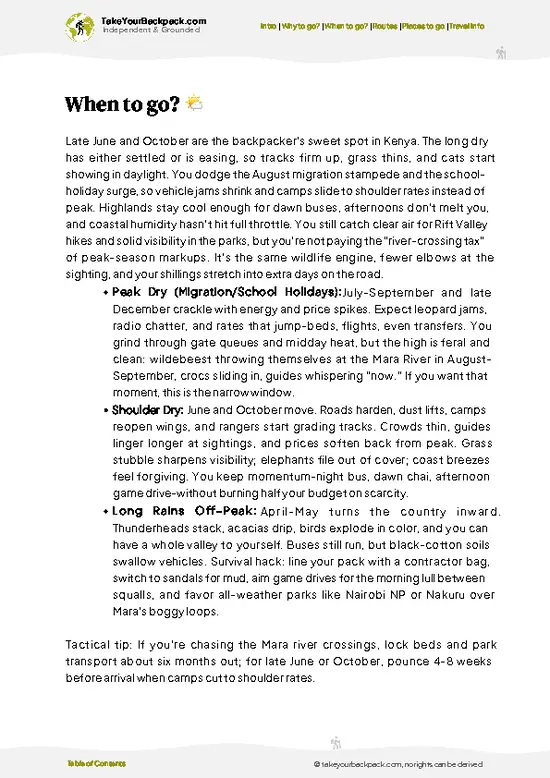
  • Weather: Gilgil sits at about 1,900 meters (6,200 feet), so expect mild temperatures year-round. The dry seasons, from June to October and January to February, offer clear skies and less mud—perfect for trekking and exploring without the damp chill.

  • Temperature: Daytime highs hover around 22-26°C (72-79°F) during dry months, dropping to 10-14°C (50-57°F) at night. Rainy seasons bring cooler days and a damp bite, so pack layers if you visit then.

  • Daylight Hours: Near the equator, Gilgil enjoys roughly 12 hours of daylight year-round. Sunrise around 6:30 AM and sunset near 6:30 PM give you a solid window for hiking and sightseeing without rushing.

  • Crowds: Tourist traffic peaks in July and August, coinciding with Kenya’s main dry season. Visiting just before or after these months means
read more 👉

  • Weather: Gilgil sits at about 1,900 meters (6,200 feet), so expect mild temperatures year-round. The dry seasons, from June to October and January to February, offer clear skies and less mud—perfect for trekking and exploring without the damp chill.

  • Temperature: Daytime highs hover around 22-26°C (72-79°F) during dry months, dropping to 10-14°C (50-57°F) at night. Rainy seasons bring cooler days and a damp bite, so pack layers if you visit then.

  • Daylight Hours: Near the equator, Gilgil enjoys roughly 12 hours of daylight year-round. Sunrise around 6:30 AM and sunset near 6:30 PM give you a solid window for hiking and sightseeing without rushing.

  • Crowds: Tourist traffic peaks in July and August, coinciding with Kenya’s main dry season. Visiting just before or after these months means fewer people on trails and more room to breathe in the landscape.

  • Seasonal Activities: Dry months are ideal for game drives and walking safaris in nearby reserves. The short rains (November-December) bring lush greenery and bird migrations, rewarding those willing to brave occasional showers.

  • Price Fluctuations: Accommodation and tour prices spike during the dry high season (June-August). Shoulder seasons offer better deals, especially January-February, without sacrificing too much on weather quality.


Pro-tip: Aim for late January or early June—when the air is crisp, the crowds thin, and the landscape is waking up or settling down—giving you the best balance of comfort, cost, and calm.


source: climatestotravel.comJANJanuary: excellent for travelingFEBFebruary: excellent for travelingMARMarch: fair for travelingAPRApril: fair for travelingMAYMay: good for travelingJUNJune: excellent for travelingJULJuly: highly recommended for travelingAUGAugust: highly recommended for travelingSEPSeptember: excellent for travelingOCTOctober: excellent for travelingNOVNovember: good for travelingDECDecember: good for traveling
when-to-go

✈️ The backpacker research shortcutKenya Travel Guide

An offline-friendly backpacking guide with optimized travel routes, ranked highlights, transport advice, and the best areas to stay.
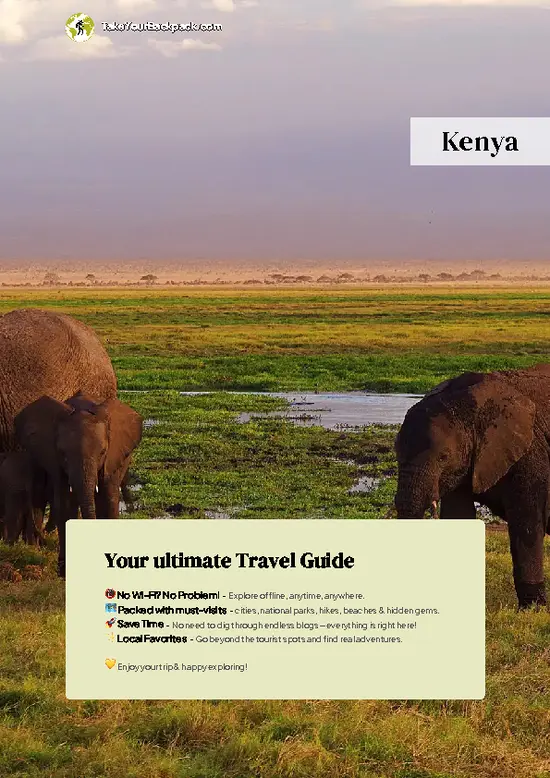
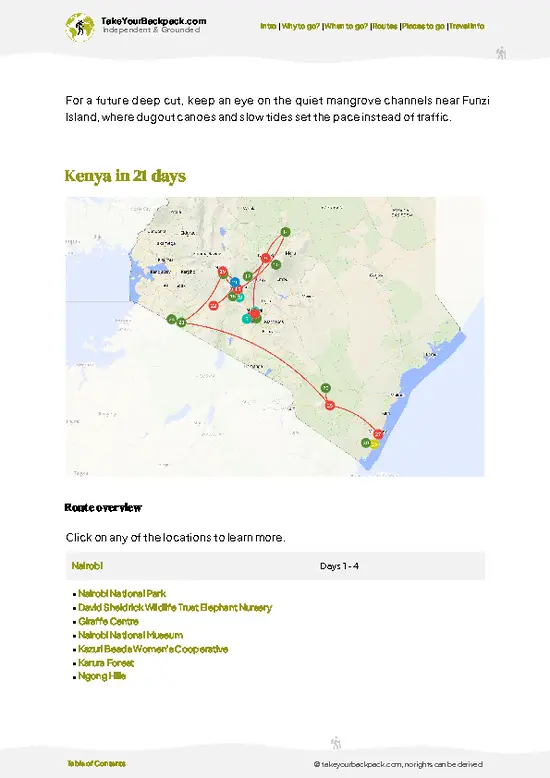
example page 0 from our offline Travel Guide for Kenya
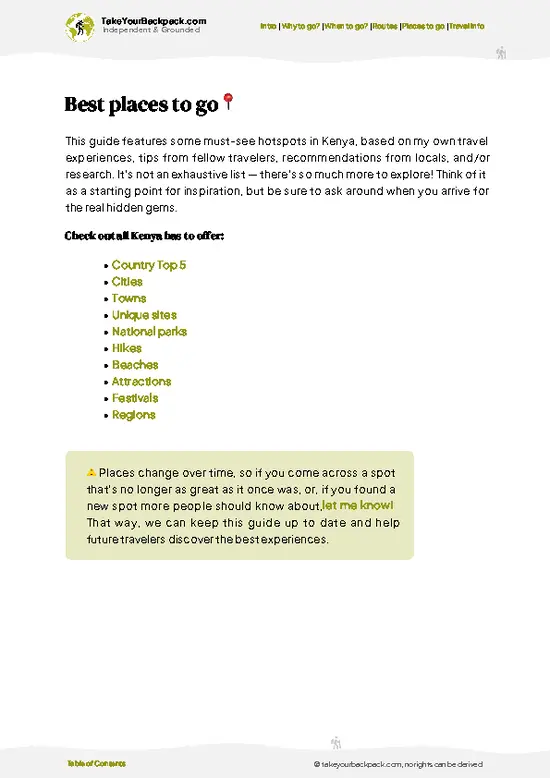
example page 1 from our offline Travel Guide for Kenya
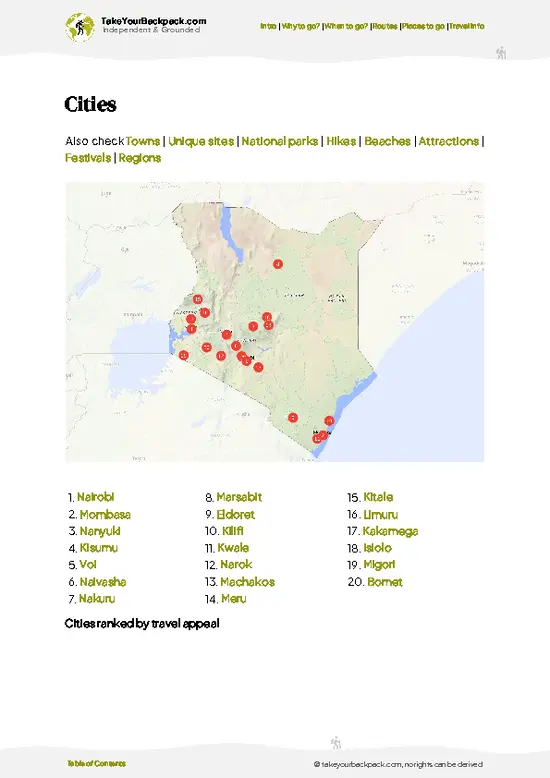
example page 2 from our offline Travel Guide for Kenya
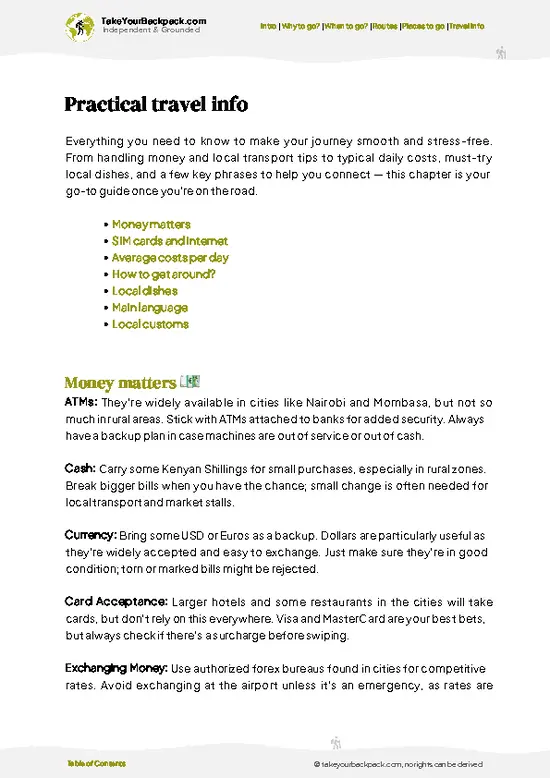
example page 3 from our offline Travel Guide for Kenya
example page 4 from our offline Travel Guide for Kenya
example page 5 from our offline Travel Guide for Kenya
example page 6 from our offline Travel Guide for Kenya
example page 7 from our offline Travel Guide for Kenya
The digital guide (429 pages) contains:
114 highlights, ranked by travel appeal
Optimized 7, 14 & 21-day travel routes
Cities, national parks, landmarks, beaches
How to get around
Offline-friendly for travel without Wi-Fi
👉 Click to see all 30+ guide features

📅 Plan smarter in minutes, not weeks
Month by month travel advice
Festivals & national holidays
Budget expectations

🗺️ Go to the right places, skip the overrated ones
Honest pros & cons of destinations
Top hikes, parks & viewpoints
Lesser-known places most travelers miss
Clear “worth it vs skip it” guidance

🛏️ Travel smoothly without rookie mistakes
Best areas to stay
Transport systems explained simply
Common scams & safety advice
SIM cards, money & practical tips

🌍 Understand the country, not just visit it
Culture & traditions
52 Essential phrases & customs
Festivals worth planning around
Traveler-friendly historical context
Insights that make places more meaningful

📱 Built for real travel conditions
Fully downloadable PDF
Works completely offline
Optimized for phone use
Useful in remote areas & buses
Everything in one place
Save weeks of stressful planning
Get instant access to your full guide. 30‑day money-back guarantee.


By proceeding you agree to our terms.
Sent to your inbox immediately after payment • 100% Secure Checkout
Best Backpacking Travel Advisor 2025 tourism awardBest Backpacking
Travel Advisor
2025
What others say about Take Your Backpack Guides:
⭐⭐⭐⭐⭐
Fantastic, amazing amount of information!
⭐⭐⭐⭐⭐
My goodness this is amazing, it's what I've been looking for hats off too you!
⭐⭐⭐⭐⭐
I think this is absolutely BRILLIANT
⭐⭐⭐⭐
Very complete and informative. It's still missing places, but I gotta to commend you
⭐⭐⭐⭐⭐
This is truly amazing, thank you, can't wait to explore it with my kids!
⭐⭐⭐⭐⭐
Awesome resource, thank you!
⭐⭐⭐⭐⭐
This is amazing! Can't wait to explore the ones I haven't seen
⭐⭐⭐⭐
I love this! Well done, great idea.
⭐⭐⭐⭐⭐
Thanks for taking the time to make this gem!
⭐⭐⭐⭐⭐
This might be the best website I've ever seen.
⭐⭐⭐⭐⭐
Congratulations, and thank you so much for your work; it's incredibly valuable.
⭐⭐⭐⭐
In all seriousness I think you did a great job pointing out the important spots
⭐⭐⭐⭐⭐
10/10 very good
⭐⭐⭐⭐⭐
As someone who's only just starting to visit regularly this is awesome, thank you.
⭐⭐⭐⭐
Thank you very much! I'm going to visit my dad, it's going to be very useful!
⭐⭐⭐⭐⭐
This is really cool! We'll be travelling for the first time and this definitely come in handy.
⭐⭐⭐⭐⭐
You are now our minister of culture, congratulations 👨‍💼
⭐⭐⭐⭐⭐
Just wanted to tell you that this is a pearl! Going to follow your recommendations.
⭐⭐⭐⭐⭐
This is so cool. I'll definitely be using the resource for my travels soon.
⭐⭐⭐⭐⭐
This is very impressive! Good work.
⭐⭐⭐⭐⭐
This is an amazing and informative site. Very well done!

🛏️ Where to stay?Where staying makes the most sense

Gilgil’s backpacker sweet spot is the town center, where the pulse of daily life hums steadily and the streets feel alive without overwhelming chaos. This area strikes a balance between safety and social buzz, making it a natural magnet for solo travelers and budget adventurers. Here, you’ll find a handful of hostels clustered near local markets and eateries, places where the scent of freshly roasted maize mingles with the earthy aroma of nearby acacia trees. The vibe is unpretentious—no frills, just genuine Kenyan town life with enough fellow travelers to swap stories over a cold soda or a steaming … read more 👉
Gilgil’s backpacker sweet spot is the town center, where the pulse of daily life hums steadily and the streets feel alive without overwhelming chaos. This area strikes a balance between safety and social buzz, making it a natural magnet for solo travelers and budget adventurers. Here, you’ll find a handful of hostels clustered near local markets and eateries, places where the scent of freshly roasted maize mingles with the earthy aroma of nearby acacia trees. The vibe is unpretentious—no frills, just genuine Kenyan town life with enough fellow travelers to swap stories over a cold soda or a steaming cup of chai.

Venture too far out, and you risk losing that social thread; the outskirts lean quieter and less secure, with fewer budget options and a more isolated feel. Staying central means you’re a short walk from transport links heading to the Rift Valley’s wild edges, so your day trips start with less hassle and more energy. The light here in the late afternoon softens the red dust on the roads, making even the simplest stroll feel like a warm invitation to explore.

🚌 Getting aroundTransportation options and practical tips

Gilgil moves at its own rhythm—neither frantic nor sluggish, but a steady pulse shaped by the sun’s climb and fall. The air carries a faint mix of dust and eucalyptus, and the streets hum with a blend of purposeful footsteps and the occasional honk from a matatu weaving through. It’s not a place where timetables rule; instead, intuition and local cues guide your timing. The market stalls open as the light softens in the morning, and by late afternoon, the town settles into a quieter pace, with fewer vehicles and more conversations drifting through the warm air. Understanding this flow means you don’t just get around—you move with the town, making every transition feel like part of the experience, not a chore.


  • Walking: Gilgil’s compact center is best explored on foot. Streets are mostly
read more 👉
Gilgil moves at its own rhythm—neither frantic nor sluggish, but a steady pulse shaped by the sun’s climb and fall. The air carries a faint mix of dust and eucalyptus, and the streets hum with a blend of purposeful footsteps and the occasional honk from a matatu weaving through. It’s not a place where timetables rule; instead, intuition and local cues guide your timing. The market stalls open as the light softens in the morning, and by late afternoon, the town settles into a quieter pace, with fewer vehicles and more conversations drifting through the warm air. Understanding this flow means you don’t just get around—you move with the town, making every transition feel like part of the experience, not a chore.


  • Walking: Gilgil’s compact center is best explored on foot. Streets are mostly flat and shaded by acacia trees, making a stroll both practical and pleasant. Walking costs nothing and lets you soak in the scent of fresh chapati from roadside vendors and the chatter of locals negotiating prices.


  • Matatus: These shared minibuses are the lifeblood of Gilgil’s transit. They run from dawn until dusk, roughly 6 AM to 6 PM, with fares around 50-100 KES depending on distance. Expect a lively, sometimes cramped ride, but it’s the fastest way to reach neighboring towns like Naivasha or Nakuru. Flag them down anywhere along main roads—no fixed stops.


  • Boda Bodas (Motorcycle Taxis): For quick hops or routes less served by matatus, boda bodas are your go-to. They operate 24/7, with prices negotiable but generally 100-200 KES within town. The wind and dust hit you immediately, so hold tight and prepare for a bumpy, exhilarating ride through narrow lanes and past market crowds.


  • Local Buses: Slightly more formal than matatus, local buses connect Gilgil with larger hubs. They depart from the main bus stage, usually early morning and late afternoon, with fares around 150-250 KES. They’re slower but offer more space and a smoother ride, ideal if you’re carrying gear or prefer less chaos.

👛 Costs (as of 13 October 2025)How expensive it really is

Backpacking in Gilgil, Kenya, offers a straightforward, no-frills experience where your money goes directly into local life and simple comforts. Here’s what you can expect to spend day-to-day.
  • Dorm Accommodation: Dorm beds in basic guesthouses or hostels typically run between $8 and $15 per night. These places are modest, often with shared bathrooms and limited hot water, but clean enough to rest well after a day of exploring.
  • Meals: Street food and local eateries serve hearty meals for $2 to $5. Expect staples like ugali, sukuma wiki (collard greens), and nyama choma (grilled meat). Western-style or tourist-targeted restaurants will push the price higher, around $7 to $10 per meal.
  • Local Transport: Matatus (shared minibuses) and boda bodas (motorcycle taxis) are the main options. A typical
read more 👉
Backpacking in Gilgil, Kenya, offers a straightforward, no-frills experience where your money goes directly into local life and simple comforts. Here’s what you can expect to spend day-to-day.
  • Dorm Accommodation: Dorm beds in basic guesthouses or hostels typically run between $8 and $15 per night. These places are modest, often with shared bathrooms and limited hot water, but clean enough to rest well after a day of exploring.
  • Meals: Street food and local eateries serve hearty meals for $2 to $5. Expect staples like ugali, sukuma wiki (collard greens), and nyama choma (grilled meat). Western-style or tourist-targeted restaurants will push the price higher, around $7 to $10 per meal.
  • Local Transport: Matatus (shared minibuses) and boda bodas (motorcycle taxis) are the main options. A typical short ride costs about $0.50 to $1.50, depending on distance. Budget around $3 to $5 daily if you’re hopping between nearby spots.
  • Basic Activities/Entry Fees: Gilgil itself is more of a base for exploring nearby natural attractions. Entry fees to local parks or sites usually range from $5 to $10. Guided walks or simple excursions can add $10 to $20 if you want a more structured experience.
  • Miscellaneous Expenses: This covers bottled water, snacks, occasional internet access, or small tips. Expect to spend around $2 to $5 daily here, depending on your habits.

All told, a realistic daily budget for backpacking in Gilgil falls between $20 and $40. This range covers the essentials without cutting corners, letting you soak in the local rhythms without the stress of overspending. The modest costs reflect the town’s straightforward vibe—no frills, just the raw, earthy pulse of rural Kenya.
⚠️ Prices can change and everyone travels differently, so take this as a rough guide. Hope it helps you plan your adventure!

🚌 Day tripsWhere to go beyond the main area

Gilgil, Kenya, is a backpacker’s dream base for day trips, offering a blend of adventure, culture, and stunning landscapes. Here are some worthwhile excursions that will make your journey feel rich and rewarding.

Lake Nakuru National Park
Just an hour’s drive from Gilgil, Lake Nakuru is famous for its flamingos and diverse wildlife. Picture yourself standing on the shores, the air thick with the scent of acacia trees, as you spot rhinos grazing nearby. A day trip typically costs around $60, including park fees and transport. The best time to visit is during the dry season, from June to October, when animals are easier to spot. Many first-timers underestimate the park’s size and miss out on the best viewpoints; don’t rush—take your time to explore.


Hell’s Gate National Park
A mere … read more 👉
Gilgil, Kenya, is a backpacker’s dream base for day trips, offering a blend of adventure, culture, and stunning landscapes. Here are some worthwhile excursions that will make your journey feel rich and rewarding.

Lake Nakuru National Park
Just an hour’s drive from Gilgil, Lake Nakuru is famous for its flamingos and diverse wildlife. Picture yourself standing on the shores, the air thick with the scent of acacia trees, as you spot rhinos grazing nearby. A day trip typically costs around $60, including park fees and transport. The best time to visit is during the dry season, from June to October, when animals are easier to spot. Many first-timers underestimate the park’s size and miss out on the best viewpoints; don’t rush—take your time to explore.


Hell’s Gate National Park
A mere 30-minute ride will land you at Hell’s Gate, where you can hike or bike through dramatic landscapes. The towering cliffs and geothermal activity create an otherworldly atmosphere. Entry fees are about $30, and you can rent a bike for around $10. Early mornings are ideal, as the light casts a golden hue over the scenery. A common mistake is sticking to the main road; venture off the beaten path to discover hidden hot springs and wildlife.
👉 Explore Hell’s Gate National Park

Naivasha Lake
Just 45 minutes from Gilgil, Lake Naivasha is perfect for a relaxing day. Rent a boat to glide across the water, surrounded by the calls of hippos and the rustle of papyrus. Expect to spend about $40 for boat hire and lunch at a lakeside café. Visit during the early morning for the best wildlife sightings and cooler temperatures. Many backpackers miss the charming town of Naivasha itself; take a stroll through the market for local crafts and snacks.


Mount Longonot
For the adventurous, Mount Longonot is a must. About an hour away, this dormant volcano offers a challenging hike with breathtaking views from the summit. The entry fee is around $20, and you’ll want to budget for transport and snacks. Aim for early morning or late afternoon to avoid the heat and catch the sunset. A common pitfall is underestimating the hike’s difficulty; bring plenty of water and wear sturdy shoes.
👉 Explore Mount Longonot

Each of these trips adds a unique layer to your experience, making Gilgil not just a stopover, but a gateway to the heart of Kenya.
Want to know what more Kenya offers?
The Kenya Travel Guide describes 114 highlights, from cities to national parks, from beaches to hikes

Get the Travel Guide -

🛡️ SafetySafety Tips and Common Scams in Gilgil

Gilgil is generally safe, but like any place, a little awareness goes a long way. Stick to well-lit areas after dark, especially if you’re solo. The streets can feel quiet, and while that’s often peaceful, it’s wise to stay alert.

Watch for common scams, particularly around transport. Some drivers might inflate fares or suggest unnecessary stops. Always agree on a price before hopping in.

Annoyances can pop up, like persistent street vendors. A polite but firm “no, thank you” usually does the trick.

Keep your belongings close, especially in crowded markets. The atmosphere is vibrant, filled with the scent of spices and the chatter of locals, but it’s easy to get distracted.

By staying aware and engaging with the community, you’ll unlock the true essence of Gilgil without unnecessary hiccups.

Other Kenyan towns near Gilgil

Explore more nearby:

  • Ol Kalou—Aberdare proximity, dairy farming, rural town center| 25 km away
  • Nyahururu—Thomson’s Falls, highland farms, cool climate| 59 km away
  • Karatina—Open-air market, Aberdare foothills, agricultural hub| 90 km away

💡 Not sure where to go next?
Create a personalized itinerary for Kenya including Gilgil and the places that fit your trip.

Generate my itinerary

👉 Discover all towns

Or checkout all Kenya has to offer (think cities, towns, villages, national parks, hikes, beaches, festivals)
Country photo of Kenya

We 💚 feedbackWhat to keep in mind

Gilgil has a raw, unfiltered vibe that’s hard to shake off. The air is thick with the scent of earth after rain, and the laughter of locals fills the streets. Don’t miss the impromptu dance parties at the market; they’re a delightful surprise. Just be mindful of the altitude—it can catch you off guard. Embrace the hustle, and you’ll find a rhythm that makes every moment feel alive. It’s a place that rewards your curiosity.

✍️ Help improve this page!
The information on this page is based on in-depth research, insights shared by experienced travelers, and feedback from the local travel community in Kenya. While every effort is made to keep the information accurate and current, conditions can change — so if you spot anything incorrect or outdated, please get in touch.


🙋‍♂️ Give feedback

👋 Meet the founderWho’s Behind Take Your Backpack?

Johan, backpacker and founder of TakeYourBackpackHi, I’m Johan (Netherlands 🇳🇱), the creator of TakeYourBackpack. Over the past decade, I’ve backpacked through 80+ countries across six continents, gaining extensive experience with independent travel, long-term trips, and overland routes.

This site is built on a combination of firsthand travel experience and carefully curated insights from other backpackers. Many guides are based on places I’ve personally visited, while others bring together tips, observations, and practical advice shared by trusted travelers I’ve met along the way.

The goal is to provide realistic, experience-driven guidance — not generic itineraries — so you can explore destinations with better context, clearer expectations, and more confidence.

Get full Kenya guide •
Instant download • 114 highlights • Full Offline guide