×

Kenya🇰🇪 | townsKaratinaOpen-air market, Aberdare foothills, agricultural hub | things to do and best time to go

Explore NamangaExplore Ol Kalou

Backpacking in Karatina
👀 For curious travelerstown ranked #20
By Johan Kruseman 🇳🇱 | Updated June 12, 2026

Everyone hears about Karatina’s market—the “biggest open-air market in East Africa”—but the real reason to stop here isn’t just to gawk at piles of tomatoes. Karatina sits in central Kenya, north of Nairobi, where the air sharpens with altitude and the mornings smell like woodsmoke and fresh chapati. For backpackers, it’s a practical pause: less hectic than Nyeri, more lived-in than Nanyuki, and close enough to Mount Kenya’s foothills for day trips. The town’s rhythm is slow, with matatus rattling through and evenings that wind down early. You’ll find cheap eats and basic guesthouses, but don’t expect a hostel scene or nightlife—this is a place for early risers, not party chasers. Walking is easy, but the best hikes and views are a matatu ride away. Costs are low, safety is decent if you keep your wits, and the social scene leans local—expect curious smiles, not crowds of backpackers.

Discover everything you want to know in the 📖 Kenya Travel Guide.


Get your Kenya guide
114 ranked highlights, routes & tips, works offline (429 pages)
Loading the map 🌍
CLICK TO FILTER
cities
towns
landmarks
national parks
hikes
beaches
attractions
festivals
regions
SHOW COUNTRY’S BESTSHOW ALL

✨ Why go?
Ranked #20 town in Kenya
What makes it a must-see town

Karatina serves as a gateway for backpackers heading to the Aberdare Mountains or the Mount Kenya region. Its walkable streets make it easy to explore local markets, where the scent of fresh ugali mingles with spices. Small-scale hostels and guesthouses offer a cozy vibe, perfect for solo travelers or those in small groups. Most visitors stay a couple of days, soaking in the friendly atmosphere and sharing stories over local dishes. It’s not a party town; instead, it’s a place to recharge before tackling the trails or heading to the coast.
Want to include Karatina in your Kenya route?
Create a personalized Kenya itinerary that includes Karatina and the places that fit your trip — based on your travel style, budget, and available time. Get your route in seconds.

Generate my trip

💡 HighlightsMust-see experiences and standout moments

  1. Karatina Market — The town’s beating heart: one of Kenya’s largest open-air markets where fresh produce, livestock, hardware and local crafts flood the streets. Visit early for the busiest, most colorful trading, to watch farmers haggle and to taste roadside samosas and chai while soaking in real local life.
  2. Karatina University (main campus) — A compact public university with tree-lined walkways, busy student culture and occasional public events or exhibitions. It’s a good place for a relaxed campus walk, people-watching, and getting a feel for the town’s younger, academic side.
A few excellent day-trip highlights just outside Karatina are Mount Kenya (access via Naro Moru/Chogoria), Ol Pejeta Conservancy and Nanyuki for wildlife, and the Aberdare Range/Thomson’s Falls area.
Spotted a mistake or missing something? Contact us.

Things to do near Karatina

Ratings based on Tripadvisor reviews. When you book through this link, you support our work at no extra cost to you.

🏘️ NeighborhoodsWhere things are and how it's laid out

Karatina is a vibrant hub that offers a unique blend of local culture and accessibility for backpackers. Here’s how to navigate its neighborhoods:

Central Karatina: This is the heartbeat of the town. Expect a lively atmosphere with bustling markets and street vendors. It’s walkable, making it easy to explore on foot. Costs are low, perfect for budget travelers. Nightlife is minimal, but you’ll find cozy spots for evening chats. Ideal for short stays.

Gikondi: A quieter area, Gikondi is great for those seeking a more relaxed vibe. It’s slightly farther from the main action, but still accessible by matatus. Prices are reasonable, and it’s perfect for longer stays if you want to soak in local life.

Karima: This neighborhood offers a mix of tranquility and local charm. It’s less touristy, providing … read more 👉
Karatina is a vibrant hub that offers a unique blend of local culture and accessibility for backpackers. Here’s how to navigate its neighborhoods:

Central Karatina: This is the heartbeat of the town. Expect a lively atmosphere with bustling markets and street vendors. It’s walkable, making it easy to explore on foot. Costs are low, perfect for budget travelers. Nightlife is minimal, but you’ll find cozy spots for evening chats. Ideal for short stays.

Gikondi: A quieter area, Gikondi is great for those seeking a more relaxed vibe. It’s slightly farther from the main action, but still accessible by matatus. Prices are reasonable, and it’s perfect for longer stays if you want to soak in local life.

Karima: This neighborhood offers a mix of tranquility and local charm. It’s less touristy, providing an authentic experience. Walkability is decent, but you may need to rely on local transport. Great for those looking to escape the hustle for a bit.

⌛️ 1 dayA smart one-day plan

Karatina, Kenya, pulses with the rhythm of daily life, where the vibrant market scenes and the aroma of fresh produce create an inviting atmosphere. Start your morning at the bustling Karatina Market. The colors of ripe fruits and vegetables are a feast for the eyes, and the chatter of local vendors fills the air. Grab a warm chapati from a street vendor; the flaky texture and buttery flavor will kickstart your day.

In the afternoon, wander through the nearby Nyeri County, where the lush green hills offer a refreshing backdrop. Visit the historic St. Peter’s Anglican Church, a hidden gem that showcases stunning architecture and a peaceful garden. The scent of blooming flowers adds to the tranquility, making it a perfect spot for reflection.

As evening approaches, head to the local eateries … read more 👉
Karatina, Kenya, pulses with the rhythm of daily life, where the vibrant market scenes and the aroma of fresh produce create an inviting atmosphere. Start your morning at the bustling Karatina Market. The colors of ripe fruits and vegetables are a feast for the eyes, and the chatter of local vendors fills the air. Grab a warm chapati from a street vendor; the flaky texture and buttery flavor will kickstart your day.

In the afternoon, wander through the nearby Nyeri County, where the lush green hills offer a refreshing backdrop. Visit the historic St. Peter’s Anglican Church, a hidden gem that showcases stunning architecture and a peaceful garden. The scent of blooming flowers adds to the tranquility, making it a perfect spot for reflection.

As evening approaches, head to the local eateries in the town center. Try some ugali and sukuma wiki, a staple dish that embodies the essence of Kenyan cuisine. The warmth of the community here is palpable, and you’ll leave with a deeper appreciation for the heart of Karatina.
Turn your Karatina visit into an Kenya adventure
Build a complete Kenya route with Karatina, hidden gems, must-see destinations, and realistic travel times included.

Generate my trip

🌤️ When to go?Seasonal considerations and timing


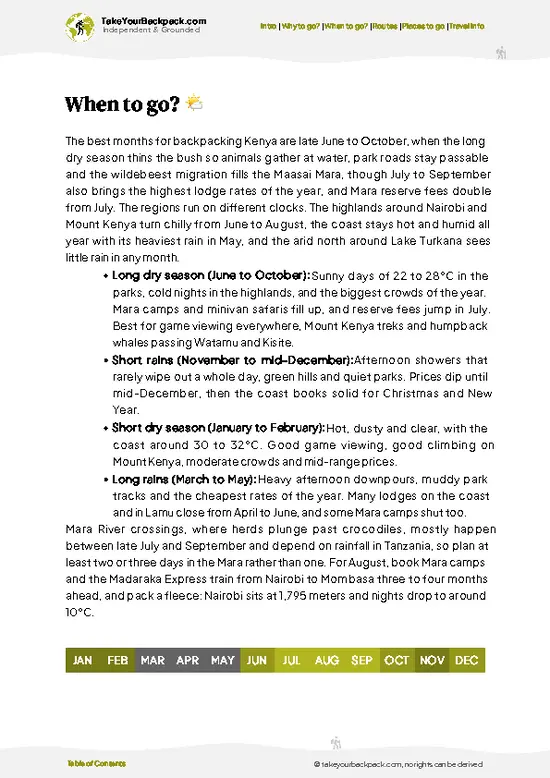
  • Topic: Weather – Karatina’s best window is during the dry seasons, roughly June to September and January to February. Expect crisp mornings around 15°C (59°F) and afternoons warming to 25°C (77°F), perfect for trekking without the oppressive humidity or muddy trails.

  • Topic: Daylight Hours – Near the equator, daylight stays steady year-round, about 12 hours. This means you can plan long hikes or market visits without worrying about early sunsets cutting your day short.

  • Topic: Crowds – Avoid the rainy season (March to May, October to November) when locals retreat indoors and roads get tricky. Visiting in the dry months means fewer tourists and a more authentic vibe, letting you connect with the town’s rhythm.

  • Topic: Seasonal Activities – Harvest season in late August brings vibrant
read more 👉

  • Topic: Weather – Karatina’s best window is during the dry seasons, roughly June to September and January to February. Expect crisp mornings around 15°C (59°F) and afternoons warming to 25°C (77°F), perfect for trekking without the oppressive humidity or muddy trails.

  • Topic: Daylight Hours – Near the equator, daylight stays steady year-round, about 12 hours. This means you can plan long hikes or market visits without worrying about early sunsets cutting your day short.

  • Topic: Crowds – Avoid the rainy season (March to May, October to November) when locals retreat indoors and roads get tricky. Visiting in the dry months means fewer tourists and a more authentic vibe, letting you connect with the town’s rhythm.

  • Topic: Seasonal Activities – Harvest season in late August brings vibrant local markets bursting with fresh produce and crafts. Timing your visit here means tasting the freshest food and catching lively community events.

  • Topic: Price Fluctuations – Accommodation and transport costs dip during the rainy season but come with trade-offs in comfort and accessibility. The dry season commands slightly higher prices but rewards with ease of movement and better overall experience.


Pro-tip: Aim for early dry season visits—cool mornings, lively markets, and clear trails make every step feel earned and every moment richer.


source: climatestotravel.comJANJanuary: excellent for travelingFEBFebruary: excellent for travelingMARMarch: fair for travelingAPRApril: fair for travelingMAYMay: fair for travelingJUNJune: excellent for travelingJULJuly: excellent for travelingAUGAugust: excellent for travelingSEPSeptember: excellent for travelingOCTOctober: fair for travelingNOVNovember: fair for travelingDECDecember: highly recommended for traveling
when-to-go

✈️ The backpacker research shortcutKenya Travel Guide

An offline-friendly backpacking guide with optimized travel routes, ranked highlights, transport advice, and the best areas to stay.
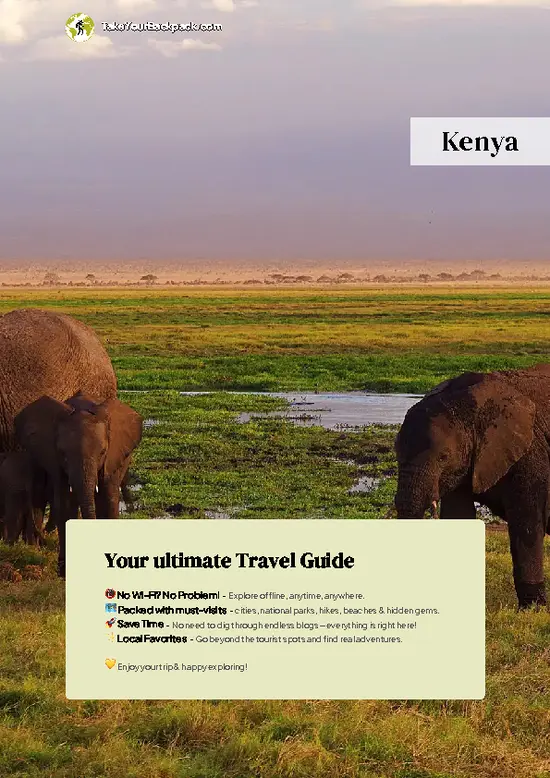
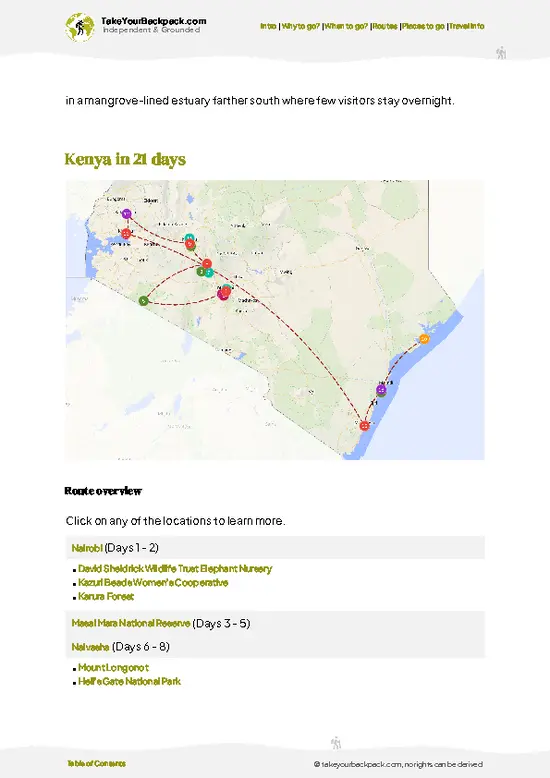
example page 0 from our offline Travel Guide for Kenya
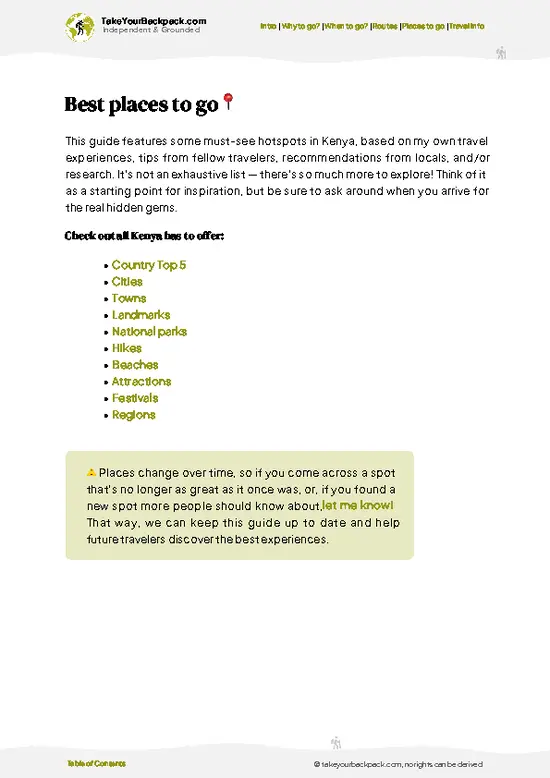
example page 1 from our offline Travel Guide for Kenya
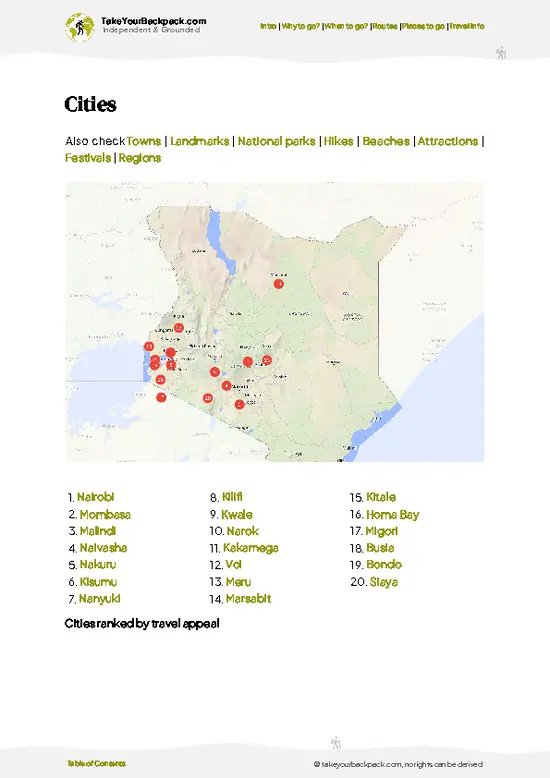
example page 2 from our offline Travel Guide for Kenya
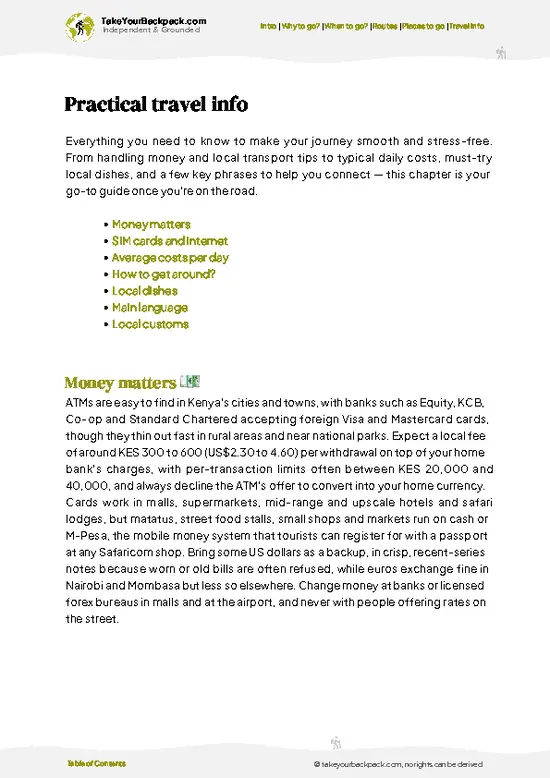
example page 3 from our offline Travel Guide for Kenya
example page 4 from our offline Travel Guide for Kenya
example page 5 from our offline Travel Guide for Kenya
example page 6 from our offline Travel Guide for Kenya
example page 7 from our offline Travel Guide for Kenya
The digital guide (429 pages) contains:
114 highlights, ranked by travel appeal
Optimized 7, 14 & 21-day travel routes
Cities, national parks, landmarks, beaches
How to get around
Offline-friendly for travel without Wi-Fi
👉 Click to see all 30+ guide features

📅 Plan smarter in minutes, not weeks
Month by month travel advice
Festivals & national holidays
Budget expectations

🗺️ Go to the right places, skip the overrated ones
Honest pros & cons of destinations
Top hikes, parks & viewpoints
Lesser-known places most travelers miss
Clear “worth it vs skip it” guidance

🛏️ Travel smoothly without rookie mistakes
Best areas to stay
Transport systems explained simply
Common scams & safety advice
SIM cards, money & practical tips

🌍 Understand the country, not just visit it
Culture & traditions
52 Essential phrases & customs
Festivals worth planning around
Traveler-friendly historical context
Insights that make places more meaningful

📱 Built for real travel conditions
Fully downloadable PDF
Works completely offline
Optimized for phone use
Useful in remote areas & buses
Everything in one place
Save weeks of stressful planning
Get instant access to your full guide. 30‑day money-back guarantee.


By proceeding you agree to our terms.
Sent to your inbox immediately after payment • 100% Secure Checkout
Best Backpacking Travel Advisor 2025 tourism awardBest Backpacking
Travel Advisor
2025
What others say about Take Your Backpack Guides:
⭐⭐⭐⭐⭐
Fantastic, amazing amount of information!
⭐⭐⭐⭐⭐
My goodness this is amazing, it's what I've been looking for hats off too you!
⭐⭐⭐⭐⭐
I think this is absolutely BRILLIANT
⭐⭐⭐⭐
Very complete and informative. It's still missing places, but I gotta to commend you
⭐⭐⭐⭐⭐
This is truly amazing, thank you, can't wait to explore it with my kids!
⭐⭐⭐⭐⭐
Awesome resource, thank you!
⭐⭐⭐⭐⭐
This is amazing! Can't wait to explore the ones I haven't seen
⭐⭐⭐⭐
I love this! Well done, great idea.
⭐⭐⭐⭐⭐
Thanks for taking the time to make this gem!
⭐⭐⭐⭐⭐
This might be the best website I've ever seen.
⭐⭐⭐⭐⭐
Congratulations, and thank you so much for your work; it's incredibly valuable.
⭐⭐⭐⭐
In all seriousness I think you did a great job pointing out the important spots
⭐⭐⭐⭐⭐
10/10 very good
⭐⭐⭐⭐⭐
As someone who's only just starting to visit regularly this is awesome, thank you.
⭐⭐⭐⭐
Thank you very much! I'm going to visit my dad, it's going to be very useful!
⭐⭐⭐⭐⭐
This is really cool! We'll be travelling for the first time and this definitely come in handy.
⭐⭐⭐⭐⭐
You are now our minister of culture, congratulations 👨‍💼
⭐⭐⭐⭐⭐
Just wanted to tell you that this is a pearl! Going to follow your recommendations.
⭐⭐⭐⭐⭐
This is so cool. I'll definitely be using the resource for my travels soon.
⭐⭐⭐⭐⭐
This is very impressive! Good work.
⭐⭐⭐⭐⭐
This is an amazing and informative site. Very well done!

🛏️ Where to stay?How to pick the right area

Karatina’s town center is the heartbeat for backpackers—safe enough to wander after dark, with a steady hum of local markets and street food stalls that keep the air thick with spices and fresh produce. This area draws budget travelers because it’s compact, social, and easy to navigate on foot. You’ll find informal guesthouses and hostels clustered here, offering a chance to meet fellow travelers without the pretense of upscale lodgings. Compared to quieter, more residential outskirts, staying near the main market means you’re plugged into the town’s rhythm—early morning chatter, the scent of … read more 👉
Karatina’s town center is the heartbeat for backpackers—safe enough to wander after dark, with a steady hum of local markets and street food stalls that keep the air thick with spices and fresh produce. This area draws budget travelers because it’s compact, social, and easy to navigate on foot. You’ll find informal guesthouses and hostels clustered here, offering a chance to meet fellow travelers without the pretense of upscale lodgings. Compared to quieter, more residential outskirts, staying near the main market means you’re plugged into the town’s rhythm—early morning chatter, the scent of roasting maize, and the occasional burst of laughter from nearby cafés. It’s the kind of place where the city’s pulse feels immediate and welcoming.

🚌 Getting aroundHow to get from A to B

Karatina moves at its own rhythm—neither frantic nor slow, but a steady pulse that matches the dusty roads and the chatter of market vendors. The air carries the scent of fresh maize and earth, and the sun casts sharp shadows that shift as the day unfolds. Here, timetables are more of a suggestion than a rule; expect a blend of patience and hustle. The town’s flow is a dance between the predictable and the spontaneous, where knowing when to wait and when to move fast makes all the difference.


  • Matatus: These minibuses are the lifeblood of Karatina’s transit, running from dawn until dusk. Fares hover around 50-100 KES depending on distance, and while they can be cramped, they’re the fastest way to cover longer stretches. Expect frequent stops and a lively, sometimes chaotic boarding process.
read more 👉
Karatina moves at its own rhythm—neither frantic nor slow, but a steady pulse that matches the dusty roads and the chatter of market vendors. The air carries the scent of fresh maize and earth, and the sun casts sharp shadows that shift as the day unfolds. Here, timetables are more of a suggestion than a rule; expect a blend of patience and hustle. The town’s flow is a dance between the predictable and the spontaneous, where knowing when to wait and when to move fast makes all the difference.


  • Matatus: These minibuses are the lifeblood of Karatina’s transit, running from dawn until dusk. Fares hover around 50-100 KES depending on distance, and while they can be cramped, they’re the fastest way to cover longer stretches. Expect frequent stops and a lively, sometimes chaotic boarding process.

  • Boda Bodas: Motorcycle taxis dart through traffic with nimble speed, perfect for short hops or when time is tight. Prices start at about 50 KES but always negotiate upfront. The wind and dust hit you immediately, so hold on tight and prepare for a bumpy ride.

  • Walking: The heart of Karatina is best explored on foot. Streets are compact, and the market buzz is a sensory overload of colors, smells, and sounds. Walking lets you absorb the town’s texture, from the rough pavement underfoot to the calls of vendors selling fresh produce.

  • Shared Taxis: Slightly pricier than matatus but more comfortable, shared taxis run fixed routes and leave once full. They offer a smoother ride and a bit more space, ideal if you’re carrying gear or want a break from the dust.

👛 Costs (as of 11 October 2025)Money, prices, and spending tips

Backpacking in Karatina, Kenya, offers a grounded experience where every shilling counts, and the local rhythms shape your daily expenses. Here’s what you can expect to spend as an independent traveler navigating this town.
  • Dorm Accommodation: Karatina isn’t flooded with hostels like Nairobi, but you’ll find basic guesthouses and budget lodges offering dorm-style or shared rooms. Expect to pay around $5 to $10 per night. These places are simple—think a fan instead of air conditioning, clean but no-frills bedding, and a chance to hear the town’s evening sounds through thin walls.
  • Meals: Food here is straightforward and filling. Street food and local eateries serve up ugali, sukuma wiki (collard greens), and nyama choma (grilled meat) for about $1 to $3 per meal. If you opt for a small restaurant,
read more 👉
Backpacking in Karatina, Kenya, offers a grounded experience where every shilling counts, and the local rhythms shape your daily expenses. Here’s what you can expect to spend as an independent traveler navigating this town.
  • Dorm Accommodation: Karatina isn’t flooded with hostels like Nairobi, but you’ll find basic guesthouses and budget lodges offering dorm-style or shared rooms. Expect to pay around $5 to $10 per night. These places are simple—think a fan instead of air conditioning, clean but no-frills bedding, and a chance to hear the town’s evening sounds through thin walls.
  • Meals: Food here is straightforward and filling. Street food and local eateries serve up ugali, sukuma wiki (collard greens), and nyama choma (grilled meat) for about $1 to $3 per meal. If you opt for a small restaurant, meals might edge closer to $4 or $5, especially if you want a soda or fresh juice. The scent of charcoal and spices is constant, grounding you in the everyday life of Karatina.
  • Local Transport: Matatus (shared minibuses) and boda-bodas (motorcycle taxis) dominate. A typical matatu ride within town costs around $0.30 to $0.50, while boda-bodas might charge $1 to $2 depending on distance. The jostling, the chatter, and the occasional honk create a lively, if chaotic, backdrop to your travel.
  • Basic Activities/Entry Fees: Karatina is more about soaking in local markets and the town’s vibe than formal tourist sites. Visiting the Karatina Market, one of the largest open-air markets in Kenya, is free but expect to spend if you buy fresh produce or crafts. If you want to explore nearby natural spots or cultural experiences, budget around $5 to $10 for entry or guided tours.
  • Miscellaneous Expenses: This covers bottled water, snacks, phone credit, and occasional small tips. Plan for about $1 to $3 daily. Water quality varies, so bottled or filtered water is a must, and topping up your phone for mobile money or calls is a regular task.

In total, a realistic daily budget for backpacking in Karatina ranges from about $10 to $25. This covers basic comfort without luxury, letting you dive into the town’s pulse without breaking the bank. The modest costs reflect the straightforward lifestyle here, where the payoff is in authentic, unvarnished local encounters.
⚠️ Prices can change and everyone travels differently, so take this as a rough guide. Hope it helps you plan your adventure!

🚌 Day tripsShort trips worth adding

Karatina is a fantastic base for exploring the heart of Kenya. With its rich culture and proximity to stunning landscapes, you can dive into unforgettable day trips without the hassle of overnight stays.

Mount Kenya National Park
Just a couple of hours from Karatina, this UNESCO World Heritage site offers breathtaking views and diverse ecosystems. The trek to the base camp is a rewarding challenge, with the scent of pine and the sound of rustling leaves accompanying you. Expect to spend around $20 for park fees and transport. The best time to visit is during the dry seasons from June to September. A common mistake? Underestimating the weather; pack layers, as temperatures can drop quickly.
👉 Explore Mount Kenya National Park

Nyeri Town
Only a short ride away, Nyeri is rich in history … read more 👉
Karatina is a fantastic base for exploring the heart of Kenya. With its rich culture and proximity to stunning landscapes, you can dive into unforgettable day trips without the hassle of overnight stays.

Mount Kenya National Park
Just a couple of hours from Karatina, this UNESCO World Heritage site offers breathtaking views and diverse ecosystems. The trek to the base camp is a rewarding challenge, with the scent of pine and the sound of rustling leaves accompanying you. Expect to spend around $20 for park fees and transport. The best time to visit is during the dry seasons from June to September. A common mistake? Underestimating the weather; pack layers, as temperatures can drop quickly.
👉 Explore Mount Kenya National Park

Nyeri Town
Only a short ride away, Nyeri is rich in history and local culture. Visit the famous Treetops Hotel, where Queen Elizabeth II ascended to the throne. The vibrant market scene is a feast for the senses, with the aroma of fresh produce and spices filling the air. Budget around $10 for transport and snacks. Weekdays are less crowded, making it easier to soak in the local vibe. First-timers often miss the chance to chat with locals—don’t be shy!


Aberdare National Park
This park is a hidden treasure, about an hour from Karatina. The lush forests and cascading waterfalls create a serene escape. You can spot elephants and other wildlife while hiking the well-marked trails. Expect to spend around $25 for entry and transport. The best time to go is early morning for the freshest air and active wildlife. Many overlook the park’s picnic spots—bring a packed lunch to enjoy amidst nature.
👉 Explore Aberdare National Park
Want to know what more Kenya offers?
The Kenya Travel Guide describes 114 highlights, from cities to national parks, from beaches to hikes

Get the Travel Guide -

🛡️ SafetyTraveler Safety Guide

Karatina is generally safe, but awareness is key. Stick to well-lit areas at night, especially if you’re solo. The market can be bustling, and while locals are friendly, keep an eye on your belongings—pickpockets can blend in with the crowd.

Be cautious of overly eager vendors; they might try to upsell or guide you to shops where they earn a commission. Trust your instincts. If something feels off, walk away. Carry yourself confidently, and you’ll navigate the town like a pro.

Other Kenyan towns near Karatina

Explore more nearby:

  • Embu—coffee farms, Embu market, eastern highlands| 37 km away
  • Chuka—Meru foothills, tea and coffee farms, market center| 61 km away
  • Ol Kalou—Aberdare proximity, dairy farming, rural town center| 87 km away

💡 Not sure where to go next?
Create a personalized itinerary for Kenya including Karatina and the places that fit your trip.

Generate my itinerary

👉 Discover all towns

Or checkout all Kenya has to offer (think cities, towns, villages, national parks, hikes, beaches, festivals)
Country photo of Kenya

We 💚 feedbackKey takeaways before you go

Karatina pulses with a raw, authentic energy. The market’s aroma of fresh produce and spices is a sensory delight. Don’t rush; soak it in. Just watch your belongings—pickpockets can be sneaky. Embrace the chaos; it’s where the real stories live.

✍️ Help improve this page!
The information on this page is based on in-depth research, insights shared by experienced travelers, and feedback from the local travel community in Kenya. While every effort is made to keep the information accurate and current, conditions can change — so if you spot anything incorrect or outdated, please get in touch.


🙋‍♂️ Give feedback

👋 Meet the founderWho’s Behind Take Your Backpack?

Johan, backpacker and founder of TakeYourBackpackHi, I’m Johan (Netherlands 🇳🇱), the creator of TakeYourBackpack. Over the past decade, I’ve backpacked through 80+ countries across six continents, gaining extensive experience with independent travel, long-term trips, and overland routes.

This site is built on a combination of firsthand travel experience and carefully curated insights from other backpackers. Many guides are based on places I’ve personally visited, while others bring together tips, observations, and practical advice shared by trusted travelers I’ve met along the way.

The goal is to provide realistic, experience-driven guidance — not generic itineraries — so you can explore destinations with better context, clearer expectations, and more confidence.

Get full Kenya guide •
Instant download • 114 highlights • Full Offline guide