×

Kenya🇰🇪 | citiesHoma Baylakefront town, fishing communities, Ruma National Park | things to do and best time to go

Explore BusiaExplore Migori

Backpacking in Homa Bay
👌 Worth visitingcity ranked #18
By Johan Kruseman 🇳🇱 | Updated June 6, 2026

A matatu door slams shut behind you, dust rising as the driver grins and shouts over the thrum of Lake Victoria’s breeze. Fish sizzle on roadside grills, and the air is thick with the promise of rain and stories. Homa Bay sits on Kenya’s western shore, far from Nairobi’s chaos and Kisumu’s bustle. It’s affordable, laid-back, and rarely crowded with tourists—expect slow mornings, friendly locals, and a few colonial relics. Nightlife is minimal, safety is decent, and the pace is pure lakeside: patient, unhurried, quietly rewarding.

Discover everything you want to know in the 📖 Kenya Travel Guide.


Get your Kenya guide
114 ranked highlights, routes & tips, works offline (429 pages)
Loading the map 🌍
CLICK TO FILTER
cities
towns
landmarks
national parks
hikes
beaches
attractions
festivals
regions
SHOW COUNTRY’S BESTSHOW ALL

✨ Why go?
Ranked #18 city in Kenya
The unique appeal for travelers

Homa Bay is a strategic stop for backpackers weaving through Kenya. It offers a unique blend of affordability and local culture. The hostels here are budget-friendly and often buzzing with fellow travelers, making it easy to swap stories and tips. The walkability of the city means you can explore local markets and eateries without breaking a sweat. Speaking of food, the local cuisine is a treat, with fresh fish from Lake Victoria stealing the spotlight. Homa Bay also serves as a basecamp for day trips to nearby attractions, maximizing your time without draining your wallet. Plus, the nightlife is laid-back yet lively, perfect for unwinding after a day of exploration. If you’re looking for a place that balances comfort and adventure, Homa Bay fits the bill.
Want to include Homa Bay in your Kenya route?
Create a personalized Kenya itinerary that includes Homa Bay and the places that fit your trip — based on your travel style, budget, and available time. Get your route in seconds.

Generate my trip

💡 HighlightsPlaces and moments you shouldn't skip

  1. Homa Bay Jetty & Fish Market — The beating heart of the town on Lake Victoria: early-morning boat landings, traders yelling over baskets of tilapia and omena (tiny dried fish), and the perfect place to watch the lakeshore economy in action and catch a boat trip.
  2. Main Town Market — A chaotic, colorful open-air market where vegetables, charcoal, secondhand clothes and street food mingle; great for people-watching, affordable local meals, and picking up snacks or basics for onward travel.
  3. Lakeshore Promenade & Small Beaches — Not a polished boardwalk, but stretch along the water where locals bathe, kids swim, fishermen repair nets, and sunsets over the lake are honest and beautiful — bring a torch if you hang around after dark.
  4. Homa Bay County Stadium — Catch a local football match or community
read more 👉
  1. Homa Bay Jetty & Fish Market — The beating heart of the town on Lake Victoria: early-morning boat landings, traders yelling over baskets of tilapia and omena (tiny dried fish), and the perfect place to watch the lakeshore economy in action and catch a boat trip.
  2. Main Town Market — A chaotic, colorful open-air market where vegetables, charcoal, secondhand clothes and street food mingle; great for people-watching, affordable local meals, and picking up snacks or basics for onward travel.
  3. Lakeshore Promenade & Small Beaches — Not a polished boardwalk, but stretch along the water where locals bathe, kids swim, fishermen repair nets, and sunsets over the lake are honest and beautiful — bring a torch if you hang around after dark.
  4. Homa Bay County Stadium — Catch a local football match or community event here to feel the town’s energy; match days are loud, friendly, and a genuine slice of local life.
  5. Catholic Cathedral (seat of the Homa Bay Diocese) — The major church in town is worth a visit for its role in the community, architecture, weekday services, and as a meeting point for local charity and cultural activities.
  6. Main Matatu/Bus Park — Not glamorous, but essential: the transport hub is where you’ll learn the rhythms of regional travel, haggle for fares, and observe the flow of goods and people — a practical, living snapshot of the town.
  7. Smoked-Fish Sheds & Omena Trading Spots — Walk the shoreline curing sheds and stalls to see how omena and smoked tilapia are processed and sold; it’s a tactile, aromatic insight into a major local industry and cuisine.
  8. Local Craft & Tailoring Row — Small workshops and stalls near the market where tailors, carpenters and craft-makers work; you can get fabrics altered, buy simple handmade goods, and meet the people behind everyday Mumbai-style creativity.
  9. Community Markets & Street-Food Corridors — Clustered lanes where grills, ugali stalls and small eateries serve real local food at tiny prices — perfect for trying fried tilapia, grilled maize, and kenyans’ favorite roadside sauces.
  10. Boat-Launch Points for Island Trips — Several working launch spots in town that offer short boat rides to nearby islands and lakeshore villages; useful for arranging day trips, watching fishermen prepare, or timing a sunrise over the water.
A few excellent day trips just outside Homa Bay are Rusinga Island (island culture and paleontology sites), Mfangano Island (island communities and hikes), and Ruma National Park (wildlife and scenery) — all easily reached by a short drive plus boat.
Spotted a mistake or missing something? Contact us.

🏘️ NeighborhoodsUnderstanding the local layout

Homa Bay is a vibrant hub on the shores of Lake Victoria, offering a mix of local culture and stunning views. Here’s how the neighborhoods stack up for backpackers:

Central Homa Bay: This is the heartbeat of the city. You’ll find affordable guesthouses and eateries. It’s walkable, with easy access to markets and the lakefront. The nightlife is lively but not overwhelming. Perfect for short stays.

Rongo Road: A quieter area, ideal for those seeking a more laid-back vibe. Accommodations are budget-friendly, and you can enjoy peaceful walks. It’s a bit farther from the nightlife, making it suitable for longer stays if you prefer tranquility.

Mbita: A bit of a trek, but worth it for the stunning views of the lake. It’s less touristy, offering a genuine local experience. Transport options are … read more 👉
Homa Bay is a vibrant hub on the shores of Lake Victoria, offering a mix of local culture and stunning views. Here’s how the neighborhoods stack up for backpackers:

Central Homa Bay: This is the heartbeat of the city. You’ll find affordable guesthouses and eateries. It’s walkable, with easy access to markets and the lakefront. The nightlife is lively but not overwhelming. Perfect for short stays.

Rongo Road: A quieter area, ideal for those seeking a more laid-back vibe. Accommodations are budget-friendly, and you can enjoy peaceful walks. It’s a bit farther from the nightlife, making it suitable for longer stays if you prefer tranquility.

Mbita: A bit of a trek, but worth it for the stunning views of the lake. It’s less touristy, offering a genuine local experience. Transport options are available, but plan for longer travel times. Great for those wanting to immerse themselves in local life.

Homa Bay Town: This area is bustling with activity. It’s a mix of local shops and restaurants, making it easy to grab a bite. While it’s more crowded, it’s also well-connected for transport. Ideal for short visits where you want to soak up the energy.

⌛️ 1 daySeeing the highlights in 24 hours

Homa Bay, perched on the shores of Lake Victoria, is a vibrant hub of culture and community. It’s not just about the stunning lakeside views; it’s a place where you can dive into local life, taste authentic cuisine, and soak in the warmth of its people.

Start your morning with a stroll along the lakefront. The fresh breeze and the sight of fishermen casting their nets is a perfect way to wake up. Grab breakfast at a local café—try the mandazi, a delightful fried dough treat, paired with chai. Afterward, head to the Homa Bay Museum. It’s often overlooked by tourists, but it offers a fascinating glimpse into the region’s history and culture.

In the afternoon, explore the bustling market in the central business district. Here, you can haggle for fresh produce, handmade crafts, and maybe even … read more 👉
Homa Bay, perched on the shores of Lake Victoria, is a vibrant hub of culture and community. It’s not just about the stunning lakeside views; it’s a place where you can dive into local life, taste authentic cuisine, and soak in the warmth of its people.

Start your morning with a stroll along the lakefront. The fresh breeze and the sight of fishermen casting their nets is a perfect way to wake up. Grab breakfast at a local café—try the mandazi, a delightful fried dough treat, paired with chai. Afterward, head to the Homa Bay Museum. It’s often overlooked by tourists, but it offers a fascinating glimpse into the region’s history and culture.

In the afternoon, explore the bustling market in the central business district. Here, you can haggle for fresh produce, handmade crafts, and maybe even some local fabric. Don’t miss the chance to chat with vendors; their stories are as rich as the goods they sell.

As evening approaches, make your way to the scenic Ruma National Park, just a short drive away. It’s a bit off the beaten path, but the sunset views over the savannah are worth it. Return to Homa Bay for dinner at a lakeside restaurant, where you can savor fresh tilapia while listening to the gentle lapping of the water. This day in Homa Bay is not just about sights; it’s about connecting with the heart of Kenya.
Turn your Homa Bay visit into an Kenya adventure
Build a complete Kenya route with Homa Bay, hidden gems, must-see destinations, and realistic travel times included.

Generate my trip

🌤️ When to go?When to go for the best experience


  • Weather: The dry seasons from June to September and December to February offer the most reliable conditions for backpacking. Expect minimal rain, which means trails stay accessible and gear stays dry.

  • Temperature: Daytime highs hover around 25-30°C (77-86°F) during dry months, perfect for outdoor activities without overheating. Nights cool down to 15-20°C (59-68°F), so pack a light jacket.

  • Daylight Hours: Roughly 12 hours year-round, but the dry season’s clearer skies make those hours feel longer and more productive for exploring.

  • Crowds: Tourist numbers peak during dry months, especially July and August, so expect more fellow travelers but also better infrastructure and social opportunities.

  • Seasonal Activities: Fishing and lake tours thrive in the dry season, while the rainy season
read more 👉

  • Weather: The dry seasons from June to September and December to February offer the most reliable conditions for backpacking. Expect minimal rain, which means trails stay accessible and gear stays dry.

  • Temperature: Daytime highs hover around 25-30°C (77-86°F) during dry months, perfect for outdoor activities without overheating. Nights cool down to 15-20°C (59-68°F), so pack a light jacket.

  • Daylight Hours: Roughly 12 hours year-round, but the dry season’s clearer skies make those hours feel longer and more productive for exploring.

  • Crowds: Tourist numbers peak during dry months, especially July and August, so expect more fellow travelers but also better infrastructure and social opportunities.

  • Seasonal Activities: Fishing and lake tours thrive in the dry season, while the rainy season (March-May, October-November) brings lush landscapes but muddy trails and fewer open activities.

  • Price Fluctuations: Accommodation and transport costs rise during dry season peaks. The rainy season offers bargains but at the expense of comfort and accessibility.


Pro-tip: Aim for the shoulder months of June or September to balance fewer crowds, decent weather, and better prices—smart timing that feels like a win.


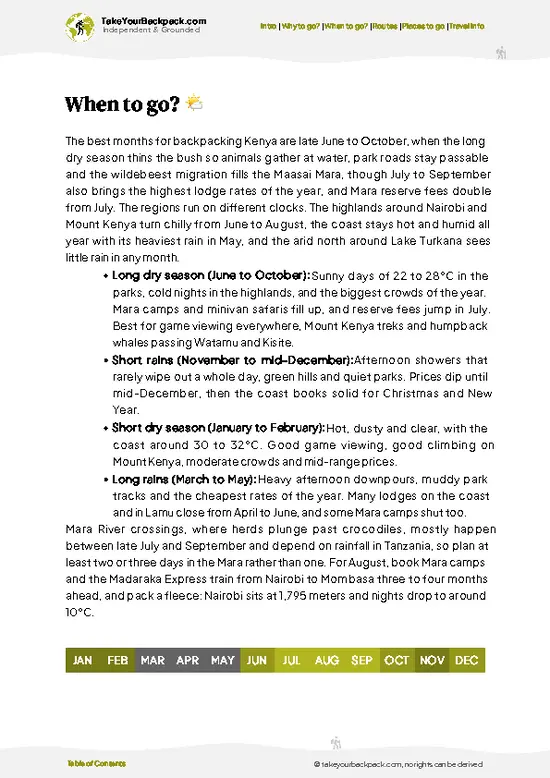
source: climatestotravel.comJANJanuary: excellent for travelingFEBFebruary: excellent for travelingMARMarch: fair for travelingAPRApril: fair for travelingMAYMay: fair for travelingJUNJune: highly recommended for travelingJULJuly: highly recommended for travelingAUGAugust: highly recommended for travelingSEPSeptember: highly recommended for travelingOCTOctober: fair for travelingNOVNovember: fair for travelingDECDecember: excellent for traveling
when-to-go

✈️ The backpacker research shortcutKenya Travel Guide

An offline-friendly backpacking guide with optimized travel routes, ranked highlights, transport advice, and the best areas to stay.
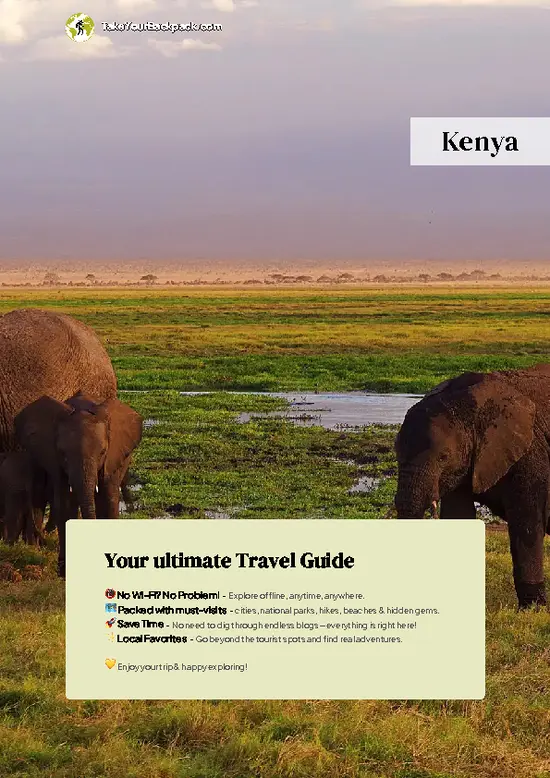
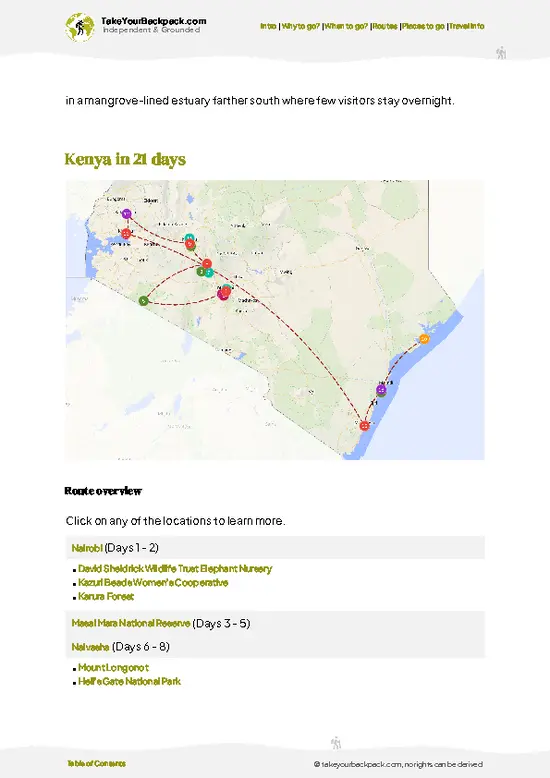
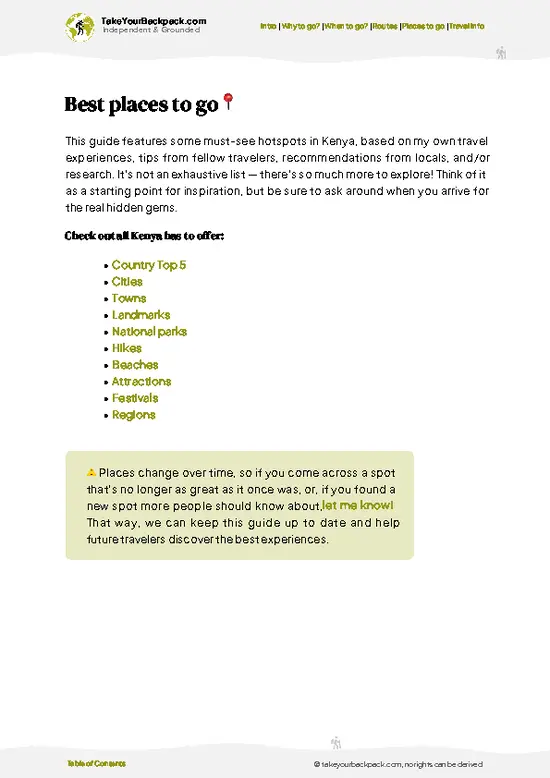
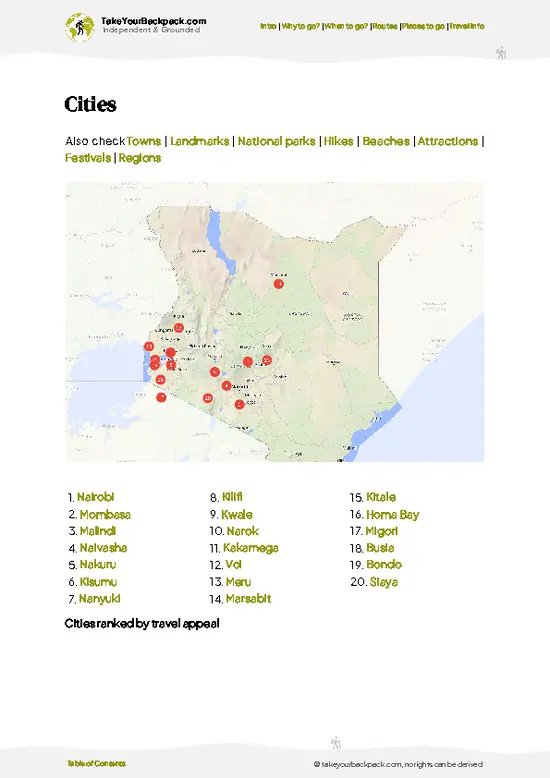
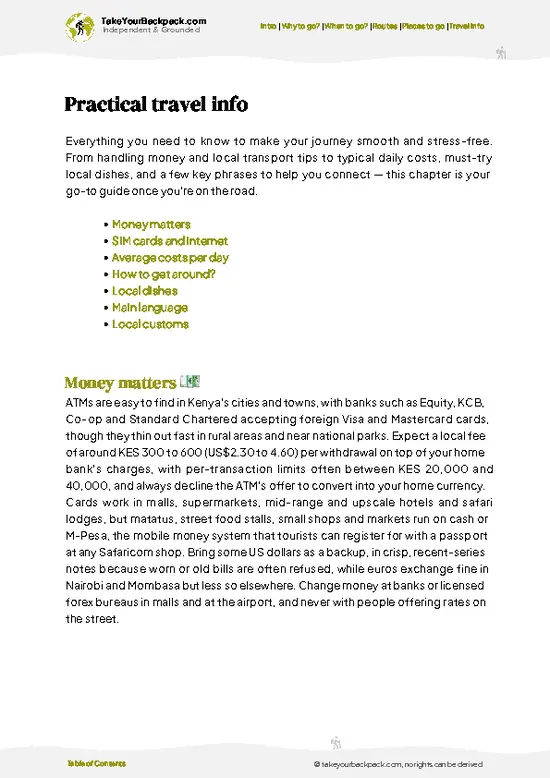
example page 0 from our offline Travel Guide for Kenyaexample page 1 from our offline Travel Guide for Kenyaexample page 2 from our offline Travel Guide for Kenyaexample page 3 from our offline Travel Guide for Kenyaexample page 4 from our offline Travel Guide for Kenyaexample page 5 from our offline Travel Guide for Kenyaexample page 6 from our offline Travel Guide for Kenyaexample page 7 from our offline Travel Guide for Kenya
The digital guide (429 pages) contains:
114 highlights, ranked by travel appeal
Optimized 7, 14 & 21-day travel routes
Cities, national parks, landmarks, beaches
How to get around
Offline-friendly for travel without Wi-Fi
👉 Click to see all 30+ guide features

📅 Plan smarter in minutes, not weeks
Month by month travel advice
Festivals & national holidays
Budget expectations

🗺️ Go to the right places, skip the overrated ones
Honest pros & cons of destinations
Top hikes, parks & viewpoints
Lesser-known places most travelers miss
Clear “worth it vs skip it” guidance

🛏️ Travel smoothly without rookie mistakes
Best areas to stay
Transport systems explained simply
Common scams & safety advice
SIM cards, money & practical tips

🌍 Understand the country, not just visit it
Culture & traditions
52 Essential phrases & customs
Festivals worth planning around
Traveler-friendly historical context
Insights that make places more meaningful

📱 Built for real travel conditions
Fully downloadable PDF
Works completely offline
Optimized for phone use
Useful in remote areas & buses
Everything in one place
Save weeks of stressful planning
Get instant access to your full guide. 30‑day money-back guarantee.


By proceeding you agree to our terms.
Sent to your inbox immediately after payment • 100% Secure Checkout
Best Backpacking Travel Advisor 2025 tourism awardBest Backpacking
Travel Advisor
2025
What others say about Take Your Backpack Guides:
⭐⭐⭐⭐⭐
Fantastic, amazing amount of information!
⭐⭐⭐⭐⭐
My goodness this is amazing, it's what I've been looking for hats off too you!
⭐⭐⭐⭐⭐
I think this is absolutely BRILLIANT
⭐⭐⭐⭐
Very complete and informative. It's still missing places, but I gotta to commend you
⭐⭐⭐⭐⭐
This is truly amazing, thank you, can't wait to explore it with my kids!
⭐⭐⭐⭐⭐
Awesome resource, thank you!
⭐⭐⭐⭐⭐
This is amazing! Can't wait to explore the ones I haven't seen
⭐⭐⭐⭐
I love this! Well done, great idea.
⭐⭐⭐⭐⭐
Thanks for taking the time to make this gem!
⭐⭐⭐⭐⭐
This might be the best website I've ever seen.
⭐⭐⭐⭐⭐
Congratulations, and thank you so much for your work; it's incredibly valuable.
⭐⭐⭐⭐
In all seriousness I think you did a great job pointing out the important spots
⭐⭐⭐⭐⭐
10/10 very good
⭐⭐⭐⭐⭐
As someone who's only just starting to visit regularly this is awesome, thank you.
⭐⭐⭐⭐
Thank you very much! I'm going to visit my dad, it's going to be very useful!
⭐⭐⭐⭐⭐
This is really cool! We'll be travelling for the first time and this definitely come in handy.
⭐⭐⭐⭐⭐
You are now our minister of culture, congratulations 👨‍💼
⭐⭐⭐⭐⭐
Just wanted to tell you that this is a pearl! Going to follow your recommendations.
⭐⭐⭐⭐⭐
This is so cool. I'll definitely be using the resource for my travels soon.
⭐⭐⭐⭐⭐
This is very impressive! Good work.
⭐⭐⭐⭐⭐
This is an amazing and informative site. Very well done!

🛏️ Where to stay?Best areas and accommodation options

In Homa Bay, the best spot for backpackers is the town center area near the lakeshore. It’s where you’ll find the right balance of safety and social buzz without the chaos of busier commercial zones. This neighborhood draws budget travelers and solo adventurers because it’s walkable, with guesthouses and hostels clustered close enough to strike up conversations but spaced enough to avoid feeling cramped. Compared to the outskirts or more residential districts, this area offers easier access to local markets and eateries, making it simple to stretch your shillings while soaking in authentic daily … read more 👉
In Homa Bay, the best spot for backpackers is the town center area near the lakeshore. It’s where you’ll find the right balance of safety and social buzz without the chaos of busier commercial zones. This neighborhood draws budget travelers and solo adventurers because it’s walkable, with guesthouses and hostels clustered close enough to strike up conversations but spaced enough to avoid feeling cramped. Compared to the outskirts or more residential districts, this area offers easier access to local markets and eateries, making it simple to stretch your shillings while soaking in authentic daily life. The vibe here is relaxed but lively—perfect for those who want to connect without sacrificing comfort or security.

🚌 Getting aroundHow to get around Homa Bay

Homa Bay moves at its own rhythm—less a clock-driven metropolis and more a place where intuition and local knowledge dictate your pace. It’s not about catching a train every 15 minutes or hopping on a spotless metro. Instead, you navigate a blend of informal minibus matatus, motorbike taxis, and the occasional ferry crossing, each with its own quirks and trade-offs. Time here is elastic; you can either wait for the perfect ride or jump on the first vehicle that shows up and hope for the best. Comfort is relative, and money spent often buys a bit more predictability or speed, but rarely both.


  • Walking: The ultimate zero-cost option. Homa Bay’s compact town center is walkable, letting you soak in the local vibe and avoid transport delays. Best for short hops under 2 km, but prepare for uneven
read more 👉
Homa Bay moves at its own rhythm—less a clock-driven metropolis and more a place where intuition and local knowledge dictate your pace. It’s not about catching a train every 15 minutes or hopping on a spotless metro. Instead, you navigate a blend of informal minibus matatus, motorbike taxis, and the occasional ferry crossing, each with its own quirks and trade-offs. Time here is elastic; you can either wait for the perfect ride or jump on the first vehicle that shows up and hope for the best. Comfort is relative, and money spent often buys a bit more predictability or speed, but rarely both.


  • Walking: The ultimate zero-cost option. Homa Bay’s compact town center is walkable, letting you soak in the local vibe and avoid transport delays. Best for short hops under 2 km, but prepare for uneven sidewalks and occasional dust.

  • Matatu: The backbone of local transit. These minibuses run roughly from 6 AM to 8 PM, costing about 50-100 KES per ride. They’re fast when full but can be cramped and unpredictable—expect frequent stops and a lively atmosphere.

  • Boda Boda (Motorbike Taxi): Your go-to for speed and flexibility, especially when matatus are scarce. Fares vary but usually start around 100 KES for short trips. It’s less comfortable and riskier but shaves off significant waiting time.

  • Ferry to Rusinga Island: If your route includes the island, ferries run from early morning until late afternoon, costing about 150 KES. They’re slower and weather-dependent but offer a scenic break from road travel.


Mastering Homa Bay’s transit means balancing your tolerance for unpredictability against your budget and schedule. Choose wisely: sometimes a few extra shillings buys peace of mind, other times the gamble of a matatu ride pays off with local color you won’t find anywhere else.

👛 Costs (as of 11 October 2025)Money, prices, and spending tips

Backpacking in Homa Bay, Kenya, presents a clear set of trade-offs between cost, convenience, and comfort. Understanding these numbers lets you play the system smartly, choosing where to save and where to invest for the best experience.
  • Dorm Accommodation (High Season): Expect to pay around $8 to $12 per night. High season drives prices up slightly due to demand, but dorms remain basic—think simple beds, shared bathrooms, and minimal extras.
  • Dorm Accommodation (Off-Season): Prices drop to about $5 to $8 per night. Fewer travelers mean more bargaining power and quieter stays, though some places may reduce services or close.
  • Meals: Street food and local eateries dominate here. Budget roughly $3 to $6 per day if you stick to staples like ugali, fish, and chapati. Eating at tourist-oriented
read more 👉
Backpacking in Homa Bay, Kenya, presents a clear set of trade-offs between cost, convenience, and comfort. Understanding these numbers lets you play the system smartly, choosing where to save and where to invest for the best experience.
  • Dorm Accommodation (High Season): Expect to pay around $8 to $12 per night. High season drives prices up slightly due to demand, but dorms remain basic—think simple beds, shared bathrooms, and minimal extras.
  • Dorm Accommodation (Off-Season): Prices drop to about $5 to $8 per night. Fewer travelers mean more bargaining power and quieter stays, though some places may reduce services or close.
  • Meals: Street food and local eateries dominate here. Budget roughly $3 to $6 per day if you stick to staples like ugali, fish, and chapati. Eating at tourist-oriented spots will push this higher.
  • Local Transport: Matatus and boda-bodas (motorcycle taxis) are the go-to. A typical short ride costs between $0.30 and $1.50. Budget around $2 to $4 daily if you move around moderately.
  • City Transport Pass: Homa Bay doesn’t have a formal city transport pass system. You’ll rely on pay-per-ride options, so factor that into your daily transport budget.
  • Basic Activities/Entry Fees: Local markets, cultural sites, and small parks usually charge minimal or no entry fees. Allocate about $1 to $3 daily if you plan to explore actively.
  • Miscellaneous Expenses: This covers bottled water, snacks, occasional internet access, or small tips. Set aside $1 to $3 daily to avoid surprises.

In total, a savvy backpacker can expect to spend between $12 and $25 per day in Homa Bay, balancing modest comfort with local authenticity. This range lets you decide if you want to stretch your budget for a bit more comfort or keep it lean and dive deeper into the local rhythm.
⚠️ Prices can change and everyone travels differently, so take this as a rough guide. Hope it helps you plan your adventure!

🚌 Day tripsShort trips worth adding

Homa Bay is a fantastic launchpad for day trips that blend adventure with cultural immersion. Here are some standout options that pack a punch without draining your wallet.

Ruma National Park
Just a 1.5-hour drive from Homa Bay, Ruma National Park offers a chance to see the endangered roan antelope and a variety of bird species. The park is less crowded than others, giving you a more intimate wildlife experience. Expect to pay around $30 for entry and transport. The best time to visit is during the dry season from June to October when animals are easier to spot. A common mistake is underestimating the park’s size; plan for a full day to explore.
👉 Explore Ruma National Park

Kisumu City
A mere hour away, Kisumu is a bustling lakeside city that’s rich in culture. Stroll along the waterfront, … read more 👉
Homa Bay is a fantastic launchpad for day trips that blend adventure with cultural immersion. Here are some standout options that pack a punch without draining your wallet.

Ruma National Park
Just a 1.5-hour drive from Homa Bay, Ruma National Park offers a chance to see the endangered roan antelope and a variety of bird species. The park is less crowded than others, giving you a more intimate wildlife experience. Expect to pay around $30 for entry and transport. The best time to visit is during the dry season from June to October when animals are easier to spot. A common mistake is underestimating the park’s size; plan for a full day to explore.
👉 Explore Ruma National Park

Kisumu City
A mere hour away, Kisumu is a bustling lakeside city that’s rich in culture. Stroll along the waterfront, visit the Kisumu Museum, or dive into local cuisine at the bustling markets. Budget about $20 for transport and snacks. The best time to visit is during the warm months from December to March. Many first-timers miss out on the local fish dishes; don’t skip the tilapia!


Mfangano Island
Catch a boat from Homa Bay for a scenic 1.5-hour ride to Mfangano Island. This tranquil spot is perfect for hiking and exploring traditional fishing villages. Expect to spend around $25 for the boat fare and a local guide. The ideal time to go is during the dry season, but be cautious of boat schedules; they can be unpredictable. Many backpackers overlook the cultural richness here, so take the time to chat with locals.


Homa Bay Town
Sometimes, the best adventure is right at your doorstep. Spend a day exploring Homa Bay itself. Visit the local markets, engage with artisans, and enjoy the lakeside views. This trip costs next to nothing if you walk or bike around. Anytime is good, but mornings are best for market visits. A common mistake is rushing through; take your time to soak in the local vibe.
Want to know what more Kenya offers?
The Kenya Travel Guide describes 114 highlights, from cities to national parks, from beaches to hikes

Get the Travel Guide -

🍲 FoodLocal Flavors for Backpackers

In Homa Bay, local cuisine is a vibrant tapestry of flavors. Dive into tilapia, freshly caught from Lake Victoria, often grilled or fried, served with a side of ugali—a staple made from maize flour that’s perfect for scooping up your meal. Don’t miss samosas from street vendors; they’re crispy, savory, and a quick bite on the go.

For drinks, try ajon, a local brew made from fermented sorghum, which pairs well with the lively atmosphere of casual bars. You’ll find backpackers mingling at markets, where the air is thick with the scent of spices and grilled meats.

Eating here is communal; sharing food is common, so don’t hesitate to join in. Just remember, it’s polite to greet vendors and fellow diners—it’s all part of the experience.

🛡️ SafetySafety Tips and Common Scams in Homa Bay

Homa Bay is generally safe, but like any place, awareness is key. Stick to well-lit areas at night, especially if you’re solo. The waterfront can be lively, but it’s best to avoid wandering too far after dark.

Watch for common scams, like overly friendly locals who might ask for money or offer unsolicited help. Politely decline and keep moving. Everyday annoyances include aggressive vendors; a firm “no, thank you” usually does the trick. Carry your belongings close, and trust your instincts. With a little savvy, you can enjoy the vibrant local culture without unnecessary hassle.

Other Kenyan cities near Homa Bay

Explore more nearby:

  • Bondo—Lake Victoria access, university town, Luo traditions| 52 km away
  • Migori—Sugar plantations, Luo culture, border proximity| 60 km away
  • Kisumu—Lake Victoria port, fish markets, Dunga wetlands| 60 km away

💡 Not sure where to go next?
Create a personalized itinerary for Kenya including Homa Bay and the places that fit your trip.

Generate my itinerary

👉 Discover all cities

Or checkout all Kenya has to offer (think cities, towns, villages, national parks, hikes, beaches, festivals)
Country photo of Kenya

We 💚 feedbackKey takeaways before you go

Homa Bay has a laid-back vibe that feels like a warm embrace. The best surprise? The locals’ genuine hospitality; you’ll leave feeling like family. Just a heads-up: the roads can be rough, so brace yourself for a bumpy ride. But trust me, the journey is worth every jolt.

✍️ Help improve this page!
The information on this page is based on in-depth research, insights shared by experienced travelers, and feedback from the local travel community in Kenya. While every effort is made to keep the information accurate and current, conditions can change — so if you spot anything incorrect or outdated, please get in touch.


🙋‍♂️ Give feedback

👋 Meet the founderWho’s Behind Take Your Backpack?

Johan, backpacker and founder of TakeYourBackpackHi, I’m Johan (Netherlands 🇳🇱), the creator of TakeYourBackpack. Over the past decade, I’ve backpacked through 80+ countries across six continents, gaining extensive experience with independent travel, long-term trips, and overland routes.

This site is built on a combination of firsthand travel experience and carefully curated insights from other backpackers. Many guides are based on places I’ve personally visited, while others bring together tips, observations, and practical advice shared by trusted travelers I’ve met along the way.

The goal is to provide realistic, experience-driven guidance — not generic itineraries — so you can explore destinations with better context, clearer expectations, and more confidence.

Get full Kenya guide •
Instant download • 114 highlights • Full Offline guide