


×

Kenya🇰🇪 | citiesKisumuLake Victoria port, fish markets, Dunga wetlands | things to do and best time to go

Explore Kikambala BeachExplore Mombasa

Backpacking in Kisumu
🏆 Top pickcity ranked #3
By Johan Kruseman 🇳🇱 | Updated June 13, 2026

Forget the idea that Kisumu is just a sleepy lakeside stopover—most travelers underestimate how much this city pulses with its own rhythm. Kisumu sits on the northeastern shore of Lake Victoria in western Kenya, a world away from Nairobi’s chaos or Mombasa’s coastal buzz. For backpackers, Kisumu is a paradox: it’s laid-back but lively, affordable but not always convenient. You’ll find real character in the bustling Kibuye Market, the colonial-era Kisumu Railway Station, and the lakeside Dunga Beach, where sunsets can make you forget the dust and traffic. The Kisumu Museum is small but surprisingly insightful if you want a crash course in Luo culture. Nightlife is local and unpretentious—think open-air bars with Afrobeat, not polished clubs. It’s easy to get around by boda-boda or matatu, but don’t expect a backpacker circuit or hostels on every corner; meeting fellow travelers takes effort. Kisumu is safer and friendlier than its reputation suggests, but it’s not immune to petty theft. Compared to Eldoret or Kakamega, Kisumu feels more open, more connected to the lake, and—if you’re willing to trade a little comfort for authenticity—far more rewarding.

Discover everything you want to know in the 📖 Kenya Travel Guide.


Get your Kenya guide
114 ranked highlights, routes & tips, works offline (429 pages)
Loading the map 🌍
CLICK TO FILTER
cities
towns
landmarks
national parks
hikes
beaches
attractions
festivals
regions
SHOW COUNTRY’S BESTSHOW ALL

✨ Why go?
Ranked #3 city in Kenya
What makes it a must-see city

Kisumu is a strategic hub for backpackers navigating Kenya. It’s not just a stopover; it’s a place that offers a blend of affordability and vibrancy. The hostels here are budget-friendly and often buzzing with fellow travelers, making it easy to swap stories and tips. You’ll find a variety of local food options that won’t break the bank, from street vendors to cozy eateries, giving you a taste of authentic Kenyan cuisine.

The walkability of Kisumu is a game-changer. You can explore the city’s lively markets and lakeside views without the hassle of public transport. Plus, the nightlife is surprisingly lively, with bars and live music that cater to a youthful crowd.

As a basecamp for day trips, Kisumu opens doors to nearby adventures, whether you’re heading to national parks or cultural sites. … read more 👉
Kisumu is a strategic hub for backpackers navigating Kenya. It’s not just a stopover; it’s a place that offers a blend of affordability and vibrancy. The hostels here are budget-friendly and often buzzing with fellow travelers, making it easy to swap stories and tips. You’ll find a variety of local food options that won’t break the bank, from street vendors to cozy eateries, giving you a taste of authentic Kenyan cuisine.

The walkability of Kisumu is a game-changer. You can explore the city’s lively markets and lakeside views without the hassle of public transport. Plus, the nightlife is surprisingly lively, with bars and live music that cater to a youthful crowd.

As a basecamp for day trips, Kisumu opens doors to nearby adventures, whether you’re heading to national parks or cultural sites. The ease of onward travel is another perk; connections to other major destinations are straightforward. If you’re looking for a place that balances comfort and value, Kisumu fits the bill, making it a worthy addition to your backpacking route.
Want to include Kisumu in your Kenya route?
Create a personalized Kenya itinerary that includes Kisumu and the places that fit your trip — based on your travel style, budget, and available time. Get your route in seconds.

Generate my trip

💡 HighlightsEssential experiences to have while visiting Kisumu

  • Kisumu Impala Sanctuary — A tiny wildlife patch right inside the city where you can walk among impalas, spot birds and enjoy Lake Victoria views without leaving the urban area. Quiet, shaded trails and close encounters make it a great low-effort nature stop and a real contrast to the bustle downtown.
  • Kisumu Museum (and Snake Park) — The best place to get grounded in Luo history and local natural heritage: ethnographic displays, objects, and handy local context. The adjoining snake/heritage displays are small but interesting, especially if you want local stories rather than a generic museum tour.
  • Hippo Point (Lakeside Sunset Spot) — Classic Kisumu moment: lakeshore sunsets, fishing boats, and often hippos offshore. It’s social, scenic and a cheap way to feel the city’s relationship with
read more 👉
  • Kisumu Impala Sanctuary — A tiny wildlife patch right inside the city where you can walk among impalas, spot birds and enjoy Lake Victoria views without leaving the urban area. Quiet, shaded trails and close encounters make it a great low-effort nature stop and a real contrast to the bustle downtown.
  • Kisumu Museum (and Snake Park) — The best place to get grounded in Luo history and local natural heritage: ethnographic displays, objects, and handy local context. The adjoining snake/heritage displays are small but interesting, especially if you want local stories rather than a generic museum tour.
  • Hippo Point (Lakeside Sunset Spot) — Classic Kisumu moment: lakeshore sunsets, fishing boats, and often hippos offshore. It’s social, scenic and a cheap way to feel the city’s relationship with Lake Victoria—bring insect repellent and stay for the colors.
  • Dunga Beach / Dunga Landing Site — A working fishing village with boat trips, smoked-fish stalls, and strong birding (waterfowl and waders). Take a local canoe ride, watch landing crews, and try fresh tilapia—authentic lakeside life without fancy tourism trappings.
  • Kisumu Port & Fish Market — The harbor is the economic heartbeat of the lakeshore: fish auctions, drying racks, and a steady parade of boats. It’s noisy and gritty in a good way—great for photos and to see livelihoods tied to Victoria up close.
  • Kibuye Market (Central Market) — The city’s busiest market: fresh produce, spices, fish, and stalls selling everything a local needs. Walk it with small-change in your pocket; the sensory overload is the point—buy a snack, ask about ingredients, and listen to Luo banter.
  • Old Kisumu Railway Terminus & Station Area — Remnants of the colonial rail era sit near the waterfront; old station buildings and the sense of Kisumu as the Ugandan Railway terminus add texture to the city’s history. Even if trains don’t roll like they used to, the architecture and stories are visit-worthy.
  • Kisumu Golf Club — A colonial-era course tucked near the lakeshore; the clubhouse and fairways give you a relaxed, leafy place for a drink with views of the water. Not just for golfers—the setting is mellow and good for escaping the city heat for an hour or two.
  • Tom Mboya Monument & Nearby Civic Spaces — A simple but meaningful roadside memorial to one of Kenya’s influential leaders from the Luo community. It anchors walks around the central business district and is a jumping-off point for conversations about Kisumu’s political history.
  • Local Live-Music Venues & Benga Scene — Kisumu is a place to hear Luo music and benga in real settings—small bars, community halls and occasional open-air gigs. Catching live music here is one of the best ways to connect with local culture; ask locals where the night’s good show is happening.
A few nearby day-trip highlights you can reach from Kisumu: Ndere Island National Reserve and its boat trips, Rusinga and Mfangano Islands for island culture and archaeology, and the striking Kit Mikayi rock formation a short drive west.
Spotted a mistake or missing something? Contact us.

🏘️ NeighborhoodsNeighborhood guide to Kisumu

Kisumu is a vibrant hub on the shores of Lake Victoria, offering a unique blend of culture, nature, and local life. Here’s how to navigate its neighborhoods to maximize your experience.

Central Kisumu: This is the beating heart of the city. Expect a lively atmosphere with bustling markets and street vendors. It’s walkable, making it easy to explore local shops and eateries. Costs are moderate, with plenty of budget accommodations. Nightlife here is vibrant, with bars and music venues. Perfect for short stays where you want to soak up the energy.

Milimani: A bit quieter, Milimani offers a more relaxed vibe. It’s home to some upscale hotels and guesthouses, so expect higher prices. The area is walkable but less lively at night. Great for longer stays if you prefer a peaceful retreat while … read more 👉
Kisumu is a vibrant hub on the shores of Lake Victoria, offering a unique blend of culture, nature, and local life. Here’s how to navigate its neighborhoods to maximize your experience.

Central Kisumu: This is the beating heart of the city. Expect a lively atmosphere with bustling markets and street vendors. It’s walkable, making it easy to explore local shops and eateries. Costs are moderate, with plenty of budget accommodations. Nightlife here is vibrant, with bars and music venues. Perfect for short stays where you want to soak up the energy.

Milimani: A bit quieter, Milimani offers a more relaxed vibe. It’s home to some upscale hotels and guesthouses, so expect higher prices. The area is walkable but less lively at night. Great for longer stays if you prefer a peaceful retreat while still being close to the action.

West Kisumu: This area is more residential, giving you a taste of local life. Costs are lower, and you’ll find homestays that provide a more authentic experience. It’s less walkable, but public transport is accessible. Ideal for longer stays where you want to immerse yourself in the community.

Obunga: Known for its vibrant street life, Obunga is a budget-friendly option. The area is lively, with local markets and food stalls. It’s not the most walkable, but you can easily catch a matatu (shared taxi) to other parts of the city. Best for adventurous backpackers looking for a true local experience.

⌛️ 1 dayA smart one-day plan

Kisumu, perched on the shores of Lake Victoria, is a vibrant hub of culture and commerce. It’s a city where the rhythm of life pulses through bustling markets and the scent of fresh fish wafts from the lakeside. Here, you can experience the warmth of the Luo community and the beauty of the lake, all while enjoying a laid-back atmosphere that invites exploration.

Start your day with a visit to the Kisumu Impala Sanctuary. Just a short drive from the city center, this sanctuary offers a peaceful escape where you can see impalas, zebras, and various bird species. The early morning light filtering through the trees creates a serene backdrop, perfect for a leisurely stroll. After soaking in the sights, head to the nearby Dunga Hill Camp for breakfast. This spot not only serves delicious local … read more 👉
Kisumu, perched on the shores of Lake Victoria, is a vibrant hub of culture and commerce. It’s a city where the rhythm of life pulses through bustling markets and the scent of fresh fish wafts from the lakeside. Here, you can experience the warmth of the Luo community and the beauty of the lake, all while enjoying a laid-back atmosphere that invites exploration.

Start your day with a visit to the Kisumu Impala Sanctuary. Just a short drive from the city center, this sanctuary offers a peaceful escape where you can see impalas, zebras, and various bird species. The early morning light filtering through the trees creates a serene backdrop, perfect for a leisurely stroll. After soaking in the sights, head to the nearby Dunga Hill Camp for breakfast. This spot not only serves delicious local dishes but also provides stunning views of the lake.

In the afternoon, make your way to the Kisumu Central Market. This is where the city’s heart beats strongest. Dive into the vibrant chaos of vendors selling everything from fresh produce to handmade crafts. It’s a sensory overload in the best way. Don’t miss the chance to sample some street food—try the fried fish or ugali, a staple that pairs perfectly with the local flavors.

As the sun begins to set, head to the waterfront for a leisurely walk along the promenade. The colors of the sunset reflecting on the lake are breathtaking. For dinner, skip the tourist traps and opt for a local eatery in the Milimani neighborhood. Here, you can enjoy authentic Luo cuisine while mingling with locals.

If you have time, visit the Kisumu Museum, which offers insights into the region’s history and culture. This isn’t on every tourist’s radar, but it’s a treasure trove of knowledge that adds depth to your experience. By the end of the day, you’ll have tasted the essence of Kisumu—its people, its food, and its stunning landscapes.
Turn your Kisumu visit into an Kenya adventure
Build a complete Kenya route with Kisumu, hidden gems, must-see destinations, and realistic travel times included.

Generate my trip

🌤️ When to go?Choosing the right time of year


  • Weather: Kisumu’s climate is tropical, with two rainy seasons—March to May and October to December. The dry months, June to September and January to February, offer clearer skies and easier trekking conditions, making them ideal for backpackers who want to avoid soggy trails and unpredictable downpours.

  • Temperature: Expect daily highs around 28–32°C (82–90°F) year-round, with nights cooling to 18–22°C (64–72°F). The temperature is fairly stable, so your timing won’t hinge on heat extremes but rather on rain and humidity.

  • Daylight Hours: Near the equator, Kisumu enjoys roughly 12 hours of daylight year-round. Sunrise and sunset times shift only slightly, so you can plan your days without worrying about losing daylight early or gaining it late.

  • Crowds: Tourist traffic peaks during the
read more 👉

  • Weather: Kisumu’s climate is tropical, with two rainy seasons—March to May and October to December. The dry months, June to September and January to February, offer clearer skies and easier trekking conditions, making them ideal for backpackers who want to avoid soggy trails and unpredictable downpours.

  • Temperature: Expect daily highs around 28–32°C (82–90°F) year-round, with nights cooling to 18–22°C (64–72°F). The temperature is fairly stable, so your timing won’t hinge on heat extremes but rather on rain and humidity.

  • Daylight Hours: Near the equator, Kisumu enjoys roughly 12 hours of daylight year-round. Sunrise and sunset times shift only slightly, so you can plan your days without worrying about losing daylight early or gaining it late.

  • Crowds: Tourist traffic peaks during the dry season, especially July and August, when international visitors flock to Lake Victoria and nearby parks. Traveling just before or after this window means fewer people and a more authentic experience.

  • Seasonal Activities: Dry months align with bird migrations and fishing seasons on Lake Victoria, offering rich wildlife viewing and cultural encounters. Rainy seasons can limit outdoor activities but bring lush landscapes and fewer tourists.

  • Price Fluctuations: Accommodation and transport costs spike during the dry season’s peak months due to demand. Visiting in shoulder months like June or September can save money without sacrificing too much comfort or access.


Pro-tip: Aim for the shoulder dry months—June or September—to balance good weather, manageable crowds, and better prices, turning your Kisumu trip into a strategic win.


source: climatestotravel.comJANJanuary: highly recommended for travelingFEBFebruary: highly recommended for travelingMARMarch: fair for travelingAPRApril: fair for travelingMAYMay: fair for travelingJUNJune: highly recommended for travelingJULJuly: good for travelingAUGAugust: good for travelingSEPSeptember: highly recommended for travelingOCTOctober: fair for travelingNOVNovember: fair for travelingDECDecember: fair for traveling
when-to-go

✈️ The backpacker research shortcutKenya Travel Guide

An offline-friendly backpacking guide with optimized travel routes, ranked highlights, transport advice, and the best areas to stay.
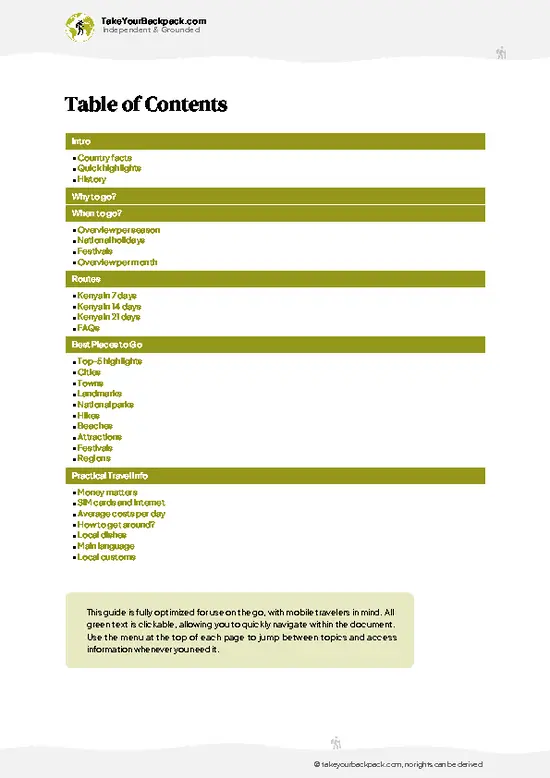
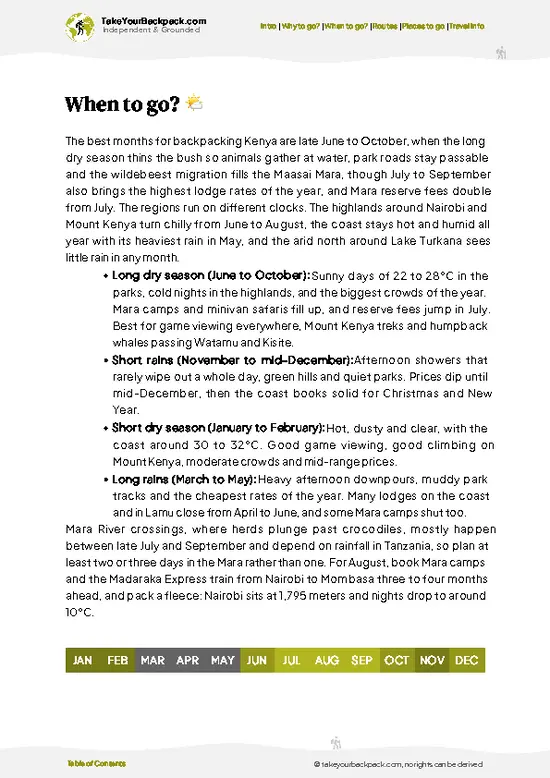
example page 0 from our offline Travel Guide for Kenya
example page 1 from our offline Travel Guide for Kenya
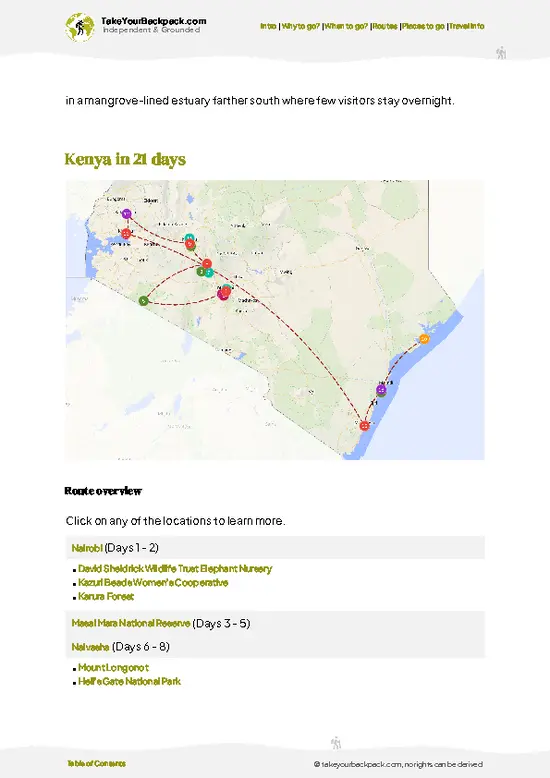
example page 2 from our offline Travel Guide for Kenya
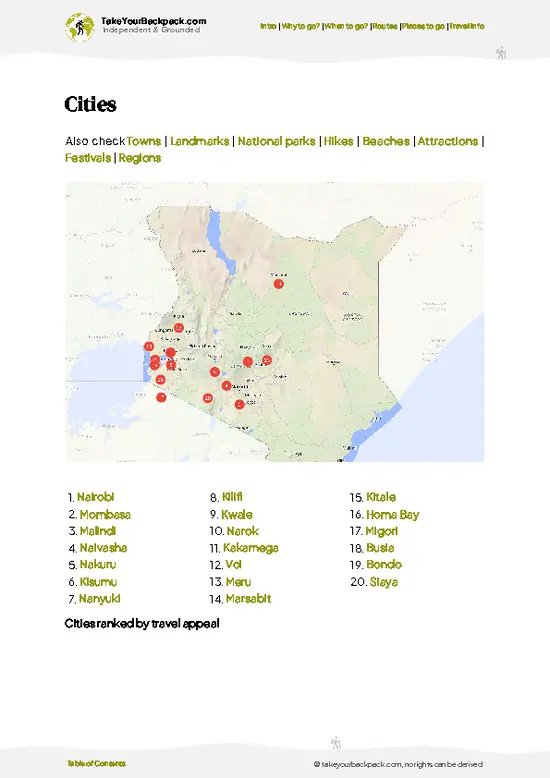
example page 3 from our offline Travel Guide for Kenya
example page 4 from our offline Travel Guide for Kenya
example page 5 from our offline Travel Guide for Kenya
example page 6 from our offline Travel Guide for Kenya
example page 7 from our offline Travel Guide for Kenya
The digital guide (429 pages) contains:
114 highlights, ranked by travel appeal
Optimized 7, 14 & 21-day travel routes
Cities, national parks, landmarks, beaches
How to get around
Offline-friendly for travel without Wi-Fi
👉 Click to see all 30+ guide features

📅 Plan smarter in minutes, not weeks
Month by month travel advice
Festivals & national holidays
Budget expectations

🗺️ Go to the right places, skip the overrated ones
Honest pros & cons of destinations
Top hikes, parks & viewpoints
Lesser-known places most travelers miss
Clear “worth it vs skip it” guidance

🛏️ Travel smoothly without rookie mistakes
Best areas to stay
Transport systems explained simply
Common scams & safety advice
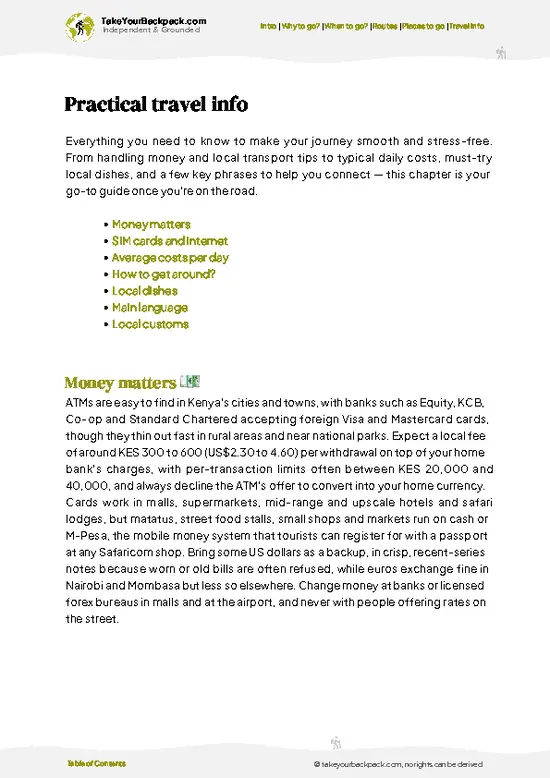
SIM cards, money & practical tips

🌍 Understand the country, not just visit it
Culture & traditions
52 Essential phrases & customs
Festivals worth planning around
Traveler-friendly historical context
Insights that make places more meaningful

📱 Built for real travel conditions
Fully downloadable PDF
Works completely offline
Optimized for phone use
Useful in remote areas & buses
Everything in one place
Save weeks of stressful planning
Get instant access to your full guide. 30‑day money-back guarantee.


By proceeding you agree to our terms.
Sent to your inbox immediately after payment • 100% Secure Checkout
Best Backpacking Travel Advisor 2025 tourism awardBest Backpacking
Travel Advisor
2025
What others say about Take Your Backpack Guides:
⭐⭐⭐⭐⭐
Fantastic, amazing amount of information!
⭐⭐⭐⭐⭐
My goodness this is amazing, it's what I've been looking for hats off too you!
⭐⭐⭐⭐⭐
I think this is absolutely BRILLIANT
⭐⭐⭐⭐
Very complete and informative. It's still missing places, but I gotta to commend you
⭐⭐⭐⭐⭐
This is truly amazing, thank you, can't wait to explore it with my kids!
⭐⭐⭐⭐⭐
Awesome resource, thank you!
⭐⭐⭐⭐⭐
This is amazing! Can't wait to explore the ones I haven't seen
⭐⭐⭐⭐
I love this! Well done, great idea.
⭐⭐⭐⭐⭐
Thanks for taking the time to make this gem!
⭐⭐⭐⭐⭐
This might be the best website I've ever seen.
⭐⭐⭐⭐⭐
Congratulations, and thank you so much for your work; it's incredibly valuable.
⭐⭐⭐⭐
In all seriousness I think you did a great job pointing out the important spots
⭐⭐⭐⭐⭐
10/10 very good
⭐⭐⭐⭐⭐
As someone who's only just starting to visit regularly this is awesome, thank you.
⭐⭐⭐⭐
Thank you very much! I'm going to visit my dad, it's going to be very useful!
⭐⭐⭐⭐⭐
This is really cool! We'll be travelling for the first time and this definitely come in handy.
⭐⭐⭐⭐⭐
You are now our minister of culture, congratulations 👨‍💼
⭐⭐⭐⭐⭐
Just wanted to tell you that this is a pearl! Going to follow your recommendations.
⭐⭐⭐⭐⭐
This is so cool. I'll definitely be using the resource for my travels soon.
⭐⭐⭐⭐⭐
This is very impressive! Good work.
⭐⭐⭐⭐⭐
This is an amazing and informative site. Very well done!

🛏️ Where to stay?Best areas to stay in Kenya

Kisumu’s backpacker sweet spot is the area around the city center, especially near Oginga Odinga Street and the lakeside stretch. This zone nails the balance between safety, social buzz, and budget options. It’s where you’ll find a cluster of hostels and guesthouses that cater to solo travelers and those watching their wallets without sacrificing comfort. The vibe here is low-key but lively—think local markets, street food stalls, and easy access to Lake Victoria’s waterfront, which doubles as a natural hangout spot.

Compared to the quieter, more residential neighborhoods on the outskirts, the … read more 👉
Kisumu’s backpacker sweet spot is the area around the city center, especially near Oginga Odinga Street and the lakeside stretch. This zone nails the balance between safety, social buzz, and budget options. It’s where you’ll find a cluster of hostels and guesthouses that cater to solo travelers and those watching their wallets without sacrificing comfort. The vibe here is low-key but lively—think local markets, street food stalls, and easy access to Lake Victoria’s waterfront, which doubles as a natural hangout spot.

Compared to the quieter, more residential neighborhoods on the outskirts, the city center keeps you plugged into Kisumu’s pulse. You’re not just bunking down; you’re stepping into the city’s rhythm. It’s also safer than some of the more sprawling, less-policed areas, which can feel isolating or sketchy after dark. The lakeside area adds a bonus layer of chill, with breezes and sunset views that make downtime feel earned.

If you want to trade a bit of comfort for social energy and convenience, this is your zone. It’s the kind of place where you can meet other travelers, swap stories, and plan your next move without wasting time or money on long commutes or pricey taxis. In Kisumu, location isn’t just about geography—it’s your ticket to the city’s character.

🚌 Getting aroundTransportation options and practical tips

Kisumu moves with a pulse that’s part laid-back lakeside town, part bustling regional hub. It’s not a place where you’ll find trains or buses running like clockwork, but neither is it a free-for-all. Instead, the city’s rhythm is a dance between informal hustle and pockets of order—matatus (minibuses) dart unpredictably through traffic, yet they follow familiar routes and peak hours. Walking feels like a conversation with the city itself, while waiting for transport tests your patience and your ability to read the crowd. Understanding this flow means you’re not just a passenger—you’re a player in Kisumu’s transit game, where time, money, and comfort constantly trade places.


  • Walking: The most reliable and cost-free way to get around central Kisumu. Streets are compact and pedestrian-friendly,
read more 👉
Kisumu moves with a pulse that’s part laid-back lakeside town, part bustling regional hub. It’s not a place where you’ll find trains or buses running like clockwork, but neither is it a free-for-all. Instead, the city’s rhythm is a dance between informal hustle and pockets of order—matatus (minibuses) dart unpredictably through traffic, yet they follow familiar routes and peak hours. Walking feels like a conversation with the city itself, while waiting for transport tests your patience and your ability to read the crowd. Understanding this flow means you’re not just a passenger—you’re a player in Kisumu’s transit game, where time, money, and comfort constantly trade places.


  • Walking: The most reliable and cost-free way to get around central Kisumu. Streets are compact and pedestrian-friendly, but watch for uneven sidewalks and occasional traffic chaos. Ideal for short hops under 2 km, especially around the lakeshore and markets.


  • Matatus: The backbone of budget transit here. Fares range from 30 to 100 KES depending on distance, with no fixed schedule—vehicles leave when full, so expect waits during off-peak hours. They’re fast in theory but can get stuck in traffic jams, and comfort is minimal: packed, noisy, and often hot. Best for medium distances within the city and to nearby suburbs.


  • Boda Bodas (Motorcycle Taxis): Quick and nimble, these are your go-to for short to medium trips when time is tight. Prices are negotiable but usually start around 50 KES. They weave through traffic effortlessly but offer zero protection from weather or road dust. Not the most comfortable, but unbeatable for speed and door-to-door access.


  • City Buses: Larger buses operate on fixed routes and are slightly more comfortable than matatus, with fares around 50-70 KES. They run roughly from 6 AM to 7 PM but can be slow due to frequent stops and traffic. A solid choice if you want a bit more space without breaking the bank.


  • Taxi Services (App-based and Traditional): The priciest option, with fares starting around 300 KES for short trips. Offers the highest comfort and reliability, with door-to-door service and air conditioning in some cases. Best reserved for early mornings, late nights, or when you’re carrying heavy gear and can afford the splurge.


Mastering Kisumu’s transit means balancing your priorities: save cash and embrace the unpredictability of matatus and bodas, or spend more for comfort and certainty. Either way, you’re engaging with the city’s pulse, not just passing through it.

👛 Costs (as of 13 October 2025)Travel costs and budget guide for Kisumu

Backpacking in Kisumu, Kenya, offers a clear trade-off map between time, money, and comfort, with costs that reflect its status as a growing city on Lake Victoria’s edge. Here’s the breakdown of what you’re likely to spend daily as an independent traveler.
  • Dorm Accommodation (High Season): Expect to pay around $10 to $15 per night. High season pushes prices up slightly due to demand, but dorms remain basic with shared facilities.
  • Dorm Accommodation (Off-Season): Prices drop to about $7 to $10 per night. Off-season means fewer tourists, so you can negotiate better deals or find quieter spots.
  • Meals: Street food and local eateries cost between $3 and $6 per day if you stick to staples like ugali, fried fish, or chapati. Western-style meals or dining in touristy spots can push this higher,
read more 👉
Backpacking in Kisumu, Kenya, offers a clear trade-off map between time, money, and comfort, with costs that reflect its status as a growing city on Lake Victoria’s edge. Here’s the breakdown of what you’re likely to spend daily as an independent traveler.
  • Dorm Accommodation (High Season): Expect to pay around $10 to $15 per night. High season pushes prices up slightly due to demand, but dorms remain basic with shared facilities.
  • Dorm Accommodation (Off-Season): Prices drop to about $7 to $10 per night. Off-season means fewer tourists, so you can negotiate better deals or find quieter spots.
  • Meals: Street food and local eateries cost between $3 and $6 per day if you stick to staples like ugali, fried fish, or chapati. Western-style meals or dining in touristy spots can push this higher, but local joints offer solid value.
  • Local Transport: Matatus (shared minibuses) and boda bodas (motorcycle taxis) are the main modes. Budget $1 to $3 daily depending on how much you move around. They’re cheap but can be time-consuming and less comfortable.
  • City Transport Pass: Kisumu doesn’t have a formal city transport pass system. Instead, daily transport costs rely on pay-as-you-go matatus or boda bodas, so factor that into your daily budget.
  • Basic Activities/Entry Fees: Visiting places like Kisumu Impala Sanctuary or local markets usually costs $2 to $5. More specialized tours or boat trips on Lake Victoria can push this up but are optional.
  • Miscellaneous Expenses: This covers water, snacks, occasional tips, or small purchases. Around $1 to $3 daily is a safe estimate.

Summing it up, a backpacker in Kisumu can expect to spend roughly $15 to $30 per day. The lower end means embracing local food, dorm stays off-season, and minimal transport, while the higher end buys a bit more comfort and activity options. Knowing these trade-offs lets you control your experience without surprises.
⚠️ Prices can change and everyone travels differently, so take this as a rough guide. Hope it helps you plan your adventure!

🚌 Day tripsExploring the surroundings

Kisumu, Kenya, is a fantastic launchpad for day trips that blend adventure, culture, and nature. With its strategic location by Lake Victoria, you can dive into experiences that are rich in character without breaking the bank.

Dunga Hill Camp
Just a 15-minute matatu ride from Kisumu, Dunga Hill Camp offers a laid-back vibe with stunning views of Lake Victoria. Spend your day birdwatching or fishing, and don’t miss the local food stalls serving fresh tilapia. The camp is a favorite among backpackers for its affordable camping options and chill atmosphere. A budget of around $10 should cover transport and a meal. The best time to visit is during the dry season, from June to September, when the weather is perfect for outdoor activities. First-timers often overlook the early morning hours when … read more 👉
Kisumu, Kenya, is a fantastic launchpad for day trips that blend adventure, culture, and nature. With its strategic location by Lake Victoria, you can dive into experiences that are rich in character without breaking the bank.

Dunga Hill Camp
Just a 15-minute matatu ride from Kisumu, Dunga Hill Camp offers a laid-back vibe with stunning views of Lake Victoria. Spend your day birdwatching or fishing, and don’t miss the local food stalls serving fresh tilapia. The camp is a favorite among backpackers for its affordable camping options and chill atmosphere. A budget of around $10 should cover transport and a meal. The best time to visit is during the dry season, from June to September, when the weather is perfect for outdoor activities. First-timers often overlook the early morning hours when the birdlife is most active.


Kakamega Forest
About an hour’s drive from Kisumu, Kakamega Forest is a biodiversity hotspot. This tropical rainforest is home to unique flora and fauna, including the rare DeBrazza’s monkey. Guided walks are available for around $5, and the experience is worth every penny. Expect to spend about $20 total for transport and a guide. The forest is best visited in the morning when the wildlife is most active. A common mistake is underestimating the forest’s size; wear sturdy shoes and be prepared for a good hike.
👉 Explore Kakamega Forest

Rusinga Island
A bit further afield, Rusinga Island is a two-hour journey by bus and boat, but the serene landscapes and local culture make it worthwhile. Explore the island’s beaches, visit the local fishing community, and enjoy a meal at a lakeside restaurant. Total costs can be around $25, including transport and lunch. The dry season is ideal for visiting, as the roads are more accessible. Many first-timers miss the chance to interact with locals, which can enrich your experience immensely.


Sindo Village
Just over an hour from Kisumu, Sindo Village offers a glimpse into traditional Luo culture. Engage with local artisans, learn about their crafts, and enjoy a meal made from locally sourced ingredients. Expect to spend about $15 for transport and food. The best time to visit is during cultural festivals, typically in August. A common pitfall is not planning ahead for language barriers; learning a few basic Luo phrases can go a long way.


Hippo Point
Only a 30-minute drive from Kisumu, Hippo Point is perfect for a quick escape. Known for its breathtaking sunsets and hippo sightings, it’s a great spot for picnics. Bring your own food to keep costs low—around $10 total. The best time to visit is late afternoon for the sunset. First-timers often forget to bring binoculars for a better view of the wildlife.
Want to know what more Kenya offers?
The Kenya Travel Guide describes 114 highlights, from cities to national parks, from beaches to hikes

Get the Travel Guide -

🍲 FoodEating & Drinking in Kisumu

In Kisumu, food is a vibrant tapestry of flavors that tells the story of the region. Start with ugali, a staple made from maize flour, often served alongside fish from Lake Victoria. The local tilapia, grilled or fried, is a must-try, bursting with freshness and seasoned to perfection. Pair it with a side of sukuma wiki, sautéed greens that add a delightful crunch.

Street food is where the magic happens. Vendors line the bustling markets, offering samosas and nyama choma (grilled meat) that sizzle on open flames. The aroma is intoxicating, drawing you in for a quick bite. Don’t miss the chance to sip on chai, a spiced tea that’s a daily ritual for many locals.

As for drinks, local brews like Tusker beer are popular, often enjoyed in casual bars where laughter and stories flow freely. When … read more 👉
In Kisumu, food is a vibrant tapestry of flavors that tells the story of the region. Start with ugali, a staple made from maize flour, often served alongside fish from Lake Victoria. The local tilapia, grilled or fried, is a must-try, bursting with freshness and seasoned to perfection. Pair it with a side of sukuma wiki, sautéed greens that add a delightful crunch.

Street food is where the magic happens. Vendors line the bustling markets, offering samosas and nyama choma (grilled meat) that sizzle on open flames. The aroma is intoxicating, drawing you in for a quick bite. Don’t miss the chance to sip on chai, a spiced tea that’s a daily ritual for many locals.

As for drinks, local brews like Tusker beer are popular, often enjoyed in casual bars where laughter and stories flow freely. When it comes to customs, sharing food is a sign of friendship. If you’re offered a bite, accept it graciously; it’s a way to connect.

Kisumu’s culinary scene is not just about eating; it’s about experiencing the warmth of its people and the richness of its culture.

🛡️ SafetySafety Tips and Common Scams in Kisumu

Kisumu is generally safe, but like any city, it has its nuances. Stay aware in crowded areas like the central market, where pickpockets might lurk. If you’re solo, especially at night, stick to well-lit streets and avoid wandering too far from your accommodation.

Common scams include overly friendly locals who may offer unsolicited help, only to expect payment afterward. A polite but firm “no thanks” usually suffices.

Annoyances can pop up, like aggressive taxi drivers. Always agree on a fare before getting in, or use a ride-hailing app to sidestep the hassle.

Carry your belongings close and keep your phone handy for navigation. Kisumu has a relaxed vibe, but a little awareness goes a long way. Embrace the local culture, but trust your instincts. Enjoy the journey; it’s all part of the experience.

Other Kenyan cities near Kisumu

Explore more nearby:

  • Kakamega—rainforest reserve, Luhya traditions, gold mining history| 42 km away
  • Bondo—Lake Victoria access, university town, Luo traditions| 55 km away
  • Siaya—rural landscapes, Luo heritage, Yala Swamp| 56 km away

💡 Not sure where to go next?
Create a personalized itinerary for Kenya including Kisumu and the places that fit your trip.

Generate my itinerary

👉 Discover all cities

Or checkout all Kenya has to offer (think cities, towns, villages, national parks, hikes, beaches, festivals)
Country photo of Kenya

We 💚 feedbackWhat to keep in mind

Kisumu has a laid-back vibe that feels like a warm hug after the hustle of Nairobi. The best surprise? The sunsets over Lake Victoria—they’re a painter’s dream, with colors you won’t forget. But a heads-up: the local transport can be a bit chaotic. Embrace the madness, and you’ll find it adds to the charm. Dive into the street food; it’s where the real flavors are. Just keep your wits about you, and you’ll leave with stories that stick.

✍️ Help improve this page!
The information on this page is based on in-depth research, insights shared by experienced travelers, and feedback from the local travel community in Kenya. While every effort is made to keep the information accurate and current, conditions can change — so if you spot anything incorrect or outdated, please get in touch.


🙋‍♂️ Give feedback

👋 Meet the founderWho’s Behind Take Your Backpack?

Johan, backpacker and founder of TakeYourBackpackHi, I’m Johan (Netherlands 🇳🇱), the creator of TakeYourBackpack. Over the past decade, I’ve backpacked through 80+ countries across six continents, gaining extensive experience with independent travel, long-term trips, and overland routes.

This site is built on a combination of firsthand travel experience and carefully curated insights from other backpackers. Many guides are based on places I’ve personally visited, while others bring together tips, observations, and practical advice shared by trusted travelers I’ve met along the way.

The goal is to provide realistic, experience-driven guidance — not generic itineraries — so you can explore destinations with better context, clearer expectations, and more confidence.

Get full Kenya guide •
Instant download • 114 highlights • Full Offline guide