×

Kenya🇰🇪 | townsNamangaKenya-Tanzania border, Maasai markets, Ol Doinyo Orok | things to do and best time to go

Explore MaralalExplore Karatina

Backpacking in Namanga
🏆 Top picktown ranked #4
By Johan Kruseman 🇳🇱 | Updated June 9, 2026

If you crave cosmopolitan buzz, rooftop bars, or a city that never sleeps, Namanga will frustrate you. But if you’re the kind of backpacker who finds beauty in borderlands—where red dust swirls and Maasai herders stride past battered matatus—Namanga rewards patience. Straddling the Kenya-Tanzania border, about three hours south of Nairobi, this town is less a destination than a crossroads. The air smells of charcoal and rain on dry earth. Namanga’s main draw is its function: a practical, low-key launchpad for Amboseli National Park or a gritty, real-world pause between Nairobi and Arusha. The town itself is compact, walkable, and unpretentious, with a few simple guesthouses and chapati stalls. Don’t expect a buzzing hostel scene; evenings are quiet, but you’ll find travelers swapping stories over Tusker beers. Costs are lower than in tourist hotspots, and while petty theft happens, the vibe is more sleepy than sketchy. Compared to the safari towns, Namanga feels raw and transitional—less polished, more honest, and, for the right traveler, a welcome breather from the tourist circuit.

Discover everything you want to know in the 📖 Kenya Travel Guide.


Get your Kenya guide
114 ranked highlights, routes & tips, works offline (429 pages)
Loading the map 🌍
CLICK TO FILTER
cities
towns
landmarks
national parks
hikes
beaches
attractions
festivals
regions
SHOW COUNTRY’S BESTSHOW ALL

✨ Why go?
Ranked #4 town in Kenya
The unique appeal for travelers

Backpackers flock to Namanga for its strategic position as a gateway to hikes in the nearby Mount Kilimanjaro region and the Tsavo National Park. The town’s walkable streets invite exploration, with small-scale hostels and guesthouses offering a cozy, communal vibe. You’ll find local eateries serving up authentic Kenyan dishes that fill the air with the scent of spices and grilled meats. Travelers often linger a few days, soaking in the friendly atmosphere and connecting with fellow adventurers. It’s ideal for slow travelers and solo explorers seeking a balance of cultural immersion and nature. While nightlife isn’t the draw here, the camaraderie and shared stories make every moment worthwhile.
Want to include Namanga in your Kenya route?
Create a personalized Kenya itinerary that includes Namanga and the places that fit your trip — based on your travel style, budget, and available time. Get your route in seconds.

Generate my trip

💡 HighlightsMust-see experiences and standout moments

  1. Namanga International Border Marker & Immigration Complex — The literal place where Kenya meets Tanzania; walking the line, watching cross-border bustle, and handling the straightforward visa/immigration routine is as close to a “must-see” landmark as Namanga has. On a clear morning you can often spot Kilimanjaro behind the immigration offices, which makes for a neat photo-op.
  2. Main Market (Namanga Open-Air Market) — A compact, chaotic market where fresh produce, meats and everyday goods change hands. It’s the best place to see daily life, haggle for cheap snacks, and practice Swahili or Maasai greetings with vendors.
  3. Maasai Craft Row / Beadwork Stalls — A strip of artisans selling beadwork, leather goods and hand-carved trinkets. These stalls are genuinely local (often Maasai families)
read more 👉
  1. Namanga International Border Marker & Immigration Complex — The literal place where Kenya meets Tanzania; walking the line, watching cross-border bustle, and handling the straightforward visa/immigration routine is as close to a “must-see” landmark as Namanga has. On a clear morning you can often spot Kilimanjaro behind the immigration offices, which makes for a neat photo-op.
  2. Main Market (Namanga Open-Air Market) — A compact, chaotic market where fresh produce, meats and everyday goods change hands. It’s the best place to see daily life, haggle for cheap snacks, and practice Swahili or Maasai greetings with vendors.
  3. Maasai Craft Row / Beadwork Stalls — A strip of artisans selling beadwork, leather goods and hand-carved trinkets. These stalls are genuinely local (often Maasai families) and buying here directly supports artisans — also great for affordable souvenirs.
  4. Weekly Livestock Market — On market days the cattle/goat/sheep trading area turns into a lively cultural show: herders, traders and brokers negotiating prices, plus a sensory immersion in pastoral life that you won’t get from a guidebook.
  5. Roadside Kilimanjaro Viewpoints — Several spots inside town and just off the main road give surprisingly good views of Mount Kilimanjaro on clear days. Early morning is best — locals will point you to the best vantage and a tea stall nearby.
  6. Maasai Bomas & Local Homestays (within town limits) — Small bomas and host families inside Namanga welcome short visits or stays; they offer dancing, beadwork demonstrations and a genuine look at contemporary Maasai life without a long drive.
  7. Namanga Bus Stage & Transport Hub — Not glamorous, but this is where the town’s rhythm happens: matatus, minibuses, long-distance coaches and porters. It’s useful for practical travel and a good spot to watch border-town logistics up close.
  8. Cross-border Trade Strip (shops, cafes and currency exchange stalls) — The businesses that cluster around the border show how two economies meet: Tanzanian goods, Kenyan fuel stops, money changers and tiny cafés where drivers and traders swap news and deals.
  9. Roadside Eateries & Nyama Choma Joints — Simple grills and small restaurants serving roasted meat, ugali and stew — food that’s cheap, filling and authentic. Great for late-evening social vibes with drivers and traders.
  10. Community Halls, Churches and Schoolfronts — These aren’t monuments, but visiting a Sunday service, a community event or asking to see a school gives an honest read on local life, priorities and hospitality; polite requests to join are usually welcomed.
A few real day-trip highlights just outside town: Amboseli National Park for classic elephant/Kilimanjaro views, the Kilimanjaro foothills/Tanzania side viewpoints, and the regional hub of Arusha (for markets and better tour links) are all doable from Namanga.
Spotted a mistake or missing something? Contact us.
🏘️ NeighborhoodsWhere things are and how it's laid out

Namanga is a vibrant border town that serves as a gateway to both Kenya and Tanzania, offering a unique blend of cultures and experiences for backpackers.

Central Namanga: This area buzzes with local markets and street vendors. The atmosphere is lively, perfect for soaking in the local culture. Costs are low, making it ideal for budget travelers. Walkability is high; you can easily explore on foot. While nightlife is limited, the evenings are filled with the sounds of laughter and chatter from nearby eateries. Short stays work well here, but longer ones might feel repetitive.

Namanga Outskirts: A quieter vibe prevails here, with fewer tourists and more local life. It’s a great spot for those seeking peace after a day of exploration. Transport access is decent, with matatus connecting you … read more 👉
Namanga is a vibrant border town that serves as a gateway to both Kenya and Tanzania, offering a unique blend of cultures and experiences for backpackers.

Central Namanga: This area buzzes with local markets and street vendors. The atmosphere is lively, perfect for soaking in the local culture. Costs are low, making it ideal for budget travelers. Walkability is high; you can easily explore on foot. While nightlife is limited, the evenings are filled with the sounds of laughter and chatter from nearby eateries. Short stays work well here, but longer ones might feel repetitive.

Namanga Outskirts: A quieter vibe prevails here, with fewer tourists and more local life. It’s a great spot for those seeking peace after a day of exploration. Transport access is decent, with matatus connecting you to the center. Costs remain low, and the area is suitable for longer stays, especially if you want to immerse yourself in the local rhythm.

Market District: This is where the action is. The scent of spices fills the air, and the energy is palpable. It’s walkable and offers plenty of affordable food options. While nightlife is minimal, the daytime hustle makes up for it. Perfect for short visits, but you might find yourself wanting to linger.

⌛️ 1 dayHow to make the most of one day

Namanga, Kenya, is a vibrant border town that serves as a gateway between Kenya and Tanzania. It’s a place where cultures collide, and the air is thick with the scent of spices and the sound of bustling markets. Spend a day here, and you’ll find a rhythm that’s both lively and laid-back.

Start your morning at the local market, where vendors display colorful fruits and vegetables. The early light dances off the produce, and the chatter of locals fills the air. Grab a fresh mango or a chapati from a street vendor; the flavors are a burst of sunshine. Afterward, take a stroll through the nearby Maasai neighborhood. Here, you can witness traditional beadwork and perhaps even chat with artisans who are eager to share their craft.

In the afternoon, visit the Namanga Cultural Center. This spot … read more 👉
Namanga, Kenya, is a vibrant border town that serves as a gateway between Kenya and Tanzania. It’s a place where cultures collide, and the air is thick with the scent of spices and the sound of bustling markets. Spend a day here, and you’ll find a rhythm that’s both lively and laid-back.

Start your morning at the local market, where vendors display colorful fruits and vegetables. The early light dances off the produce, and the chatter of locals fills the air. Grab a fresh mango or a chapati from a street vendor; the flavors are a burst of sunshine. Afterward, take a stroll through the nearby Maasai neighborhood. Here, you can witness traditional beadwork and perhaps even chat with artisans who are eager to share their craft.

In the afternoon, visit the Namanga Cultural Center. This spot is often overlooked by tourists but offers a deep dive into the local Maasai culture. Engage with the exhibits and soak in the stories that shape this community.

As evening approaches, head to a local eatery for dinner. The grilled nyama choma (meat) is a must-try, paired with ugali. The atmosphere is warm, filled with laughter and the clinking of glasses.

End your day by watching the sunset over the plains, a canvas of oranges and purples that feels like a well-earned reward. Namanga may be small, but its heart beats strong, and every moment here is a chance to connect with something real.
Turn your Namanga visit into an Kenya adventure
Build a complete Kenya route with Namanga, hidden gems, must-see destinations, and realistic travel times included.

Generate my trip

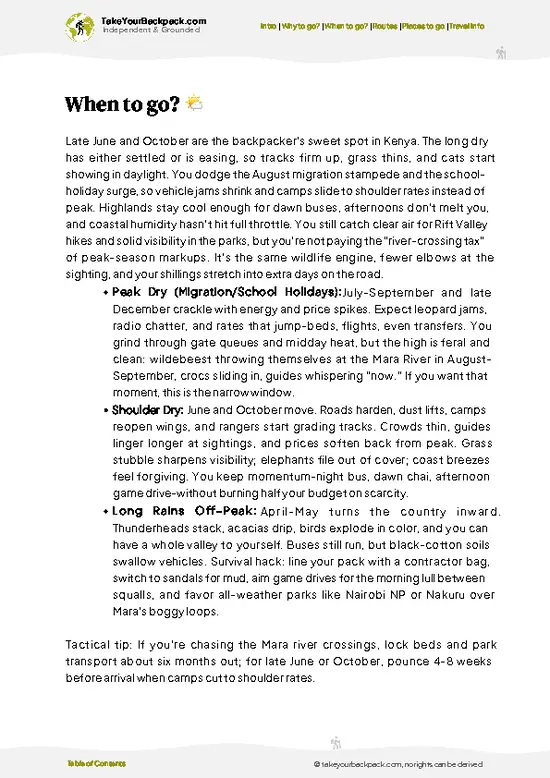
🌤️ When to go?When to go for the best experience


  • Weather: Namanga sits on the edge of the Kenyan-Tanzanian border, where the dry season from June to October offers clear skies and minimal rain—perfect for dusty trails and uninterrupted views of the savanna. The wet seasons, especially March to May, bring heavy rains that can turn roads to mud and slow your pace.

  • Temperature: Expect daytime highs around 25-30°C (77-86°F) during the dry months, with cooler nights dropping to 10-15°C (50-59°F). The wet season is warmer but stickier, which can sap your energy on long hikes.

  • Daylight Hours: Near the equator, daylight stays steady year-round, roughly 12 hours a day. This consistency means you can plan your treks without worrying about early sunsets cutting your adventures short.

  • Crowds: Tourist flow peaks in July and August when East
read more 👉

  • Weather: Namanga sits on the edge of the Kenyan-Tanzanian border, where the dry season from June to October offers clear skies and minimal rain—perfect for dusty trails and uninterrupted views of the savanna. The wet seasons, especially March to May, bring heavy rains that can turn roads to mud and slow your pace.

  • Temperature: Expect daytime highs around 25-30°C (77-86°F) during the dry months, with cooler nights dropping to 10-15°C (50-59°F). The wet season is warmer but stickier, which can sap your energy on long hikes.

  • Daylight Hours: Near the equator, daylight stays steady year-round, roughly 12 hours a day. This consistency means you can plan your treks without worrying about early sunsets cutting your adventures short.

  • Crowds: Tourist flow peaks in July and August when East African safaris are in full swing. Namanga sees fewer visitors outside this window, so visiting in shoulder months like June or September means quieter trails and more authentic local interactions.

  • Seasonal Activities: Dry months are prime for wildlife spotting and crossing into Tanzania’s parks. The rains bring lush greenery and bird migrations but can limit access to some areas due to flooding.

  • Price Fluctuations: Accommodation and transport costs spike during peak safari season (July-August). Booking in the shoulder seasons can save you a solid chunk of cash without sacrificing the experience.


Pro-tip: Aim for June or September to catch Namanga’s golden light, avoid crowds, and enjoy the best balance of weather and wallet-friendly prices.


source: climatestotravel.comJANJanuary: good for travelingFEBFebruary: good for travelingMARMarch: fair for travelingAPRApril: fair for travelingMAYMay: fair for travelingJUNJune: highly recommended for travelingJULJuly: excellent for travelingAUGAugust: excellent for travelingSEPSeptember: highly recommended for travelingOCTOctober: highly recommended for travelingNOVNovember: good for travelingDECDecember: good for traveling
when-to-go

✈️ The backpacker research shortcutKenya Travel Guide

An offline-friendly backpacking guide with optimized travel routes, ranked highlights, transport advice, and the best areas to stay.
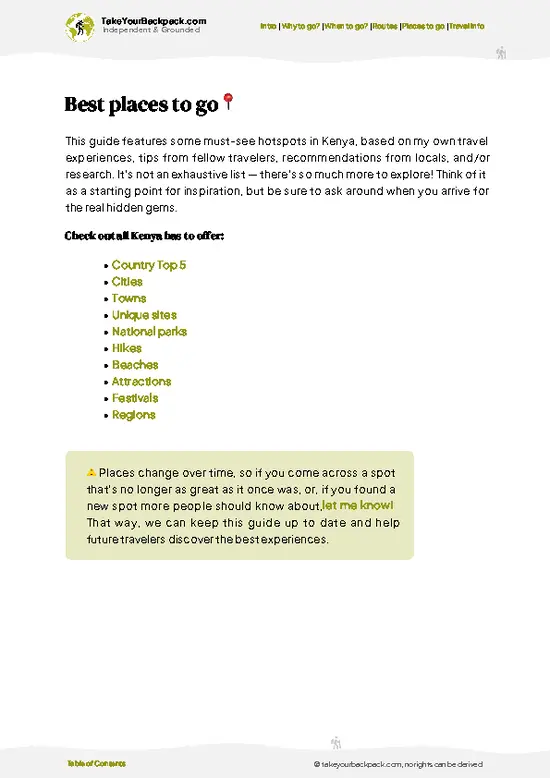
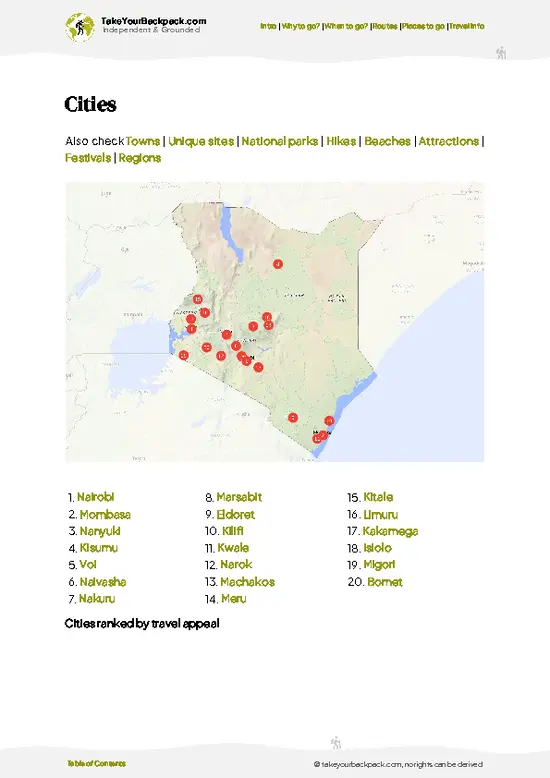
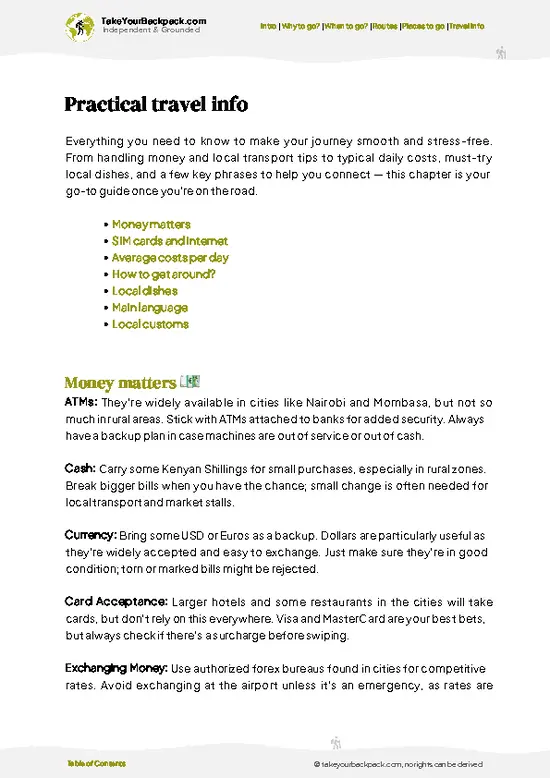
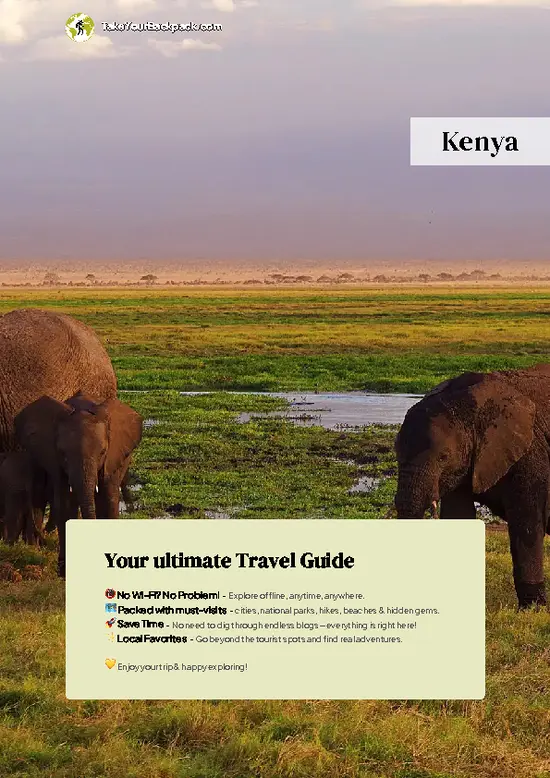
example page 0 from our offline Travel Guide for Kenya
example page 1 from our offline Travel Guide for Kenya
example page 2 from our offline Travel Guide for Kenya
example page 3 from our offline Travel Guide for Kenya
example page 4 from our offline Travel Guide for Kenya
example page 5 from our offline Travel Guide for Kenya
example page 6 from our offline Travel Guide for Kenya
example page 7 from our offline Travel Guide for Kenya
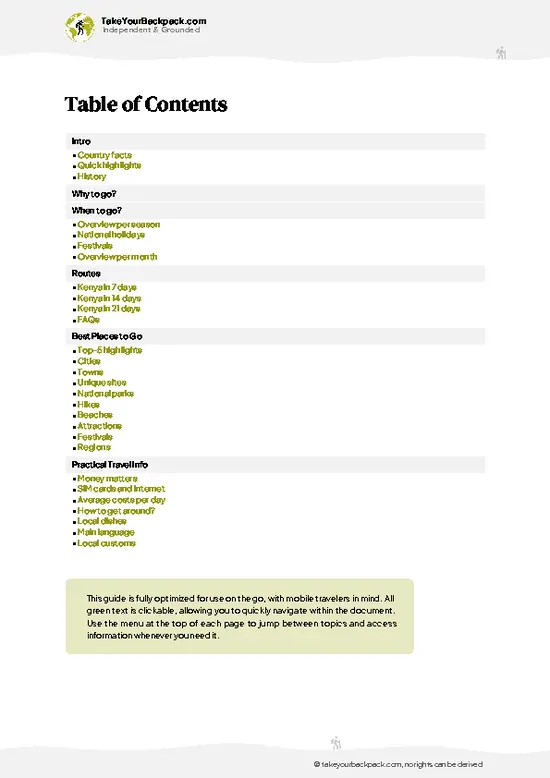
The digital guide (429 pages) contains:
114 highlights, ranked by travel appeal
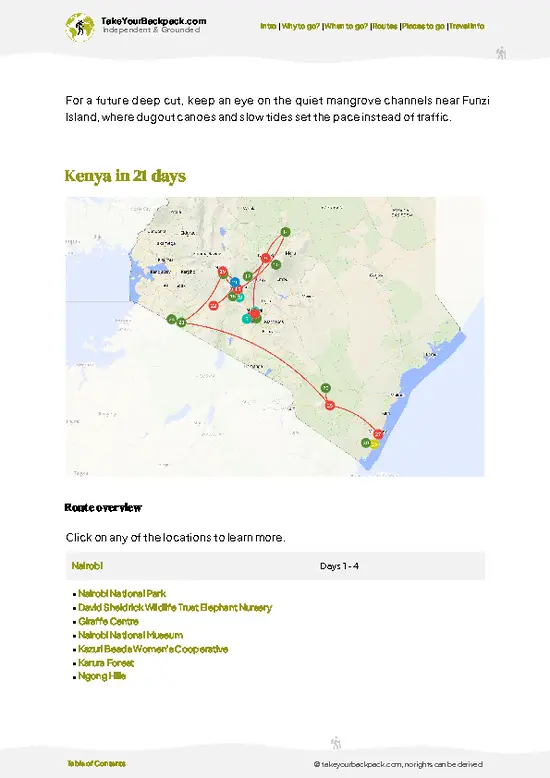
Optimized 7, 14 & 21-day travel routes
Cities, national parks, landmarks, beaches
How to get around
Offline-friendly for travel without Wi-Fi
👉 Click to see all 30+ guide features

📅 Plan smarter in minutes, not weeks
Month by month travel advice
Festivals & national holidays
Budget expectations

🗺️ Go to the right places, skip the overrated ones
Honest pros & cons of destinations
Top hikes, parks & viewpoints
Lesser-known places most travelers miss
Clear “worth it vs skip it” guidance

🛏️ Travel smoothly without rookie mistakes
Best areas to stay
Transport systems explained simply
Common scams & safety advice
SIM cards, money & practical tips

🌍 Understand the country, not just visit it
Culture & traditions
52 Essential phrases & customs
Festivals worth planning around
Traveler-friendly historical context
Insights that make places more meaningful

📱 Built for real travel conditions
Fully downloadable PDF
Works completely offline
Optimized for phone use
Useful in remote areas & buses
Everything in one place
Save weeks of stressful planning
Get instant access to your full guide. 30‑day money-back guarantee.


By proceeding you agree to our terms.
Sent to your inbox immediately after payment • 100% Secure Checkout
Best Backpacking Travel Advisor 2025 tourism awardBest Backpacking
Travel Advisor
2025
What others say about Take Your Backpack Guides:
⭐⭐⭐⭐⭐
Fantastic, amazing amount of information!
⭐⭐⭐⭐⭐
My goodness this is amazing, it's what I've been looking for hats off too you!
⭐⭐⭐⭐⭐
I think this is absolutely BRILLIANT
⭐⭐⭐⭐
Very complete and informative. It's still missing places, but I gotta to commend you
⭐⭐⭐⭐⭐
This is truly amazing, thank you, can't wait to explore it with my kids!
⭐⭐⭐⭐⭐
Awesome resource, thank you!
⭐⭐⭐⭐⭐
This is amazing! Can't wait to explore the ones I haven't seen
⭐⭐⭐⭐
I love this! Well done, great idea.
⭐⭐⭐⭐⭐
Thanks for taking the time to make this gem!
⭐⭐⭐⭐⭐
This might be the best website I've ever seen.
⭐⭐⭐⭐⭐
Congratulations, and thank you so much for your work; it's incredibly valuable.
⭐⭐⭐⭐
In all seriousness I think you did a great job pointing out the important spots
⭐⭐⭐⭐⭐
10/10 very good
⭐⭐⭐⭐⭐
As someone who's only just starting to visit regularly this is awesome, thank you.
⭐⭐⭐⭐
Thank you very much! I'm going to visit my dad, it's going to be very useful!
⭐⭐⭐⭐⭐
This is really cool! We'll be travelling for the first time and this definitely come in handy.
⭐⭐⭐⭐⭐
You are now our minister of culture, congratulations 👨‍💼
⭐⭐⭐⭐⭐
Just wanted to tell you that this is a pearl! Going to follow your recommendations.
⭐⭐⭐⭐⭐
This is so cool. I'll definitely be using the resource for my travels soon.
⭐⭐⭐⭐⭐
This is very impressive! Good work.
⭐⭐⭐⭐⭐
This is an amazing and informative site. Very well done!

🛏️ Where to stay?Best areas to stay in Kenya

Namanga’s heartbeat for backpackers pulses strongest around the town center, where the streets hum with local life and the air carries the scent of fresh chapati and roasting maize. This area is your best bet—not just for safety, but for the social vibe that solo travelers crave. Here, you’re close enough to markets and eateries to catch the rhythm of daily life without feeling like a stranger. The light in the late afternoon filters through acacia trees, casting long shadows that invite you to linger at a roadside café or strike up a conversation with fellow travelers.

Compared to the quieter … read more 👉
Namanga’s heartbeat for backpackers pulses strongest around the town center, where the streets hum with local life and the air carries the scent of fresh chapati and roasting maize. This area is your best bet—not just for safety, but for the social vibe that solo travelers crave. Here, you’re close enough to markets and eateries to catch the rhythm of daily life without feeling like a stranger. The light in the late afternoon filters through acacia trees, casting long shadows that invite you to linger at a roadside café or strike up a conversation with fellow travelers.

Compared to the quieter outskirts, the town center offers a cluster of budget-friendly hostels and guesthouses that cater specifically to backpackers. These spots aren’t just places to crash; they’re hubs where stories swap hands over shared meals and plans for the next day’s trek take shape. The vibe is relaxed but lively, a mix of local warmth and the easy camaraderie of travelers who’ve learned that Namanga’s charm lies in its people.

Stepping outside this zone means fewer options and a more isolated experience. The outskirts might feel safer in theory, but they lack the pulse that makes Namanga feel like a place worth staying. For backpackers, the town center is where the journey truly begins.

🚌 Getting aroundHow to get around Namanga

Namanga moves at the pace of the sun climbing over the East African horizon—steady, deliberate, but never rushed. This border town between Kenya and Tanzania is a crossroads where the dusty air carries the scent of acacia and diesel, and the rhythm is part instinct, part necessity. You won’t find a strict timetable here; instead, the flow depends on the pulse of traders, truck drivers, and locals weaving through the market stalls and dusty streets. The key to moving smoothly is to embrace this blend of order and chaos, knowing when to wait and when to jump on the next ride that rolls by. It’s a place where patience pays off, but so does quick decision-making when the right vehicle pulls up.


  • Matatus (Shared Minibuses): These are the lifeblood of Namanga’s transit, running frequently from
read more 👉
Namanga moves at the pace of the sun climbing over the East African horizon—steady, deliberate, but never rushed. This border town between Kenya and Tanzania is a crossroads where the dusty air carries the scent of acacia and diesel, and the rhythm is part instinct, part necessity. You won’t find a strict timetable here; instead, the flow depends on the pulse of traders, truck drivers, and locals weaving through the market stalls and dusty streets. The key to moving smoothly is to embrace this blend of order and chaos, knowing when to wait and when to jump on the next ride that rolls by. It’s a place where patience pays off, but so does quick decision-making when the right vehicle pulls up.


  • Matatus (Shared Minibuses): These are the lifeblood of Namanga’s transit, running frequently from dawn until early evening. Expect to pay around 50 to 100 Kenyan shillings for short hops. They’re cramped and noisy but fast enough to get you to nearby towns like Ongata Rongai or Kitengela. Don’t expect a fixed schedule—matatus leave when full, so timing is a mix of luck and local savvy.


  • Boda Bodas (Motorcycle Taxis): When the sun dips low and the streets cool, boda bodas become your best bet for quick, flexible travel within Namanga and its outskirts. Prices start at about 100 KES for short rides but always negotiate upfront. The wind in your face and the scent of dust and eucalyptus make these rides memorable, but hold tight—the roads can be rough and unpredictable.


  • Walking: Namanga’s compact center is best explored on foot. The market, small eateries, and border offices are all within a 15- to 20-minute stroll. Walking lets you soak in the dry heat, hear the chatter in Swahili and Maasai, and catch the sharp tang of roasting maize. It’s the cheapest and most immersive way to navigate the town’s core.


  • Shared Taxis: For longer trips, especially crossing into Tanzania, shared taxis offer a more comfortable and direct option. They leave once full, usually mid-morning and late afternoon, costing around 300 to 500 KES depending on the destination. These rides are smoother than matatus but less frequent, so plan accordingly.


  • Private Car Hire: If your budget allows, hiring a private car or 4x4 is the most flexible way to explore the Namanga region and cross the border without waiting. Prices vary widely, but expect to pay significantly more than public options. This is your ticket to controlling your schedule and avoiding the unpredictability of shared transport.

👛 Costs (as of 12 October 2025)Typical daily expenses

Backpacking in Namanga, Kenya, offers a raw, grounded experience where every shilling counts and the local rhythm sets the pace. Here’s what you can expect to spend daily, broken down into the essentials:
  • Dorm Accommodation: Options are limited but functional. Expect to pay around $8 to $15 per night for a basic dorm bed in a guesthouse or budget lodge. These places are simple, often with shared bathrooms and minimal amenities, but they put you right in the heart of town.
  • Meals: Street food and local eateries dominate. A hearty meal of ugali, sukuma (collard greens), and nyama choma (grilled meat) will run you about $2 to $5. Breakfasts are usually cheaper—think chai and mandazi for under $1.50. If you want something more Western or packaged, prices climb quickly.
  • Local Transport: Matatus
read more 👉
Backpacking in Namanga, Kenya, offers a raw, grounded experience where every shilling counts and the local rhythm sets the pace. Here’s what you can expect to spend daily, broken down into the essentials:
  • Dorm Accommodation: Options are limited but functional. Expect to pay around $8 to $15 per night for a basic dorm bed in a guesthouse or budget lodge. These places are simple, often with shared bathrooms and minimal amenities, but they put you right in the heart of town.
  • Meals: Street food and local eateries dominate. A hearty meal of ugali, sukuma (collard greens), and nyama choma (grilled meat) will run you about $2 to $5. Breakfasts are usually cheaper—think chai and mandazi for under $1.50. If you want something more Western or packaged, prices climb quickly.
  • Local Transport: Matatus (shared minibuses) and boda bodas (motorcycle taxis) are the go-to. A short ride within town costs around $0.50 to $1.50. For trips to nearby attractions or crossing into Tanzania, budget $5 to $10 depending on distance and negotiation skills.
  • Basic Activities/Entry Fees: Namanga is a gateway to Amboseli National Park, so if you’re just passing through, entry fees aren’t a daily cost. However, local cultural visits or small guided walks might cost $5 to $10. These are usually informal and negotiable, offering a glimpse into Maasai life.
  • Miscellaneous Expenses: Water, snacks, and small essentials add up. Bottled water is about $0.50 per liter. Phone credit and internet access are cheap but vary by provider; budget $1 to $3 daily if you want to stay connected. Souvenirs or tips for local helpers can add another $2 to $5.

All told, a realistic daily budget for backpackers in Namanga ranges from about $15 on a shoestring to $35 if you want a bit more comfort or flexibility. This town’s charm is in its straightforward, no-frills vibe—spend smart, and you’ll have the freedom to soak in the raw edge of the Kenya-Tanzania borderlands without breaking the bank.
⚠️ Prices can change and everyone travels differently, so take this as a rough guide. Hope it helps you plan your adventure!

🚌 Day tripsShort trips worth adding

Namanga, Kenya, is a backpacker’s dream base, offering easy access to some truly rewarding day trips. The vibrant local culture and stunning landscapes make every outing feel like an adventure worth savoring.

Amboseli National Park
Just a couple of hours from Namanga, Amboseli is famous for its breathtaking views of Mount Kilimanjaro. The park is a haven for wildlife enthusiasts; you’ll likely spot elephants roaming freely against the backdrop of the mountain. The entrance fee is around $50, but it’s worth every shilling for the chance to witness such raw beauty. Early mornings are best for game drives, as the animals are most active then. A common mistake? Underestimating the park’s size; plan for a full day to explore.


Lake Natron
This stunning alkaline lake is about a three-hour … read more 👉
Namanga, Kenya, is a backpacker’s dream base, offering easy access to some truly rewarding day trips. The vibrant local culture and stunning landscapes make every outing feel like an adventure worth savoring.

Amboseli National Park
Just a couple of hours from Namanga, Amboseli is famous for its breathtaking views of Mount Kilimanjaro. The park is a haven for wildlife enthusiasts; you’ll likely spot elephants roaming freely against the backdrop of the mountain. The entrance fee is around $50, but it’s worth every shilling for the chance to witness such raw beauty. Early mornings are best for game drives, as the animals are most active then. A common mistake? Underestimating the park’s size; plan for a full day to explore.


Lake Natron
This stunning alkaline lake is about a three-hour drive from Namanga. The vibrant reds and pinks of the salt crusts and flamingos create a surreal landscape. The journey can be bumpy, so a sturdy vehicle is essential. Expect to spend around $30 for transport and park fees. The best time to visit is during the dry season when the lake is less muddy. Many first-timers miss the chance to hike to the nearby Ol Doinyo Lengai volcano, which offers a unique perspective of the lake.


Arusha National Park
A bit further afield, about a four-hour trip, Arusha National Park is a hidden treasure. The park is less crowded than its counterparts, allowing for a more intimate experience with nature. You can hike through lush forests and spot giraffes and monkeys. Budget around $40 for the entrance fee and transport. The dry season is ideal for visibility, but the rainy season brings lush greenery. Many backpackers overlook the park’s walking safaris, which offer a different way to connect with the landscape.


Each of these trips offers a unique slice of Kenya’s diverse beauty, making Namanga an ideal launchpad for exploration.
Want to know what more Kenya offers?
The Kenya Travel Guide describes 114 highlights, from cities to national parks, from beaches to hikes

Get the Travel Guide -

🛡️ SafetyTraveler Safety Guide

Namanga is generally safe, but a few practical tips can enhance your experience. Stay aware in crowded markets; pickpockets can be a nuisance. If you’re solo, avoid wandering too far after dark. The streets can feel deserted, and it’s best to stick to well-lit areas.

Common scams include overly friendly locals offering unsolicited help, often with a hidden agenda. Politely decline and keep your plans close to your chest. Carry yourself confidently; a relaxed demeanor can deter unwanted attention. Trust your instincts—if something feels off, it probably is. Enjoy the vibrant atmosphere, but stay grounded in your surroundings.

Other Kenyan towns near Namanga

Explore more nearby:

  • Taveta—Border town, Chyulu foothills, sisal plantations| 137 km away
  • Karatina—Open-air market, Aberdare foothills, agricultural hub| 233 km away
  • Gilgil—Rift Valley escarpment, military history, flower farms| 235 km away

💡 Not sure where to go next?
Create a personalized itinerary for Kenya including Namanga and the places that fit your trip.

Generate my itinerary

👉 Discover all towns

Or checkout all Kenya has to offer (think cities, towns, villages, national parks, hikes, beaches, festivals)
Country photo of Kenya

We 💚 feedbackKey takeaways before you go

Namanga has a pulse that’s both electric and laid-back. The best surprise? The local food markets—aromas of spices and grilled meats wafting through the air. Just a heads-up: the roads can be bumpy, so brace yourself for a bit of a jolt. But trust me, the warmth of the people makes every bump worth it.

✍️ Help improve this page!
The information on this page is based on in-depth research, insights shared by experienced travelers, and feedback from the local travel community in Kenya. While every effort is made to keep the information accurate and current, conditions can change — so if you spot anything incorrect or outdated, please get in touch.


🙋‍♂️ Give feedback

👋 Meet the founderWho’s Behind Take Your Backpack?

Johan, backpacker and founder of TakeYourBackpackHi, I’m Johan (Netherlands 🇳🇱), the creator of TakeYourBackpack. Over the past decade, I’ve backpacked through 80+ countries across six continents, gaining extensive experience with independent travel, long-term trips, and overland routes.

This site is built on a combination of firsthand travel experience and carefully curated insights from other backpackers. Many guides are based on places I’ve personally visited, while others bring together tips, observations, and practical advice shared by trusted travelers I’ve met along the way.

The goal is to provide realistic, experience-driven guidance — not generic itineraries — so you can explore destinations with better context, clearer expectations, and more confidence.

Get full Kenya guide •
Instant download • 114 highlights • Full Offline guide