

×

Kenya🇰🇪 | citiesKilifi
coastal town, creek estuary, Swahili architecture | things to do and best time to go

Explore KajiadoExplore Kwale

Backpacking in Kilifi
🌟 Highlightcity ranked #7
By Johan Kruseman 🇳🇱 | Updated May 17, 2026

Most travelers expect Kilifi to be just another sleepy coastal town, but here’s the twist: Kilifi is quietly the epicenter of Kenya’s alternative scene—think impromptu beach raves, eco-hostels run by barefoot entrepreneurs, and a creative energy that’s more Berlin-on-the-Indian-Ocean than resort brochure. Wedged between Mombasa and Malindi on Kenya’s north coast, Kilifi is a place where you can kayak through mangroves in the morning, wander the crumbling ruins of Mnarani in the afternoon, and end up debating philosophy with digital nomads over street samosas by night. It’s cheap to eat, sleep, and get around, but public transport is slow and patchy. Safety is decent by Kenyan standards, but you’ll want to keep your wits about you after dark. Compared to the tourist conveyor belt of Mombasa, Kilifi feels raw, experimental, and—if you’re open to it—genuinely communal.

Discover everything you want to know in the 📖 Kenya Travel Guide.
Loading the map 🌍
CLICK TO FILTER
city
town
unique site
national park
hike
beach
attraction
festival
region
SHOW COUNTRY‘S BESTSHOW ALL

✨ Why go?
Ranked #7 city in Kenya
What sets this place apart

Kilifi is a strategic basecamp for backpackers weaving through Kenya’s coast. It offers a blend of affordability and comfort that makes it appealing for both short stops and longer stays. The hostels here are budget-friendly, often buzzing with fellow travelers eager to share stories and tips. You’ll find a variety of food options, from local street vendors to cozy cafes, satisfying both your cravings and your wallet.

The walkability of Kilifi enhances its charm; you can easily explore the town on foot, soaking in the local vibe. While the nightlife is laid-back, it has enough energy to keep you entertained without overwhelming you. Plus, Kilifi serves as a convenient launchpad for day trips to nearby attractions, making it easy to dive into the region’s natural beauty.

In short, Kilifi … read more 👉
Kilifi is a strategic basecamp for backpackers weaving through Kenya’s coast. It offers a blend of affordability and comfort that makes it appealing for both short stops and longer stays. The hostels here are budget-friendly, often buzzing with fellow travelers eager to share stories and tips. You’ll find a variety of food options, from local street vendors to cozy cafes, satisfying both your cravings and your wallet.

The walkability of Kilifi enhances its charm; you can easily explore the town on foot, soaking in the local vibe. While the nightlife is laid-back, it has enough energy to keep you entertained without overwhelming you. Plus, Kilifi serves as a convenient launchpad for day trips to nearby attractions, making it easy to dive into the region’s natural beauty.

In short, Kilifi balances highlights and activities with a relaxed atmosphere, making it a smart choice for backpackers looking to maximize their experience without sacrificing comfort.
Get the complete Travel Guide for Kenya
Everything organized for offline planning — routes, highlights, costs & tips

See what’s inside 👉

Get the Travel Guide -

💡 HighlightsDon't-miss highlights and experiences

  1. Mnarani Ruins & Turtle Rescue — centuries-old Swahili stone ruins set at the mouth of Kilifi Creek with small mosques and tombs; the attached community turtle-conservation project lets you see rescued turtles and learn about local marine stewardship up close.
  2. Kilifi Bridge & Creek Viewpoints — the long arched bridge that frames the estuary is the town’s icon; walk across for fishermen, dhows at low tide, great sunset photos and cheap roadside snacks at the approaches.
  3. Bofa Beach (Kilifi Bay beaches) — a wide, sandy shore with sandbanks that appear at low tide, shallow swimming, and a relaxed local beach vibe — perfect for a day of splashing, sun, and watching kids play football on the sand.
  4. Kilifi Fish Landing / Fish Market — early-morning chaos where fishermen sell the catch off the
read more 👉
  1. Mnarani Ruins & Turtle Rescue — centuries-old Swahili stone ruins set at the mouth of Kilifi Creek with small mosques and tombs; the attached community turtle-conservation project lets you see rescued turtles and learn about local marine stewardship up close.
  2. Kilifi Bridge & Creek Viewpoints — the long arched bridge that frames the estuary is the town’s icon; walk across for fishermen, dhows at low tide, great sunset photos and cheap roadside snacks at the approaches.
  3. Bofa Beach (Kilifi Bay beaches) — a wide, sandy shore with sandbanks that appear at low tide, shallow swimming, and a relaxed local beach vibe — perfect for a day of splashing, sun, and watching kids play football on the sand.
  4. Kilifi Fish Landing / Fish Market — early-morning chaos where fishermen sell the catch off the dhows; you can watch negotiations, buy ridiculously fresh seafood, and see traditional net-mending and fish-smoking techniques.
  5. Kilifi Old Town lanes — narrow streets and modest Swahili houses tucked behind the creekfront; wandering here gives the best sense of daily Kilifi life, from small mosques to informal craft stalls and verandah chatter.
  6. Dhow and Mangrove Tours on Kilifi Creek — short boat trips into mangrove channels and out to nearby sandbars; they’re cheap, scenic, and a real way to meet fishermen, spot birds, and explore the tidal ecosystems that shape local livelihoods.
  7. Pwani University hill viewpoint & campus life — the university sits on a rise with one of the clearest panoramic views of the creek and bridge; drop in for student-run cafes, occasional cultural events, and to see a younger side of Kilifi.
  8. Sandbanks & Tidal Pools off the creek — at low tide the creek exposes shallow reefs and pools ideal for easy snorkeling, paddling or hanging out on exposed sandbanks; bring water shoes and local guidance for the safest spots.
  9. Waterfront cafés and seafood shacks — the string of simple eateries along the creek is where locals eat and gossip: expect grilled fish, pilau, coconut rice and cold sodas with views over the dhows — highly social, low-cost, very real.
  10. Kilifi town market (weekly stalls & crafts) — the market near the main junction is where you’ll find fresh produce, charcoal, second-hand clothes, and handfuls of local artisans; it’s the best place to practice bargaining and pick up honest souvenirs.
A few great day-trip options just outside Kilifi are the Gede Ruins (historic Swahili town), Watamu Marine National Park (beaches and snorkeling), Mida Creek (mangroves and birding) and the Arabuko-Sokoke Forest (birdwatching and rare wildlife).
Spotted a mistake or missing something? Contact us.

🏘️ NeighborhoodsHow different areas shape the experience

Kilifi is a laid-back coastal town that offers a blend of culture, relaxation, and adventure. Here’s how its neighborhoods stack up for backpackers:

Kilifi Town
This is the heart of Kilifi, where you’ll find local markets and eateries. The vibe is bustling yet friendly. Costs are low, making it ideal for budget travelers. It’s walkable, with most amenities nearby. Nightlife is mellow, with a few bars but nothing too wild. Great for short stays, as you can easily explore the town and nearby beaches.

Watamu
Just a short ride from Kilifi, Watamu is known for its stunning beaches and marine parks. The atmosphere is more resort-like, but you can find affordable hostels. It’s a bit pricier than Kilifi Town, but worth it for the scenery. Walkability is decent, though you might need a bike or … read more 👉
Kilifi is a laid-back coastal town that offers a blend of culture, relaxation, and adventure. Here’s how its neighborhoods stack up for backpackers:

Kilifi Town
This is the heart of Kilifi, where you’ll find local markets and eateries. The vibe is bustling yet friendly. Costs are low, making it ideal for budget travelers. It’s walkable, with most amenities nearby. Nightlife is mellow, with a few bars but nothing too wild. Great for short stays, as you can easily explore the town and nearby beaches.

Watamu
Just a short ride from Kilifi, Watamu is known for its stunning beaches and marine parks. The atmosphere is more resort-like, but you can find affordable hostels. It’s a bit pricier than Kilifi Town, but worth it for the scenery. Walkability is decent, though you might need a bike or tuk-tuk for longer distances. Nightlife is relaxed, focusing on beach bars. Perfect for longer stays if you want to soak up the sun and enjoy water activities.

Gede
This area is quieter, with a rich history and archaeological sites. It’s less touristy, offering a more authentic experience. Costs are low, and it’s very walkable. Nightlife is virtually non-existent, making it ideal for those seeking peace. Best for longer stays if you want to immerse yourself in local culture and nature.

Choose wisely, and you’ll find the right balance of time, money, and comfort in Kilifi!

⌛️ 1 dayWhat you can realistically do in a day

Kilifi, Kenya, is a coastal treasure where the Indian Ocean meets rich Swahili culture. It’s a place where you can feel the pulse of local life while soaking in stunning views. Spend a day here, and you’ll find a blend of relaxation and adventure that’s hard to resist.

Start your morning at the Kilifi Creek, where the gentle lapping of water sets a serene tone. Grab a cup of coffee at a local café, like the cozy **Kilifi Coffee Shop**, and watch fishermen set out for the day. After your caffeine fix, head to the **Mnarani Ruins**, a short drive away. These ancient coral stone structures whisper stories of the past, and the views from the site are breathtaking.

In the afternoon, make your way to **Kilifi Beach**. This isn’t just any beach; it’s a stretch of soft sand that invites you to unwind. … read more 👉
Kilifi, Kenya, is a coastal treasure where the Indian Ocean meets rich Swahili culture. It’s a place where you can feel the pulse of local life while soaking in stunning views. Spend a day here, and you’ll find a blend of relaxation and adventure that’s hard to resist.

Start your morning at the Kilifi Creek, where the gentle lapping of water sets a serene tone. Grab a cup of coffee at a local café, like the cozy **Kilifi Coffee Shop**, and watch fishermen set out for the day. After your caffeine fix, head to the **Mnarani Ruins**, a short drive away. These ancient coral stone structures whisper stories of the past, and the views from the site are breathtaking.

In the afternoon, make your way to **Kilifi Beach**. This isn’t just any beach; it’s a stretch of soft sand that invites you to unwind. Rent a kayak or simply float in the warm waters. For lunch, try a local seafood spot like **The Beach Bar**, where you can savor fresh catch while enjoying ocean breezes.

As the sun begins to dip, explore the **Kilifi Market**. This vibrant hub is often overlooked by tourists, but it’s where you’ll find the heart of the community. Engage with local vendors, sample street food, and pick up unique crafts.

Wrap up your day with dinner at **The Tides**, where you can indulge in a mix of local and international cuisine. The ambiance is relaxed, perfect for reflecting on your day. Kilifi may be small, but it offers a rich tapestry of experiences that linger long after you leave.
Build the Right Itinerary
Use the Kenya Travel Guide’s 7, 14 & 21-day routes as a starting point to plan a trip that actually works on the ground.

Get the Travel Guide -

🌤️ When to go?Seasonal considerations and timing


  • Topic: Weather — Kilifi’s dry season from June to October offers clear skies and minimal rain, perfect for beach days and exploring ruins. The wet season, November to May, brings heavy, unpredictable showers that can disrupt plans.

  • Topic: Temperature — Expect highs around 28-32°C (82-90°F) during the dry months, with cooler evenings near 20°C (68°F). The wet season is warmer and more humid, often pushing highs above 33°C (91°F), which can sap your energy on hikes.

  • Topic: Daylight Hours — Kilifi enjoys roughly 11-12 hours of daylight year-round, with sunrise around 6:30 AM and sunset near 6:30 PM, giving you a reliable window for adventure regardless of season.

  • Topic: Crowds — Peak tourist flow aligns with the dry season, especially July and August, when international travelers flock
read more 👉

  • Topic: Weather — Kilifi’s dry season from June to October offers clear skies and minimal rain, perfect for beach days and exploring ruins. The wet season, November to May, brings heavy, unpredictable showers that can disrupt plans.

  • Topic: Temperature — Expect highs around 28-32°C (82-90°F) during the dry months, with cooler evenings near 20°C (68°F). The wet season is warmer and more humid, often pushing highs above 33°C (91°F), which can sap your energy on hikes.

  • Topic: Daylight Hours — Kilifi enjoys roughly 11-12 hours of daylight year-round, with sunrise around 6:30 AM and sunset near 6:30 PM, giving you a reliable window for adventure regardless of season.

  • Topic: Crowds — Peak tourist flow aligns with the dry season, especially July and August, when international travelers flock to the coast. Visiting just before or after this window means fewer people and a more relaxed vibe.

  • Topic: Seasonal Activities — Dry months unlock snorkeling, diving, and boat trips with calm seas. The wet season limits water activities but brings lush landscapes and bird migrations, appealing if you prefer nature over beach time.

  • Topic: Price Fluctuations — Accommodation and tours spike in the dry season’s peak months. Traveling in shoulder months like June or October can save money without sacrificing weather quality.


Pro-tip: Aim for the shoulder dry months—June or October—for the smartest balance of weather, crowd size, and cost.


source: climatestotravel.comJANJanuary: fair for travelingFEBFebruary: fair for travelingMARMarch: fair for travelingAPRApril: fair for travelingMAYMay: fair for travelingJUNJune: highly recommended for travelingJULJuly: excellent for travelingAUGAugust: excellent for travelingSEPSeptember: excellent for travelingOCTOctober: highly recommended for travelingNOVNovember: fair for travelingDECDecember: fair for traveling
when-to-go

✈️ The backpacker research shortcutKenya Travel Guide

An offline-friendly backpacking guide with optimized travel routes, ranked highlights, transport advice, and the best areas to stay.
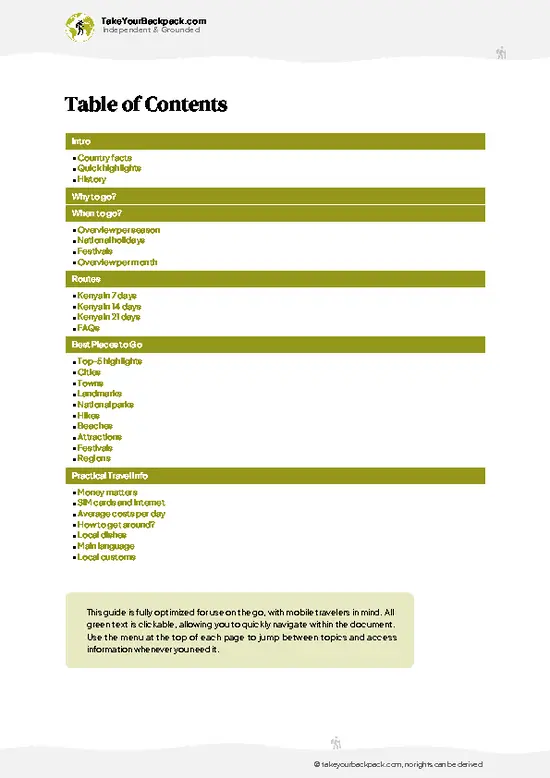
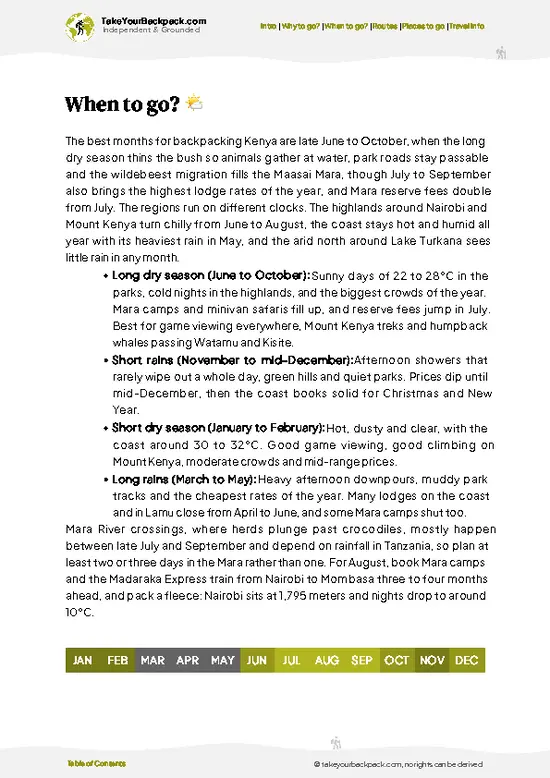
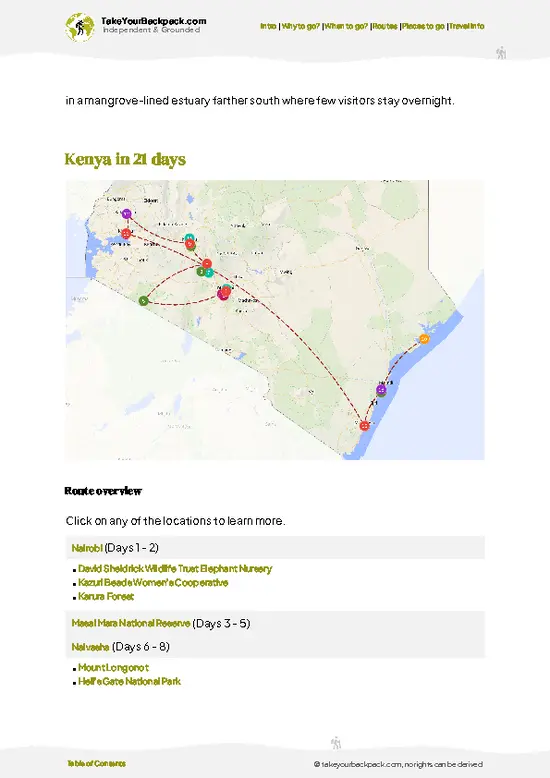
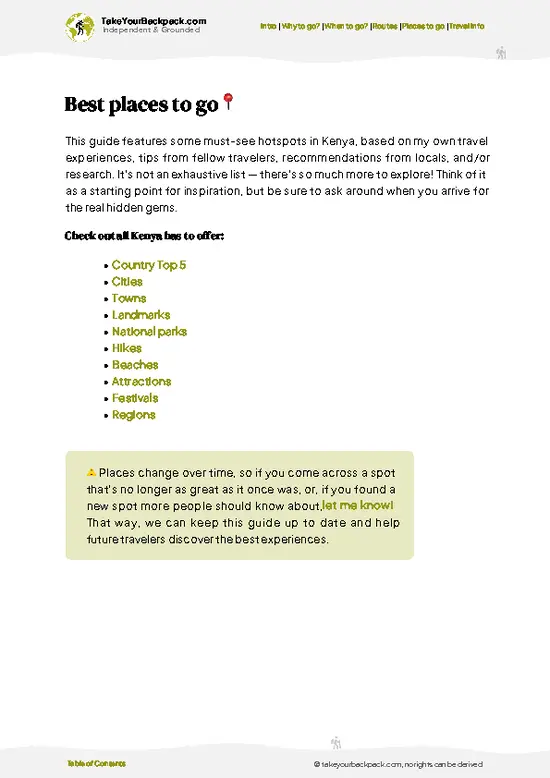
example page 0 from our offline Travel Guide for Kenyaexample page 1 from our offline Travel Guide for Kenyaexample page 2 from our offline Travel Guide for Kenyaexample page 3 from our offline Travel Guide for Kenyaexample page 4 from our offline Travel Guide for Kenyaexample page 5 from our offline Travel Guide for Kenyaexample page 6 from our offline Travel Guide for Kenyaexample page 7 from our offline Travel Guide for Kenya
The digital guide (429 pages) contains:
114 highlights, ranked by travel appeal
Optimized 7, 14 & 21-day travel routes
Best neighborhoods to stay
How to get around
Offline-friendly for travel without Wi-Fi
👉 See all 30+ guide features

📅 Plan smarter in minutes, not weeks
Month by month travel advice
Festivals & national holidays
Budget expectations

🗺️ Go to the right places, skip the overrated ones
Honest pros & cons of destinations
Top hikes, parks & viewpoints
Lesser-known places most travelers miss
Clear “worth it vs skip it” guidance

🛏️ Travel smoothly without rookie mistakes
Best areas to stay
Transport systems explained simply
Common scams & safety advice
SIM cards, money & practical tips

🌍 Understand the country, not just visit it
Culture & traditions
52 Essential phrases & customs
Festivals worth planning around
Traveler-friendly historical context
Insights that make places more meaningful

📱 Built for real travel conditions
Fully downloadable PDF
Works completely offline
Optimized for phone use
Useful in remote areas & buses
Everything in one place
Save weeks of stressful planning
Get instant access to the full guide directly. 30-day money-back guarantee.


Sent to your inbox immediately after payment • 100% Secure Checkout
Best Backpacking Travel Advisor 2025 tourism awardBest Backpacking
Travel Advisor
2025
What others say about Take Your Backpack Guides:
⭐⭐⭐⭐⭐
Fantastic, amazing amount of information!
⭐⭐⭐⭐⭐
My goodness this is amazing, it's what I've been looking for hats off too you!
⭐⭐⭐⭐⭐
I think this is absolutely BRILLIANT
⭐⭐⭐⭐
Very complete and informative. It's still missing places, but I gotta to commend you
⭐⭐⭐⭐⭐
This is truly amazing, thank you, can't wait to explore it with my kids!
⭐⭐⭐⭐⭐
Awesome resource, thank you!
⭐⭐⭐⭐⭐
This is amazing! Can't wait to explore the ones I haven't seen
⭐⭐⭐⭐
I love this! Well done, great idea.
⭐⭐⭐⭐⭐
Thanks for taking the time to make this gem!
⭐⭐⭐⭐⭐
This might be the best website I've ever seen.
⭐⭐⭐⭐⭐
Congratulations, and thank you so much for your work; it's incredibly valuable.
⭐⭐⭐⭐
In all seriousness I think you did a great job pointing out the important spots
⭐⭐⭐⭐⭐
10/10 very good
⭐⭐⭐⭐⭐
As someone who's only just starting to visit regularly this is awesome, thank you.
⭐⭐⭐⭐
Thank you very much! I'm going to visit my dad, it's going to be very useful!
⭐⭐⭐⭐⭐
This is really cool! We'll be travelling for the first time and this definitely come in handy.
⭐⭐⭐⭐⭐
You are now our minister of culture, congratulations 👨‍💼
⭐⭐⭐⭐⭐
Just wanted to tell you that this is a pearl! Going to follow your recommendations.
⭐⭐⭐⭐⭐
This is so cool. I'll definitely be using the resource for my travels soon.
⭐⭐⭐⭐⭐
This is very impressive! Good work.
⭐⭐⭐⭐⭐
This is an amazing and informative site. Very well done!

🛏️ Where to stay?Choosing the right base

Kilifi’s backpacker sweet spot is the area around Kilifi Creek and the town center. This zone strikes a smart balance between safety and social buzz, making it a natural magnet for solo travelers and budget adventurers. You’re close enough to the water to enjoy the laid-back coastal vibe without sacrificing access to local markets, eateries, and transport links. It’s where you’ll find a cluster of hostels and guesthouses that cater specifically to backpackers, so the vibe leans toward communal spaces and easy mingling.

Compared to the quieter, more residential neighborhoods inland, this area … read more 👉
Kilifi’s backpacker sweet spot is the area around Kilifi Creek and the town center. This zone strikes a smart balance between safety and social buzz, making it a natural magnet for solo travelers and budget adventurers. You’re close enough to the water to enjoy the laid-back coastal vibe without sacrificing access to local markets, eateries, and transport links. It’s where you’ll find a cluster of hostels and guesthouses that cater specifically to backpackers, so the vibe leans toward communal spaces and easy mingling.

Compared to the quieter, more residential neighborhoods inland, this area feels alive without being overwhelming. It’s not the luxury resort strip, so you’re not paying for polished comfort, but you’re also not stuck in a sketchy zone where safety is a gamble. The trade-off here is clear: you sacrifice some high-end amenities for a richer, more authentic social experience and a budget-friendly setup that encourages connection. If you want to maximize your time meeting fellow travelers and soaking in local rhythms, this is your base camp. Other parts of Kilifi either push you too far from the action or into pricier, less social territory.

🚌 Getting aroundGetting around like a local

Kilifi moves at its own rhythm—less a clockwork machine and more a laid-back dance where schedules flex and intuition rules. This coastal town doesn’t demand rigid adherence to timetables; instead, it invites you to read the flow of locals, vendors, and vehicles weaving through dusty streets and palm-lined avenues. Time here is elastic, shaped by the sun and tides rather than strict deadlines. Your best bet is to embrace this ebb and flow, knowing that every mode of transport comes with its own trade-offs between speed, cost, and comfort. Mastering these choices means you’re not just getting around—you’re playing the city’s game on your terms.


  • Walking: The ultimate budget move. Kilifi’s compact center and beachfront are best explored on foot. Zero cost, full control over pace, and the
read more 👉
Kilifi moves at its own rhythm—less a clockwork machine and more a laid-back dance where schedules flex and intuition rules. This coastal town doesn’t demand rigid adherence to timetables; instead, it invites you to read the flow of locals, vendors, and vehicles weaving through dusty streets and palm-lined avenues. Time here is elastic, shaped by the sun and tides rather than strict deadlines. Your best bet is to embrace this ebb and flow, knowing that every mode of transport comes with its own trade-offs between speed, cost, and comfort. Mastering these choices means you’re not just getting around—you’re playing the city’s game on your terms.


  • Walking: The ultimate budget move. Kilifi’s compact center and beachfront are best explored on foot. Zero cost, full control over pace, and the chance to soak in the local vibe. Just watch for uneven sidewalks and midday heat.


  • Boda Boda (Motorcycle Taxi): Fast and flexible, boda bodas dart through traffic and narrow lanes with ease. Expect to pay around 50-150 KES per short trip. They run all day until dusk but can be risky if you’re not helmeted or comfortable with aggressive driving. Great for quick hops when time is tight.


  • Matatu (Shared Minibus): The backbone of Kilifi’s public transit. Matatus run from early morning (around 6 AM) until early evening (6-7 PM), charging roughly 30-50 KES per ride. They’re slow and often packed, but unbeatable for budget travelers needing to cover longer distances without breaking the bank. Comfort is minimal; expect noise and crowding.


  • Private Taxi: More expensive—typically 800-1500 KES for common routes—but offers door-to-door convenience and air-conditioned comfort. Ideal if you’re traveling with luggage or in a group. Availability is flexible, but prices spike after dark or during peak demand.


  • Bicycle Rental: A middle ground between walking and motorized transport. Renting a bike costs about 300-500 KES per day. It’s eco-friendly, gives you speed without the noise, and lets you explore beyond the center at your own pace. Terrain is mostly flat but watch for sandy patches.


Understanding these options means you’re not just moving through Kilifi—you’re choosing how to spend your time, money, and comfort like a pro. Each choice shifts your experience: a boda boda saves minutes but costs more and risks safety; walking costs nothing but demands time and stamina. Play these trade-offs smartly, and Kilifi becomes less a challenge and more a playground.

👛 Costs (as of 13 October 2025)What things cost and how to budget

Backpacking in Kilifi, Kenya, offers a clear trade-off map between time, money, and comfort, with costs that reflect its laid-back coastal vibe and developing tourism infrastructure.
  • Dorm Accommodation (High Season): Expect to pay around $12 to $18 per night. High season drives prices up due to demand, especially near the beach and popular hostels.
  • Dorm Accommodation (Off-Season): Prices drop to about $8 to $12 per night. Fewer tourists mean better deals, but some places may close or reduce services.
  • Meals: Street food and local eateries offer meals for $2 to $5. If you opt for a mid-range restaurant, expect $7 to $12. Fresh seafood is a highlight but comes at a premium.
  • Local Transport: Matatus (shared minibuses) and boda-bodas (motorcycle taxis) cost between $0.50 and $1.50 per short
read more 👉
Backpacking in Kilifi, Kenya, offers a clear trade-off map between time, money, and comfort, with costs that reflect its laid-back coastal vibe and developing tourism infrastructure.
  • Dorm Accommodation (High Season): Expect to pay around $12 to $18 per night. High season drives prices up due to demand, especially near the beach and popular hostels.
  • Dorm Accommodation (Off-Season): Prices drop to about $8 to $12 per night. Fewer tourists mean better deals, but some places may close or reduce services.
  • Meals: Street food and local eateries offer meals for $2 to $5. If you opt for a mid-range restaurant, expect $7 to $12. Fresh seafood is a highlight but comes at a premium.
  • Local Transport: Matatus (shared minibuses) and boda-bodas (motorcycle taxis) cost between $0.50 and $1.50 per short trip. Negotiating fares is common, especially on boda-bodas.
  • City Transport Pass: Kilifi doesn’t have a formal city transport pass system. Budget around $3 to $5 daily if you rely heavily on local transport for multiple trips.
  • Basic Activities/Entry Fees: Visiting local beaches is often free, but entry to cultural sites or nature reserves ranges from $3 to $10. Guided tours or water sports push costs higher.
  • Miscellaneous Expenses: This includes bottled water, snacks, SIM cards, and occasional tips, averaging $2 to $5 daily depending on your habits.

The total daily budget for backpacking in Kilifi typically falls between $20 and $40. This range balances the essentials with some room for comfort or activities, letting you decide where to stretch or save. Understanding these trade-offs lets you play the system smartly, maximizing your experience without surprises.
⚠️ Prices can change and everyone travels differently, so take this as a rough guide. Hope it helps you plan your adventure!

🚌 Day tripsEasy escapes and nearby places

Kilifi, Kenya, is a backpacker’s dream base for day trips, offering a mix of culture, adventure, and stunning landscapes. Here are some top picks that make the most of your time and money.

Kaya Kinondo Forest
Just a 45-minute drive from Kilifi, Kaya Kinondo is a sacred forest that offers a glimpse into the rich cultural heritage of the Digo people. The lush greenery and towering trees create a serene atmosphere perfect for hiking. Expect to pay around $5 for entry and a local guide, which is well worth it for the insights into the flora and fauna. Many first-timers underestimate the importance of hiring a guide; they can reveal hidden trails and stories that enrich your experience.


Watamu Marine National Park
A mere 30-minute ride will land you at Watamu, where the marine park beckons … read more 👉
Kilifi, Kenya, is a backpacker’s dream base for day trips, offering a mix of culture, adventure, and stunning landscapes. Here are some top picks that make the most of your time and money.

Kaya Kinondo Forest
Just a 45-minute drive from Kilifi, Kaya Kinondo is a sacred forest that offers a glimpse into the rich cultural heritage of the Digo people. The lush greenery and towering trees create a serene atmosphere perfect for hiking. Expect to pay around $5 for entry and a local guide, which is well worth it for the insights into the flora and fauna. Many first-timers underestimate the importance of hiring a guide; they can reveal hidden trails and stories that enrich your experience.


Watamu Marine National Park
A mere 30-minute ride will land you at Watamu, where the marine park beckons with its vibrant coral reefs and diverse marine life. Snorkeling here is a must, with costs around $10 for gear rental. The best time to visit is during the dry season, from June to October, when visibility is at its peak. A common mistake is to skip the early morning; the waters are calmer and the fish more active, making for a better experience.
👉 Explore Watamu Marine National Park

Mida Creek
Just 20 minutes from Kilifi, Mida Creek is a tranquil spot for kayaking and birdwatching. The mangroves are home to a variety of bird species, making it a paradise for nature lovers. Kayak rentals are about $15, and the peaceful ambiance is worth every penny. Many backpackers miss out on the sunset views; plan to stay a bit longer for a magical end to your day.


Gede Ruins
About 30 minutes away, the Gede Ruins offer a fascinating peek into a lost Swahili civilization. Entry is around $3, and wandering through the ancient structures feels like stepping back in time. The best time to visit is early morning to avoid the heat and crowds. A common pitfall is rushing through; take your time to soak in the history and the surrounding nature.
Want to know what more Kenya offers?
The Kenya Travel Guide describes 114 highlights, from cities to national parks, from beaches to hikes

Get the Travel Guide -

🍲 FoodLocal Flavors for Backpackers

In Kilifi, food and drinks are a vibrant part of the experience, steeped in local culture. You can’t miss trying ugali, a staple made from maize flour, often served with fresh fish or spicy stews. Pair it with sukuma wiki, sautéed greens that add a burst of flavor and color to your plate.

Street food stalls are your best bet for authentic bites. Picture this: the aroma of samosas sizzling in hot oil, or the sound of vendors calling out as they grill nyama choma—succulent, smoky meat skewers that are a must-try. Markets buzz with life, offering everything from fresh coconut water to mandazi, sweet fried dough that’s perfect for a snack.

When it comes to drinks, don’t overlook ajon, a local brew made from fermented millet. It’s an acquired taste, but sipping it in a casual setting with locals … read more 👉
In Kilifi, food and drinks are a vibrant part of the experience, steeped in local culture. You can’t miss trying ugali, a staple made from maize flour, often served with fresh fish or spicy stews. Pair it with sukuma wiki, sautéed greens that add a burst of flavor and color to your plate.

Street food stalls are your best bet for authentic bites. Picture this: the aroma of samosas sizzling in hot oil, or the sound of vendors calling out as they grill nyama choma—succulent, smoky meat skewers that are a must-try. Markets buzz with life, offering everything from fresh coconut water to mandazi, sweet fried dough that’s perfect for a snack.

When it comes to drinks, don’t overlook ajon, a local brew made from fermented millet. It’s an acquired taste, but sipping it in a casual setting with locals is a rite of passage.

Etiquette here is relaxed; sharing food is common, and you’ll often see groups gathered around a communal plate. Dive in, enjoy the flavors, and embrace the communal spirit that defines Kilifi’s culinary scene.

🛡️ SafetySafety Tips and Common Scams in Kilifi

Kilifi is generally safe, but a few smart habits can enhance your experience. Stay aware in crowded areas, especially near markets or bus stations, where pickpockets might lurk. If you’re solo, avoid wandering too far after dark; stick to well-lit paths and populated spots.

Common scams are rare, but be cautious with overly friendly locals offering unsolicited help. Politely decline and trust your instincts. Taxis can be a hassle; always agree on a fare beforehand to avoid surprises.

Annoyances like persistent street vendors can test your patience. A friendly smile and a firm “no, thank you” usually do the trick. Carry yourself confidently, and you’ll navigate Kilifi like a pro, soaking in its charm without unnecessary distractions.

Other Kenyan cities near Kilifi

Explore more nearby:

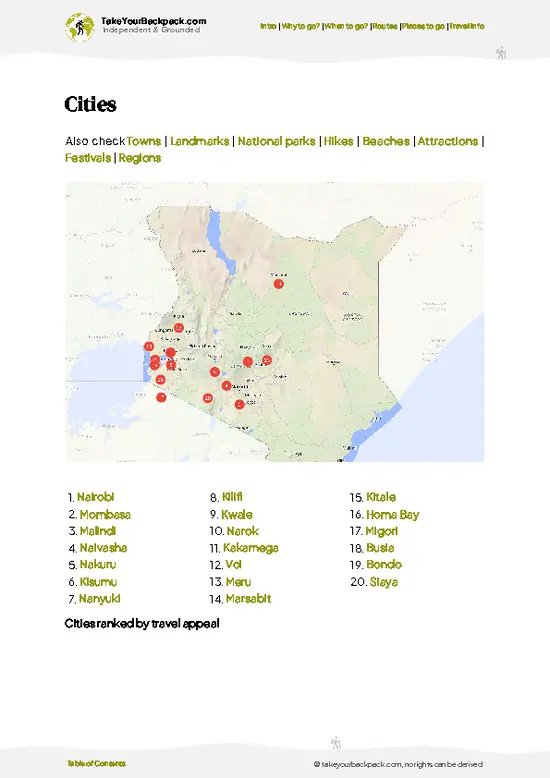
  • Mombasa—Indian Ocean port, Old Town, Swahili cuisine| 52 km away
  • Kwale—Shimba Hills, coastal hinterland, Digo culture| 76 km away
  • Voi—Tsavo gateway, railway junction, market bustle| 146 km away

👉 Discover all cities

Or checkout all Kenya has to offer (think cities, towns, villages, national parks, hikes, beaches, festivals)
Country photo of Kenya

We 💚 feedbackFinal thoughts on visiting Kilifi

Kilifi has this laid-back vibe that feels like a secret you’ve stumbled upon. The best surprise? The local food scene—fresh seafood that’s downright addictive. But be mindful of the tides if you’re planning to swim; they can be unpredictable. Embrace the slower pace, connect with the locals, and don’t rush through the markets. It’s all about soaking in the moments that make this place special. Trust me, you’ll leave with stories worth telling.

✍️ Help improve this page!
The information on this page is based on in-depth research, insights shared by experienced travelers, and feedback from the local travel community in Kenya. While every effort is made to keep the information accurate and current, conditions can change — so if you spot anything incorrect or outdated, please get in touch.


🙋‍♂️ Give feedback

👋 Meet the founderWho’s Behind Take Your Backpack?

Johan, backpacker and founder of TakeYourBackpackHi, I’m Johan (Netherlands 🇳🇱), the creator of TakeYourBackpack. Over the past decade, I’ve backpacked through 80+ countries across six continents, gaining extensive experience with independent travel, long-term trips, and overland routes.

This site is built on a combination of firsthand travel experience and carefully curated insights from other backpackers. Many guides are based on places I’ve personally visited, while others bring together tips, observations, and practical advice shared by trusted travelers I’ve met along the way.

The goal is to provide realistic, experience-driven guidance — not generic itineraries — so you can explore destinations with better context, clearer expectations, and more confidence.

Get Full Country Guide |
Instant download • 114 highlights • Full Offline guide