×

Kenya🇰🇪 | citiesKwaleShimba Hills, coastal hinterland, Digo culture | things to do and best time to go

Explore KilifiExplore Baringo

Backpacking in Kwale
🌟 Highlightcity ranked #8
By Johan Kruseman 🇳🇱 | Updated June 13, 2026

Kwale is not for the traveler chasing Kenya’s blockbuster safari scenes or the all-night beach parties of Diani. But here’s the twist: that’s exactly why it works for the backpacker who wants to see the gears turning beneath the surface. Tucked in the hills just inland from Kenya’s southern coast, Kwale is a small, workaday town where the pace is slow and the smiles are genuine. You’ll find a lively market, colonial-era government buildings, and the odd local café where Swahili and coastal flavors mix. There’s little in the way of nightlife or hostels, and you’ll need to work for your connections—most travelers breeze past on their way to the coast. But costs are low, safety is solid, and the vibe is refreshingly unpolished compared to Mombasa or Diani. Kwale rewards curiosity, not convenience.

Discover everything you want to know in the 📖 Kenya Travel Guide.


Get your Kenya guide
114 ranked highlights, routes & tips, works offline (429 pages)
Loading the map 🌍
CLICK TO FILTER
cities
towns
landmarks
national parks
hikes
beaches
attractions
festivals
regions
SHOW COUNTRY’S BESTSHOW ALL

✨ Why go?
Ranked #8 city in Kenya
What makes this city worth visiting

Kwale, Kenya, is a strategic basecamp for backpackers, offering a blend of affordability and accessibility. The city is a hub for day trips to stunning beaches and national parks, making it easy to explore the surrounding beauty without breaking the bank. Hostels here are not just budget-friendly; they foster a sense of community, perfect for meeting fellow travelers.

The walkability of Kwale enhances its charm; you can easily stroll to local eateries where you’ll find delicious street food that won’t dent your wallet. As the sun sets, the nightlife buzzes with energy, providing a vibrant atmosphere to unwind after a day of adventure.

For those looking to continue their journey, Kwale’s transport links are straightforward, allowing for easy onward travel. Whether you’re planning to linger … read more 👉
Kwale, Kenya, is a strategic basecamp for backpackers, offering a blend of affordability and accessibility. The city is a hub for day trips to stunning beaches and national parks, making it easy to explore the surrounding beauty without breaking the bank. Hostels here are not just budget-friendly; they foster a sense of community, perfect for meeting fellow travelers.

The walkability of Kwale enhances its charm; you can easily stroll to local eateries where you’ll find delicious street food that won’t dent your wallet. As the sun sets, the nightlife buzzes with energy, providing a vibrant atmosphere to unwind after a day of adventure.

For those looking to continue their journey, Kwale’s transport links are straightforward, allowing for easy onward travel. Whether you’re planning to linger or just passing through, Kwale offers a high-value experience that fits seamlessly into your backpacking route.
Want to include Kwale in your Kenya route?
Create a personalized Kenya itinerary that includes Kwale and the places that fit your trip — based on your travel style, budget, and available time. Get your route in seconds.

Generate my trip

💡 HighlightsEssential experiences to have while visiting Kwale

  1. Kwale Central Market — The beating heart of town: an open-air market where local farmers, traders and craftspeople sell fruits, vegetables, spices, textiles and everyday goods. Visiting in the early morning gives you the best sights and prices, a real feel for Digo/Duruma coastal town life, and chances to buy fresh produce and simple street snacks while watching locals haggle and trade.
A few real, visitable highlights just outside Kwale that make perfect day trips: Diani Beach, Shimba Hills National Reserve, Kaya Kinondo Sacred Forest, Gede Ruins and Mwaluganje Elephant Sanctuary.
Spotted a mistake or missing something? Contact us.

Things to do near Kwale

Ratings based on Tripadvisor reviews. When you book through this link, you support our work at no extra cost to you.

🏘️ NeighborhoodsKey areas and districts to know

Kwale, Kenya, offers a unique blend of coastal charm and cultural richness, making it a prime spot for backpackers seeking authentic experiences.

Diani Beach: This area is a backpacker favorite for its stunning beaches and vibrant atmosphere. Expect a lively vibe with plenty of budget-friendly hostels and eateries. Walkability is high, with beach access just steps away. Nightlife thrives here, with beach bars and live music. Ideal for both short and longer stays, especially if you love sun and socializing.

Ukunda: Just a stone’s throw from Diani, Ukunda is more laid-back and offers a glimpse into local life. Prices are lower here, making it a great option for budget-conscious travelers. The area is walkable, but public transport is readily available for longer excursions. It’s quieter than … read more 👉
Kwale, Kenya, offers a unique blend of coastal charm and cultural richness, making it a prime spot for backpackers seeking authentic experiences.

Diani Beach: This area is a backpacker favorite for its stunning beaches and vibrant atmosphere. Expect a lively vibe with plenty of budget-friendly hostels and eateries. Walkability is high, with beach access just steps away. Nightlife thrives here, with beach bars and live music. Ideal for both short and longer stays, especially if you love sun and socializing.

Ukunda: Just a stone’s throw from Diani, Ukunda is more laid-back and offers a glimpse into local life. Prices are lower here, making it a great option for budget-conscious travelers. The area is walkable, but public transport is readily available for longer excursions. It’s quieter than Diani, perfect for those who want to recharge while still being close to the action.

Msambweni: For a more tranquil experience, head to Msambweni. This area is less touristy, offering a peaceful retreat with stunning views. Accommodation is affordable, but options may be limited. Walkability is decent, though you might need a bike or a matatu for longer distances. Ideal for longer stays if you’re looking to immerse yourself in local culture and enjoy serene beaches.

Shimba Hills: A bit off the beaten path, Shimba Hills is perfect for nature lovers. The area is known for its wildlife and hiking trails. While accommodations can be pricier, the experience is worth it. Transport options are limited, so plan ahead. Best for longer stays if you want to explore the natural beauty and tranquility.

⌛️ 1 dayA smart one-day plan

Kwale, Kenya, is a vibrant tapestry of culture and nature, where the coastal breeze mingles with the rich history of the Swahili people. This small town is often overshadowed by its more famous neighbors, but it offers a unique glimpse into local life and stunning landscapes.

Start your morning at the bustling Kwale Market. The aroma of fresh spices and local produce fills the air as you wander through stalls brimming with colorful fruits and handmade crafts. Grab a cup of chai from a local vendor; it’s a perfect way to fuel up for the day. After soaking in the market’s energy, head to the nearby Shimba Hills National Reserve. Just a short drive away, this lush sanctuary is home to elephants and rare sable antelopes. Spend a couple of hours hiking the trails, where the sounds of nature provide … read more 👉
Kwale, Kenya, is a vibrant tapestry of culture and nature, where the coastal breeze mingles with the rich history of the Swahili people. This small town is often overshadowed by its more famous neighbors, but it offers a unique glimpse into local life and stunning landscapes.

Start your morning at the bustling Kwale Market. The aroma of fresh spices and local produce fills the air as you wander through stalls brimming with colorful fruits and handmade crafts. Grab a cup of chai from a local vendor; it’s a perfect way to fuel up for the day. After soaking in the market’s energy, head to the nearby Shimba Hills National Reserve. Just a short drive away, this lush sanctuary is home to elephants and rare sable antelopes. Spend a couple of hours hiking the trails, where the sounds of nature provide a refreshing backdrop.

In the afternoon, return to Kwale and explore the historic ruins of the old Swahili town. The coral stone architecture tells stories of a bygone era. Don’t miss the chance to visit the Kwale Museum, where you can learn about the local culture and traditions. For lunch, try a local eatery serving up ugali and sukuma wiki; it’s a delicious, authentic experience.

As the sun begins to set, make your way to the coast. The beaches near Diani are stunning, but for a quieter vibe, head to the less-traveled shores of Gazi. Enjoy a peaceful evening, perhaps with a seafood dinner at a beachside shack, as the waves lap gently at your feet. This day in Kwale is a blend of adventure, culture, and relaxation, leaving you with memories that linger long after the trip ends.
Turn your Kwale visit into an Kenya adventure
Build a complete Kenya route with Kwale, hidden gems, must-see destinations, and realistic travel times included.

Generate my trip

🌤️ When to go?Choosing the right time of year


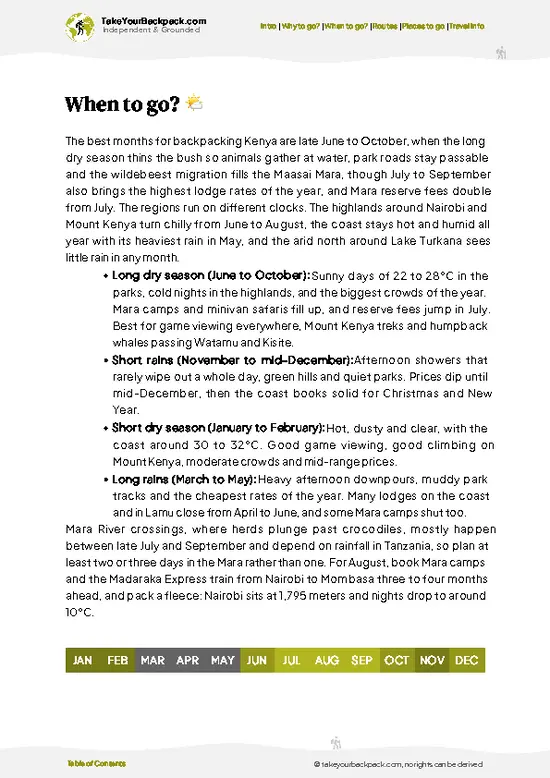
  • Topic: Weather – Kwale’s climate swings between a hot, humid wet season (March to May) and a drier, cooler stretch (June to October). The dry months offer less mud and more trail-friendly conditions, crucial for backpackers who want to move fast and light.

  • Topic: Temperature – Expect highs around 28-32°C (82-90°F) during the dry season, with nights cooling to a comfortable 20°C (68°F). Wet season temps hover slightly higher but come with heavy rains that can slow you down.

  • Topic: Daylight Hours – Near the equator, daylight stays steady year-round, roughly 12 hours daily. This consistency means you can plan your hikes and explorations without worrying about early sunsets.

  • Topic: Crowds – Peak tourist influx aligns with the dry season, especially July and August. If you want quieter
read more 👉

  • Topic: Weather – Kwale’s climate swings between a hot, humid wet season (March to May) and a drier, cooler stretch (June to October). The dry months offer less mud and more trail-friendly conditions, crucial for backpackers who want to move fast and light.

  • Topic: Temperature – Expect highs around 28-32°C (82-90°F) during the dry season, with nights cooling to a comfortable 20°C (68°F). Wet season temps hover slightly higher but come with heavy rains that can slow you down.

  • Topic: Daylight Hours – Near the equator, daylight stays steady year-round, roughly 12 hours daily. This consistency means you can plan your hikes and explorations without worrying about early sunsets.

  • Topic: Crowds – Peak tourist influx aligns with the dry season, especially July and August. If you want quieter trails and better deals, shoulder months like June or September are smarter bets.

  • Topic: Seasonal Activities – Dry months unlock outdoor adventures like coastal snorkeling and forest treks. The wet season, while challenging, brings lush landscapes and bird migrations—great if you’re after nature’s spectacle over comfort.

  • Topic: Price Fluctuations – Expect accommodation and transport costs to spike during the dry season’s peak. Traveling just before or after this window can save you a significant chunk without sacrificing too much on experience quality.


Pro-tip: Aim for the early dry season (June) to balance trail conditions, crowd size, and wallet impact—this is where smart timing turns a trip from good to memorable.


source: climatestotravel.comJANJanuary: good for travelingFEBFebruary: good for travelingMARMarch: fair for travelingAPRApril: fair for travelingMAYMay: fair for travelingJUNJune: highly recommended for travelingJULJuly: highly recommended for travelingAUGAugust: highly recommended for travelingSEPSeptember: highly recommended for travelingOCTOctober: good for travelingNOVNovember: good for travelingDECDecember: good for traveling
kenya-city-kwale v1
© Google |

✈️ The backpacker research shortcutKenya Travel Guide

An offline-friendly backpacking guide with optimized travel routes, ranked highlights, transport advice, and the best areas to stay.
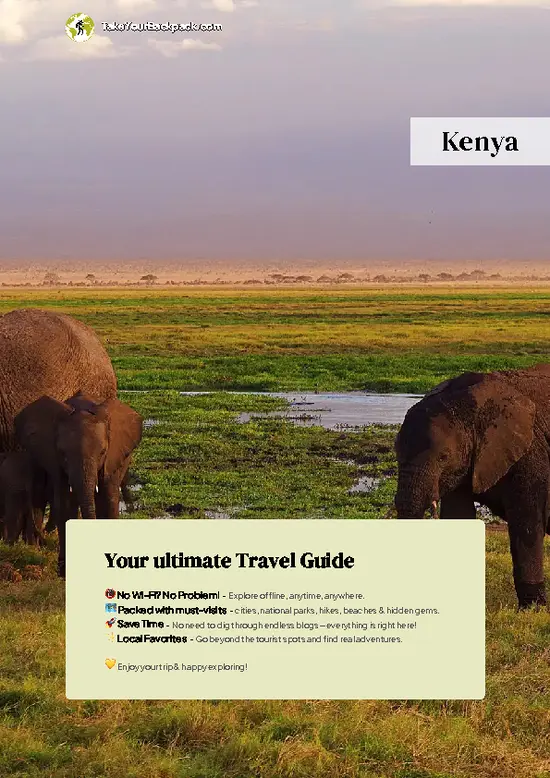
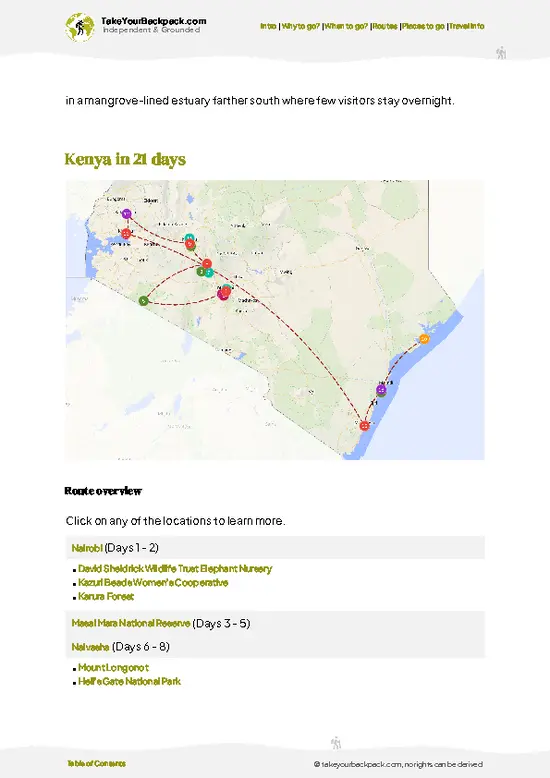
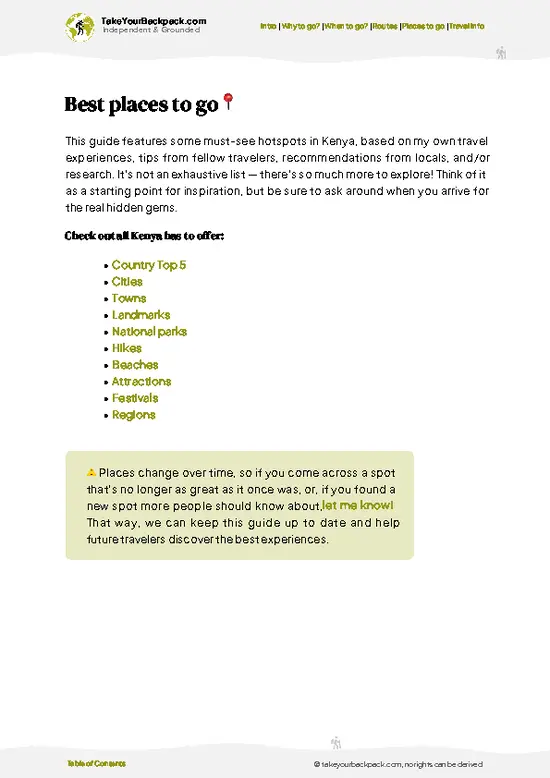
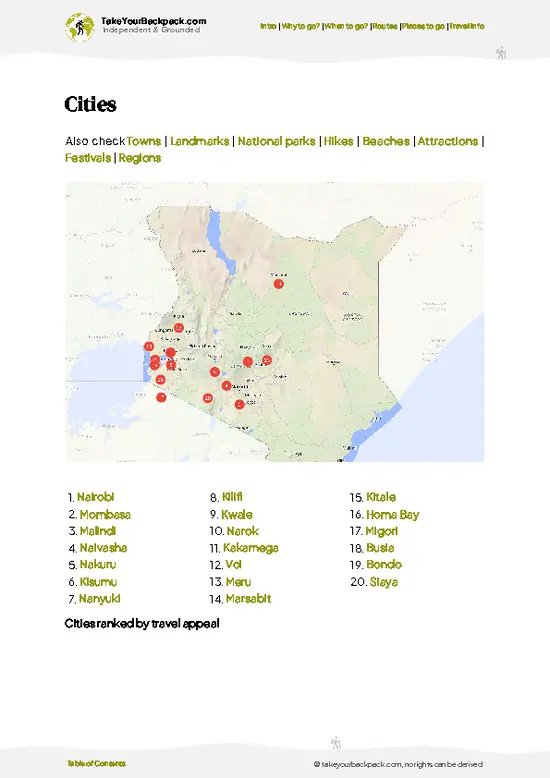
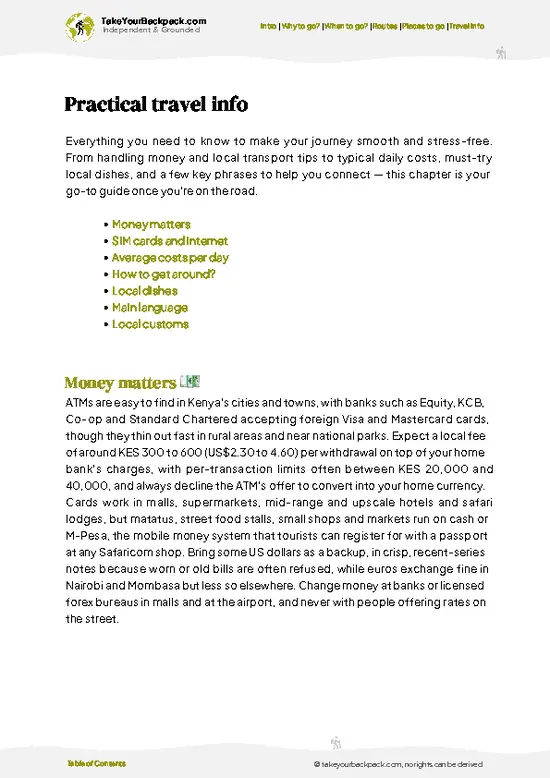
example page 0 from our offline Travel Guide for Kenya
example page 1 from our offline Travel Guide for Kenya
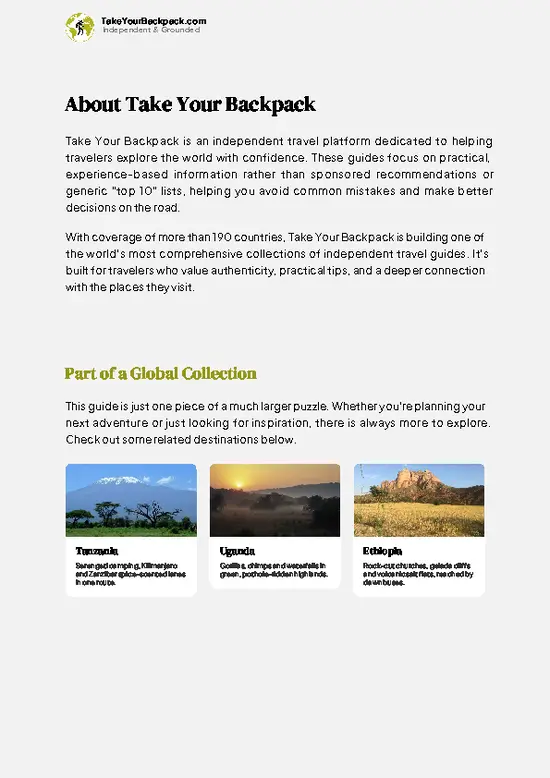
example page 2 from our offline Travel Guide for Kenya
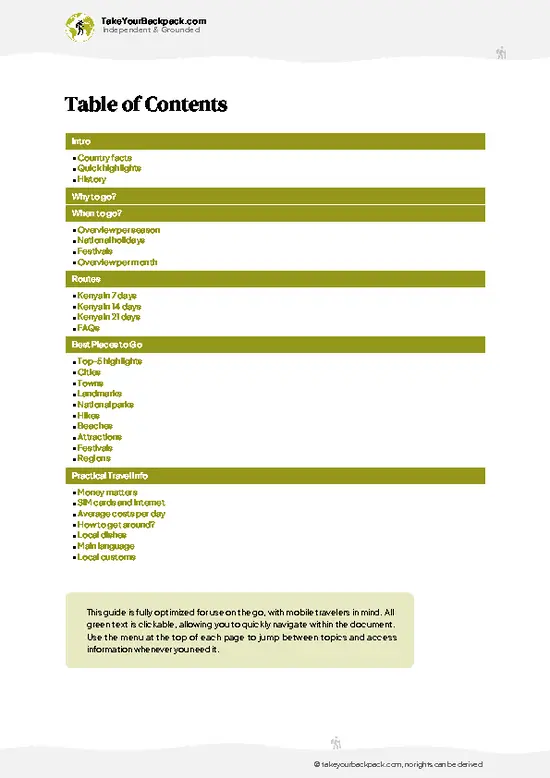
example page 3 from our offline Travel Guide for Kenya
example page 4 from our offline Travel Guide for Kenya
example page 5 from our offline Travel Guide for Kenya
example page 6 from our offline Travel Guide for Kenya
example page 7 from our offline Travel Guide for Kenya
The digital guide (429 pages) contains:
114 highlights, ranked by travel appeal
Optimized 7, 14 & 21-day travel routes
Cities, national parks, landmarks, beaches
How to get around
Offline-friendly for travel without Wi-Fi
👉 Click to see all 30+ guide features

📅 Plan smarter in minutes, not weeks
Month by month travel advice
Festivals & national holidays
Budget expectations

🗺️ Go to the right places, skip the overrated ones
Honest pros & cons of destinations
Top hikes, parks & viewpoints
Lesser-known places most travelers miss
Clear “worth it vs skip it” guidance

🛏️ Travel smoothly without rookie mistakes
Best areas to stay
Transport systems explained simply
Common scams & safety advice
SIM cards, money & practical tips

🌍 Understand the country, not just visit it
Culture & traditions
52 Essential phrases & customs
Festivals worth planning around
Traveler-friendly historical context
Insights that make places more meaningful

📱 Built for real travel conditions
Fully downloadable PDF
Works completely offline
Optimized for phone use
Useful in remote areas & buses
Everything in one place
Save weeks of stressful planning
Get instant access to your full guide. 30‑day money-back guarantee.


By proceeding you agree to our terms.
Sent to your inbox immediately after payment • 100% Secure Checkout
Best Backpacking Travel Advisor 2025 tourism awardBest Backpacking
Travel Advisor
2025
What others say about Take Your Backpack Guides:
⭐⭐⭐⭐⭐
Fantastic, amazing amount of information!
⭐⭐⭐⭐⭐
My goodness this is amazing, it's what I've been looking for hats off too you!
⭐⭐⭐⭐⭐
I think this is absolutely BRILLIANT
⭐⭐⭐⭐
Very complete and informative. It's still missing places, but I gotta to commend you
⭐⭐⭐⭐⭐
This is truly amazing, thank you, can't wait to explore it with my kids!
⭐⭐⭐⭐⭐
Awesome resource, thank you!
⭐⭐⭐⭐⭐
This is amazing! Can't wait to explore the ones I haven't seen
⭐⭐⭐⭐
I love this! Well done, great idea.
⭐⭐⭐⭐⭐
Thanks for taking the time to make this gem!
⭐⭐⭐⭐⭐
This might be the best website I've ever seen.
⭐⭐⭐⭐⭐
Congratulations, and thank you so much for your work; it's incredibly valuable.
⭐⭐⭐⭐
In all seriousness I think you did a great job pointing out the important spots
⭐⭐⭐⭐⭐
10/10 very good
⭐⭐⭐⭐⭐
As someone who's only just starting to visit regularly this is awesome, thank you.
⭐⭐⭐⭐
Thank you very much! I'm going to visit my dad, it's going to be very useful!
⭐⭐⭐⭐⭐
This is really cool! We'll be travelling for the first time and this definitely come in handy.
⭐⭐⭐⭐⭐
You are now our minister of culture, congratulations 👨‍💼
⭐⭐⭐⭐⭐
Just wanted to tell you that this is a pearl! Going to follow your recommendations.
⭐⭐⭐⭐⭐
This is so cool. I'll definitely be using the resource for my travels soon.
⭐⭐⭐⭐⭐
This is very impressive! Good work.
⭐⭐⭐⭐⭐
This is an amazing and informative site. Very well done!

🛏️ Where to stay?Best areas and accommodation options

Kwale’s backpacker scene centers around two main neighborhoods that balance safety, social buzz, and budget-friendly options. First up is the town center—compact, walkable, and where you’ll find the most hostels catering to solo travelers. It’s not flashy, but it’s practical: easy access to local markets, eateries, and transport hubs. The vibe here is straightforward and communal, perfect if you want to plug into a network of fellow backpackers without the distractions of tourist traps.

A short ride from the center, the area near Ukunda offers a slightly quieter, more laid-back atmosphere. It’s … read more 👉
Kwale’s backpacker scene centers around two main neighborhoods that balance safety, social buzz, and budget-friendly options. First up is the town center—compact, walkable, and where you’ll find the most hostels catering to solo travelers. It’s not flashy, but it’s practical: easy access to local markets, eateries, and transport hubs. The vibe here is straightforward and communal, perfect if you want to plug into a network of fellow backpackers without the distractions of tourist traps.

A short ride from the center, the area near Ukunda offers a slightly quieter, more laid-back atmosphere. It’s still safe and has a handful of budget accommodations, but the draw here is the proximity to the coast and the chance to unwind after days of trekking or exploring. It’s less about nightlife and more about chilling with other travelers who value comfort without breaking the bank.

Compared to more residential or commercial zones, these two spots keep you close to the pulse of backpacker life—social enough to meet people, safe enough to relax, and affordable enough to stretch your trip longer.

🚌 Getting aroundMoving around without the hassle

Kwale moves at its own rhythm—less a clockwork machine and more a pulse you learn to read. It’s not about strict timetables but about catching the wave of local momentum. Here, schedules are suggestions, and the real flow is in the ebb and surge of people, vehicles, and markets. If you want to master Kwale’s transit game, you need to think less like a tourist and more like a local who knows when to jump on the next ride or when to stretch your legs and take it slow. The trade-off between time, money, and comfort is constant, and your choices reveal how much you value each.


  • Matatus (Shared Minibuses): The backbone of Kwale’s transit, these run roughly from 6 AM to 9 PM, cost about 50-100 KES per trip, and are fast if you can handle the crowd crush and unpredictable stops. They’re cheap
read more 👉
Kwale moves at its own rhythm—less a clockwork machine and more a pulse you learn to read. It’s not about strict timetables but about catching the wave of local momentum. Here, schedules are suggestions, and the real flow is in the ebb and surge of people, vehicles, and markets. If you want to master Kwale’s transit game, you need to think less like a tourist and more like a local who knows when to jump on the next ride or when to stretch your legs and take it slow. The trade-off between time, money, and comfort is constant, and your choices reveal how much you value each.


  • Matatus (Shared Minibuses): The backbone of Kwale’s transit, these run roughly from 6 AM to 9 PM, cost about 50-100 KES per trip, and are fast if you can handle the crowd crush and unpredictable stops. They’re cheap and quick but expect tight quarters and a noisy ride.


  • Boda-Bodas (Motorcycle Taxis): Available 24/7, these are your go-to for speed and door-to-door service, especially when time is tight. Prices vary but start around 100 KES for short hops. They’re less comfortable and riskier but unbeatable for cutting through traffic and reaching spots off the main roads.


  • Walking: The ultimate budget option and a way to soak in Kwale’s street life. Distances within town are manageable, and walking costs nothing but time and energy. It’s slower but offers unmatched immersion and zero hassle with schedules or fares.


  • Local Taxis: Less common and pricier, expect to pay 300-500 KES for a short trip. They offer more comfort and privacy but sacrifice budget and sometimes speed, as drivers often wait for full fares or take longer routes.


  • Private Car Hire: For those who want maximum comfort and flexibility, renting a car or hiring a driver is an option. It’s the priciest choice, starting around 3,000 KES per day, but it saves time and lets you explore beyond Kwale’s core without the hassle of public transit.

👛 Costs (as of 14 October 2025)Typical daily expenses

Backpacking in Kwale, Kenya, offers a clear trade-off between stretching your budget and maintaining comfort, with costs that reflect the town’s modest scale and local economy.
  • Dorm Accommodation (High Season): Expect to pay around $8 to $12 per night. High season drives prices up slightly due to demand, but options remain basic—think simple beds in shared rooms with minimal frills.
  • Dorm Accommodation (Off-Season): Prices drop to about $5 to $8 per night. Fewer travelers mean better bargaining power and sometimes added perks like free Wi-Fi or breakfast.
  • Meals: Local eateries serve hearty meals for $2 to $5. Street food is even cheaper, often under $2, but expect simple, filling dishes rather than gourmet fare. Western-style restaurants will push your meal cost higher, around $7 to $10.
read more 👉
Backpacking in Kwale, Kenya, offers a clear trade-off between stretching your budget and maintaining comfort, with costs that reflect the town’s modest scale and local economy.
  • Dorm Accommodation (High Season): Expect to pay around $8 to $12 per night. High season drives prices up slightly due to demand, but options remain basic—think simple beds in shared rooms with minimal frills.
  • Dorm Accommodation (Off-Season): Prices drop to about $5 to $8 per night. Fewer travelers mean better bargaining power and sometimes added perks like free Wi-Fi or breakfast.
  • Meals: Local eateries serve hearty meals for $2 to $5. Street food is even cheaper, often under $2, but expect simple, filling dishes rather than gourmet fare. Western-style restaurants will push your meal cost higher, around $7 to $10.
  • Local Transport: Matatus and boda-bodas (motorcycle taxis) dominate. Short rides cost between $0.50 and $1.50. Negotiating fares upfront is key to avoid surprises.
  • City Transport Pass: Kwale doesn’t have a formal city transport pass system. Budgeting for daily local transport means relying on cash for individual rides.
  • Basic Activities/Entry Fees: Most local attractions and natural sites charge modest fees, typically $2 to $5. Guided tours or specialized activities can push this higher, but independent exploration keeps costs low.
  • Miscellaneous Expenses: Budget $1 to $3 for essentials like bottled water, snacks, or small tips. Internet cafes and SIM cards are affordable, with data packages around $5 for decent coverage.

Add it all up, and you’re looking at a daily spend between $15 and $30, depending on your choices around accommodation and dining. The real trade-off here is between comfort and cost—opting for off-season stays and local meals keeps your budget lean, while splurging on private rooms or Western-style dining pushes you toward the higher end. Understanding these trade-offs lets you tailor your Kwale experience exactly how you want it.
⚠️ Prices can change and everyone travels differently, so take this as a rough guide. Hope it helps you plan your adventure!

🚌 Day tripsEasy escapes and nearby places

Kwale, Kenya, is a backpacker’s dream base for day trips, offering a blend of adventure, culture, and stunning landscapes without breaking the bank. Here’s how to make the most of your time.

Shimba Hills National Reserve
Just a short 45-minute drive from Kwale, Shimba Hills is a lush escape where you can spot elephants, giraffes, and a variety of birds. The park’s trails lead you through dense forests and open grasslands, making it a perfect spot for hiking and wildlife photography. Bring a packed lunch to enjoy at one of the scenic viewpoints. Budget around $20 for entrance and transport. The best time to visit is during the dry season from June to October, when wildlife is more active. First-timers often underestimate the need for sturdy shoes; those trails can be slippery!


Wasini read more 👉
Kwale, Kenya, is a backpacker’s dream base for day trips, offering a blend of adventure, culture, and stunning landscapes without breaking the bank. Here’s how to make the most of your time.

Shimba Hills National Reserve
Just a short 45-minute drive from Kwale, Shimba Hills is a lush escape where you can spot elephants, giraffes, and a variety of birds. The park’s trails lead you through dense forests and open grasslands, making it a perfect spot for hiking and wildlife photography. Bring a packed lunch to enjoy at one of the scenic viewpoints. Budget around $20 for entrance and transport. The best time to visit is during the dry season from June to October, when wildlife is more active. First-timers often underestimate the need for sturdy shoes; those trails can be slippery!


Wasini Island
A 30-minute boat ride from the mainland, Wasini Island is a slice of paradise. Spend your day snorkeling in the coral reefs of Kisite Marine Park, where vibrant fish and sea turtles abound. The island also offers a glimpse into local Swahili culture, with fresh seafood and friendly locals. Expect to spend about $30 for the boat trip and snorkeling gear. The ideal time to visit is during the dry months, from December to March. A common mistake is not checking the tide schedules; low tide can limit your snorkeling experience.


Diani Beach
Only an hour away, Diani Beach is famous for its white sands and turquoise waters. It’s perfect for a day of relaxation or water sports like kite surfing and paddleboarding. Grab a local meal at one of the beachside shacks for an authentic taste of coastal cuisine. Budget around $15 for transport and food. The best time to go is during the dry season, but avoid weekends when it gets crowded. Many first-timers forget sunscreen; the sun here is intense!
👉 Explore Diani Beach

Mombasa Old Town
About an hour and a half from Kwale, Mombasa’s Old Town is a cultural treasure trove. Wander through narrow streets lined with Swahili architecture, visit the Fort Jesus, and indulge in local street food. The total cost for transport and snacks can be around $20. The cooler mornings are the best time to explore before the heat sets in. A common mistake is not allowing enough time to get lost in the charm of the alleys; it’s part of the experience!
Want to know what more Kenya offers?
The Kenya Travel Guide describes 114 highlights, from cities to national parks, from beaches to hikes

Get the Travel Guide -

🍲 FoodLocal Flavors for Backpackers

In Kwale, food is a vibrant tapestry of flavors that tells the story of its coastal heritage. You can’t miss trying ugali, a staple made from maize flour, often served with a rich fish stew or spicy vegetable sauce. The samosas here are a local favorite, crispy and stuffed with spiced potatoes or meat, perfect for a quick snack from a street vendor.

For drinks, sample kefir, a tangy fermented milk drink that cools you down after a day in the sun. If you’re feeling adventurous, try ajon, a local brew made from fermented millet, often enjoyed in social settings.

Backpackers flock to bustling markets where the air is thick with the scent of grilled meats and fresh produce. Casual eateries line the streets, offering hearty meals at prices that won’t break the bank.

When dining, expect a communal … read more 👉
In Kwale, food is a vibrant tapestry of flavors that tells the story of its coastal heritage. You can’t miss trying ugali, a staple made from maize flour, often served with a rich fish stew or spicy vegetable sauce. The samosas here are a local favorite, crispy and stuffed with spiced potatoes or meat, perfect for a quick snack from a street vendor.

For drinks, sample kefir, a tangy fermented milk drink that cools you down after a day in the sun. If you’re feeling adventurous, try ajon, a local brew made from fermented millet, often enjoyed in social settings.

Backpackers flock to bustling markets where the air is thick with the scent of grilled meats and fresh produce. Casual eateries line the streets, offering hearty meals at prices that won’t break the bank.

When dining, expect a communal vibe; sharing food is common, and it’s polite to greet your fellow diners. Embrace the slow pace of meals here; it’s all part of the experience.

🛡️ SafetyStaying Safe: What Travelers Should Know

Kwale, Kenya, is generally safe, but a few situational awareness tips can enhance your experience. Stick to well-lit areas at night, especially if you’re solo. The local vibe is friendly, but avoid displaying valuables; it can attract unwanted attention.

Common scams include overly eager guides offering unsolicited help or inflated prices for services. If someone approaches you with a deal that seems too good to be true, trust your instincts.

Everyday annoyances might include persistent street vendors. A polite but firm “no, thank you” usually does the trick. Carry yourself confidently and engage with locals; they often appreciate genuine interest. By staying aware and grounded, you can navigate Kwale with ease and enjoy its authentic charm.

Other Kenyan cities near Kwale

Explore more nearby:

  • Mombasa—Indian Ocean port, Old Town, Swahili cuisine| 27 km away
  • Kilifi—coastal town, creek estuary, Swahili architecture| 76 km away
  • Voi—Tsavo gateway, railway junction, market bustle| 133 km away

💡 Not sure where to go next?
Create a personalized itinerary for Kenya including Kwale and the places that fit your trip.

Generate my itinerary

👉 Discover all cities

Or checkout all Kenya has to offer (think cities, towns, villages, national parks, hikes, beaches, festivals)
Country photo of Kenya

We 💚 feedbackIs it worth it?

Kwale has a laid-back vibe that feels like a warm embrace. The best surprise? The local food scene—fresh seafood and spicy dishes that dance on your palate. But a heads-up: the beaches can get crowded during peak season, so aim for early mornings or late afternoons for some solitude. Embrace the slower pace; it’s a place that rewards those who linger and explore. Trust me, you’ll want to soak it all in.

✍️ Help improve this page!
The information on this page is based on in-depth research, insights shared by experienced travelers, and feedback from the local travel community in Kenya. While every effort is made to keep the information accurate and current, conditions can change — so if you spot anything incorrect or outdated, please get in touch.


🙋‍♂️ Give feedback

👋 Meet the founderWho’s Behind Take Your Backpack?

Johan, backpacker and founder of TakeYourBackpackHi, I’m Johan (Netherlands 🇳🇱), the creator of TakeYourBackpack. Over the past decade, I’ve backpacked through 80+ countries across six continents, gaining extensive experience with independent travel, long-term trips, and overland routes.

This site is built on a combination of firsthand travel experience and carefully curated insights from other backpackers. Many guides are based on places I’ve personally visited, while others bring together tips, observations, and practical advice shared by trusted travelers I’ve met along the way.

The goal is to provide realistic, experience-driven guidance — not generic itineraries — so you can explore destinations with better context, clearer expectations, and more confidence.

Get full Kenya guide •
Instant download • 114 highlights • Full Offline guide