×

Kenya🇰🇪 | attractionsLamu MuseumSwahili culture, maritime history, dhow models | things to do and best time to go

Explore Mamba Village Crocodile FarmExplore Lamu Fort

Backpacking in Lamu Museum
🏆 Top pickattraction ranked #4
By Johan Kruseman 🇳🇱 | Updated June 6, 2026

A barefoot pause on cool coral stone, the air thick with the scent of old wood and sea salt. Somewhere, a muezzin’s call threads through the open window, mixing with the scrape of a dhow’s hull against the harbor wall. This is the Lamu Museum—right in the heart of Lamu Old Town, off Kenya’s northern coast, where the Indian Ocean laps at centuries of Swahili history.

Let’s skip the Instagram fantasy: you won’t find empty halls or polished glass cases here. The museum is compact, sometimes humid, and yes, you’ll share it with a handful of other travelers and the occasional school group. But what you get is the real deal—Swahili culture, Omani doors heavy with stories, and artifacts that feel lived-in, not staged. It’s cheap by Kenyan standards, easy to reach if you’re already in Lamu (which is half the adventure), and a world away from the safari circuit’s crowds and costs. If you want adrenaline, look elsewhere. But if you crave the pulse of a place that’s survived pirates, sultans, and colonial schemes, Lamu Museum delivers the kind of quiet, layered magic that doesn’t need a filter.

Discover everything you want to know in the 📖 Kenya Travel Guide.


Get your Kenya guide
114 ranked highlights, routes & tips, works offline (429 pages)
Loading the map 🌍
CLICK TO FILTER
cities
towns
landmarks
national parks
hikes
beaches
attractions
festivals
regions
SHOW COUNTRY’S BESTSHOW ALL

✨ Why go?
Ranked #4 attraction in Kenya
Why Lamu Museum should be on your travel list

The Lamu Museum isn’t just another stop on Kenya’s coast—it’s a checkpoint for anyone serious about understanding the country’s layered history. Sure, it doesn’t have the flashy appeal of safari parks or the beach party vibe of Mombasa, but that’s exactly why it’s worth your time. This place is a vault of Swahili culture, showcasing centuries of trade, migration, and local craftsmanship that shaped East Africa’s identity. The museum’s collection of ancient coins, traditional dhow models, and old manuscripts isn’t just dusty relics; it’s a tangible connection to the Indian Ocean’s trading empire that once thrived here.

Don’t expect crowds or tourist traps. Lamu Island itself is a slow-paced, almost meditative place, and the museum fits right into that rhythm. It’s a low-effort, high-rewardread more 👉
The Lamu Museum isn’t just another stop on Kenya’s coast—it’s a checkpoint for anyone serious about understanding the country’s layered history. Sure, it doesn’t have the flashy appeal of safari parks or the beach party vibe of Mombasa, but that’s exactly why it’s worth your time. This place is a vault of Swahili culture, showcasing centuries of trade, migration, and local craftsmanship that shaped East Africa’s identity. The museum’s collection of ancient coins, traditional dhow models, and old manuscripts isn’t just dusty relics; it’s a tangible connection to the Indian Ocean’s trading empire that once thrived here.

Don’t expect crowds or tourist traps. Lamu Island itself is a slow-paced, almost meditative place, and the museum fits right into that rhythm. It’s a low-effort, high-reward stop—easy to explore in under an hour but packed with insights that deepen your entire Kenyan experience. For backpackers threading through the coast, it’s a milestone that breaks up the journey with something genuinely enriching. If you want to move beyond the surface and understand the real story behind the Swahili coast, this museum is your no-nonsense gateway.
Want to include Lamu Museum in your Kenya route?
Create a personalized Kenya itinerary that includes Lamu Museum and the places that fit your trip — based on your travel style, budget, and available time. Get your route in seconds.

Generate my trip

💡 HighlightsDon't-miss highlights and experiences

The Swahili Door Gallery
Forget the Instagram shots of ornate doors—here, you get the real story. These doors aren’t just pretty backdrops; they’re status symbols, coded messages, and family history carved into hardwood. The museum lines up a parade of original Lamu doors, each with its own swagger. You’ll spot Indian, Arab, and African influences colliding in the woodwork. If you want to understand how trade, religion, and ego shaped this island, start here. Run your fingers over the grooves. This is Lamu’s social media, 200 years before hashtags.


The Traditional Swahili House Exhibit
You don’t just look at old stuff—you step inside it. The museum’s reconstructed Swahili house is a time capsule, right down to the coral rag walls and cool, shadowy interiors. It’s not a sanitized diorama; … read more 👉
The Swahili Door Gallery
Forget the Instagram shots of ornate doors—here, you get the real story. These doors aren’t just pretty backdrops; they’re status symbols, coded messages, and family history carved into hardwood. The museum lines up a parade of original Lamu doors, each with its own swagger. You’ll spot Indian, Arab, and African influences colliding in the woodwork. If you want to understand how trade, religion, and ego shaped this island, start here. Run your fingers over the grooves. This is Lamu’s social media, 200 years before hashtags.


The Traditional Swahili House Exhibit
You don’t just look at old stuff—you step inside it. The museum’s reconstructed Swahili house is a time capsule, right down to the coral rag walls and cool, shadowy interiors. It’s not a sanitized diorama; it’s a lesson in how people beat the heat, kept their privacy, and made a home out of limited space and materials. The layout is a masterclass in practical design, with a courtyard that doubles as a social hub and a sanctuary from the relentless coastal sun. You’ll leave with a new respect for the phrase “less is more.”


The Maritime Room
Lamu’s soul is saltwater. The Maritime Room is where you finally get why. Here, battered dhow models, ancient navigation tools, and weathered maps tell the story of how this island survived and thrived by sea. It’s not a dry history lesson. You’ll see the ingenuity that let Lamu’s sailors outsmart monsoon winds and pirates alike. The room smells faintly of rope and old wood, and if you listen, you can almost hear the creak of a hull and the slap of waves. This is the real engine of Lamu’s rise—and its stubborn independence.


The Donkey Culture Display
Yes, donkeys. Laugh if you want, but these animals are the unsung heroes of Lamu. The museum doesn’t romanticize it: you’ll see the tools, harnesses, and even the old licenses that made donkeys the backbone of island logistics. No cars, no problem—donkeys hauled everything from fresh water to wedding guests. It’s a gritty, unvarnished look at daily life, and it’s more interesting than any camel ride you’ll find on the mainland.


Artifacts of Everyday Life
Skip the gold and jewels—this is where you find the real treasure. The museum’s collection of household items, musical instruments, and ceremonial gear is a crash course in Swahili creativity. You’ll see how people turned scarcity into style, from coconut-shell ladles to intricately woven mats. It’s not about luxury; it’s about making do, and making it beautiful. This is the heartbeat of Lamu—resourceful, communal, and quietly defiant.
Spotted a mistake or missing something? Contact us.

🌤️ When to go?When to go for the best experience


  • Weather: The best time to visit Lamu Museum is during the dry season from June to October. Expect warm, dry days with temperatures hovering between 28-32°C (82-90°F). Avoid the heavy rains of April and May, which can make exploring the narrow streets and outdoor exhibits a soggy mess.

  • Temperature: Daytime highs in the dry season are comfortable, rarely exceeding 32°C (90°F), but nights can cool down to around 22°C (72°F). The wet season brings humidity that can push daytime temps higher, making walking around less pleasant.

  • Daylight Hours: Lamu enjoys roughly 12 hours of daylight year-round, but the dry months offer clearer skies and more reliable sunshine, perfect for photography and wandering without the threat of sudden downpours.

  • Crowds: Tourist numbers peak during July and August
read more 👉

  • Weather: The best time to visit Lamu Museum is during the dry season from June to October. Expect warm, dry days with temperatures hovering between 28-32°C (82-90°F). Avoid the heavy rains of April and May, which can make exploring the narrow streets and outdoor exhibits a soggy mess.

  • Temperature: Daytime highs in the dry season are comfortable, rarely exceeding 32°C (90°F), but nights can cool down to around 22°C (72°F). The wet season brings humidity that can push daytime temps higher, making walking around less pleasant.

  • Daylight Hours: Lamu enjoys roughly 12 hours of daylight year-round, but the dry months offer clearer skies and more reliable sunshine, perfect for photography and wandering without the threat of sudden downpours.

  • Crowds: Tourist numbers peak during July and August when international visitors escape colder climates. The museum can feel crowded, especially on weekends. Visiting in June or September means fewer people and a more relaxed vibe.

  • Seasonal Activities: The Lamu Cultural Festival in November is a highlight but expect higher prices and crowds. For a quieter experience focused on the museum itself, stick to the dry season months before or after the festival.

  • Price Fluctuations: Accommodation and local transport costs spike during the dry season and festival times. Visiting just outside these peak months can save you money without sacrificing the experience.


Pro-tip: Aim for June or September to dodge crowds and rain, enjoy pleasant weather, and get the best bang for your buck at Lamu Museum.


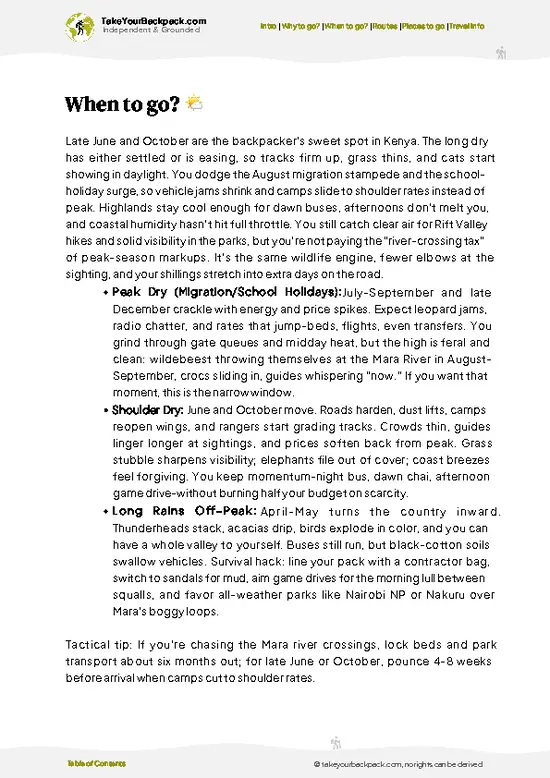
source: climatestotravel.comJANJanuary: good for travelingFEBFebruary: good for travelingMARMarch: fair for travelingAPRApril: below average for travelingMAYMay: below average for travelingJUNJune: excellent for travelingJULJuly: highly recommended for travelingAUGAugust: highly recommended for travelingSEPSeptember: excellent for travelingOCTOctober: excellent for travelingNOVNovember: good for travelingDECDecember: good for traveling
kenya-attraction-lamu-museum
© Google |

✈️ The backpacker research shortcutKenya Travel Guide

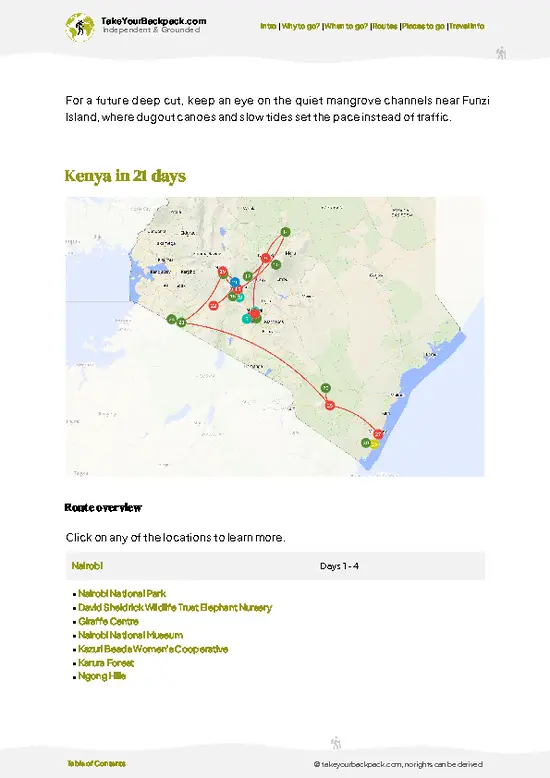
An offline-friendly backpacking guide with optimized travel routes, ranked highlights, transport advice, and the best areas to stay.
example page 0 from our offline Travel Guide for Kenya
example page 1 from our offline Travel Guide for Kenya
example page 2 from our offline Travel Guide for Kenya
example page 3 from our offline Travel Guide for Kenya
example page 4 from our offline Travel Guide for Kenya
example page 5 from our offline Travel Guide for Kenya
example page 6 from our offline Travel Guide for Kenya
example page 7 from our offline Travel Guide for Kenya
The digital guide (429 pages) contains:
114 highlights, ranked by travel appeal
Optimized 7, 14 & 21-day travel routes
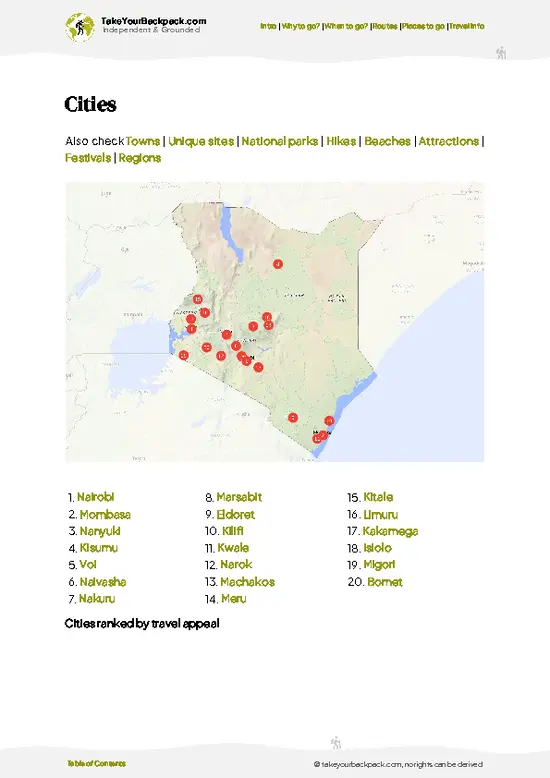
Cities, national parks, landmarks, beaches
How to get around
Offline-friendly for travel without Wi-Fi
👉 Click to see all 30+ guide features

📅 Plan smarter in minutes, not weeks
Month by month travel advice
Festivals & national holidays
Budget expectations

🗺️ Go to the right places, skip the overrated ones
Honest pros & cons of destinations
Top hikes, parks & viewpoints
Lesser-known places most travelers miss
Clear “worth it vs skip it” guidance

🛏️ Travel smoothly without rookie mistakes
Best areas to stay
Transport systems explained simply
Common scams & safety advice
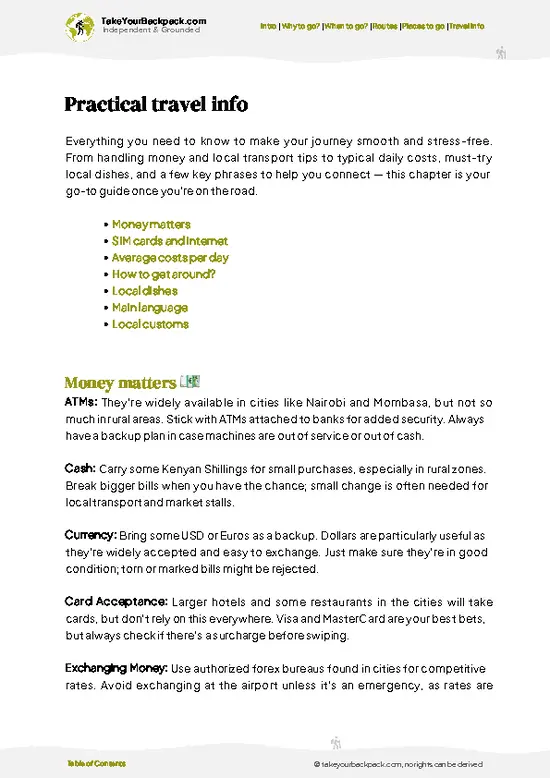
SIM cards, money & practical tips

🌍 Understand the country, not just visit it
Culture & traditions
52 Essential phrases & customs
Festivals worth planning around
Traveler-friendly historical context
Insights that make places more meaningful

📱 Built for real travel conditions
Fully downloadable PDF
Works completely offline
Optimized for phone use
Useful in remote areas & buses
Everything in one place
Save weeks of stressful planning
Get instant access to your full guide. 30‑day money-back guarantee.


By proceeding you agree to our terms.
Sent to your inbox immediately after payment • 100% Secure Checkout
Best Backpacking Travel Advisor 2025 tourism awardBest Backpacking
Travel Advisor
2025
What others say about Take Your Backpack Guides:
⭐⭐⭐⭐⭐
Fantastic, amazing amount of information!
⭐⭐⭐⭐⭐
My goodness this is amazing, it's what I've been looking for hats off too you!
⭐⭐⭐⭐⭐
I think this is absolutely BRILLIANT
⭐⭐⭐⭐
Very complete and informative. It's still missing places, but I gotta to commend you
⭐⭐⭐⭐⭐
This is truly amazing, thank you, can't wait to explore it with my kids!
⭐⭐⭐⭐⭐
Awesome resource, thank you!
⭐⭐⭐⭐⭐
This is amazing! Can't wait to explore the ones I haven't seen
⭐⭐⭐⭐
I love this! Well done, great idea.
⭐⭐⭐⭐⭐
Thanks for taking the time to make this gem!
⭐⭐⭐⭐⭐
This might be the best website I've ever seen.
⭐⭐⭐⭐⭐
Congratulations, and thank you so much for your work; it's incredibly valuable.
⭐⭐⭐⭐
In all seriousness I think you did a great job pointing out the important spots
⭐⭐⭐⭐⭐
10/10 very good
⭐⭐⭐⭐⭐
As someone who's only just starting to visit regularly this is awesome, thank you.
⭐⭐⭐⭐
Thank you very much! I'm going to visit my dad, it's going to be very useful!
⭐⭐⭐⭐⭐
This is really cool! We'll be travelling for the first time and this definitely come in handy.
⭐⭐⭐⭐⭐
You are now our minister of culture, congratulations 👨‍💼
⭐⭐⭐⭐⭐
Just wanted to tell you that this is a pearl! Going to follow your recommendations.
⭐⭐⭐⭐⭐
This is so cool. I'll definitely be using the resource for my travels soon.
⭐⭐⭐⭐⭐
This is very impressive! Good work.
⭐⭐⭐⭐⭐
This is an amazing and informative site. Very well done!

🛏️ Where to stay?Best areas to stay in Kenya

Lamu Museum sits in the heart of Lamu Old Town, a UNESCO World Heritage site that’s often painted as a serene throwback to Swahili culture. The Instagram crowd will show you sun-dappled alleys and pristine dhow boats, but here’s the real deal: Lamu Old Town is a living, breathing maze where electricity flickers, and the pace is slow—sometimes frustratingly so. It’s not polished for tourists, and that’s exactly why it’s worth your time.

For backpackers, the best place to stay is right inside or just a stone’s throw from Old Town. This area is where you’ll find the pulse of Lamu’s social life—locals … read more 👉
Lamu Museum sits in the heart of Lamu Old Town, a UNESCO World Heritage site that’s often painted as a serene throwback to Swahili culture. The Instagram crowd will show you sun-dappled alleys and pristine dhow boats, but here’s the real deal: Lamu Old Town is a living, breathing maze where electricity flickers, and the pace is slow—sometimes frustratingly so. It’s not polished for tourists, and that’s exactly why it’s worth your time.

For backpackers, the best place to stay is right inside or just a stone’s throw from Old Town. This area is where you’ll find the pulse of Lamu’s social life—locals chatting over chai, fishermen hauling in their catch, and travelers swapping stories in small guesthouses or homestays. It’s safe, but you need to respect local customs and keep your wits about you after dark. The streets are narrow and winding, so it’s easy to get lost, but that’s part of the charm.

If you want to be near the museum and still meet other backpackers, focus on the neighborhoods just outside the busiest tourist spots. These areas offer a quieter vibe without cutting you off from the action. You’ll find communal spaces where travelers gather, and the cost of staying here is far friendlier than the few luxury lodges that dominate the waterfront. This is where you get the authentic Lamu experience—rough edges, rich culture, and a chance to connect with both locals and fellow adventurers.

👛 Costs (as of 8 October 2025)What things cost and how to budget

As of the latest available information, the entrance fee for Lamu Museum is approximately KES 500 per adult for non-residents, which is about €4.50. For children under 16 years, the fee is KES 250, approximately €2.25. Additional costs may include guided tours, which can vary in price. Please note that these fees are subject to change, and it's advisable to check the official website for the most current information.

source: nmk.go.ke
⚠️ Prices can change and everyone travels differently, so take this as a rough guide. Hope it helps you plan your adventure!

Other Kenyan attractions near Lamu Museum

Explore more nearby:


💡 Not sure where to go next?
Create a personalized itinerary for Kenya including Lamu Museum and the places that fit your trip.

Generate my itinerary

👉 Discover all attractions

Or checkout all Kenya has to offer (think cities, towns, villages, national parks, hikes, beaches, festivals)
Country photo of Kenya

We 💚 feedbackWhat to keep in mind

The Lamu Museum isn’t a flashy spot packed with crowds, but that’s exactly why it’s worth your time. It’s quiet, almost meditative, letting you soak in the layers of Swahili history without the usual tourist noise. The real magic? The way the exhibits connect you to Lamu’s deep-rooted culture—old dhow models, ancient artifacts, and stories that don’t make the usual guidebooks. Heads up: it’s small and can feel a bit underwhelming if you expect a blockbuster museum. But if you’re here to understand Lamu beyond the beach, this place nails it.

✍️ Help improve this page!
The information on this page is based on in-depth research, insights shared by experienced travelers, and feedback from the local travel community in Kenya. While every effort is made to keep the information accurate and current, conditions can change — so if you spot anything incorrect or outdated, please get in touch.


🙋‍♂️ Give feedback

👋 Meet the founderWho’s Behind Take Your Backpack?

Johan, backpacker and founder of TakeYourBackpackHi, I’m Johan (Netherlands 🇳🇱), the creator of TakeYourBackpack. Over the past decade, I’ve backpacked through 80+ countries across six continents, gaining extensive experience with independent travel, long-term trips, and overland routes.

This site is built on a combination of firsthand travel experience and carefully curated insights from other backpackers. Many guides are based on places I’ve personally visited, while others bring together tips, observations, and practical advice shared by trusted travelers I’ve met along the way.

The goal is to provide realistic, experience-driven guidance — not generic itineraries — so you can explore destinations with better context, clearer expectations, and more confidence.

Get full Kenya guide •
Instant download • 114 highlights • Full Offline guide