×

Kenya🇰🇪 | best attractionsEssential 10 attractions to Explore in Kenya

Kenya’s best attractions are defined by a dynamic interplay of geography, culture, and climate that shapes every backpacker’s journey. From the sweeping savannahs of the Maasai Mara to the bustling streets of Nairobi, each region demands a different set of priorities around time, money, and comfort. Independent travelers quickly learn that choosing a wildlife reserve during the dry season means higher costs but unparalleled game viewing, while coastal towns offer budget-friendly beach vibes with a slower pace and distinct Swahili culture. The trade-offs here are tangible: opting for remote national parks requires longer, rougher travel but rewards with raw, unfiltered encounters, whereas urban attractions provide easier access and safety but less immersion. Understanding these contrasts lets you tailor your itinerary to match your appetite for adventure, budget constraints, and desire for authentic connection. In Kenya, the right attraction isn’t just a destination—it’s a deliberate choice that shapes your entire experience, from vibe and safety to cultural depth and logistical ease.

By Johan Kruseman 🇳🇱 | Updated June 4, 2026
Explore the best festivals in Kenya

Why go?Why Travelers Love These Spots

Kenya’s attractions demand a clear-eyed view of what you’re trading off: time, money, and comfort collide here in ways few other places do. The country’s vast landscapes and rich cultural tapestry offer experiences that unfold slowly, rewarding those willing to invest hours on dusty roads or rugged trails. This isn’t a place for quick stops or polished tourist circuits. Instead, the payoff comes from immersing yourself deeply—whether tracking wildlife across sprawling savannahs or engaging with communities whose traditions have endured centuries. The trade-off is obvious: long travel times often mean fewer stops but richer encounters.

Geographically, Kenya stretches from the Indian Ocean’s humid coast to the arid northern deserts and the high-altitude Rift Valley. This diversity shapes what’s … read more 👉
Kenya’s attractions demand a clear-eyed view of what you’re trading off: time, money, and comfort collide here in ways few other places do. The country’s vast landscapes and rich cultural tapestry offer experiences that unfold slowly, rewarding those willing to invest hours on dusty roads or rugged trails. This isn’t a place for quick stops or polished tourist circuits. Instead, the payoff comes from immersing yourself deeply—whether tracking wildlife across sprawling savannahs or engaging with communities whose traditions have endured centuries. The trade-off is obvious: long travel times often mean fewer stops but richer encounters.

Geographically, Kenya stretches from the Indian Ocean’s humid coast to the arid northern deserts and the high-altitude Rift Valley. This diversity shapes what’s possible and what’s challenging. Some regions demand sturdy vehicles and patience for rough roads, while others offer easier access but less raw wilderness. The comfort versus authenticity balance is sharp here. Opting for luxury lodges or guided tours guarantees ease but narrows the scope of genuine, off-the-beaten-path discovery. Conversely, embracing local transport and simpler accommodations opens doors to encounters that linger in memory but requires a tolerance for unpredictability.

Climatic factors further complicate choices. Kenya’s equatorial position means weather swings can be sudden and intense, affecting accessibility and the quality of wildlife viewing. Planning around these shifts means sacrificing spontaneity for the best possible experience. Infrastructure outside major hubs remains uneven, so travelers must weigh the convenience of urban centers against the allure of remote, less-developed areas where the country’s soul reveals itself.

Ultimately, Kenya’s attractions matter because they demand active engagement. You’re not just passing through; you’re navigating trade-offs that shape how deeply you connect with the land and its people. Understanding these dynamics upfront transforms travel from a checklist into a deliberate, kinetic journey where every choice counts.
Why These Made the Cut
The list of best attractions in Kenya is created based on cultural significance or entertainment value. If you feel a attraction is missing in this list, please let us know.

When to go?When to Plan Your Trip

Seasonal rhythms shape every moment in Kenya, dictating what you see and how you experience it. The country swings between two main weather patterns: dry and wet. The dry season, marked by clear skies and minimal rain, is the prime window for wildlife spotting and outdoor adventures. This period typically falls between the cooler months and the early part of the year, offering firm ground and easy travel conditions. Animals gather around shrinking water sources, making sightings more predictable and intense. But this clarity comes at a price: expect more visitors and higher costs as demand spikes.


Wet seasons bring a different energy. Rainfall rejuvenates the landscape, turning it lush and vibrant, but it also complicates travel logistics. Roads can become challenging, and some remote areas

read more 👉

Seasonal rhythms shape every moment in Kenya, dictating what you see and how you experience it. The country swings between two main weather patterns: dry and wet. The dry season, marked by clear skies and minimal rain, is the prime window for wildlife spotting and outdoor adventures. This period typically falls between the cooler months and the early part of the year, offering firm ground and easy travel conditions. Animals gather around shrinking water sources, making sightings more predictable and intense. But this clarity comes at a price: expect more visitors and higher costs as demand spikes.


Wet seasons bring a different energy. Rainfall rejuvenates the landscape, turning it lush and vibrant, but it also complicates travel logistics. Roads can become challenging, and some remote areas may be less accessible. The rains usually arrive in two bursts, one in the spring and another in the fall. These shoulder periods offer a quieter experience with fewer tourists and lower prices, but the trade-off is less certainty in wildlife visibility and occasional disruptions to your itinerary. The wet season’s softer light and blooming flora reward those willing to embrace the unpredictability.


Temperature swings are subtle but worth noting. Kenya’s equatorial position keeps temperatures relatively stable, but altitude and season influence comfort levels. The dry season tends to be cooler, especially in the mornings and evenings, while the wet season brings warmer, more humid conditions. This affects not just your comfort but also the timing of activities—early starts are essential to beat the heat and catch wildlife at their most active.


Planning around these cycles means balancing your priorities. Opt for the dry season if your goal is reliable wildlife encounters and smooth travel, accepting the premium on price and crowds. Choose the shoulder or wet seasons to save money and enjoy a quieter pace, but prepare for the possibility of rain and limited access. Each choice shapes the story of your trip, turning Kenya’s natural rhythms into a dynamic backdrop for your adventure.

attraction hoppingSuggested Travel Strategies

Charting Your Route Through Kenya’s Highlights

Kenya’s attractions cluster naturally into regions that reward a logical flow. The southern circuit, for example, links Nairobi’s urban pulse with the Maasai Mara’s wildlife spectacle and the Great Rift Valley’s geological drama. Moving north or east introduces savannahs, deserts, and coastal charms. Tackling these clusters sequentially cuts down on backtracking and wasted travel time, letting you squeeze more out of each stop.

Balancing Time and Experience

Expect to spend at least two to three days in major wildlife reserves to catch the rhythm of animal activity and avoid the rush of a quick drive-through. Urban and cultural hubs often demand a day or two to absorb markets, museums, and local life without feeling like a checklist. Coastal … read more 👉

Charting Your Route Through Kenya’s Highlights

Kenya’s attractions cluster naturally into regions that reward a logical flow. The southern circuit, for example, links Nairobi’s urban pulse with the Maasai Mara’s wildlife spectacle and the Great Rift Valley’s geological drama. Moving north or east introduces savannahs, deserts, and coastal charms. Tackling these clusters sequentially cuts down on backtracking and wasted travel time, letting you squeeze more out of each stop.

Balancing Time and Experience

Expect to spend at least two to three days in major wildlife reserves to catch the rhythm of animal activity and avoid the rush of a quick drive-through. Urban and cultural hubs often demand a day or two to absorb markets, museums, and local life without feeling like a checklist. Coastal escapes, with their slower pace, benefit from a minimum of three days to unwind and explore beyond the beach. Rushing through these experiences sacrifices depth for quantity, leaving a shallow impression rather than a vivid memory.

Common Pitfalls in Multi-Stop Planning

A frequent mistake is overloading the itinerary with too many stops, turning the trip into a logistical scramble. Another is underestimating travel times on Kenya’s varied roads, where distances can be deceptive and conditions unpredictable. Ignoring seasonal factors—like the Great Migration’s timing—can also undermine the value of a visit.

Trade-Offs: Speed, Comfort, and Immersion

Fast travel between distant points may save days but drains energy and narrows your window for meaningful encounters. Opting for budget transport can stretch funds but often adds hours and discomfort, cutting into exploration time. Conversely, splurging on private transfers and guided tours buys comfort and efficiency but demands a higher budget. The key is to weigh what matters most: is it the thrill of ticking off every highlight, or the richness of lingering in fewer places?

Strategic Flexibility and Realistic Pacing

Build in buffer days to absorb delays or seize unexpected opportunities. Flexibility lets you pivot from a crowded park to a quieter reserve or extend a coastal stay if the vibe clicks. Realistic pacing means respecting the physical and mental toll of travel—Kenya’s vastness rewards those who move deliberately, savoring the journey as much as the destination.

The ListHighly Recommended attractions of Kenya

1 David Sheldrick Wildlife Trust Elephant Nursery

orphaned elephants, conservation project, bottle feeding

Observe rescued baby elephants during feeding and mud bath sessions while learning about rehabilitation and anti-poaching efforts.

kenya-attraction-david-sheldrick-wildlife-trust-elephant-nursery v1
© Google |

2 Giraffe Centre

endangered Rothschild’s giraffes, feeding platform, conservation education

Feed giraffes at eye level and learn about ongoing efforts to protect one of Africa’s rarest subspecies in a leafy Nairobi suburb.

kenya-attraction-giraffe-centre
© Google |

3 Fort Jesus Museum

Portuguese fort, coastal defense, archaeological finds

Walk through centuries-old ramparts and view artifacts that reveal Mombasa’s role in Indian Ocean trade and colonial conflict.

kenya-attraction-fort-jesus-museum
© Google |

4 Lamu Museum

Swahili culture, maritime history, dhow models

Discover artifacts, traditional costumes, and boat models that trace the island’s Indian Ocean connections and layered heritage.

kenya-attraction-lamu-museum
© Google |

5 Karen Blixen Museum

colonial farmhouse, literary history, garden views

Tour the preserved home of the Out of Africa author and see personal artifacts set against the backdrop of Ngong Hills.

kenya-attraction-karen-blixen-museum
© Google |

6 Nairobi National Museum

prehistoric fossils, ethnographic galleries, botanical gardens

See fossil discoveries, cultural artifacts, and rotating exhibitions that cover Kenya’s natural and human history in one complex.

kenya-attraction-nairobi-national-museum
© Google |

7 Gede Ruins Museum

Swahili ruins, forest setting, coral stone architecture

Wander among moss-covered walls and ancient tombs, exploring the remains of a once-thriving Swahili town hidden in coastal forest.

kenya-attraction-gede-ruins-museum
© Google |

8 Lamu Fort

stone fortress, Swahili architecture, town landmark

Climb battlements and explore galleries inside a 19th-century fort that anchors the heart of Lamu’s UNESCO-listed old town.

kenya-attraction-lamu-fort
© Google |

9 Maasai Market

open-air stalls, beadwork, Maasai crafts

Browse colorful displays of jewelry, textiles, and carvings made by Maasai artisans, with bargaining expected and variety by location.

10 Bomas of Kenya

traditional homesteads, live dance, cultural exhibits

Watch daily performances and walk through authentic homestead replicas to understand Kenya’s diverse communities and their living traditions.

kenya-attraction-bomas-of-kenya
© Google |

11 Kazuri Beads Women’s Cooperative

handmade ceramics, women’s employment, bead making

Watch artisans shape and paint clay beads, supporting a cooperative that provides sustainable income for local women.

12 Mamba Village Crocodile Farm

crocodile enclosures, reptile feeding, guided tours

Watch crocodiles at close range during feeding times and join tours explaining breeding, lifecycles, and other resident reptiles.

13 Railway Museum

colonial locomotives, rail memorabilia, East African history

Inspect vintage engines and carriages while tracing the story of the railway’s impact on settlement, trade, and regional development.

14 Bombolulu Workshops and Cultural Centre

artisan workshops, adaptive crafts, inclusive community

Meet artisans with disabilities as they create jewelry, textiles, and leatherwork, offering insight into local craft and social enterprise.

15 Kisumu Museum

ethnographic displays, Luo heritage, aquatic life exhibits

View traditional homesteads, regional artifacts, and freshwater aquariums that highlight the culture and ecology of western Kenya.

16 Kitale Museum

natural history, ethnobotany trail, regional artifacts

Stroll through gardens and galleries featuring local wildlife specimens, indigenous plants, and tools from Kenya’s northwest communities.

17 Kenya National Theatre

stage performances, local drama, cultural events

Attend live productions ranging from contemporary plays to traditional music, offering a window into Kenya’s performing arts scene.

18 GoDown Arts Centre

contemporary art studios, creative hub, urban murals

Experience Nairobi’s creative pulse through open studios, exhibitions, and street art reflecting the city’s evolving artistic identity.

Think you know Kenya?

Prove you’re a true local — uncover 9 lesser-known attractions in Kenya that locals tend to keep to themselves.
Loading the map 🌍

Expert viewPro Tips for Exploring the Best

Balancing Time, Money, and Comfort in Kenya’s Attractions

Kenya’s landscape of attractions is vast and varied, stretching from arid plains to lush highlands, each demanding a different kind of investment from you. The first hard truth: you can’t do it all without burning out or breaking the bank. I recommend zeroing in on three to five key experiences to savor fully. This isn’t about rushing through a checklist; it’s about letting each place sink in, letting the rhythm of the land and its people shape your journey. Trying to cram more will cost you time and comfort, turning what should be a thrill into a grind.

Time: The Currency of Depth

Kenya’s attractions don’t reveal themselves in a glance. The landscapes and wildlife require patience, and the cultural encounters demand presence. Traveling … read more 👉

Balancing Time, Money, and Comfort in Kenya’s Attractions

Kenya’s landscape of attractions is vast and varied, stretching from arid plains to lush highlands, each demanding a different kind of investment from you. The first hard truth: you can’t do it all without burning out or breaking the bank. I recommend zeroing in on three to five key experiences to savor fully. This isn’t about rushing through a checklist; it’s about letting each place sink in, letting the rhythm of the land and its people shape your journey. Trying to cram more will cost you time and comfort, turning what should be a thrill into a grind.

Time: The Currency of Depth

Kenya’s attractions don’t reveal themselves in a glance. The landscapes and wildlife require patience, and the cultural encounters demand presence. Traveling between regions can eat up hours, sometimes a full day, especially if you’re relying on public transport or shared rides. Roads vary wildly—from smooth tarmac to rough dirt tracks—so plan your travel legs with buffer time. If you’re chasing a high-value experience, expect to spend at least a couple of days in each major area to absorb the environment and avoid the frantic pace that drains energy. Sacrificing time for speed means missing the subtle shifts in light, the quiet moments with wildlife, or the chance to connect with locals beyond surface-level interactions.

Money: Where to Spend and Where to Save

Kenya offers a broad spectrum of costs, but the real trade-off is between paying for convenience and comfort versus embracing the local way with its rough edges. High-end lodges and guided safaris deliver comfort and efficiency but come with a steep price tag. On the flip side, budget options—like community-run campsites or local transport—offer authenticity but demand flexibility and a tolerance for unpredictability. The key is to decide what matters most: is it the thrill of spotting the Big Five with a seasoned guide in a 4x4, or the raw experience of self-driven exploration and sleeping under the stars? Either choice shapes your budget and your comfort level. Remember, splurging on one or two standout experiences can elevate the entire trip, while skimping everywhere risks turning your adventure into a series of compromises.

Comfort: The Hidden Cost of Adventure

Comfort in Kenya is a moving target. Infrastructure outside major hubs can be basic, and amenities vary widely. If you’re used to smooth roads and reliable services, prepare for bumps—literally and figuratively. The trade-off here is between embracing the ruggedness that defines much of Kenya’s charm and seeking out comfort that cushions the journey. Long drives on rough roads can sap your energy, so factor in rest days or shorter travel segments. Also, climate shifts—from hot lowlands to chilly highlands—mean packing smart and being ready to adapt. Safety is part of comfort too. Some areas require vigilance after dark or avoiding isolated spots. Trust local advice and err on the side of caution without letting it cage your curiosity.

Planning and Prioritizing: The Art of Saying No

Kenya’s attractions demand choices. The temptation to chase every highlight is strong, but the real skill is in what you leave out. Prioritize based on what excites you most—wildlife, culture, landscapes—and then layer in practicalities like travel time and budget. For example, if wildlife is your focus, allocate more days and budget to that, accepting fewer cultural stops. If cultural immersion tops your list, prepare for slower travel and more interaction with local communities, which might mean fewer game drives. This approach keeps your trip coherent and rewarding rather than a scattershot scramble. I’ve seen travelers burn out trying to cover too much ground, only to leave feeling they barely scratched the surface.

Regional Variation: Adjusting Expectations

Kenya’s regions differ sharply in accessibility and infrastructure. Some areas are well-trodden with reliable services; others require a spirit of adventure and patience. This affects your trade-offs directly. In more remote regions, expect longer travel times, fewer comfort options, and a need for self-sufficiency. In contrast, popular areas offer more comfort and quicker access but at a premium price and often with crowds. Your choice here shapes the entire rhythm of your trip. If you want to avoid the tourist throng, prepare to sacrifice some ease and spend more time on the road. If you want smooth logistics, be ready to pay and accept a more commercialized experience.

Safety and Cultural Sensitivity: Non-Negotiables

Kenya’s warmth extends beyond its climate—local communities are generally welcoming, but respect is essential. Safety isn’t just about crime; it’s about understanding local customs, dress codes, and behaviors that keep you out of trouble and deepen your experience. Some areas have specific security concerns, especially after dark or in isolated spots. This means planning your days to avoid risky travel times and choosing accommodations wisely. Cultural sensitivity also means engaging with communities on their terms, not as a tourist spectacle. This might mean slower interactions and more listening than photographing. The payoff is a richer, more respectful experience that stays with you long after the trip.

Final Thought: The Journey Shapes the Story

Kenya’s attractions are not just points on a map; they’re chapters in a story you write with every step, every conversation, every moment of stillness watching the horizon. The trade-offs between time, money, and comfort aren’t obstacles—they’re the framework that shapes your adventure’s character. Embrace them consciously, and you’ll find the trip that fits your pace, your pocket, and your spirit. Push too hard on one front, and the whole experience can unravel. But balance them well, and Kenya rewards you with a journey that’s as much about the process of discovery as the sights themselves.

✈️ The backpacker research shortcutKenya Travel Guide

An offline-friendly backpacking guide with optimized travel routes, ranked highlights, transport advice, and the best areas to stay.
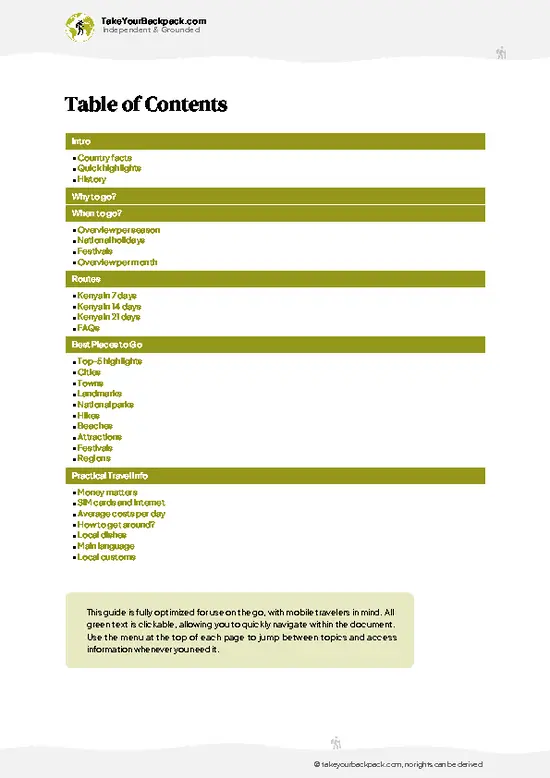
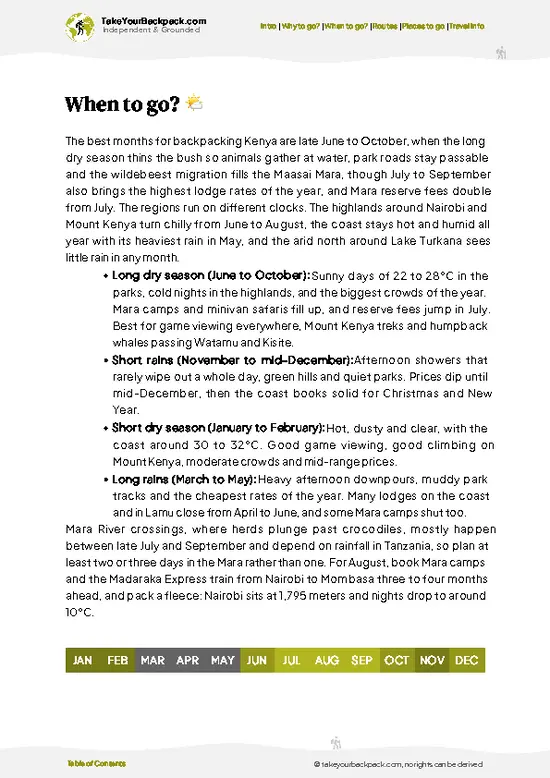
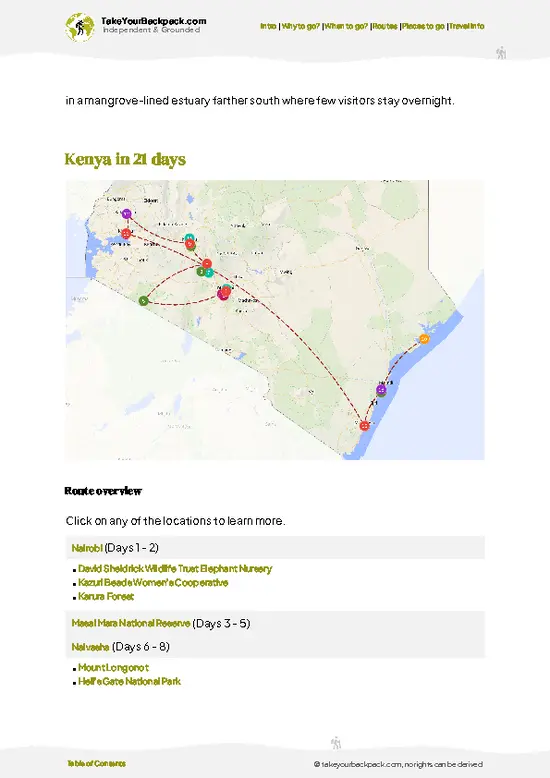
example page 0 from our offline Travel Guide for Kenyaexample page 1 from our offline Travel Guide for Kenyaexample page 2 from our offline Travel Guide for Kenyaexample page 3 from our offline Travel Guide for Kenyaexample page 4 from our offline Travel Guide for Kenyaexample page 5 from our offline Travel Guide for Kenyaexample page 6 from our offline Travel Guide for Kenyaexample page 7 from our offline Travel Guide for Kenya
The digital guide (429 pages) contains:
114 highlights, ranked by travel appeal
Optimized 7, 14 & 21-day travel routes
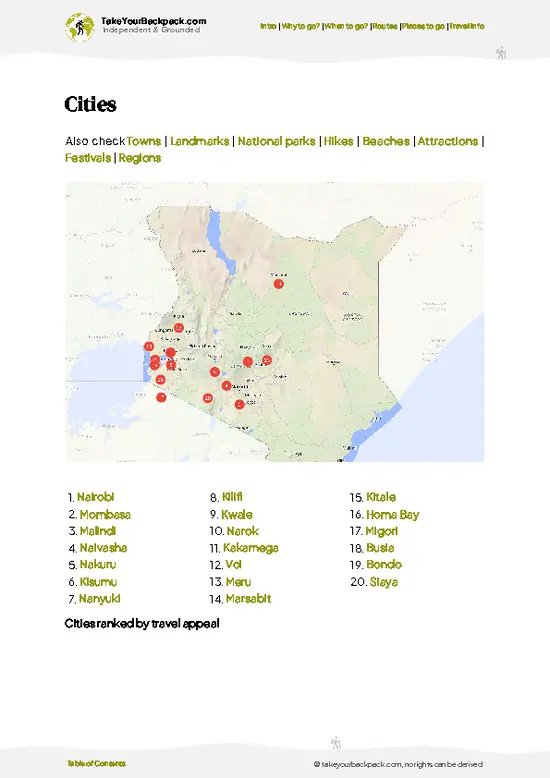
Cities, national parks, landmarks, beaches
How to get around
Offline-friendly for travel without Wi-Fi
👉 Click to see all 30+ guide features

📅 Plan smarter in minutes, not weeks
Month by month travel advice
Festivals & national holidays
Budget expectations

🗺️ Go to the right places, skip the overrated ones
Honest pros & cons of destinations
Top hikes, parks & viewpoints
Lesser-known places most travelers miss
Clear “worth it vs skip it” guidance

🛏️ Travel smoothly without rookie mistakes
Best areas to stay
Transport systems explained simply
Common scams & safety advice
SIM cards, money & practical tips

🌍 Understand the country, not just visit it
Culture & traditions
52 Essential phrases & customs
Festivals worth planning around
Traveler-friendly historical context
Insights that make places more meaningful

📱 Built for real travel conditions
Fully downloadable PDF
Works completely offline
Optimized for phone use
Useful in remote areas & buses
Everything in one place
Save weeks of stressful planning
Get instant access to your full guide. 30‑day money-back guarantee.


By proceeding you agree to our terms.
Sent to your inbox immediately after payment • 100% Secure Checkout
Best Backpacking Travel Advisor 2025 tourism awardBest Backpacking
Travel Advisor
2025
What others say about Take Your Backpack Guides:
⭐⭐⭐⭐⭐
Fantastic, amazing amount of information!
⭐⭐⭐⭐⭐
My goodness this is amazing, it's what I've been looking for hats off too you!
⭐⭐⭐⭐⭐
I think this is absolutely BRILLIANT
⭐⭐⭐⭐
Very complete and informative. It's still missing places, but I gotta to commend you
⭐⭐⭐⭐⭐
This is truly amazing, thank you, can't wait to explore it with my kids!
⭐⭐⭐⭐⭐
Awesome resource, thank you!
⭐⭐⭐⭐⭐
This is amazing! Can't wait to explore the ones I haven't seen
⭐⭐⭐⭐
I love this! Well done, great idea.
⭐⭐⭐⭐⭐
Thanks for taking the time to make this gem!
⭐⭐⭐⭐⭐
This might be the best website I've ever seen.
⭐⭐⭐⭐⭐
Congratulations, and thank you so much for your work; it's incredibly valuable.
⭐⭐⭐⭐
In all seriousness I think you did a great job pointing out the important spots
⭐⭐⭐⭐⭐
10/10 very good
⭐⭐⭐⭐⭐
As someone who's only just starting to visit regularly this is awesome, thank you.
⭐⭐⭐⭐
Thank you very much! I'm going to visit my dad, it's going to be very useful!
⭐⭐⭐⭐⭐
This is really cool! We'll be travelling for the first time and this definitely come in handy.
⭐⭐⭐⭐⭐
You are now our minister of culture, congratulations 👨‍💼
⭐⭐⭐⭐⭐
Just wanted to tell you that this is a pearl! Going to follow your recommendations.
⭐⭐⭐⭐⭐
This is so cool. I'll definitely be using the resource for my travels soon.
⭐⭐⭐⭐⭐
This is very impressive! Good work.
⭐⭐⭐⭐⭐
This is an amazing and informative site. Very well done!

🛏️ Where to stay?Where to Base Yourself

Yes — Kenya has plenty of hostels and budget accommodation concentrated in major hubs: Nairobi (Westlands for nightlife and many hostels, CBD for the cheapest central options, Kilimani for quieter budget stays), Mombasa (Old Town for beach access and cheap guesthouses, Nyali for quieter beachside options), coastal towns (Diani, Watamu, Malindi) for beach hostels and dive bases, and lake/park gateways (Naivasha, Narok/Maasai Mara gate) for camping and low-cost lodges.
Westlands gives nightlife and transport links but watch petty theft after dark; the CBD is ultra-central and cheap but less safe at night; Kilimani is quieter with good local food; Old Town and Diani put beaches and activities … read more 👉
Yes — Kenya has plenty of hostels and budget accommodation concentrated in major hubs: Nairobi (Westlands for nightlife and many hostels, CBD for the cheapest central options, Kilimani for quieter budget stays), Mombasa (Old Town for beach access and cheap guesthouses, Nyali for quieter beachside options), coastal towns (Diani, Watamu, Malindi) for beach hostels and dive bases, and lake/park gateways (Naivasha, Narok/Maasai Mara gate) for camping and low-cost lodges.
Westlands gives nightlife and transport links but watch petty theft after dark; the CBD is ultra-central and cheap but less safe at night; Kilimani is quieter with good local food; Old Town and Diani put beaches and activities on the doorstep but get touristy and can be isolated without transport; Nyali and Watamu are more relaxed and family-friendly; Naivasha and Narok are practical bases for parks but need planned transfers and offer more basic facilities.

If you enjoy meeting fellow travelers, consider choosing hostels with high ratings for atmosphere. On the other hand, if you prefer having your own space, a hotel might be a better option.

KenyaExpand Your Journey

👋 Meet the founderWho’s Behind Take Your Backpack?

Johan, backpacker and founder of TakeYourBackpackHi, I’m Johan (Netherlands 🇳🇱), the creator of TakeYourBackpack. Over the past decade, I’ve backpacked through 80+ countries across six continents, gaining extensive experience with independent travel, long-term trips, and overland routes.

This site is built on a combination of firsthand travel experience and carefully curated insights from other backpackers. Many guides are based on places I’ve personally visited, while others bring together tips, observations, and practical advice shared by trusted travelers I’ve met along the way.

The goal is to provide realistic, experience-driven guidance — not generic itineraries — so you can explore destinations with better context, clearer expectations, and more confidence.

Get full Kenya guide •
Instant download • 114 highlights • Full Offline guide