×

Kenya🇰🇪 | citiesMarsabitCrater lakes, Borana culture, arid highlands | things to do and best time to go

Explore IsioloExplore Kitui

Backpacking in Marsabit
🌟 Highlightcity ranked #5
By Johan Kruseman 🇳🇱 | Updated June 11, 2026

You’re standing in the pre-dawn chill, breath fogging in the thin air, as a battered matatu rattles past and the scent of woodsmoke drifts from a nearby tea shack. This is Marsabit, a highland outpost in northern Kenya, where the tarmac ends and the desert begins. Marsabit isn’t a destination for urban thrills; it’s a staging ground for the wild, volcanic landscapes of Marsabit National Park and the camel-thick trade routes heading north. The town itself is dusty, practical, and a little rough around the edges—think corrugated iron roofs, a few basic guesthouses, and a market that wakes up with the sun. It’s not especially social for travelers; you’ll find more truckers than backpackers, and evenings are quiet, not buzzing. Getting here is a journey—long, slow bus rides from Isiolo or Moyale, with every bump a reminder you’re far from Nairobi’s polish. Marsabit is cheaper than touristy Nanyuki, but you trade comfort for authenticity. It’s best as a launchpad for crater hikes, wildlife drives, or as a necessary pause on the overland route to Ethiopia. Safety is mostly about road conditions and keeping your wits in the market, not nightlife. If you want easy camaraderie, head south; if you want the feeling of earning your sunrise, Marsabit delivers.

Discover everything you want to know in the 📖 Kenya Travel Guide.


Get your Kenya guide
114 ranked highlights, routes & tips, works offline (429 pages)
Loading the map 🌍
CLICK TO FILTER
cities
towns
landmarks
national parks
hikes
beaches
attractions
festivals
regions
SHOW COUNTRY’S BESTSHOW ALL

✨ Why go?
Ranked #5 city in Kenya
What makes it a must-see city

Marsabit serves as a gateway for backpackers seeking the rugged beauty of northern Kenya. Its convenient location makes it a strategic stop for those heading to the Marsabit National Park, where you can hike through lush forests and spot unique wildlife. The town itself has a friendly atmosphere, with small-scale hostels and guesthouses that welcome solo travelers and small groups alike. You’ll find walkable streets filled with local food stalls, offering a taste of authentic Kenyan cuisine—think spicy stews and fresh chapati that warm you up after a long day of trekking.

Backpackers often linger here for a few days, soaking in the cultural richness and connecting with locals. The vibe is relaxed, perfect for slow travelers who appreciate the journey as much as the destination. While nightlife … read more 👉
Marsabit serves as a gateway for backpackers seeking the rugged beauty of northern Kenya. Its convenient location makes it a strategic stop for those heading to the Marsabit National Park, where you can hike through lush forests and spot unique wildlife. The town itself has a friendly atmosphere, with small-scale hostels and guesthouses that welcome solo travelers and small groups alike. You’ll find walkable streets filled with local food stalls, offering a taste of authentic Kenyan cuisine—think spicy stews and fresh chapati that warm you up after a long day of trekking.

Backpackers often linger here for a few days, soaking in the cultural richness and connecting with locals. The vibe is relaxed, perfect for slow travelers who appreciate the journey as much as the destination. While nightlife isn’t the main draw, the social interactions over shared meals can be just as rewarding. If you’re looking for a place to recharge before your next adventure, Marsabit is a solid choice.
Want to include Marsabit in your Kenya route?
Create a personalized Kenya itinerary that includes Marsabit and the places that fit your trip — based on your travel style, budget, and available time. Get your route in seconds.

Generate my trip

💡 HighlightsPlaces and moments you shouldn't skip

  • Mount Marsabit / Marsabit National Park — The big draw: a forested volcanic massif rising right above town with shaded trails, crater scenery, rich birdlife and mammals. Easy to arrange drives and walks from town; the cool forest feels like a different world compared with the surrounding lowlands.
  • Marsabit Town Forest — A pocket of tall indigenous trees and green lanes that spills into the town itself. Perfect for a shaded stroll, short wildlife spotting (monkeys and birds) and a quiet picnic without leaving the urban area.
  • Marsabit Central Market — The town’s daily marketplace where you’ll find fresh produce, staples, imported goods and local wares. It’s the best place to feel the pulse of the town, photograph daily life and pick up simple supplies or snacks.
  • Marsabit Livestock Market
read more 👉
  • Mount Marsabit / Marsabit National Park — The big draw: a forested volcanic massif rising right above town with shaded trails, crater scenery, rich birdlife and mammals. Easy to arrange drives and walks from town; the cool forest feels like a different world compared with the surrounding lowlands.
  • Marsabit Town Forest — A pocket of tall indigenous trees and green lanes that spills into the town itself. Perfect for a shaded stroll, short wildlife spotting (monkeys and birds) and a quiet picnic without leaving the urban area.
  • Marsabit Central Market — The town’s daily marketplace where you’ll find fresh produce, staples, imported goods and local wares. It’s the best place to feel the pulse of the town, photograph daily life and pick up simple supplies or snacks.
  • Marsabit Livestock Market — A lively, early-morning scene where pastoralists trade camels, goats and sheep. Visiting in the morning gives a real sense of local economy, bargaining culture and pastoralist life in northern Kenya.
  • Marsabit Mission (church and hospital compound) — The long-standing mission compound that includes a church and medical facilities; it’s historically important to the town and offers a window into the role of missions in local social services and community life.
A few strong day-trip options outside the town are the crater lakes and higher forest zones on Mount Marsabit (for longer hikes and birding), nearby crater lakes such as Lake Paradise, and the more open pastoral landscapes toward the Chalbi Desert for a different, arid contrast.
Spotted a mistake or missing something? Contact us.

🏘️ NeighborhoodsWhere things are and how it's laid out

Marsabit is a unique blend of culture and adventure, a gateway to the stunning landscapes of northern Kenya. Here’s how to navigate its neighborhoods for an optimal backpacking experience.

Central Marsabit: This is the heartbeat of the town. The vibe is bustling, with local markets and street vendors filling the air with the scent of spices and grilled meats. It’s walkable, making it easy to explore on foot. Accommodations range from budget hostels to mid-range hotels. Nightlife is low-key, with a few bars where you can mingle with locals. Perfect for short stays, as everything is within reach.

Jirime: A quieter area, Jirime offers a more laid-back atmosphere. It’s slightly removed from the hustle, making it ideal for those seeking peace after a day of exploration. The cost is similar to … read more 👉
Marsabit is a unique blend of culture and adventure, a gateway to the stunning landscapes of northern Kenya. Here’s how to navigate its neighborhoods for an optimal backpacking experience.

Central Marsabit: This is the heartbeat of the town. The vibe is bustling, with local markets and street vendors filling the air with the scent of spices and grilled meats. It’s walkable, making it easy to explore on foot. Accommodations range from budget hostels to mid-range hotels. Nightlife is low-key, with a few bars where you can mingle with locals. Perfect for short stays, as everything is within reach.

Jirime: A quieter area, Jirime offers a more laid-back atmosphere. It’s slightly removed from the hustle, making it ideal for those seeking peace after a day of exploration. The cost is similar to Central Marsabit, but you’ll find fewer dining options. Transport access is decent, but you might need to rely on taxis for late-night returns. Great for longer stays if you want to immerse yourself in local life.

North Horr Road: This area is a bit off the beaten path, catering to adventurous souls. The vibe is rugged, with a few guesthouses that offer basic amenities. It’s less walkable, so be prepared for some taxi rides. The nightlife is virtually non-existent, but the stunning views make up for it. Ideal for longer stays if you’re planning to explore the surrounding wilderness.

⌛️ 1 day1-day itinerary for Marsabit

Marsabit, Kenya, is a vibrant crossroads of cultures, where the air is thick with the scent of roasted maize and the sounds of bustling markets fill the streets. This town, often overlooked by travelers, offers a rich tapestry of experiences that reveal the heart of northern Kenya.

Start your day early at the Marsabit Market. The sun rises, casting a warm glow over stalls brimming with fresh produce and local crafts. Engage with vendors; their stories are as colorful as their wares. Grab a cup of chai from a nearby kiosk. The creamy, spiced tea is a perfect companion as you soak in the lively atmosphere.

Afterward, head to the Marsabit National Park. It’s a short drive from the town center, and the journey is worth it. The park is a sanctuary of lush forests and unique wildlife. Take a guided … read more 👉
Marsabit, Kenya, is a vibrant crossroads of cultures, where the air is thick with the scent of roasted maize and the sounds of bustling markets fill the streets. This town, often overlooked by travelers, offers a rich tapestry of experiences that reveal the heart of northern Kenya.

Start your day early at the Marsabit Market. The sun rises, casting a warm glow over stalls brimming with fresh produce and local crafts. Engage with vendors; their stories are as colorful as their wares. Grab a cup of chai from a nearby kiosk. The creamy, spiced tea is a perfect companion as you soak in the lively atmosphere.

Afterward, head to the Marsabit National Park. It’s a short drive from the town center, and the journey is worth it. The park is a sanctuary of lush forests and unique wildlife. Take a guided walk to spot elephants and various bird species. The cool shade of the trees and the rustling leaves create a serene backdrop, making the effort to get there feel rewarding.

As afternoon rolls in, return to town and explore the less-traveled neighborhood of Korr. Here, you’ll find traditional Samburu homes and the chance to interact with local communities. This is a rare opportunity to experience authentic culture, away from the typical tourist path. Enjoy a simple lunch at a local eatery, where the flavors of ugali and sukuma wiki will fuel your adventures.

As the sun sets, make your way to the Marsabit Hill viewpoint. The panoramic view of the surrounding landscape is breathtaking, especially as the sky transforms into hues of orange and purple. It’s a perfect spot to reflect on your day.

Finish with dinner at a local restaurant, savoring the warmth of Kenyan hospitality. Marsabit may not be on every traveler’s radar, but its charm lies in the connections you make and the stories you gather.
Turn your Marsabit visit into an Kenya adventure
Build a complete Kenya route with Marsabit, hidden gems, must-see destinations, and realistic travel times included.

Generate my trip

🌤️ When to go?Weather, crowds, and seasonal trade-offs


  • Weather: Marsabit’s climate swings between dry and wet seasons. The dry months from January to March and July to September offer dusty trails and clear skies, perfect for trekking without the mud. The rains, especially April to June, turn the landscape lush but can make roads tricky and some paths slippery.

  • Temperature: Daytime highs hover around 28-32°C (82-90°F) during dry spells, cooling to 15-18°C (59-64°F) at night. Wet season days are cooler, often dipping into the low 20s°C (mid-70s°F), which can feel refreshing but also damp.

  • Daylight Hours: Near the equator, Marsabit enjoys roughly 12 hours of daylight year-round. Sunrise is around 6:30 AM, and sunset near 6:30 PM, giving you a reliable window for early starts and late returns.

  • Crowds: Marsabit is off the beaten path, so
read more 👉

  • Weather: Marsabit’s climate swings between dry and wet seasons. The dry months from January to March and July to September offer dusty trails and clear skies, perfect for trekking without the mud. The rains, especially April to June, turn the landscape lush but can make roads tricky and some paths slippery.

  • Temperature: Daytime highs hover around 28-32°C (82-90°F) during dry spells, cooling to 15-18°C (59-64°F) at night. Wet season days are cooler, often dipping into the low 20s°C (mid-70s°F), which can feel refreshing but also damp.

  • Daylight Hours: Near the equator, Marsabit enjoys roughly 12 hours of daylight year-round. Sunrise is around 6:30 AM, and sunset near 6:30 PM, giving you a reliable window for early starts and late returns.

  • Crowds: Marsabit is off the beaten path, so crowds are minimal year-round. However, the dry season attracts more local tourists and researchers, so expect a livelier atmosphere then.

  • Seasonal Activities: Dry months are best for hiking and wildlife spotting, as animals gather near waterholes. The wet season brings blooming wildflowers and migratory birds, rewarding patient travelers with vibrant scenes.

  • Price Fluctuations: Accommodation and transport costs rise slightly during the dry season due to increased demand. The wet season offers better deals but comes with the trade-off of less predictable travel conditions.


Pro-tip: Aim for the shoulder months of March or September to catch the tail end of dry spells—less dust, fewer crowds, and a landscape that’s just starting to green up.


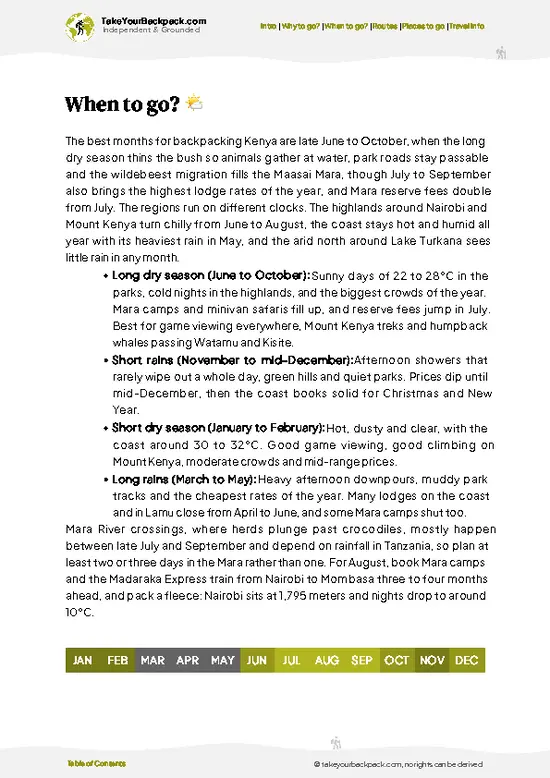
source: climatestotravel.comJANJanuary: highly recommended for travelingFEBFebruary: highly recommended for travelingMARMarch: excellent for travelingAPRApril: fair for travelingMAYMay: fair for travelingJUNJune: fair for travelingJULJuly: highly recommended for travelingAUGAugust: highly recommended for travelingSEPSeptember: excellent for travelingOCTOctober: good for travelingNOVNovember: good for travelingDECDecember: good for traveling
when-to-go

✈️ The backpacker research shortcutKenya Travel Guide

An offline-friendly backpacking guide with optimized travel routes, ranked highlights, transport advice, and the best areas to stay.
example page 0 from our offline Travel Guide for Kenya
example page 1 from our offline Travel Guide for Kenya
example page 2 from our offline Travel Guide for Kenya
example page 3 from our offline Travel Guide for Kenya
example page 4 from our offline Travel Guide for Kenya
example page 5 from our offline Travel Guide for Kenya
example page 6 from our offline Travel Guide for Kenya
example page 7 from our offline Travel Guide for Kenya
The digital guide (429 pages) contains:
114 highlights, ranked by travel appeal
Optimized 7, 14 & 21-day travel routes
Cities, national parks, landmarks, beaches
How to get around
Offline-friendly for travel without Wi-Fi
👉 Click to see all 30+ guide features

📅 Plan smarter in minutes, not weeks
Month by month travel advice
Festivals & national holidays
Budget expectations

🗺️ Go to the right places, skip the overrated ones
Honest pros & cons of destinations
Top hikes, parks & viewpoints
Lesser-known places most travelers miss
Clear “worth it vs skip it” guidance

🛏️ Travel smoothly without rookie mistakes
Best areas to stay
Transport systems explained simply
Common scams & safety advice
SIM cards, money & practical tips

🌍 Understand the country, not just visit it
Culture & traditions
52 Essential phrases & customs
Festivals worth planning around
Traveler-friendly historical context
Insights that make places more meaningful

📱 Built for real travel conditions
Fully downloadable PDF
Works completely offline
Optimized for phone use
Useful in remote areas & buses
Everything in one place
Save weeks of stressful planning
Get instant access to your full guide. 30‑day money-back guarantee.


By proceeding you agree to our terms.
Sent to your inbox immediately after payment • 100% Secure Checkout
Best Backpacking Travel Advisor 2025 tourism awardBest Backpacking
Travel Advisor
2025
What others say about Take Your Backpack Guides:
⭐⭐⭐⭐⭐
Fantastic, amazing amount of information!
⭐⭐⭐⭐⭐
My goodness this is amazing, it's what I've been looking for hats off too you!
⭐⭐⭐⭐⭐
I think this is absolutely BRILLIANT
⭐⭐⭐⭐
Very complete and informative. It's still missing places, but I gotta to commend you
⭐⭐⭐⭐⭐
This is truly amazing, thank you, can't wait to explore it with my kids!
⭐⭐⭐⭐⭐
Awesome resource, thank you!
⭐⭐⭐⭐⭐
This is amazing! Can't wait to explore the ones I haven't seen
⭐⭐⭐⭐
I love this! Well done, great idea.
⭐⭐⭐⭐⭐
Thanks for taking the time to make this gem!
⭐⭐⭐⭐⭐
This might be the best website I've ever seen.
⭐⭐⭐⭐⭐
Congratulations, and thank you so much for your work; it's incredibly valuable.
⭐⭐⭐⭐
In all seriousness I think you did a great job pointing out the important spots
⭐⭐⭐⭐⭐
10/10 very good
⭐⭐⭐⭐⭐
As someone who's only just starting to visit regularly this is awesome, thank you.
⭐⭐⭐⭐
Thank you very much! I'm going to visit my dad, it's going to be very useful!
⭐⭐⭐⭐⭐
This is really cool! We'll be travelling for the first time and this definitely come in handy.
⭐⭐⭐⭐⭐
You are now our minister of culture, congratulations 👨‍💼
⭐⭐⭐⭐⭐
Just wanted to tell you that this is a pearl! Going to follow your recommendations.
⭐⭐⭐⭐⭐
This is so cool. I'll definitely be using the resource for my travels soon.
⭐⭐⭐⭐⭐
This is very impressive! Good work.
⭐⭐⭐⭐⭐
This is an amazing and informative site. Very well done!

🛏️ Where to stay?How to pick the right area

Marsabit’s heart for backpackers pulses strongest around the town center, where the dusty streets hum with local life and the scent of roasting maize drifts through the air. This area is your best bet for safety and social energy. It’s where you’ll find a handful of budget guesthouses and simple hostels that cater to travelers who want to swap stories over a cup of chai without breaking the bank. The vibe here is unpretentious and grounded—no flashy tourist traps, just real people and real connections.

Venture too far from the center, and the town thins out into quieter, less secure neighborhoods … read more 👉
Marsabit’s heart for backpackers pulses strongest around the town center, where the dusty streets hum with local life and the scent of roasting maize drifts through the air. This area is your best bet for safety and social energy. It’s where you’ll find a handful of budget guesthouses and simple hostels that cater to travelers who want to swap stories over a cup of chai without breaking the bank. The vibe here is unpretentious and grounded—no flashy tourist traps, just real people and real connections.

Venture too far from the center, and the town thins out into quieter, less secure neighborhoods where services and social spots vanish. Staying central means you’re close to markets, local eateries, and the informal hubs where you’ll meet other backpackers and locals alike. The streets are lively enough to feel safe walking at dusk, but not so crowded that you lose the small-town rhythm.

Choosing the town center isn’t just about convenience—it’s about plugging into Marsabit’s raw, earthy pulse. The light here shifts as the sun sets behind the volcanic hills, casting long shadows that invite evening conversations and a chance to soak in the town’s slow, steady beat.

🚌 Getting aroundGetting around like a local

Marsabit moves at its own rhythm—less a clockwork town and more a pulse you feel in the dry heat and dust swirling through its streets. It’s not about rigid timetables but about catching the right moment, the right vehicle, and the right vibe. The sun hits hard by mid-morning, so most locals and travelers alike hit the road early or wait for the cooler late afternoon light to move. The scent of acacia and dry earth hangs heavy, and the town’s sparse layout means you’re never far from a dusty track or a cluster of market stalls where time slows and conversations stretch. Here, transit isn’t just about getting from A to B; it’s about syncing with the town’s laid-back, improvisational flow.


  • Walking: Marsabit’s compact center makes walking the most straightforward and free option. The terrain
read more 👉
Marsabit moves at its own rhythm—less a clockwork town and more a pulse you feel in the dry heat and dust swirling through its streets. It’s not about rigid timetables but about catching the right moment, the right vehicle, and the right vibe. The sun hits hard by mid-morning, so most locals and travelers alike hit the road early or wait for the cooler late afternoon light to move. The scent of acacia and dry earth hangs heavy, and the town’s sparse layout means you’re never far from a dusty track or a cluster of market stalls where time slows and conversations stretch. Here, transit isn’t just about getting from A to B; it’s about syncing with the town’s laid-back, improvisational flow.


  • Walking: Marsabit’s compact center makes walking the most straightforward and free option. The terrain is mostly flat but dusty, so sturdy shoes and a hat are essentials. Early mornings and late afternoons offer the best light and cooler air, making your strolls more comfortable and the landscape more vivid.

  • Matatus (Shared Minibuses): These are the lifeblood of local transit, running from dawn until dusk, roughly 6 AM to 6 PM. They’re cheap (a few Kenyan shillings per ride) and frequent but expect a bumpy, crowded ride with stops on demand. Matatus don’t follow strict schedules; they leave when full, so timing is flexible but unpredictable.

  • Boda Bodas (Motorcycle Taxis): Perfect for quick hops across town or to nearby villages. They operate all day but slow down after dark for safety reasons. Prices are negotiable but generally affordable. The wind in your face and the dust swirling around give you a raw, immediate connection to the landscape—just hold on tight.

  • Local Taxis: Less common and pricier than matatus or boda bodas, taxis offer a more comfortable and private ride. They’re best for early morning or late-night travel when other options thin out. Expect to negotiate fares upfront; meters are rare.

  • Inter-County Buses: For journeys beyond Marsabit, these buses connect to larger hubs like Moyale or Isiolo. Departures are early morning, around 7 AM, and tickets should be bought in advance if possible. The ride can be long and rough but is the most reliable way to cover distance on a budget.

👛 Costs (as of 11 October 2025)Typical daily expenses

Backpacking in Marsabit, Kenya, means stepping into a raw, rugged landscape where every shilling counts and the pace is slower but richer in texture. Here’s what your daily budget looks like when you’re navigating this remote town on your own terms.
  • Dorm Accommodation: Marsabit’s lodging options are basic but functional. Expect to pay around $8 to $15 per night for a dorm bed in a guesthouse or budget lodge. These places often have simple rooms with shared bathrooms, and the charm lies in their no-frills authenticity rather than luxury.
  • Meals: Food here is straightforward and hearty. Local eateries serve up staples like ugali, rice, and stews for about $2 to $5 per meal. If you stick to street food or small local joints, you can keep your daily food spend around $6 to $12, enjoying fresh,
read more 👉
Backpacking in Marsabit, Kenya, means stepping into a raw, rugged landscape where every shilling counts and the pace is slower but richer in texture. Here’s what your daily budget looks like when you’re navigating this remote town on your own terms.
  • Dorm Accommodation: Marsabit’s lodging options are basic but functional. Expect to pay around $8 to $15 per night for a dorm bed in a guesthouse or budget lodge. These places often have simple rooms with shared bathrooms, and the charm lies in their no-frills authenticity rather than luxury.
  • Meals: Food here is straightforward and hearty. Local eateries serve up staples like ugali, rice, and stews for about $2 to $5 per meal. If you stick to street food or small local joints, you can keep your daily food spend around $6 to $12, enjoying fresh, local flavors without the tourist markup.
  • Local Transport: Getting around Marsabit typically involves matatus (shared minibuses) or boda-bodas (motorcycle taxis). A short ride within town costs roughly $0.50 to $1.50. Budget around $3 to $5 daily if you plan to move between key spots or markets.
  • Basic Activities/Entry Fees: Marsabit’s main draws are its natural parks and cultural sites. Entry fees for Marsabit National Park hover around $10 to $15. Guided walks or local tours might add another $10 to $20, depending on the length and depth of the experience. If you’re selective, you can keep activity costs near $10 to $20 per day.
  • Miscellaneous Expenses: This covers water, snacks, occasional tips, or small souvenirs. Allocate about $2 to $5 daily here to avoid surprises, especially since bottled water is a must in this dry climate.

Marsabit’s daily backpacking budget typically falls between $29 and $57. This range reflects the balance between stretching your shillings and embracing the authentic, sometimes rough edges of this remote Kenyan town. The payoff is a place where the light shifts dramatically over volcanic hills and the air carries the scent of acacia and dust—a reminder that every dollar spent here buys you a step deeper into a landscape few travelers explore.
⚠️ Prices can change and everyone travels differently, so take this as a rough guide. Hope it helps you plan your adventure!

🚌 Day tripsBest day trips from Marsabit

Marsabit, Kenya, is a backpacker’s dream base, offering a gateway to stunning landscapes and rich cultures. The highland air is crisp, and the vibrant local markets pulse with life. Here are some day trips that make the most of your time in this unique region.

Mount Marsabit Trek
This trek is a must for those who crave panoramic views and a touch of adventure. The hike takes about 4-5 hours to reach the summit, where you’ll be rewarded with sweeping vistas of the surrounding plains and the distant peaks of Ethiopia. The trail winds through lush forests, where the scent of wildflowers fills the air. Bring a packed lunch to enjoy at the top, and keep an eye out for the rare Marsabit antelope. Mistakes happen when people underestimate the altitude; acclimatize a bit before you go.


Lake read more 👉
Marsabit, Kenya, is a backpacker’s dream base, offering a gateway to stunning landscapes and rich cultures. The highland air is crisp, and the vibrant local markets pulse with life. Here are some day trips that make the most of your time in this unique region.

Mount Marsabit Trek
This trek is a must for those who crave panoramic views and a touch of adventure. The hike takes about 4-5 hours to reach the summit, where you’ll be rewarded with sweeping vistas of the surrounding plains and the distant peaks of Ethiopia. The trail winds through lush forests, where the scent of wildflowers fills the air. Bring a packed lunch to enjoy at the top, and keep an eye out for the rare Marsabit antelope. Mistakes happen when people underestimate the altitude; acclimatize a bit before you go.


Lake Marsabit
Just a short drive from town, Lake Marsabit is a serene escape. The journey takes about 30 minutes, and once you arrive, you can rent a canoe or simply stroll along the shore. The lake is surrounded by ancient trees, and the reflections on the water create a tranquil atmosphere. Birdwatchers will love spotting the vibrant species that call this place home. A common misstep is not bringing enough water; the sun can be relentless.


North Horr
Venture to North Horr for a taste of the local Samburu culture. This trip takes around 1.5 hours by matatu, and you’ll find yourself in a lively village where traditional dances and crafts come alive. Engage with the locals, and don’t miss the chance to try some authentic cuisine. The best time to visit is during the dry season when the community is most active. First-timers often overlook the importance of respectful engagement; a smile goes a long way.


Gofor Waterfalls
A hidden treasure, Gofor Waterfalls is about an hour’s drive from Marsabit. The hike to the falls is a bit rugged but worth every step. The sound of rushing water and the cool mist create a refreshing escape from the heat. Pack a swimsuit for a quick dip, but be cautious of slippery rocks. Many miss this spot because they stick to well-trodden paths; don’t be afraid to explore a little off the beaten track.
Want to know what more Kenya offers?
The Kenya Travel Guide describes 114 highlights, from cities to national parks, from beaches to hikes

Get the Travel Guide -

🍲 FoodLocal Cuisine & Drinks

Marsabit’s food scene is a raw, unfiltered slice of northern Kenya’s flavor landscape. The real draw here is the Nyama Choma—grilled meat, often goat or camel, smoky and tender, served with a side of ugali or millet bread that soaks up every charred drop. It’s not just a meal; it’s a ritual, best enjoyed with locals who’ll insist you try the fiery kachumbari salad, a fresh, spicy mix of tomatoes and onions that cuts through the richness.

Backpackers won’t find polished cafés or tourist traps. Instead, the pulse of Marsabit’s eating life beats strongest in the open-air markets and roadside grills where smoke curls into the dry air. Here, you’ll grab a plate, stand shoulder-to-shoulder with traders and herders, and soak in the chatter and clatter. Drinking is straightforward—expect strong, read more 👉
Marsabit’s food scene is a raw, unfiltered slice of northern Kenya’s flavor landscape. The real draw here is the Nyama Choma—grilled meat, often goat or camel, smoky and tender, served with a side of ugali or millet bread that soaks up every charred drop. It’s not just a meal; it’s a ritual, best enjoyed with locals who’ll insist you try the fiery kachumbari salad, a fresh, spicy mix of tomatoes and onions that cuts through the richness.

Backpackers won’t find polished cafés or tourist traps. Instead, the pulse of Marsabit’s eating life beats strongest in the open-air markets and roadside grills where smoke curls into the dry air. Here, you’ll grab a plate, stand shoulder-to-shoulder with traders and herders, and soak in the chatter and clatter. Drinking is straightforward—expect strong, sweet chai served in small glasses, often with a generous splash of sugar and milk, fueling conversations under the sun.

Etiquette is simple but important: sharing food is a sign of respect, and refusing an offered bite can feel like a missed connection. Eating with your right hand is the norm, and meals often stretch into social time rather than a quick refuel. In Marsabit, food is less about convenience and more about connection—embrace the pace and the flavors will follow.

🛡️ SafetyScams, Hazards, and Annoyances

Marsabit is generally safe, but a few practical tips can enhance your experience. The town has a laid-back vibe, but stay alert in crowded markets, especially near the bus station. Pickpockets can be a nuisance, so keep your valuables close and avoid flashy displays of wealth.

If you’re traveling solo, consider sticking to well-lit areas after dark. The streets can feel quiet, and while locals are friendly, it’s wise to be cautious.

Scams are rare, but some vendors might inflate prices for tourists. A friendly smile and a firm, polite negotiation can go a long way.

Overall, carry yourself with confidence. Engage with locals, but trust your instincts. The beauty of Marsabit lies in its authenticity, and a little awareness will help you soak it all in without a hitch.

Other Kenyan cities near Marsabit

Explore more nearby:

  • Isiolo—crossroads town, arid landscapes, Samburu influence| 225 km away
  • Wajir—Semi-arid plains, Somali influence, seasonal laghas| 238 km away
  • Meru—tea farms, Nyambene hills, gateway to Mount Kenya| 257 km away

💡 Not sure where to go next?
Create a personalized itinerary for Kenya including Marsabit and the places that fit your trip.

Generate my itinerary

👉 Discover all cities

Or checkout all Kenya has to offer (think cities, towns, villages, national parks, hikes, beaches, festivals)
Country photo of Kenya

We 💚 feedbackWhat to keep in mind

Marsabit has a raw, untamed vibe that feels like stepping into another world. The air is crisp, carrying the scent of acacia and the distant hum of wildlife. Don’t miss the sunrise over the mountains; it’s a moment that lingers. Just be prepared for the altitude—it can hit hard. Take it slow, savor the local dishes, and let the landscape work its magic. You’ll leave with stories that feel earned, not just collected.

✍️ Help improve this page!
The information on this page is based on in-depth research, insights shared by experienced travelers, and feedback from the local travel community in Kenya. While every effort is made to keep the information accurate and current, conditions can change — so if you spot anything incorrect or outdated, please get in touch.


🙋‍♂️ Give feedback

👋 Meet the founderWho’s Behind Take Your Backpack?

Johan, backpacker and founder of TakeYourBackpackHi, I’m Johan (Netherlands 🇳🇱), the creator of TakeYourBackpack. Over the past decade, I’ve backpacked through 80+ countries across six continents, gaining extensive experience with independent travel, long-term trips, and overland routes.

This site is built on a combination of firsthand travel experience and carefully curated insights from other backpackers. Many guides are based on places I’ve personally visited, while others bring together tips, observations, and practical advice shared by trusted travelers I’ve met along the way.

The goal is to provide realistic, experience-driven guidance — not generic itineraries — so you can explore destinations with better context, clearer expectations, and more confidence.

Get full Kenya guide •
Instant download • 114 highlights • Full Offline guide