

×

Kenya🇰🇪 | citiesMerutea farms, Nyambene hills, gateway to Mount Kenya | things to do and best time to go

Explore MachakosExplore Kitale

Backpacking in Meru
👍 Recommendedcity ranked #11
By Johan Kruseman 🇳🇱 | Updated June 15, 2026

Forget the idea that Meru is just a pit stop on the way to Mount Kenya—it’s a city with its own pulse, not a sleepy rural outpost. Tucked on the northeastern slopes of Mount Kenya, Meru is where Kenya’s lush highlands meet the wild frontier. For backpackers, Meru is a study in contrasts: you’ll find a lively central market, the odd colonial relic, and the rare Meru Museum, but nightlife is more “local bar” than “backpacker pub crawl.” It’s affordable, safe by Kenyan standards, and refreshingly untouristy, but don’t expect a ready-made hostel scene or easy meetups with other travelers. Compared to Nanyuki or Embu, Meru feels more authentic but less polished—think real Kenya, not Instagram Kenya.

Discover everything you want to know in the 📖 Kenya Travel Guide.


Get your Kenya guide
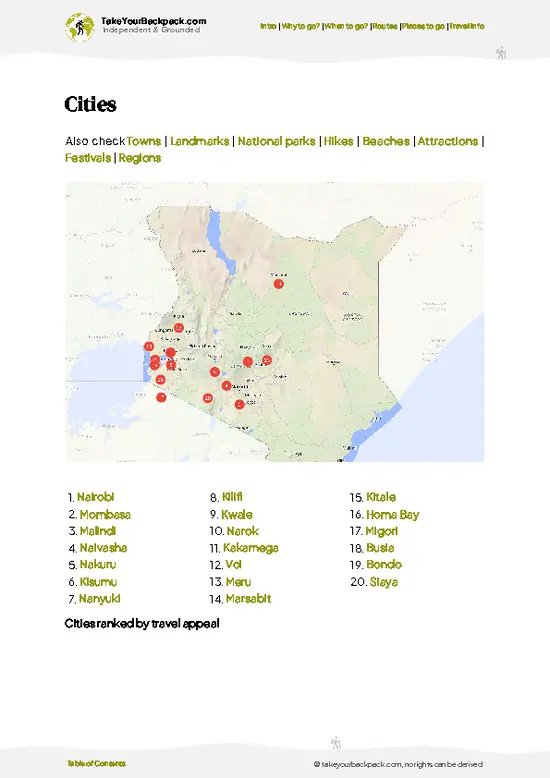
114 ranked highlights, routes & tips, works offline (429 pages)
Loading the map 🌍
CLICK TO FILTER
cities
towns
landmarks
national parks
hikes
beaches
attractions
festivals
regions
SHOW COUNTRY’S BESTSHOW ALL

✨ Why go?
Ranked #11 city in Kenya
What makes it a must-see city

Meru is a strategic hub for backpackers, offering a blend of affordability and accessibility. The city’s hostels are budget-friendly and often buzzing with fellow travelers, making it easy to swap stories and tips. You’ll find a variety of local food options that won’t break the bank, from street vendors to cozy eateries. The walkability of Meru allows you to explore its vibrant streets without the hassle of transport, while the nightlife offers a laid-back vibe perfect for unwinding after a day of adventure. Plus, it serves as an excellent basecamp for day trips to nearby highlights, maximizing your experience without the need for extensive travel. If you’re looking for a place that balances comfort and value, Meru is worth more than just a quick stop.
Want to include Meru in your Kenya route?
Create a personalized Kenya itinerary that includes Meru and the places that fit your trip — based on your travel style, budget, and available time. Get your route in seconds.

Generate my trip

💡 HighlightsWhat this place is best known for

  • Meru Museum & Cultural Centre — The clearest window into Meru town’s history and people: ethnographic exhibits on the Ameru, displays of traditional tools and regalia, a small natural-history section, and a tidy garden. It’s run by the National Museums of Kenya and gives context you won’t get wandering the streets.
  • Meru Central Market — The working heart of the city where farmers, traders and street-food vendors meet. Go for fresh produce, local snacks, artisanal baskets and a front-row seat to daily life and bargaining culture in Meru.
  • St. Joseph’s Cathedral (Diocese of Meru) — The main Catholic cathedral in town and an active community hub. It’s worth a visit for a look at local church life, periodic music and services, and the cathedral’s role in Meru’s social history.
Meru also serves … read more 👉
  • Meru Museum & Cultural Centre — The clearest window into Meru town’s history and people: ethnographic exhibits on the Ameru, displays of traditional tools and regalia, a small natural-history section, and a tidy garden. It’s run by the National Museums of Kenya and gives context you won’t get wandering the streets.
  • Meru Central Market — The working heart of the city where farmers, traders and street-food vendors meet. Go for fresh produce, local snacks, artisanal baskets and a front-row seat to daily life and bargaining culture in Meru.
  • St. Joseph’s Cathedral (Diocese of Meru) — The main Catholic cathedral in town and an active community hub. It’s worth a visit for a look at local church life, periodic music and services, and the cathedral’s role in Meru’s social history.
Meru also serves as a launch pad for day trips to Meru National Park, the nearby town of Maua (famous for its miraa markets), and the eastern slopes of Mount Kenya / Imenti forest areas.
Spotted a mistake or missing something? Contact us.

Things to do near Meru

Ratings based on Tripadvisor reviews. When you book through this link, you support our work at no extra cost to you.

🏘️ NeighborhoodsNeighborhood guide to Meru

Meru, a vibrant hub in Kenya, offers a mix of experiences for backpackers. Here’s how the neighborhoods stack up:

Town Center: The heartbeat of Meru. It’s bustling, with markets and shops. Affordable accommodations are plentiful, making it ideal for budget travelers. Walkability is high, but be cautious of traffic. Nightlife is lively, with local bars and eateries. Perfect for short stays.

Nkubu: A quieter suburb, great for those seeking a more relaxed vibe. It’s slightly pricier but offers a cozy atmosphere. Public transport is accessible, though you might need to rely on matatus. Ideal for longer stays if you want to immerse yourself in local life.

Gikumene: A hidden treasure for nature lovers. It’s less commercialized, offering a peaceful retreat. Accommodations are affordable, and the … read more 👉
Meru, a vibrant hub in Kenya, offers a mix of experiences for backpackers. Here’s how the neighborhoods stack up:

Town Center: The heartbeat of Meru. It’s bustling, with markets and shops. Affordable accommodations are plentiful, making it ideal for budget travelers. Walkability is high, but be cautious of traffic. Nightlife is lively, with local bars and eateries. Perfect for short stays.

Nkubu: A quieter suburb, great for those seeking a more relaxed vibe. It’s slightly pricier but offers a cozy atmosphere. Public transport is accessible, though you might need to rely on matatus. Ideal for longer stays if you want to immerse yourself in local life.

Gikumene: A hidden treasure for nature lovers. It’s less commercialized, offering a peaceful retreat. Accommodations are affordable, and the area is walkable. Nightlife is minimal, focusing more on community gatherings. Best for longer stays to soak in the tranquility.

Chuka: A bit further out, but worth the trip. It’s known for its scenic views and outdoor activities. Costs can vary, but you’ll find good deals. Transport options are available, though less frequent. Great for those looking to explore beyond Meru for a few days.

⌛️ 1 daySeeing the highlights in 24 hours

Meru, Kenya, is a vibrant tapestry of culture and nature, nestled between the foothills of the majestic Meru National Park and the bustling life of its streets. It’s a place where the rhythm of daily life dances with the backdrop of stunning landscapes, making it a perfect spot for a day of exploration.

Start your morning in the lively Meru Town. Grab a cup of local chai at a roadside kiosk; the warmth and spice will kickstart your day. Afterward, stroll through the bustling market, where vendors sell everything from fresh produce to handmade crafts. This is where you’ll feel the pulse of the city, and it’s a fantastic opportunity to engage with locals.

In the afternoon, head to the nearby Meru National Park. Spend a few hours on a guided walking safari. This isn’t just about spotting wildlife; … read more 👉
Meru, Kenya, is a vibrant tapestry of culture and nature, nestled between the foothills of the majestic Meru National Park and the bustling life of its streets. It’s a place where the rhythm of daily life dances with the backdrop of stunning landscapes, making it a perfect spot for a day of exploration.

Start your morning in the lively Meru Town. Grab a cup of local chai at a roadside kiosk; the warmth and spice will kickstart your day. Afterward, stroll through the bustling market, where vendors sell everything from fresh produce to handmade crafts. This is where you’ll feel the pulse of the city, and it’s a fantastic opportunity to engage with locals.

In the afternoon, head to the nearby Meru National Park. Spend a few hours on a guided walking safari. This isn’t just about spotting wildlife; it’s about immersing yourself in the sounds and scents of the bush. The park is less touristy than others, so you might find yourself alone with nature, a rare treat.

As evening approaches, return to town and explore the charming Nkubu neighborhood. Dine at a local eatery, savoring traditional dishes like ugali and sukuma wiki. The atmosphere is relaxed, and you’ll likely find yourself sharing stories with friendly locals.

End your day with a leisurely walk along the riverbank, soaking in the sunset. This is Meru—authentic, engaging, and full of life.
Turn your Meru visit into an Kenya adventure
Build a complete Kenya route with Meru, hidden gems, must-see destinations, and realistic travel times included.

Generate my trip

🌤️ When to go?Choosing the right time of year


  • Weather: Meru’s climate swings between a wet and dry season. The dry months, from June to October, offer clear skies and minimal rain, perfect for trekking and outdoor activities. The wet season, March to May, brings heavy rains that can turn trails into mudslides, slowing you down and soaking your gear.

  • Temperature: Daytime temps hover around 20-25°C (68-77°F) during the dry season, comfortable for hiking without overheating. Nights can dip to 10°C (50°F), so pack layers. The wet season is warmer but stickier, with highs near 28°C (82°F).

  • Daylight Hours: Near the equator, Meru enjoys roughly 12 hours of daylight year-round, so your trekking window stays consistent—no need to rush or linger based on fading light.

  • Crowds: Peak tourist flow aligns with the dry season, especially July
read more 👉

  • Weather: Meru’s climate swings between a wet and dry season. The dry months, from June to October, offer clear skies and minimal rain, perfect for trekking and outdoor activities. The wet season, March to May, brings heavy rains that can turn trails into mudslides, slowing you down and soaking your gear.

  • Temperature: Daytime temps hover around 20-25°C (68-77°F) during the dry season, comfortable for hiking without overheating. Nights can dip to 10°C (50°F), so pack layers. The wet season is warmer but stickier, with highs near 28°C (82°F).

  • Daylight Hours: Near the equator, Meru enjoys roughly 12 hours of daylight year-round, so your trekking window stays consistent—no need to rush or linger based on fading light.

  • Crowds: Peak tourist flow aligns with the dry season, especially July and August. Expect more fellow backpackers and higher prices then. The shoulder months (June, September, October) balance fewer people with good weather.

  • Seasonal Activities: Dry season unlocks wildlife viewing and cultural festivals, while the wet season is quieter but lush, ideal for photographers chasing vibrant landscapes.

  • Price Fluctuations: Accommodation and tours spike in the dry season’s peak months. Booking in shoulder periods can save you a chunk without sacrificing comfort or access.


Pro-tip: Aim for early June or late September to snag the sweet spot—solid weather, manageable crowds, and better prices.


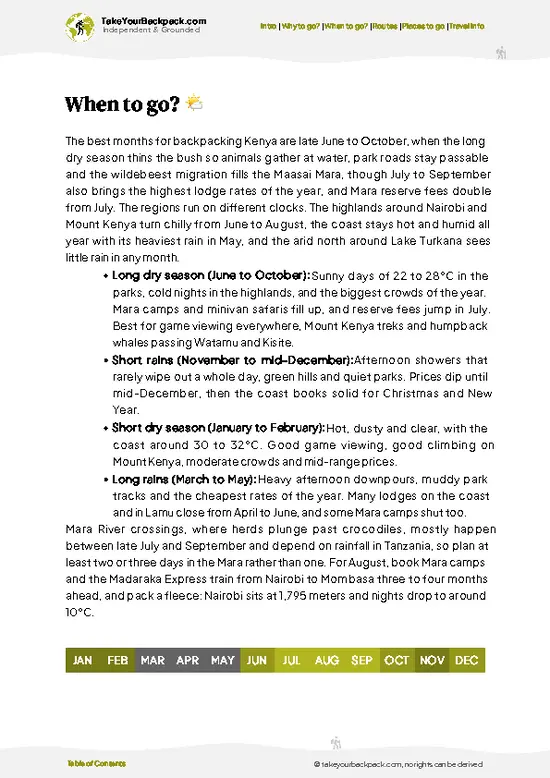
source: climatestotravel.comJANJanuary: good for travelingFEBFebruary: good for travelingMARMarch: fair for travelingAPRApril: fair for travelingMAYMay: fair for travelingJUNJune: highly recommended for travelingJULJuly: excellent for travelingAUGAugust: excellent for travelingSEPSeptember: highly recommended for travelingOCTOctober: highly recommended for travelingNOVNovember: good for travelingDECDecember: good for traveling
when-to-go

✈️ The backpacker research shortcutKenya Travel Guide

An offline-friendly backpacking guide with optimized travel routes, ranked highlights, transport advice, and the best areas to stay.
example page 0 from our offline Travel Guide for Kenya
example page 1 from our offline Travel Guide for Kenya
example page 2 from our offline Travel Guide for Kenya
example page 3 from our offline Travel Guide for Kenya
example page 4 from our offline Travel Guide for Kenya
example page 5 from our offline Travel Guide for Kenya
example page 6 from our offline Travel Guide for Kenya
example page 7 from our offline Travel Guide for Kenya
The digital guide (429 pages) contains:
114 highlights, ranked by travel appeal
Optimized 7, 14 & 21-day travel routes
Cities, national parks, landmarks, beaches
How to get around
Offline-friendly for travel without Wi-Fi
👉 Click to see all 30+ guide features

📅 Plan smarter in minutes, not weeks
Month by month travel advice
Festivals & national holidays
Budget expectations

🗺️ Go to the right places, skip the overrated ones
Honest pros & cons of destinations
Top hikes, parks & viewpoints
Lesser-known places most travelers miss
Clear “worth it vs skip it” guidance

🛏️ Travel smoothly without rookie mistakes
Best areas to stay
Transport systems explained simply
Common scams & safety advice
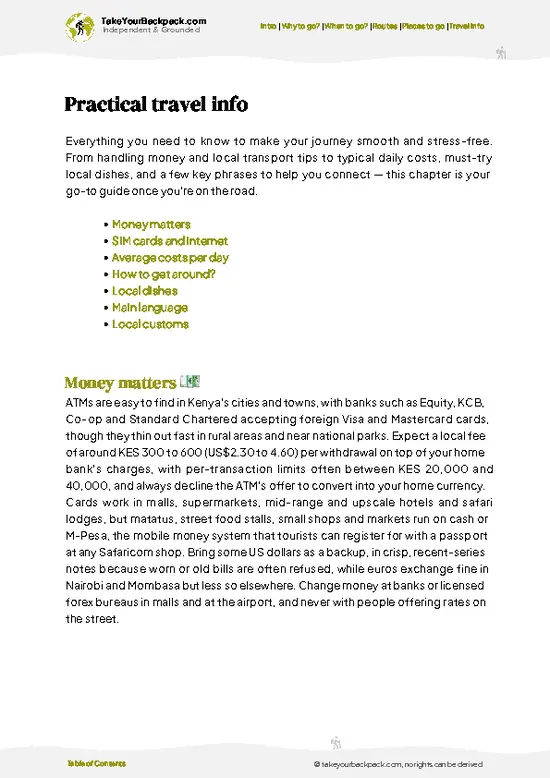
SIM cards, money & practical tips

🌍 Understand the country, not just visit it
Culture & traditions
52 Essential phrases & customs
Festivals worth planning around
Traveler-friendly historical context
Insights that make places more meaningful

📱 Built for real travel conditions
Fully downloadable PDF
Works completely offline
Optimized for phone use
Useful in remote areas & buses
Everything in one place
Save weeks of stressful planning
Get instant access to your full guide. 30‑day money-back guarantee.


By proceeding you agree to our terms.
Sent to your inbox immediately after payment • 100% Secure Checkout
Best Backpacking Travel Advisor 2025 tourism awardBest Backpacking
Travel Advisor
2025
What others say about Take Your Backpack Guides:
⭐⭐⭐⭐⭐
Fantastic, amazing amount of information!
⭐⭐⭐⭐⭐
My goodness this is amazing, it's what I've been looking for hats off too you!
⭐⭐⭐⭐⭐
I think this is absolutely BRILLIANT
⭐⭐⭐⭐
Very complete and informative. It's still missing places, but I gotta to commend you
⭐⭐⭐⭐⭐
This is truly amazing, thank you, can't wait to explore it with my kids!
⭐⭐⭐⭐⭐
Awesome resource, thank you!
⭐⭐⭐⭐⭐
This is amazing! Can't wait to explore the ones I haven't seen
⭐⭐⭐⭐
I love this! Well done, great idea.
⭐⭐⭐⭐⭐
Thanks for taking the time to make this gem!
⭐⭐⭐⭐⭐
This might be the best website I've ever seen.
⭐⭐⭐⭐⭐
Congratulations, and thank you so much for your work; it's incredibly valuable.
⭐⭐⭐⭐
In all seriousness I think you did a great job pointing out the important spots
⭐⭐⭐⭐⭐
10/10 very good
⭐⭐⭐⭐⭐
As someone who's only just starting to visit regularly this is awesome, thank you.
⭐⭐⭐⭐
Thank you very much! I'm going to visit my dad, it's going to be very useful!
⭐⭐⭐⭐⭐
This is really cool! We'll be travelling for the first time and this definitely come in handy.
⭐⭐⭐⭐⭐
You are now our minister of culture, congratulations 👨‍💼
⭐⭐⭐⭐⭐
Just wanted to tell you that this is a pearl! Going to follow your recommendations.
⭐⭐⭐⭐⭐
This is so cool. I'll definitely be using the resource for my travels soon.
⭐⭐⭐⭐⭐
This is very impressive! Good work.
⭐⭐⭐⭐⭐
This is an amazing and informative site. Very well done!

🛏️ Where to stay?Where staying makes the most sense

Meru’s backpacker sweet spot is the town center and its immediate surroundings. This area strikes a solid balance between safety and social buzz, making it a natural magnet for solo travelers and budget adventurers. You’ll find a handful of hostels and guesthouses here, which means easy access to communal spaces where meeting fellow backpackers feels organic, not forced. The vibe is straightforward—functional but friendly, with local markets and eateries just a short walk away, offering authentic Kenyan flavors without the tourist markup.

Venture too far out, and you trade convenience for quiet … read more 👉
Meru’s backpacker sweet spot is the town center and its immediate surroundings. This area strikes a solid balance between safety and social buzz, making it a natural magnet for solo travelers and budget adventurers. You’ll find a handful of hostels and guesthouses here, which means easy access to communal spaces where meeting fellow backpackers feels organic, not forced. The vibe is straightforward—functional but friendly, with local markets and eateries just a short walk away, offering authentic Kenyan flavors without the tourist markup.

Venture too far out, and you trade convenience for quiet neighborhoods that are safer but lack the social pulse and budget options. The outskirts lean more residential and less geared toward travelers, so you’d miss out on spontaneous connections and the practical perks of centrality. Staying downtown means you’re plugged into Meru’s rhythm, with transport links and amenities close at hand, letting you spend less time navigating and more time soaking in the experience. It’s the smart choice for those who want to maximize value without sacrificing comfort or safety.

🚌 Getting aroundHow to get around Meru

Meru moves at its own rhythm—neither a frantic rush nor a laid-back drift. It’s a city where schedules exist but bend to the pulse of daily life, a blend of order and improvisation. You’ll find that timing here is a flexible concept; buses and matatus (shared minibuses) run on a loose timetable, often leaving when full rather than on the clock. This means your transit choices are a dance between patience, speed, and comfort, with money as the constant referee. Understanding this flow lets you play the system smartly, turning what looks like chaos into a strategic advantage.


  • Walking: The ultimate budget option. Meru’s compact center makes walking not just free but often faster than waiting for a bus during peak hours. It’s your best bet for short hops and soaking in the city’s street-level
read more 👉
Meru moves at its own rhythm—neither a frantic rush nor a laid-back drift. It’s a city where schedules exist but bend to the pulse of daily life, a blend of order and improvisation. You’ll find that timing here is a flexible concept; buses and matatus (shared minibuses) run on a loose timetable, often leaving when full rather than on the clock. This means your transit choices are a dance between patience, speed, and comfort, with money as the constant referee. Understanding this flow lets you play the system smartly, turning what looks like chaos into a strategic advantage.


  • Walking: The ultimate budget option. Meru’s compact center makes walking not just free but often faster than waiting for a bus during peak hours. It’s your best bet for short hops and soaking in the city’s street-level vibe. No schedule, no cost, just your own pace.


  • Matatus: The backbone of local transit. These shared minibuses run from dawn until late evening, typically charging around 50-100 KES per ride. They’re quick and frequent but can get cramped and noisy. Expect them to leave only when full, so timing is unpredictable but the price unbeatable.


  • City Buses: Slightly more comfortable and spacious than matatus, city buses operate on rough schedules, usually from 6 AM to 8 PM. Tickets cost about 100-150 KES. They offer a smoother ride but sacrifice some flexibility—you’ll wait at designated stops and fixed times.


  • Boda Bodas (Motorcycle Taxis): Fast and nimble, boda bodas slice through traffic and get you where you need to go quickly. They’re pricier—expect to pay 150-300 KES for short trips—but worth it if you’re pressed for time or carrying gear. Comfort is minimal, and safety varies, so weigh speed against risk.


  • Private Taxis: The most comfortable and direct option, but also the priciest, with fares starting around 500 KES. Ideal if you want door-to-door service without waiting, but it’s a clear trade-off: you pay for comfort and convenience, not for budget.


Mastering Meru’s transit means balancing these options like a chess game—sometimes you sprint on a boda boda, other times you stroll or cram into a matatu. Each choice costs you time, money, or comfort, but knowing exactly what you’re trading lets you win the trip on your terms.

👛 Costs (as of 15 October 2025)How expensive it really is

Backpacking in Meru, Kenya, offers a clear trade-off map between time, money, and comfort, with costs that reflect the city’s modest pace and local lifestyle.
  • Dorm Accommodation (High Season): Expect to pay around $10 to $15 per night. High season pushes prices up slightly due to demand, but dorms remain basic and functional, often with shared bathrooms and limited amenities.
  • Dorm Accommodation (Off-Season): Prices drop to about $7 to $10 per night. Off-season travelers can find quieter spots with the same basic comfort but fewer crowds and more negotiating power.
  • Meals: Local eateries serve filling meals for $2 to $5. Street food and small restaurants offer authentic Kenyan dishes like ugali and sukuma wiki, balancing cost and flavor without fuss.
  • Local Transport: Matatus and boda-bodas
read more 👉
Backpacking in Meru, Kenya, offers a clear trade-off map between time, money, and comfort, with costs that reflect the city’s modest pace and local lifestyle.
  • Dorm Accommodation (High Season): Expect to pay around $10 to $15 per night. High season pushes prices up slightly due to demand, but dorms remain basic and functional, often with shared bathrooms and limited amenities.
  • Dorm Accommodation (Off-Season): Prices drop to about $7 to $10 per night. Off-season travelers can find quieter spots with the same basic comfort but fewer crowds and more negotiating power.
  • Meals: Local eateries serve filling meals for $2 to $5. Street food and small restaurants offer authentic Kenyan dishes like ugali and sukuma wiki, balancing cost and flavor without fuss.
  • Local Transport: Matatus and boda-bodas (motorcycle taxis) dominate, costing roughly $0.30 to $1 per short trip. They’re quick but can be chaotic, so factor in a bit of time for waiting and navigating traffic.
  • City Transport Pass: Meru doesn’t have a formal city transport pass system. Budget travelers rely on pay-per-ride options, which keeps flexibility high but means no bulk savings here.
  • Basic Activities/Entry Fees: Visits to local markets, small museums, or community projects typically cost between $1 and $5. More structured tours or wildlife excursions outside the city will push the budget higher but aren’t daily expenses.
  • Miscellaneous Expenses: Budget around $1 to $3 daily for essentials like bottled water, snacks, or phone credit. These small costs add up but remain manageable with a bit of planning.

Summing it up, a backpacker in Meru can expect to spend roughly $15 to $30 per day, depending on season and personal choices. This range balances basic comfort with local immersion, letting you decide where to save and where to splurge for a trip that feels both authentic and smart.
⚠️ Prices can change and everyone travels differently, so take this as a rough guide. Hope it helps you plan your adventure!

🚌 Day tripsWhere to go beyond the main area

Meru, Kenya, is a strategic launchpad for day trips that pack a punch without draining your wallet or time. Here are some standout options that will elevate your experience.

Mount Kenya National Park
Just a couple of hours from Meru, this UNESCO World Heritage site offers breathtaking views and diverse ecosystems. You can hike to the lower slopes for a taste of the mountain without committing to a multi-day trek. Expect to spend around $30 for park entry and transport. The best time to visit is during the dry seasons from January to March and July to October. A common mistake is underestimating the weather; pack layers, as temperatures can drop quickly.
👉 Explore Mount Kenya National Park

Meru National Park
Only about an hour away, this park is less crowded than its counterparts, making … read more 👉
Meru, Kenya, is a strategic launchpad for day trips that pack a punch without draining your wallet or time. Here are some standout options that will elevate your experience.

Mount Kenya National Park
Just a couple of hours from Meru, this UNESCO World Heritage site offers breathtaking views and diverse ecosystems. You can hike to the lower slopes for a taste of the mountain without committing to a multi-day trek. Expect to spend around $30 for park entry and transport. The best time to visit is during the dry seasons from January to March and July to October. A common mistake is underestimating the weather; pack layers, as temperatures can drop quickly.
👉 Explore Mount Kenya National Park

Meru National Park
Only about an hour away, this park is less crowded than its counterparts, making it a hidden treasure for wildlife enthusiasts. You can spot elephants, lions, and a variety of birds. A day trip can cost around $50, including transport and entry fees. The dry season is ideal for wildlife viewing, but the park’s lushness during the rainy season is equally captivating. Many first-timers overlook the early morning hours; that’s when the animals are most active.
👉 Explore Meru National Park

Kisii Hot Springs
Roughly a two-hour drive, these natural hot springs are perfect for relaxation after a day of exploration. The entry fee is minimal, around $10, and you can soak in the warm waters while enjoying the surrounding scenery. The best time to visit is during the dry months, but the springs are enjoyable year-round. A common pitfall is forgetting to bring a towel; you’ll want to dry off after a dip!


Chuka Town
Just under an hour from Meru, this vibrant town offers a taste of local life and culture. Explore the bustling markets and sample street food for less than $10. The best time to visit is during market days, typically on Wednesdays and Saturdays. Many backpackers miss out on the local cuisine; don’t skip the ugali and sukuma wiki!
Want to know what more Kenya offers?
The Kenya Travel Guide describes 114 highlights, from cities to national parks, from beaches to hikes

Get the Travel Guide -

🍲 FoodLocal Flavors for Backpackers

In Meru, local cuisine is a vibrant tapestry of flavors that tells the story of its people. Don’t miss ugali, a staple made from maize flour, often served with rich stews like nyama choma—grilled meat that’s smoky and tender. Pair it with sukuma wiki, sautéed greens that add a fresh crunch.

Street food is where the magic happens. Vendors line the streets, offering samosas bursting with spiced potatoes or meat, and mandazi, sweet fried dough that’s perfect with a cup of chai. Markets are alive with chatter and the aroma of grilled corn, inviting you to dive into the local scene.

When it comes to drinks, ajon, a local brew made from fermented millet, is a must-try. Sharing a drink is a sign of friendship, so don’t hesitate to join in. Just remember, meals are often communal, so embrace the … read more 👉
In Meru, local cuisine is a vibrant tapestry of flavors that tells the story of its people. Don’t miss ugali, a staple made from maize flour, often served with rich stews like nyama choma—grilled meat that’s smoky and tender. Pair it with sukuma wiki, sautéed greens that add a fresh crunch.

Street food is where the magic happens. Vendors line the streets, offering samosas bursting with spiced potatoes or meat, and mandazi, sweet fried dough that’s perfect with a cup of chai. Markets are alive with chatter and the aroma of grilled corn, inviting you to dive into the local scene.

When it comes to drinks, ajon, a local brew made from fermented millet, is a must-try. Sharing a drink is a sign of friendship, so don’t hesitate to join in. Just remember, meals are often communal, so embrace the family-style dining experience. It’s all about connection here.

🛡️ SafetyTraveler Safety Guide

Meru is generally safe, but like any city, it has its quirks. Stay alert in crowded markets, especially around the bus station, where pickpockets might lurk. If you’re solo, avoid wandering too far after dark; stick to well-lit areas and travel with a buddy whenever possible.

Scams are rare, but some locals might try to overcharge for services or goods. Always negotiate prices upfront, especially with taxi drivers. A friendly demeanor goes a long way, but keep your valuables close. Carry a small amount of cash for small purchases and avoid flashing larger bills. With a bit of awareness, you can navigate Meru smoothly and enjoy its vibrant culture.

Other Kenyan cities near Meru

Explore more nearby:

  • Isiolo—crossroads town, arid landscapes, Samburu influence| 35 km away
  • Nanyuki—Mount Kenya views, British settler legacy, equator marker| 64 km away
  • Mwingi—Kitui plains, dryland farming, transit stop| 119 km away

💡 Not sure where to go next?
Create a personalized itinerary for Kenya including Meru and the places that fit your trip.

Generate my itinerary

👉 Discover all cities

Or checkout all Kenya has to offer (think cities, towns, villages, national parks, hikes, beaches, festivals)
Country photo of Kenya

We 💚 feedbackWhat to keep in mind

Meru has a raw, untamed vibe that feels like a secret handshake among adventurers. The best surprise? The locals’ warmth; they’ll share stories over chai that make you feel at home. Just a heads-up: the altitude can hit hard. Take it slow, savor the journey, and let Meru’s magic unfold. You won’t regret it.

✍️ Help improve this page!
The information on this page is based on in-depth research, insights shared by experienced travelers, and feedback from the local travel community in Kenya. While every effort is made to keep the information accurate and current, conditions can change — so if you spot anything incorrect or outdated, please get in touch.


🙋‍♂️ Give feedback

👋 Meet the founderWho’s Behind Take Your Backpack?

Johan, backpacker and founder of TakeYourBackpackHi, I’m Johan (Netherlands 🇳🇱), the creator of TakeYourBackpack. Over the past decade, I’ve backpacked through 80+ countries across six continents, gaining extensive experience with independent travel, long-term trips, and overland routes.

This site is built on a combination of firsthand travel experience and carefully curated insights from other backpackers. Many guides are based on places I’ve personally visited, while others bring together tips, observations, and practical advice shared by trusted travelers I’ve met along the way.

The goal is to provide realistic, experience-driven guidance — not generic itineraries — so you can explore destinations with better context, clearer expectations, and more confidence.

Get full Kenya guide •
Instant download • 114 highlights • Full Offline guide