


×

Kenya🇰🇪 | citiesNairobiurban center, national park, cultural institutions | things to do and best time to go

Explore MombasaExplore Naivasha

Backpacking in Nairobi
🏆 Top pickcity ranked #1
By Johan Kruseman 🇳🇱 | Updated June 13, 2026

A matatu door slams shut behind you, reggae bass thumping through the metal frame, as the scent of grilled maize and diesel tangles in the air. You’re wedged between a sharply dressed office worker and a Maasai in bright shuka, both scrolling their phones, both ignoring the chaos outside: hawkers, boda-bodas, and the distant shimmer of Nairobi’s skyline.

Nairobi sits at the heart of Kenya, a highland city where the savannah meets skyscrapers. For backpackers, it’s a paradox: the National Museum’s colonial bones and the wild giraffes of Nairobi National Park are minutes apart, but so are traffic jams and pickpockets. Nairobi is fast, loud, and alive—more electric than Mombasa, less touristy than Arusha across the border. Hostels cluster in Westlands, where you’ll find rooftop bars and travelers swapping safari stories. It’s affordable if you eat local and ride matatus, but Western comforts cost extra. Safety is real work here—stick to daylight, trust your instincts, and you’ll find the city’s pulse addictive, not intimidating.

Discover everything you want to know in the 📖 Kenya Travel Guide.


Get your Kenya guide
114 ranked highlights, routes & tips, works offline (429 pages)
Loading the map 🌍
CLICK TO FILTER
cities
towns
landmarks
national parks
hikes
beaches
attractions
festivals
regions
SHOW COUNTRY’S BESTSHOW ALL

✨ Why go?
Ranked #1 city in Kenya
What makes it a must-see city

Nairobi is a backpacker’s hub that balances time, money, and comfort seamlessly. It’s not just a stopover; it’s a strategic basecamp for your adventures. The city offers a rich tapestry of highlights and activities that can fill your days without draining your wallet. Hostels here are not only affordable but also buzzing with fellow travelers, making it easy to swap stories and tips.

When it comes to food, Nairobi serves up a delightful mix of local and international cuisine, often at prices that won’t make your wallet weep. The city is surprisingly walkable, allowing you to explore vibrant neighborhoods and markets on foot, which adds to the experience without the need for costly transport.

As for nightlife, there’s a lively scene that caters to all tastes, from laid-back bars to energetic … read more 👉
Nairobi is a backpacker’s hub that balances time, money, and comfort seamlessly. It’s not just a stopover; it’s a strategic basecamp for your adventures. The city offers a rich tapestry of highlights and activities that can fill your days without draining your wallet. Hostels here are not only affordable but also buzzing with fellow travelers, making it easy to swap stories and tips.

When it comes to food, Nairobi serves up a delightful mix of local and international cuisine, often at prices that won’t make your wallet weep. The city is surprisingly walkable, allowing you to explore vibrant neighborhoods and markets on foot, which adds to the experience without the need for costly transport.

As for nightlife, there’s a lively scene that caters to all tastes, from laid-back bars to energetic clubs. Plus, Nairobi’s connectivity makes onward travel a breeze, whether you’re heading to the safari or the coast.

In short, Nairobi is a high-value stop that offers enough to keep you engaged while serving as a launchpad for your next adventure. If you’re looking for a place that combines culture, convenience, and camaraderie, this city fits the bill perfectly.
Want to include Nairobi in your Kenya route?
Create a personalized Kenya itinerary that includes Nairobi and the places that fit your trip — based on your travel style, budget, and available time. Get your route in seconds.

Generate my trip

💡 HighlightsEssential experiences to have while visiting Nairobi

  • Nairobi National Park — a proper safari a few minutes from downtown: lions, buffalo, giraffes and rhinos with the city skyline in the background. Great for short game drives, birding and surreal photos you won’t get anywhere else.
  • David Sheldrick Wildlife Trust (Elephant Orphanage) — watch baby elephants on their daily mud baths and feedings and learn about rescue and reintegration work. It’s emotional, educational, and visiting (or sponsoring an orphan) has a direct conservation impact.
  • Giraffe Centre — get eye-level with endangered Rothschild giraffes and hand-feed them from a raised platform. It’s intimate, family-friendly, and offers a clear conservation story plus good views of the surrounding suburbs.
  • Karura Forest — shady trails, waterfalls, picnic spots and a surprising sense
read more 👉
  • Nairobi National Park — a proper safari a few minutes from downtown: lions, buffalo, giraffes and rhinos with the city skyline in the background. Great for short game drives, birding and surreal photos you won’t get anywhere else.
  • David Sheldrick Wildlife Trust (Elephant Orphanage) — watch baby elephants on their daily mud baths and feedings and learn about rescue and reintegration work. It’s emotional, educational, and visiting (or sponsoring an orphan) has a direct conservation impact.
  • Giraffe Centre — get eye-level with endangered Rothschild giraffes and hand-feed them from a raised platform. It’s intimate, family-friendly, and offers a clear conservation story plus good views of the surrounding suburbs.
  • Karura Forest — shady trails, waterfalls, picnic spots and a surprising sense of wilderness inside the city. Walk, bike or run past fig trees and birdlife; there are also historical Mau Mau caves if you like a dose of history on your hike.
  • National Museum of Kenya — the best one-stop introduction to Kenya’s natural history, archaeology and cultures with fossils, ethnographic galleries and rotating exhibits. Solid context for everything else you’ll see around the country.
  • Karen Blixen Museum — the preserved farmhouse and gardens of the Out of Africa writer give a tangible slice of colonial-era Nairobi and a tranquil garden to wander. Good for literature fans and anyone who likes old houses with stories.
  • Bomas of Kenya — a cultural village and daily live performances showcasing dances, songs and homesteads from Kenya’s ethnic groups. It’s touristy but genuinely informative and vibrant; great evening entertainment with strong photo moments.
  • Nairobi Railway Museum — old steam engines, carriages and railway paraphernalia that tell the story of how the railway shaped modern Kenya. Small, accessible and oddly charming for history buffs or anyone who likes big, noisy iron machines.
  • Kazuri Beads Women’s Cooperative — a working workshop in Karen where you can watch handmade ceramic beads and pottery being made and buy fair-trade souvenirs that directly support local women. Short tours give context and make your purchases meaningful.
  • Kibera Community Tour (guided) — a responsible, community-run walking tour of one of Africa’s largest informal settlements that focuses on daily life, local projects and entrepreneurship rather than “poverty tourism.” Book a reputable operator and come ready to listen and learn.
If you have time for day trips, consider Ngong Hills for short hikes, Lake Naivasha/Hell’s Gate for boating and cycling among wildlife, or Mount Longonot for a crater rim trek — all reachable from Nairobi in a few hours.
Spotted a mistake or missing something? Contact us.

Things to do in Nairobi

Ratings based on Tripadvisor reviews. When you book through this link, you support our work at no extra cost to you.

🏘️ NeighborhoodsHow different areas shape the experience

Nairobi is a bustling hub where every neighborhood tells a different story. Here’s how to navigate the city’s diverse areas, balancing your time, money, and comfort.

Westlands: This is the go-to for nightlife and dining. Trendy bars and restaurants line the streets, making it vibrant after dark. Costs can be higher here, especially for food and drinks. It’s walkable, but taxis are common for late-night returns. Perfect for short stays if you want to dive into the city’s social scene.

Karen: A quieter, upscale area known for its green spaces and cafes. It’s a bit pricier, but you get a more relaxed vibe. Public transport is less frequent, so expect to rely on rideshares. Ideal for longer stays if you prefer a slower pace and access to nature.

Eastlands: This is where you’ll find a more authentic … read more 👉
Nairobi is a bustling hub where every neighborhood tells a different story. Here’s how to navigate the city’s diverse areas, balancing your time, money, and comfort.

Westlands: This is the go-to for nightlife and dining. Trendy bars and restaurants line the streets, making it vibrant after dark. Costs can be higher here, especially for food and drinks. It’s walkable, but taxis are common for late-night returns. Perfect for short stays if you want to dive into the city’s social scene.

Karen: A quieter, upscale area known for its green spaces and cafes. It’s a bit pricier, but you get a more relaxed vibe. Public transport is less frequent, so expect to rely on rideshares. Ideal for longer stays if you prefer a slower pace and access to nature.

Eastlands: This is where you’ll find a more authentic local experience. It’s budget-friendly, with street food and markets galore. Walkability varies, so be prepared for some hustle. Nightlife is low-key, making it suitable for those who want to immerse themselves in everyday life without the touristy distractions.

City Centre: The heart of Nairobi, bustling with activity. It’s a mix of business and culture, with museums and markets nearby. Costs are moderate, and it’s highly walkable. Great for short stays if you want to be in the thick of things, but it can be noisy.

Lang’ata: Close to attractions like the Giraffe Centre and Nairobi National Park. It’s affordable and offers a unique blend of urban and wildlife experiences. Transport options are decent, but having a plan helps. Best for longer stays if you want to explore beyond the city’s hustle.

⌛️ 1 dayA smart one-day plan

Nairobi is a city where the pulse of urban life meets the wild heart of Africa. It’s a place where you can sip coffee in a bustling café while watching giraffes graze just a few miles away. The blend of cultures, history, and nature makes it a fascinating stop for any traveler.

Start your day in the vibrant neighborhood of Karen. Head to the Giraffe Centre, where you can feed the endangered Rothschild giraffes. It’s a unique experience that’s both fun and educational. Spend an hour here, soaking in the charm of these gentle giants. Afterward, grab breakfast at a nearby café like the Karen Blixen Coffee Garden. The lush surroundings and delicious pastries will set a positive tone for your day.

In the afternoon, make your way to the Nairobi National Museum. This isn’t just a stop for history … read more 👉
Nairobi is a city where the pulse of urban life meets the wild heart of Africa. It’s a place where you can sip coffee in a bustling café while watching giraffes graze just a few miles away. The blend of cultures, history, and nature makes it a fascinating stop for any traveler.

Start your day in the vibrant neighborhood of Karen. Head to the Giraffe Centre, where you can feed the endangered Rothschild giraffes. It’s a unique experience that’s both fun and educational. Spend an hour here, soaking in the charm of these gentle giants. Afterward, grab breakfast at a nearby café like the Karen Blixen Coffee Garden. The lush surroundings and delicious pastries will set a positive tone for your day.

In the afternoon, make your way to the Nairobi National Museum. This isn’t just a stop for history buffs; the museum showcases Kenya’s rich heritage through art, culture, and natural history. Allocate a couple of hours to explore the exhibits. Afterward, stroll through the adjacent Nairobi Botanical Gardens for a peaceful escape from the city’s hustle. This is a lesser-known spot that offers a serene atmosphere and a chance to see local flora.

As evening approaches, head to the lively district of Westlands. Here, you’ll find a variety of dining options. Try a local favorite like Nyama Choma (grilled meat) at a casual spot like Carnivore. The atmosphere is electric, and the food is a true taste of Kenya.

Wrap up your day with a visit to the Kazuri Beads Women’s Factory. This isn’t on most tourist itineraries, but it’s a fantastic way to support local artisans while picking up unique souvenirs. You’ll leave with a deeper appreciation for the craftsmanship and stories behind each piece.

In just one day, you’ve danced through Nairobi’s urban landscape, connecting with its wildlife, culture, and people. Each choice you made—whether to linger at the Giraffe Centre or explore the museum—was a step toward crafting your own unforgettable experience.
Turn your Nairobi visit into an Kenya adventure
Build a complete Kenya route with Nairobi, hidden gems, must-see destinations, and realistic travel times included.

Generate my trip

🌤️ When to go?Choosing the right time of year


  • Topic: Weather – Nairobi’s climate is mild year-round, but the best window is during the dry seasons: late June to October and January to February. These months avoid the heavy rains that can turn dirt roads into mud traps, making trekking and city exploration smoother.

  • Topic: Temperature – Expect daytime highs around 20-26°C (68-79°F) in the dry season, perfect for active days without overheating. Nights can dip to 10-12°C (50-54°F), so pack a light jacket. The wet seasons bring cooler, damp conditions that can sap energy.

  • Topic: Daylight Hours – Nairobi sits near the equator, so daylight is steady year-round, roughly 12 hours a day. This consistency means you won’t lose precious daylight hours to seasonal shifts, allowing for reliable planning.

  • Topic: Crowds – Peak tourist influx
read more 👉

  • Topic: Weather – Nairobi’s climate is mild year-round, but the best window is during the dry seasons: late June to October and January to February. These months avoid the heavy rains that can turn dirt roads into mud traps, making trekking and city exploration smoother.

  • Topic: Temperature – Expect daytime highs around 20-26°C (68-79°F) in the dry season, perfect for active days without overheating. Nights can dip to 10-12°C (50-54°F), so pack a light jacket. The wet seasons bring cooler, damp conditions that can sap energy.

  • Topic: Daylight Hours – Nairobi sits near the equator, so daylight is steady year-round, roughly 12 hours a day. This consistency means you won’t lose precious daylight hours to seasonal shifts, allowing for reliable planning.

  • Topic: Crowds – Peak tourist influx aligns with the dry seasons, especially July and August, when safaris and city tours fill up. Visiting just before or after these months can mean fewer tourists and better deals without sacrificing weather quality.

  • Topic: Seasonal Activities – Dry months are prime for safaris in nearby reserves and urban hikes. The Great Migration in the Maasai Mara (July-October) is a major draw, influencing Nairobi’s visitor flow and prices.

  • Topic: Price Fluctuations – Accommodation and tour prices spike during the dry season and migration period. Traveling in the shoulder months (June or November) can save money while still offering decent weather and access to activities.


Pro-tip: Align your Nairobi trip with the dry season’s start or end to balance weather, crowd size, and cost—this is where savvy backpackers find their sweet spot.


source: climatestotravel.comJANJanuary: excellent for travelingFEBFebruary: excellent for travelingMARMarch: fair for travelingAPRApril: below average for travelingMAYMay: fair for travelingJUNJune: highly recommended for travelingJULJuly: excellent for travelingAUGAugust: excellent for travelingSEPSeptember: excellent for travelingOCTOctober: excellent for travelingNOVNovember: highly recommended for travelingDECDecember: good for traveling
when-to-go

✈️ The backpacker research shortcutKenya Travel Guide

An offline-friendly backpacking guide with optimized travel routes, ranked highlights, transport advice, and the best areas to stay.
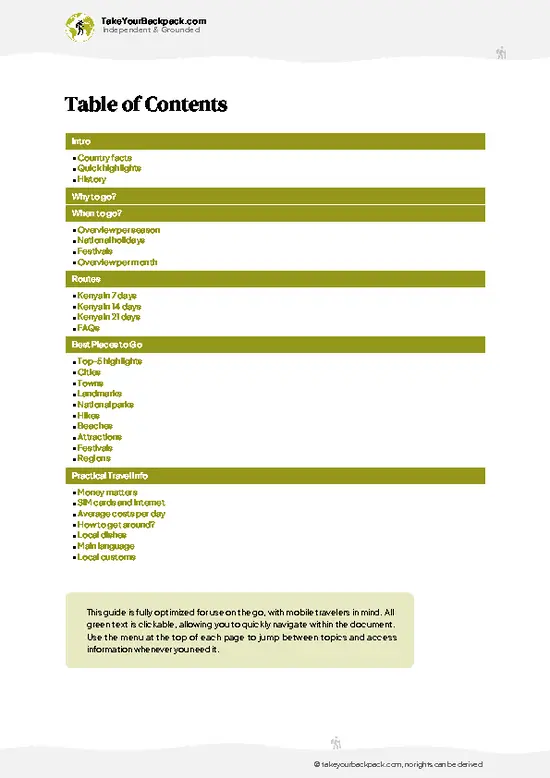
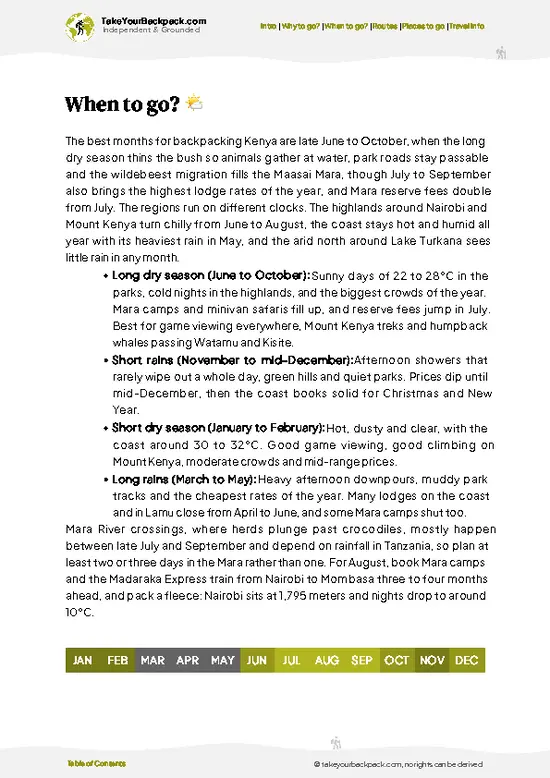
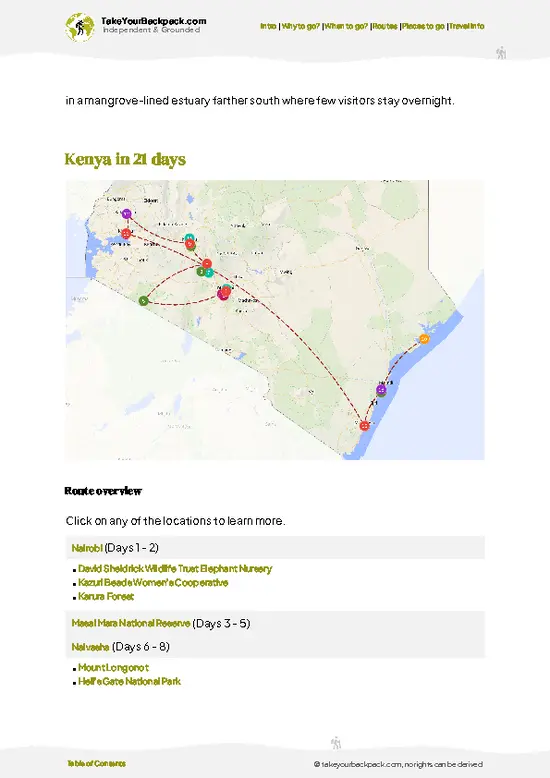
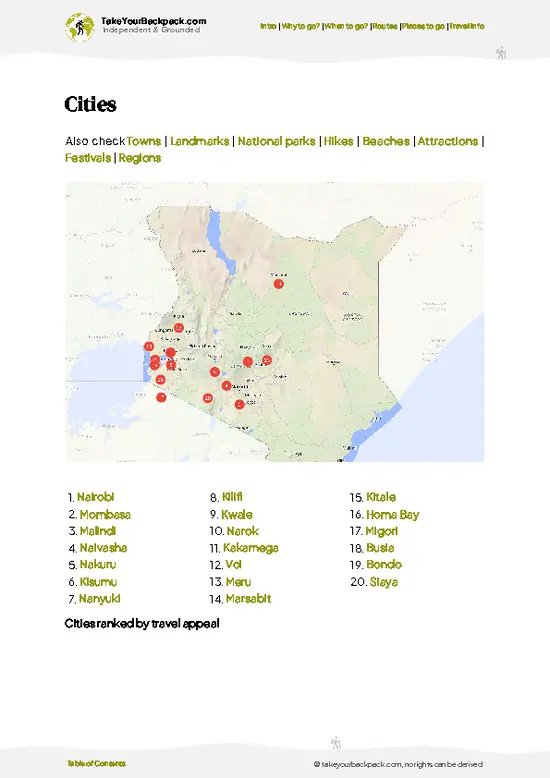
example page 0 from our offline Travel Guide for Kenya
example page 1 from our offline Travel Guide for Kenya
example page 2 from our offline Travel Guide for Kenya
example page 3 from our offline Travel Guide for Kenya
example page 4 from our offline Travel Guide for Kenya
example page 5 from our offline Travel Guide for Kenya
example page 6 from our offline Travel Guide for Kenya
example page 7 from our offline Travel Guide for Kenya
The digital guide (429 pages) contains:
114 highlights, ranked by travel appeal
Optimized 7, 14 & 21-day travel routes
Cities, national parks, landmarks, beaches
How to get around
Offline-friendly for travel without Wi-Fi
👉 Click to see all 30+ guide features

📅 Plan smarter in minutes, not weeks
Month by month travel advice
Festivals & national holidays
Budget expectations

🗺️ Go to the right places, skip the overrated ones
Honest pros & cons of destinations
Top hikes, parks & viewpoints
Lesser-known places most travelers miss
Clear “worth it vs skip it” guidance

🛏️ Travel smoothly without rookie mistakes
Best areas to stay
Transport systems explained simply
Common scams & safety advice
SIM cards, money & practical tips

🌍 Understand the country, not just visit it
Culture & traditions
52 Essential phrases & customs
Festivals worth planning around
Traveler-friendly historical context
Insights that make places more meaningful

📱 Built for real travel conditions
Fully downloadable PDF
Works completely offline
Optimized for phone use
Useful in remote areas & buses
Everything in one place
Save weeks of stressful planning
Get instant access to your full guide. 30‑day money-back guarantee.


By proceeding you agree to our terms.
Sent to your inbox immediately after payment • 100% Secure Checkout
Best Backpacking Travel Advisor 2025 tourism awardBest Backpacking
Travel Advisor
2025
What others say about Take Your Backpack Guides:
⭐⭐⭐⭐⭐
Fantastic, amazing amount of information!
⭐⭐⭐⭐⭐
My goodness this is amazing, it's what I've been looking for hats off too you!
⭐⭐⭐⭐⭐
I think this is absolutely BRILLIANT
⭐⭐⭐⭐
Very complete and informative. It's still missing places, but I gotta to commend you
⭐⭐⭐⭐⭐
This is truly amazing, thank you, can't wait to explore it with my kids!
⭐⭐⭐⭐⭐
Awesome resource, thank you!
⭐⭐⭐⭐⭐
This is amazing! Can't wait to explore the ones I haven't seen
⭐⭐⭐⭐
I love this! Well done, great idea.
⭐⭐⭐⭐⭐
Thanks for taking the time to make this gem!
⭐⭐⭐⭐⭐
This might be the best website I've ever seen.
⭐⭐⭐⭐⭐
Congratulations, and thank you so much for your work; it's incredibly valuable.
⭐⭐⭐⭐
In all seriousness I think you did a great job pointing out the important spots
⭐⭐⭐⭐⭐
10/10 very good
⭐⭐⭐⭐⭐
As someone who's only just starting to visit regularly this is awesome, thank you.
⭐⭐⭐⭐
Thank you very much! I'm going to visit my dad, it's going to be very useful!
⭐⭐⭐⭐⭐
This is really cool! We'll be travelling for the first time and this definitely come in handy.
⭐⭐⭐⭐⭐
You are now our minister of culture, congratulations 👨‍💼
⭐⭐⭐⭐⭐
Just wanted to tell you that this is a pearl! Going to follow your recommendations.
⭐⭐⭐⭐⭐
This is so cool. I'll definitely be using the resource for my travels soon.
⭐⭐⭐⭐⭐
This is very impressive! Good work.
⭐⭐⭐⭐⭐
This is an amazing and informative site. Very well done!

🛏️ Where to stay?How to pick the right area

Nairobi’s backpacker sweet spot is a balancing act between safety, social buzz, and budget sense. The standout neighborhood is Westlands. It’s where you get a solid mix of secure streets and a lively backpacker scene. Hostels here cater to solo travelers and groups alike, offering communal spaces that make meeting others effortless. The vibe is relaxed but active—think casual bars, street food stalls, and easy access to nightlife without the chaos of downtown.

Compared to Downtown Nairobi, Westlands feels less hectic and safer after dark. Downtown has its charms—markets and cultural spots—but … read more 👉
Nairobi’s backpacker sweet spot is a balancing act between safety, social buzz, and budget sense. The standout neighborhood is Westlands. It’s where you get a solid mix of secure streets and a lively backpacker scene. Hostels here cater to solo travelers and groups alike, offering communal spaces that make meeting others effortless. The vibe is relaxed but active—think casual bars, street food stalls, and easy access to nightlife without the chaos of downtown.

Compared to Downtown Nairobi, Westlands feels less hectic and safer after dark. Downtown has its charms—markets and cultural spots—but it’s a trade-off with noise, traffic, and a more intense hustle that can wear you down fast. For a backpacker, that’s a comfort hit you don’t want to take unless you’re on a tight schedule and need to be in the thick of it.

Then there’s Kilimani, just south of Westlands. It’s quieter, more residential, and slightly pricier, but still within reach for budget travelers who want a bit more calm and green spaces. It’s less social than Westlands, though, so if you’re hunting for connections, it’s a step down.

In short: Westlands nails the sweet spot for backpackers who want safety, social energy, and budget-friendly options all in one place. It’s the strategic choice that maximizes your time and comfort without blowing your wallet.

🚌 Getting aroundHow to get around Nairobi

Nairobi moves at its own rhythm—a blend of calculated chaos and bursts of order. The city’s pulse is neither strictly regimented nor entirely freewheeling; it’s a dance between the predictable and the spontaneous. You’ll find that schedules exist more as guidelines than gospel, and the real flow depends on your ability to read the street-level cues. Here, time is elastic, and comfort is a negotiable luxury. Understanding this dynamic is your first win. Once you grasp how Nairobi’s transit system balances speed, cost, and ease, you can navigate like a pro, turning what looks like disorder into a strategic advantage.


  • Walking: The ultimate budget mode. Nairobi’s central neighborhoods are surprisingly walkable, especially around downtown and Westlands. Walking costs nothing, gives you full
read more 👉
Nairobi moves at its own rhythm—a blend of calculated chaos and bursts of order. The city’s pulse is neither strictly regimented nor entirely freewheeling; it’s a dance between the predictable and the spontaneous. You’ll find that schedules exist more as guidelines than gospel, and the real flow depends on your ability to read the street-level cues. Here, time is elastic, and comfort is a negotiable luxury. Understanding this dynamic is your first win. Once you grasp how Nairobi’s transit system balances speed, cost, and ease, you can navigate like a pro, turning what looks like disorder into a strategic advantage.


  • Walking: The ultimate budget mode. Nairobi’s central neighborhoods are surprisingly walkable, especially around downtown and Westlands. Walking costs nothing, gives you full control over your pace, and lets you soak in the city’s textures up close. It’s slow but reliable—perfect for short hops or when you want to avoid the unpredictability of traffic. Just watch your step; sidewalks can be uneven and street crossings demand vigilance.


  • Matatus: The iconic minibuses that define Nairobi’s transit culture. They run almost 24/7, with peak hours packed and off-peak hours more relaxed. Fares hover around 50-100 KES ($0.40-$0.80), making them the cheapest motorized option. Speed varies wildly—expect frequent stops and occasional detours as drivers chase passengers. Comfort is minimal; these rides are noisy, crowded, and often standing-room-only. But they’re fast enough to beat walking and give you a raw slice of local life.


  • City Buses: Larger and more structured than matatus, these buses cover main routes with fixed stops. They operate roughly from 6 AM to 9 PM. Tickets cost about 100-150 KES ($0.80-$1.20). They offer a bit more breathing room and a smoother ride, but they’re slower due to scheduled stops and traffic. If you’re prioritizing comfort over speed, this is your middle ground.


  • Ride-Hailing Services (Uber, Bolt): Your comfort and convenience option, but at a price. Fares start around 300 KES ($2.50) for short trips and can spike during rush hour or bad weather. These services run 24/7, offering door-to-door rides with air conditioning and a predictable route. They save time and hassle but eat into your budget quickly. Ideal when you’re carrying gear or heading somewhere off the main transit lines.


  • Boda Bodas (Motorcycle Taxis): The wildcard in Nairobi’s transit game. They dart through traffic jams with ease, cutting travel time dramatically. Prices vary but expect 100-200 KES ($0.80-$1.60) for short trips. They’re fast and flexible but come with safety trade-offs—helmets are often optional, and the ride can be bumpy. Use them when time is tight and you’re comfortable with a bit of risk.

👛 Costs (as of 12 October 2025)What things cost and how to budget

Nairobi’s backpacking costs reflect a balance between affordability and the occasional splurge for comfort or experience. Here’s the breakdown to help you play the budget game smartly:
  • Dorm Accommodation (High Season): Expect to pay around $10 to $15 per night in popular hostels. High season pushes prices up due to demand, especially around July to October and December holidays.
  • Dorm Accommodation (Off-Season): Drop to about $7 to $10 per night. Fewer tourists mean better deals, but some places might close or reduce services.
  • Meals: Street food and local eateries will cost you roughly $3 to $7 per meal. Western-style cafes or tourist-targeted restaurants can push meals to $10 or more, but sticking to local joints keeps costs low and flavors authentic.
  • Local Transport: Matatus (shared minibuses)
read more 👉
Nairobi’s backpacking costs reflect a balance between affordability and the occasional splurge for comfort or experience. Here’s the breakdown to help you play the budget game smartly:
  • Dorm Accommodation (High Season): Expect to pay around $10 to $15 per night in popular hostels. High season pushes prices up due to demand, especially around July to October and December holidays.
  • Dorm Accommodation (Off-Season): Drop to about $7 to $10 per night. Fewer tourists mean better deals, but some places might close or reduce services.
  • Meals: Street food and local eateries will cost you roughly $3 to $7 per meal. Western-style cafes or tourist-targeted restaurants can push meals to $10 or more, but sticking to local joints keeps costs low and flavors authentic.
  • Local Transport: Matatus (shared minibuses) and buses are the backbone here, with fares typically between $0.30 and $0.70 per ride. They’re cheap but can be crowded and chaotic.
  • City Transport Pass: Nairobi doesn’t have a unified city transport pass system for tourists, so daily transport costs depend on usage but budget around $2 to $5 if you plan multiple trips.
  • Basic Activities/Entry Fees: Museums, parks, and cultural sites usually charge between $5 and $15. Nairobi National Park, a standout, is around $43 for non-residents, so factor that in if you want the wildlife experience.
  • Miscellaneous Expenses: This covers water, snacks, SIM cards, and occasional tips. Around $2 to $5 daily keeps you covered without surprises.

Add it all up, and you’re looking at a daily budget ranging from about $20 on the leanest days to $50 if you mix in a few comfort upgrades or special activities. Nairobi rewards those who know where to save and where to spend—your choices here shape the trip’s flavor and flow.
⚠️ Prices can change and everyone travels differently, so take this as a rough guide. Hope it helps you plan your adventure!

🚌 Day tripsEasy escapes and nearby places

Nairobi is a fantastic launchpad for day trips that blend adventure, culture, and wildlife. Here’s how to maximize your experience without breaking the bank.

Giraffe Centre
Just a short 30-minute ride from the city center, the Giraffe Centre offers a unique chance to feed and interact with the endangered Rothschild giraffes. The entrance fee is around $15, which includes a guided tour. This is a perfect morning trip; arrive early to avoid crowds and enjoy the serene atmosphere. A common mistake is underestimating the time you’ll want to spend here—plan for at least two hours to soak it all in.
👉 Explore Giraffe Centre

Nairobi National Park
Only about 30 minutes from downtown, this park is a remarkable juxtaposition of urban life and wildlife. For around $43, you can enter and embark … read more 👉
Nairobi is a fantastic launchpad for day trips that blend adventure, culture, and wildlife. Here’s how to maximize your experience without breaking the bank.

Giraffe Centre
Just a short 30-minute ride from the city center, the Giraffe Centre offers a unique chance to feed and interact with the endangered Rothschild giraffes. The entrance fee is around $15, which includes a guided tour. This is a perfect morning trip; arrive early to avoid crowds and enjoy the serene atmosphere. A common mistake is underestimating the time you’ll want to spend here—plan for at least two hours to soak it all in.
👉 Explore Giraffe Centre

Nairobi National Park
Only about 30 minutes from downtown, this park is a remarkable juxtaposition of urban life and wildlife. For around $43, you can enter and embark on a self-guided safari. The best time to visit is early morning when animals are most active. Many first-timers overlook the fact that you can bring your own snacks and drinks, saving money and enhancing your experience. Don’t miss the chance to see lions and rhinos against the city skyline!
👉 Explore Nairobi National Park

Bomas of Kenya
A cultural experience awaits you just 20 minutes from Nairobi. The Bomas of Kenya showcases traditional music, dance, and crafts. Tickets cost about $10, and the performances are vibrant and engaging. Aim for an afternoon visit to catch the live shows, which usually start around 2 PM. A common pitfall is arriving too late; check the schedule in advance to ensure you don’t miss out.
👉 Explore Bomas of Kenya

Karen Blixen Museum
Located in the suburb of Karen, this museum is a mere 30-minute drive from Nairobi. For about $12, you can explore the former home of the author of ”Out of Africa.” The lush gardens and historical context make it a peaceful retreat. The best time to visit is during the week when it’s less crowded. Many backpackers miss the guided tours that provide deeper insights—don’t skip them!
👉 Explore Karen Blixen Museum

Elephant Orphanage
Just 45 minutes from Nairobi, the David Sheldrick Wildlife Trust is a must-visit for elephant lovers. Entry is around $7, and you can watch baby elephants being fed and playing. The best time to go is during the morning feeding session. A common mistake is not booking in advance, as slots fill up quickly. This experience is both heartwarming and educational, making it a high-value trip.
Want to know what more Kenya offers?
The Kenya Travel Guide describes 114 highlights, from cities to national parks, from beaches to hikes

Get the Travel Guide -

🍲 FoodWhat to Eat & Drink

In Nairobi, food is a vibrant tapestry of flavors and cultures, reflecting its rich history. You can’t miss ugali, a staple made from maize flour, served with almost every meal. It’s the perfect vehicle for scooping up stews like sukuma wiki (collard greens) or nyama choma (grilled meat). The smoky aroma of meat sizzling over open flames is a siren call from street vendors, where you’ll find locals gathered, sharing stories and laughter.

For a true taste of the city, dive into the bustling Kibera Market or Westlands. Here, the air is thick with spices, and the chatter of vendors creates a lively backdrop. Street food is king; grab a samosa or kibanda (a small roadside eatery) for a quick bite. Don’t shy away from trying chapati with your meal; it’s flaky, buttery, and utterly satisfying.
read more 👉
In Nairobi, food is a vibrant tapestry of flavors and cultures, reflecting its rich history. You can’t miss ugali, a staple made from maize flour, served with almost every meal. It’s the perfect vehicle for scooping up stews like sukuma wiki (collard greens) or nyama choma (grilled meat). The smoky aroma of meat sizzling over open flames is a siren call from street vendors, where you’ll find locals gathered, sharing stories and laughter.

For a true taste of the city, dive into the bustling Kibera Market or Westlands. Here, the air is thick with spices, and the chatter of vendors creates a lively backdrop. Street food is king; grab a samosa or kibanda (a small roadside eatery) for a quick bite. Don’t shy away from trying chapati with your meal; it’s flaky, buttery, and utterly satisfying.

When it comes to drinks, chai is a daily ritual. You’ll find it served everywhere, often sweetened and spiced. If you’re feeling adventurous, try a local brew like Tusker or a craft beer from one of the city’s microbreweries.

Etiquette is simple: share your food and enjoy the communal vibe. Eating with your hands is common, so embrace it! This isn’t just a meal; it’s a connection to the heart of Nairobi.

🛡️ SafetyScams, Hazards, and Annoyances

Nairobi is generally safe for travelers, but a little awareness goes a long way. Stick to well-trodden areas like Westlands and Karen during the day. At night, it’s best to avoid walking alone; use a reputable taxi service instead.

Common scams include the “friendly local” who offers unsolicited help. Politely decline and keep moving. Street vendors can be persistent, but a firm “no, thank you” usually does the trick.

When using ATMs, choose ones located inside banks or busy shopping centers. Keep your belongings close, especially in crowded places like markets or public transport.

Solo travelers should trust their instincts. If something feels off, it probably is. Engage with locals, but stay aware of your surroundings. Overall, with a bit of savvy and a confident demeanor, you can … read more 👉
Nairobi is generally safe for travelers, but a little awareness goes a long way. Stick to well-trodden areas like Westlands and Karen during the day. At night, it’s best to avoid walking alone; use a reputable taxi service instead.

Common scams include the “friendly local” who offers unsolicited help. Politely decline and keep moving. Street vendors can be persistent, but a firm “no, thank you” usually does the trick.

When using ATMs, choose ones located inside banks or busy shopping centers. Keep your belongings close, especially in crowded places like markets or public transport.

Solo travelers should trust their instincts. If something feels off, it probably is. Engage with locals, but stay aware of your surroundings. Overall, with a bit of savvy and a confident demeanor, you can navigate Nairobi smoothly and enjoy its vibrant culture without unnecessary hassle.

Other Kenyan cities near Nairobi

Explore more nearby:

  • Ruiru—satellite town, coffee estates, Thika superhighway| 21 km away
  • Limuru—Tea estates, rolling hills, cool mornings| 28 km away
  • Thika—pineapple plantations, industrial estates, Chania Falls| 39 km away

💡 Not sure where to go next?
Create a personalized itinerary for Kenya including Nairobi and the places that fit your trip.

Generate my itinerary

👉 Discover all cities

Or checkout all Kenya has to offer (think cities, towns, villages, national parks, hikes, beaches, festivals)
Country photo of Kenya

We 💚 feedbackParting advice and final tips

Nairobi’s energy is electric, a blend of urban hustle and wild adventure. Don’t miss the Giraffe Centre; it’s a delightful surprise to feed these gentle giants. The city’s street food scene? A must-try—just go easy on the spicy stuff if you’re not ready for a fiery surprise. One heads-up: traffic can be a beast. Plan your outings wisely, or you might find yourself stuck in a jam longer than you intended. Embrace the chaos; it’s part of Nairobi’s charm.

✍️ Help improve this page!
The information on this page is based on in-depth research, insights shared by experienced travelers, and feedback from the local travel community in Kenya. While every effort is made to keep the information accurate and current, conditions can change — so if you spot anything incorrect or outdated, please get in touch.


🙋‍♂️ Give feedback

👋 Meet the founderWho’s Behind Take Your Backpack?

Johan, backpacker and founder of TakeYourBackpackHi, I’m Johan (Netherlands 🇳🇱), the creator of TakeYourBackpack. Over the past decade, I’ve backpacked through 80+ countries across six continents, gaining extensive experience with independent travel, long-term trips, and overland routes.

This site is built on a combination of firsthand travel experience and carefully curated insights from other backpackers. Many guides are based on places I’ve personally visited, while others bring together tips, observations, and practical advice shared by trusted travelers I’ve met along the way.

The goal is to provide realistic, experience-driven guidance — not generic itineraries — so you can explore destinations with better context, clearer expectations, and more confidence.

Get full Kenya guide •
Instant download • 114 highlights • Full Offline guide