

×

Kiribati🇰🇮 | festivalsKiribati Music Festivallocal bands, dance troupes, open-air stages | things to do and best time to go

Explore Kiribati DayExplore Abaiang Atoll National Park

Backpacking in Kiribati Music
👌 Worth visitingfestival ranked #3
By Johan Kruseman 🇳🇱 | Updated September 4, 2026

Most write-ups sell Kiribati Music Festival as a big, glossy island party; the surprise is that it’s much closer to a community gathering where you’ll probably recognize faces by day two. The festival usually happens on South Tarawa, Kiribati’s crowded main atoll, so you’re not on some remote sandbar—you’re in the country’s noisy, lived‑in core. Expect traditional Kiribati group singing, dense choral harmonies, and fierce dance competitions more than international DJ sets; the crowd is mostly locals with a thin layer of regional travelers and a handful of backpackers who did their homework. The vibe is intense but welcoming, with performances running late into the humid night over several days rather than one polished weekend. It’s worth it if you crave raw, cultural immersion and don’t mind rough edges, limited infrastructure, and almost zero “festival conveniences” in exchange for something real.

Discover everything you want to know in the 📖 Kiribati Travel Guide.


Get your Kiribati guide
31 ranked highlights, routes & tips, works offline (147 pages)
Loading the map 🌍
CLICK TO FILTER
towns
villages
landmarks
national parks
beaches
attractions
festivals
regions
SHOW COUNTRY’S BESTSHOW ALL

✨ Why go?
Ranked #3 festival in Kiribati
The unique appeal for travelers

Backpackers flock to the Kiribati Music Festival for a reason: it’s a social energy powerhouse. Picture this: vibrant rhythms echoing across the islands, drawing people together in a temporary community that pulses with life. You’re not just a spectator; you’re part of something bigger, immersing yourself in local culture through music, dance, and shared experiences.

This festival isn’t just about the tunes; it’s a cultural immersion that lets you taste the essence of Kiribati. The affordability compared to similar events worldwide is a game-changer. You can enjoy top-notch performances without breaking the bank, leaving you with more funds for other adventures.

Planning your route around the festival means you’re not just ticking boxes; you’re weaving the festival into your longer travel read more 👉
Backpackers flock to the Kiribati Music Festival for a reason: it’s a social energy powerhouse. Picture this: vibrant rhythms echoing across the islands, drawing people together in a temporary community that pulses with life. You’re not just a spectator; you’re part of something bigger, immersing yourself in local culture through music, dance, and shared experiences.

This festival isn’t just about the tunes; it’s a cultural immersion that lets you taste the essence of Kiribati. The affordability compared to similar events worldwide is a game-changer. You can enjoy top-notch performances without breaking the bank, leaving you with more funds for other adventures.

Planning your route around the festival means you’re not just ticking boxes; you’re weaving the festival into your longer travel plans. It’s a strategic move that enhances your journey, making every moment richer. So, grab your gear, dive into the rhythm, and let the festival fuel your exploration. The Kiribati Music Festival isn’t just an event; it’s a catalyst for unforgettable experiences.
Want to include Kiribati Music Festival in your Kiribati route?
Create a personalized Kiribati itinerary that includes Kiribati Music Festival and the places that fit your trip — based on your travel style, budget, and available time. Get your route in seconds.

Generate my trip

💡 HighlightsEssential experiences to have while celebrating the Kiribati Music

  • Traditional maneaba performances — Watching music and dance inside a maneaba (the island meeting house) is a must: groups sing in tight, layered harmonies and perform storytelling dances that map local myths and ocean life. The communal vibe and raw, acoustic sound make it feel like you’ve been invited to the heart of the culture, not a staged show.
  • Contemporary island-fusion sets — Local bands fuse Kiribati vocal styles and chants with reggae, Pacific rhythms, even hip-hop, creating a sound that’s unmistakably local yet fresh. It’s where old melodies get new life and you can see younger musicians pushing traditions forward without losing their roots.
  • Beachside night sessions — Small stages (or impromptu circles) on the sand, with drums, ukuleles, and voices carried by the sea breeze—perfect
read more 👉
  • Traditional maneaba performances — Watching music and dance inside a maneaba (the island meeting house) is a must: groups sing in tight, layered harmonies and perform storytelling dances that map local myths and ocean life. The communal vibe and raw, acoustic sound make it feel like you’ve been invited to the heart of the culture, not a staged show.
  • Contemporary island-fusion sets — Local bands fuse Kiribati vocal styles and chants with reggae, Pacific rhythms, even hip-hop, creating a sound that’s unmistakably local yet fresh. It’s where old melodies get new life and you can see younger musicians pushing traditions forward without losing their roots.
  • Beachside night sessions — Small stages (or impromptu circles) on the sand, with drums, ukuleles, and voices carried by the sea breeze—perfect for barefoot dancing under the stars. Those late-night, low-amplification jams are intimate and often the most memorable moments.
  • Hands-on workshops and sing-along circles — The festival isn’t just for watching: you can learn basic Gilbertese songs, clap out rhythmic patterns, or join a dance circle. These participatory moments are sincere and fun, and locals are usually happy to teach you a chorus or a step.
  • Food, crafts and the maneaba market — Between sets you’ll find grilled fish, coconut-based snacks, and stalls selling woven mats, shell necklaces, and live demonstrations of traditional weaving. The market is where music meets daily life—eat, browse, haggle a little, and hear bands tuning up nearby.
Spotted a mistake or missing something? Contact us.

🌤️ When to go?When is the celebration of Kiribati Music Festival?


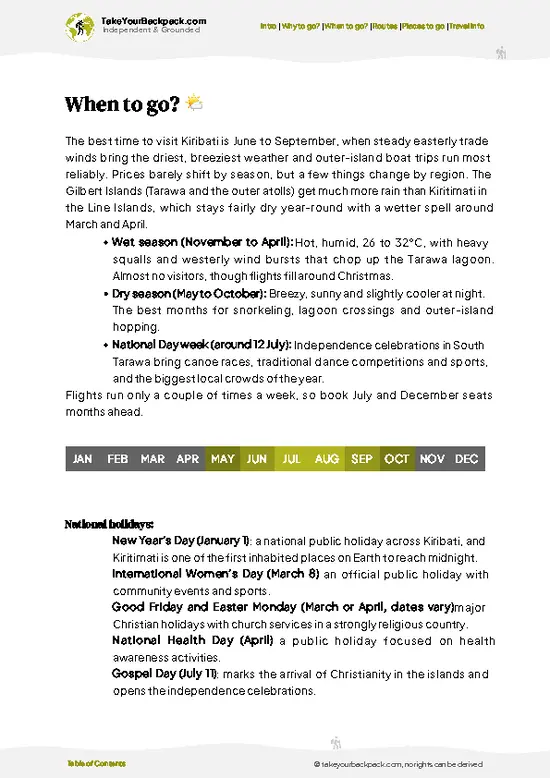
  • Topic: Weather – The Kiribati Music Festival thrives during the dry season, roughly from May to October. Expect less rain, which means your gear stays dry and the festival grounds stay accessible. Avoid the wet season (November to April) when heavy rains and storms can disrupt plans and dampen spirits.

  • Topic: Temperature – Temperatures hover between 27°C and 31°C (81°F to 88°F) year-round, but the dry season brings a more comfortable humidity level. The wet season’s humidity can feel like a sauna, sapping your energy fast.

  • Topic: Daylight Hours – Kiribati sits near the equator, so daylight stays steady at about 12 hours daily. This consistency means you can plan your days without worrying about early sunsets cutting your exploration short.

  • Topic: Crowds – The festival draws its biggest
read more 👉

  • Topic: Weather – The Kiribati Music Festival thrives during the dry season, roughly from May to October. Expect less rain, which means your gear stays dry and the festival grounds stay accessible. Avoid the wet season (November to April) when heavy rains and storms can disrupt plans and dampen spirits.

  • Topic: Temperature – Temperatures hover between 27°C and 31°C (81°F to 88°F) year-round, but the dry season brings a more comfortable humidity level. The wet season’s humidity can feel like a sauna, sapping your energy fast.

  • Topic: Daylight Hours – Kiribati sits near the equator, so daylight stays steady at about 12 hours daily. This consistency means you can plan your days without worrying about early sunsets cutting your exploration short.

  • Topic: Crowds – The festival draws its biggest crowds during the dry season, especially in July and August. If you want to soak in the vibe without elbowing through throngs, aim for early or late in the festival window.

  • Topic: Seasonal Activities – Dry season doubles as prime time for outdoor adventures like snorkeling and island hopping. Pair your festival experience with these activities to maximize your trip’s payoff.

  • Topic: Price Fluctuations – Expect accommodation and flight prices to spike during the dry season festival months. Booking early or targeting shoulder months (May, October) can save you cash without sacrificing the festival’s energy.


Pro-tip: Lock in your trip for the dry season’s start or end—less rain, fewer crowds, and better prices keep your energy and budget ready for the moments that count.


source: climatestotravel.comJANJanuary: not recommended for travelingFEBFebruary: not recommended for travelingMARMarch: not recommended for travelingAPRApril: not recommended for travelingMAYMay: excellent for travelingJUNJune: not recommended for travelingJULJuly: not recommended for travelingAUGAugust: not recommended for travelingSEPSeptember: not recommended for travelingOCTOctober: not recommended for travelingNOVNovember: not recommended for travelingDECDecember: not recommended for traveling

✈️ The backpacker research shortcutKiribati Travel Guide

An offline-friendly backpacking guide with optimized travel routes, ranked highlights, transport advice, and the best areas to stay.
example page 0 from our offline Travel Guide for Kiribati
example page 1 from our offline Travel Guide for Kiribati
example page 2 from our offline Travel Guide for Kiribati
example page 3 from our offline Travel Guide for Kiribati
example page 4 from our offline Travel Guide for Kiribati
example page 5 from our offline Travel Guide for Kiribati
example page 6 from our offline Travel Guide for Kiribati
example page 7 from our offline Travel Guide for Kiribati
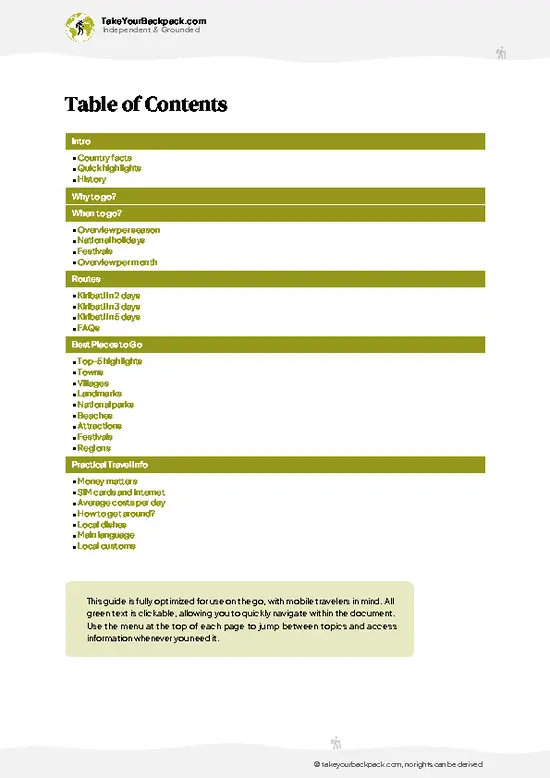
The digital guide (147 pages) contains:
31 highlights, ranked by travel appeal
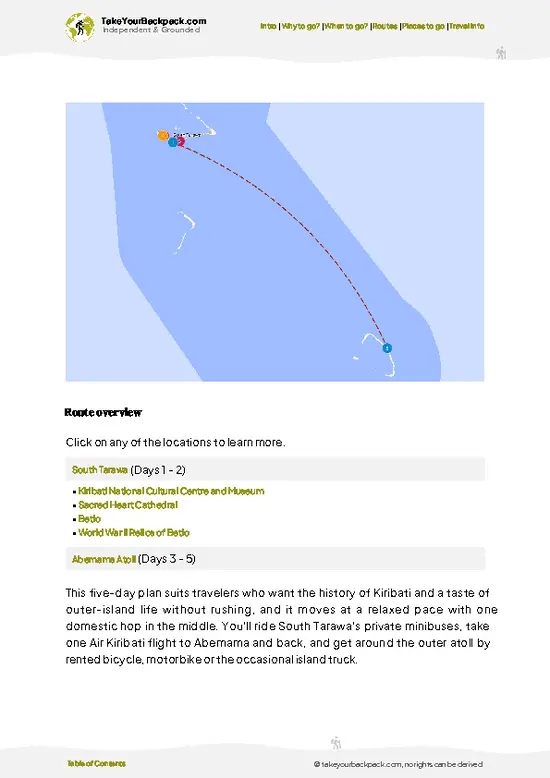
Optimized 2, 3 & 5-day travel routes
Cities, national parks, landmarks, beaches
How to get around
Offline-friendly for travel without Wi-Fi
👉 Click to see all 30+ guide features

📅 Plan smarter in minutes, not weeks
Month by month travel advice
Festivals & national holidays
Budget expectations

🗺️ Go to the right places, skip the overrated ones
Honest pros & cons of destinations
Top hikes, parks & viewpoints
Lesser-known places most travelers miss
Clear “worth it vs skip it” guidance

🛏️ Travel smoothly without rookie mistakes
Best areas to stay
Transport systems explained simply
Common scams & safety advice
SIM cards, money & practical tips

🌍 Understand the country, not just visit it
Culture & traditions
52 Essential phrases & customs
Festivals worth planning around
Traveler-friendly historical context
Insights that make places more meaningful

📱 Built for real travel conditions
Fully downloadable PDF
Works completely offline
Optimized for phone use
Useful in remote areas & buses
Everything in one place
Save weeks of stressful planning
Get instant access to your full guide. 30‑day money-back guarantee.
+ Add another guide for just US$7.80

By proceeding you agree to our terms.
Sent to your inbox immediately after payment • 100% Secure Checkout
Best Backpacking Travel Advisor 2025 tourism awardBest Backpacking
Travel Advisor
2025
What others say about Take Your Backpack Guides:
⭐⭐⭐⭐⭐
Fantastic, amazing amount of information!
⭐⭐⭐⭐⭐
My goodness this is amazing, it's what I've been looking for hats off too you!
⭐⭐⭐⭐⭐
I think this is absolutely BRILLIANT
⭐⭐⭐⭐
Very complete and informative. It's still missing places, but I gotta to commend you
⭐⭐⭐⭐⭐
This is truly amazing, thank you, can't wait to explore it with my kids!
⭐⭐⭐⭐⭐
Awesome resource, thank you!
⭐⭐⭐⭐⭐
This is amazing! Can't wait to explore the ones I haven't seen
⭐⭐⭐⭐
I love this! Well done, great idea.
⭐⭐⭐⭐⭐
Thanks for taking the time to make this gem!
⭐⭐⭐⭐⭐
This might be the best website I've ever seen.
⭐⭐⭐⭐⭐
Congratulations, and thank you so much for your work; it's incredibly valuable.
⭐⭐⭐⭐
In all seriousness I think you did a great job pointing out the important spots
⭐⭐⭐⭐⭐
10/10 very good
⭐⭐⭐⭐⭐
As someone who's only just starting to visit regularly this is awesome, thank you.
⭐⭐⭐⭐
Thank you very much! I'm going to visit my dad, it's going to be very useful!
⭐⭐⭐⭐⭐
This is really cool! We'll be travelling for the first time and this definitely come in handy.
⭐⭐⭐⭐⭐
You are now our minister of culture, congratulations 👨‍💼
⭐⭐⭐⭐⭐
Just wanted to tell you that this is a pearl! Going to follow your recommendations.
⭐⭐⭐⭐⭐
This is so cool. I'll definitely be using the resource for my travels soon.
⭐⭐⭐⭐⭐
This is very impressive! Good work.
⭐⭐⭐⭐⭐
This is an amazing and informative site. Very well done!

🛏️ Where to stay?Best areas and accommodation options

When you’re gearing up for the Kiribati Music Festival, your choice of where to stay can make or break your experience. Head to Tarawa, the capital, where the festival buzzes with energy. This area is a hub for backpackers, offering a mix of affordable guesthouses and communal spaces that foster connection. You’ll find fellow travelers eager to share stories and tips, making it easy to forge friendships.

Stay close to the festival grounds. This not only saves you from long treks after a night of dancing but also immerses you in the vibrant atmosphere. Look for spots near the main venues; the … read more 👉
When you’re gearing up for the Kiribati Music Festival, your choice of where to stay can make or break your experience. Head to Tarawa, the capital, where the festival buzzes with energy. This area is a hub for backpackers, offering a mix of affordable guesthouses and communal spaces that foster connection. You’ll find fellow travelers eager to share stories and tips, making it easy to forge friendships.

Stay close to the festival grounds. This not only saves you from long treks after a night of dancing but also immerses you in the vibrant atmosphere. Look for spots near the main venues; the closer you are, the more spontaneous your adventures can be.

Safety is key, especially for solo backpackers. Tarawa has a friendly vibe, but stick to well-lit areas at night and keep your belongings secure.

Don’t overlook the local homestays. They offer a unique glimpse into Kiribati culture and often come with home-cooked meals that fuel your energy for the day.

By choosing wisely, you’ll preserve your budget and energy for the moments that truly matter—like dancing under the stars with new friends.

👛 Costs (as of 4 September 2026)Money, prices, and spending tips

The Kiribati Music Festival is a vibrant celebration, but navigating costs can be tricky. Here’s how to budget wisely for an authentic experience.
  • Festival Tickets: Expect to pay around $20 to $50 USD for a full festival pass. Prices can vary based on the lineup and any special events. Grab your tickets early to avoid last-minute hikes.
  • Accommodation: Options range from basic guesthouses at about $30 to $60 USD per night to mid-range hotels that can go up to $100 USD. Book ahead, especially during the festival, as places fill up fast.
  • Local Transport: Budget around $5 to $15 USD per day for local transport. Bicycles are a popular choice for getting around, and some areas are walkable. Taxis can add up, so plan your routes.
  • Food & Drinks: Street food is your best friend here. You can enjoy meals
read more 👉
The Kiribati Music Festival is a vibrant celebration, but navigating costs can be tricky. Here’s how to budget wisely for an authentic experience.
  • Festival Tickets: Expect to pay around $20 to $50 USD for a full festival pass. Prices can vary based on the lineup and any special events. Grab your tickets early to avoid last-minute hikes.
  • Accommodation: Options range from basic guesthouses at about $30 to $60 USD per night to mid-range hotels that can go up to $100 USD. Book ahead, especially during the festival, as places fill up fast.
  • Local Transport: Budget around $5 to $15 USD per day for local transport. Bicycles are a popular choice for getting around, and some areas are walkable. Taxis can add up, so plan your routes.
  • Food & Drinks: Street food is your best friend here. You can enjoy meals for as little as $5 to $10 USD. If you opt for sit-down restaurants, expect to spend $15 to $30 USD per meal. Keep an eye on drink prices; local beers are usually around $3 to $5 USD.
  • Miscellaneous Expenses: Set aside $10 to $20 USD for souvenirs, tips, or unexpected costs. This cushion can save you from scrambling later.

By keeping these costs in mind, you’ll preserve your energy and budget for the moments that truly matter at the festival.


source: kiribatitourism.gov.ki
⚠️ Prices can change and everyone travels differently, so take this as a rough guide. Hope it helps you plan your adventure!

🍲 FoodLocal Flavors for Backpackers

At the Kiribati Music Festival, food and drinks are as vibrant as the music. Dive into local specialties like palusami, a creamy coconut dish wrapped in taro leaves, or tebuke, a savory fish dish that captures the essence of the ocean. Stalls burst with color, offering fresh fruit, grilled meats, and sweet treats like coconut candy.

Don’t miss out on trying kava, a traditional drink that’s both refreshing and a bit of a social ritual. Sip it slowly, and you’ll feel the island vibe wash over you. The festival atmosphere encourages sharing, so don’t hesitate to swap bites with fellow festival-goers. It’s all about connection here.

Be prepared for some quirks: lines can get long, especially for the most popular stalls. Patience is key, and remember to bring cash; many vendors don’t accept … read more 👉
At the Kiribati Music Festival, food and drinks are as vibrant as the music. Dive into local specialties like palusami, a creamy coconut dish wrapped in taro leaves, or tebuke, a savory fish dish that captures the essence of the ocean. Stalls burst with color, offering fresh fruit, grilled meats, and sweet treats like coconut candy.

Don’t miss out on trying kava, a traditional drink that’s both refreshing and a bit of a social ritual. Sip it slowly, and you’ll feel the island vibe wash over you. The festival atmosphere encourages sharing, so don’t hesitate to swap bites with fellow festival-goers. It’s all about connection here.

Be prepared for some quirks: lines can get long, especially for the most popular stalls. Patience is key, and remember to bring cash; many vendors don’t accept cards. Serving sizes can be generous, so consider sharing dishes to sample more flavors without overdoing it.

Embrace the experience, savor the tastes, and let the rhythm of the festival fuel your adventure.

FAQCommon questions from travelers

The Kiribati Music Festival typically takes place in July and lasts for 3 days. It is scheduled to coincide with local cultural celebrations to maximize participation.
Attendance at the Kiribati Music Festival is generally free of charge, as it is a community event supported by local government and sponsors. However, some special performances or workshops may have a small fee around 5 to 10 AUD.
No, you do not need tickets in advance for the Kiribati Music Festival. Entry is usually open and on a first-come, first-served basis, but arriving early is recommended to secure a good spot.
⚠️ Things can change over time, so always validate details locally before you go.

Other I-Kiribati festivals near Kiribati Music

Explore more nearby:


💡 Not sure where to go next?
Create a personalized itinerary for Kiribati including Kiribati Music and the places that fit your trip.

Generate my itinerary

👉 Discover all festivals

Or checkout all Kiribati has to offer (think cities, towns, villages, national parks, hikes, beaches, festivals)
Country photo of Kiribati

We 💚 feedbackFinal thoughts on celebrating the Kiribati Music

The Kiribati Music Festival is a pulse of life you won’t forget. Expect a blend of traditional and modern sounds that’ll have you dancing like nobody’s watching. The best surprise? The locals’ warmth — they’ll pull you into their circle, sharing stories and laughter. Just a heads-up: bring cash. ATMs are scarce, and you don’t want to miss out on that handmade craft or the local delicacies. Embrace the rhythm, soak in the culture, and let the island’s spirit fuel your adventure.

✍️ Help improve this page!
The information on this page is based on in-depth research, insights shared by experienced travelers, and feedback from the local travel community in Kiribati. While every effort is made to keep the information accurate and current, conditions can change — so if you spot anything incorrect or outdated, please get in touch.


🙋‍♂️ Give feedback

👋 Meet the founderWho’s Behind Take Your Backpack?

Johan, backpacker and founder of TakeYourBackpackHi, I’m Johan (Netherlands 🇳🇱), the creator of TakeYourBackpack. Over the past decade, I’ve backpacked through 80+ countries across six continents, gaining extensive experience with independent travel, long-term trips, and overland routes.

This site is built on a combination of firsthand travel experience and carefully curated insights from other backpackers. Many guides are based on places I’ve personally visited, while others bring together tips, observations, and practical advice shared by trusted travelers I’ve met along the way.

The goal is to provide realistic, experience-driven guidance — not generic itineraries — so you can explore destinations with better context, clearer expectations, and more confidence.

Get full Kiribati guide •
Instant download • 31 highlights • Full Offline guide