


×

Kiribati🇰🇮 | national parksAbaiang Atoll National ParkPale lagoon, maneaba meeting houses, toddy cutters, sandbar picnics | things to do and best time to go

Explore Kiribati Music FestivalExplore Kiritimati National Park

Backpacking in Abaiang Atoll
By Johan Kruseman 🇳🇱 | Updated October 13, 2026

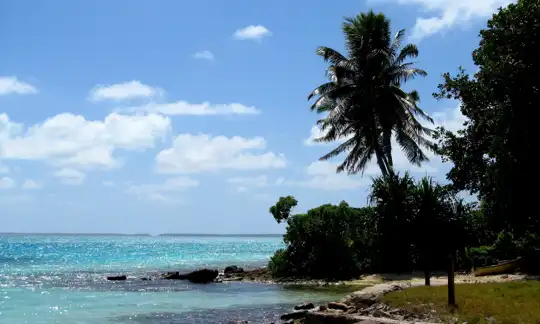
The boat bumps over the shallows, the engine cuts out, and you wade the last stretch through warm, ankle-deep lagoon water while the smell of drying coconut and woodsmoke drifts down the beach. Abaiang Atoll National Park lies north of Tarawa in Kiribati, a ribbon of low islets around a wide, pale lagoon. The scenery is flat and luminous, the walking is easy, and the village life is warm, but there are no marked peaks or ranger-led circuits. Frigatebirds and terns work the sky, and the reef is quiet. Crowds do not exist. The hard parts are logistics: flights and boats shift with weather and tides, so keep a spare day at both ends. Shops are tiny and stocks run out, so buy food, fuel and water containers in Tarawa. Carry small-denomination cash because there are no machines. Before going, confirm your return transport with the operator and a local contact.

Discover everything you want to know in the 📖 Kiribati Travel Guide.


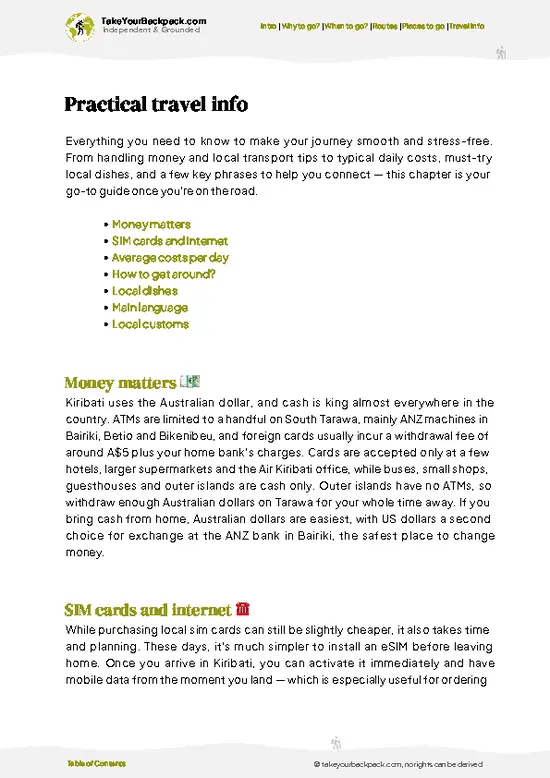
example page 0 from our offline Travel Guide for Kiribati
example page 1 from our offline Travel Guide for Kiribati
example page 2 from our offline Travel Guide for Kiribati
example page 3 from our offline Travel Guide for Kiribati
example page 4 from our offline Travel Guide for Kiribati
example page 5 from our offline Travel Guide for Kiribati
example page 6 from our offline Travel Guide for Kiribati
example page 7 from our offline Travel Guide for Kiribati
Loading the map 🌍
CLICK TO FILTER
towns
villages
landmarks
national parks
beaches
attractions
festivals
regions
SHOW COUNTRY’S BESTSHOW ALL

✨ Why go?
Ranked #99 national park in Kiribati
Reasons people choose to explore here

Abaiang suits you if you like making your own plan and having the shoreline to yourself. There is no gate, no queue and no guided circuit to follow, so you walk the island road, ask villagers about the tide, and decide each morning where to go. The lagoon is the big draw, and a borrowed canoe or a lift on a fishing boat gets you to sandbars and outer islets that tour groups never reach. Home stays and simple guesthouses keep costs modest, and eating with a family teaches you more than a brochure would. The other pull is culture. Villages here keep their maneaba meeting houses in daily use, and a polite arrival, a greeting in Kiribati (“Mauri”) and a small gift of tea or sugar open doors. This is a place for self-guided travelers who are comfortable with slow schedules, not for anyone chasing ticked-off attractions.

💡 HighlightsEssential experiences to have while exploring Abaiang Atoll

  1. Abaiang Lagoon: The shallow, milky-turquoise lagoon is the heart of the atoll. At high tide you can paddle or ride a boat across it, and at low tide the flats open up for wading and watching fishermen work.
  2. Outer sandbars and islets: Small strips of sand and pandanus at the lagoon edge make a good picnic destination. Shade is scarce, so bring a hat and water. Seabirds wheel overhead, and the sand glows white around midday.
  3. Tuarabu and the island road: The main settlement area has the airstrip, a few small stores and the easiest access to the road that runs along the atoll. Walking it shows you houses of thatch and tin, copra drying in the sun, and children running between palms.
  4. Village maneabas: These open-sided meeting houses with huge roof beams are where decisions are made and feasts are
… read more 👉
  1. Abaiang Lagoon: The shallow, milky-turquoise lagoon is the heart of the atoll. At high tide you can paddle or ride a boat across it, and at low tide the flats open up for wading and watching fishermen work.
  2. Outer sandbars and islets: Small strips of sand and pandanus at the lagoon edge make a good picnic destination. Shade is scarce, so bring a hat and water. Seabirds wheel overhead, and the sand glows white around midday.
  3. Tuarabu and the island road: The main settlement area has the airstrip, a few small stores and the easiest access to the road that runs along the atoll. Walking it shows you houses of thatch and tin, copra drying in the sun, and children running between palms.
  4. Village maneabas: These open-sided meeting houses with huge roof beams are where decisions are made and feasts are held. Ask permission before entering and sit low, as locals do. Seeing one in use tells you more about Kiribati than any museum.
  5. Ocean-side reef shore: The seaward side is rougher, with coral rubble, crashing swell and a steady wind. It is not for swimming, but the sunrise light here is excellent and the reef edge is good for watching birds and crabs.
  6. Toddy cutters at dawn: Men climb coconut palms before sunrise to collect the sweet sap that families rely on. Watch from a respectful distance, and if offered a taste, accept; it is sweet, slightly smoky and very filling.
Pair the lagoon crossing to the outer sandbars with a late-afternoon visit to a maneaba in the nearest village, so you have water in the morning and culture when the heat eases.
Spotted a mistake or missing something? Contact us.

🌤️ When to go?Best time to explore Abaiang Atoll

  • Dry Season (roughly May to October): Trade winds keep Abaiang at 26 to 31°C (79 to 88°F) with lower rainfall, calmer lagoon crossings and the easiest sailing days. Daylight stays close to 12 hours all year, so dusk arrives around 6 pm.
  • Wet Season (roughly November to April): Expect heavier showers, higher humidity and occasional squalls, with temperatures of 27 to 32°C (81 to 90°F). Westerly storms can churn the lagoon and make boat transfers from Tarawa less predictable.
  • Crowds and Prices: Visitors are very few in any month, so there is no crowd pressure. Fares and guesthouse rates stay flat, though domestic flights can book out around Christmas and Independence Day (July 12) when families travel home.
  • Seasonal Activities: Lagoon fishing, sailing in a traditional canoe and reef walks are best
… read more 👉
  • Dry Season (roughly May to October): Trade winds keep Abaiang at 26 to 31°C (79 to 88°F) with lower rainfall, calmer lagoon crossings and the easiest sailing days. Daylight stays close to 12 hours all year, so dusk arrives around 6 pm.
  • Wet Season (roughly November to April): Expect heavier showers, higher humidity and occasional squalls, with temperatures of 27 to 32°C (81 to 90°F). Westerly storms can churn the lagoon and make boat transfers from Tarawa less predictable.
  • Crowds and Prices: Visitors are very few in any month, so there is no crowd pressure. Fares and guesthouse rates stay flat, though domestic flights can book out around Christmas and Independence Day (July 12) when families travel home.
  • Seasonal Activities: Lagoon fishing, sailing in a traditional canoe and reef walks are best on calm dry-season mornings. Church festivals and community feasts peak at Christmas and New Year.
Book your return transfer with a buffer day, since weather and tides can shift boat schedules.


source: climatestotravel.comJANJanuary: fair for travelingFEBFebruary: fair for travelingMARMarch: fair for travelingAPRApril: fair for travelingMAYMay: highly recommended for travelingJUNJune: excellent for travelingJULJuly: excellent for travelingAUGAugust: excellent for travelingSEPSeptember: excellent for travelingOCTOctober: highly recommended for travelingNOVNovember: fair for travelingDECDecember: fair for traveling
kiribati-national-park-abaiang-atoll-national-park
© Google | Aleks Brac Guru

✈️ The backpacker research shortcutKiribati Travel Guide

An offline-friendly backpacking guide with optimized travel routes, ranked highlights, transport advice, and the best areas to stay.
example page 0 from our offline Travel Guide for Kiribati
example page 1 from our offline Travel Guide for Kiribati
example page 2 from our offline Travel Guide for Kiribati
example page 3 from our offline Travel Guide for Kiribati
example page 4 from our offline Travel Guide for Kiribati
example page 5 from our offline Travel Guide for Kiribati
example page 6 from our offline Travel Guide for Kiribati
example page 7 from our offline Travel Guide for Kiribati
The digital guide (120 pages) contains:
✅ 25 highlights, ranked by travel appeal
✅ Optimized 2, 3 & 5-day travel routes
✅ Cities, national parks, landmarks, beaches
✅ How to get around
✅ Offline-friendly for travel without Wi-Fi
👉 Click to see all 30+ guide features

📅 Plan smarter in minutes, not weeks
✅ Month by month travel advice
✅ Festivals & national holidays
✅ Budget expectations

🗺️ Go to the right places, skip the overrated ones
✅ Honest pros & cons of destinations
✅ Top hikes, parks & viewpoints
✅ Lesser-known places most travelers miss
✅ Clear “worth it vs skip it” guidance

🛏️ Travel smoothly without rookie mistakes
✅ Best areas to stay
✅ Transport systems explained simply
✅ Common scams & safety advice
✅ SIM cards, money & practical tips

🌍 Understand the country, not just visit it
✅ Culture & traditions
✅ 52 Essential phrases & customs
✅ Festivals worth planning around
✅ Traveler-friendly historical context
✅ Insights that make places more meaningful

📱 Built for real travel conditions
✅ Fully downloadable PDF
✅ Works completely offline
✅ Optimized for phone use
✅ Useful in remote areas & buses
✅ Everything in one place
Stop searching, start planning
Get instant access to your full guide. 30‑day money-back guarantee.
+ Add another guide for just

By proceeding you agree to our terms.
Sent to your inbox immediately after payment • 100% Secure Checkout
Best Backpacking Travel Advisor 2025 tourism awardBest Backpacking
Travel Advisor
2025
What others say about Take Your Backpack Guides:
⭐⭐⭐⭐⭐
Fantastic, amazing amount of information!
⭐⭐⭐⭐⭐
My goodness this is amazing, it's what I've been looking for hats off too you!
⭐⭐⭐⭐⭐
I think this is absolutely BRILLIANT
⭐⭐⭐⭐
Very complete and informative. It's still missing places, but I gotta to commend you
⭐⭐⭐⭐⭐
This is truly amazing, thank you, can't wait to explore it with my kids!
⭐⭐⭐⭐⭐
Awesome resource, thank you!
⭐⭐⭐⭐⭐
This is amazing! Can't wait to explore the ones I haven't seen
⭐⭐⭐⭐
I love this! Well done, great idea.
⭐⭐⭐⭐⭐
Thanks for taking the time to make this gem!
⭐⭐⭐⭐⭐
This might be the best website I've ever seen.
⭐⭐⭐⭐⭐
Congratulations, and thank you so much for your work; it's incredibly valuable.
⭐⭐⭐⭐
In all seriousness I think you did a great job pointing out the important spots
⭐⭐⭐⭐⭐
10/10 very good
⭐⭐⭐⭐⭐
As someone who's only just starting to visit regularly this is awesome, thank you.
⭐⭐⭐⭐
Thank you very much! I'm going to visit my dad, it's going to be very useful!
⭐⭐⭐⭐⭐
This is really cool! We'll be travelling for the first time and this definitely come in handy.
⭐⭐⭐⭐⭐
You are now our minister of culture, congratulations 👨‍💼
⭐⭐⭐⭐⭐
Just wanted to tell you that this is a pearl! Going to follow your recommendations.
⭐⭐⭐⭐⭐
This is so cool. I'll definitely be using the resource for my travels soon.
⭐⭐⭐⭐⭐
This is very impressive! Good work.
⭐⭐⭐⭐⭐
This is an amazing and informative site. Very well done!

🛏️ Where to stay?Where staying makes the most sense

There are no hotels or campgrounds inside the park itself, so most backpackers sleep in a village on Abaiang and visit the lagoon and its protected sites from there. Abaiang has only a handful of tourist-oriented options, and the usual route is a homestay in a village such as Tabontebike, Koinawa or Ibwerere, arranged through the island council or a contact in Tarawa. Rooms are simple: a mat or mattress in a traditional or tin-roofed house, a mosquito net, bucket washing and shared meals of fish, coconut and breadfruit. Bring cash in Australian dollars, since the island has few places to change … read more 👉
There are no hotels or campgrounds inside the park itself, so most backpackers sleep in a village on Abaiang and visit the lagoon and its protected sites from there. Abaiang has only a handful of tourist-oriented options, and the usual route is a homestay in a village such as Tabontebike, Koinawa or Ibwerere, arranged through the island council or a contact in Tarawa. Rooms are simple: a mat or mattress in a traditional or tin-roofed house, a mosquito net, bucket washing and shared meals of fish, coconut and breadfruit. Bring cash in Australian dollars, since the island has few places to change money and no ATMs.
Tarawa is the practical gateway. South Tarawa has the widest range, including guesthouses and small hotels in Betio, Bairiki and Bikenibeu, and it is where you should stock up on food, water, batteries and cash before leaving. Abaiang sits to the north, reached by a short domestic flight from Bonriki or by a boat across the lagoon. Ask your host before you arrive about village etiquette, modest dress and a small gift or contribution for food, which is appreciated and expected.

👛 Costs (as of 13 October 2026)Typical daily expenses

Expect to spend about US$40 to 95 per day on Abaiang, with transport to the island as the biggest variable. The park has no fixed entrance fee for visitors in most cases, and costs are dominated by getting there, a homestay bed and imported food. Prices are in US dollars for clarity, though Kiribati uses the Australian dollar.
CategoryBudget RangeLocal Reality
Entrance / Community FeesUS$0 to 5Often a small village or council contribution rather than an official ticket.
Accommodation (high season)US$20 to 40Village homestay or basic guesthouse, often including a mosquito net and shared bathroom.
Food and SuppliesUS$10 to 20Fish, rice, breadfruit and coconut are cheap in homestays; imported snacks and canned goods cost more.
Local TransportUS$5 to 15Shared trucks, bikes and village boats. Flights
… read more 👉
Expect to spend about US$40 to 95 per day on Abaiang, with transport to the island as the biggest variable. The park has no fixed entrance fee for visitors in most cases, and costs are dominated by getting there, a homestay bed and imported food. Prices are in US dollars for clarity, though Kiribati uses the Australian dollar.
CategoryBudget RangeLocal Reality
Entrance / Community FeesUS$0 to 5Often a small village or council contribution rather than an official ticket.
Accommodation (high season)US$20 to 40Village homestay or basic guesthouse, often including a mosquito net and shared bathroom.
Food and SuppliesUS$10 to 20Fish, rice, breadfruit and coconut are cheap in homestays; imported snacks and canned goods cost more.
Local TransportUS$5 to 15Shared trucks, bikes and village boats. Flights or boat transfers from Tarawa are extra and can cost US$30 to 60 each way.
Activities and GuidesUS$5 to 15Lagoon boat trips, fishing and guides are negotiated directly with hosts.
Total Daily BudgetUS$40 to 95Per person, per day, in high season.
⚠️ Prices can change and everyone travels differently, so take this as a rough guide. Hope it helps you plan your adventure!

🥾 TrailsDiscover Abaiang Atoll's top trails and natural wonders

Abaiang has no signed trail network, so the walking is simple and improvised. Most people start in a village and follow the sandy road or the shoreline, with no need for a map beyond asking which way the tide is running.
  • Island road walk: The main path runs along the lagoon side of the atoll past houses, taro pits, copra racks and small churches. It is flat and sandy, and you can cover a few kilometers in a morning at an easy pace. Difficulty is low, but heat is not, so start early.
  • Lagoon shore at low tide: The flats expose sand, seagrass and small fish, and locals collect shellfish here. Allow
… read more 👉
Abaiang has no signed trail network, so the walking is simple and improvised. Most people start in a village and follow the sandy road or the shoreline, with no need for a map beyond asking which way the tide is running.
  • Island road walk: The main path runs along the lagoon side of the atoll past houses, taro pits, copra racks and small churches. It is flat and sandy, and you can cover a few kilometers in a morning at an easy pace. Difficulty is low, but heat is not, so start early.
  • Lagoon shore at low tide: The flats expose sand, seagrass and small fish, and locals collect shellfish here. Allow a couple of hours, wear reef shoes, and keep an eye on the returning water.
  • Ocean-side beach walk: Cross the narrow island to the seaward coast and follow the reef edge. Terrain is coral rubble and packed sand, harder on the ankles than the lagoon side. Expect wind, spray, noddies, terns and frigatebirds.
  • Boat-assisted sandbar day: Hire a local boat or join fishermen to reach outer islets. You spend half a day wading, swimming and picnicking in open sun with almost no shade.
Wildlife is mostly birds, reef fish, crabs and the occasional turtle offshore. Dress modestly in villages, with shoulders and knees covered, and swim in shorts or a sarong rather than skimpy beachwear.
Getting here means a domestic flight or a boat from Tarawa, and both depend on weather and tides, so schedules shift. Visitor numbers are very low, so you will often be the only traveler on the road. No formal ticket system operates for walking, but ask the village council or your host before camping or entering a sandbar owned by a family. Bring all water you will need for long walks, sun protection and cash.
⚠️ Hiking info can sometimes be outdated or inaccurate. Before you hit the trail, check the latest conditions with locals. If you do spot anything that's off, I'd love to hear from you, so I can update it for fellow travelers.

🛡️ SafetySafety Tips and Common Scams in Abaiang Atoll

Abaiang is calm and low-risk, and the main issues are sun, water and logistics rather than danger. The island is flat, so there are no steep climbs, but the equatorial sun burns skin within minutes, and midday heat on coral roads is draining. Carry a hat, reef-safe sunscreen and more drinking water than you think you need, because fresh water is limited and rainwater is shared. Stick to bottled or boiled water to avoid stomach trouble.
Reef flats have sharp coral and stonefish, so wear sturdy reef shoes when wading, and check tides with locals before crossing. Swimming in lagoon channels can mean strong currents, so ask where the village swims. Sharks are present but incidents are rare. Boat crossings are the real exposure, so insist on life jackets and avoid sailing in squally weather. Medical … read more 👉
Abaiang is calm and low-risk, and the main issues are sun, water and logistics rather than danger. The island is flat, so there are no steep climbs, but the equatorial sun burns skin within minutes, and midday heat on coral roads is draining. Carry a hat, reef-safe sunscreen and more drinking water than you think you need, because fresh water is limited and rainwater is shared. Stick to bottled or boiled water to avoid stomach trouble.
Reef flats have sharp coral and stonefish, so wear sturdy reef shoes when wading, and check tides with locals before crossing. Swimming in lagoon channels can mean strong currents, so ask where the village swims. Sharks are present but incidents are rare. Boat crossings are the real exposure, so insist on life jackets and avoid sailing in squally weather. Medical care on the island is basic, so bring a full first-aid kit and any prescriptions. Always ask the village before photographing people or entering sacred or protected areas.

FAQCommon questions from travelers

Plan on 3 to 4 days for Abaiang Atoll. That gives you a day to travel from Tarawa, one or two days for lagoon trips, village walks and reef fishing, and a buffer day for weather-delayed transfers. Day trips are rarely practical because of crossing times and flight schedules.
Yes, and most visitors do. Abaiang is reached from South Tarawa by a short domestic flight from Bonriki or by a boat across the lagoon, and once on the island you get around on foot, by bicycle or on shared trucks. The atoll is flat and narrow, so distances between villages are short, usually under 10 km.
There is no formal national park gate fee for most visitors, but you should arrange permission through the island council or your host village. Expect to contribute roughly US$0 to 5 as a community fee, plus a small gift for your homestay. Check with the Kiribati tourism office in Tarawa before you go, since local arrangements can vary.
⚠️ Things can change over time, so always validate details locally before you go.

Other I-Kiribati national parks near Abaiang Atoll

Explore more nearby:


💡 Not sure where to go next?
Create a personalized itinerary for Kiribati including Abaiang Atoll and the places that fit your trip.

Generate my itinerary

👉 Discover all national parks

Or checkout all Kiribati has to offer (think cities, towns, villages, national parks, hikes, beaches, festivals)
Country photo of Kiribati

We 💚 feedbackFinal thoughts on exploring Abaiang Atoll

Treat Abaiang as the quiet second act after Tarawa. Spend a night or two in the capital sorting cash, food and onward tickets, then head north for lagoon days and village evenings before returning for your flight out. If you have a few extra days, add another outer-island stop rather than rushing. I would pack extra snacks and a headlamp, and I would let the tide set my schedule.

✍️ Help improve this page!
The information on this page is based on in-depth research, insights shared by experienced travelers, and feedback from the local travel community in Kiribati. While every effort is made to keep the information accurate and current, conditions can change — so if you spot anything incorrect or outdated, please get in touch.


🙋‍♂️ Give feedback

👋 Meet the founderWho’s Behind Take Your Backpack?

Johan, backpacker and founder of TakeYourBackpackHi, I’m Johan (Netherlands 🇳🇱), the creator of TakeYourBackpack. Over the past 3 decades, I’ve backpacked through 90+ countries across six continents, gaining extensive experience with independent travel, long-term trips, and overland routes.

This site is built on a combination of firsthand travel experience and carefully curated insights from other backpackers. Many guides are based on places I’ve personally visited, while others bring together tips, observations, and practical advice shared by trusted travelers I’ve met along the way.

The goal is to provide realistic, experience-driven guidance — not generic itineraries — so you can explore destinations with better context, clearer expectations, and more confidence.