×

Kyrgyzstan🇰🇬 | attractionsPetroglyph Open-Air Museumancient rock carvings, mountain backdrop, archaeological site | things to do and best time to go

Explore Rukh Ordo Cultural CenterExplore Manas Ordo Historical and Cultural Complex (Talaspai

Backpacking in Petroglyph Open-Air Museum
👌 Worth visitingattraction ranked #7
By Johan Kruseman 🇳🇱 | Updated July 30, 2026

Your boots crunch over sun-bleached grass. The wind off Issyk-Kul Lake tastes faintly of salt and sage. You squint at a boulder, and suddenly—there it is—a horned ibex, scratched by hands that lived and died before the Silk Road was even a rumor. This is the Petroglyph Open-Air Museum, sprawled on the outskirts of Cholpon-Ata in northern Kyrgyzstan. Here’s the truth: you won’t find crowds jostling for selfies, and you won’t find much shade, either. The “museum” is a field of stones under a big, honest sky, not a curated gallery. The wow-factor is subtle—no adrenaline, just the slow burn of realizing you’re tracing the fingerprints of Bronze Age nomads. It’s cheap, easy to reach from the lake resorts, and refreshingly unpolished. Compared to the high-drama peaks of Ala Archa or the tourist bustle of Karakol, this place is quiet, raw, and stubbornly real.

Discover everything you want to know in the 📖 Kyrgyzstan Travel Guide.
Loading the map 🌍
CLICK TO FILTER
cities
towns
villages
landmarks
national parks
hikes
beaches
attractions
festivals
regions
SHOW COUNTRY’S BESTSHOW ALL

✨ Why go?
Ranked #7 attraction in Kyrgyzstan
What makes it a must-see attraction

Backpackers who carve out time for the Petroglyph Open-Air Museum in Kyrgyzstan aren’t just ticking off a box—they’re stepping into a living archive that punches way above its weight. Sure, it’s not a polished, Instagram-perfect site swarming with selfie sticks, but that’s exactly the point. This place is raw, rugged, and real. The petroglyphs here date back thousands of years, offering a direct line to the minds and lives of ancient nomads who roamed these mountains long before borders existed. It’s a cultural milestone that anchors Kyrgyzstan’s nomadic heritage in stone, literally. The hike to reach the site demands effort, but the payoff is a quiet, almost sacred connection to history that no museum display can replicate. For backpackers on the classic Kyrgyzstan route, it’s a major milestone—a … read more 👉
Backpackers who carve out time for the Petroglyph Open-Air Museum in Kyrgyzstan aren’t just ticking off a box—they’re stepping into a living archive that punches way above its weight. Sure, it’s not a polished, Instagram-perfect site swarming with selfie sticks, but that’s exactly the point. This place is raw, rugged, and real. The petroglyphs here date back thousands of years, offering a direct line to the minds and lives of ancient nomads who roamed these mountains long before borders existed. It’s a cultural milestone that anchors Kyrgyzstan’s nomadic heritage in stone, literally. The hike to reach the site demands effort, but the payoff is a quiet, almost sacred connection to history that no museum display can replicate. For backpackers on the classic Kyrgyzstan route, it’s a major milestone—a moment to pause, reflect, and appreciate the depth beneath the country’s rugged beauty. This isn’t about crowds or convenience; it’s about authenticity and the thrill of discovering something genuinely timeless.
Want to include Petroglyph Open-Air Museum in your Kyrgyzstan route?
Create a personalized Kyrgyzstan itinerary that includes Petroglyph Open-Air Museum and the places that fit your trip — based on your travel style, budget, and available time. Get your route in seconds.

Generate my trip

💡 HighlightsDon't-miss highlights and experiences

The Main Petroglyph Field
This is the reason you’re here. Forget the Instagram shots of a lone traveler in a sea of ancient stones—unless you arrive at sunrise, you’ll be sharing the field with a mix of school groups, selfie squads, and the occasional goat. But the carvings themselves? They’re the real deal: ibex hunts, sun-headed shamans, and wild animal chases, all chipped into boulders that have been baking under the Tian Shan sun for up to 4,000 years. The sheer number and clarity of the images make this one of Central Asia’s most concentrated open-air galleries. You’re not just looking at art; you’re staring at the original social media feed of the Bronze Age.


The “Solar Symbol” Petroglyphs
If you’re hunting for something that feels genuinely mystical—without the incense and staged performances—track … read more 👉
The Main Petroglyph Field
This is the reason you’re here. Forget the Instagram shots of a lone traveler in a sea of ancient stones—unless you arrive at sunrise, you’ll be sharing the field with a mix of school groups, selfie squads, and the occasional goat. But the carvings themselves? They’re the real deal: ibex hunts, sun-headed shamans, and wild animal chases, all chipped into boulders that have been baking under the Tian Shan sun for up to 4,000 years. The sheer number and clarity of the images make this one of Central Asia’s most concentrated open-air galleries. You’re not just looking at art; you’re staring at the original social media feed of the Bronze Age.


The “Solar Symbol” Petroglyphs
If you’re hunting for something that feels genuinely mystical—without the incense and staged performances—track down the solar symbols. These aren’t just circles; they’re complex, radiating motifs that hint at ancient cosmology and ritual. No two are quite the same, and their meaning is still debated by archaeologists. Stand in front of one and you’ll feel the centuries collapse. This is the museum’s most quietly powerful corner.


The Panoramic View Over Issyk-Kul
Here’s the unsung hero: climb to the upper edge of the site and you get a sweeping view of Issyk-Kul Lake, with snow-capped peaks framing the horizon. Most visitors are too busy squinting at rocks to notice, but this is where the landscape and the petroglyphs merge. You realize why ancient people chose this spot—nature’s amphitheater, with a view that’s worth the trip alone. This is my personal favorite: the moment when history, geography, and sheer beauty all hit at once.


The Soviet-Era Interpretive Signs
They’re battered, sun-faded, and occasionally hilarious in their translations, but these signs are a time capsule in their own right. They offer a glimpse into how the site was presented in the 1970s and 80s, complete with earnest diagrams and a whiff of Cold War optimism. It’s a quirky, unintentional museum-within-a-museum—proof that every era leaves its mark, not just the Bronze Age.


The Spring Wildflowers (Seasonal)
Visit in late May or early June and the site explodes with color. Wild tulips and alpine blooms push up between the stones, turning the whole field into a living canvas. It’s fleeting, unpredictable, and absolutely not in the brochures. If you catch it, you’ll remember it long after the petroglyphs blur together.
Spotted a mistake or missing something? Contact us.
🌤️ When to go?Best time to visit Petroglyph Open-Air Museum


  • Weather: The best weather hits between June and September. Expect dry, sunny days with highs around 20-25°C (68-77°F). Outside this window, especially in winter, snow and cold winds make the rocky terrain tough to navigate.

  • Temperature: Summer days are comfortable, but nights can dip to 5-10°C (41-50°F), so pack layers. Spring and autumn bring unpredictable chills, sometimes dropping below freezing at night.

  • Daylight Hours: Long summer days stretch up to 15 hours of light, giving you plenty of time to explore the carvings without rushing. Winter days shrink to about 9 hours, limiting your window.

  • Crowds: July and August attract the most visitors, including local tourists. If you want solitude, aim for late May or early September when the weather is still decent but the crowds thin out.

  • Seasonal
read more 👉

  • Weather: The best weather hits between June and September. Expect dry, sunny days with highs around 20-25°C (68-77°F). Outside this window, especially in winter, snow and cold winds make the rocky terrain tough to navigate.

  • Temperature: Summer days are comfortable, but nights can dip to 5-10°C (41-50°F), so pack layers. Spring and autumn bring unpredictable chills, sometimes dropping below freezing at night.

  • Daylight Hours: Long summer days stretch up to 15 hours of light, giving you plenty of time to explore the carvings without rushing. Winter days shrink to about 9 hours, limiting your window.

  • Crowds: July and August attract the most visitors, including local tourists. If you want solitude, aim for late May or early September when the weather is still decent but the crowds thin out.

  • Seasonal Activities: Summer offers guided hikes and cultural tours nearby. Spring and autumn are quieter but lack organized events, focusing more on raw exploration.

  • Price Fluctuations: Entrance fees stay stable year-round, but accommodation and transport costs spike in peak summer months. Booking ahead in July and August is essential to avoid inflated prices.


Pro-tip: Visit in early September—cooler temps, fewer people, and the carvings under soft autumn light make for a richer, more personal experience.


source: climatestotravel.comJANJanuary: below average for travelingFEBFebruary: below average for travelingMARMarch: fair for travelingAPRApril: fair for travelingMAYMay: highly recommended for travelingJUNJune: excellent for travelingJULJuly: excellent for travelingAUGAugust: excellent for travelingSEPSeptember: highly recommended for travelingOCTOctober: good for travelingNOVNovember: fair for travelingDECDecember: below average for traveling
when-to-go

✈️ The backpacker research shortcutKyrgyzstan Travel Guide

An offline-friendly backpacking guide with optimized travel routes, ranked highlights, transport advice, and the best areas to stay.
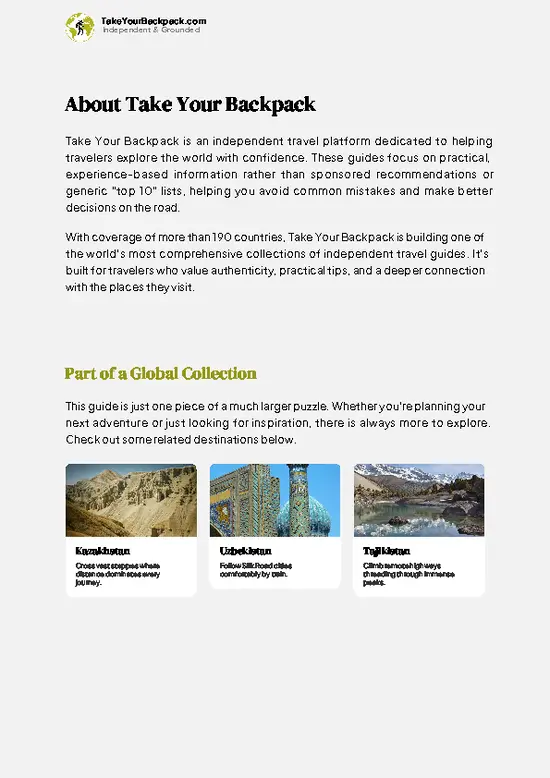
example page 0 from our offline Travel Guide for Kyrgyzstan
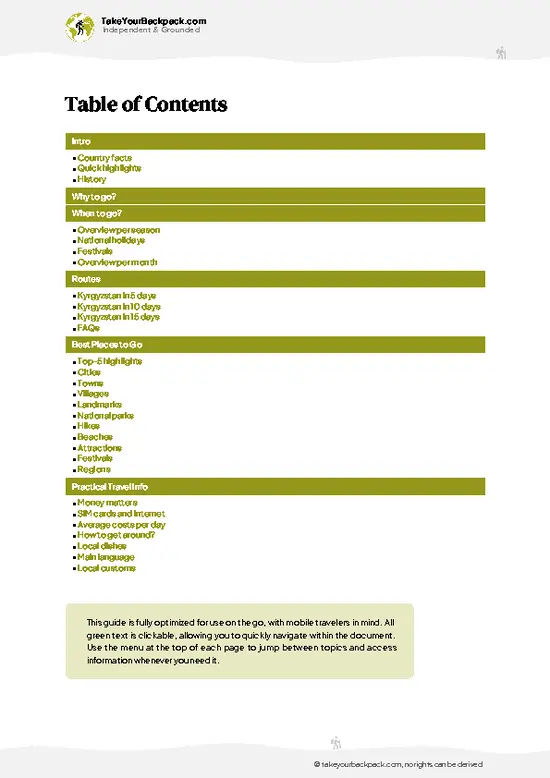
example page 1 from our offline Travel Guide for Kyrgyzstan
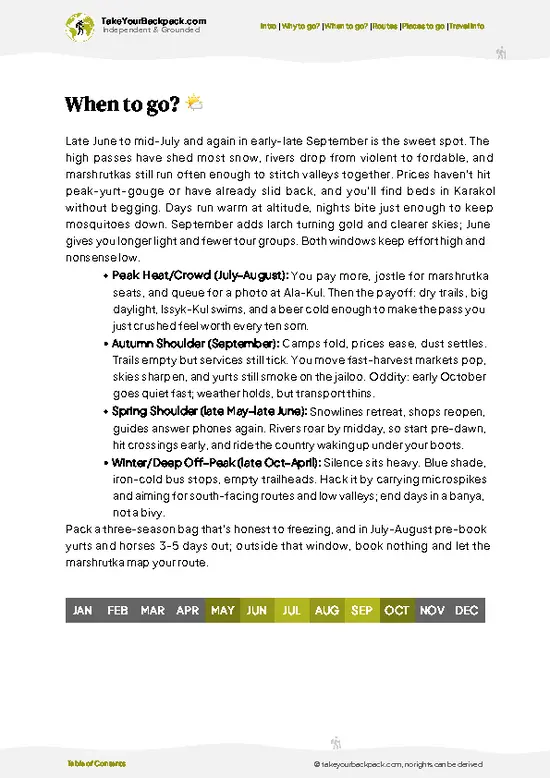
example page 2 from our offline Travel Guide for Kyrgyzstan
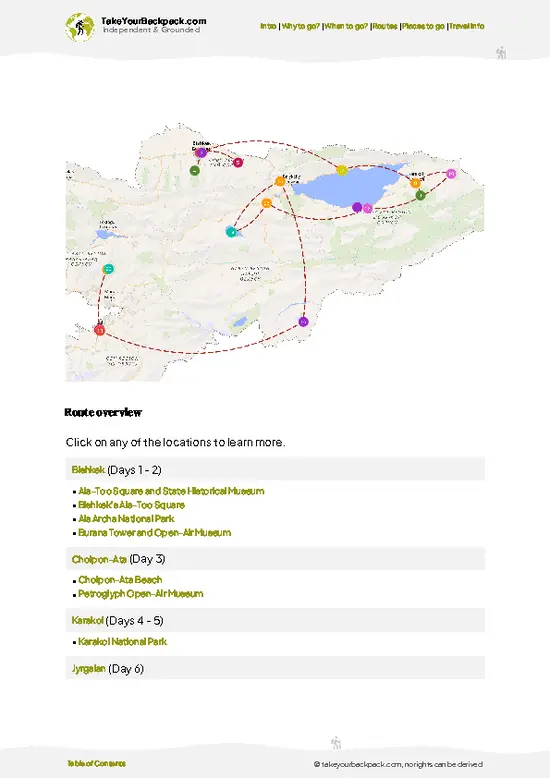
example page 3 from our offline Travel Guide for Kyrgyzstan
example page 4 from our offline Travel Guide for Kyrgyzstan
example page 5 from our offline Travel Guide for Kyrgyzstan
example page 6 from our offline Travel Guide for Kyrgyzstan
example page 7 from our offline Travel Guide for Kyrgyzstan
The digital guide (296 pages) contains:
77 highlights, ranked by travel appeal
Optimized 5, 10 & 15-day travel routes
Cities, national parks, landmarks, beaches
How to get around
Offline-friendly for travel without Wi-Fi
👉 Click to see all 30+ guide features

📅 Plan smarter in minutes, not weeks
Month by month travel advice
Festivals & national holidays
Budget expectations

🗺️ Go to the right places, skip the overrated ones
Honest pros & cons of destinations
Top hikes, parks & viewpoints
Lesser-known places most travelers miss
Clear “worth it vs skip it” guidance

🛏️ Travel smoothly without rookie mistakes
Best areas to stay
Transport systems explained simply
Common scams & safety advice
SIM cards, money & practical tips

🌍 Understand the country, not just visit it
Culture & traditions
52 Essential phrases & customs
Festivals worth planning around
Traveler-friendly historical context
Insights that make places more meaningful

📱 Built for real travel conditions
Fully downloadable PDF
Works completely offline
Optimized for phone use
Useful in remote areas & buses
Everything in one place
Save weeks of stressful planning
Get instant access to your full guide. 30‑day money-back guarantee.
+ Add another guide for just US$7.80

By proceeding you agree to our terms.
Sent to your inbox immediately after payment • 100% Secure Checkout
Best Backpacking Travel Advisor 2025 tourism awardBest Backpacking
Travel Advisor
2025
What others say about Take Your Backpack Guides:
⭐⭐⭐⭐⭐
Fantastic, amazing amount of information!
⭐⭐⭐⭐⭐
My goodness this is amazing, it's what I've been looking for hats off too you!
⭐⭐⭐⭐⭐
I think this is absolutely BRILLIANT
⭐⭐⭐⭐
Very complete and informative. It's still missing places, but I gotta to commend you
⭐⭐⭐⭐⭐
This is truly amazing, thank you, can't wait to explore it with my kids!
⭐⭐⭐⭐⭐
Awesome resource, thank you!
⭐⭐⭐⭐⭐
This is amazing! Can't wait to explore the ones I haven't seen
⭐⭐⭐⭐
I love this! Well done, great idea.
⭐⭐⭐⭐⭐
Thanks for taking the time to make this gem!
⭐⭐⭐⭐⭐
This might be the best website I've ever seen.
⭐⭐⭐⭐⭐
Congratulations, and thank you so much for your work; it's incredibly valuable.
⭐⭐⭐⭐
In all seriousness I think you did a great job pointing out the important spots
⭐⭐⭐⭐⭐
10/10 very good
⭐⭐⭐⭐⭐
As someone who's only just starting to visit regularly this is awesome, thank you.
⭐⭐⭐⭐
Thank you very much! I'm going to visit my dad, it's going to be very useful!
⭐⭐⭐⭐⭐
This is really cool! We'll be travelling for the first time and this definitely come in handy.
⭐⭐⭐⭐⭐
You are now our minister of culture, congratulations 👨‍💼
⭐⭐⭐⭐⭐
Just wanted to tell you that this is a pearl! Going to follow your recommendations.
⭐⭐⭐⭐⭐
This is so cool. I'll definitely be using the resource for my travels soon.
⭐⭐⭐⭐⭐
This is very impressive! Good work.
⭐⭐⭐⭐⭐
This is an amazing and informative site. Very well done!

🛏️ Where to stay?How to pick the right area

The Petroglyph Open-Air Museum near Bishkek is a magnet for history buffs and backpackers craving a raw slice of Kyrgyzstan’s ancient soul. But let’s cut through the Instagram haze: this isn’t a polished tourist trap with endless amenities. The crowds? Manageable, but they swell on weekends and holidays. Costs? Dirt cheap compared to Western standards, but don’t expect luxury. The real challenge is finding a spot that feels safe, social, and genuinely welcoming without breaking the bank.

Your best bet is to base yourself in the outskirts of Bishkek, particularly in neighborhoods like Orto-Say … read more 👉
The Petroglyph Open-Air Museum near Bishkek is a magnet for history buffs and backpackers craving a raw slice of Kyrgyzstan’s ancient soul. But let’s cut through the Instagram haze: this isn’t a polished tourist trap with endless amenities. The crowds? Manageable, but they swell on weekends and holidays. Costs? Dirt cheap compared to Western standards, but don’t expect luxury. The real challenge is finding a spot that feels safe, social, and genuinely welcoming without breaking the bank.

Your best bet is to base yourself in the outskirts of Bishkek, particularly in neighborhoods like Orto-Say or Tokmok. These areas offer a gritty, authentic vibe where locals and travelers mingle naturally. You’ll find guesthouses and small homestays that prioritize connection over comfort, perfect for solo backpackers looking to swap stories and tips. Public transport links to the museum are straightforward, so you’re not stuck with pricey taxis.

Staying here means embracing the imperfect: expect basic facilities but rich human interaction. This is where you’ll meet the real Kyrgyz spirit—unfiltered, unpolished, and unforgettable. Skip the city center’s polished hostels; the edges hold the real magic.

👛 Costs (as of 30 July 2026)How expensive it really is

As of the most recent estimates, the entrance fee to the Petroglyph Open-Air Museum in Cholpon-Ata, Kyrgyzstan, is 50 Kyrgyz som (approximately €0.50) per person. The museum is open daily from 8:00 AM to 8:00 PM. ([cholponata.wixsite.com](https://cholponata.wixsite.com/cholpon-ata/place-to-see?utm_source=openai)) Additional costs may include transportation to and from the museum, which can vary depending on your choice of transport.

source: cholponata.wixsite.com
⚠️ Prices can change and everyone travels differently, so take this as a rough guide. Hope it helps you plan your adventure!

Other Kyrgyz attractions near Petroglyph Open-Air Museum

Explore more nearby:


💡 Not sure where to go next?
Create a personalized itinerary for Kyrgyzstan including Petroglyph Open-Air Museum and the places that fit your trip.

Generate my itinerary

👉 Discover all attractions

Or checkout all Kyrgyzstan has to offer (think cities, towns, villages, national parks, hikes, beaches, festivals)
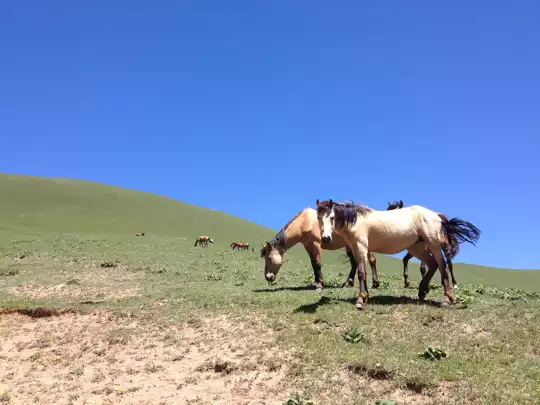
Country photo of Kyrgyzstan

We 💚 feedbackFinal thoughts on visiting Petroglyph Open-Air Museum

The Petroglyph Open-Air Museum isn’t some polished tourist magnet—it’s raw history carved into stone, whispering stories older than most countries. Sure, it’s a bit out of the way and the signage can be sparse, so you’ll need patience and a good map. But if you’re into peeling back layers of time without crowds elbowing you aside, this place delivers a quiet, powerful connection to Kyrgyzstan’s ancient soul.

✈️ When did I visit Kyrgyzstan?
I started my 1.5 year travel around the world trip in June 2015 in Kyrgyzstan.

✍️ Help improve this page!
The information on this page is based on my own backpacking experience in Kyrgyzstan, supplemented with up-to-date research and feedback from other travelers. Travel details can change, so if you notice anything outdated or incomplete, feel free to let me know.


🙋‍♂️ Give feedback

👋 Meet the founderWho’s Behind Take Your Backpack?

Johan, backpacker and founder of TakeYourBackpackHi, I’m Johan (Netherlands 🇳🇱), the creator of TakeYourBackpack. Over the past decade, I’ve backpacked through 80+ countries across six continents, gaining extensive experience with independent travel, long-term trips, and overland routes.

This site is built on a combination of firsthand travel experience and carefully curated insights from other backpackers. Many guides are based on places I’ve personally visited, while others bring together tips, observations, and practical advice shared by trusted travelers I’ve met along the way.

The goal is to provide realistic, experience-driven guidance — not generic itineraries — so you can explore destinations with better context, clearer expectations, and more confidence.

Get full Kyrgyzstan guide •
Instant download • 77 highlights • Full Offline guide