×

Laos🇱🇦 | villagesBan Sop HounNam Ou riverbank, stilt houses, boat landing | things to do and best time to go

Explore Ban Khoun KhamExplore Ban Xieng Lom

Backpacking in Ban Sop Houn
🌟 Highlightvillage ranked #3
By Johan Kruseman 🇳🇱 | Updated October 6, 2026

Everyone comes to Ban Sop Houn for “that” thing: the boat landing for the 4,000 Islands run on the Nam Ou, the Instagram river bend, the idea of drifting past limestone cliffs. That’s fine, but what actually matters here is how gently it slows your whole Laos route down. Ban Sop Houn sits in northern Laos, in Phongsali province, a small riverside town that feels like a pause button between Nong Khiaw/Muang Ngoy and the far north. It’s simple, a bit scruffy, with a few guesthouses, riverside noodle stalls, and red-dust streets that glow at sunset. As a destination, it’s more staging ground than “must-see”: you stay here to catch boats, poke around the riverbank, and watch local life rather than chase big sights. Buses and songthaews make it reachable but not slick; expect loose schedules and some waiting around, which is part of the deal. You can walk most of the town in ten minutes, and evenings are quiet, more Beerlao-on-a-plastic-stool than bar crawl, so meeting other backpackers depends on who’s in your guesthouse that night. It’s cheaper and calmer than Luang Prabang or Nong Khiaw, with fewer comforts and less English spoken, but that trade-off buys you a more local, slightly rough-edged river stop that fits best as a one- or two-night layover on a longer northern Laos loop.

Discover everything you want to know in the 📖 Laos Travel Guide.


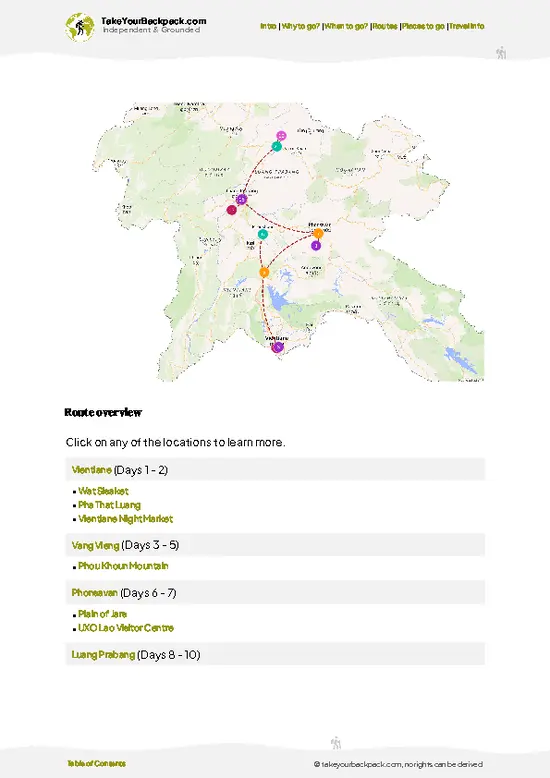
example page 0 from our offline Travel Guide for Laos
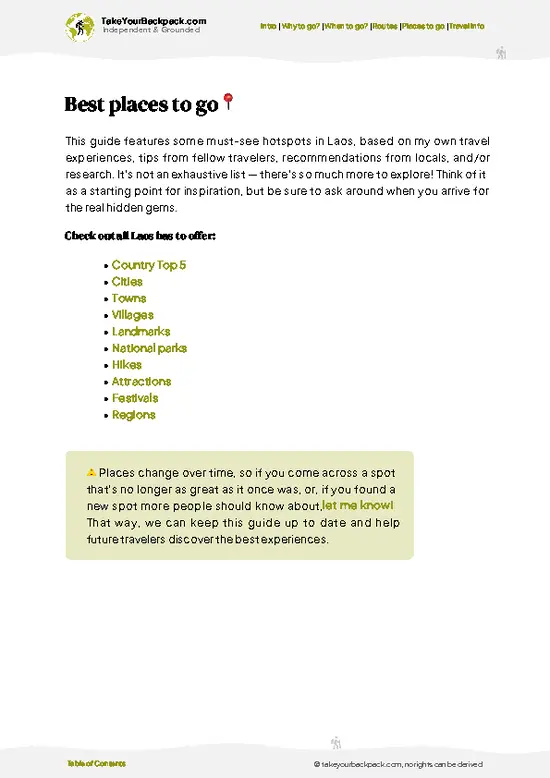
example page 1 from our offline Travel Guide for Laos
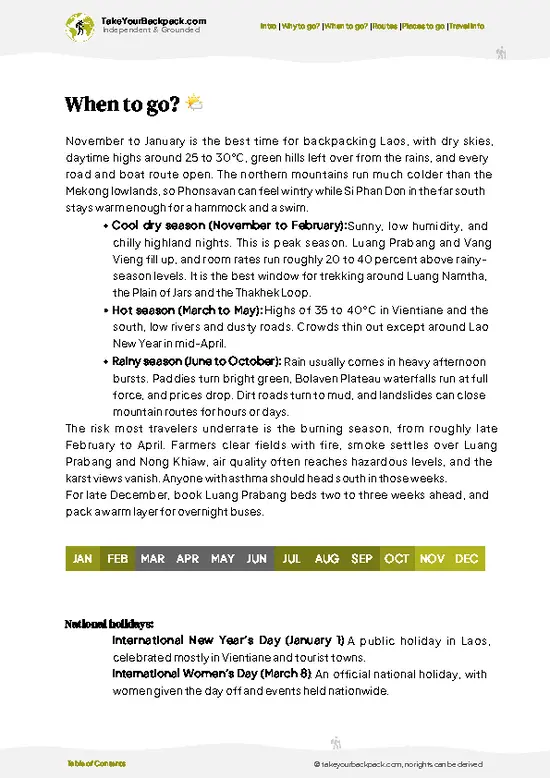
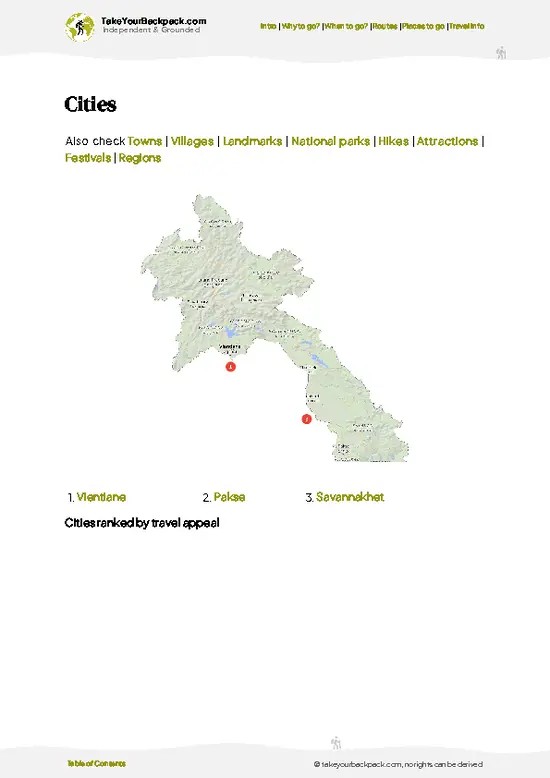
example page 2 from our offline Travel Guide for Laos
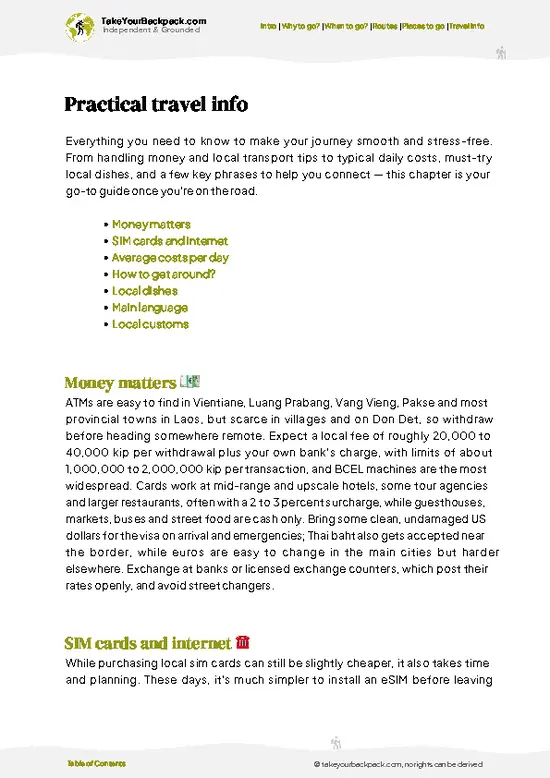
example page 3 from our offline Travel Guide for Laos
example page 4 from our offline Travel Guide for Laos
example page 5 from our offline Travel Guide for Laos
example page 6 from our offline Travel Guide for Laos
example page 7 from our offline Travel Guide for Laos
Loading the map 🌍
CLICK TO FILTER
cities
towns
villages
landmarks
national parks
hikes
attractions
festivals
regions
SHOW COUNTRY’S BESTSHOW ALL

✨ Why go?
Ranked #3 village in Laos
Why visitors keep coming back

Ban Sop Houn serves as a gateway for backpackers exploring Laos. Its convenient location near stunning hikes and cultural sites makes it a strategic stop. You can easily access the Nam Ou River for kayaking or trek to nearby waterfalls, all while soaking in the lush scenery. The town’s walkable streets invite you to wander, with small-scale hostels and guesthouses offering a cozy, communal vibe. Here, you’ll find friendly locals and fellow travelers sharing stories over delicious street food—think spicy papaya salad and grilled meats that fill the air with mouthwatering aromas.

Most travelers stay a few days, enjoying the laid-back atmosphere that suits slow travelers and solo adventurers alike. It’s not a party hub, but rather a place to recharge and connect. If you appreciate a blend of … read more 👉
Ban Sop Houn serves as a gateway for backpackers exploring Laos. Its convenient location near stunning hikes and cultural sites makes it a strategic stop. You can easily access the Nam Ou River for kayaking or trek to nearby waterfalls, all while soaking in the lush scenery. The town’s walkable streets invite you to wander, with small-scale hostels and guesthouses offering a cozy, communal vibe. Here, you’ll find friendly locals and fellow travelers sharing stories over delicious street food—think spicy papaya salad and grilled meats that fill the air with mouthwatering aromas.

Most travelers stay a few days, enjoying the laid-back atmosphere that suits slow travelers and solo adventurers alike. It’s not a party hub, but rather a place to recharge and connect. If you appreciate a blend of nature and culture, Ban Sop Houn is a perfect fit for your journey.

💡 HighlightsPlaces and moments you shouldn't skip

  • The village wat (Buddhist temple) — The social and spiritual heart of Ban Sop Houn, where you can observe daily alms, see simple lacquered Buddha images, and watch villagers gather for festivals; a great place to learn about local Lao religious life and respectful customs.
  • Homestay families — Family-run homestays in the village offer real overnight immersion: sleeping on Lao mats, shared meals cooked over a wood stove, storytelling, and hands-on rice-field or kitchen work that reveal everyday rhythms you won’t get in a hotel.
  • Community weaving and handicraft houses — Small workshop rooms where women weave ikat and traditional textiles on backstrap looms; you can watch the process, try a shuttle, and buy directly from makers at fair prices.
  • Daily village market — A compact market area
… read more 👉
  • The village wat (Buddhist temple) — The social and spiritual heart of Ban Sop Houn, where you can observe daily alms, see simple lacquered Buddha images, and watch villagers gather for festivals; a great place to learn about local Lao religious life and respectful customs.
  • Homestay families — Family-run homestays in the village offer real overnight immersion: sleeping on Lao mats, shared meals cooked over a wood stove, storytelling, and hands-on rice-field or kitchen work that reveal everyday rhythms you won’t get in a hotel.
  • Community weaving and handicraft houses — Small workshop rooms where women weave ikat and traditional textiles on backstrap looms; you can watch the process, try a shuttle, and buy directly from makers at fair prices.
  • Daily village market — A compact market area where locals trade vegetables, herbs, sticky rice and household goods; the best place to sample fresh street snacks, practice bargaining, and see rural supply chains in action.
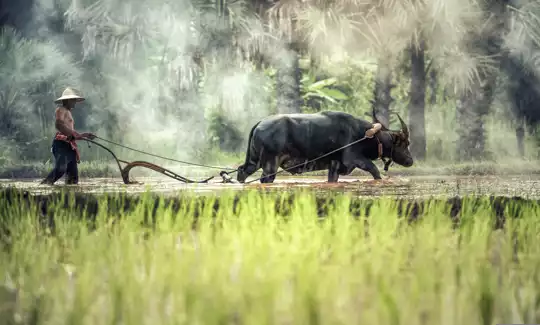
  • Stilt houses and rice-paddy walks — A clear walkable loop through the village’s stilt homes and adjacent paddies, perfect for photography and seeing how houses, livestock and fields are arranged for the monsoon cycle.
  • Village school and community center — A modest primary school that often welcomes visitors; visiting supports local education, you can observe classes or donate supplies, and community events are staged here during festivals.
  • Riverside/bamboo-bridge crossing — A simple riverbank spot with seasonal bamboo crossings and fishing platforms where villagers cast nets and launch longtail boats; peaceful at dawn and good for watching local water-based livelihoods.
Nearby day trips worth exploring are neighboring ethnic villages, a local regional market outside town, and the nearest accessible waterfall or forest trail for a morning hike.
Spotted a mistake or missing something? Contact us.

Things to do near Ban Sop Houn

Ratings based on Tripadvisor reviews. When you book through this link, you support our work at no extra cost to you.

🌤️ When to go?When to go for the best experience

  • Topic: Weather Ban Sop Houn’s dry season from November to February offers crisp mornings and clear skies, perfect for trekking and river views. The wet season (May to October) brings heavy rains that can turn trails muddy and rivers swift, making travel tricky but lush.
  • Topic: Temperature In the dry season, daytime highs hover around 25-30°C (77-86°F), cooling to 15°C (59°F) at night—ideal for active days and cozy evenings. The wet season spikes humidity and daytime temps to 30-35°C (86-95°F), which can sap energy fast.
  • Topic: Daylight Hours Daylight stretches roughly from 6 AM to 6 PM year-round, but the dry season’s clearer skies mean you’ll get more usable light for exploring without the damp rush of storms.
  • Topic: Crowds Peak backpacker season aligns with the dry months, so expect
… read more 👉
  • Topic: Weather Ban Sop Houn’s dry season from November to February offers crisp mornings and clear skies, perfect for trekking and river views. The wet season (May to October) brings heavy rains that can turn trails muddy and rivers swift, making travel tricky but lush.
  • Topic: Temperature In the dry season, daytime highs hover around 25-30°C (77-86°F), cooling to 15°C (59°F) at night—ideal for active days and cozy evenings. The wet season spikes humidity and daytime temps to 30-35°C (86-95°F), which can sap energy fast.
  • Topic: Daylight Hours Daylight stretches roughly from 6 AM to 6 PM year-round, but the dry season’s clearer skies mean you’ll get more usable light for exploring without the damp rush of storms.
  • Topic: Crowds Peak backpacker season aligns with the dry months, so expect more fellow travelers but also better infrastructure and open guesthouses. The wet season sees fewer visitors, offering solitude but fewer services.
  • Topic: Seasonal Activities Dry season unlocks hiking, kayaking, and village visits without weather interruptions. The wet season invites rice planting festivals and vibrant greenery but limits outdoor adventure options.
  • Topic: Price Fluctuations Accommodation and transport costs rise during the dry season’s peak, reflecting demand. The wet season offers bargains but comes with the trade-off of less predictable conditions.
Pro-tip: Aim for late November or early December—when the air is fresh, the crowds are manageable, and the landscape is waking up from the rains, giving you the best of both worlds.


source: climatestotravel.comJANJanuary: excellent for travelingFEBFebruary: excellent for travelingMARMarch: highly recommended for travelingAPRApril: good for travelingMAYMay: fair for travelingJUNJune: fair for travelingJULJuly: fair for travelingAUGAugust: fair for travelingSEPSeptember: fair for travelingOCTOctober: fair for travelingNOVNovember: highly recommended for travelingDECDecember: excellent for traveling
when-to-go

✈️ The backpacker research shortcutLaos Travel Guide

An offline-friendly backpacking guide with optimized travel routes, ranked highlights, transport advice, and the best areas to stay.
example page 0 from our offline Travel Guide for Laos
example page 1 from our offline Travel Guide for Laos
example page 2 from our offline Travel Guide for Laos
example page 3 from our offline Travel Guide for Laos
example page 4 from our offline Travel Guide for Laos
example page 5 from our offline Travel Guide for Laos
example page 6 from our offline Travel Guide for Laos
example page 7 from our offline Travel Guide for Laos
The digital guide (276 pages) contains:
✅ 73 highlights, ranked by travel appeal
✅ Optimized 5, 10 & 15-day travel routes
✅ Cities, national parks, landmarks, beaches
✅ How to get around
✅ Offline-friendly for travel without Wi-Fi
👉 Click to see all 30+ guide features

📅 Plan smarter in minutes, not weeks
✅ Month by month travel advice
✅ Festivals & national holidays
✅ Budget expectations

🗺️ Go to the right places, skip the overrated ones
✅ Honest pros & cons of destinations
✅ Top hikes, parks & viewpoints
✅ Lesser-known places most travelers miss
✅ Clear “worth it vs skip it” guidance

🛏️ Travel smoothly without rookie mistakes
✅ Best areas to stay
✅ Transport systems explained simply
✅ Common scams & safety advice
✅ SIM cards, money & practical tips

🌍 Understand the country, not just visit it
✅ Culture & traditions
✅ 52 Essential phrases & customs
✅ Festivals worth planning around
✅ Traveler-friendly historical context
✅ Insights that make places more meaningful

📱 Built for real travel conditions
✅ Fully downloadable PDF
✅ Works completely offline
✅ Optimized for phone use
✅ Useful in remote areas & buses
✅ Everything in one place
Stop searching, start planning
Get instant access to your full guide. 30‑day money-back guarantee.
+ Add another guide for just

By proceeding you agree to our terms.
Sent to your inbox immediately after payment • 100% Secure Checkout
Best Backpacking Travel Advisor 2025 tourism awardBest Backpacking
Travel Advisor
2025
What others say about Take Your Backpack Guides:
⭐⭐⭐⭐⭐
Fantastic, amazing amount of information!
⭐⭐⭐⭐⭐
My goodness this is amazing, it's what I've been looking for hats off too you!
⭐⭐⭐⭐⭐
I think this is absolutely BRILLIANT
⭐⭐⭐⭐
Very complete and informative. It's still missing places, but I gotta to commend you
⭐⭐⭐⭐⭐
This is truly amazing, thank you, can't wait to explore it with my kids!
⭐⭐⭐⭐⭐
Awesome resource, thank you!
⭐⭐⭐⭐⭐
This is amazing! Can't wait to explore the ones I haven't seen
⭐⭐⭐⭐
I love this! Well done, great idea.
⭐⭐⭐⭐⭐
Thanks for taking the time to make this gem!
⭐⭐⭐⭐⭐
This might be the best website I've ever seen.
⭐⭐⭐⭐⭐
Congratulations, and thank you so much for your work; it's incredibly valuable.
⭐⭐⭐⭐
In all seriousness I think you did a great job pointing out the important spots
⭐⭐⭐⭐⭐
10/10 very good
⭐⭐⭐⭐⭐
As someone who's only just starting to visit regularly this is awesome, thank you.
⭐⭐⭐⭐
Thank you very much! I'm going to visit my dad, it's going to be very useful!
⭐⭐⭐⭐⭐
This is really cool! We'll be travelling for the first time and this definitely come in handy.
⭐⭐⭐⭐⭐
You are now our minister of culture, congratulations 👨‍💼
⭐⭐⭐⭐⭐
Just wanted to tell you that this is a pearl! Going to follow your recommendations.
⭐⭐⭐⭐⭐
This is so cool. I'll definitely be using the resource for my travels soon.
⭐⭐⭐⭐⭐
This is very impressive! Good work.
⭐⭐⭐⭐⭐
This is an amazing and informative site. Very well done!

🛏️ Where to stay?Where staying makes the most sense

Ban Sop Houn’s backpacker sweet spot is the stretch along the Nam Ou River near the town center. This area hums with a laid-back energy that’s rare in Laos—think open-air cafés where the scent of strong coffee mingles with river mist, and hammocks sway under the shade of tamarind trees. It’s safe, easy to navigate on foot, and packed with budget guesthouses and hostels that attract solo travelers and small groups alike. The vibe here is social without being overwhelming; you’ll find fellow backpackers swapping stories over cold Beerlao or planning day trips to nearby caves and waterfalls.

Venture … read more 👉
Ban Sop Houn’s backpacker sweet spot is the stretch along the Nam Ou River near the town center. This area hums with a laid-back energy that’s rare in Laos—think open-air cafés where the scent of strong coffee mingles with river mist, and hammocks sway under the shade of tamarind trees. It’s safe, easy to navigate on foot, and packed with budget guesthouses and hostels that attract solo travelers and small groups alike. The vibe here is social without being overwhelming; you’ll find fellow backpackers swapping stories over cold Beerlao or planning day trips to nearby caves and waterfalls.

Venture a little farther from the river, and the town shifts into quieter residential zones where guesthouses thin out and the atmosphere feels more local but less connected to the backpacker circuit. Staying riverside means you’re plugged into the pulse of Ban Sop Houn’s easygoing charm, with the bonus of spontaneous meetups and a genuine sense of community that’s hard to replicate elsewhere in town.

🚌 Day tripsBest day trips from Ban Sop Houn

Ban Sop Houn is a backpacker’s dream base, offering easy access to stunning landscapes and rich culture. The charm of this town lies in its laid-back vibe, making it the perfect launchpad for unforgettable day trips.

Kuang Si Waterfalls
Just a short ride away, the Kuang Si Waterfalls are a must-see. Picture turquoise pools cascading down limestone cliffs, inviting you for a refreshing dip. The journey takes about an hour, and you can expect to spend around $5 for transportation. Arrive early to beat the crowds and soak in the serene atmosphere. A common mistake is underestimating the time needed to explore the area; don’t rush your visit!


Pak Ou Caves
A boat ride along the Mekong River leads you to the Pak Ou Caves, where thousands of Buddha statues await. The trip takes about two hours, … read more 👉
Ban Sop Houn is a backpacker’s dream base, offering easy access to stunning landscapes and rich culture. The charm of this town lies in its laid-back vibe, making it the perfect launchpad for unforgettable day trips.

Kuang Si Waterfalls
Just a short ride away, the Kuang Si Waterfalls are a must-see. Picture turquoise pools cascading down limestone cliffs, inviting you for a refreshing dip. The journey takes about an hour, and you can expect to spend around $5 for transportation. Arrive early to beat the crowds and soak in the serene atmosphere. A common mistake is underestimating the time needed to explore the area; don’t rush your visit!


Pak Ou Caves
A boat ride along the Mekong River leads you to the Pak Ou Caves, where thousands of Buddha statues await. The trip takes about two hours, and you can budget around $10 for the boat fare. The best time to go is during the dry season when the river is calm. Many first-timers miss the chance to enjoy the riverside scenery; take your time on the boat to appreciate the lush surroundings.


Vang Vieng
For a taste of adventure, head to Vang Vieng, about a three-hour bus ride from Ban Sop Houn. Known for its stunning karst landscapes and outdoor activities, you can rent a bike for around $2 and explore the area. The best time to visit is during the cooler months, from November to February. A common pitfall is sticking to the main tourist spots; venture off the beaten path to discover hidden lagoons and caves.
👉 Explore Vang Vieng

Luang Prabang
Just a two-hour bus ride away, Luang Prabang offers a blend of history and culture. Visit the morning alms ceremony and explore the night market. Expect to spend about $5 on transportation. The dry season is ideal for exploring the city’s temples and vibrant streets. Many travelers overlook the early morning hours; waking up early rewards you with a peaceful experience before the crowds arrive.
👉 Explore Luang Prabang

FAQCommon questions from travelers

Ban Sop Houn is accessible by boat from Luang Prabang, typically a 3 to 4-hour journey along the Mekong River. Alternatively, you can reach it by motorbike or car via rural roads, but the river route is more common and scenic.
Yes, Ban Sop Houn is worth the trip for travelers interested in authentic rural Lao village life and traditional weaving crafts. The village is known for its silk weaving, which provides a unique cultural experience away from tourist crowds.
Yes, Ban Sop Houn can be visited as a day trip from Luang Prabang, especially if you take the early morning boat. Plan for about 6 to 8 hours total travel time, allowing a few hours to explore the village and interact with locals.
⚠️ Things can change over time, so always validate details locally before you go.

Other Laotian villages near Ban Sop Houn

Explore more nearby:

  • Ban Xieng Lom—forest edge, eco-lodges, elephant camp| 95 km away
  • Nong Khiaw—karst cliffs, suspension bridge, riverside guesthouses| 101 km away
  • Ban Xieng Mene—Mekong ferry point, temple ruins, riverside hamlet| 106 km away

💡 Not sure where to go next?
Create a personalized itinerary for Laos including Ban Sop Houn and the places that fit your trip.

Generate my itinerary

👉 Discover all villages

Or checkout all Laos has to offer (think cities, towns, villages, national parks, hikes, beaches, festivals)
Country photo of Laos

We 💚 feedbackIs it worth it?

Ban Sop Houn has a laid-back vibe that wraps around you like a warm blanket. The scent of grilled fish wafts through the air, mingling with the earthy aroma of the nearby forest. Don’t miss the local market at dawn; it’s a sensory feast. Just be ready for the occasional power outage—embrace it. It’s all part of the charm. You’ll leave feeling like you’ve truly connected with the heart of Laos.

✍️ Help improve this page!
The information on this page is based on in-depth research, insights shared by experienced travelers, and feedback from the local travel community in Laos. While every effort is made to keep the information accurate and current, conditions can change — so if you spot anything incorrect or outdated, please get in touch.


🙋‍♂️ Give feedback

👋 Meet the founderWho’s Behind Take Your Backpack?

Johan, backpacker and founder of TakeYourBackpackHi, I’m Johan (Netherlands 🇳🇱), the creator of TakeYourBackpack. Over the past 3 decades, I’ve backpacked through 90+ countries across six continents, gaining extensive experience with independent travel, long-term trips, and overland routes.

This site is built on a combination of firsthand travel experience and carefully curated insights from other backpackers. Many guides are based on places I’ve personally visited, while others bring together tips, observations, and practical advice shared by trusted travelers I’ve met along the way.

The goal is to provide realistic, experience-driven guidance — not generic itineraries — so you can explore destinations with better context, clearer expectations, and more confidence.