
×

Lesotho🇱🇸 | townsHa Komecave dwellings, cultural site, hillside settlement | things to do and best time to go

Explore PekaExplore Ha Mofoka

Backpacking in Ha Kome
🏆 Top picktown ranked #2
By Johan Kruseman 🇳🇱 | Updated September 4, 2026

Everyone comes to Ha Kome for the cave dwellings—those honeycombed homes carved into sandstone, famous on postcards and Instagram. But if you’re only chasing a photo, you’ll miss the real pulse: the way smoke from cooking fires curls into the chilly mountain air, the quiet pride of families who still live in these caves, and the hush that settles over the valley at dusk. Ha Kome sits in Lesotho’s Berea district, a good hour’s drive from Maseru, tucked into hills that feel both remote and lived-in. For backpackers, it’s not a base for nightlife or big hikes; it’s a slow, contemplative stop—best as a day trip or a pause between busier towns. There’s little in the way of hostels or backpacker cafés, and evenings are quiet, but you’ll find a raw, unpolished welcome. Costs are low, safety is solid, and compared to the bustle of Teyateyaneng or the tourist gloss of Malealea, Ha Kome feels stripped-back and honest—more about stories than spectacle.

Discover everything you want to know in the 📖 Lesotho Travel Guide.


Get your Lesotho guide
42 ranked highlights, routes & tips, works offline (178 pages)
Loading the map 🌍
CLICK TO FILTER
cities
towns
villages
landmarks
national parks
hikes
attractions
festivals
regions
SHOW COUNTRY’S BESTSHOW ALL

✨ Why go?
Ranked #2 town in Lesotho
Reasons people choose to visit here

Backpackers flock to Ha Kome for its strategic position along the Lesotho hiking routes. This town serves as a gateway to stunning trails, including the Sani Pass and Maluti Mountains, making it a prime spot for hikers and nature lovers. The walkable streets are lined with small-scale guesthouses and hostels, offering cozy, budget-friendly stays that foster a friendly social atmosphere. Here, you can savor local dishes at family-run eateries, where the aroma of stewed meats and fresh bread fills the air. Travelers often linger a few days, soaking in the cultural experiences and connecting with fellow adventurers. It’s ideal for slow travelers and solo explorers seeking a blend of community and tranquility. If you’re looking for a quick stop, you might miss the heart of what makes Ha Kome special.
Want to include Ha Kome in your Lesotho route?
Create a personalized Lesotho itinerary that includes Ha Kome and the places that fit your trip — based on your travel style, budget, and available time. Get your route in seconds.

Generate my trip

💡 HighlightsKey sights and experiences for travelers

🏘️ NeighborhoodsKey areas and districts to know

Ha Kome is a captivating town in Lesotho, where the rugged beauty of the landscape meets the warmth of local culture. Each neighborhood offers a unique flavor for backpackers.

Ha Kome Village: This is the heart of the town, where you’ll find traditional Basotho huts and a vibrant community atmosphere. The vibe is friendly and welcoming, perfect for short stays. Walkability is excellent; you can easily explore local markets and eateries. Nightlife is low-key, with a few bars offering live music on weekends.

Ha Kome Caves: A bit off the beaten path, this area is ideal for those seeking adventure. The caves are a short hike away, and the scenery is breathtaking. It’s quieter here, making it suitable for longer stays if you want to immerse yourself in nature. Transport options are limited, … read more 👉
Ha Kome is a captivating town in Lesotho, where the rugged beauty of the landscape meets the warmth of local culture. Each neighborhood offers a unique flavor for backpackers.

Ha Kome Village: This is the heart of the town, where you’ll find traditional Basotho huts and a vibrant community atmosphere. The vibe is friendly and welcoming, perfect for short stays. Walkability is excellent; you can easily explore local markets and eateries. Nightlife is low-key, with a few bars offering live music on weekends.

Ha Kome Caves: A bit off the beaten path, this area is ideal for those seeking adventure. The caves are a short hike away, and the scenery is breathtaking. It’s quieter here, making it suitable for longer stays if you want to immerse yourself in nature. Transport options are limited, so plan your hikes accordingly.

Ha Kome Lodge Area: This area caters to backpackers looking for comfort without breaking the bank. It’s a bit more developed, with hostels and guesthouses. The atmosphere is relaxed, and you’ll find a mix of locals and travelers. It’s a great base for exploring nearby attractions, with decent transport links.

⌛️ 1 dayA smart one-day plan

Ha Kome, a small town in Lesotho, is a tapestry of rich culture and breathtaking landscapes. Nestled in the foothills, it’s a place where the air is crisp, and the scent of earth after rain lingers. The town is known for its traditional Basotho culture and the stunning Ha Kome Caves, which offer a glimpse into the lives of the early inhabitants.

Start your morning with a stroll through the vibrant local market. The colors of fresh produce and handmade crafts pop against the backdrop of the mountains. Engage with the vendors; their stories add depth to your experience. Grab a traditional breakfast of pap and chakalaka from a nearby eatery, savoring the spicy warmth as you watch the town wake up.

In the afternoon, make your way to the Ha Kome Caves. The hike is invigorating, with rocky paths … read more 👉
Ha Kome, a small town in Lesotho, is a tapestry of rich culture and breathtaking landscapes. Nestled in the foothills, it’s a place where the air is crisp, and the scent of earth after rain lingers. The town is known for its traditional Basotho culture and the stunning Ha Kome Caves, which offer a glimpse into the lives of the early inhabitants.

Start your morning with a stroll through the vibrant local market. The colors of fresh produce and handmade crafts pop against the backdrop of the mountains. Engage with the vendors; their stories add depth to your experience. Grab a traditional breakfast of pap and chakalaka from a nearby eatery, savoring the spicy warmth as you watch the town wake up.

In the afternoon, make your way to the Ha Kome Caves. The hike is invigorating, with rocky paths leading you through lush greenery. The caves themselves are adorned with ancient rock paintings, whispering tales of the past. Take your time here; the atmosphere is serene, and the views are worth every step.

As evening approaches, head to the nearby village of Teyateyaneng. It’s not on the usual tourist trail, but the local community welcomes visitors with open arms. Enjoy a simple dinner at a family-run restaurant, where you can taste traditional Lesotho dishes. The warmth of the people and the flavors of the food create a perfect ending to your day, leaving you with a sense of connection to this remarkable place.
Turn your Ha Kome visit into an Lesotho adventure
Build a complete Lesotho route with Ha Kome, hidden gems, must-see destinations, and realistic travel times included.

Generate my trip

🌤️ When to go?When to go for the best experience


  • Weather: Ha Kome sits high in Lesotho’s mountains, so expect crisp, cool air most of the year. Summers (Nov-Mar) bring afternoon showers and temperatures around 20-25°C (68-77°F), which can quickly drop after sunset. Winters (Jun-Aug) are cold and dry, often dipping below freezing at night, so pack layers.

  • Temperature: Daytime highs in summer are comfortable, but nights can be chilly year-round. Winter days hover around 10°C (50°F), with nights plunging to -5°C (23°F) or lower. Spring and autumn offer a sweet spot with mild days and cool nights.

  • Daylight Hours: Longer days in summer give you more hiking time—up to 13-14 hours of light. Winter days shrink to about 10 hours, so plan early starts to maximize daylight for trekking.

  • Crowds: Ha Kome is off the beaten path, so crowds are
read more 👉

  • Weather: Ha Kome sits high in Lesotho’s mountains, so expect crisp, cool air most of the year. Summers (Nov-Mar) bring afternoon showers and temperatures around 20-25°C (68-77°F), which can quickly drop after sunset. Winters (Jun-Aug) are cold and dry, often dipping below freezing at night, so pack layers.

  • Temperature: Daytime highs in summer are comfortable, but nights can be chilly year-round. Winter days hover around 10°C (50°F), with nights plunging to -5°C (23°F) or lower. Spring and autumn offer a sweet spot with mild days and cool nights.

  • Daylight Hours: Longer days in summer give you more hiking time—up to 13-14 hours of light. Winter days shrink to about 10 hours, so plan early starts to maximize daylight for trekking.

  • Crowds: Ha Kome is off the beaten path, so crowds are minimal year-round. However, local festivals in summer can bring a lively buzz, adding cultural flavor without overwhelming the trails.

  • Seasonal Activities: Summer is prime for wildflower blooms and river crossings, while winter offers stark, dramatic landscapes dusted with frost—perfect for photographers who don’t mind the cold.

  • Price Fluctuations: Accommodation and guides tend to be pricier in summer due to demand and accessibility. Winter rates drop, but some services may be limited due to harsher conditions.


Pro-tip: Aim for late spring or early autumn to catch mild weather, fewer bugs, and balanced daylight—this timing turns Ha Kome’s rugged charm into a smooth, immersive experience.


source: climatestotravel.comJANJanuary: highly recommended for travelingFEBFebruary: highly recommended for travelingMARMarch: highly recommended for travelingAPRApril: excellent for travelingMAYMay: excellent for travelingJUNJune: good for travelingJULJuly: fair for travelingAUGAugust: fair for travelingSEPSeptember: excellent for travelingOCTOctober: excellent for travelingNOVNovember: highly recommended for travelingDECDecember: highly recommended for traveling
when-to-go

✈️ The backpacker research shortcutLesotho Travel Guide

An offline-friendly backpacking guide with optimized travel routes, ranked highlights, transport advice, and the best areas to stay.
example page 0 from our offline Travel Guide for Lesotho
example page 1 from our offline Travel Guide for Lesotho
example page 2 from our offline Travel Guide for Lesotho
example page 3 from our offline Travel Guide for Lesotho
example page 4 from our offline Travel Guide for Lesotho
example page 5 from our offline Travel Guide for Lesotho
example page 6 from our offline Travel Guide for Lesotho
example page 7 from our offline Travel Guide for Lesotho
The digital guide (178 pages) contains:
42 highlights, ranked by travel appeal
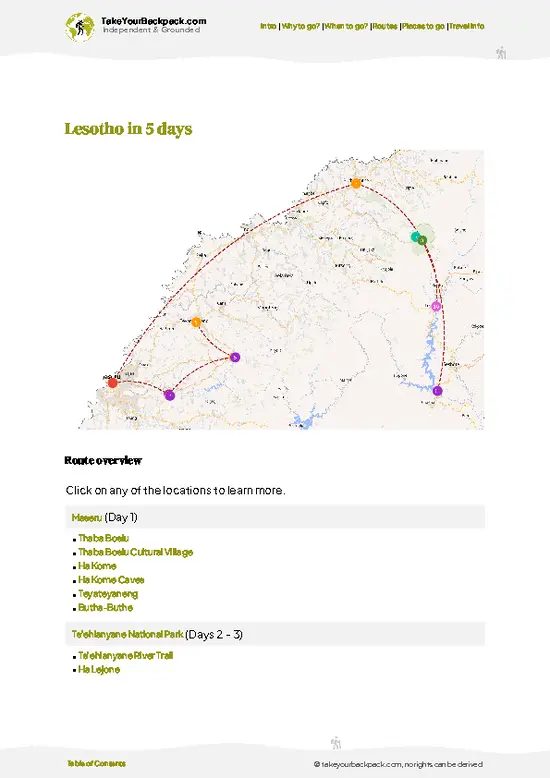
Optimized 2, 3 & 5-day travel routes
Cities, national parks, landmarks, beaches
How to get around
Offline-friendly for travel without Wi-Fi
👉 Click to see all 30+ guide features

📅 Plan smarter in minutes, not weeks
Month by month travel advice
Festivals & national holidays
Budget expectations

🗺️ Go to the right places, skip the overrated ones
Honest pros & cons of destinations
Top hikes, parks & viewpoints
Lesser-known places most travelers miss
Clear “worth it vs skip it” guidance

🛏️ Travel smoothly without rookie mistakes
Best areas to stay
Transport systems explained simply
Common scams & safety advice
SIM cards, money & practical tips

🌍 Understand the country, not just visit it
Culture & traditions
52 Essential phrases & customs
Festivals worth planning around
Traveler-friendly historical context
Insights that make places more meaningful

📱 Built for real travel conditions
Fully downloadable PDF
Works completely offline
Optimized for phone use
Useful in remote areas & buses
Everything in one place
Save weeks of stressful planning
Get instant access to your full guide. 30‑day money-back guarantee.
+ Add another guide for just US$7.80

By proceeding you agree to our terms.
Sent to your inbox immediately after payment • 100% Secure Checkout
Best Backpacking Travel Advisor 2025 tourism awardBest Backpacking
Travel Advisor
2025
What others say about Take Your Backpack Guides:
⭐⭐⭐⭐⭐
Fantastic, amazing amount of information!
⭐⭐⭐⭐⭐
My goodness this is amazing, it's what I've been looking for hats off too you!
⭐⭐⭐⭐⭐
I think this is absolutely BRILLIANT
⭐⭐⭐⭐
Very complete and informative. It's still missing places, but I gotta to commend you
⭐⭐⭐⭐⭐
This is truly amazing, thank you, can't wait to explore it with my kids!
⭐⭐⭐⭐⭐
Awesome resource, thank you!
⭐⭐⭐⭐⭐
This is amazing! Can't wait to explore the ones I haven't seen
⭐⭐⭐⭐
I love this! Well done, great idea.
⭐⭐⭐⭐⭐
Thanks for taking the time to make this gem!
⭐⭐⭐⭐⭐
This might be the best website I've ever seen.
⭐⭐⭐⭐⭐
Congratulations, and thank you so much for your work; it's incredibly valuable.
⭐⭐⭐⭐
In all seriousness I think you did a great job pointing out the important spots
⭐⭐⭐⭐⭐
10/10 very good
⭐⭐⭐⭐⭐
As someone who's only just starting to visit regularly this is awesome, thank you.
⭐⭐⭐⭐
Thank you very much! I'm going to visit my dad, it's going to be very useful!
⭐⭐⭐⭐⭐
This is really cool! We'll be travelling for the first time and this definitely come in handy.
⭐⭐⭐⭐⭐
You are now our minister of culture, congratulations 👨‍💼
⭐⭐⭐⭐⭐
Just wanted to tell you that this is a pearl! Going to follow your recommendations.
⭐⭐⭐⭐⭐
This is so cool. I'll definitely be using the resource for my travels soon.
⭐⭐⭐⭐⭐
This is very impressive! Good work.
⭐⭐⭐⭐⭐
This is an amazing and informative site. Very well done!

🛏️ Where to stay?Best areas and accommodation options

Ha Kome’s best backpacker zone is the cluster around the town center, where the pulse of daily life hums strongest. This area is compact enough to walk everywhere, which means you’re never stuck waiting for transport or navigating confusing streets after dark. The light here shifts quickly from sharp midday sun to a soft, golden haze that spills over the corrugated roofs, giving the whole place a warm, lived-in glow.

Staying here means easy access to local markets and eateries where the scent of wood smoke and fresh maize mingle in the air—perfect for those who want to dive into authentic flavors … read more 👉
Ha Kome’s best backpacker zone is the cluster around the town center, where the pulse of daily life hums strongest. This area is compact enough to walk everywhere, which means you’re never stuck waiting for transport or navigating confusing streets after dark. The light here shifts quickly from sharp midday sun to a soft, golden haze that spills over the corrugated roofs, giving the whole place a warm, lived-in glow.

Staying here means easy access to local markets and eateries where the scent of wood smoke and fresh maize mingle in the air—perfect for those who want to dive into authentic flavors without breaking the bank. Hostels and guesthouses are sprinkled through this neighborhood, offering a social vibe that’s low-key but lively enough to meet fellow travelers swapping stories over shared dinners or morning coffee.

Compared to the quieter outskirts, this central zone feels safer after dark because there’s always a few people around, and the streets have a rhythm that discourages wandering too far off. It’s the sweet spot for solo backpackers who want to feel connected without losing the freedom to explore at their own pace.

🚌 Getting aroundMoving around without the hassle

Ha Kome moves at its own rhythm—less a clock-driven town and more a place where the sun’s angle and the scent of wood smoke set the pace. Streets hum with a mix of purposeful strides and meandering locals who know the best shade or the freshest market stall by instinct, not by timetable. This isn’t a place where you’ll find rigid schedules posted on every corner; instead, it’s about reading the flow, catching the right moment, and blending into the local pulse. The air carries a mix of earth and spices, and the light shifts quickly from sharp morning clarity to the soft, golden haze of late afternoon, nudging you to move with intention but without rush.


  • Walking: The heart of Ha Kome is best explored on foot. Narrow lanes and uneven cobblestones make walking slow but immersive, letting
read more 👉
Ha Kome moves at its own rhythm—less a clock-driven town and more a place where the sun’s angle and the scent of wood smoke set the pace. Streets hum with a mix of purposeful strides and meandering locals who know the best shade or the freshest market stall by instinct, not by timetable. This isn’t a place where you’ll find rigid schedules posted on every corner; instead, it’s about reading the flow, catching the right moment, and blending into the local pulse. The air carries a mix of earth and spices, and the light shifts quickly from sharp morning clarity to the soft, golden haze of late afternoon, nudging you to move with intention but without rush.


  • Walking: The heart of Ha Kome is best explored on foot. Narrow lanes and uneven cobblestones make walking slow but immersive, letting you catch the scent of fresh bread or the chatter spilling from open windows. It’s free, flexible, and the only way to truly absorb the town’s layered textures.


  • Shared Minibuses: These are the budget traveler’s lifeline for hopping between Ha Kome and nearby villages. They don’t run on a strict timetable—expect departures when full, usually between 6:30 AM and 6 PM. Fares are low, but comfort is basic; prepare for a tight squeeze and lively local banter.


  • Motorbike Taxis: For quick, short hops within town or to outskirts, motorbike taxis offer speed and agility. Negotiate fares upfront—usually cheap but variable—and hold on tight as drivers weave through the bustling streets. They operate from dawn until dusk, perfect for catching a sunset viewpoint without the walk back.


  • Bicycle Rentals: Renting a bike gives you control over your pace and route, ideal for exploring beyond the center. Rentals cost a few dollars per day, and the terrain is mostly flat but with occasional rough patches, so a sturdy bike is a must. Early morning rides are best to avoid the midday heat and enjoy the soft light filtering through the trees.

👛 Costs (as of 4 September 2026)What things cost and how to budget

Backpacking in Ha Kome, Lesotho, offers a raw, authentic experience where every expense reflects the simplicity and rugged charm of this mountain town. Here’s what you can expect to spend daily, broken down into the essentials.
  • Dorm Accommodation: Expect to pay around €8-€15 per night for a basic dorm bed in a local guesthouse or community lodge. These places are no-frills but clean, often with shared bathrooms and a chance to meet other travelers. The lighting is usually soft and natural during the day, with a quiet, earthy scent from the stone and wood interiors.
  • Meals: Local meals run about €3-€6 each. Think hearty, simple dishes like maize porridge or stews with fresh vegetables and occasional meat. Street food or small local eateries offer the best value and flavor, with meals often
read more 👉
Backpacking in Ha Kome, Lesotho, offers a raw, authentic experience where every expense reflects the simplicity and rugged charm of this mountain town. Here’s what you can expect to spend daily, broken down into the essentials.
  • Dorm Accommodation: Expect to pay around €8-€15 per night for a basic dorm bed in a local guesthouse or community lodge. These places are no-frills but clean, often with shared bathrooms and a chance to meet other travelers. The lighting is usually soft and natural during the day, with a quiet, earthy scent from the stone and wood interiors.
  • Meals: Local meals run about €3-€6 each. Think hearty, simple dishes like maize porridge or stews with fresh vegetables and occasional meat. Street food or small local eateries offer the best value and flavor, with meals often served with a side of fresh mountain air and the faint aroma of wood smoke.
  • Local Transport: Transport options are limited but affordable. Minibus taxis or shared rides cost roughly €1-€2 per trip within or near Ha Kome. The rides are short, bumpy, and open to the elements, giving you a real sense of the landscape’s rugged texture and the town’s slow pace.
  • Basic Activities/Entry Fees: Many cultural or natural sites charge minimal fees, usually around €2-€5. This might include entry to local craft markets, small museums, or guided walks. These fees support the community and add layers of meaning to your visit, connecting you directly to the people and their stories.
  • Miscellaneous Expenses: Budget about €2-€4 for essentials like bottled water, snacks, or small souvenirs. These items are often sold by locals, adding a personal touch to your spending and a chance to engage in brief, friendly exchanges.

In total, a realistic daily budget for backpacking in Ha Kome ranges from about €16 to €32. This covers the basics without cutting corners, letting you soak in the atmosphere without the stress of overspending. The modest costs reflect the town’s pace and resources, making every euro feel like a direct investment in an authentic, grounded experience.
⚠️ Prices can change and everyone travels differently, so take this as a rough guide. Hope it helps you plan your adventure!

🚌 Day tripsWhere to go beyond the main area

Ha Kome is a backpacker’s dream base in Lesotho, offering a unique blend of culture and adventure. From here, you can dive into the heart of the region with day trips that reveal its raw beauty and rich heritage.

1. Semonkong Falls
A trek to Semonkong Falls is a must. The journey takes about an hour by taxi, winding through breathtaking landscapes. The falls themselves plunge dramatically, creating a mist that dances in the sunlight. Bring a picnic to enjoy while soaking in the sound of cascading water. The best time to visit is during the rainy season (November to March) when the falls are at their fullest. A common mistake? Underestimating the chill—pack a light jacket for the breeze.


2. Thaba Bosiu
Just a short drive from Ha Kome, Thaba Bosiu is a historical plateau that served … read more 👉
Ha Kome is a backpacker’s dream base in Lesotho, offering a unique blend of culture and adventure. From here, you can dive into the heart of the region with day trips that reveal its raw beauty and rich heritage.

1. Semonkong Falls
A trek to Semonkong Falls is a must. The journey takes about an hour by taxi, winding through breathtaking landscapes. The falls themselves plunge dramatically, creating a mist that dances in the sunlight. Bring a picnic to enjoy while soaking in the sound of cascading water. The best time to visit is during the rainy season (November to March) when the falls are at their fullest. A common mistake? Underestimating the chill—pack a light jacket for the breeze.


2. Thaba Bosiu
Just a short drive from Ha Kome, Thaba Bosiu is a historical plateau that served as a fortress for the Basotho people. The hike is relatively easy, taking about 30 minutes to reach the summit. The views are expansive, with the sun setting behind the mountains creating a golden glow. Entry is usually around $2, making it a budget-friendly option. Visit in the early morning to avoid the heat and catch the sunrise. Many first-timers miss the guided tours that offer deeper insights into the site’s significance.
👉 Explore Thaba Bosiu

3. Katse Dam
A bit further afield, the Katse Dam is a marvel of engineering. The drive takes about two hours, but the scenery along the way is worth every minute. The dam itself is surrounded by dramatic cliffs and offers a visitor center where you can learn about its construction. Expect to spend around $5 for entry. The best time to go is during the dry season (April to October) when the skies are clear. A common rookie mistake is not checking the tour schedules, which can limit your experience.
👉 Explore Katse Dam

4. Mohale Dam
Less crowded than Katse, Mohale Dam is perfect for a peaceful day out. It’s about an hour’s drive from Ha Kome. The area is serene, with opportunities for fishing and hiking. Bring your own food, as options are limited. The dam is stunning in the late afternoon light, making it ideal for photography. Aim for a visit in spring (September to November) when the wildflowers bloom. Many overlook the chance to explore the nearby trails, which offer fantastic views.
Want to know what more Lesotho offers?
The Lesotho Travel Guide describes 42 highlights, from cities to national parks, from beaches to hikes

Get the Travel Guide -

🛡️ SafetySafety Tips and Common Scams in Ha Kome

In Ha Kome, safety is generally solid, but a few mindful practices can enhance your experience. Stick to well-lit areas after dark, especially if you’re solo. The atmosphere shifts; shadows stretch, and the vibrant chatter of the day fades.

Be aware of your surroundings, particularly near markets where vendors can be a bit pushy. It’s not malicious, just their hustle. If someone offers unsolicited help, a polite decline usually suffices.

Common annoyances include the occasional stray dog that might bark or follow you. A calm demeanor and a firm “no” usually send them on their way. Carry yourself confidently, and you’ll blend in seamlessly, enjoying the rich culture without unnecessary stress.

FAQTraveler FAQ

Ha Kome is primarily a stopover rather than a major tourist destination. It offers a glimpse into rural Basotho life but lacks extensive attractions for longer stays. Most travelers pass through on their way to more prominent sites in Lesotho.
One day is sufficient to experience Ha Kome, as the village is small and activities are limited. Spending more than a day is generally unnecessary unless you want to engage deeply with local culture or community projects.
Yes, Ha Kome can be visited as a day trip from nearby towns like Maseru, which is about 70 kilometers away. The trip typically takes around 2 hours each way by car, making it feasible for a day visit.
⚠️ Things can change over time, so always validate details locally before you go.

Other Basotho towns near Ha Kome

Explore more nearby:

  • Teyateyaneng—craft markets, weaving workshops, roadside town| 16 km away
  • Ha Ntsi—small village, rural landscape, community life| 21 km away
  • Ha Matela—village cluster, hillside views, local markets| 35 km away

💡 Not sure where to go next?
Create a personalized itinerary for Lesotho including Ha Kome and the places that fit your trip.

Generate my itinerary

👉 Discover all towns

Or checkout all Lesotho has to offer (think cities, towns, villages, national parks, hikes, beaches, festivals)
Country photo of Lesotho

We 💚 feedbackIs it worth it?

Ha Kome is a slice of raw beauty. The air is crisp, and the sound of the river is a constant companion. You’ll be surprised by the warmth of the locals; their stories are as rich as the landscape. Just a heads-up: the paths can be tricky, so sturdy shoes are a must. Embrace the challenge; the views are worth every step.

✍️ Help improve this page!
The information on this page is based on in-depth research, insights shared by experienced travelers, and feedback from the local travel community in Lesotho. While every effort is made to keep the information accurate and current, conditions can change — so if you spot anything incorrect or outdated, please get in touch.


🙋‍♂️ Give feedback

👋 Meet the founderWho’s Behind Take Your Backpack?

Johan, backpacker and founder of TakeYourBackpackHi, I’m Johan (Netherlands 🇳🇱), the creator of TakeYourBackpack. Over the past decade, I’ve backpacked through 80+ countries across six continents, gaining extensive experience with independent travel, long-term trips, and overland routes.

This site is built on a combination of firsthand travel experience and carefully curated insights from other backpackers. Many guides are based on places I’ve personally visited, while others bring together tips, observations, and practical advice shared by trusted travelers I’ve met along the way.

The goal is to provide realistic, experience-driven guidance — not generic itineraries — so you can explore destinations with better context, clearer expectations, and more confidence.

Get full Lesotho guide •
Instant download • 42 highlights • Full Offline guide