×

Lesotho🇱🇸 | townsTeyateyanengcraft markets, weaving workshops, roadside town | things to do and best time to go

Explore SemonkongExplore Butha-Buthe

Backpacking in Teyateyaneng
🌟 Highlighttown ranked #4
By Johan Kruseman 🇳🇱 | Updated September 3, 2026

The first real fork in the road at Teyateyaneng is whether you treat it as a destination or a pit stop. That choice matters: linger, and you’ll get a taste of Lesotho’s craft soul and mountain rhythm; rush through, and you’ll miss the slow-burn charm that’s easy to overlook from a minibus window. Teyateyaneng—locals call it “TY”—sits about 40km northeast of Maseru, right on the main road slicing through Lesotho’s western highlands. The air is dry, the sun sharp, and the town’s pulse is steady but never frantic. For backpackers, TY is less about nightlife and more about daylight: it’s a practical base for exploring the surrounding hills, browsing the famous weaving workshops, or catching a ride deeper into the mountains. The center is walkable, but you’ll need a taxi or shared minibus for anything beyond the main drag. Social life is mellow—think quiet guesthouses and the occasional café, not hostels packed with travelers. Costs are low, safety is decent if you keep your wits about you, and compared to Maseru, TY feels more relaxed and authentic, but less connected. If you want a taste of Basotho life without the capital’s bustle, this is where you slow down and let the dust settle.

Discover everything you want to know in the 📖 Lesotho Travel Guide.


Get your Lesotho guide
42 ranked highlights, routes & tips, works offline (178 pages)
Loading the map 🌍
CLICK TO FILTER
cities
towns
villages
landmarks
national parks
hikes
attractions
festivals
regions
SHOW COUNTRY’S BESTSHOW ALL

✨ Why go?
Ranked #4 town in Lesotho
Why visitors keep coming back

Teyateyaneng serves as a gateway for backpackers exploring the rugged beauty of Lesotho. Its convenient location makes it a strategic stop for those heading to nearby hikes like the Maletsunyane Falls or the Sani Pass. The town’s walkable streets invite you to wander, with small-scale guesthouses and hostels offering a cozy place to rest. Here, you can savor local dishes, like pap and braai, in a relaxed atmosphere that encourages conversation among travelers.

Most backpackers tend to linger a few days, soaking in the friendly social vibe while sharing stories over a meal. It’s perfect for slow travelers and solo adventurers looking for a genuine connection. While it’s not a nightlife hub, the tranquility of Teyateyaneng allows for reflection and exploration, making it an ideal stopover or a comfortable base for deeper adventures.
Want to include Teyateyaneng in your Lesotho route?
Create a personalized Lesotho itinerary that includes Teyateyaneng and the places that fit your trip — based on your travel style, budget, and available time. Get your route in seconds.

Generate my trip

💡 HighlightsKey sights and experiences for travelers

  • Teyateyaneng Main Market — The town’s heartbeat: noisy stalls, fresh produce, Basotho blanket sellers and tailors. Great for people-watching, bargaining, and seeing everyday commerce up close.
  • Blanket-and-Weaving Workshops (Main Street cluster) — Small, working workshops and shops where you can see blanket-making, get measured for a tailor-made blanket or buy directly from local artisans.
  • Teya Hill Viewpoint — A short climb out of the central streets rewards you with a sweeping view over the Berea Plateau and town rooftops — ideal at golden hour for photos and quiet reflection.
  • Teyateyaneng Stadium (local football ground) — Catching a local match (or a training session) is the quickest way to experience community energy, chants, and Basotho sporting pride.
  • Main Street Shebeens and Live-Music
read more 👉
  • Teyateyaneng Main Market — The town’s heartbeat: noisy stalls, fresh produce, Basotho blanket sellers and tailors. Great for people-watching, bargaining, and seeing everyday commerce up close.
  • Blanket-and-Weaving Workshops (Main Street cluster) — Small, working workshops and shops where you can see blanket-making, get measured for a tailor-made blanket or buy directly from local artisans.
  • Teya Hill Viewpoint — A short climb out of the central streets rewards you with a sweeping view over the Berea Plateau and town rooftops — ideal at golden hour for photos and quiet reflection.
  • Teyateyaneng Stadium (local football ground) — Catching a local match (or a training session) is the quickest way to experience community energy, chants, and Basotho sporting pride.
  • Main Street Shebeens and Live-Music Spots — Low-key bars and music venues where locals gather; expect live Sesotho music, beer, and genuine interaction rather than tourist performance.
  • Central Taxi Rank & Market Quarter — Not glamorous, but culturally rich: watch the taxi culture, hire a shared ride to nearby villages, and observe daily bargaining rituals and social networks in action.
  • Community Craft Stalls & Small Galleries — Scattered near the market are painters, beadworkers and carvers selling original pieces; conversation with the makers often adds the real value.
  • Town Churches and Sunday Services — Attending a Sunday service (ask first) offers a deep cultural immersion — strong singing, communal warmth, and a window into local beliefs and rhythms.
  • Weekend Food Stalls & Pop-up Vendors — Informal food spots selling maize porridge, grilled meats and local snacks; tasting street food here connects you to local routines and recipes.
  • Historic Main Street Walk (colonial-era buildings & municipal sites) — A short walking route through the older parts of town reveals administrative buildings, memorials and quiet corners that tell Teya’s civic story.
A few real, visitable highlights just outside town that make perfect day trips: Morija (Morija Mission and Morija Museum & Archives), nearby traditional villages and Berea highland drives, and a quick run into Maseru for national museums and larger craft markets.
Spotted a mistake or missing something? Contact us.

Things to do near Teyateyaneng

Ratings based on Tripadvisor reviews. When you book through this link, you support our work at no extra cost to you.

🏘️ NeighborhoodsUnderstanding the local layout

Teyateyaneng is a vibrant hub that offers a unique blend of culture and accessibility for backpackers. Here’s a breakdown of its key neighborhoods:

Central Teyateyaneng: This area is the heartbeat of the town. You’ll find bustling markets filled with local produce and crafts. The vibe is energetic, perfect for those who thrive on activity. It’s walkable, with plenty of affordable guesthouses. Nightlife is low-key, but you can enjoy local eateries. Ideal for short stays, as you can easily explore on foot.

Ha Tsolo: A quieter neighborhood, Ha Tsolo offers a more laid-back atmosphere. It’s surrounded by stunning landscapes, making it great for those who want to hike or relax. Accommodations are slightly pricier but worth it for the views. Public transport is accessible, but you might need to … read more 👉
Teyateyaneng is a vibrant hub that offers a unique blend of culture and accessibility for backpackers. Here’s a breakdown of its key neighborhoods:

Central Teyateyaneng: This area is the heartbeat of the town. You’ll find bustling markets filled with local produce and crafts. The vibe is energetic, perfect for those who thrive on activity. It’s walkable, with plenty of affordable guesthouses. Nightlife is low-key, but you can enjoy local eateries. Ideal for short stays, as you can easily explore on foot.

Ha Tsolo: A quieter neighborhood, Ha Tsolo offers a more laid-back atmosphere. It’s surrounded by stunning landscapes, making it great for those who want to hike or relax. Accommodations are slightly pricier but worth it for the views. Public transport is accessible, but you might need to walk a bit. Best for longer stays if you want to soak in the tranquility.

Ha Lejone: This area is a bit off the beaten path, providing a more authentic experience. The local community is welcoming, and you can engage in cultural exchanges. It’s less walkable, so consider renting a bike or using local taxis. Nightlife is virtually non-existent, making it perfect for those seeking peace. Great for longer stays to truly immerse yourself in the local culture.

⌛️ 1 dayWhat you can realistically do in a day

Teyateyaneng, a lively town in Lesotho, pulses with the rhythm of daily life. It’s a place where you can feel the warmth of the sun on your skin and the vibrant energy of the locals as they go about their day. This isn’t just a stopover; it’s a chance to dive into the heart of Basotho culture.

Start your morning at the bustling Teyateyaneng Market. The air is thick with the scent of fresh produce and spices. Grab a local breakfast of pap and chakalaka from a vendor. The flavors are bold, and the experience is authentic. As you wander through the stalls, take in the colorful fabrics and handmade crafts. This is where you’ll find the soul of the town.

In the afternoon, head to the nearby Thaba-Bosiu Cultural Village. It’s a bit off the usual tourist path, but the history here is rich. Explore … read more 👉
Teyateyaneng, a lively town in Lesotho, pulses with the rhythm of daily life. It’s a place where you can feel the warmth of the sun on your skin and the vibrant energy of the locals as they go about their day. This isn’t just a stopover; it’s a chance to dive into the heart of Basotho culture.

Start your morning at the bustling Teyateyaneng Market. The air is thick with the scent of fresh produce and spices. Grab a local breakfast of pap and chakalaka from a vendor. The flavors are bold, and the experience is authentic. As you wander through the stalls, take in the colorful fabrics and handmade crafts. This is where you’ll find the soul of the town.

In the afternoon, head to the nearby Thaba-Bosiu Cultural Village. It’s a bit off the usual tourist path, but the history here is rich. Explore the site where King Moshoeshoe I established his kingdom. The views from the hill are breathtaking, and the stories shared by local guides will give you a deeper understanding of Lesotho’s heritage.

As the sun begins to set, return to Teyateyaneng and stroll through the quiet streets of the residential neighborhoods. The light softens, casting a golden hue over the houses. Stop by a local café for a cup of rooibos tea. Chat with the friendly locals; their stories will linger long after you leave. This day isn’t just about seeing; it’s about connecting, feeling, and understanding a place that’s often overlooked.
Turn your Teyateyaneng visit into an Lesotho adventure
Build a complete Lesotho route with Teyateyaneng, hidden gems, must-see destinations, and realistic travel times included.

Generate my trip

🌤️ When to go?Choosing the right time of year


  • Weather: Teyateyaneng’s climate swings between cool winters and mild summers. From May to August, expect crisp days around 10-15°C (50-59°F) with chilly nights dipping near freezing. Summers, November to March, warm up to 20-25°C (68-77°F), but occasional afternoon showers keep the air fresh and the landscape green.

  • Temperature: The best backpacking months fall in spring (September-November) and autumn (March-April). These shoulder seasons balance comfortable daytime warmth (15-22°C / 59-72°F) with cooler evenings, perfect for layering without overheating or freezing.

  • Daylight Hours: Longer days from October to March mean more hiking time, with up to 13 hours of light. Winter months shrink daylight to about 10 hours, so plan early starts to maximize your trekking window.

  • Crowds: Teyateyaneng
read more 👉

  • Weather: Teyateyaneng’s climate swings between cool winters and mild summers. From May to August, expect crisp days around 10-15°C (50-59°F) with chilly nights dipping near freezing. Summers, November to March, warm up to 20-25°C (68-77°F), but occasional afternoon showers keep the air fresh and the landscape green.

  • Temperature: The best backpacking months fall in spring (September-November) and autumn (March-April). These shoulder seasons balance comfortable daytime warmth (15-22°C / 59-72°F) with cooler evenings, perfect for layering without overheating or freezing.

  • Daylight Hours: Longer days from October to March mean more hiking time, with up to 13 hours of light. Winter months shrink daylight to about 10 hours, so plan early starts to maximize your trekking window.

  • Crowds: Teyateyaneng stays low-key year-round, but local festivals in summer can draw crowds. Visiting off-peak means quieter trails and more authentic village interactions.

  • Seasonal Activities: Spring and autumn bring wildflowers and clearer skies, ideal for photography and outdoor markets. Winter’s stark beauty suits those craving solitude and crisp mountain air.

  • Price Fluctuations: Accommodation and transport costs dip outside the summer festival season. Booking in shoulder months often nets better deals without sacrificing weather quality.


Pro-tip: Aim for early spring or late autumn to catch Teyateyaneng’s sweet spot—mild weather, fewer people, and vibrant landscapes that reward every step.


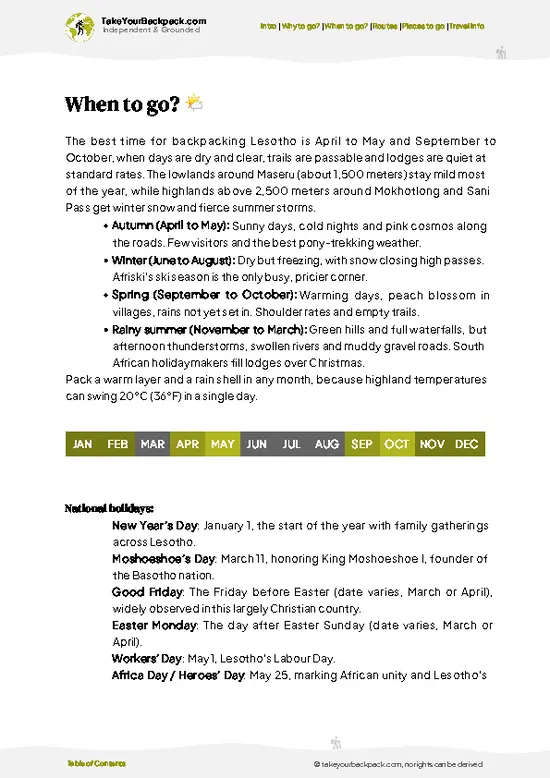
source: climatestotravel.comJANJanuary: highly recommended for travelingFEBFebruary: highly recommended for travelingMARMarch: highly recommended for travelingAPRApril: highly recommended for travelingMAYMay: good for travelingJUNJune: fair for travelingJULJuly: fair for travelingAUGAugust: fair for travelingSEPSeptember: excellent for travelingOCTOctober: excellent for travelingNOVNovember: excellent for travelingDECDecember: highly recommended for traveling
when-to-go

✈️ The backpacker research shortcutLesotho Travel Guide

An offline-friendly backpacking guide with optimized travel routes, ranked highlights, transport advice, and the best areas to stay.
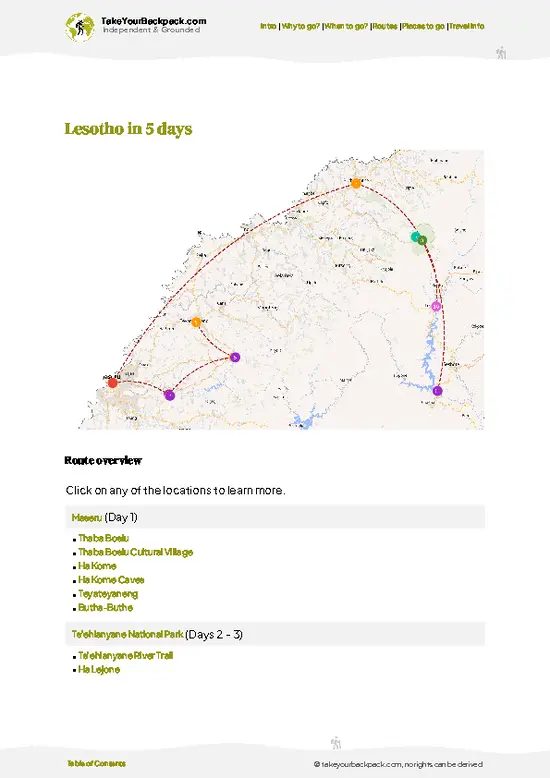
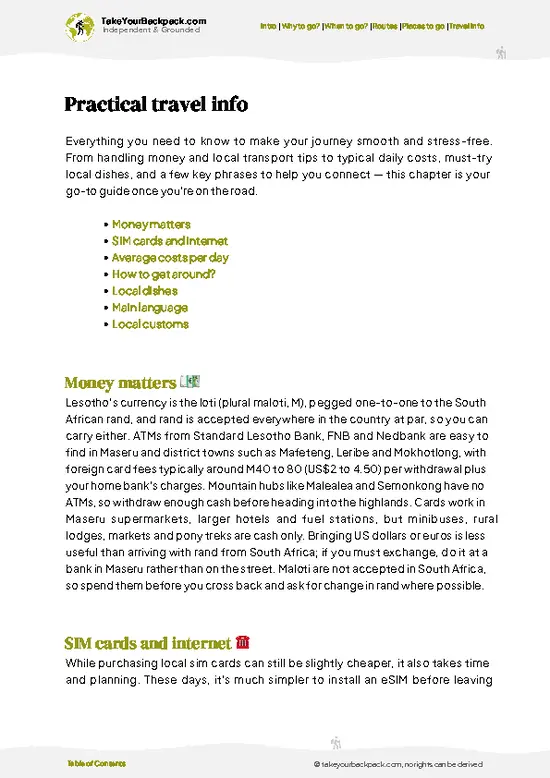
example page 0 from our offline Travel Guide for Lesotho
example page 1 from our offline Travel Guide for Lesotho
example page 2 from our offline Travel Guide for Lesotho
example page 3 from our offline Travel Guide for Lesotho
example page 4 from our offline Travel Guide for Lesotho
example page 5 from our offline Travel Guide for Lesotho
example page 6 from our offline Travel Guide for Lesotho
example page 7 from our offline Travel Guide for Lesotho
The digital guide (178 pages) contains:
42 highlights, ranked by travel appeal
Optimized 2, 3 & 5-day travel routes
Cities, national parks, landmarks, beaches
How to get around
Offline-friendly for travel without Wi-Fi
👉 Click to see all 30+ guide features

📅 Plan smarter in minutes, not weeks
Month by month travel advice
Festivals & national holidays
Budget expectations

🗺️ Go to the right places, skip the overrated ones
Honest pros & cons of destinations
Top hikes, parks & viewpoints
Lesser-known places most travelers miss
Clear “worth it vs skip it” guidance

🛏️ Travel smoothly without rookie mistakes
Best areas to stay
Transport systems explained simply
Common scams & safety advice
SIM cards, money & practical tips

🌍 Understand the country, not just visit it
Culture & traditions
52 Essential phrases & customs
Festivals worth planning around
Traveler-friendly historical context
Insights that make places more meaningful

📱 Built for real travel conditions
Fully downloadable PDF
Works completely offline
Optimized for phone use
Useful in remote areas & buses
Everything in one place
Save weeks of stressful planning
Get instant access to your full guide. 30‑day money-back guarantee.
+ Add another guide for just US$7.80

By proceeding you agree to our terms.
Sent to your inbox immediately after payment • 100% Secure Checkout
Best Backpacking Travel Advisor 2025 tourism awardBest Backpacking
Travel Advisor
2025
What others say about Take Your Backpack Guides:
⭐⭐⭐⭐⭐
Fantastic, amazing amount of information!
⭐⭐⭐⭐⭐
My goodness this is amazing, it's what I've been looking for hats off too you!
⭐⭐⭐⭐⭐
I think this is absolutely BRILLIANT
⭐⭐⭐⭐
Very complete and informative. It's still missing places, but I gotta to commend you
⭐⭐⭐⭐⭐
This is truly amazing, thank you, can't wait to explore it with my kids!
⭐⭐⭐⭐⭐
Awesome resource, thank you!
⭐⭐⭐⭐⭐
This is amazing! Can't wait to explore the ones I haven't seen
⭐⭐⭐⭐
I love this! Well done, great idea.
⭐⭐⭐⭐⭐
Thanks for taking the time to make this gem!
⭐⭐⭐⭐⭐
This might be the best website I've ever seen.
⭐⭐⭐⭐⭐
Congratulations, and thank you so much for your work; it's incredibly valuable.
⭐⭐⭐⭐
In all seriousness I think you did a great job pointing out the important spots
⭐⭐⭐⭐⭐
10/10 very good
⭐⭐⭐⭐⭐
As someone who's only just starting to visit regularly this is awesome, thank you.
⭐⭐⭐⭐
Thank you very much! I'm going to visit my dad, it's going to be very useful!
⭐⭐⭐⭐⭐
This is really cool! We'll be travelling for the first time and this definitely come in handy.
⭐⭐⭐⭐⭐
You are now our minister of culture, congratulations 👨‍💼
⭐⭐⭐⭐⭐
Just wanted to tell you that this is a pearl! Going to follow your recommendations.
⭐⭐⭐⭐⭐
This is so cool. I'll definitely be using the resource for my travels soon.
⭐⭐⭐⭐⭐
This is very impressive! Good work.
⭐⭐⭐⭐⭐
This is an amazing and informative site. Very well done!

🛏️ Where to stay?Choosing the right base

In Teyateyaneng, the heart of backpacker life pulses strongest near the town center, where the streets hum with local markets and the scent of wood smoke drifts through the air. This area isn’t just convenient—it’s where you tap into the town’s rhythm. Staying here means you’re steps away from informal social hubs, where locals and travelers swap stories over steaming mugs of rooibos tea. The vibe is grounded, unpretentious, and safe, with enough foot traffic to feel secure without the noise of a big city.

Venture a little beyond the core, and you’ll find quieter residential pockets that offer … read more 👉
In Teyateyaneng, the heart of backpacker life pulses strongest near the town center, where the streets hum with local markets and the scent of wood smoke drifts through the air. This area isn’t just convenient—it’s where you tap into the town’s rhythm. Staying here means you’re steps away from informal social hubs, where locals and travelers swap stories over steaming mugs of rooibos tea. The vibe is grounded, unpretentious, and safe, with enough foot traffic to feel secure without the noise of a big city.

Venture a little beyond the core, and you’ll find quieter residential pockets that offer a slower pace but fewer chances to meet fellow backpackers. These areas can feel isolated, especially after dark, so they’re better suited for those with their own transport or a preference for solitude.

Hostels and guesthouses cluster near the center, making it easy to find budget-friendly beds and communal spaces. This setup naturally encourages interaction, turning your stay into more than just a place to crash—it becomes a gateway to local culture and new friendships. In Teyateyaneng, the best stay isn’t just about safety or price; it’s about plugging into the town’s pulse without losing your sense of ease.

🚌 Getting aroundGetting around like a local

Teyateyaneng moves at its own rhythm—less a clockwork town and more a place where time bends to the pace of conversation and the scent of wood smoke drifting from kitchen fires. The streets don’t hum with the urgency of a city; instead, they pulse with a laid-back flow where locals greet each other by name, and the market stalls open when the sun is right, not by a strict timetable. This isn’t a place where you’ll find rigid schedules or a metro map; it’s a town that rewards patience and a willingness to blend into its easygoing tempo. Understanding this flow means you’ll navigate smarter, not faster, and get to experience the town’s character rather than just passing through it.


  • Walking: The heart of Teyateyaneng is compact enough to explore on foot, making walking your best bet for budget
read more 👉
Teyateyaneng moves at its own rhythm—less a clockwork town and more a place where time bends to the pace of conversation and the scent of wood smoke drifting from kitchen fires. The streets don’t hum with the urgency of a city; instead, they pulse with a laid-back flow where locals greet each other by name, and the market stalls open when the sun is right, not by a strict timetable. This isn’t a place where you’ll find rigid schedules or a metro map; it’s a town that rewards patience and a willingness to blend into its easygoing tempo. Understanding this flow means you’ll navigate smarter, not faster, and get to experience the town’s character rather than just passing through it.


  • Walking: The heart of Teyateyaneng is compact enough to explore on foot, making walking your best bet for budget travel. The streets are mostly unpaved but manageable, with the scent of earth and fresh grass underfoot. Walking lets you catch the small details—the chatter from a corner café, the texture of handmade crafts in the market, and the way the late afternoon light softens the hills. No cost, full immersion.


  • Shared Minibus Taxis (Combis): These are the town’s informal lifelines, running from early morning around 6:30 AM until dusk, roughly 6 PM. Fares hover around 10-15 Maloti, making them affordable but expect a squeeze during peak times. They don’t run on a strict schedule; instead, they leave when full, so timing is flexible but unpredictable. Comfort is basic—wooden benches and open windows—but the ride offers a raw, local vibe and quick hops between neighborhoods.


  • Private Taxis: For a bit more cash—usually 50-70 Maloti—you get a door-to-door ride with more comfort and speed. These don’t run on fixed routes or schedules, so you’ll need to negotiate fares upfront. Ideal if you’re carrying heavy gear or heading out early or late when minibuses aren’t running. The trade-off is cost, but the convenience and shelter from the elements can be worth it.


  • Bicycle Rentals: Not widespread but available through a few guesthouses, renting a bike costs about 100 Maloti per day. It’s a sweet middle ground between walking and motorized transport, letting you cover more ground at your own pace while still soaking in the fresh air and open skies. Roads can be rough, so a sturdy bike is a must.

👛 Costs (as of 3 September 2026)Money, prices, and spending tips

Backpacking in Teyateyaneng, Lesotho, offers a raw, authentic experience where every lota of your budget counts toward genuine local encounters rather than tourist fluff.
  • Dorm Accommodation: Expect to pay around $10 to $15 per night for a bed in a basic guesthouse or hostel dorm. Options are limited and simple, often with shared bathrooms and minimal amenities, but clean and safe enough for a good rest after a day exploring.
  • Meals: Local eateries serve hearty, straightforward meals for about $3 to $6 each. Think maize porridge, stews, and fresh vegetables. Street food is cheaper but less common here, so budget for at least two meals a day at these modest spots.
  • Local Transport: Minibus taxis are the main mode, costing roughly $0.50 to $1 per short trip within town or to nearby villages.
read more 👉
Backpacking in Teyateyaneng, Lesotho, offers a raw, authentic experience where every lota of your budget counts toward genuine local encounters rather than tourist fluff.
  • Dorm Accommodation: Expect to pay around $10 to $15 per night for a bed in a basic guesthouse or hostel dorm. Options are limited and simple, often with shared bathrooms and minimal amenities, but clean and safe enough for a good rest after a day exploring.
  • Meals: Local eateries serve hearty, straightforward meals for about $3 to $6 each. Think maize porridge, stews, and fresh vegetables. Street food is cheaper but less common here, so budget for at least two meals a day at these modest spots.
  • Local Transport: Minibus taxis are the main mode, costing roughly $0.50 to $1 per short trip within town or to nearby villages. For longer rides or private hires, expect to pay closer to $5 to $10 depending on distance and negotiation skills.
  • Basic Activities/Entry Fees: Most cultural sites and local markets don’t charge entry fees, but guided tours or visits to nearby natural attractions can run $5 to $15. Hiring a local guide is worth it for context and smoother navigation.
  • Miscellaneous Expenses: This covers essentials like bottled water, snacks, or occasional phone credit top-ups, usually around $1 to $3 daily. Keep some cash handy as card payments are rare outside main hubs.

Altogether, a realistic daily budget for backpacking in Teyateyaneng falls between $20 and $40. This range balances basic comfort with enough flexibility to engage with the local culture and environment without feeling pinched.
⚠️ Prices can change and everyone travels differently, so take this as a rough guide. Hope it helps you plan your adventure!

🚌 Day tripsBest day trips from Teyateyaneng

Teyateyaneng is a fantastic launchpad for exploring the rugged beauty of Lesotho. With its vibrant local culture and stunning landscapes, you’ll find plenty of rewarding day trips that make the effort worthwhile.

Thaba Bosiu Cultural Village
Just a 30-minute drive from Teyateyaneng, this historical site is where the Basotho nation was born. Walk among the ancient stone walls and feel the weight of history. The guided tours are rich with stories, and you’ll get a taste of traditional Basotho life. Expect to spend around $5 for entry and a guide. Early mornings are best to avoid the heat and catch the sunrise illuminating the mountains. A common mistake? Skipping the local crafts market afterward; it’s a perfect spot to snag unique souvenirs.
👉 Explore Thaba Bosiu Cultural Village

Maletsunyane read more 👉
Teyateyaneng is a fantastic launchpad for exploring the rugged beauty of Lesotho. With its vibrant local culture and stunning landscapes, you’ll find plenty of rewarding day trips that make the effort worthwhile.

Thaba Bosiu Cultural Village
Just a 30-minute drive from Teyateyaneng, this historical site is where the Basotho nation was born. Walk among the ancient stone walls and feel the weight of history. The guided tours are rich with stories, and you’ll get a taste of traditional Basotho life. Expect to spend around $5 for entry and a guide. Early mornings are best to avoid the heat and catch the sunrise illuminating the mountains. A common mistake? Skipping the local crafts market afterward; it’s a perfect spot to snag unique souvenirs.
👉 Explore Thaba Bosiu Cultural Village

Maletsunyane Falls
A bit further afield, about an hour and a half from Teyateyaneng, Maletsunyane Falls is a breathtaking sight. The 192-meter drop is one of the highest in Southern Africa. The hike down to the base is steep but rewarding, with the roar of the water filling your ears. Bring a picnic to enjoy by the river. Costs are minimal—around $10 for transport and snacks. Visit in spring for the best flow, but be cautious of slippery paths. Many first-timers underestimate the hike’s difficulty; wear sturdy shoes.
👉 Explore Maletsunyane Falls

Katse Dam
Roughly two hours away, Katse Dam is an engineering marvel surrounded by stunning mountain scenery. The dam tour offers insights into its construction and the surrounding ecosystem. Expect to pay about $15 for the tour and transport. The best time to visit is during the dry season when the views are crystal clear. Don’t miss the chance to sample local food at the nearby village; it’s a great way to connect with the community. A common oversight is not checking the tour schedule in advance, as they can fill up quickly.
👉 Explore Katse Dam

Sehlabathebe National Park
For the adventurous, Sehlabathebe is about a two-hour drive and offers a taste of Lesotho’s wild side. The park is known for its unique rock formations and diverse wildlife. Hiking trails vary in difficulty, so there’s something for everyone. Costs are around $10 for entry and transport. Late spring is ideal for wildflowers, adding color to your trek. Many newcomers underestimate the weather; pack layers, as it can change rapidly.
👉 Explore Sehlabathebe National Park
Want to know what more Lesotho offers?
The Lesotho Travel Guide describes 42 highlights, from cities to national parks, from beaches to hikes

Get the Travel Guide -

🛡️ SafetyStaying Safe: What Travelers Should Know

Teyateyaneng is generally safe, but a few practical tips can enhance your experience. Stay aware in crowded markets; pickpockets can lurk where excitement brews. If you’re solo, avoid wandering too far after dark. The streets can feel quiet, and it’s easy to lose your bearings.

When it comes to scams, be cautious of overly friendly locals offering unsolicited help; they might expect a tip. Instead, engage with those who approach you for genuine conversation.

Carry yourself with confidence. A relaxed demeanor can deter unwanted attention. Keep your valuables close and your wits sharper. The warmth of the community is palpable, but a little awareness goes a long way in ensuring your adventure remains smooth and enjoyable.

FAQCommon questions from travelers

Teyateyaneng is worth visiting for its vibrant local culture and traditional Basotho crafts, especially the famous Basotho blankets. It is more than just a stopover if you want to experience authentic Lesotho life and local markets.
You need about 1 to 2 days in Teyateyaneng to explore the town, visit the craft markets, and enjoy local food. This timeframe allows for a relaxed visit without rushing through the main attractions.
Yes, Teyateyaneng can be visited as a day trip from Maseru, which is about 40 kilometers away. The drive takes roughly an hour each way, making it feasible to explore the town and return the same day.
⚠️ Things can change over time, so always validate details locally before you go.

Other Basotho towns near Teyateyaneng

Explore more nearby:

  • Ha Kome—cave dwellings, cultural site, hillside settlement| 16 km away
  • Ha Ntsi—small village, rural landscape, community life| 30 km away
  • Ha Matela—village cluster, hillside views, local markets| 32 km away

💡 Not sure where to go next?
Create a personalized itinerary for Lesotho including Teyateyaneng and the places that fit your trip.

Generate my itinerary

👉 Discover all towns

Or checkout all Lesotho has to offer (think cities, towns, villages, national parks, hikes, beaches, festivals)
Country photo of Lesotho

We 💚 feedbackWhat to keep in mind

Teyateyaneng has a raw, unfiltered vibe that feels like stepping into a living postcard. The air is crisp, and the scent of earth after rain lingers. Don’t miss the local pottery market; it’s a delightful surprise where you can chat with artisans and snag unique pieces. Just be ready for the altitude—it can take your breath away, but the views are worth every gasp.

✍️ Help improve this page!
The information on this page is based on in-depth research, insights shared by experienced travelers, and feedback from the local travel community in Lesotho. While every effort is made to keep the information accurate and current, conditions can change — so if you spot anything incorrect or outdated, please get in touch.


🙋‍♂️ Give feedback

👋 Meet the founderWho’s Behind Take Your Backpack?

Johan, backpacker and founder of TakeYourBackpackHi, I’m Johan (Netherlands 🇳🇱), the creator of TakeYourBackpack. Over the past decade, I’ve backpacked through 80+ countries across six continents, gaining extensive experience with independent travel, long-term trips, and overland routes.

This site is built on a combination of firsthand travel experience and carefully curated insights from other backpackers. Many guides are based on places I’ve personally visited, while others bring together tips, observations, and practical advice shared by trusted travelers I’ve met along the way.

The goal is to provide realistic, experience-driven guidance — not generic itineraries — so you can explore destinations with better context, clearer expectations, and more confidence.

Get full Lesotho guide •
Instant download • 42 highlights • Full Offline guide