×

Lesotho🇱🇸 | townsPekaCaledon River crossing, mission church, market corner, lowland lanes | things to do and best time to go

Explore Qacha’s NekExplore Ha Kome

Backpacking in Peka
👀 For curious travelerstown ranked #9
By Johan Kruseman 🇳🇱 | Updated October 22, 2026

Years ago Peka was a quiet farming and mission settlement where the main events were church bells, grazing herds and the occasional truck rattling toward the border. Today it is still small, but the road carries more minibus taxis, and the air smells of diesel, dust and roasting maize. Peka sits in the northwest of Lesotho, in Leribe District, close to the Caledon River and the South African frontier. Expect no hostel scene and no nightlife, just a few shops, a market corner and evenings so quiet you hear dogs from across the valley. You will not meet many backpackers here, which is the appeal if you want to talk to locals over a cold drink. It works as a calm stop between border and highlands. Carry small notes of cash, because few places take cards.

Discover everything you want to know in the 📖 Lesotho Travel Guide.


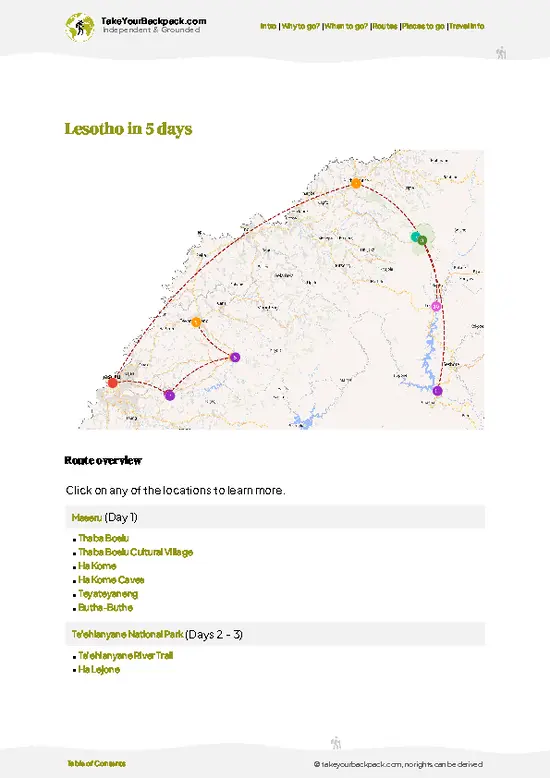
example page 0 from our offline Travel Guide for Lesotho
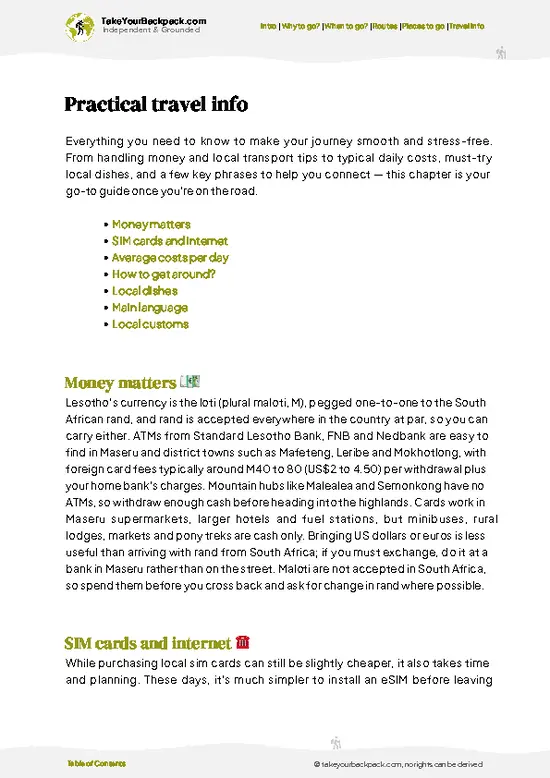
example page 1 from our offline Travel Guide for Lesotho
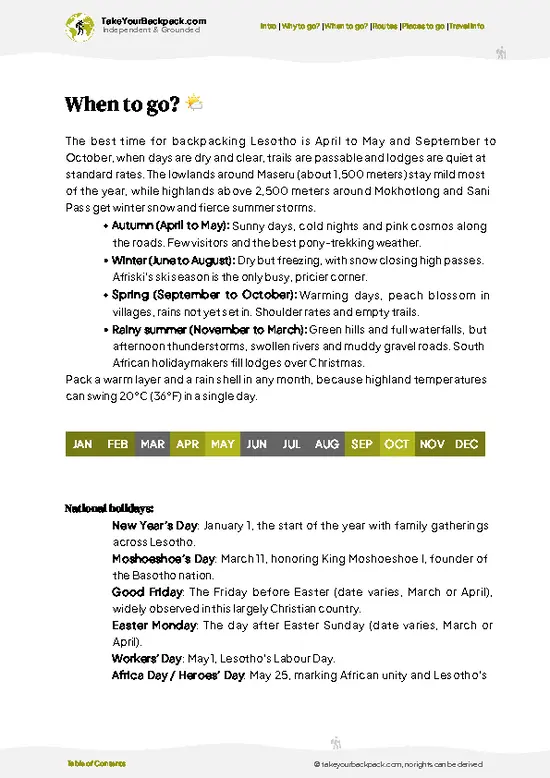
example page 2 from our offline Travel Guide for Lesotho
example page 3 from our offline Travel Guide for Lesotho
example page 4 from our offline Travel Guide for Lesotho
example page 5 from our offline Travel Guide for Lesotho
example page 6 from our offline Travel Guide for Lesotho
example page 7 from our offline Travel Guide for Lesotho
Loading the map 🌍
CLICK TO FILTER
cities
towns
villages
landmarks
national parks
hikes
attractions
festivals
regions
SHOW COUNTRY’S BESTSHOW ALL

✨ Why go?
Ranked #9 town in Lesotho
Why Peka should be on your travel list

Peka suits the traveler who wants a slow, ordinary Basotho town rather than a checklist. Its position near the Caledon River border crossing makes it a gentle first stop after leaving South Africa, and the lowland farm country around it is ideal for walking dirt tracks past maize fields, herd boys and stone-walled homesteads. Come for a night or two. The Catholic mission presence gives the settlement a calm, church-centered rhythm, and Sunday mornings fill the roads with people in their best clothes and the sound of hymns. Solo travelers and slow wanderers get the most from it, since strangers greet you and conversations start easily. Hikers and sightseers will want to push on to the bigger highland draws of Leribe District after settling in. Anyone who needs nightlife, hostels or a ready-made … read more 👉
Peka suits the traveler who wants a slow, ordinary Basotho town rather than a checklist. Its position near the Caledon River border crossing makes it a gentle first stop after leaving South Africa, and the lowland farm country around it is ideal for walking dirt tracks past maize fields, herd boys and stone-walled homesteads. Come for a night or two. The Catholic mission presence gives the settlement a calm, church-centered rhythm, and Sunday mornings fill the roads with people in their best clothes and the sound of hymns. Solo travelers and slow wanderers get the most from it, since strangers greet you and conversations start easily. Hikers and sightseers will want to push on to the bigger highland draws of Leribe District after settling in. Anyone who needs nightlife, hostels or a ready-made backpacker crowd should treat Peka as a short stop only.

💡 HighlightsMust-see experiences and standout moments

  1. Peka Bridge and the Caledon River: the crossing is what the area is best known for, and the river banks make a pleasant place to watch trucks, walkers and cattle move between two countries. Go in the morning when it is cooler. It is free and takes 30 to 60 minutes.
  2. Peka Catholic Mission: the church grounds anchor the community, and a Sunday service with full-voiced choir singing is the best way to experience it. Visitors who dress modestly are welcome. Entry is free, and a service lasts 1 to 2 hours.
  3. Village walks around Peka: the dirt lanes lead past stone and thatch homesteads, maize plots and grazing herds, with open lowland views. Early morning or late afternoon is best, and you should greet everyone you pass. A loop takes 2 to 3 hours and costs nothing.
  4. Peka market corner: small stalls sell
… read more 👉
  1. Peka Bridge and the Caledon River: the crossing is what the area is best known for, and the river banks make a pleasant place to watch trucks, walkers and cattle move between two countries. Go in the morning when it is cooler. It is free and takes 30 to 60 minutes.
  2. Peka Catholic Mission: the church grounds anchor the community, and a Sunday service with full-voiced choir singing is the best way to experience it. Visitors who dress modestly are welcome. Entry is free, and a service lasts 1 to 2 hours.
  3. Village walks around Peka: the dirt lanes lead past stone and thatch homesteads, maize plots and grazing herds, with open lowland views. Early morning or late afternoon is best, and you should greet everyone you pass. A loop takes 2 to 3 hours and costs nothing.
  4. Peka market corner: small stalls sell fresh produce, bread, airtime and cheap snacks, which makes it the easiest place to chat with locals and try fat cakes. Morning is liveliest. Budget US$1 to 3 for a snack and 30 minutes.
For day trips from Peka, head to the dinosaur footprints at Subeng, the Leribe Craft Centre in Hlotse, Bokong Nature Reserve or Katse Dam, all easier to reach once you have found a minibus on the main road. The Catholic mission service is the best choice on a first visit, because it shows you the town at its most communal.
Spotted a mistake or missing something? Contact us.

Things to do near Peka

Ratings based on Tripadvisor reviews. When you book through this link, you support our work at no extra cost to you.

🏘️ NeighborhoodsHow different areas shape the experience

Peka is a small border settlement in the Leribe District, and everything sits within a short walk of the main road running toward the Mapoteng and Maseru direction.
  • Main road strip: The tarred road is the spine. Minibus taxis honk, vendors fry fat cakes (magwinya) on charcoal, and the smell of diesel mixes with grilled meat. Corner shops sell airtime, bread and cold soda. You get a quick, honest feel for daily life and a hot snack for pennies.
  • Border post area: Close to the Mohokare (Caledon) River, the Peka bridge crossing to South Africa is where trucks queue and traders haggle over sacks and blankets. It is dusty, loud and flat. You get a front-row view of cross-border trade and the river valley beyond.
  • Residential lanes: Behind the road, dirt tracks wind between low houses, maize plots and
… read more 👉
Peka is a small border settlement in the Leribe District, and everything sits within a short walk of the main road running toward the Mapoteng and Maseru direction.
  • Main road strip: The tarred road is the spine. Minibus taxis honk, vendors fry fat cakes (magwinya) on charcoal, and the smell of diesel mixes with grilled meat. Corner shops sell airtime, bread and cold soda. You get a quick, honest feel for daily life and a hot snack for pennies.
  • Border post area: Close to the Mohokare (Caledon) River, the Peka bridge crossing to South Africa is where trucks queue and traders haggle over sacks and blankets. It is dusty, loud and flat. You get a front-row view of cross-border trade and the river valley beyond.
  • Residential lanes: Behind the road, dirt tracks wind between low houses, maize plots and fenced gardens. Dogs bark, children call greetings, and the surface turns to slick mud after rain. Walking here is easy in dry weather, and you leave with a smile and a few words of Sesotho.
  • Surrounding fields and ridges: Short walks upslope lead past sandstone outcrops and grazing herds. Wind rattles the grass and the light goes gold on the plains. You get wide views over the lowlands toward the Maloti.

⌛️ 1 daySeeing the highlights in 24 hours

Start at the Peka market corner at 8:00 AM, when produce arrives and the roadside is busy with minibus taxis, so you can buy bread and fruit and get your bearings. 8:00 AM, Peka market corner: have a fat cake and tea, then follow the main road out of the center.
9:30 AM, village lanes: wander the dirt tracks into the farmland, greeting herd boys and women carrying water. The stone homesteads and maize fields show the working life of the lowlands, and the light is soft and cool at this hour.
12:00 PM, Caledon River and Peka Bridge: walk down toward the border, watch trucks queue and cattle drift near the banks, and sit in the shade. This is the least polished part of the day, and the most telling about why Peka exists.
2:00 PM, lunch in town: find a simple eatery or shop for pap and stew, and … read more 👉
Start at the Peka market corner at 8:00 AM, when produce arrives and the roadside is busy with minibus taxis, so you can buy bread and fruit and get your bearings. 8:00 AM, Peka market corner: have a fat cake and tea, then follow the main road out of the center.
9:30 AM, village lanes: wander the dirt tracks into the farmland, greeting herd boys and women carrying water. The stone homesteads and maize fields show the working life of the lowlands, and the light is soft and cool at this hour.
12:00 PM, Caledon River and Peka Bridge: walk down toward the border, watch trucks queue and cattle drift near the banks, and sit in the shade. This is the least polished part of the day, and the most telling about why Peka exists.
2:00 PM, lunch in town: find a simple eatery or shop for pap and stew, and rest through the hottest hours.
4:00 PM, Catholic mission grounds: walk the quiet grounds and, if anyone is around, ask permission to look at the church. It is a lesser-known stop that most visitors never see, and the low sun makes the stone glow.
6:00 PM, back to the roadside: buy a cold drink from a shop, watch the evening commute and turn in early.

🌤️ When to go?When to go for the best experience

Peka is most comfortable from March to May and September to November, when days are mild and the roads are dry. Altitude of roughly 1,600 meters keeps nights cool all year.
  • Summer (Dec to Feb): Warm days of 24 to 30°C (75 to 86°F), with afternoon thunderstorms that turn dirt tracks to mud. Daylight stretches long, good for walking.
  • Autumn (Mar to May): Clear skies, 16 to 24°C (61 to 75°F), and quiet roads. Harvest time in the fields.
  • Winter (Jun to Aug): Dry and sunny by day at 8 to 17°C (46 to 63°F), but nights drop below freezing, and frost is common. Daylight is short.
  • Spring (Sep to Nov): Warming to 18 to 27°C (64 to 81°F), with green hills and early storms.
Book onward transport before the December holidays, when South African visitors crowd the border roads.

source: climatestotravel.comJANJanuary: good for travelingFEBFebruary: good for travelingMARMarch: good for travelingAPRApril: highly recommended for travelingMAYMay: highly recommended for travelingJUNJune: fair for travelingJULJuly: fair for travelingAUGAugust: good for travelingSEPSeptember: highly recommended for travelingOCTOctober: highly recommended for travelingNOVNovember: good for travelingDECDecember: good for traveling
when-to-go

✈️ The backpacker research shortcutLesotho Travel Guide

An offline-friendly backpacking guide with optimized travel routes, ranked highlights, transport advice, and the best areas to stay.
example page 0 from our offline Travel Guide for Lesotho
example page 1 from our offline Travel Guide for Lesotho
example page 2 from our offline Travel Guide for Lesotho
example page 3 from our offline Travel Guide for Lesotho
example page 4 from our offline Travel Guide for Lesotho
example page 5 from our offline Travel Guide for Lesotho
example page 6 from our offline Travel Guide for Lesotho
example page 7 from our offline Travel Guide for Lesotho
The digital guide (154 pages) contains:
✅ 35 highlights, ranked by travel appeal
✅ Optimized 2, 3 & 5-day travel routes
✅ Cities, national parks, landmarks, beaches
✅ How to get around
✅ Offline-friendly for travel without Wi-Fi
👉 Click to see all 30+ guide features

📅 Plan smarter in minutes, not weeks
✅ Month by month travel advice
✅ Festivals & national holidays
✅ Budget expectations

🗺️ Go to the right places, skip the overrated ones
✅ Honest pros & cons of destinations
✅ Top hikes, parks & viewpoints
✅ Lesser-known places most travelers miss
✅ Clear “worth it vs skip it” guidance

🛏️ Travel smoothly without rookie mistakes
✅ Best areas to stay
✅ Transport systems explained simply
✅ Common scams & safety advice
✅ SIM cards, money & practical tips

🌍 Understand the country, not just visit it
✅ Culture & traditions
✅ 52 Essential phrases & customs
✅ Festivals worth planning around
✅ Traveler-friendly historical context
✅ Insights that make places more meaningful

📱 Built for real travel conditions
✅ Fully downloadable PDF
✅ Works completely offline
✅ Optimized for phone use
✅ Useful in remote areas & buses
✅ Everything in one place
Stop searching, start planning
Get instant access to your full guide. 30‑day money-back guarantee.
+ Add another guide for just

By proceeding you agree to our terms.
Sent to your inbox immediately after payment • 100% Secure Checkout
Best Backpacking Travel Advisor 2025 tourism awardBest Backpacking
Travel Advisor
2025
What others say about Take Your Backpack Guides:
⭐⭐⭐⭐⭐
Fantastic, amazing amount of information!
⭐⭐⭐⭐⭐
My goodness this is amazing, it's what I've been looking for hats off too you!
⭐⭐⭐⭐⭐
I think this is absolutely BRILLIANT
⭐⭐⭐⭐
Very complete and informative. It's still missing places, but I gotta to commend you
⭐⭐⭐⭐⭐
This is truly amazing, thank you, can't wait to explore it with my kids!
⭐⭐⭐⭐⭐
Awesome resource, thank you!
⭐⭐⭐⭐⭐
This is amazing! Can't wait to explore the ones I haven't seen
⭐⭐⭐⭐
I love this! Well done, great idea.
⭐⭐⭐⭐⭐
Thanks for taking the time to make this gem!
⭐⭐⭐⭐⭐
This might be the best website I've ever seen.
⭐⭐⭐⭐⭐
Congratulations, and thank you so much for your work; it's incredibly valuable.
⭐⭐⭐⭐
In all seriousness I think you did a great job pointing out the important spots
⭐⭐⭐⭐⭐
10/10 very good
⭐⭐⭐⭐⭐
As someone who's only just starting to visit regularly this is awesome, thank you.
⭐⭐⭐⭐
Thank you very much! I'm going to visit my dad, it's going to be very useful!
⭐⭐⭐⭐⭐
This is really cool! We'll be travelling for the first time and this definitely come in handy.
⭐⭐⭐⭐⭐
You are now our minister of culture, congratulations 👨‍💼
⭐⭐⭐⭐⭐
Just wanted to tell you that this is a pearl! Going to follow your recommendations.
⭐⭐⭐⭐⭐
This is so cool. I'll definitely be using the resource for my travels soon.
⭐⭐⭐⭐⭐
This is very impressive! Good work.
⭐⭐⭐⭐⭐
This is an amazing and informative site. Very well done!

🛏️ Where to stay?How to pick the right area

The best budget option near Peka is to sleep in Hlotse or in a simple guesthouse along the main road, since Peka itself has very few beds. Dedicated hostels are rare in this part of Lesotho, so expect guesthouses and B&Bs at around US$20 to 45 a night instead of dorms. The main road area is the most practical because taxis pass the door, shops sell food nearby, and the walk from the road is short. Noise comes from early taxis and trucks, so bring earplugs. After dark, streets have little lighting, so arrive before evening and take a taxi if you come late. Hlotse, a short ride away, offers more … read more 👉
The best budget option near Peka is to sleep in Hlotse or in a simple guesthouse along the main road, since Peka itself has very few beds. Dedicated hostels are rare in this part of Lesotho, so expect guesthouses and B&Bs at around US$20 to 45 a night instead of dorms. The main road area is the most practical because taxis pass the door, shops sell food nearby, and the walk from the road is short. Noise comes from early taxis and trucks, so bring earplugs. After dark, streets have little lighting, so arrive before evening and take a taxi if you come late. Hlotse, a short ride away, offers more choice, shops with ATMs and regular transport links in every direction. Book ahead for December and Easter, when rooms fill up with visiting families.

🚌 Getting aroundMoving around without the hassle

Peka has no central station, so minibus taxis stop along the main road and the short walk to the shops and border takes a few minutes. Traffic is light apart from the honking taxis and the occasional truck queue near the bridge. Public transport is frequent in the morning and thins by late afternoon.
  • Walking: Everything in town fits within 1 to 2 kilometers. Dirt lanes are dusty in dry weather and slippery after rain. You see goats, laundry lines and hilltop views at a gentle pace.
  • Minibus taxis: The backbone of travel, running toward Hlotse, Teyateyaneng and Maseru for roughly US$2 to 5 depending on distance. They leave when full, mostly from early morning until late afternoon, with loud music and tight seats. You get local chatter and the cheapest ride.
  • Shared sedans (4+1): Faster than minibuses
… read more 👉
Peka has no central station, so minibus taxis stop along the main road and the short walk to the shops and border takes a few minutes. Traffic is light apart from the honking taxis and the occasional truck queue near the bridge. Public transport is frequent in the morning and thins by late afternoon.
  • Walking: Everything in town fits within 1 to 2 kilometers. Dirt lanes are dusty in dry weather and slippery after rain. You see goats, laundry lines and hilltop views at a gentle pace.
  • Minibus taxis: The backbone of travel, running toward Hlotse, Teyateyaneng and Maseru for roughly US$2 to 5 depending on distance. They leave when full, mostly from early morning until late afternoon, with loud music and tight seats. You get local chatter and the cheapest ride.
  • Shared sedans (4+1): Faster than minibuses for similar prices, a little more expensive at about US$3 to 6 on main routes. They fill quickly in the morning and are scarce after dark. You gain speed and a front-seat view of the plains.
  • Private taxi: Arranged by phone or through a guesthouse, around US$10 to 25 for short trips or the border bridge. Useful with luggage or late arrivals. You get a door-to-door ride.

👛 Costs (as of 22 October 2026)Money, prices, and spending tips

Peka costs around US$35 to 66 a day for a backpacker using local transport and simple guesthouses. Prices are in US dollars, though you pay in local currency or South African rand.
CategoryBudget RangeLocal Reality
Dorm accommodationUS$20 to 30No true dorms nearby, so a basic guesthouse room is the norm.
MealsUS$6 to 12Fat cakes, pap and meat from stalls and small cafés.
Local transportUS$3 to 8Minibus taxis and shared sedans on main routes.
Basic activities/entry feesUS$3 to 10Mostly free walks, with small guide or site fees.
Miscellaneous expensesUS$3 to 6Airtime, water and snacks.
Total Daily BudgetUS$35 to 66About US$50 for a typical day.
Cook your own meals or buy bread and fruit at the market to cut food costs.
⚠️ Prices can change and everyone travels differently, so take this as a rough guide. Hope it helps you plan your adventure!

🚌 Day tripsEasy escapes and nearby places

Peka works as a base for short rural outings, though choices are limited and most need a taxi connection.
Hlotse:
The district capital has ATMs, markets and a lively taxi rank. Allow 30 to 45 minutes each way by minibus for US$2 to 4. Go on a weekday morning, when the market is busy. Bring cash, since machines sometimes run empty.

Teyateyaneng:
Known for its craft studios, weaving and Basotho pottery, this town is a pleasant half-day trip. Expect about an hour by taxi for US$3 to 6. Buy mohair rugs directly from workshops and check weights before paying. Dry months are best.
👉 Explore Teyateyaneng
Maseru:
The capital is a long but feasible day, about 1.5 to 2 hours each way for US$4 to 8. Visit the Basotho Hat craft stalls and Kingdom markets. Many first-timers leave too late and miss the last … read more 👉
Peka works as a base for short rural outings, though choices are limited and most need a taxi connection.
Hlotse:
The district capital has ATMs, markets and a lively taxi rank. Allow 30 to 45 minutes each way by minibus for US$2 to 4. Go on a weekday morning, when the market is busy. Bring cash, since machines sometimes run empty.

Teyateyaneng:
Known for its craft studios, weaving and Basotho pottery, this town is a pleasant half-day trip. Expect about an hour by taxi for US$3 to 6. Buy mohair rugs directly from workshops and check weights before paying. Dry months are best.
👉 Explore Teyateyaneng
Maseru:
The capital is a long but feasible day, about 1.5 to 2 hours each way for US$4 to 8. Visit the Basotho Hat craft stalls and Kingdom markets. Many first-timers leave too late and miss the last taxis home, so start early.
👉 Explore Maseru
Subeng River dinosaur footprints:
Near Hlotse, fossil tracks sit on a rock shelf by the river. Budget about US$10 to 20 with transport and a local guide. Go in dry months, when the river is low.

🛡️ SafetySafety Tips and Common Scams in Peka

Peka is a quiet, low-crime border settlement where the main issues are petty theft and the occasional pushy hustler near the bridge. Keep phones and cash out of sight around taxi stops and the border area, where crowds make pickpocketing easier. Solo travelers, including women, generally have no trouble in daylight, but streets are poorly lit, so avoid walking dark lanes at night and take a taxi instead. Money changers near the border may offer poor rates, so use banks or official counters. Roads outside town can have livestock and potholes, so avoid driving after dark. Greet people in Sesotho with a simple “Khotso” and you will usually meet warmth and help.

FAQFrequently asked questions about Peka

Peka is worth a short stop rather than a destination, mainly for the border crossing atmosphere and rural lanes. Its appeal is daily life along the Mohokare River and easy access to Hlotse, about 30 to 45 minutes away. Most travelers use it as a pass-through toward the Maloti highlands.
A few hours to one night is enough in Peka. Add a second day only if you plan walks into the surrounding ridges or a trip to Hlotse or Teyateyaneng, each under an hour by taxi. Guesthouses cost around US$20 to 45 a night.
Peka can be reached as a day trip from Maseru, roughly 1.5 to 2 hours each way by minibus for about US$4 to 8. That leaves limited time on the ground, so go early and leave before the late-afternoon taxis thin out. It also works from Hlotse in under an hour.
⚠️ Things can change over time, so always validate details locally before you go.

Other Basotho towns near Peka

Explore more nearby:

  • Teyateyaneng—craft markets, weaving workshops, roadside town| 20 km away
  • Ha Kome—cave dwellings, cultural site, hillside settlement| 32 km away
  • Ha Ntsi—small village, rural landscape, community life| 50 km away

💡 Not sure where to go next?
Create a personalized itinerary for Lesotho including Peka and the places that fit your trip.

Generate my itinerary

👉 Discover all towns

Or checkout all Lesotho has to offer (think cities, towns, villages, national parks, hikes, beaches, festivals)
Country photo of Lesotho

We 💚 feedbackWhat to keep in mind

Peka works best as a calm first or last night on a northern Lesotho loop, paired with Hlotse for crafts and Bokong or Katse for the highlands. I would go on a Sunday to hear the church singing, and bring cash and a headlamp, because the evenings are dark.

✍️ Help improve this page!
The information on this page is based on in-depth research, insights shared by experienced travelers, and feedback from the local travel community in Lesotho. While every effort is made to keep the information accurate and current, conditions can change — so if you spot anything incorrect or outdated, please get in touch.


🙋‍♂️ Give feedback

👋 Meet the founderWho’s Behind Take Your Backpack?

Johan, backpacker and founder of TakeYourBackpackHi, I’m Johan (Netherlands 🇳🇱), the creator of TakeYourBackpack. Over the past 3 decades, I’ve backpacked through 90+ countries across six continents, gaining extensive experience with independent travel, long-term trips, and overland routes.

This site is built on a combination of firsthand travel experience and carefully curated insights from other backpackers. Many guides are based on places I’ve personally visited, while others bring together tips, observations, and practical advice shared by trusted travelers I’ve met along the way.

The goal is to provide realistic, experience-driven guidance — not generic itineraries — so you can explore destinations with better context, clearer expectations, and more confidence.