×

Lesotho🇱🇸 | regionsTsoelike ValleyRiver gorge rim, rondavel hamlets, herders’ ridges, self-reliant walking | things to do and best time to go

Explore Maloti MountainsExplore Semonkong

Backpacking in Tsoelike Valley
🏆 Top pickregion ranked #1
By Johan Kruseman 🇳🇱 | Updated October 22, 2026

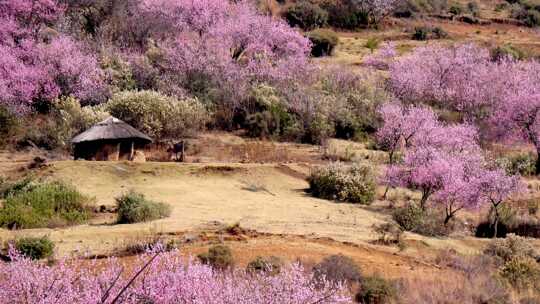
Tsoelike Valley is best known for the steep, terraced slopes where the Tsoelike River cuts down toward the Senqu, the river the rest of the world calls the Orange. It sits in the southeast of Lesotho, in the Qacha’s Nek district, just north of the border town of Qacha’s Nek. On the ground it is dirt tracks, stone-walled kraals, round thatched rondavels and herd boys whistling their sheep along ledges. You get a view with no souvenir stalls in it. Mornings are sharp and smell of dung fires. Midday sun burns the grass pale, and afternoon storms turn clay paths slick. Paved roads thin out quickly, signs are rare, and shops are small, so you plan and carry your own supplies. What you get back is silence, a wave from every passerby and a real look at village life. Hikers and slow travelers who like self-reliance will love it. Anyone who needs nightlife, polished tours or fixed schedules will be frustrated.

Discover everything you want to know in the 📖 Lesotho Travel Guide.


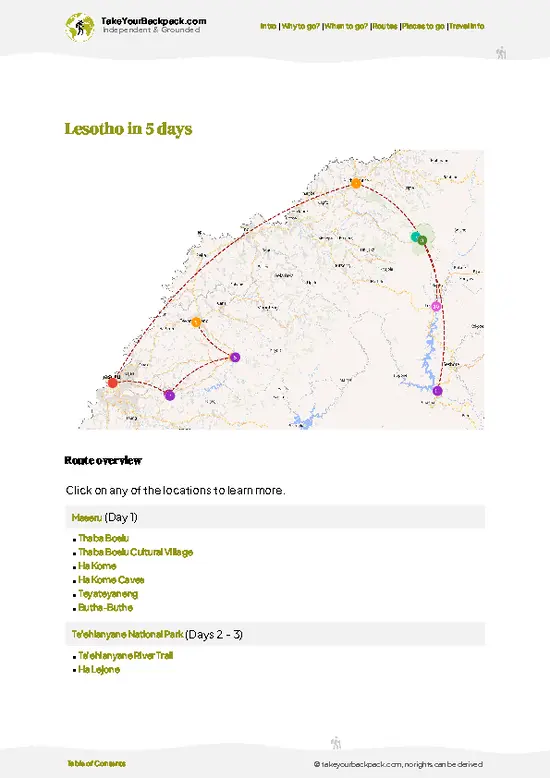
example page 0 from our offline Travel Guide for Lesotho
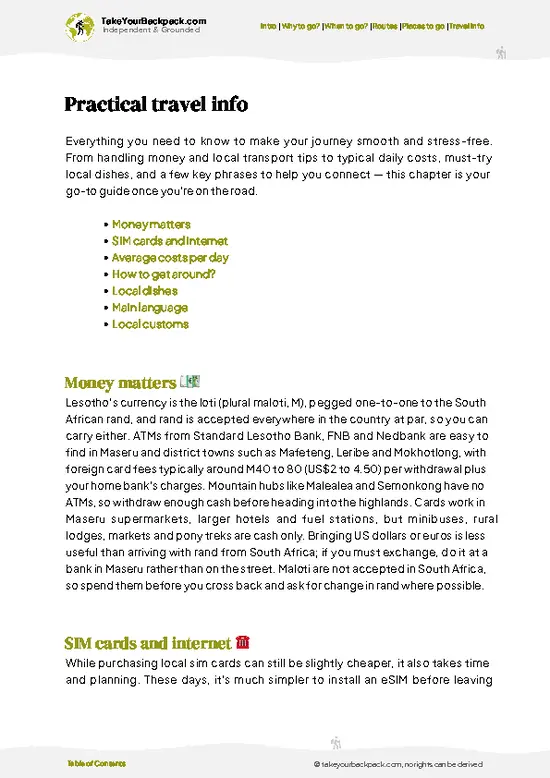
example page 1 from our offline Travel Guide for Lesotho
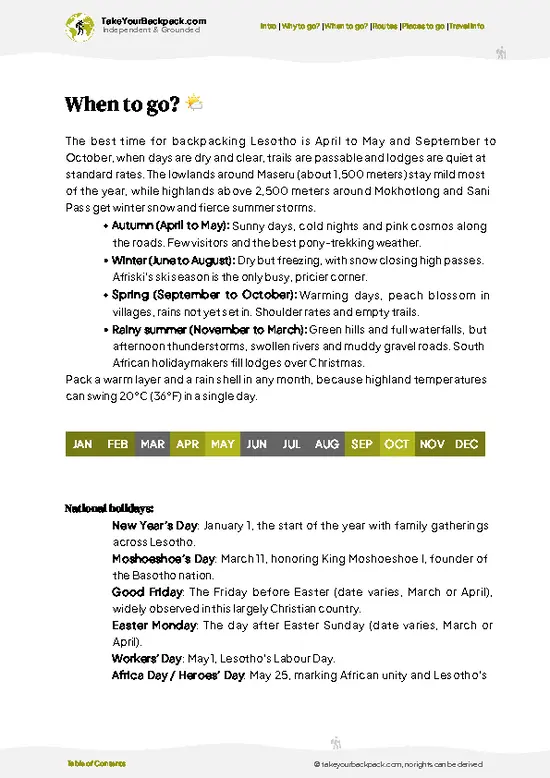
example page 2 from our offline Travel Guide for Lesotho
example page 3 from our offline Travel Guide for Lesotho
example page 4 from our offline Travel Guide for Lesotho
example page 5 from our offline Travel Guide for Lesotho
example page 6 from our offline Travel Guide for Lesotho
example page 7 from our offline Travel Guide for Lesotho
Loading the map 🌍
CLICK TO FILTER
cities
towns
villages
landmarks
national parks
hikes
attractions
festivals
regions
SHOW COUNTRY’S BESTSHOW ALL

✨ Why go?
Ranked #1 region in Lesotho
What makes it a must-see region

Tsoelike Valley rewards backpackers who want the southern Lesotho highlands without the crowds of the better-known pony-trekking hubs. Its first draw is the Tsoelike River gorge and the Senqu River beyond it, a landscape you can read on foot, dropping from grassy ridges to river flats and climbing out again by shepherd paths. Everything here is walkable, so you can sleep in one village, hike to the next and never need a vehicle for the exploring itself. The second draw is the Qacha’s Nek border town close by, which gives you a bank, a market, fuel and a place to restock before you head back into the hills. Seeing a place like this slowly means you notice the details: how fields are terraced, how blankets signal weather and season, how villagers read the sky before leaving a pass. Staying a … read more 👉
Tsoelike Valley rewards backpackers who want the southern Lesotho highlands without the crowds of the better-known pony-trekking hubs. Its first draw is the Tsoelike River gorge and the Senqu River beyond it, a landscape you can read on foot, dropping from grassy ridges to river flats and climbing out again by shepherd paths. Everything here is walkable, so you can sleep in one village, hike to the next and never need a vehicle for the exploring itself. The second draw is the Qacha’s Nek border town close by, which gives you a bank, a market, fuel and a place to restock before you head back into the hills. Seeing a place like this slowly means you notice the details: how fields are terraced, how blankets signal weather and season, how villagers read the sky before leaving a pass. Staying a few nights in one valley, instead of ticking off sights, is how you start to understand rural Lesotho. Go with patience and a sturdy pair of boots.

💡 HighlightsEssential experiences to have while visiting Tsoelike Valley

  1. Tsoelike River Gorge: The valley’s defining feature, a deep cut with steep walls where you can walk the rim and look down on the water and the patchwork of fields below.
  2. Senqu River Valley: The big river that drains much of Lesotho flows past here. Its banks are quiet, warm and lined with small farms, a very different atmosphere from the cold plateau above.
  3. Qacha’s Nek Pass and Border Post: The high mountain road crossing into South Africa. The pass has wide views over the district and is a good place to understand how the highlands connect to the outside.
  4. Qacha’s Nek Town Market: A small, practical market where villagers trade in produce, blankets and everyday goods. Come to stock up and chat, not to browse for souvenirs.
  5. Village Walks Between Rondavel Settlements: Lesser known, and the best
… read more 👉
  1. Tsoelike River Gorge: The valley’s defining feature, a deep cut with steep walls where you can walk the rim and look down on the water and the patchwork of fields below.
  2. Senqu River Valley: The big river that drains much of Lesotho flows past here. Its banks are quiet, warm and lined with small farms, a very different atmosphere from the cold plateau above.
  3. Qacha’s Nek Pass and Border Post: The high mountain road crossing into South Africa. The pass has wide views over the district and is a good place to understand how the highlands connect to the outside.
  4. Qacha’s Nek Town Market: A small, practical market where villagers trade in produce, blankets and everyday goods. Come to stock up and chat, not to browse for souvenirs.
  5. Village Walks Between Rondavel Settlements: Lesser known, and the best way to see the valley. Footpaths link hamlets of thatched, stone-built homes, and greetings along the way are warm. Ask permission before staying or photographing.
  6. Herders’ Ridge Tracks: Locals know the high grassy ridges above the gorge, where shepherds in blankets and gumboots graze sheep and goats. The views run across layer after layer of mountain.
  7. Mission Church Settlements near Qacha’s Nek: Old stone mission churches mark the district’s history. Another place locals love and few outsiders visit, good for a quiet stop.
Tsoelike Valley can be covered in about two to three days if you stay local and walk the main sights at an easy pace.
Spotted a mistake or missing something? Contact us.

Things to do near Tsoelike Valley

Ratings based on Tripadvisor reviews. When you book through this link, you support our work at no extra cost to you.

⌛️ 5 daysA smart one-week plan

Day 1: Qacha’s Nek: Start in the border town, because supplies, cash and fuel are all easier to find here than in the hills. Public transport in this part of Lesotho runs on shared minibuses that leave when full and thin out by afternoon, so arriving early sets the pace for everything else. Spend the afternoon at the market and walk up toward the pass for a first look at the terrain.
Day 2: Tsoelike Valley: Travel into the valley while the transport is still running, then drop your bags at a village homestay or guesthouse. Use the rest of the day for a gentle walk along the river and the lower terraces. Doing it this way lets you read the landscape before you attempt anything long.
Day 3: Tsoelike River Gorge and the Ridges: Make this your big walking day. Go along the rim early, when the air … read more 👉
Day 1: Qacha’s Nek: Start in the border town, because supplies, cash and fuel are all easier to find here than in the hills. Public transport in this part of Lesotho runs on shared minibuses that leave when full and thin out by afternoon, so arriving early sets the pace for everything else. Spend the afternoon at the market and walk up toward the pass for a first look at the terrain.
Day 2: Tsoelike Valley: Travel into the valley while the transport is still running, then drop your bags at a village homestay or guesthouse. Use the rest of the day for a gentle walk along the river and the lower terraces. Doing it this way lets you read the landscape before you attempt anything long.
Day 3: Tsoelike River Gorge and the Ridges: Make this your big walking day. Go along the rim early, when the air is cool, and loop back along the herders’ tracks above. Without regular vehicles, your feet set the schedule, so pack lunch, water and a rain layer. This is the day that justifies the whole trip: the gorge, the layered ridges and the silence all come together.
Day 4: Senqu River Side Trip: Detour down toward the Senqu on foot or with a local guide. The climate is warmer here and the fields are lush, and it fits the route because you return to the same village by evening without extra transport.
Day 5: Return to Qacha’s Nek: Catch a minibus back in the morning, since afternoon services are unreliable. Spend the last hours in town visiting a mission church or stocking up before moving on.

🌤️ When to go?Choosing the right time of year

Tsoelike Valley is easiest to hike from October to April, when trails are dry and the river crossings are manageable. Altitude is high, so everything runs cooler than the lowlands.
  • Summer (November to February): Days reach 20 to 27°C (68 to 81°F), nights drop to 8 to 12°C (46 to 54°F). Afternoon thunderstorms are common, rivers swell fast, and daylight stretches to about 14 hours. Green hillsides and waterfalls are at their best.
  • Autumn (March to May): Clear skies, 12 to 22°C (54 to 72°F) by day, near freezing by May nights. Good visibility for long treks and the quietest trails.
  • Winter (June to August): Days of 5 to 14°C (41 to 57°F), nights well below -5°C (23°F). Snow can close the high passes and the dirt roads. Daylight is only about 10 hours. Pony trekking operators may not run.
  • Spring (September
… read more 👉
Tsoelike Valley is easiest to hike from October to April, when trails are dry and the river crossings are manageable. Altitude is high, so everything runs cooler than the lowlands.
  • Summer (November to February): Days reach 20 to 27°C (68 to 81°F), nights drop to 8 to 12°C (46 to 54°F). Afternoon thunderstorms are common, rivers swell fast, and daylight stretches to about 14 hours. Green hillsides and waterfalls are at their best.
  • Autumn (March to May): Clear skies, 12 to 22°C (54 to 72°F) by day, near freezing by May nights. Good visibility for long treks and the quietest trails.
  • Winter (June to August): Days of 5 to 14°C (41 to 57°F), nights well below -5°C (23°F). Snow can close the high passes and the dirt roads. Daylight is only about 10 hours. Pony trekking operators may not run.
  • Spring (September to October): Variable, 10 to 22°C (50 to 72°F), with wind and occasional late snow. Prices stay flat year round and crowds are almost nonexistent.
Book a village stay a day ahead in summer, since storms can delay your arrival on the unpaved road.


source: climatestotravel.comJANJanuary: highly recommended for travelingFEBFebruary: good for travelingMARMarch: highly recommended for travelingAPRApril: highly recommended for travelingMAYMay: fair for travelingJUNJune: below average for travelingJULJuly: below average for travelingAUGAugust: below average for travelingSEPSeptember: fair for travelingOCTOctober: excellent for travelingNOVNovember: highly recommended for travelingDECDecember: good for traveling
when-to-go

✈️ The backpacker research shortcutLesotho Travel Guide

An offline-friendly backpacking guide with optimized travel routes, ranked highlights, transport advice, and the best areas to stay.
example page 0 from our offline Travel Guide for Lesotho
example page 1 from our offline Travel Guide for Lesotho
example page 2 from our offline Travel Guide for Lesotho
example page 3 from our offline Travel Guide for Lesotho
example page 4 from our offline Travel Guide for Lesotho
example page 5 from our offline Travel Guide for Lesotho
example page 6 from our offline Travel Guide for Lesotho
example page 7 from our offline Travel Guide for Lesotho
The digital guide (154 pages) contains:
✅ 35 highlights, ranked by travel appeal
✅ Optimized 2, 3 & 5-day travel routes
✅ Cities, national parks, landmarks, beaches
✅ How to get around
✅ Offline-friendly for travel without Wi-Fi
👉 Click to see all 30+ guide features

📅 Plan smarter in minutes, not weeks
✅ Month by month travel advice
✅ Festivals & national holidays
✅ Budget expectations

🗺️ Go to the right places, skip the overrated ones
✅ Honest pros & cons of destinations
✅ Top hikes, parks & viewpoints
✅ Lesser-known places most travelers miss
✅ Clear “worth it vs skip it” guidance

🛏️ Travel smoothly without rookie mistakes
✅ Best areas to stay
✅ Transport systems explained simply
✅ Common scams & safety advice
✅ SIM cards, money & practical tips

🌍 Understand the country, not just visit it
✅ Culture & traditions
✅ 52 Essential phrases & customs
✅ Festivals worth planning around
✅ Traveler-friendly historical context
✅ Insights that make places more meaningful

📱 Built for real travel conditions
✅ Fully downloadable PDF
✅ Works completely offline
✅ Optimized for phone use
✅ Useful in remote areas & buses
✅ Everything in one place
Stop searching, start planning
Get instant access to your full guide. 30‑day money-back guarantee.
+ Add another guide for just

By proceeding you agree to our terms.
Sent to your inbox immediately after payment • 100% Secure Checkout
Best Backpacking Travel Advisor 2025 tourism awardBest Backpacking
Travel Advisor
2025
What others say about Take Your Backpack Guides:
⭐⭐⭐⭐⭐
Fantastic, amazing amount of information!
⭐⭐⭐⭐⭐
My goodness this is amazing, it's what I've been looking for hats off too you!
⭐⭐⭐⭐⭐
I think this is absolutely BRILLIANT
⭐⭐⭐⭐
Very complete and informative. It's still missing places, but I gotta to commend you
⭐⭐⭐⭐⭐
This is truly amazing, thank you, can't wait to explore it with my kids!
⭐⭐⭐⭐⭐
Awesome resource, thank you!
⭐⭐⭐⭐⭐
This is amazing! Can't wait to explore the ones I haven't seen
⭐⭐⭐⭐
I love this! Well done, great idea.
⭐⭐⭐⭐⭐
Thanks for taking the time to make this gem!
⭐⭐⭐⭐⭐
This might be the best website I've ever seen.
⭐⭐⭐⭐⭐
Congratulations, and thank you so much for your work; it's incredibly valuable.
⭐⭐⭐⭐
In all seriousness I think you did a great job pointing out the important spots
⭐⭐⭐⭐⭐
10/10 very good
⭐⭐⭐⭐⭐
As someone who's only just starting to visit regularly this is awesome, thank you.
⭐⭐⭐⭐
Thank you very much! I'm going to visit my dad, it's going to be very useful!
⭐⭐⭐⭐⭐
This is really cool! We'll be travelling for the first time and this definitely come in handy.
⭐⭐⭐⭐⭐
You are now our minister of culture, congratulations 👨‍💼
⭐⭐⭐⭐⭐
Just wanted to tell you that this is a pearl! Going to follow your recommendations.
⭐⭐⭐⭐⭐
This is so cool. I'll definitely be using the resource for my travels soon.
⭐⭐⭐⭐⭐
This is very impressive! Good work.
⭐⭐⭐⭐⭐
This is an amazing and informative site. Very well done!

🛏️ Where to stay?Best areas to stay in Lesotho

Tsoelike Valley itself, in the main settlement along the river, is the best base for most backpackers because it has the road access, the small shops and the guides for onward walks. Stay here first for a day or two while you arrange ponies, check river levels and buy supplies. Evenings are quiet and social in a low-key way, with a few locals gathering near the shops and travelers swapping route notes around a shared table.
For a deeper look at village life, move to one of the smaller settlements higher up the valley. Homestay-style stays and basic village lodging put you among stone-and-thatch … read more 👉
Tsoelike Valley itself, in the main settlement along the river, is the best base for most backpackers because it has the road access, the small shops and the guides for onward walks. Stay here first for a day or two while you arrange ponies, check river levels and buy supplies. Evenings are quiet and social in a low-key way, with a few locals gathering near the shops and travelers swapping route notes around a shared table.
For a deeper look at village life, move to one of the smaller settlements higher up the valley. Homestay-style stays and basic village lodging put you among stone-and-thatch rondavels, with herders passing at dawn and a sky full of stars at night. You will likely be one of very few visitors, so conversation with hosts is easy and often the highlight. Bring a sleeping bag, because nights are cold even in summer.
Qacha’s Nek, the nearest sizable town, is a useful fallback on the way in or out. It has more beds, shops, ATMs and a chance to meet other travelers heading to the border or the south. It is safer to arrive there with daylight to spare than to push on to the valley after dark. Expect basic dorm or room rates of about US$10 to 25 across the region, more for private lodge rooms.

🚌 Getting aroundTransportation options and practical tips

From the roadside minibus stop in Tsoelike’s main settlement, a short walk along the gravel road leads to the clinic, the small shops and the river edge, and that is the whole center. Most backpackers reach the valley by shared minibus from Qacha’s Nek or Mohale’s Hoek and then walk, ride a pony or hitch between villages. Services are slow and thin, schedules are loose, and weather can undo any plan, so build in spare days.
  • Shared minibus taxi: The workhorse, costing roughly US$3 to 10 depending on the leg, leaving when full, often in the early morning. You sit hip to hip with sacks of maize meal and blankets, the radio rattling, and you hear the valley gossip all the way down the gorge.
  • Walking: Between neighboring villages it takes 2 to 6 hours on footpaths worn smooth by herders. Free, silent
… read more 👉
From the roadside minibus stop in Tsoelike’s main settlement, a short walk along the gravel road leads to the clinic, the small shops and the river edge, and that is the whole center. Most backpackers reach the valley by shared minibus from Qacha’s Nek or Mohale’s Hoek and then walk, ride a pony or hitch between villages. Services are slow and thin, schedules are loose, and weather can undo any plan, so build in spare days.
  • Shared minibus taxi: The workhorse, costing roughly US$3 to 10 depending on the leg, leaving when full, often in the early morning. You sit hip to hip with sacks of maize meal and blankets, the radio rattling, and you hear the valley gossip all the way down the gorge.
  • Walking: Between neighboring villages it takes 2 to 6 hours on footpaths worn smooth by herders. Free, silent apart from cowbells and wind, and you arrive with dust on your boots and a cup of tea offered at the first door.
  • Basotho pony: Local guides arrange rides for about US$15 to 30 a day, with the guide’s fee often extra. The ponies are sure-footed on loose shale ledges, and from the saddle you see the river canyon drop away below your knee.
  • Hitching: Pickups and the occasional 4x4 pass a few times a day. A ride costs about US$2 to 8 and puts you in the open bed with the cold air, red dust and a sweeping view of terraced slopes.
  • Private 4x4 transfer: Arranged through lodges or guides in Qacha’s Nek, about US$100 to 180 for the vehicle. Pricey, but it is the only dependable option after heavy rain or snow, and it climbs ruts that minibuses refuse.
Carry small cash in the local currency, since nobody makes change for large notes, and start every journey at dawn so you are not caught on the road by afternoon storms.

🍲 FoodLocal Cuisine & Drinks

Food in Tsoelike Valley is plain highland cooking, and it tastes better after a day of walking. The staple is papa, a stiff maize porridge you pinch into balls and dip into moroho, stewed wild or cultivated greens, often cooked down with onion and a little salt until silky and slightly bitter. Mutton and chicken appear on special days, and steamed bread (likhobe is a mix of beans and maize) is a hearty fallback. Expect to spend about US$2 to 6 on a simple meal.
Eating options are limited. Small village shops sell tinned fish, biscuits, bread and soft drinks, and a few homes cook for guests if you ask ahead. Bring snacks like nuts and oats for trail days. Lodges and guesthouses serve set dinners at around US$6 to 12.
The local drink is joala, a sour, cloudy sorghum beer sold in plastic buckets … read more 👉
Food in Tsoelike Valley is plain highland cooking, and it tastes better after a day of walking. The staple is papa, a stiff maize porridge you pinch into balls and dip into moroho, stewed wild or cultivated greens, often cooked down with onion and a little salt until silky and slightly bitter. Mutton and chicken appear on special days, and steamed bread (likhobe is a mix of beans and maize) is a hearty fallback. Expect to spend about US$2 to 6 on a simple meal.
Eating options are limited. Small village shops sell tinned fish, biscuits, bread and soft drinks, and a few homes cook for guests if you ask ahead. Bring snacks like nuts and oats for trail days. Lodges and guesthouses serve set dinners at around US$6 to 12.
The local drink is joala, a sour, cloudy sorghum beer sold in plastic buckets and shared in a circle, thick and faintly fizzy with a yeasty tang. Locals also drink hot sweet tea with milk. Welcome it with both hands and a small thank-you.
Customs are simple: wash hands before eating, accept food when offered, and take a modest portion. Everything is shared from a common pot, so go slowly and leave something on the plate for politeness.

FAQFrequently asked questions about Tsoelike Valley

Plan 3 to 5 days in Tsoelike Valley if you want to walk between villages and see the gorge properly. One day is barely enough to get in and settle after the long road from Qacha’s Nek, which takes several hours on rough surfaces. Add 2 or 3 more days if you plan a pony trek into the highlands.
In Tsoelike Valley you rely on shared minibus taxis, hitching and your own feet. Minibuses from Qacha’s Nek cost about US$3 to 10 and leave when full, usually in the morning. Ponies with a guide run roughly US$15 to 30 a day, and walks between neighboring villages take 2 to 6 hours.
Tsoelike Valley is known for its deep river gorge, traditional Basotho villages and remote trekking far from any tourist crowds. Stone-and-thatch homes, herders on horseback and terraced fields define the views. Travelers come for 2 to 5 day treks, pony rides and a chance to stay in village homes for about US$10 to 25 a night.
⚠️ Things can change over time, so always validate details locally before you go.

More places to explore across Lesotho

Tsoelike Valley isn’t the only highlight in Lesotho. Explore all what Lesotho has to offer.
Country photo of Lesotho

We 💚 feedbackWhat to keep in mind

Tsoelike Valley gives its best moments to people who stop and greet everyone they pass, because a short chat often leads to a meal, a shortcut or a bed. I would carry small bills, a rain shell and enough food for a full day, and skip any plan that depends on a minibus after midday.

✍️ Help improve this page!
The information on this page is based on in-depth research, insights shared by experienced travelers, and feedback from the local travel community in Lesotho. While every effort is made to keep the information accurate and current, conditions can change — so if you spot anything incorrect or outdated, please get in touch.


🙋‍♂️ Give feedback

👋 Meet the founderWho’s Behind Take Your Backpack?

Johan, backpacker and founder of TakeYourBackpackHi, I’m Johan (Netherlands 🇳🇱), the creator of TakeYourBackpack. Over the past 3 decades, I’ve backpacked through 90+ countries across six continents, gaining extensive experience with independent travel, long-term trips, and overland routes.

This site is built on a combination of firsthand travel experience and carefully curated insights from other backpackers. Many guides are based on places I’ve personally visited, while others bring together tips, observations, and practical advice shared by trusted travelers I’ve met along the way.

The goal is to provide realistic, experience-driven guidance — not generic itineraries — so you can explore destinations with better context, clearer expectations, and more confidence.