

×

Liberia🇱🇷 | hikesNimba Mountainsironstone peaks, montane grasslands, endemic species | things to do and best time to go

Explore Liberia National Culture Troupe FestivalExplore Wologizi Mountain Trail

Backpacking in Nimba Mountains
🏆 Top pickhike ranked #1
By Johan Kruseman 🇳🇱 | Updated June 5, 2026

You face a real fork in the road with the Nimba Mountains: do you commit to the sweat and scramble of Liberia’s toughest hike, or do you settle for the gentler, more accessible trails in Sapo National Park? This isn’t just a question of stamina—it’s about what kind of story you want to tell when you’re back home. The Nimba Mountains rise in Liberia’s far northeast, right up against the borders with Guinea and Côte d’Ivoire, a jagged spine of green that looks like it was punched up from the earth by some ancient fist. The hike itself is a lung-buster—steep, humid, and relentless, with every step through thick forest and grassland earning you a new layer of sweat and a better view. The payoff? A summit panorama that stretches across three countries, and the kind of silence that makes you forget your phone exists. Getting to the trailhead is half the battle—public transport is patchy at best, and you’ll likely need to negotiate a moto ride from the last dusty town. Compared to Sapo’s flatter, wildlife-rich walks, Nimba is raw, remote, and absolutely worth the effort if you want to feel like you’ve truly crossed a line.

Discover everything you want to know in the 📖 Liberia Travel Guide.
Best time to go: November - April
Duration: 3 to 5 days
Distance: 10 to 30 kilometers
Total ascent: 1,440 meters


Get your Liberia guide
61 ranked highlights, routes & tips, works offline (260 pages)
Loading the map 🌍
CLICK TO FILTER
cities
towns
landmarks
national parks
hikes
beaches
attractions
festivals
regions
SHOW COUNTRY’S BESTSHOW ALL

✨ Why go?
Ranked #1 hike in Liberia
What makes it a must-see hike

The Nimba Mountains in Liberia draw backpackers for a reason. The scenery-to-effort ratio is off the charts. You’ll sweat it out on the trails, but every step rewards you with breathtaking views of lush valleys and distant peaks. The public transport access is surprisingly smooth; hop on a shared taxi from Monrovia, and you’re on your way to adventure without breaking the bank.

Cost? It’s a steal. You can camp or find budget-friendly lodges that keep your wallet happy. The flexible distances cater to all levels. Whether you’re up for a quick day hike or a multi-day trek, you can tailor your experience.

What really sets this hike apart is how seamlessly it fits into a longer backpacking route. Pair it with a visit to the nearby Sapo National Park or the coastal towns for a well-rounded trip. … read more 👉
The Nimba Mountains in Liberia draw backpackers for a reason. The scenery-to-effort ratio is off the charts. You’ll sweat it out on the trails, but every step rewards you with breathtaking views of lush valleys and distant peaks. The public transport access is surprisingly smooth; hop on a shared taxi from Monrovia, and you’re on your way to adventure without breaking the bank.

Cost? It’s a steal. You can camp or find budget-friendly lodges that keep your wallet happy. The flexible distances cater to all levels. Whether you’re up for a quick day hike or a multi-day trek, you can tailor your experience.

What really sets this hike apart is how seamlessly it fits into a longer backpacking route. Pair it with a visit to the nearby Sapo National Park or the coastal towns for a well-rounded trip.

After a day on the trails, nothing beats that first cold beer at a local spot, savoring the moment as the sun dips behind the mountains. The Nimba Mountains aren’t just a hike; they’re a pulse, a rhythm that keeps you moving and craving more.
Want to include Nimba Mountains in your Liberia route?
Create a personalized Liberia itinerary that includes Nimba Mountains and the places that fit your trip — based on your travel style, budget, and available time. Get your route in seconds.

Generate my trip

💡 HighlightsDon't-miss highlights and experiences

  1. Ridge-line panoramas — The spine of the Nimba massif gives you sharp, exposed ridgelines where the sky and valley meet; on a clear morning you get long, layered views that feel alpine even though you’re in West Africa. The combination of steep escarpments and sudden drops makes every viewpoint dramatic — perfect for sunrise, but expect wind and a bit of vertigo if you’re not used to exposed routes.
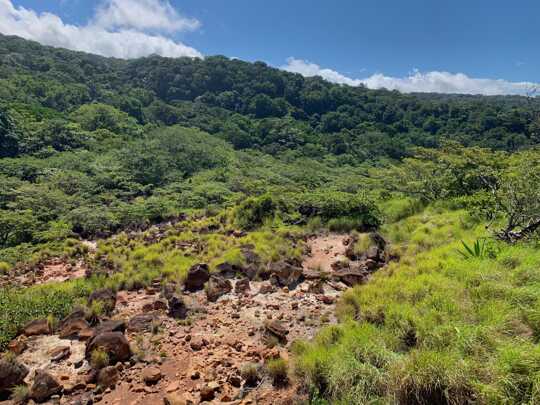
  2. Mosaic of cloud forest and highland grasslands — The plant communities change fast as you climb: thick, mossy montane forest gives way to open, iron-rich grasslands and rocky outcrops within a few hundred metres. That abrupt transition creates landscapes you don’t see on lowland trails — orchids, giant ferns and weird, stunted trees in pockets of mist.
  3. Endemic wildlife encounters — Nimba is
read more 👉
  1. Ridge-line panoramas — The spine of the Nimba massif gives you sharp, exposed ridgelines where the sky and valley meet; on a clear morning you get long, layered views that feel alpine even though you’re in West Africa. The combination of steep escarpments and sudden drops makes every viewpoint dramatic — perfect for sunrise, but expect wind and a bit of vertigo if you’re not used to exposed routes.
  2. Mosaic of cloud forest and highland grasslands — The plant communities change fast as you climb: thick, mossy montane forest gives way to open, iron-rich grasslands and rocky outcrops within a few hundred metres. That abrupt transition creates landscapes you don’t see on lowland trails — orchids, giant ferns and weird, stunted trees in pockets of mist.
  3. Endemic wildlife encounters — Nimba is famous for species found nowhere else, so hikes here are as much about tiny, oddball animals as big scenery. Look for specialized amphibians and small mammals, and a healthy assemblage of forest birds; sightings aren’t guaranteed, but the chance to see Nimba-specific wildlife is what sets this range apart from typical West African jungles.
  4. Clear mountain streams and waterfalls — The massif feeds a network of cold, fast streams that cut dramatic gullies and drop in small waterfalls — great spots to cool off or to sit for a while and listen. Trails often follow these watercourses, which makes for lush, photogenic sections and a pleasant contrast to the exposed ridge walking.
  5. Local culture and the mountain’s mining history — Villages around the base put a human face on the place: local guides, spoken stories about the mountain, and visible traces of past iron-ore activity. That mix of traditional village life and the conservation/mining history gives the hike extra texture — you’re not just walking through scenery, you’re moving through a landscape with a complicated past and engaged communities today.
Spotted a mistake or missing something? Contact us.

🌤️ When to go?Choosing the right time of year


  • Weather: The dry season from November to April is your best bet. Trails stay firm, and the air clears out, cutting through the usual West African humidity. Rain during the wet season (May to October) turns paths into mudslides and rivers into barriers.

  • Temperature: Daytime highs hover around 25-30°C (77-86°F) in the dry months, perfect for pushing uphill without overheating. Nights can dip to 15°C (59°F), so pack layers. The wet season brings muggy heat, often above 30°C (86°F), sapping energy fast.

  • Daylight Hours: Liberia offers roughly 11-12 hours of daylight year-round. Still, the dry season’s clearer skies mean you’ll get more reliable light for early starts and late finishes.

  • Crowds: The Nimba Mountains don’t draw big crowds, but the dry season sees a modest uptick in hikers.
read more 👉

  • Weather: The dry season from November to April is your best bet. Trails stay firm, and the air clears out, cutting through the usual West African humidity. Rain during the wet season (May to October) turns paths into mudslides and rivers into barriers.

  • Temperature: Daytime highs hover around 25-30°C (77-86°F) in the dry months, perfect for pushing uphill without overheating. Nights can dip to 15°C (59°F), so pack layers. The wet season brings muggy heat, often above 30°C (86°F), sapping energy fast.

  • Daylight Hours: Liberia offers roughly 11-12 hours of daylight year-round. Still, the dry season’s clearer skies mean you’ll get more reliable light for early starts and late finishes.

  • Crowds: The Nimba Mountains don’t draw big crowds, but the dry season sees a modest uptick in hikers. Expect more local guides and fellow trekkers, which can boost safety and camaraderie.

  • Seasonal Activities: Dry months align with local festivals and wildlife spotting. You might catch rare glimpses of endemic species active in the cooler, drier air.

  • Price Fluctuations: Expect slightly higher costs for guides and accommodations during the dry season. The wet season offers deals but at the expense of trail conditions and comfort.


Pro-tip: Aim for late November or early December—trails are dry, crowds are light, and the mountain’s raw beauty hits peak clarity just before the full dry season rush.


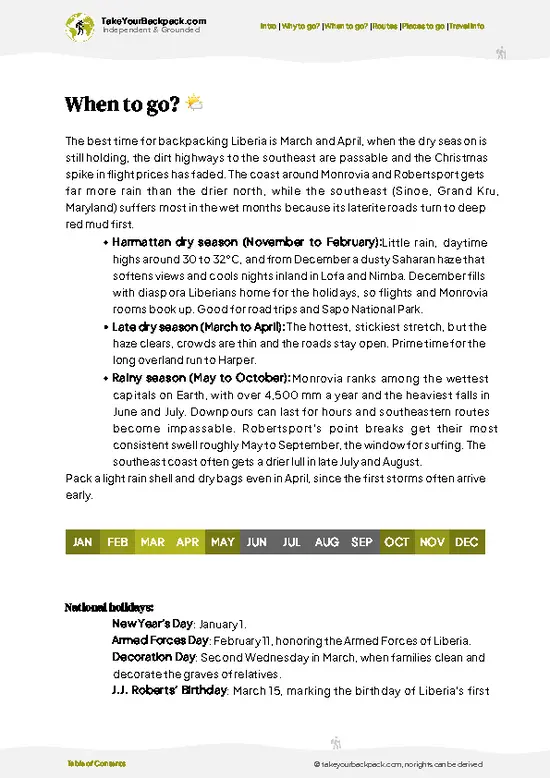
source: climatestotravel.comJANJanuary: excellent for travelingFEBFebruary: excellent for travelingMARMarch: excellent for travelingAPRApril: highly recommended for travelingMAYMay: fair for travelingJUNJune: below average for travelingJULJuly: below average for travelingAUGAugust: below average for travelingSEPSeptember: fair for travelingOCTOctober: fair for travelingNOVNovember: highly recommended for travelingDECDecember: excellent for traveling
when-to-go

✈️ The backpacker research shortcutLiberia Travel Guide

An offline-friendly backpacking guide with optimized travel routes, ranked highlights, transport advice, and the best areas to stay.
example page 0 from our offline Travel Guide for Liberia
example page 1 from our offline Travel Guide for Liberia
example page 2 from our offline Travel Guide for Liberia
example page 3 from our offline Travel Guide for Liberia
example page 4 from our offline Travel Guide for Liberia
example page 5 from our offline Travel Guide for Liberia
example page 6 from our offline Travel Guide for Liberia
example page 7 from our offline Travel Guide for Liberia
The digital guide (260 pages) contains:
61 highlights, ranked by travel appeal
Optimized 5, 10 & 15-day travel routes
Cities, national parks, landmarks, beaches
How to get around
Offline-friendly for travel without Wi-Fi
👉 Click to see all 30+ guide features

📅 Plan smarter in minutes, not weeks
Month by month travel advice
Festivals & national holidays
Budget expectations

🗺️ Go to the right places, skip the overrated ones
Honest pros & cons of destinations
Top hikes, parks & viewpoints
Lesser-known places most travelers miss
Clear “worth it vs skip it” guidance

🛏️ Travel smoothly without rookie mistakes
Best areas to stay
Transport systems explained simply
Common scams & safety advice
SIM cards, money & practical tips

🌍 Understand the country, not just visit it
Culture & traditions
Local customs
Festivals worth planning around
Traveler-friendly historical context
Insights that make places more meaningful

📱 Built for real travel conditions
Fully downloadable PDF
Works completely offline
Optimized for phone use
Useful in remote areas & buses
Everything in one place
Save weeks of stressful planning
Get instant access to your full guide. 30‑day money-back guarantee.


By proceeding you agree to our terms.
Sent to your inbox immediately after payment • 100% Secure Checkout
Best Backpacking Travel Advisor 2025 tourism awardBest Backpacking
Travel Advisor
2025
What others say about Take Your Backpack Guides:
⭐⭐⭐⭐⭐
Fantastic, amazing amount of information!
⭐⭐⭐⭐⭐
My goodness this is amazing, it's what I've been looking for hats off too you!
⭐⭐⭐⭐⭐
I think this is absolutely BRILLIANT
⭐⭐⭐⭐
Very complete and informative. It's still missing places, but I gotta to commend you
⭐⭐⭐⭐⭐
This is truly amazing, thank you, can't wait to explore it with my kids!
⭐⭐⭐⭐⭐
Awesome resource, thank you!
⭐⭐⭐⭐⭐
This is amazing! Can't wait to explore the ones I haven't seen
⭐⭐⭐⭐
I love this! Well done, great idea.
⭐⭐⭐⭐⭐
Thanks for taking the time to make this gem!
⭐⭐⭐⭐⭐
This might be the best website I've ever seen.
⭐⭐⭐⭐⭐
Congratulations, and thank you so much for your work; it's incredibly valuable.
⭐⭐⭐⭐
In all seriousness I think you did a great job pointing out the important spots
⭐⭐⭐⭐⭐
10/10 very good
⭐⭐⭐⭐⭐
As someone who's only just starting to visit regularly this is awesome, thank you.
⭐⭐⭐⭐
Thank you very much! I'm going to visit my dad, it's going to be very useful!
⭐⭐⭐⭐⭐
This is really cool! We'll be travelling for the first time and this definitely come in handy.
⭐⭐⭐⭐⭐
You are now our minister of culture, congratulations 👨‍💼
⭐⭐⭐⭐⭐
Just wanted to tell you that this is a pearl! Going to follow your recommendations.
⭐⭐⭐⭐⭐
This is so cool. I'll definitely be using the resource for my travels soon.
⭐⭐⭐⭐⭐
This is very impressive! Good work.
⭐⭐⭐⭐⭐
This is an amazing and informative site. Very well done!

🛏️ Where to stay?Where staying makes the most sense

If you enjoy meeting fellow travelers, consider choosing hostels with high ratings for atmosphere. On the other hand, if you prefer having your own space, a hotel might be a better option.

🥾 Hike detailsRoute, distance, and difficulty explained

Total Distance: The Nimba Mountains trail spans approximately 20 kilometers (about 12.4 miles) round trip.

Estimated Duration: Expect to spend around 6 to 8 hours on the trail, depending on your pace and how often you stop to take in the views or catch your breath.

Difficulty Level: This trail is considered moderate to challenging. You’ll face some steep sections and uneven terrain, so a decent level of fitness is recommended.

Starting Point: The trailhead is near the town of Sanniquellie. You can get there by taking a shared taxi or bush taxi from Monrovia to Sanniquellie, which usually takes … read more 👉
Total Distance: The Nimba Mountains trail spans approximately 20 kilometers (about 12.4 miles) round trip.

Estimated Duration: Expect to spend around 6 to 8 hours on the trail, depending on your pace and how often you stop to take in the views or catch your breath.

Difficulty Level: This trail is considered moderate to challenging. You’ll face some steep sections and uneven terrain, so a decent level of fitness is recommended.

Starting Point: The trailhead is near the town of Sanniquellie. You can get there by taking a shared taxi or bush taxi from Monrovia to Sanniquellie, which usually takes about 5 to 6 hours. Once in Sanniquellie, you might need to hire a local guide or find someone to point you in the right direction to the trailhead.

Major Landmarks Along the Route:
  • Mount Nimba: The highest peak in the range, offering stunning panoramic views.
  • Waterfalls: There are a couple of beautiful waterfalls along the way, perfect for a refreshing break.
  • Local Villages: You might pass through small villages where you can interact with friendly locals and experience the culture.

Type of Terrain and Scenery: The trail features a mix of rocky paths, muddy sections, and some steep ascents. You’ll be surrounded by lush green forests and rugged mountain landscapes, with occasional clearings that offer breathtaking views of the surrounding area.

Typical Vegetation and Wildlife:
  • Vegetation: Expect to see dense tropical forests, with towering hardwood trees, ferns, and various shrubs.
  • Wildlife: Keep an eye out for monkeys, various bird species, and maybe even some colorful butterflies flitting about. The area is rich in biodiversity, so you might spot something interesting if you’re lucky.

With a bit of preparation and a sense of adventure, the Nimba Mountains can be a fantastic experience for independent hikers looking to explore Liberia’s natural beauty. Just make sure to pack enough water and snacks, and maybe brush up on your local language skills to chat with the villagers!
⚠️ Hiking info can sometimes be outdated or inaccurate. Before you hit the trail, check the latest conditions with locals. If you do spot anything that's off, I'd love to hear from you, so I can update it for fellow travelers.

🛡️ SafetyStaying Safe: What Travelers Should Know

The Nimba Mountains offer a raw, exhilarating experience, but you need to be prepared. Weather can shift quickly; a sunny morning can morph into a downpour. Dress in layers and pack a waterproof jacket. The trails are steep and can be slippery, especially after rain. Good hiking boots with solid grip are non-negotiable.

Navigation can be tricky; trails aren’t always well-marked. A reliable map or GPS app is essential. Expect river crossings, which can be challenging but manageable—just take your time and choose your footing wisely.

Wildlife encounters are part of the thrill. You might spot monkeys or colorful birds, but keep your distance. Respect their space; don’t feed them.

First-timers often underestimate the physical demand. Pace yourself, take breaks, and hydrate. The effort pays … read more 👉
The Nimba Mountains offer a raw, exhilarating experience, but you need to be prepared. Weather can shift quickly; a sunny morning can morph into a downpour. Dress in layers and pack a waterproof jacket. The trails are steep and can be slippery, especially after rain. Good hiking boots with solid grip are non-negotiable.

Navigation can be tricky; trails aren’t always well-marked. A reliable map or GPS app is essential. Expect river crossings, which can be challenging but manageable—just take your time and choose your footing wisely.

Wildlife encounters are part of the thrill. You might spot monkeys or colorful birds, but keep your distance. Respect their space; don’t feed them.

First-timers often underestimate the physical demand. Pace yourself, take breaks, and hydrate. The effort pays off when you reach a viewpoint, the landscape sprawling below, or when you finally crack open that cold beer at the end of the day. Embrace the grit; it’s all part of the adventure.

Other Liberian hikes near Nimba Mountains

Explore more nearby:


💡 Not sure where to go next?
Create a personalized itinerary for Liberia including Nimba Mountains and the places that fit your trip.

Generate my itinerary

👉 Discover all hikes

Or checkout all Liberia has to offer (think cities, towns, villages, national parks, hikes, beaches, festivals)
Country photo of Liberia

We 💚 feedbackParting advice and final tips

The Nimba Mountains are raw and alive. You’ll feel the sweat on your brow as you tackle those steep trails, but the payoff? A panoramic view that stretches for miles, where the horizon seems to kiss the sky. Keep your eyes peeled for the locals; their warmth is a delightful surprise amidst the rugged terrain. Just a heads-up: the weather can turn on a dime, so pack a rain jacket. Trust me, the journey here is as rewarding as the destination itself.

✍️ Help improve this page!
The information on this page is based on in-depth research, insights shared by experienced travelers, and feedback from the local travel community in Liberia. While every effort is made to keep the information accurate and current, conditions can change — so if you spot anything incorrect or outdated, please get in touch.


🙋‍♂️ Give feedback

👋 Meet the founderWho’s Behind Take Your Backpack?

Johan, backpacker and founder of TakeYourBackpackHi, I’m Johan (Netherlands 🇳🇱), the creator of TakeYourBackpack. Over the past decade, I’ve backpacked through 80+ countries across six continents, gaining extensive experience with independent travel, long-term trips, and overland routes.

This site is built on a combination of firsthand travel experience and carefully curated insights from other backpackers. Many guides are based on places I’ve personally visited, while others bring together tips, observations, and practical advice shared by trusted travelers I’ve met along the way.

The goal is to provide realistic, experience-driven guidance — not generic itineraries — so you can explore destinations with better context, clearer expectations, and more confidence.

Get full Liberia guide •
Instant download • 61 highlights • Full Offline guide