×

Liberia🇱🇷 | festivalsLiberia National Culture Troupe FestivalRaffia masquerades, hand drums, stilt dancers, Paynesville grounds | things to do and best time to go

Explore Liberia MarathonExplore Nimba Mountains

Backpacking in Liberia National Culture Troupe
🏆 Top pickfestival ranked #2
By Johan Kruseman 🇳🇱 | Updated October 22, 2026

Drums arrive before anything else does: deep, hand-struck rhythms carrying across open ground while rattles of dried gourds and seeds hiss underneath, and you follow the noise to the performance ring. Liberia National Culture Troupe Festival is best known for its dance and masquerade, with costumed performers in raffia, carved wooden masks and bright cloth stamping up red dust under a hot sky. The festival sits on the Paynesville side of Monrovia, east of the city center in Liberia, where the sprawl thins into open compounds. Expect a mostly Liberian crowd of families, students and elders, loud, sweaty and friendly, with grilled snacks and sugary drinks sold at the edges. Sets run long and start loosely, so you stand, sweat and get pulled into the circle whether you want to or not. Carry small cash and confirm the schedule in Monrovia before you head out.

Discover everything you want to know in the 📖 Liberia Travel Guide.


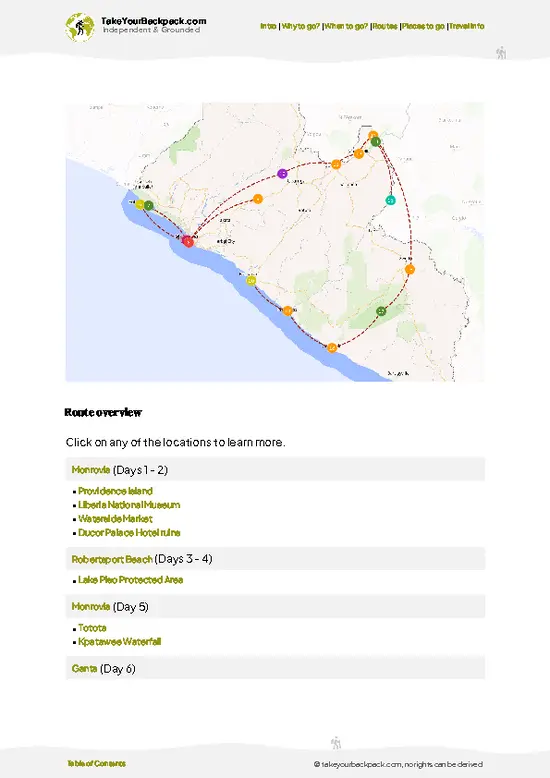
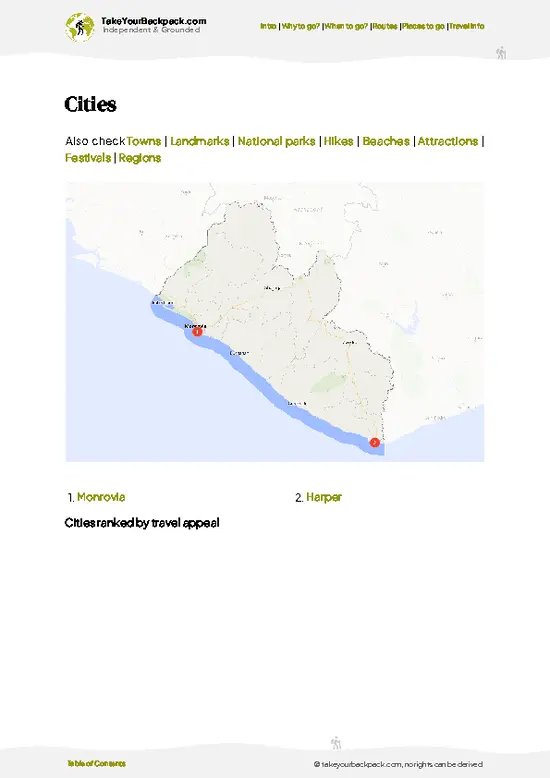
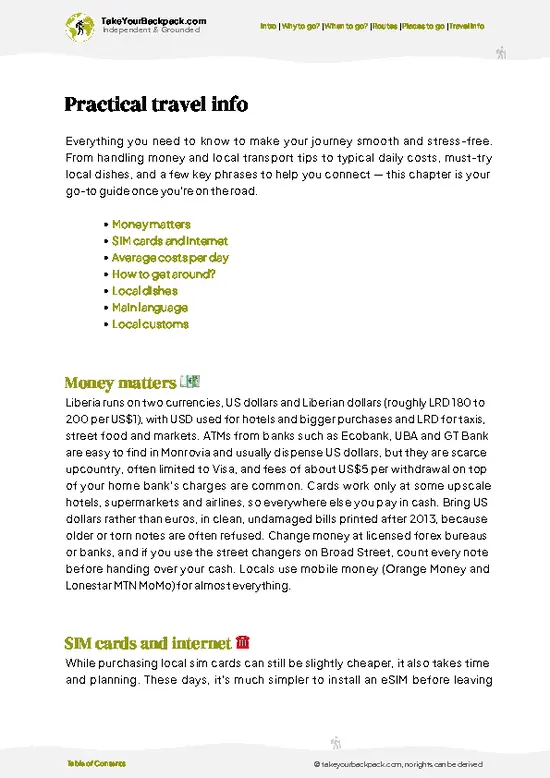
example page 0 from our offline Travel Guide for Liberia
example page 1 from our offline Travel Guide for Liberia
example page 2 from our offline Travel Guide for Liberia
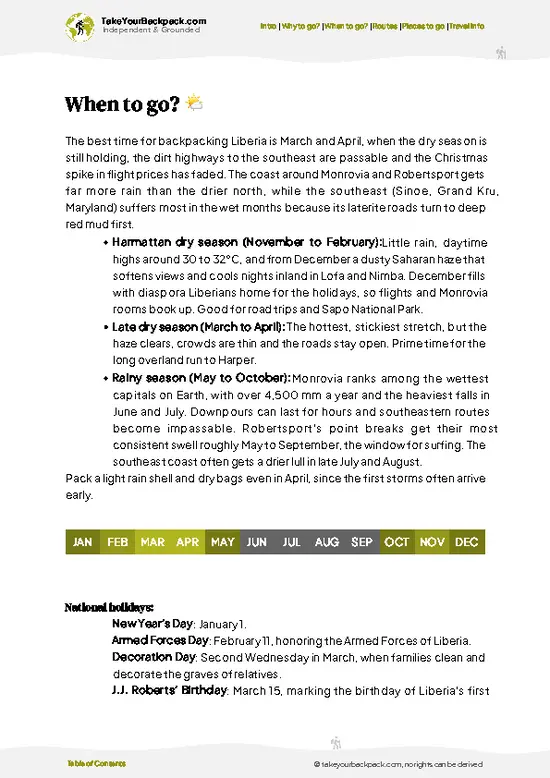
example page 3 from our offline Travel Guide for Liberia
example page 4 from our offline Travel Guide for Liberia
example page 5 from our offline Travel Guide for Liberia
example page 6 from our offline Travel Guide for Liberia
example page 7 from our offline Travel Guide for Liberia
Loading the map 🌍
CLICK TO FILTER
cities
towns
landmarks
national parks
hikes
beaches
attractions
festivals
regions
SHOW COUNTRY’S BESTSHOW ALL

✨ Why go?
Ranked #2 festival in Liberia
Why Liberia National Culture Troupe should be on your travel list

Liberia National Culture Troupe Festival gives you something the capital’s beaches and bars rarely do: a cross-section of the country’s peoples performing their own material in one place. Dance and music from groups such as the Kpelle, Bassa, Kru and Vai traditions can appear on the same ground, so you see in an afternoon how much the style, costume and drum language change from one community to the next. That is hard to piece together by bus, where reaching those regions takes days of rough road.

The second reason is the people. Because the audience is overwhelmingly local, you are a guest rather than a customer. Strangers explain which mask is entering, why the crowd just roared, and where to buy the best fried plantain. The festival grounds in Paynesville are easy to reach from Monrovia, … read more 👉
Liberia National Culture Troupe Festival gives you something the capital’s beaches and bars rarely do: a cross-section of the country’s peoples performing their own material in one place. Dance and music from groups such as the Kpelle, Bassa, Kru and Vai traditions can appear on the same ground, so you see in an afternoon how much the style, costume and drum language change from one community to the next. That is hard to piece together by bus, where reaching those regions takes days of rough road.

The second reason is the people. Because the audience is overwhelmingly local, you are a guest rather than a customer. Strangers explain which mask is entering, why the crowd just roared, and where to buy the best fried plantain. The festival grounds in Paynesville are easy to reach from Monrovia, so it slots into a trip that already passes through the capital, either as a first taste of Liberian culture before you head inland or as a send-off before a flight out. It is also free of the tour-bus polish found at similar events elsewhere in West Africa. Bring patience, and let the schedule slide.

💡 HighlightsMust-see experiences and standout moments

  1. Opening procession of the troupes: Groups arrive in costume with drummers leading, and the whole ground shifts from waiting to dancing. It is the best moment to see every style side by side and to gauge which performers you want to catch later.
  2. Drum and dance sets: The core of the festival. Hand drums, shakers and call-and-response singing drive each set, and the dancers’ footwork kicks up red dust you can taste. Stand close enough to feel the bass in your chest.
  3. Masked performances: Carved masks and full raffia or cloth costumes bring a different energy, slower and more theatrical, with the crowd giving the masked figures plenty of room. Watch how the audience reacts and follow their lead on distance and photos.
  4. Stilt dancers: Tall performers balance and spin well above the crowd, and the sight
… read more 👉
  1. Opening procession of the troupes: Groups arrive in costume with drummers leading, and the whole ground shifts from waiting to dancing. It is the best moment to see every style side by side and to gauge which performers you want to catch later.
  2. Drum and dance sets: The core of the festival. Hand drums, shakers and call-and-response singing drive each set, and the dancers’ footwork kicks up red dust you can taste. Stand close enough to feel the bass in your chest.
  3. Masked performances: Carved masks and full raffia or cloth costumes bring a different energy, slower and more theatrical, with the crowd giving the masked figures plenty of room. Watch how the audience reacts and follow their lead on distance and photos.
  4. Stilt dancers: Tall performers balance and spin well above the crowd, and the sight of a figure twice human height moving to fast drumming draws a wide circle of spectators. It is the easiest act to photograph and the hardest to forget.
  5. Storytelling, songs and local food stalls: Between the big sets, elders and singers hold smaller audiences, and the edges of the ground fill with grilled meat, cassava and fried plantain. Eating here with a plastic bag of cold water and a stranger’s commentary is half the experience.
Liberia National Culture Troupe Festival pairs the opening procession with the masked performances well, since you catch the full range of costumes arriving and then see the most striking ones up close once the crowd settles.
Spotted a mistake or missing something? Contact us.

🌤️ When to go?When is the celebration of Liberia National Culture Troupe Festival?

Liberia National Culture Troupe Festival is usually held in the dry months between December and March in the Monrovia area, runs for a few days, and the dates are set each year by the organizers rather than tied to a fixed calendar date.
  • Best day: The main performance day, normally a weekend, has the full troupes in costume, drumming and masked dancers. Weekdays are calmer but programs can be thin.
  • Weather: Expect 23 to 32°C (73 to 90°F), strong sun and dusty harmattan haze in the early months. Bring a hat, sunscreen, a refillable bottle and a light rain jacket for the odd early shower.
  • Booking: Reserve a room two to three weeks ahead. Prices in Monrovia rise by roughly 10 to 30 percent around event dates.
  • Crowds and roads: Traffic on the Monrovia to Paynesville corridor jams badly in late afternoon.
… read more 👉
Liberia National Culture Troupe Festival is usually held in the dry months between December and March in the Monrovia area, runs for a few days, and the dates are set each year by the organizers rather than tied to a fixed calendar date.
  • Best day: The main performance day, normally a weekend, has the full troupes in costume, drumming and masked dancers. Weekdays are calmer but programs can be thin.
  • Weather: Expect 23 to 32°C (73 to 90°F), strong sun and dusty harmattan haze in the early months. Bring a hat, sunscreen, a refillable bottle and a light rain jacket for the odd early shower.
  • Booking: Reserve a room two to three weeks ahead. Prices in Monrovia rise by roughly 10 to 30 percent around event dates.
  • Crowds and roads: Traffic on the Monrovia to Paynesville corridor jams badly in late afternoon. Arrive early in the day and leave before dark or wait out the rush.
Confirm the exact days with the organizers a week out, since schedules shift.


source: climatestotravel.comJANJanuary: not recommended for travelingFEBFebruary: not recommended for travelingMARMarch: not recommended for travelingAPRApril: not recommended for travelingMAYMay: excellent for travelingJUNJune: not recommended for travelingJULJuly: not recommended for travelingAUGAugust: not recommended for travelingSEPSeptember: not recommended for travelingOCTOctober: not recommended for travelingNOVNovember: not recommended for travelingDECDecember: not recommended for traveling

✈️ The backpacker research shortcutLiberia Travel Guide

An offline-friendly backpacking guide with optimized travel routes, ranked highlights, transport advice, and the best areas to stay.
example page 0 from our offline Travel Guide for Liberia
example page 1 from our offline Travel Guide for Liberia
example page 2 from our offline Travel Guide for Liberia
example page 3 from our offline Travel Guide for Liberia
example page 4 from our offline Travel Guide for Liberia
example page 5 from our offline Travel Guide for Liberia
example page 6 from our offline Travel Guide for Liberia
example page 7 from our offline Travel Guide for Liberia
The digital guide (211 pages) contains:
✅ 49 highlights, ranked by travel appeal
✅ Optimized 5, 10 & 15-day travel routes
✅ Cities, national parks, landmarks, beaches
✅ How to get around
✅ Offline-friendly for travel without Wi-Fi
👉 Click to see all 30+ guide features

📅 Plan smarter in minutes, not weeks
✅ Month by month travel advice
✅ Festivals & national holidays
✅ Budget expectations

🗺️ Go to the right places, skip the overrated ones
✅ Honest pros & cons of destinations
✅ Top hikes, parks & viewpoints
✅ Lesser-known places most travelers miss
✅ Clear “worth it vs skip it” guidance

🛏️ Travel smoothly without rookie mistakes
✅ Best areas to stay
✅ Transport systems explained simply
✅ Common scams & safety advice
✅ SIM cards, money & practical tips

🌍 Understand the country, not just visit it
✅ Culture & traditions
✅ Local customs
✅ Festivals worth planning around
✅ Traveler-friendly historical context
✅ Insights that make places more meaningful

📱 Built for real travel conditions
✅ Fully downloadable PDF
✅ Works completely offline
✅ Optimized for phone use
✅ Useful in remote areas & buses
✅ Everything in one place
Stop searching, start planning
Get instant access to your full guide. 30‑day money-back guarantee.
+ Add another guide for just

By proceeding you agree to our terms.
Sent to your inbox immediately after payment • 100% Secure Checkout
Best Backpacking Travel Advisor 2025 tourism awardBest Backpacking
Travel Advisor
2025
What others say about Take Your Backpack Guides:
⭐⭐⭐⭐⭐
Fantastic, amazing amount of information!
⭐⭐⭐⭐⭐
My goodness this is amazing, it's what I've been looking for hats off too you!
⭐⭐⭐⭐⭐
I think this is absolutely BRILLIANT
⭐⭐⭐⭐
Very complete and informative. It's still missing places, but I gotta to commend you
⭐⭐⭐⭐⭐
This is truly amazing, thank you, can't wait to explore it with my kids!
⭐⭐⭐⭐⭐
Awesome resource, thank you!
⭐⭐⭐⭐⭐
This is amazing! Can't wait to explore the ones I haven't seen
⭐⭐⭐⭐
I love this! Well done, great idea.
⭐⭐⭐⭐⭐
Thanks for taking the time to make this gem!
⭐⭐⭐⭐⭐
This might be the best website I've ever seen.
⭐⭐⭐⭐⭐
Congratulations, and thank you so much for your work; it's incredibly valuable.
⭐⭐⭐⭐
In all seriousness I think you did a great job pointing out the important spots
⭐⭐⭐⭐⭐
10/10 very good
⭐⭐⭐⭐⭐
As someone who's only just starting to visit regularly this is awesome, thank you.
⭐⭐⭐⭐
Thank you very much! I'm going to visit my dad, it's going to be very useful!
⭐⭐⭐⭐⭐
This is really cool! We'll be travelling for the first time and this definitely come in handy.
⭐⭐⭐⭐⭐
You are now our minister of culture, congratulations 👨‍💼
⭐⭐⭐⭐⭐
Just wanted to tell you that this is a pearl! Going to follow your recommendations.
⭐⭐⭐⭐⭐
This is so cool. I'll definitely be using the resource for my travels soon.
⭐⭐⭐⭐⭐
This is very impressive! Good work.
⭐⭐⭐⭐⭐
This is an amazing and informative site. Very well done!

🛏️ Where to stay?Best areas and accommodation options

Central Monrovia, around Broad Street and Mamba Point, is where most backpackers stay, because guesthouses there are the easiest to reach for taxis heading out to the festival grounds. Mamba Point has the densest cluster of restaurants, ATMs and expat-oriented cafes, plus the most reliable generators and Wi-Fi in the city. It is also where you will meet other solo travelers, aid workers and volunteers over an evening beer.

Sinkor is the second option. It is a large residential and commercial district with mid-range guesthouses, local bars and cheaper food, and it sits between the center and the … read more 👉
Central Monrovia, around Broad Street and Mamba Point, is where most backpackers stay, because guesthouses there are the easiest to reach for taxis heading out to the festival grounds. Mamba Point has the densest cluster of restaurants, ATMs and expat-oriented cafes, plus the most reliable generators and Wi-Fi in the city. It is also where you will meet other solo travelers, aid workers and volunteers over an evening beer.

Sinkor is the second option. It is a large residential and commercial district with mid-range guesthouses, local bars and cheaper food, and it sits between the center and the roads leading east toward Paynesville. Rooms tend to be a bit cheaper than Mamba Point and you get more everyday Liberian street life.

Paynesville and the roads along the coast are worth considering if you want to be close to the festival venue and avoid the evening traffic. Choices are fewer and quieter, so you will meet fewer travelers, but the walk or short ride to the performances is easy.

Whichever area you pick, book a place with a gate, a generator and a trusted taxi contact. Avoid walking alone after dark, and use guesthouse-arranged rides back from late-night shows.

👛 Costs (as of 22 October 2026)Typical daily expenses

Liberia National Culture Troupe Festival costs most independent travelers about US$30 to 70 per day, depending mainly on where you sleep and how often you take taxis.
CategoryBudget RangeLocal Reality
Festival ticketsUS$0 to 5Entry is often free or a small door fee. Reserved seating or special evening shows can cost more.
Accommodation (high season)US$20 to 40Basic guesthouse rooms in Sinkor or central Monrovia. Prices climb around festival dates, and rooms with air conditioning cost more.
Local transportUS$2 to 6Shared taxis cost under US$1 a hop. Motorbike keh-keh rides cost US$1 to 3. Private taxis cost more, especially at night.
Food & drinksUS$5 to 12Street plates cost US$2 to 5, cold drinks about US$1 to 2, and a beer US$2 to 3.
Miscellaneous expensesUS$3 to 8Donations to performers, crafts,
… read more 👉
Liberia National Culture Troupe Festival costs most independent travelers about US$30 to 70 per day, depending mainly on where you sleep and how often you take taxis.
CategoryBudget RangeLocal Reality
Festival ticketsUS$0 to 5Entry is often free or a small door fee. Reserved seating or special evening shows can cost more.
Accommodation (high season)US$20 to 40Basic guesthouse rooms in Sinkor or central Monrovia. Prices climb around festival dates, and rooms with air conditioning cost more.
Local transportUS$2 to 6Shared taxis cost under US$1 a hop. Motorbike keh-keh rides cost US$1 to 3. Private taxis cost more, especially at night.
Food & drinksUS$5 to 12Street plates cost US$2 to 5, cold drinks about US$1 to 2, and a beer US$2 to 3.
Miscellaneous expensesUS$3 to 8Donations to performers, crafts, phone data and bottled water. Carry small bills, since change is scarce.
Total Daily BudgetUS$30 to 70Lower end for local guesthouses and street food, upper end for comfort and private rides.
⚠️ Prices can change and everyone travels differently, so take this as a rough guide. Hope it helps you plan your adventure!

🍲 FoodEating & Drinking in Liberia National Culture Troupe

Eating at Liberia National Culture Troupe Festival means street-side stalls and home-style cooking set up around the performance grounds. Expect jollof rice, fried chicken, grilled fish and fried plantain sold in foam boxes, plus skewers of spiced roasted meat and cassava chunks with pepper sauce. Many stallholders also sell palm butter or cassava leaf with rice, the dishes Liberians treat as true celebration food. Plates usually cost US$2 to 5.

Try palm butter with rice if you see it. It is rich, orange, smoky and often loaded with fish or chicken, and locals will tell you who makes the best one. Pair it with fufu or dumboy if offered, and eat with your right hand when others do. A cold ginger beer or a bag of sachet water cuts through the heat, and Club beer and palm wine show up in the … read more 👉
Eating at Liberia National Culture Troupe Festival means street-side stalls and home-style cooking set up around the performance grounds. Expect jollof rice, fried chicken, grilled fish and fried plantain sold in foam boxes, plus skewers of spiced roasted meat and cassava chunks with pepper sauce. Many stallholders also sell palm butter or cassava leaf with rice, the dishes Liberians treat as true celebration food. Plates usually cost US$2 to 5.

Try palm butter with rice if you see it. It is rich, orange, smoky and often loaded with fish or chicken, and locals will tell you who makes the best one. Pair it with fufu or dumboy if offered, and eat with your right hand when others do. A cold ginger beer or a bag of sachet water cuts through the heat, and Club beer and palm wine show up in the evening.

Carry small bills in US dollars or Liberian dollars, since stalls rarely take cards or have change for large notes. Portions are generous, so sharing a plate with a new friend is normal and welcomed. Lines are loose, so say your order clearly and greet the cook first. Peppers can be fierce, so ask for the sauce on the side. Stick to food cooked hot in front of you.

FAQCommon questions from travelers

Liberia National Culture Troupe Festival is usually held in the dry months between December and March, normally over several days with the main performance day on a weekend. It takes place in the Monrovia area, so most travelers base themselves in Sinkor or Mamba Point. Dates are set by the organizers each year, so check a week or two before you fly.
Attending Liberia National Culture Troupe Festival costs little for the event itself, usually free to about US$5 at the door. Your main spending goes on a guesthouse room in Monrovia at roughly US$20 to 40 a night, plus taxis at US$1 to 6 a day. Expect a total of about US$30 to 70 per day including food at US$5 to 12.
Liberia National Culture Troupe Festival usually does not require tickets far in advance, since entry is typically free or sold at the door for a few dollars. Arrive early on the main weekend day for a good viewing spot, as crowds build by mid-afternoon. Book your room in Monrovia two to three weeks ahead, because prices rise by about 10 to 30 percent around the event.
⚠️ Things can change over time, so always validate details locally before you go.

Other Liberian festivals near Liberia National Culture Troupe

Explore more nearby:


💡 Not sure where to go next?
Create a personalized itinerary for Liberia including Liberia National Culture Troupe and the places that fit your trip.

Generate my itinerary

👉 Discover all festivals

Or checkout all Liberia has to offer (think cities, towns, villages, national parks, hikes, beaches, festivals)
Country photo of Liberia

We 💚 feedbackKey takeaways before you go

Liberia National Culture Troupe Festival punishes anyone who treats it as a one-hour photo stop. Travelers show up for the opening, watch two dances and leave before the best sets start. I would stay through the afternoon, bring a hat, a refillable bottle and small bills, and let the late sets pull you into the circle.

✍️ Help improve this page!
The information on this page is based on in-depth research, insights shared by experienced travelers, and feedback from the local travel community in Liberia. While every effort is made to keep the information accurate and current, conditions can change — so if you spot anything incorrect or outdated, please get in touch.


🙋‍♂️ Give feedback

👋 Meet the founderWho’s Behind Take Your Backpack?

Johan, backpacker and founder of TakeYourBackpackHi, I’m Johan (Netherlands 🇳🇱), the creator of TakeYourBackpack. Over the past 3 decades, I’ve backpacked through 90+ countries across six continents, gaining extensive experience with independent travel, long-term trips, and overland routes.

This site is built on a combination of firsthand travel experience and carefully curated insights from other backpackers. Many guides are based on places I’ve personally visited, while others bring together tips, observations, and practical advice shared by trusted travelers I’ve met along the way.

The goal is to provide realistic, experience-driven guidance — not generic itineraries — so you can explore destinations with better context, clearer expectations, and more confidence.