v2.webp)
The “Crying Cows” Panel
Let’s cut through the Instagram haze: most people come for the sheer age of the art, but the “Crying Cows” panel is the emotional gut-punch. This isn’t just ancient graffiti—it’s a 7,000-year-old mural that shows cattle with what look like tears streaming down their faces. Theories abound (drought, ritual, or just artistic flair), but standing in front of it, you feel the weight of a lost world. No filter needed; the sense of mystery is real, and the silence of the desert amplifies it.
Arches of Tin Khilwa
Forget the generic “rock formations” you’ve seen a thousand times. The Tin Khilwa arches are geological oddballs—massive, wind-carved stone bridges that look like something out of a Salvador Dalí fever dream. They’re not just photogenic; they’re playgrounds for the … read more 👉
Let’s cut through the Instagram haze: most people come for the sheer age of the art, but the “Crying Cows” panel is the emotional gut-punch. This isn’t just ancient graffiti—it’s a 7,000-year-old mural that shows cattle with what look like tears streaming down their faces. Theories abound (drought, ritual, or just artistic flair), but standing in front of it, you feel the weight of a lost world. No filter needed; the sense of mystery is real, and the silence of the desert amplifies it.
Arches of Tin Khilwa
Forget the generic “rock formations” you’ve seen a thousand times. The Tin Khilwa arches are geological oddballs—massive, wind-carved stone bridges that look like something out of a Salvador Dalí fever dream. They’re not just photogenic; they’re playgrounds for the … read more 👉
The “Crying Cows” Panel
Let’s cut through the Instagram haze: most people come for the sheer age of the art, but the “Crying Cows” panel is the emotional gut-punch. This isn’t just ancient graffiti—it’s a 7,000-year-old mural that shows cattle with what look like tears streaming down their faces. Theories abound (drought, ritual, or just artistic flair), but standing in front of it, you feel the weight of a lost world. No filter needed; the sense of mystery is real, and the silence of the desert amplifies it.
Arches of Tin Khilwa
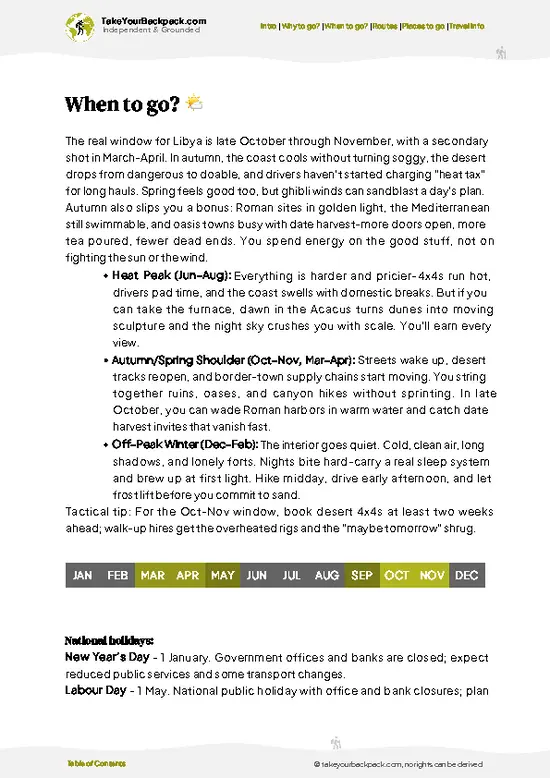
Forget the generic “rock formations” you’ve seen a thousand times. The Tin Khilwa arches are geological oddballs—massive, wind-carved stone bridges that look like something out of a Salvador Dalí fever dream. They’re not just photogenic; they’re playgrounds for the imagination. Climb up at sunrise and you’ll get a Martian panorama that makes every hour of the bumpy 4x4 ride worth it. This is the kind of landscape that makes you question if you’re still on Earth.
Giraffe Engravings at Wadi Tashwinat
Here’s the plot twist: the Sahara wasn’t always a wasteland. The giraffe engravings at Wadi Tashwinat are proof. These life-sized carvings are so precise you can count the spots. They’re a direct line to a time when giraffes, crocodiles, and hippos roamed what’s now endless sand. It’s a jolt of perspective—nature’s own plot twist, carved in stone.
“Round Head” Figures
If you’re expecting stick figures, think again. The “Round Head” paintings are surreal—humanoid shapes with bulbous, featureless heads, sometimes floating or dancing. They’re older than the pyramids, and nobody really knows what they mean. Aliens? Shamans? Early attempts at depicting trance states? The ambiguity is the point. You don’t just look at these; you puzzle over them, and that’s half the fun.
Desert Silence at Night
This isn’t a museum with closing hours. The real magic hits after sunset, when the crowds (such as they are—this is no tourist circus) vanish and the desert drops into a silence so deep it’s almost physical. The stars are absurdly bright, the air is cold, and the rock faces glow with ancient stories. If you want a “spiritual” moment, skip the yoga retreat and just sit here for an hour. No Wi-Fi, no distractions—just you and 10,000 years of human imagination.
Wadi In Habeter’s Elephant Rock
Yes, it’s called Elephant Rock because it looks like an elephant, but don’t roll your eyes yet. This isn’t roadside kitsch. The scale is prehistoric, and the setting—towering above a sea of red sand—makes it feel like a fossilized memory of a vanished ecosystem. It’s a reminder that the Sahara is as much about what’s gone as what’s left.
Let’s cut through the Instagram haze: most people come for the sheer age of the art, but the “Crying Cows” panel is the emotional gut-punch. This isn’t just ancient graffiti—it’s a 7,000-year-old mural that shows cattle with what look like tears streaming down their faces. Theories abound (drought, ritual, or just artistic flair), but standing in front of it, you feel the weight of a lost world. No filter needed; the sense of mystery is real, and the silence of the desert amplifies it.
Arches of Tin Khilwa
Forget the generic “rock formations” you’ve seen a thousand times. The Tin Khilwa arches are geological oddballs—massive, wind-carved stone bridges that look like something out of a Salvador Dalí fever dream. They’re not just photogenic; they’re playgrounds for the imagination. Climb up at sunrise and you’ll get a Martian panorama that makes every hour of the bumpy 4x4 ride worth it. This is the kind of landscape that makes you question if you’re still on Earth.
Giraffe Engravings at Wadi Tashwinat
Here’s the plot twist: the Sahara wasn’t always a wasteland. The giraffe engravings at Wadi Tashwinat are proof. These life-sized carvings are so precise you can count the spots. They’re a direct line to a time when giraffes, crocodiles, and hippos roamed what’s now endless sand. It’s a jolt of perspective—nature’s own plot twist, carved in stone.
“Round Head” Figures
If you’re expecting stick figures, think again. The “Round Head” paintings are surreal—humanoid shapes with bulbous, featureless heads, sometimes floating or dancing. They’re older than the pyramids, and nobody really knows what they mean. Aliens? Shamans? Early attempts at depicting trance states? The ambiguity is the point. You don’t just look at these; you puzzle over them, and that’s half the fun.
Desert Silence at Night
This isn’t a museum with closing hours. The real magic hits after sunset, when the crowds (such as they are—this is no tourist circus) vanish and the desert drops into a silence so deep it’s almost physical. The stars are absurdly bright, the air is cold, and the rock faces glow with ancient stories. If you want a “spiritual” moment, skip the yoga retreat and just sit here for an hour. No Wi-Fi, no distractions—just you and 10,000 years of human imagination.
Wadi In Habeter’s Elephant Rock
Yes, it’s called Elephant Rock because it looks like an elephant, but don’t roll your eyes yet. This isn’t roadside kitsch. The scale is prehistoric, and the setting—towering above a sea of red sand—makes it feel like a fossilized memory of a vanished ecosystem. It’s a reminder that the Sahara is as much about what’s gone as what’s left.
Spotted a mistake or missing something? Contact us.


 Best Backpacking
.jpg) Hi, I’m Johan (Netherlands 🇳🇱), the creator of TakeYourBackpack. Over the past decade, I’ve backpacked through 80+ countries across six continents, gaining extensive experience with independent travel, long-term trips, and overland routes.
Hi, I’m Johan (Netherlands 🇳🇱), the creator of TakeYourBackpack. Over the past decade, I’ve backpacked through 80+ countries across six continents, gaining extensive experience with independent travel, long-term trips, and overland routes.