×

Libya🇱🇾 | landmarksWaw an NamusVolcanic crater, black sand, salt lakes, remote oasis | things to do and best time to go

Explore Qasr al-HajjExplore Haua Fteah

Backpacking in Waw an Namus
👍 Recommendedunique site ranked #4
By Johan Kruseman 🇳🇱 | Updated September 3, 2026

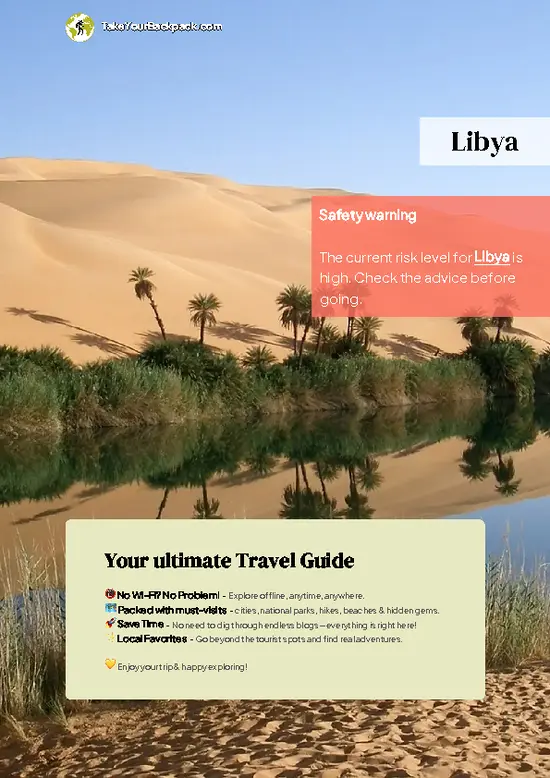
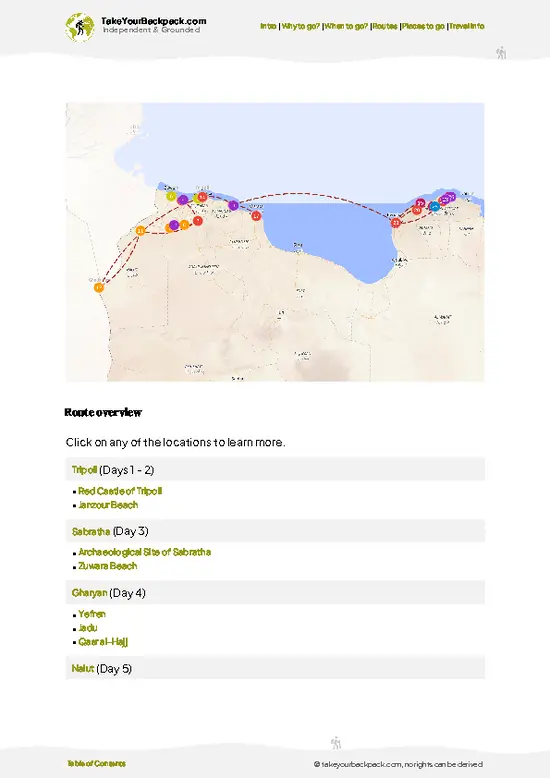
Forget the Instagram mirage: Waw an Namus isn’t a lush oasis where you’ll sip tea under palm trees while influencers float by on camels. It’s a volcanic crater in the dead heart of the Libyan Sahara, hundreds of kilometers from the nearest real town, and it’s as raw as adventure gets. Located deep in the Fezzan region, this place is a black-rimmed caldera surrounded by a halo of red and yellow sands, with three surreal blue lakes at its core—each ringed by reeds and, yes, swarms of mosquitoes that don’t care about your travel dreams. Getting here is a logistical beast: you’ll need permits, a 4x4, a fixer, and a tolerance for both bureaucracy and boredom on the endless drive. But here’s the kicker—when you finally stand on that crater’s edge, with nothing but wind and silence for company, you’ll know you’ve reached one of the Sahara’s true wonders. No crowds, no gift shops, just you and a landscape that feels like Mars. It’s not cheap or easy, but it’s the kind of place that rewires your sense of scale and solitude.

Discover everything you want to know in the 📖 Libya Travel Guide.
Safety warning

The current risk level for Libya is high. Check the advice before going.


Get your Libya guide
55 ranked highlights, routes & tips, works offline (231 pages)
Loading the map 🌍
CLICK TO FILTER
cities
towns
landmarks
national parks
hikes
beaches
attractions
festivals
regions
SHOW COUNTRY’S BESTSHOW ALL

✨ Why go?
Ranked #4 unique site in Libya
Why Waw an Namus should be on your travel list

Waw an Namus is not just another desert pit stop; it’s a mind-bending oasis that challenges your expectations. Sure, the crowds can be a drag, especially if you hit it during peak season, but the sheer scale of this ancient volcanic crater is jaw-dropping. You’ll find yourself standing on the rim, staring down into a surreal landscape of turquoise lakes and lush palm groves.

The cost to visit is minimal, especially when you consider the value of the experience. It’s a perfect addition to a broader route through Libya, seamlessly fitting into an adventure that includes the Sahara’s vastness and the rich history of places like Ghadames.

Accessibility isn’t a nightmare either; with a bit of planning, you can navigate the roads without feeling like you’re in a race against time. Waw an Namus … read more 👉
Waw an Namus is not just another desert pit stop; it’s a mind-bending oasis that challenges your expectations. Sure, the crowds can be a drag, especially if you hit it during peak season, but the sheer scale of this ancient volcanic crater is jaw-dropping. You’ll find yourself standing on the rim, staring down into a surreal landscape of turquoise lakes and lush palm groves.

The cost to visit is minimal, especially when you consider the value of the experience. It’s a perfect addition to a broader route through Libya, seamlessly fitting into an adventure that includes the Sahara’s vastness and the rich history of places like Ghadames.

Accessibility isn’t a nightmare either; with a bit of planning, you can navigate the roads without feeling like you’re in a race against time. Waw an Namus isn’t just a spot on the map; it’s a life-altering moment that reminds you why you travel in the first place.
Want to include Waw an Namus in your Libya route?
Create a personalized Libya itinerary that includes Waw an Namus and the places that fit your trip — based on your travel style, budget, and available time. Get your route in seconds.

Generate my trip

💡 HighlightsThe experiences that define the visit

  • The central black scoria cone — A nearly intact volcanic cone of dark cinders rising out of the crater; it’s unusually fresh-looking for the Sahara and gives the whole site a dramatic, otherworldly centerpiece you can hike around and up for different vantage points.
  • The three crater lakes — Small, startling pools of blue-green water sitting inside the crater; their colors and reflections feel impossible in the middle of dunes, and they create a tiny wetland micro-environment that stands in sharp contrast to the surrounding desert.
  • Pockets of oasis vegetation — Reeds, acacias and patches of greenery ring the lakes and crack the monotony of sand. That vegetation supports the ecosystem here and makes the crater feel like a secret garden in the middle of nowhere.
  • Shockingly vivid color contrasts
read more 👉
  • The central black scoria cone — A nearly intact volcanic cone of dark cinders rising out of the crater; it’s unusually fresh-looking for the Sahara and gives the whole site a dramatic, otherworldly centerpiece you can hike around and up for different vantage points.
  • The three crater lakes — Small, startling pools of blue-green water sitting inside the crater; their colors and reflections feel impossible in the middle of dunes, and they create a tiny wetland micro-environment that stands in sharp contrast to the surrounding desert.
  • Pockets of oasis vegetation — Reeds, acacias and patches of greenery ring the lakes and crack the monotony of sand. That vegetation supports the ecosystem here and makes the crater feel like a secret garden in the middle of nowhere.
  • Shockingly vivid color contrasts — Black volcanic ash, rust-red scoria, bright blue water and golden sand all cheek by jowl. Photographers and people who like dramatic scenery live for that palette; it’s the main reason the place looks like a painting.
  • Encircling dunes and the Murzuq sand sea — The crater sits inside vast ergs, so you get both intimate volcanic detail and sweeping dune-scape views. Climb the rim at dawn or late afternoon and the light on the dunes is something else.
  • Wildlife and migratory birds — For the middle of the Sahara there’s surprisingly more life than you’d expect: birds stop here, insects buzz, and small desert creatures use the water and shade. It’s a neat reminder that life finds a way, even in extreme places.
  • Complete isolation and night skies — Far from towns and light pollution, the crater is one of those rare places where the Milky Way feels touchable. The silence at night, broken only by desert wind, gives the site a real sense of timelessness — and a reminder to plan logistics carefully (4x4, water, permits).
Spotted a mistake or missing something? Contact us.

Things to do near Waw an Namus

Ratings based on Tripadvisor reviews. When you book through this link, you support our work at no extra cost to you.

🌤️ When to go?Choosing the right time of year


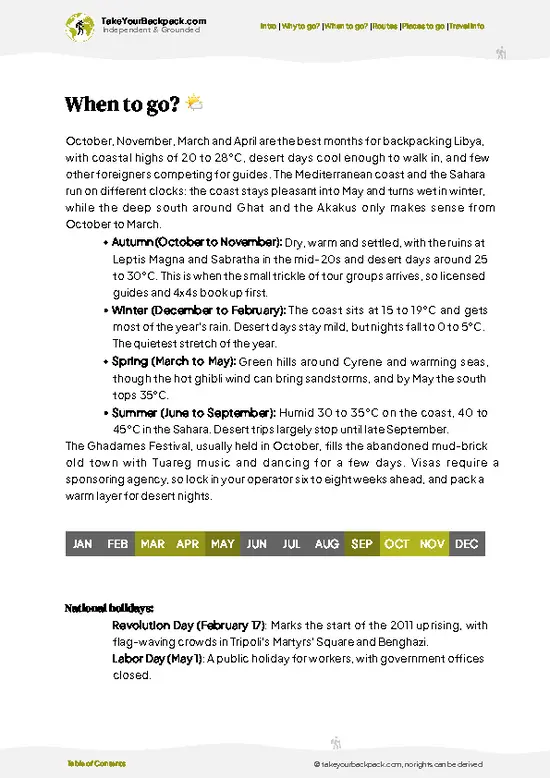
  • Weather: Waw an Namus sits in the Sahara, so expect brutal heat from April to October, often soaring above 40°C (104°F). The best window is November to March when daytime temps drop to a bearable 20-25°C (68-77°F), making trekking and camping doable without frying.

  • Temperature: Nights can be surprisingly cold, especially in winter, dipping near 0°C (32°F). Pack layers because the desert swings from scorching days to chilly nights fast.

  • Daylight Hours: Around 10-12 hours year-round, but shorter days in winter mean you’ll want to start early to maximize exploration before dark.

  • Crowds: Don’t expect crowds—Waw an Namus is off the beaten path and tough to reach. You’ll likely have the crater to yourself, but that means no amenities or backup if things go sideways.

  • Seasonal Activities:
read more 👉

  • Weather: Waw an Namus sits in the Sahara, so expect brutal heat from April to October, often soaring above 40°C (104°F). The best window is November to March when daytime temps drop to a bearable 20-25°C (68-77°F), making trekking and camping doable without frying.

  • Temperature: Nights can be surprisingly cold, especially in winter, dipping near 0°C (32°F). Pack layers because the desert swings from scorching days to chilly nights fast.

  • Daylight Hours: Around 10-12 hours year-round, but shorter days in winter mean you’ll want to start early to maximize exploration before dark.

  • Crowds: Don’t expect crowds—Waw an Namus is off the beaten path and tough to reach. You’ll likely have the crater to yourself, but that means no amenities or backup if things go sideways.

  • Seasonal Activities: Winter months offer the chance to explore the volcanic crater and surrounding dunes without heat exhaustion. Spring can bring rare desert blooms, but don’t count on it.

  • Price Fluctuations: Costs stay relatively stable due to the remote location and limited tourism infrastructure. Expect to pay a premium for guides and transport year-round, but no seasonal discounts.


Pro-tip: Aim for late November to early March to dodge the Sahara’s extremes—this is when Waw an Namus reveals its raw, rugged beauty without turning your trip into a survival test.


source: climatestotravel.comJANJanuary: excellent for travelingFEBFebruary: excellent for travelingMARMarch: excellent for travelingAPRApril: fair for travelingMAYMay: below average for travelingJUNJune: below average for travelingJULJuly: below average for travelingAUGAugust: below average for travelingSEPSeptember: fair for travelingOCTOctober: fair for travelingNOVNovember: highly recommended for travelingDECDecember: excellent for traveling
when-to-go

✈️ The backpacker research shortcutLibya Travel Guide

An offline-friendly backpacking guide with optimized travel routes, ranked highlights, transport advice, and the best areas to stay.
example page 0 from our offline Travel Guide for Libya
example page 1 from our offline Travel Guide for Libya
example page 2 from our offline Travel Guide for Libya
example page 3 from our offline Travel Guide for Libya
example page 4 from our offline Travel Guide for Libya
example page 5 from our offline Travel Guide for Libya
example page 6 from our offline Travel Guide for Libya
example page 7 from our offline Travel Guide for Libya
The digital guide (231 pages) contains:
55 highlights, ranked by travel appeal
Optimized 5, 10 & 15-day travel routes
Cities, national parks, landmarks, beaches
How to get around
Offline-friendly for travel without Wi-Fi
👉 Click to see all 30+ guide features

📅 Plan smarter in minutes, not weeks
Month by month travel advice
Festivals & national holidays
Budget expectations

🗺️ Go to the right places, skip the overrated ones
Honest pros & cons of destinations
Top hikes, parks & viewpoints
Lesser-known places most travelers miss
Clear “worth it vs skip it” guidance

🛏️ Travel smoothly without rookie mistakes
Best areas to stay
Transport systems explained simply
Common scams & safety advice
SIM cards, money & practical tips

🌍 Understand the country, not just visit it
Culture & traditions
52 Essential phrases & customs
Festivals worth planning around
Traveler-friendly historical context
Insights that make places more meaningful

📱 Built for real travel conditions
Fully downloadable PDF
Works completely offline
Optimized for phone use
Useful in remote areas & buses
Everything in one place
Save weeks of stressful planning
Get instant access to your full guide. 30‑day money-back guarantee.
+ Add another guide for just R$44.25

By proceeding you agree to our terms.
Sent to your inbox immediately after payment • 100% Secure Checkout
Best Backpacking Travel Advisor 2025 tourism awardBest Backpacking
Travel Advisor
2025
What others say about Take Your Backpack Guides:
⭐⭐⭐⭐⭐
Fantastic, amazing amount of information!
⭐⭐⭐⭐⭐
My goodness this is amazing, it's what I've been looking for hats off too you!
⭐⭐⭐⭐⭐
I think this is absolutely BRILLIANT
⭐⭐⭐⭐
Very complete and informative. It's still missing places, but I gotta to commend you
⭐⭐⭐⭐⭐
This is truly amazing, thank you, can't wait to explore it with my kids!
⭐⭐⭐⭐⭐
Awesome resource, thank you!
⭐⭐⭐⭐⭐
This is amazing! Can't wait to explore the ones I haven't seen
⭐⭐⭐⭐
I love this! Well done, great idea.
⭐⭐⭐⭐⭐
Thanks for taking the time to make this gem!
⭐⭐⭐⭐⭐
This might be the best website I've ever seen.
⭐⭐⭐⭐⭐
Congratulations, and thank you so much for your work; it's incredibly valuable.
⭐⭐⭐⭐
In all seriousness I think you did a great job pointing out the important spots
⭐⭐⭐⭐⭐
10/10 very good
⭐⭐⭐⭐⭐
As someone who's only just starting to visit regularly this is awesome, thank you.
⭐⭐⭐⭐
Thank you very much! I'm going to visit my dad, it's going to be very useful!
⭐⭐⭐⭐⭐
This is really cool! We'll be travelling for the first time and this definitely come in handy.
⭐⭐⭐⭐⭐
You are now our minister of culture, congratulations 👨‍💼
⭐⭐⭐⭐⭐
Just wanted to tell you that this is a pearl! Going to follow your recommendations.
⭐⭐⭐⭐⭐
This is so cool. I'll definitely be using the resource for my travels soon.
⭐⭐⭐⭐⭐
This is very impressive! Good work.
⭐⭐⭐⭐⭐
This is an amazing and informative site. Very well done!

🛏️ Where to stay?Best areas and accommodation options

Staying near Waw an Namus, Libya, is a unique challenge, but it’s worth it for the experience. The area around the oasis is remote, so options are limited, but that’s part of the charm.

Focus on the town of Murzuq. It’s a hub for travelers heading to the desert, and you’ll find a mix of locals and fellow backpackers. The vibe is friendly, and you can easily strike up conversations over a cup of sweet tea.

Another option is to camp near the oasis itself. This isn’t for the faint-hearted, but if you’re up for it, the stars at night are a spectacle. Just make sure to connect with local guides … read more 👉
Staying near Waw an Namus, Libya, is a unique challenge, but it’s worth it for the experience. The area around the oasis is remote, so options are limited, but that’s part of the charm.

Focus on the town of Murzuq. It’s a hub for travelers heading to the desert, and you’ll find a mix of locals and fellow backpackers. The vibe is friendly, and you can easily strike up conversations over a cup of sweet tea.

Another option is to camp near the oasis itself. This isn’t for the faint-hearted, but if you’re up for it, the stars at night are a spectacle. Just make sure to connect with local guides who can help you navigate the area safely.

Safety is a priority, so stick to well-trodden paths and travel in groups when possible. The real magic lies in the stories shared around a fire, the laughter echoing in the vastness of the desert, and the sense of adventure that comes with every step. Embrace the simplicity and authenticity of this journey; it’s what backpacking is all about.

👛 Costs (as of 3 September 2026)Travel costs and budget guide for Waw an Namus

Visiting Waw an Namus in Libya isn’t just about the stunning scenery; it’s also about navigating the costs involved. Here’s the breakdown:
  • Transportation: Expect to pay around €100 to €300 for a round-trip flight to Libya, depending on your departure point. Once in Libya, a 4x4 rental can set you back about €50 to €100 per day. Fuel is relatively cheap, but the rugged terrain means you’ll want a reliable vehicle.
  • Accommodation: Options are limited. Basic hotels or guesthouses in nearby towns range from €20 to €50 per night. If you’re looking for something more comfortable, expect to pay up to €100 for a nicer place. Camping near the site is possible but check local regulations first.
  • Guided Tours: A guided tour to Waw an Namus can cost between €150 and €300. This usually includes transportation,
read more 👉
Visiting Waw an Namus in Libya isn’t just about the stunning scenery; it’s also about navigating the costs involved. Here’s the breakdown:
  • Transportation: Expect to pay around €100 to €300 for a round-trip flight to Libya, depending on your departure point. Once in Libya, a 4x4 rental can set you back about €50 to €100 per day. Fuel is relatively cheap, but the rugged terrain means you’ll want a reliable vehicle.
  • Accommodation: Options are limited. Basic hotels or guesthouses in nearby towns range from €20 to €50 per night. If you’re looking for something more comfortable, expect to pay up to €100 for a nicer place. Camping near the site is possible but check local regulations first.
  • Guided Tours: A guided tour to Waw an Namus can cost between €150 and €300. This usually includes transportation, a guide, and sometimes meals. It’s worth it for the local insights and safety in such a remote area.
  • Food: Meals can be quite affordable. Street food or local eateries might charge €5 to €15 per meal. If you opt for a restaurant, budget around €20 to €40 for a more substantial dining experience.
  • Permits and Fees: Depending on the current regulations, you might need a permit to visit certain areas. This can range from €10 to €50. Always check ahead to avoid surprises.

Waw an Namus is a trek worth taking, but be prepared for the realities of travel in Libya.
⚠️ Prices can change and everyone travels differently, so take this as a rough guide. Hope it helps you plan your adventure!

FAQTraveler FAQ

Waw an Namus is a volcanic field in the Libyan Sahara featuring a large crater with a permanent oasis and several smaller craters. It is known for its unique landscape, including black volcanic cones and green palm trees around the crater lake.
Visiting Waw an Namus typically requires at least 2 to 3 days to fully explore the area and appreciate the volcanic formations and oasis. The remote location and rough terrain mean travel time should be factored in.
Access to Waw an Namus is usually by 4x4 vehicle from the nearest town, Sabha, which is about 400 kilometers away. The route involves desert driving and requires careful planning, local guides, and sufficient supplies.
⚠️ Things can change over time, so always validate details locally before you go.

Other Libyan landmarks near Waw an Namus

Explore more nearby:


💡 Not sure where to go next?
Create a personalized itinerary for Libya including Waw an Namus and the places that fit your trip.

Generate my itinerary

👉 Discover all landmarks

Or checkout all Libya has to offer (think cities, towns, villages, national parks, hikes, beaches, festivals)
Country photo of Libya

We 💚 feedbackParting advice and final tips

Waw an Namus isn’t just a pretty picture; it’s a raw slice of Libya’s soul. Expect crowds, especially during peak season, but don’t let that deter you. The real magic? The surreal silence at sunrise when the dunes glow like molten gold. Just be ready for the heat—bring plenty of water and a good hat. This isn’t a tourist trap; it’s a place that demands respect and rewards those who venture off the beaten path.

✍️ Help improve this page!
The information on this page is based on in-depth research, insights shared by experienced travelers, and feedback from the local travel community in Libya. While every effort is made to keep the information accurate and current, conditions can change — so if you spot anything incorrect or outdated, please get in touch.


🙋‍♂️ Give feedback

👋 Meet the founderWho’s Behind Take Your Backpack?

Johan, backpacker and founder of TakeYourBackpackHi, I’m Johan (Netherlands 🇳🇱), the creator of TakeYourBackpack. Over the past decade, I’ve backpacked through 80+ countries across six continents, gaining extensive experience with independent travel, long-term trips, and overland routes.

This site is built on a combination of firsthand travel experience and carefully curated insights from other backpackers. Many guides are based on places I’ve personally visited, while others bring together tips, observations, and practical advice shared by trusted travelers I’ve met along the way.

The goal is to provide realistic, experience-driven guidance — not generic itineraries — so you can explore destinations with better context, clearer expectations, and more confidence.

Get full Libya guide •
Instant download • 55 highlights • Full Offline guide