×

Madagascar🇲🇬 | festivalsAloalo FestivalMahafaly tombs, woodcarving art, ancestral symbolism | things to do and best time to go

Explore ToliaraExplore Donia Festival

Backpacking in Aloalo
👌 Worth visitingfestival ranked #9
By Johan Kruseman 🇳🇱 | Updated September 3, 2026

Most guides gloss over this, but here’s the twist: the Aloalo Festival isn’t a raucous, all-night party—locals treat it as a living ritual, and outsiders who expect a wild music scene often end up awkwardly on the sidelines. Held in the southwest of Madagascar, usually around the coastal town of Morondava, the festival pulses with traditional Malagasy rhythms and woodcarving displays, not pop bands or EDM. You’ll find families, elders, and a handful of curious travelers, all orbiting around the unveiling of intricately carved aloalo (funerary totems) and communal feasts. The energy is communal, respectful, and deeply rooted. If you crave authenticity and don’t mind trading late-night dancing for sunrise ceremonies and real connection, this is where you’ll feel the pulse of Madagascar—just don’t expect a backpacker bar crawl.

Discover everything you want to know in the 📖 Madagascar Travel Guide.
Loading the map 🌍
CLICK TO FILTER
cities
towns
villages
landmarks
national parks
hikes
beaches
attractions
festivals
regions
SHOW COUNTRY’S BESTSHOW ALL

✨ Why go?
Ranked #9 festival in Madagascar
What sets this place apart

Backpackers flock to the Aloalo Festival in Madagascar for a burst of social energy that transforms the landscape into a vibrant tapestry of temporary community. This festival isn’t just a party; it’s a deep dive into cultural immersion. You’ll find locals sharing stories, music, and food that resonate with the heart of Madagascar.

Planning your route around this event means you’re not just hitting a destination; you’re engaging with a living, breathing culture. The affordability of the festival compared to similar events worldwide makes it a no-brainer. Why spend a fortune elsewhere when you can experience authentic traditions here for a fraction of the cost?

Plus, the festival fits seamlessly into longer travel plans. You can explore the stunning landscapes of Madagascar before or after, … read more 👉
Backpackers flock to the Aloalo Festival in Madagascar for a burst of social energy that transforms the landscape into a vibrant tapestry of temporary community. This festival isn’t just a party; it’s a deep dive into cultural immersion. You’ll find locals sharing stories, music, and food that resonate with the heart of Madagascar.

Planning your route around this event means you’re not just hitting a destination; you’re engaging with a living, breathing culture. The affordability of the festival compared to similar events worldwide makes it a no-brainer. Why spend a fortune elsewhere when you can experience authentic traditions here for a fraction of the cost?

Plus, the festival fits seamlessly into longer travel plans. You can explore the stunning landscapes of Madagascar before or after, making every moment count. This isn’t just about the destination; it’s about the journey and the connections you forge along the way. Don’t miss out on this unique experience that fuels both your spirit and your budget.
Want to include Aloalo Festival in your Madagascar route?
Create a personalized Madagascar itinerary that includes Aloalo Festival and the places that fit your trip — based on your travel style, budget, and available time. Get your route in seconds.

Generate my trip

💡 HighlightsWhat this place is best known for

  • Aloalo carving exhibitions and live carving demos: see the tall, expressive wooden aloalo poles up close and watch master carvers work—sometimes from a rough log to a finished motif in a single demonstration. It’s a rare chance to ask about symbols, tools and meanings while the artist works; the tactile, dusty rhythm of shaving wood is oddly hypnotic. (personal favorite)
  • Ancestor-veneration rituals and ceremonial processions: the festival foregrounds rites that are part solemn, part communal celebration—offerings, songs for the dead, and processions that thread together memory and present-day life. It’s powerful because the focus isn’t theatrical tourism but living tradition: you feel the history in the way people move and sing.
  • Traditional music and dance performances: groups from different
read more 👉
  • Aloalo carving exhibitions and live carving demos: see the tall, expressive wooden aloalo poles up close and watch master carvers work—sometimes from a rough log to a finished motif in a single demonstration. It’s a rare chance to ask about symbols, tools and meanings while the artist works; the tactile, dusty rhythm of shaving wood is oddly hypnotic. (personal favorite)
  • Ancestor-veneration rituals and ceremonial processions: the festival foregrounds rites that are part solemn, part communal celebration—offerings, songs for the dead, and processions that thread together memory and present-day life. It’s powerful because the focus isn’t theatrical tourism but living tradition: you feel the history in the way people move and sing.
  • Traditional music and dance performances: groups from different regions bring unique rhythms, vocal styles, and traditional instruments like the valiha and kabosy. Hands clap, feet stamp, and dancers improvise around local stories—intense, joyful, and often wildly infectious, so be ready to join in or at least clap along.
  • Craft markets and cultural workshops: beyond aloalo you’ll find textiles, woodwork, jewelry and small workshops where you can try carving, weaving, or a short language/cooking class. It’s a great place to pick up authentic souvenirs and support small makers, and you’ll learn faster doing than watching.
  • Food stalls and the festival’s evening vibe: expect rustic, tasty local eats—seafood, grilled meats, rice dishes and sweet snacks—served from stalls and family-run stands. As lights come on, the whole place softens into mingling clusters, music from multiple stages and a friendly, relaxed buzz that makes the festival feel intimate even when it’s busy.
Spotted a mistake or missing something? Contact us.

Things to do around Aloalo Festival

Ratings based on Tripadvisor reviews. When you book through this link, you support our work at no extra cost to you.

🌤️ When to go?When is the celebration of Aloalo Festival?


  • Topic: Weather – Aim for July to September when Madagascar’s dry season kicks in. Expect clear skies and minimal rain, perfect for trekking and festival activities without soggy boots or soggy spirits.

  • Topic: Temperature – During these months, temperatures hover between 15-25°C (59-77°F). Cool mornings and evenings keep you alert, while daytime warmth fuels your energy for exploring.

  • Topic: Daylight Hours – With roughly 11 to 12 hours of daylight, you get ample time to soak in the festival’s vibrant ceremonies and local life without rushing.

  • Topic: Crowds – The dry season draws more visitors, so expect a livelier crowd. This means more energy but also a need to book accommodations early to avoid last-minute price hikes.

  • Topic: Seasonal Activities – This period aligns with traditional
read more 👉

  • Topic: Weather – Aim for July to September when Madagascar’s dry season kicks in. Expect clear skies and minimal rain, perfect for trekking and festival activities without soggy boots or soggy spirits.

  • Topic: Temperature – During these months, temperatures hover between 15-25°C (59-77°F). Cool mornings and evenings keep you alert, while daytime warmth fuels your energy for exploring.

  • Topic: Daylight Hours – With roughly 11 to 12 hours of daylight, you get ample time to soak in the festival’s vibrant ceremonies and local life without rushing.

  • Topic: Crowds – The dry season draws more visitors, so expect a livelier crowd. This means more energy but also a need to book accommodations early to avoid last-minute price hikes.

  • Topic: Seasonal Activities – This period aligns with traditional rituals and dances at the Aloalo Festival, offering authentic cultural immersion that off-season visits can’t match.

  • Topic: Price Fluctuations – Prices peak during the dry season. Lock in your lodging and transport early to dodge inflated costs and keep your budget intact for festival treats and local eats.


Pro-tip: Arrive a day early to acclimate and catch the quieter pre-festival moments—your energy and wallet will thank you.


source: climatestotravel.comJANJanuary: not recommended for travelingFEBFebruary: not recommended for travelingMARMarch: not recommended for travelingAPRApril: not recommended for travelingMAYMay: not recommended for travelingJUNJune: not recommended for travelingJULJuly: excellent for travelingAUGAugust: not recommended for travelingSEPSeptember: not recommended for travelingOCTOctober: not recommended for travelingNOVNovember: not recommended for travelingDECDecember: not recommended for traveling

✈️ The backpacker research shortcutMadagascar Travel Guide

An offline-friendly backpacking guide with optimized travel routes, ranked highlights, transport advice, and the best areas to stay.
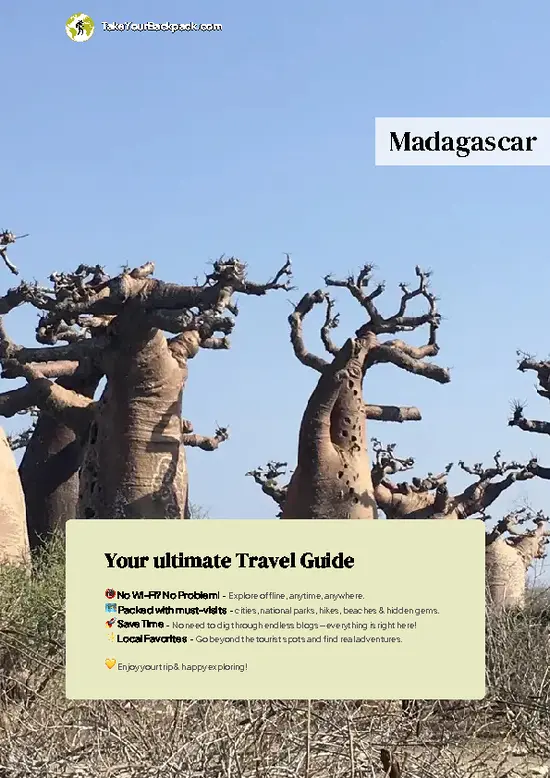
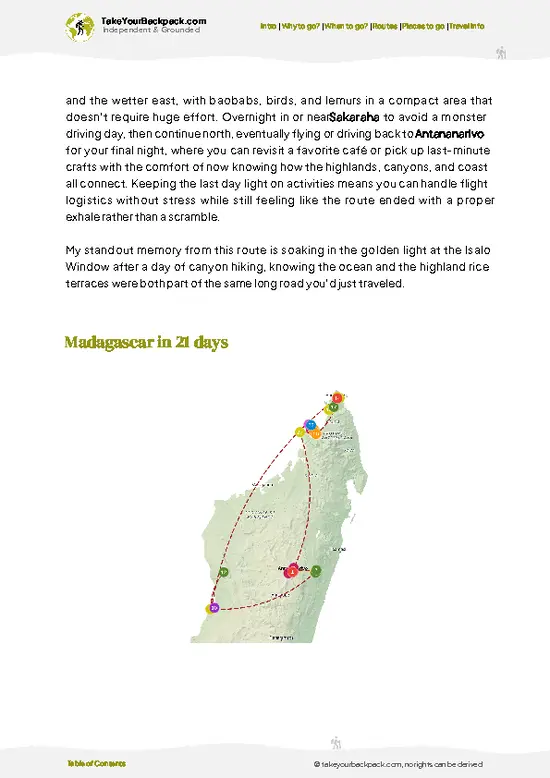
example page 0 from our offline Travel Guide for Madagascar
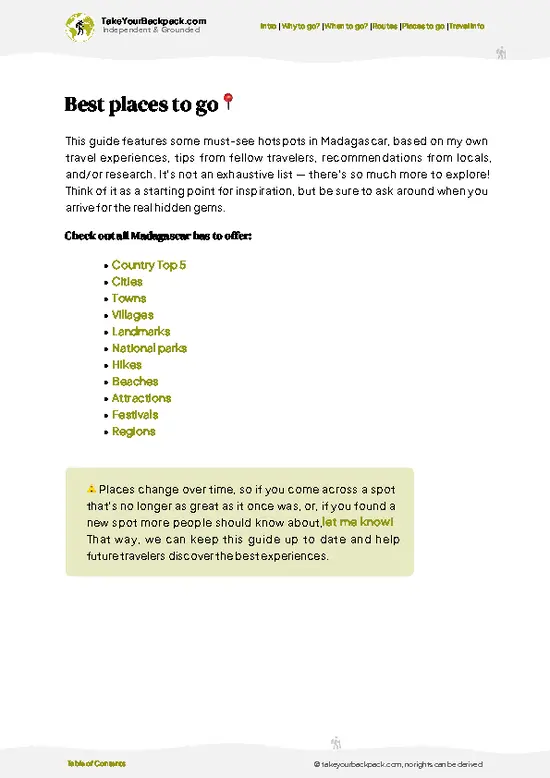
example page 1 from our offline Travel Guide for Madagascar
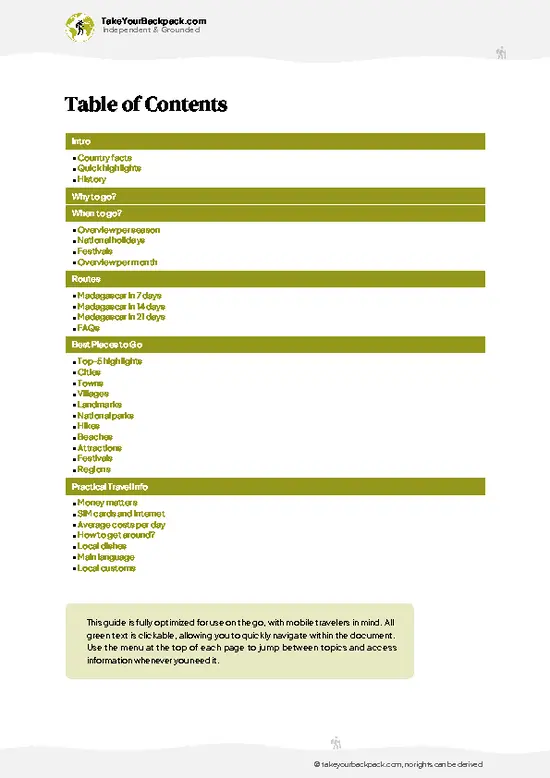
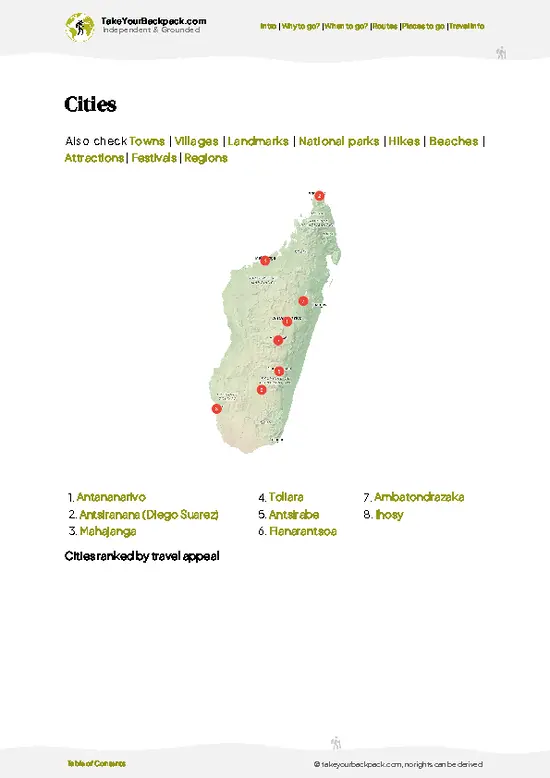
example page 2 from our offline Travel Guide for Madagascar
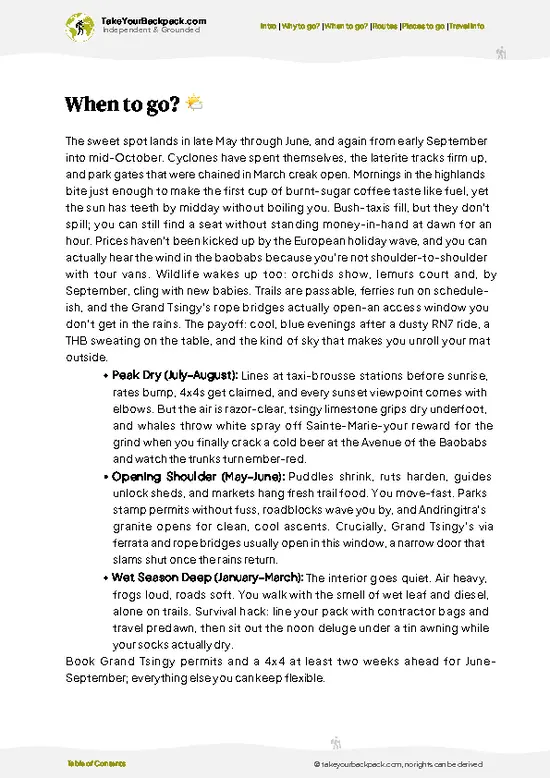
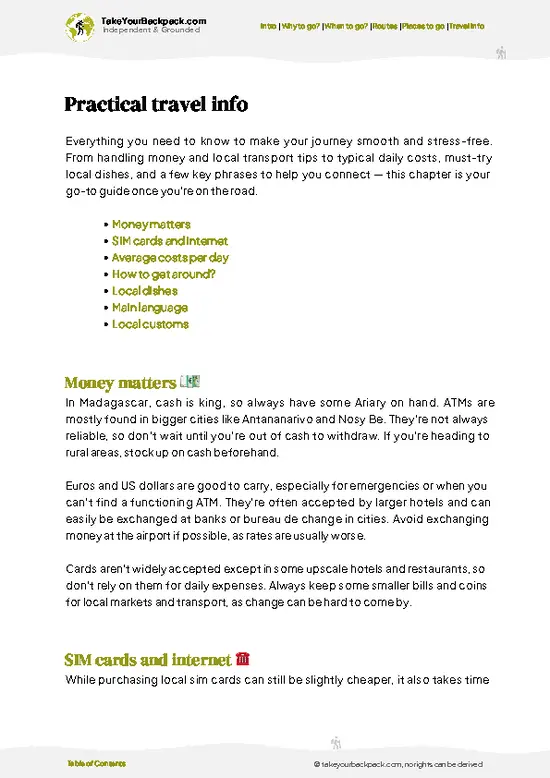
example page 3 from our offline Travel Guide for Madagascar
example page 4 from our offline Travel Guide for Madagascar
example page 5 from our offline Travel Guide for Madagascar
example page 6 from our offline Travel Guide for Madagascar
example page 7 from our offline Travel Guide for Madagascar
The digital guide (418 pages) contains:
110 highlights, ranked by travel appeal
Optimized 7, 14 & 21-day travel routes
Cities, national parks, landmarks, beaches
How to get around
Offline-friendly for travel without Wi-Fi
👉 Click to see all 30+ guide features

📅 Plan smarter in minutes, not weeks
Month by month travel advice
Festivals & national holidays
Budget expectations

🗺️ Go to the right places, skip the overrated ones
Honest pros & cons of destinations
Top hikes, parks & viewpoints
Lesser-known places most travelers miss
Clear “worth it vs skip it” guidance

🛏️ Travel smoothly without rookie mistakes
Best areas to stay
Transport systems explained simply
Common scams & safety advice
SIM cards, money & practical tips

🌍 Understand the country, not just visit it
Culture & traditions
52 Essential phrases & customs
Festivals worth planning around
Traveler-friendly historical context
Insights that make places more meaningful

📱 Built for real travel conditions
Fully downloadable PDF
Works completely offline
Optimized for phone use
Useful in remote areas & buses
Everything in one place
Save weeks of stressful planning
Get instant access to your full guide. 30‑day money-back guarantee.
+ Add another guide for just US$7.80

By proceeding you agree to our terms.
Sent to your inbox immediately after payment • 100% Secure Checkout
Best Backpacking Travel Advisor 2025 tourism awardBest Backpacking
Travel Advisor
2025
What others say about Take Your Backpack Guides:
⭐⭐⭐⭐⭐
Fantastic, amazing amount of information!
⭐⭐⭐⭐⭐
My goodness this is amazing, it's what I've been looking for hats off too you!
⭐⭐⭐⭐⭐
I think this is absolutely BRILLIANT
⭐⭐⭐⭐
Very complete and informative. It's still missing places, but I gotta to commend you
⭐⭐⭐⭐⭐
This is truly amazing, thank you, can't wait to explore it with my kids!
⭐⭐⭐⭐⭐
Awesome resource, thank you!
⭐⭐⭐⭐⭐
This is amazing! Can't wait to explore the ones I haven't seen
⭐⭐⭐⭐
I love this! Well done, great idea.
⭐⭐⭐⭐⭐
Thanks for taking the time to make this gem!
⭐⭐⭐⭐⭐
This might be the best website I've ever seen.
⭐⭐⭐⭐⭐
Congratulations, and thank you so much for your work; it's incredibly valuable.
⭐⭐⭐⭐
In all seriousness I think you did a great job pointing out the important spots
⭐⭐⭐⭐⭐
10/10 very good
⭐⭐⭐⭐⭐
As someone who's only just starting to visit regularly this is awesome, thank you.
⭐⭐⭐⭐
Thank you very much! I'm going to visit my dad, it's going to be very useful!
⭐⭐⭐⭐⭐
This is really cool! We'll be travelling for the first time and this definitely come in handy.
⭐⭐⭐⭐⭐
You are now our minister of culture, congratulations 👨‍💼
⭐⭐⭐⭐⭐
Just wanted to tell you that this is a pearl! Going to follow your recommendations.
⭐⭐⭐⭐⭐
This is so cool. I'll definitely be using the resource for my travels soon.
⭐⭐⭐⭐⭐
This is very impressive! Good work.
⭐⭐⭐⭐⭐
This is an amazing and informative site. Very well done!

🛏️ Where to stay?Where staying makes the most sense

When you’re gearing up for the ’Aloalo Festival’ in Madagascar, the right base can make all the difference. Head to the vibrant town of Tulear. It’s buzzing with backpackers and offers a mix of budget-friendly accommodations. You’ll find hostels and guesthouses that foster a social atmosphere, perfect for swapping stories and tips with fellow travelers.

Stay near the waterfront for a lively vibe. The ocean breeze is refreshing, and you’re just a stone’s throw from local eateries serving up fresh seafood. Plus, being close to the festival means you can easily dive into the festivities without … read more 👉
When you’re gearing up for the ’Aloalo Festival’ in Madagascar, the right base can make all the difference. Head to the vibrant town of Tulear. It’s buzzing with backpackers and offers a mix of budget-friendly accommodations. You’ll find hostels and guesthouses that foster a social atmosphere, perfect for swapping stories and tips with fellow travelers.

Stay near the waterfront for a lively vibe. The ocean breeze is refreshing, and you’re just a stone’s throw from local eateries serving up fresh seafood. Plus, being close to the festival means you can easily dive into the festivities without the hassle of long commutes.

Another solid option is Ifaty, a bit further out but worth it for its laid-back charm. It’s a haven for those who want a quieter spot while still being connected to the festival. The beach bungalows here are often affordable and provide a chance to unwind after a day of exploration.

Avoid the tourist traps that promise luxury but drain your wallet. Instead, focus on places where you can mingle, share a meal, and soak in the local culture. That’s where the real adventure begins.

👛 Costs (as of 3 September 2026)How expensive it really is

The Aloalo Festival in Madagascar is a vibrant celebration, but navigating the costs can be tricky. Here’s a breakdown to keep your budget in check while you soak in the culture.
  • Festival Tickets: Expect to pay around €5 to €15 for entry. Prices can vary based on the day and events you want to attend. Some special performances might cost a bit more, so keep an eye out for those.
  • Accommodation: Options range from budget hostels at about €10 to €30 per night to mid-range hotels that can go from €40 to €80. Booking in advance can save you some cash, especially during peak festival times.
  • Local Transport: Public transport is your friend here. Budget around €1 to €3 for local buses or shared taxis. If you’re feeling adventurous, renting a bike can cost about €5 per day, giving you the freedom to explore
read more 👉
The Aloalo Festival in Madagascar is a vibrant celebration, but navigating the costs can be tricky. Here’s a breakdown to keep your budget in check while you soak in the culture.
  • Festival Tickets: Expect to pay around €5 to €15 for entry. Prices can vary based on the day and events you want to attend. Some special performances might cost a bit more, so keep an eye out for those.
  • Accommodation: Options range from budget hostels at about €10 to €30 per night to mid-range hotels that can go from €40 to €80. Booking in advance can save you some cash, especially during peak festival times.
  • Local Transport: Public transport is your friend here. Budget around €1 to €3 for local buses or shared taxis. If you’re feeling adventurous, renting a bike can cost about €5 per day, giving you the freedom to explore at your own pace.
  • Food & Drinks: Street food is a must-try and can be as cheap as €1 to €5 for a meal. Restaurants will set you back about €5 to €15 for a decent meal. Don’t forget to budget for drinks; local beers are around €1, while bottled water is about €0.50.
  • Miscellaneous Expenses: This includes souvenirs, tips, and any unexpected costs. Set aside €10 to €20 for this category. It’s always good to have a buffer for those spontaneous moments that make travel special.

Keep these figures in mind to avoid surprises. The festival is about the experience, so focus on enjoying every moment without breaking the bank.


source: madagascar-tourisme.com
⚠️ Prices can change and everyone travels differently, so take this as a rough guide. Hope it helps you plan your adventure!

🍲 FoodLocal Flavors for Backpackers

At the Aloalo Festival in Madagascar, food and drink are as vibrant as the celebrations themselves. You’ll find local specialties like romazava, a hearty beef stew simmered with greens, and akoho sy voanio, chicken cooked in coconut milk. These dishes are not just meals; they’re a taste of Malagasy culture.

Festival stalls buzz with energy, serving up koba, a sweet treat made from ground peanuts and rice flour, wrapped in banana leaves. Don’t skip the freshly squeezed juice from local fruits like litchi and mangue—it’s a refreshing burst of flavor that complements the warm atmosphere.

When diving into the food scene, embrace the sharing culture. It’s common to swap bites with fellow festival-goers, so don’t hesitate to ask for a taste of their dish. Lines can get long, but the camaraderie … read more 👉
At the Aloalo Festival in Madagascar, food and drink are as vibrant as the celebrations themselves. You’ll find local specialties like romazava, a hearty beef stew simmered with greens, and akoho sy voanio, chicken cooked in coconut milk. These dishes are not just meals; they’re a taste of Malagasy culture.

Festival stalls buzz with energy, serving up koba, a sweet treat made from ground peanuts and rice flour, wrapped in banana leaves. Don’t skip the freshly squeezed juice from local fruits like litchi and mangue—it’s a refreshing burst of flavor that complements the warm atmosphere.

When diving into the food scene, embrace the sharing culture. It’s common to swap bites with fellow festival-goers, so don’t hesitate to ask for a taste of their dish. Lines can get long, but the camaraderie makes it worthwhile. Bring cash; many stalls don’t accept cards, and you’ll want to avoid the hassle of searching for an ATM.

Serving sizes can vary, so be ready to sample a bit of everything. This festival isn’t just about eating; it’s about connecting through food. Enjoy the experience!

FAQTraveler FAQ

Aloalo Festival takes place annually in July, typically lasting 3 days. It coincides with local cultural celebrations in the southern regions of Madagascar.
Attendance to Aloalo Festival is generally free, as it is a community event. However, some specific performances or activities may have small fees around 5,000 to 10,000 Malagasy Ariary.
No, you do not need tickets in advance for the Aloalo Festival. It is an open event where locals and travelers can join freely, but arriving early is recommended to secure good spots for popular events.
⚠️ Things can change over time, so always validate details locally before you go.

Other Malagasy festivals near Aloalo

Explore more nearby:

  • Festival des Lémuriens—Andasibe forests, lemur conservation, guided treks| 355 km away
  • Donia Festival—Nosy Be island, open-air concerts, Indian Ocean music| 373 km away
  • Za Festival—Sakalava region, youth gatherings, initiation rites| 373 km away

💡 Not sure where to go next?
Create a personalized itinerary for Madagascar including Aloalo and the places that fit your trip.

Generate my itinerary

👉 Discover all festivals

Or checkout all Madagascar has to offer (think cities, towns, villages, national parks, hikes, beaches, festivals)
Country photo of Madagascar

We 💚 feedbackWhat to keep in mind

The Aloalo Festival is a vibrant explosion of culture that’ll leave you buzzing long after the last drumbeat fades. You’ll connect with locals in ways that make every moment feel electric. But be ready: the logistics can be a maze. Transportation options are limited, and costs can sneak up on you. Plan ahead to keep your energy focused on the experience, not the headaches. Embrace the chaos; it’s part of the adventure!

✈️ When did I visit Madagascar?
Madagascar I went backpacking in October 2019. With a friend I rented a 4WD and drove around the southern part of Madagascar.

✍️ Help improve this page!
The information on this page is based on my own backpacking experience in Madagascar, supplemented with up-to-date research and feedback from other travelers. Travel details can change, so if you notice anything outdated or incomplete, feel free to let me know.


🙋‍♂️ Give feedback

👋 Meet the founderWho’s Behind Take Your Backpack?

Johan, backpacker and founder of TakeYourBackpackHi, I’m Johan (Netherlands 🇳🇱), the creator of TakeYourBackpack. Over the past decade, I’ve backpacked through 80+ countries across six continents, gaining extensive experience with independent travel, long-term trips, and overland routes.

This site is built on a combination of firsthand travel experience and carefully curated insights from other backpackers. Many guides are based on places I’ve personally visited, while others bring together tips, observations, and practical advice shared by trusted travelers I’ve met along the way.

The goal is to provide realistic, experience-driven guidance — not generic itineraries — so you can explore destinations with better context, clearer expectations, and more confidence.

Get full Madagascar guide •
Instant download • 110 highlights • Full Offline guide