×

Madagascar🇲🇬 | citiesToliaraVezo pirogues, sandy avenues, spiny-forest garden, southwest port | things to do and best time to go

Explore AntsirabeExplore Aloalo Festival

Backpacking in Toliara
👍 Recommendedcity ranked #4
By Johan Kruseman 🇳🇱 | Updated October 16, 2026

Toliara has a reliable airport, a paved highway in from Ranohira, and the best-organized access on the southwest coast to Ifaty’s reefs and the Mikea forest. It sits on the Mozambique Channel in southwest Madagascar, at the mouth of the Fiherenana River, and it suits travelers who like sand streets and sea air more than polish. The light is white by 9 AM, pousse-pousse bells clink, and diesel mixes with grilled fish. At the market a vendor named Soa pressed a lime into my palm and said, “Mora, mora,” slowly, slowly, as I tried to haggle too fast. The upside is easy beach access and cheap seafood. The downside is dust, patchy services and few sights in town itself. A taxi-brousse south saves money but costs a full day, and flying gives the most time for a backpacker. Unlike Morondava, with its baobab-lined road, Toliara is a working port first.

Discover everything you want to know in the 📖 Madagascar Travel Guide.


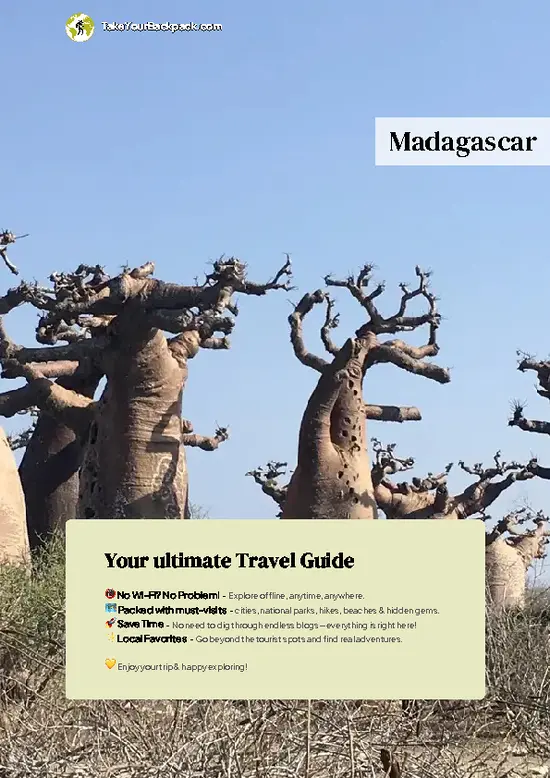
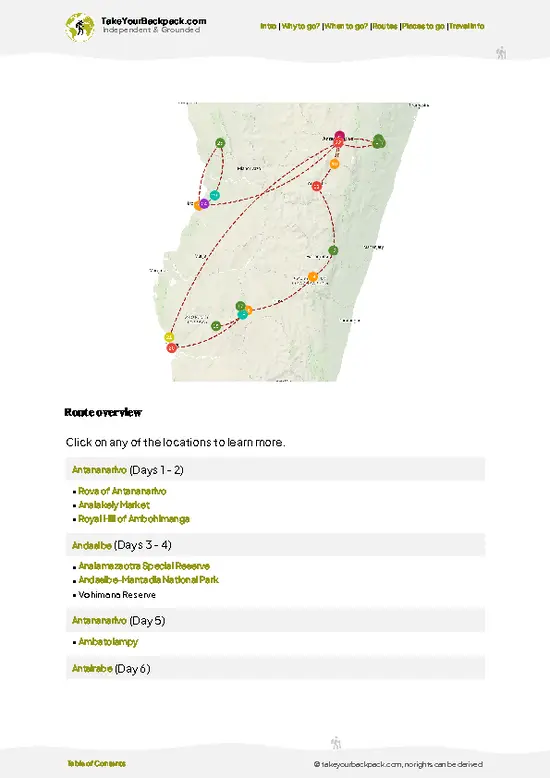
example page 0 from our offline Travel Guide for Madagascar
example page 1 from our offline Travel Guide for Madagascar
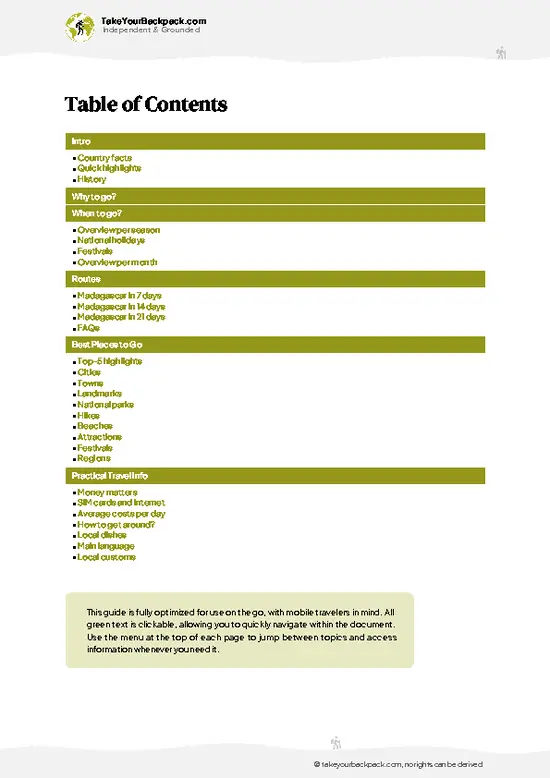
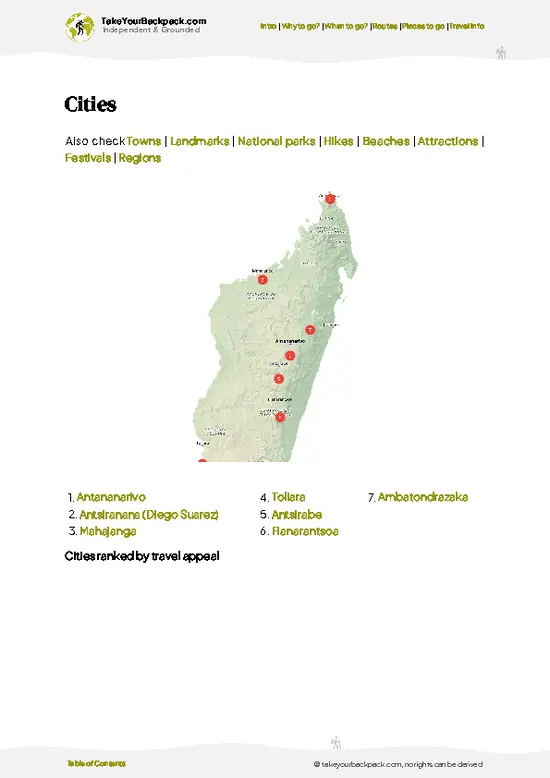
example page 2 from our offline Travel Guide for Madagascar
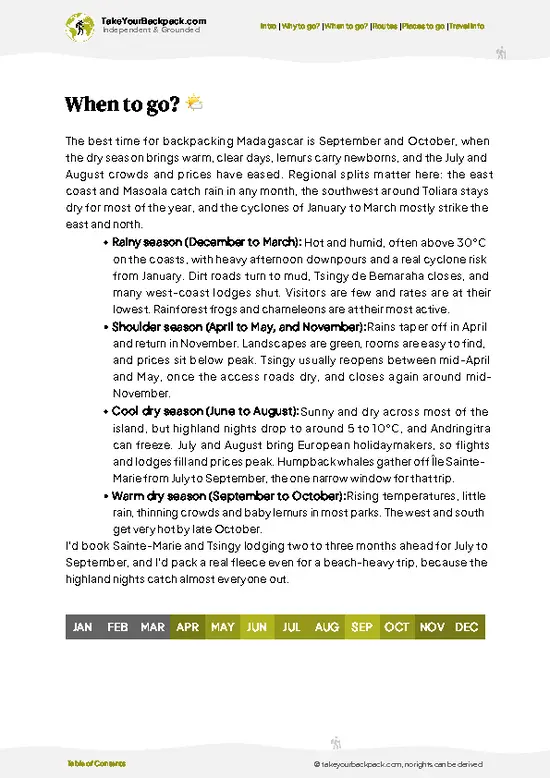
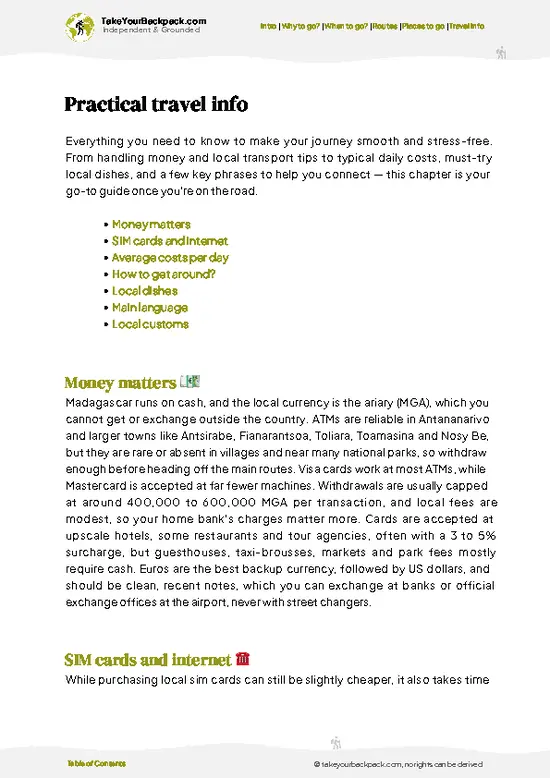
example page 3 from our offline Travel Guide for Madagascar
example page 4 from our offline Travel Guide for Madagascar
example page 5 from our offline Travel Guide for Madagascar
example page 6 from our offline Travel Guide for Madagascar
example page 7 from our offline Travel Guide for Madagascar
Loading the map 🌍
CLICK TO FILTER
cities
towns
landmarks
national parks
hikes
beaches
attractions
festivals
regions
SHOW COUNTRY’S BESTSHOW ALL

✨ Why go?
Ranked #4 city in Madagascar
Why visitors keep coming back

Toliara matters because it is the southwest gateway where the RN7 ends, so almost every overland traveler from Antananarivo, Ranohira or Fianarantsoa eventually rolls in here. You come to rest after long, rough rides, restock cash and supplies, and organize the next leg. The city has a good spread of guesthouses and beach bungalows, and seafood is the main draw at the table, especially grilled lobster and zebu skewers on the waterfront. Walking is possible in the center, but distances along the sandy avenues make pousse-pousse rides the habit. What you really get is access: the reefs and the spiny forest lie close, and Anakao’s boats and the Ifaty coast start from here. Nightlife is low-key, mostly beach bars and a few clubs. It works best as a base of two or three nights rather than a long stay, since the town itself is quickly seen.

💡 HighlightsEssential experiences to have while visiting Toliara

  1. Musée de l’Université de Toliara (Musée de la Mer area): A small collection on regional marine life and southwestern cultures, including Vezo and Mahafaly traditions. Go in the morning when it is cooler. Entry is usually a few thousand ariary (about US$1 to 2), and an hour is plenty.
  2. Marché Central: The place for spices, dried fish, vanilla, woven mats and fabric. Early morning is liveliest and cooler, and it gives a real look at daily life. Browsing is free and takes 1 to 2 hours.
  3. Bay and Plage de Toliara waterfront: Pirogues with patched sails come in with the catch, and you can watch Vezo fishermen unload. Late afternoon has the softest light. It is free and fits an hour or two.
  4. Pousse-pousse ride through the old quarter: Rickshaw cycles are the classic way to see the wide avenues and colonial-era
… read more 👉
  1. Musée de l’Université de Toliara (Musée de la Mer area): A small collection on regional marine life and southwestern cultures, including Vezo and Mahafaly traditions. Go in the morning when it is cooler. Entry is usually a few thousand ariary (about US$1 to 2), and an hour is plenty.
  2. Marché Central: The place for spices, dried fish, vanilla, woven mats and fabric. Early morning is liveliest and cooler, and it gives a real look at daily life. Browsing is free and takes 1 to 2 hours.
  3. Bay and Plage de Toliara waterfront: Pirogues with patched sails come in with the catch, and you can watch Vezo fishermen unload. Late afternoon has the softest light. It is free and fits an hour or two.
  4. Pousse-pousse ride through the old quarter: Rickshaw cycles are the classic way to see the wide avenues and colonial-era facades. A short ride costs about 2,000 to 4,000 ariary (roughly US$0.50 to 1), and an hour covers it.
  5. Arboretum d’Antsokay: A botanical garden just outside the center, with spiny-forest plants, chameleons and tortoises, and guided walks. Morning is best. Entry is about 15,000 to 25,000 ariary (US$3 to 5) and a visit takes 1.5 to 2 hours.
  6. Sunset at the Mangily and Plage Mahavatse shore: A quiet stretch for evening walks, with fishing boats lined up on the sand. Free, 1 hour.
Beyond town, you can reach Ifaty’s reef and baobab forest, Anakao and Nosy Ve island, and Tsimanampetsotsa National Park as day trips from Toliara. All of it fits comfortably into one full day and a half.
Spotted a mistake or missing something? Contact us.

🏘️ NeighborhoodsUnderstanding the local layout

Toliara sprawls flat along the Mozambique Channel, and the areas below are easy to link on foot or by a short cyclo-pousse ride.
  • Centre Ville and Avenue de France: Wide, sandy-edged avenues, shaded by tamarinds, where the market stalls, banks, bakeries and internet cafés cluster. Mornings smell of frying mofo gasy and diesel. Walkable in an hour, and it costs nothing, so it gives you the most for the least effort.
  • Waterfront Boulevard (Bord de Mer): A long promenade facing the channel, with cool sea wind at dusk, grilled fish smoke and a few bars with live sega and dancing on weekends. Quiet by day, loud on Saturday nights. Take a cyclo-pousse home after dark rather than walking.
  • Mahavatse and Tsimenatse: Residential edges where life spills onto sandy lanes: charcoal stoves, kids kicking balls,
… read more 👉
Toliara sprawls flat along the Mozambique Channel, and the areas below are easy to link on foot or by a short cyclo-pousse ride.
  • Centre Ville and Avenue de France: Wide, sandy-edged avenues, shaded by tamarinds, where the market stalls, banks, bakeries and internet cafés cluster. Mornings smell of frying mofo gasy and diesel. Walkable in an hour, and it costs nothing, so it gives you the most for the least effort.
  • Waterfront Boulevard (Bord de Mer): A long promenade facing the channel, with cool sea wind at dusk, grilled fish smoke and a few bars with live sega and dancing on weekends. Quiet by day, loud on Saturday nights. Take a cyclo-pousse home after dark rather than walking.
  • Mahavatse and Tsimenatse: Residential edges where life spills onto sandy lanes: charcoal stoves, kids kicking balls, zebu carts creaking past. Few sights, but you get the real rhythm of the town. Hot and dusty, so go early.
  • Ankiembe and the Port Area: Fishermen haul in catches and sailing pirogues rest on the sand. Expect flies, salt and shouting at the morning auction. Worth a short ride, not a long stay.
  • Sarodrano and Ifaty road (north and south edges): Beach settlements reached by taxi-brousse or tuk-tuk, with soft sand and dry spiny scrub. Better for a half day than for sightseeing.

⌛️ 1 dayWhat you can realistically do in a day

The day moves on foot and by pousse-pousse in the cool morning, with a long break in the midday heat before an easy sunset walk.
7:30 AM, Marché Central: Start while stalls are setting up. Taste fresh mofo (fried dough) and pick through spices and dried fish. Then take a pousse-pousse to the waterfront.
9:00 AM, Waterfront and fishing pirogues: Walk the bay as Vezo fishermen haul in the morning catch. Photos are better here than anywhere in town. Ask before pointing a camera at people.
10:30 AM, Musée de l’Université: A short, cool stop for local marine and cultural history. Take a taxi from the waterfront.
12:00 PM, Lunch and rest: Order grilled fish or zebu skewers at a seafront restaurant, then stay out of the sun for a couple of hours. A siesta is the local habit.
3:00 PM, Arboretum d’Antsokay: … read more 👉
The day moves on foot and by pousse-pousse in the cool morning, with a long break in the midday heat before an easy sunset walk.
7:30 AM, Marché Central: Start while stalls are setting up. Taste fresh mofo (fried dough) and pick through spices and dried fish. Then take a pousse-pousse to the waterfront.
9:00 AM, Waterfront and fishing pirogues: Walk the bay as Vezo fishermen haul in the morning catch. Photos are better here than anywhere in town. Ask before pointing a camera at people.
10:30 AM, Musée de l’Université: A short, cool stop for local marine and cultural history. Take a taxi from the waterfront.
12:00 PM, Lunch and rest: Order grilled fish or zebu skewers at a seafront restaurant, then stay out of the sun for a couple of hours. A siesta is the local habit.
3:00 PM, Arboretum d’Antsokay: This is the stop most visitors skip. Take a taxi a short ride out of town and walk the spiny-forest paths with a guide, spotting tortoises and chameleons among octopus trees.
5:30 PM, Sunset at the shore: Return to town and walk the beach as the boats come in and the light turns orange. End with a drink or dinner nearby.

🌤️ When to go?Seasonal considerations and timing

The dry months of May to October are the most comfortable for Toliara, with days of 25 to 28°C (77 to 82°F) and cool nights near 15 to 18°C (59 to 64°F).
  • Cool Dry Season (May to October): Sunny, almost rainless, with about 11 to 12 hours of daylight in June. Humpback whales pass offshore from July to September. Prices for beach lodging rise in July and August.
  • Hot Season (November to April): Highs reach 32 to 35°C (90 to 95°F) and sun feels fierce, even though Toliara is one of the driest towns on the island. Brief heavy downpours come from January to March, and cyclones can disrupt roads and flights.
  • Shoulder Weeks (October and November): Warm, quiet, and bargains are easy to find, with daylight stretching to about 13 hours by December.
Book transport out of town a few days ahead in July and August, when seats fill up.

source: climatestotravel.comJANJanuary: below average for travelingFEBFebruary: below average for travelingMARMarch: below average for travelingAPRApril: fair for travelingMAYMay: highly recommended for travelingJUNJune: highly recommended for travelingJULJuly: excellent for travelingAUGAugust: excellent for travelingSEPSeptember: excellent for travelingOCTOctober: highly recommended for travelingNOVNovember: fair for travelingDECDecember: fair for traveling
when-to-go

✈️ The backpacker research shortcutMadagascar Travel Guide

An offline-friendly backpacking guide with optimized travel routes, ranked highlights, transport advice, and the best areas to stay.
example page 0 from our offline Travel Guide for Madagascar
example page 1 from our offline Travel Guide for Madagascar
example page 2 from our offline Travel Guide for Madagascar
example page 3 from our offline Travel Guide for Madagascar
example page 4 from our offline Travel Guide for Madagascar
example page 5 from our offline Travel Guide for Madagascar
example page 6 from our offline Travel Guide for Madagascar
example page 7 from our offline Travel Guide for Madagascar
The digital guide (301 pages) contains:
✅ 96 highlights, ranked by travel appeal
✅ Optimized 7, 14 & 21-day travel routes
✅ Cities, national parks, landmarks, beaches
✅ How to get around
✅ Offline-friendly for travel without Wi-Fi
👉 Click to see all 30+ guide features

📅 Plan smarter in minutes, not weeks
✅ Month by month travel advice
✅ Festivals & national holidays
✅ Budget expectations

🗺️ Go to the right places, skip the overrated ones
✅ Honest pros & cons of destinations
✅ Top hikes, parks & viewpoints
✅ Lesser-known places most travelers miss
✅ Clear “worth it vs skip it” guidance

🛏️ Travel smoothly without rookie mistakes
✅ Best areas to stay
✅ Transport systems explained simply
✅ Common scams & safety advice
✅ SIM cards, money & practical tips

🌍 Understand the country, not just visit it
✅ Culture & traditions
✅ 52 Essential phrases & customs
✅ Festivals worth planning around
✅ Traveler-friendly historical context
✅ Insights that make places more meaningful

📱 Built for real travel conditions
✅ Fully downloadable PDF
✅ Works completely offline
✅ Optimized for phone use
✅ Useful in remote areas & buses
✅ Everything in one place
Stop searching, start planning
Get instant access to your full guide. 30‑day money-back guarantee.
+ Add another guide for just

By proceeding you agree to our terms.
Sent to your inbox immediately after payment • 100% Secure Checkout
Best Backpacking Travel Advisor 2025 tourism awardBest Backpacking
Travel Advisor
2025
What others say about Take Your Backpack Guides:
⭐⭐⭐⭐⭐
Fantastic, amazing amount of information!
⭐⭐⭐⭐⭐
My goodness this is amazing, it's what I've been looking for hats off too you!
⭐⭐⭐⭐⭐
I think this is absolutely BRILLIANT
⭐⭐⭐⭐
Very complete and informative. It's still missing places, but I gotta to commend you
⭐⭐⭐⭐⭐
This is truly amazing, thank you, can't wait to explore it with my kids!
⭐⭐⭐⭐⭐
Awesome resource, thank you!
⭐⭐⭐⭐⭐
This is amazing! Can't wait to explore the ones I haven't seen
⭐⭐⭐⭐
I love this! Well done, great idea.
⭐⭐⭐⭐⭐
Thanks for taking the time to make this gem!
⭐⭐⭐⭐⭐
This might be the best website I've ever seen.
⭐⭐⭐⭐⭐
Congratulations, and thank you so much for your work; it's incredibly valuable.
⭐⭐⭐⭐
In all seriousness I think you did a great job pointing out the important spots
⭐⭐⭐⭐⭐
10/10 very good
⭐⭐⭐⭐⭐
As someone who's only just starting to visit regularly this is awesome, thank you.
⭐⭐⭐⭐
Thank you very much! I'm going to visit my dad, it's going to be very useful!
⭐⭐⭐⭐⭐
This is really cool! We'll be travelling for the first time and this definitely come in handy.
⭐⭐⭐⭐⭐
You are now our minister of culture, congratulations 👨‍💼
⭐⭐⭐⭐⭐
Just wanted to tell you that this is a pearl! Going to follow your recommendations.
⭐⭐⭐⭐⭐
This is so cool. I'll definitely be using the resource for my travels soon.
⭐⭐⭐⭐⭐
This is very impressive! Good work.
⭐⭐⭐⭐⭐
This is an amazing and informative site. Very well done!

🛏️ Where to stay?Choosing the right base

The center around Avenue de France and the waterfront boulevard is the best area for a budget bed in Toliara. Basic guesthouses and small hotels with fan rooms are plentiful, and a few have dorms or cheap singles. The market, banks, ATMs and taxi-brousse departures are all within a short cyclo-pousse ride, which means you can arrange onward travel without spending much.
The waterfront stretch is breezier and quieter by day, though bars play music on weekend nights, so ask for a room away from the street. Streets are dimly lit after dark, so take a cyclo-pousse for the last few blocks. Reserve ahead … read more 👉
The center around Avenue de France and the waterfront boulevard is the best area for a budget bed in Toliara. Basic guesthouses and small hotels with fan rooms are plentiful, and a few have dorms or cheap singles. The market, banks, ATMs and taxi-brousse departures are all within a short cyclo-pousse ride, which means you can arrange onward travel without spending much.
The waterfront stretch is breezier and quieter by day, though bars play music on weekend nights, so ask for a room away from the street. Streets are dimly lit after dark, so take a cyclo-pousse for the last few blocks. Reserve ahead in July and August, when whale-watching and Ifaty visitors fill the better-value places.
If you want sand and snorkeling, the coastal villages north of town, around Ifaty and Mangily, offer bungalows and a few hostel-style beds. Transport there is by taxi-brousse, with fewer evening options, and fewer shops, so you will need cash and snacks in hand. For most backpackers on a first visit, sleep in the center and visit the coast by day.

🚌 Getting aroundHow to get from A to B

From the taxi-brousse station on the edge of town, a cyclo-pousse or tuk-tuk to the center costs about Ar 2,000 to 5,000 (US$0.50 to 1) and takes 10 to 15 minutes. Toliara is flat and sandy, with little traffic and no metro or formal bus system, so you will mix walking with cheap local rides. Expect heat, dust and the clatter of bicycle bells.
  • Walking: Free, and the center and waterfront fit in a 30 to 40 minute loop. Go early or after 4 pm, since midday sun is brutal and sand slows every step. This gives you the most for your money in town.
  • Cyclo-pousse: Pedal rickshaws cost roughly Ar 1,000 to 3,000 (US$0.25 to 0.70) per short ride. Slow and a little bumpy, but cheaper than a tuk-tuk, and the driver cools you with a breeze. Agree the price first.
  • Tuk-tuk and taxi: Tuk-tuks run about Ar 3,000
… read more 👉
From the taxi-brousse station on the edge of town, a cyclo-pousse or tuk-tuk to the center costs about Ar 2,000 to 5,000 (US$0.50 to 1) and takes 10 to 15 minutes. Toliara is flat and sandy, with little traffic and no metro or formal bus system, so you will mix walking with cheap local rides. Expect heat, dust and the clatter of bicycle bells.
  • Walking: Free, and the center and waterfront fit in a 30 to 40 minute loop. Go early or after 4 pm, since midday sun is brutal and sand slows every step. This gives you the most for your money in town.
  • Cyclo-pousse: Pedal rickshaws cost roughly Ar 1,000 to 3,000 (US$0.25 to 0.70) per short ride. Slow and a little bumpy, but cheaper than a tuk-tuk, and the driver cools you with a breeze. Agree the price first.
  • Tuk-tuk and taxi: Tuk-tuks run about Ar 3,000 to 8,000 (US$0.70 to 1.80) across town. They are faster and noisier, with exhaust in your face at junctions. Worth it after dark or with a pack.
  • Taxi-brousse: Minibuses reach Ifaty, Anakao-area ports and Antananarivo or Fianarantsoa. Ifaty costs about Ar 8,000 to 15,000 (US$2 to 3.50) and takes 1.5 to 2.5 hours on sandy tracks. Seats are tight, and they leave when full, usually early morning. The best value for long hauls, though comfort is minimal.
  • Bush taxi by 4x4 or hired car: A private vehicle for day trips runs about US$60 to 100. Pricey, but it saves hours if you split it among four people.

👛 Costs (as of 16 October 2026)Typical daily expenses

Budget about US$19 to 41 a day in Toliara, including a dorm or basic room, local meals and cheap rides. Prices are quoted in US$, though you pay in Malagasy ariary.
CategoryBudget RangeLocal Reality
Dorm accommodation (high season)US$8 to 15Few true dorms, so a basic fan room or shared bed is more common in July and August.
Dorm accommodation (off-season)US$6 to 11Negotiable when guesthouses are empty.
MealsUS$5 to 12Street breakfast, hotely rice plates and grilled fish in the evening.
Local transportUS$1 to 4Cyclo-pousse and tuk-tuk rides across town.
City transport passUS$0No pass exists, so you pay per ride.
Basic activities/entry feesUS$3 to 6Arboretum or Reniala entry, plus occasional snorkeling trips.
MiscellaneousUS$2 to 4Water, sunscreen, data and tips.
Total Daily BudgetUS$19 to 41Based on
… read more 👉
Budget about US$19 to 41 a day in Toliara, including a dorm or basic room, local meals and cheap rides. Prices are quoted in US$, though you pay in Malagasy ariary.
CategoryBudget RangeLocal Reality
Dorm accommodation (high season)US$8 to 15Few true dorms, so a basic fan room or shared bed is more common in July and August.
Dorm accommodation (off-season)US$6 to 11Negotiable when guesthouses are empty.
MealsUS$5 to 12Street breakfast, hotely rice plates and grilled fish in the evening.
Local transportUS$1 to 4Cyclo-pousse and tuk-tuk rides across town.
City transport passUS$0No pass exists, so you pay per ride.
Basic activities/entry feesUS$3 to 6Arboretum or Reniala entry, plus occasional snorkeling trips.
MiscellaneousUS$2 to 4Water, sunscreen, data and tips.
Total Daily BudgetUS$19 to 41Based on high-season accommodation.
Eat where locals queue and agree on fares first, which saves a few dollars every day.
⚠️ Prices can change and everyone travels differently, so take this as a rough guide. Hope it helps you plan your adventure!

🚌 Day tripsShort trips worth adding

Toliara works well as a base for coastal and dry-forest outings, most of them done in a day by shared taxi or a hired vehicle.Ifaty and Mangily: Spiny forest, baobabs and a lagoon with a reef lie about 1.5 to 2.5 hours north on sandy tracks. A taxi-brousse costs roughly US$2 to 4 each way, a pirogue snorkeling trip about US$10 to 20. Go before 8 am to beat the heat. Many first-timers underestimate the sun, so bring a hat and plenty of water.
👉 Explore IfatyReniala Reserve: Baobabs up to 1,000 years old and lemurs, tortoises and birds in spiny forest, about 30 minutes beyond Ifaty. Entry runs about Ar 20,000 to 30,000 (US$5 to 7) with a guide. Early morning is best for birds.
Anakao and Nosy Ve: A boat ride south to a village with white sand and Nosy Ve, where red-tailed tropicbirds nest. Reach … read more 👉
Toliara works well as a base for coastal and dry-forest outings, most of them done in a day by shared taxi or a hired vehicle.Ifaty and Mangily: Spiny forest, baobabs and a lagoon with a reef lie about 1.5 to 2.5 hours north on sandy tracks. A taxi-brousse costs roughly US$2 to 4 each way, a pirogue snorkeling trip about US$10 to 20. Go before 8 am to beat the heat. Many first-timers underestimate the sun, so bring a hat and plenty of water.
👉 Explore IfatyReniala Reserve: Baobabs up to 1,000 years old and lemurs, tortoises and birds in spiny forest, about 30 minutes beyond Ifaty. Entry runs about Ar 20,000 to 30,000 (US$5 to 7) with a guide. Early morning is best for birds.
Anakao and Nosy Ve: A boat ride south to a village with white sand and Nosy Ve, where red-tailed tropicbirds nest. Reach it by pirogue or motorboat, around 1 to 2 hours depending on wind, costing about US$25 to 50 for a shared outing. Seas are calmer from May to October. Check the return time, as afternoon winds can delay boats.
👉 Explore AnakaoArboretum d’Antsokay: A botanical garden about 12 km southeast of town, with dryland plants and tortoises. Tuk-tuk there costs about US$3 to 6, entry around US$5 to 8 with a guide. It is an easy half day in the heat of the day, since paths are shaded.

🍲 FoodWhat to Eat & Drink

Toliara eats from the sea. Look for grilled fish and lobster straight from Vezo fishermen, often cheaper than elsewhere on the island, and octopus cooked in coconut milk or with lemon and chili. Coastal cooks lean on coconut and lemon more than highland kitchens do. Keep an eye out for sea cucumber and fried crab in season.
For breakfast, find the women frying mofo gasy and mofo anana at dawn near the market, fragrant with oil and sugar, for around Ar 500 to 1,000 (US$0.10 to 0.25). Small hotelys along the avenues serve rice with fish or zebu for about Ar 4,000 to 8,000 (US$1 to 2). Evenings on the waterfront bring grill stalls and beach bars, where a plate of fish runs US$3 to 8 and a cold THB beer costs about Ar 4,000 to 6,000.
Sample rhum arrangé, rum steeped in fruit and spices, at bars … read more 👉
Toliara eats from the sea. Look for grilled fish and lobster straight from Vezo fishermen, often cheaper than elsewhere on the island, and octopus cooked in coconut milk or with lemon and chili. Coastal cooks lean on coconut and lemon more than highland kitchens do. Keep an eye out for sea cucumber and fried crab in season.
For breakfast, find the women frying mofo gasy and mofo anana at dawn near the market, fragrant with oil and sugar, for around Ar 500 to 1,000 (US$0.10 to 0.25). Small hotelys along the avenues serve rice with fish or zebu for about Ar 4,000 to 8,000 (US$1 to 2). Evenings on the waterfront bring grill stalls and beach bars, where a plate of fish runs US$3 to 8 and a cold THB beer costs about Ar 4,000 to 6,000.
Sample rhum arrangé, rum steeped in fruit and spices, at bars or from sellers near the market. Order drinks sealed, and choose busy stalls where the fish is cooked in front of you.

🛡️ SafetyStaying Safe: What Travelers Should Know

Toliara is generally calm, and most problems are petty. Pickpocketing and bag snatching happen around the market, the taxi-brousse station and on the waterfront, so carry only the cash you need and keep your phone out of sight. Streets are poorly lit at night, and walking alone after dark is where extra care helps. Take a cyclo-pousse or tuk-tuk instead, and agree on the fare before climbing in. Solo travelers, including women, usually manage fine with modest dress and normal confidence, though unwanted attention from touts is common. Guides may approach near the station and quote inflated prices, so a firm no and a walk away is enough. Hold bags on your lap in taxi-brousses. For Ifaty and Anakao, leave valuables locked at your guesthouse and use licensed boat operators. Sun and dehydration … read more 👉
Toliara is generally calm, and most problems are petty. Pickpocketing and bag snatching happen around the market, the taxi-brousse station and on the waterfront, so carry only the cash you need and keep your phone out of sight. Streets are poorly lit at night, and walking alone after dark is where extra care helps. Take a cyclo-pousse or tuk-tuk instead, and agree on the fare before climbing in. Solo travelers, including women, usually manage fine with modest dress and normal confidence, though unwanted attention from touts is common. Guides may approach near the station and quote inflated prices, so a firm no and a walk away is enough. Hold bags on your lap in taxi-brousses. For Ifaty and Anakao, leave valuables locked at your guesthouse and use licensed boat operators. Sun and dehydration cause more trouble than crime, so drink bottled or filtered water.

FAQCommon questions from travelers

Two to three days is enough for Toliara itself plus a coastal outing. Spend one day in town around the market, waterfront and port, then add Ifaty or Reniala (1.5 to 2.5 hours away) and, if time allows, a boat trip to Anakao or Nosy Ve.
Toliara is reasonably safe for solo backpackers, with petty theft the main concern. Avoid walking alone on dark streets, use a cyclo-pousse (about Ar 1,000 to 3,000) at night, and keep phones and cash out of sight around the market and taxi-brousse station.
Toliara is known as the gateway to the dry southwest, with the Ifaty reef, spiny forests and baobabs, and the Vezo fishing culture. Humpback whales pass offshore July to September, and the town sits roughly 940 km from Antananarivo, at the end of the RN7 highway.
⚠️ Things can change over time, so always validate details locally before you go.

Other Malagasy cities near Toliara

Explore more nearby:

  • Fianarantsoa—Betsileo old quarter, stone lanes, FCE train, highland vineyards| 410 km away
  • Antsirabe—Colonial station, rickshaw loops, horn workshops, thermal spa| 520 km away
  • Antananarivo—Analakely steps, Rova hilltop, Andravoahangy crafts, tin-roof views| 636 km away

💡 Not sure where to go next?
Create a personalized itinerary for Madagascar including Toliara and the places that fit your trip.

Generate my itinerary

👉 Discover all cities

Or checkout all Madagascar has to offer (think cities, towns, villages, national parks, hikes, beaches, festivals)
Country photo of Madagascar

We 💚 feedbackIs it worth it?

Give Toliara two nights, three if you want a full day at the Mozambique Channel reef and a slow evening of grilled fish by the water. Any longer and you will start watching the sand streets for the next bush taxi. I would arrive early, book the onward seat the same afternoon, and treat the town as a launchpad, not a destination.

✈️ When did I visit Madagascar?
Madagascar I went backpacking in October 2019. With a friend I rented a 4WD and drove around the southern part of Madagascar.

✍️ Help improve this page!
The information on this page is based on my own backpacking experience in Madagascar, supplemented with up-to-date research and feedback from other travelers. Travel details can change, so if you notice anything outdated or incomplete, feel free to let me know.


🙋‍♂️ Give feedback

👋 Meet the founderWho’s Behind Take Your Backpack?

Johan, backpacker and founder of TakeYourBackpackHi, I’m Johan (Netherlands 🇳🇱), the creator of TakeYourBackpack. Over the past 3 decades, I’ve backpacked through 90+ countries across six continents, gaining extensive experience with independent travel, long-term trips, and overland routes.

This site is built on a combination of firsthand travel experience and carefully curated insights from other backpackers. Many guides are based on places I’ve personally visited, while others bring together tips, observations, and practical advice shared by trusted travelers I’ve met along the way.

The goal is to provide realistic, experience-driven guidance — not generic itineraries — so you can explore destinations with better context, clearer expectations, and more confidence.