×

Madagascar🇲🇬 | festivalsFestival des RizièresHighland terraces, rice planting, Betsileo traditions | things to do and best time to go

Explore Festival des LémuriensExplore Andringitra Massif

Backpacking in des Rizières
👌 Worth visitingfestival ranked #11
By Johan Kruseman 🇳🇱 | Updated September 3, 2026

Forget the fantasy of a polished, Instagram-perfect music festival—Festival des Rizières is not a sanitized, Western-style event with VIP lounges and predictable lineups. It’s raw, pulsing, and rooted in the muddy heart of Madagascar’s rice country, just outside Ambositra in the central highlands. Picture this: local musicians hammering out tsapiky and hira gasy rhythms, crowds of Malagasy families, backpackers, and the occasional lost expat all pressed together on the edge of emerald paddies. The festival runs for a few days, but time blurs—sunrise drumming, dusk dancing, and the constant thrum of village life. It’s chaotic, welcoming, and sometimes exhausting, but if you want to trade comfort for connection and see Madagascar’s soul in motion, this is where you do it.

Discover everything you want to know in the 📖 Madagascar Travel Guide.
Loading the map 🌍
CLICK TO FILTER
cities
towns
villages
landmarks
national parks
hikes
beaches
attractions
festivals
regions
SHOW COUNTRY’S BESTSHOW ALL

✨ Why go?
Ranked #11 festival in Madagascar
Why des Rizières should be on your travel list

Backpackers flock to the Festival des Rizières in Madagascar for a burst of social energy and a taste of temporary community. This festival isn’t just a spectacle; it’s a deep dive into local culture, where you can witness traditional rice planting and join in the vibrant celebrations. The affordability of this event compared to similar festivals worldwide makes it a no-brainer for budget-conscious travelers.

Planning your route around this festival not only enriches your experience but also allows you to connect with fellow adventurers and locals alike. It’s a perfect anchor in a longer travel itinerary, giving you a chance to recharge and immerse yourself before heading back into the wild. Don’t miss this opportunity to blend exploration with cultural immersion!
Want to include Festival des Rizières in your Madagascar route?
Create a personalized Madagascar itinerary that includes Festival des Rizières and the places that fit your trip — based on your travel style, budget, and available time. Get your route in seconds.

Generate my trip

💡 HighlightsTop highlights of des Rizières

  • Traditional music and dance troupes — Live, local rhythms and dances are everywhere, from small village groups to big procession stages. The songs are communal and raw rather than polished for tourists, so you feel the energy of the place more than a rehearsed performance.
  • Rice-planting & transplant competitions — Hands-on, muddy, and oddly addictive: teams race to plant or transplant rice in the flooded plots, showing off speed, technique, and local pride. It’s a genuine way to join the work that the festival celebrates (personal favorite — it’s loud, unpretentious, and you leave filthy and smiling).
  • Decorative rice floats and straw art — Expect floats, sculptures, and costumes made from rice stalks, husks, and thatching; clever, low-tech artistry that turns the harvest itself into parade
read more 👉
  • Traditional music and dance troupes — Live, local rhythms and dances are everywhere, from small village groups to big procession stages. The songs are communal and raw rather than polished for tourists, so you feel the energy of the place more than a rehearsed performance.
  • Rice-planting & transplant competitions — Hands-on, muddy, and oddly addictive: teams race to plant or transplant rice in the flooded plots, showing off speed, technique, and local pride. It’s a genuine way to join the work that the festival celebrates (personal favorite — it’s loud, unpretentious, and you leave filthy and smiling).
  • Decorative rice floats and straw art — Expect floats, sculptures, and costumes made from rice stalks, husks, and thatching; clever, low-tech artistry that turns the harvest itself into parade pieces. It’s a great snapshot of local creativity and how communities repurpose agricultural materials.
  • Communal rice feasts and tastings — The food stalls focus on rice in every form: savory, sticky, sweet, steamed, grilled, even rice-based sweets you didn’t know existed. Sampling different varieties and simple home-cooked dishes gives real insight into regional tastes and daily life.
  • Paddy-terrace scenery and evening gatherings — The festival tends to center where rice is grown, so terraces, flooded fields, and working farmers create a cinematic backdrop. As the day cools, small fires, lanterns, and slow conversations make the atmosphere unexpectedly intimate and peaceful.
Spotted a mistake or missing something? Contact us.

🌤️ When to go?When is the celebration of Festival des Rizières?


  • Topic: Weather – Aim for July to September when Madagascar’s dry season kicks in. Expect clear skies and minimal rain, perfect for trekking through rice terraces without slipping or soggy gear.

  • Topic: Temperature – Daytime temps hover around 20-25°C (68-77°F), cool enough to keep you moving without overheating. Nights can dip to 10-15°C (50-59°F), so pack a light jacket.

  • Topic: Daylight Hours – Longer days in this period mean more daylight for exploring—roughly 11 to 12 hours—letting you squeeze every drop of adventure from your day.

  • Topic: Crowds – Festival peaks attract locals and tourists alike, but it’s never overwhelming. Arrive early in the dry season to catch the authentic vibe before the buzz builds.

  • Topic: Seasonal Activities – This window aligns with harvest celebrations,
read more 👉

  • Topic: Weather – Aim for July to September when Madagascar’s dry season kicks in. Expect clear skies and minimal rain, perfect for trekking through rice terraces without slipping or soggy gear.

  • Topic: Temperature – Daytime temps hover around 20-25°C (68-77°F), cool enough to keep you moving without overheating. Nights can dip to 10-15°C (50-59°F), so pack a light jacket.

  • Topic: Daylight Hours – Longer days in this period mean more daylight for exploring—roughly 11 to 12 hours—letting you squeeze every drop of adventure from your day.

  • Topic: Crowds – Festival peaks attract locals and tourists alike, but it’s never overwhelming. Arrive early in the dry season to catch the authentic vibe before the buzz builds.

  • Topic: Seasonal Activities – This window aligns with harvest celebrations, so you’ll witness the full cultural spectacle—dances, rituals, and fresh rice tastings—without the distraction of monsoon mud.

  • Topic: Price Fluctuations – Dry season means higher demand; expect accommodation and transport costs to rise. Book early to lock in rates and avoid last-minute price hikes.


Pro-tip: Time your visit just before the festival’s crescendo to enjoy quieter trails and snag better deals, then ride the wave of energy as the event unfolds.


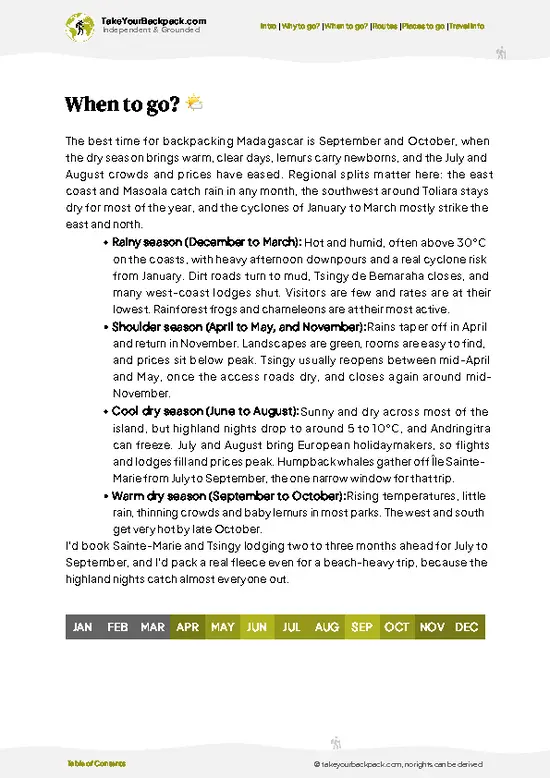
source: climatestotravel.comJANJanuary: not recommended for travelingFEBFebruary: not recommended for travelingMARMarch: not recommended for travelingAPRApril: not recommended for travelingMAYMay: not recommended for travelingJUNJune: not recommended for travelingJULJuly: excellent for travelingAUGAugust: not recommended for travelingSEPSeptember: not recommended for travelingOCTOctober: not recommended for travelingNOVNovember: not recommended for travelingDECDecember: not recommended for traveling

✈️ The backpacker research shortcutMadagascar Travel Guide

An offline-friendly backpacking guide with optimized travel routes, ranked highlights, transport advice, and the best areas to stay.
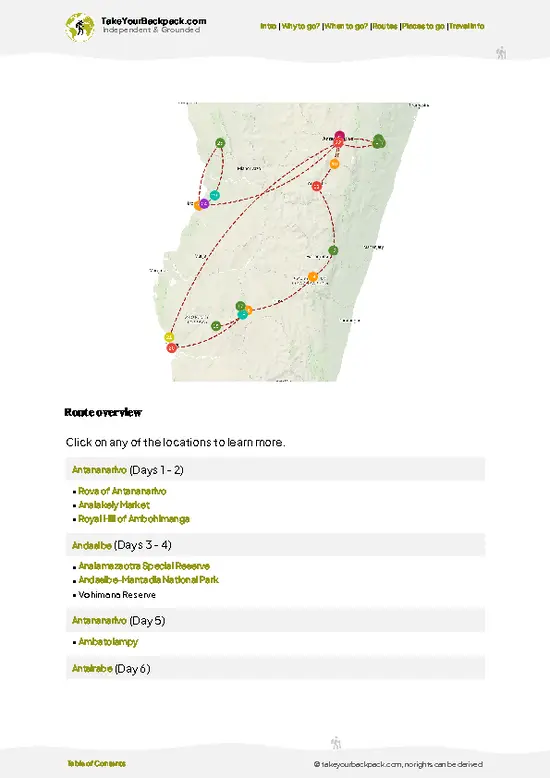
example page 0 from our offline Travel Guide for Madagascar
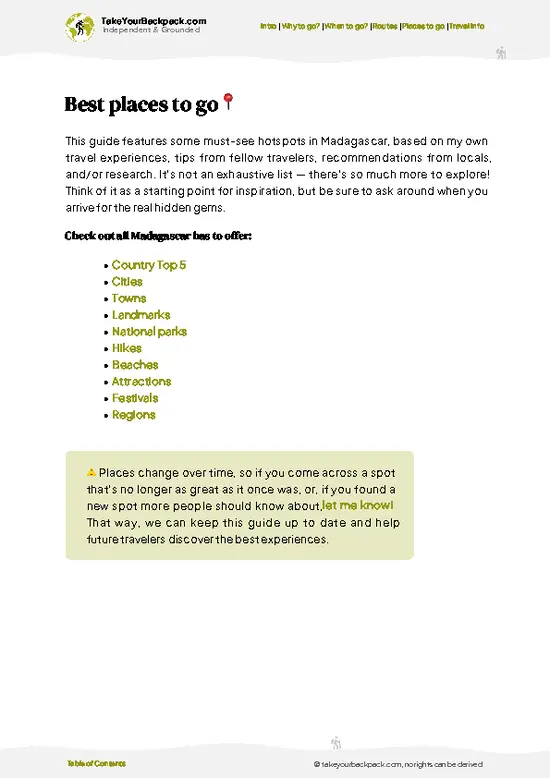
example page 1 from our offline Travel Guide for Madagascar
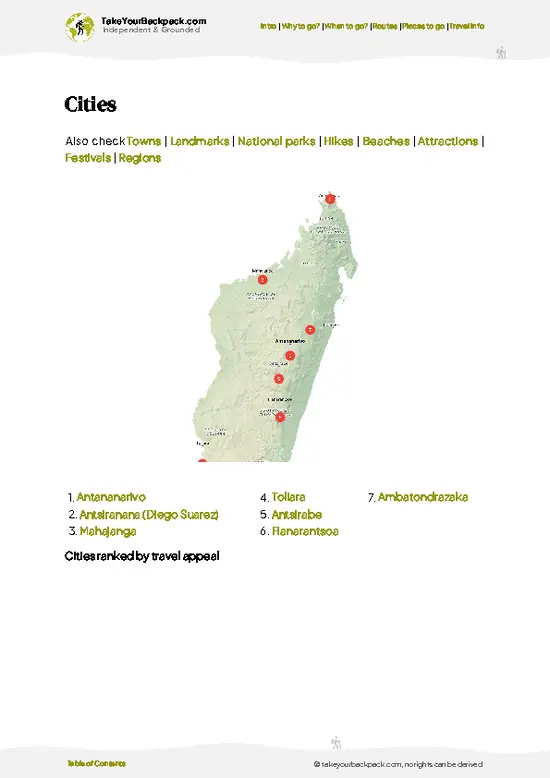
example page 2 from our offline Travel Guide for Madagascar
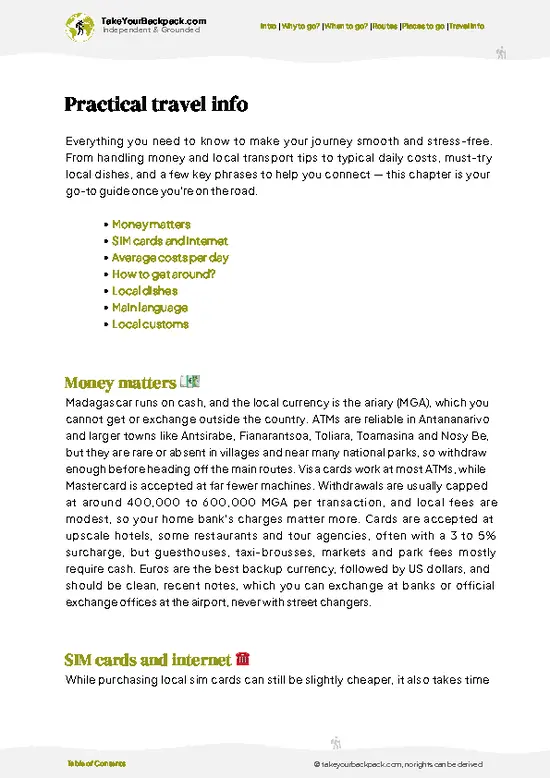
example page 3 from our offline Travel Guide for Madagascar
example page 4 from our offline Travel Guide for Madagascar
example page 5 from our offline Travel Guide for Madagascar
example page 6 from our offline Travel Guide for Madagascar
example page 7 from our offline Travel Guide for Madagascar
The digital guide (418 pages) contains:
110 highlights, ranked by travel appeal
Optimized 7, 14 & 21-day travel routes
Cities, national parks, landmarks, beaches
How to get around
Offline-friendly for travel without Wi-Fi
👉 Click to see all 30+ guide features

📅 Plan smarter in minutes, not weeks
Month by month travel advice
Festivals & national holidays
Budget expectations

🗺️ Go to the right places, skip the overrated ones
Honest pros & cons of destinations
Top hikes, parks & viewpoints
Lesser-known places most travelers miss
Clear “worth it vs skip it” guidance

🛏️ Travel smoothly without rookie mistakes
Best areas to stay
Transport systems explained simply
Common scams & safety advice
SIM cards, money & practical tips

🌍 Understand the country, not just visit it
Culture & traditions
52 Essential phrases & customs
Festivals worth planning around
Traveler-friendly historical context
Insights that make places more meaningful

📱 Built for real travel conditions
Fully downloadable PDF
Works completely offline
Optimized for phone use
Useful in remote areas & buses
Everything in one place
Save weeks of stressful planning
Get instant access to your full guide. 30‑day money-back guarantee.
+ Add another guide for just US$7.80

By proceeding you agree to our terms.
Sent to your inbox immediately after payment • 100% Secure Checkout
Best Backpacking Travel Advisor 2025 tourism awardBest Backpacking
Travel Advisor
2025
What others say about Take Your Backpack Guides:
⭐⭐⭐⭐⭐
Fantastic, amazing amount of information!
⭐⭐⭐⭐⭐
My goodness this is amazing, it's what I've been looking for hats off too you!
⭐⭐⭐⭐⭐
I think this is absolutely BRILLIANT
⭐⭐⭐⭐
Very complete and informative. It's still missing places, but I gotta to commend you
⭐⭐⭐⭐⭐
This is truly amazing, thank you, can't wait to explore it with my kids!
⭐⭐⭐⭐⭐
Awesome resource, thank you!
⭐⭐⭐⭐⭐
This is amazing! Can't wait to explore the ones I haven't seen
⭐⭐⭐⭐
I love this! Well done, great idea.
⭐⭐⭐⭐⭐
Thanks for taking the time to make this gem!
⭐⭐⭐⭐⭐
This might be the best website I've ever seen.
⭐⭐⭐⭐⭐
Congratulations, and thank you so much for your work; it's incredibly valuable.
⭐⭐⭐⭐
In all seriousness I think you did a great job pointing out the important spots
⭐⭐⭐⭐⭐
10/10 very good
⭐⭐⭐⭐⭐
As someone who's only just starting to visit regularly this is awesome, thank you.
⭐⭐⭐⭐
Thank you very much! I'm going to visit my dad, it's going to be very useful!
⭐⭐⭐⭐⭐
This is really cool! We'll be travelling for the first time and this definitely come in handy.
⭐⭐⭐⭐⭐
You are now our minister of culture, congratulations 👨‍💼
⭐⭐⭐⭐⭐
Just wanted to tell you that this is a pearl! Going to follow your recommendations.
⭐⭐⭐⭐⭐
This is so cool. I'll definitely be using the resource for my travels soon.
⭐⭐⭐⭐⭐
This is very impressive! Good work.
⭐⭐⭐⭐⭐
This is an amazing and informative site. Very well done!

🛏️ Where to stay?Best areas and accommodation options

For the Festival des Rizières in Madagascar, you want to be in the thick of it, soaking up the atmosphere without breaking the bank. Head to Antananarivo, the capital, where you’ll find a mix of budget-friendly guesthouses and vibrant hostels. This area buzzes with backpackers, making it easy to connect with fellow travelers.

Ampefy is another solid choice. Just a short ride from the festival, it offers a laid-back vibe with local eateries and stunning lake views. You’ll find a community of adventurers here, perfect for swapping stories and tips.

Stay alert for hidden costs, like transport … read more 👉
For the Festival des Rizières in Madagascar, you want to be in the thick of it, soaking up the atmosphere without breaking the bank. Head to Antananarivo, the capital, where you’ll find a mix of budget-friendly guesthouses and vibrant hostels. This area buzzes with backpackers, making it easy to connect with fellow travelers.

Ampefy is another solid choice. Just a short ride from the festival, it offers a laid-back vibe with local eateries and stunning lake views. You’ll find a community of adventurers here, perfect for swapping stories and tips.

Stay alert for hidden costs, like transport fares or meal prices that can sneak up on you. Prioritize places with good reviews on safety and social atmosphere. This way, you’ll save your energy and cash for the festival’s unforgettable moments.

👛 Costs (as of 3 September 2026)What things cost and how to budget

The Festival des Rizières in Madagascar is a vibrant celebration, but navigating costs can be tricky. Here’s how to budget wisely for this unique experience.
  • Festival Tickets: Expect to pay around €10 to €20 ($11 to $22) for a ticket. This grants you access to the festivities, including traditional performances and local crafts. Buy in advance if possible to avoid last-minute price hikes.
  • Accommodation: Options range from basic guesthouses at €15 to €30 ($17 to $34) per night to mid-range hotels at €40 to €70 ($45 to $78). Book early, especially during the festival, as places fill up fast. Consider staying a bit outside the main area for better rates.
  • Local Transport: Budget about €5 to €15 ($6 to $17) for local transport. Taxis and tuk-tuks are common, but negotiate fares upfront. If you’re
read more 👉
The Festival des Rizières in Madagascar is a vibrant celebration, but navigating costs can be tricky. Here’s how to budget wisely for this unique experience.
  • Festival Tickets: Expect to pay around €10 to €20 ($11 to $22) for a ticket. This grants you access to the festivities, including traditional performances and local crafts. Buy in advance if possible to avoid last-minute price hikes.
  • Accommodation: Options range from basic guesthouses at €15 to €30 ($17 to $34) per night to mid-range hotels at €40 to €70 ($45 to $78). Book early, especially during the festival, as places fill up fast. Consider staying a bit outside the main area for better rates.
  • Local Transport: Budget about €5 to €15 ($6 to $17) for local transport. Taxis and tuk-tuks are common, but negotiate fares upfront. If you’re feeling adventurous, renting a bicycle can be a fun and cost-effective way to explore.
  • Food & Drinks: Street food is your friend here. You can enjoy meals for as little as €2 to €5 ($2.25 to $5.50). Restaurants will set you back around €10 to €20 ($11 to $22) for a decent meal. Don’t miss trying local specialties; they’re often the highlight of the trip.
  • Miscellaneous Expenses: Set aside €10 to €30 ($11 to $34) for souvenirs, tips, and unexpected costs. This covers everything from local crafts to small fees for photography in certain areas. Always have a little extra for those spontaneous moments that make travel special.

Keep these figures in mind to preserve your energy and budget for the moments that truly matter.


source: madagascar-tourisme.com
⚠️ Prices can change and everyone travels differently, so take this as a rough guide. Hope it helps you plan your adventure!

🍲 FoodWhat to Eat & Drink

At the Festival des Rizières in Madagascar, food is a vibrant celebration of local culture. Dive into romazava, a hearty beef stew with greens, or savor vary amin’anana, rice mixed with wild herbs. Street stalls overflow with koba, a sweet treat made from ground peanuts and rice flour, wrapped in banana leaves.

Don’t miss the local drinks—try ranon’apango, a smoky rice water that’s refreshing after a day of exploring. It’s a festival staple, and you’ll find it everywhere.

Be prepared for some quirks: sharing is common, so don’t be surprised if someone offers you a taste from their plate. Lines can get long, but the wait is part of the experience. Bring cash; many stalls don’t accept cards. Serving sizes are generous, so pace yourself to enjoy every bite without feeling rushed. This festival … read more 👉
At the Festival des Rizières in Madagascar, food is a vibrant celebration of local culture. Dive into romazava, a hearty beef stew with greens, or savor vary amin’anana, rice mixed with wild herbs. Street stalls overflow with koba, a sweet treat made from ground peanuts and rice flour, wrapped in banana leaves.

Don’t miss the local drinks—try ranon’apango, a smoky rice water that’s refreshing after a day of exploring. It’s a festival staple, and you’ll find it everywhere.

Be prepared for some quirks: sharing is common, so don’t be surprised if someone offers you a taste from their plate. Lines can get long, but the wait is part of the experience. Bring cash; many stalls don’t accept cards. Serving sizes are generous, so pace yourself to enjoy every bite without feeling rushed. This festival isn’t just about food; it’s about connecting with the heart of Madagascar.

FAQFrequently asked questions about des Rizières

Festival des Rizières takes place annually in August. It usually lasts for about 3 days, celebrating the rice harvest with traditional music, dance, and rituals.
The cost to attend Festival des Rizières is generally free, as it is a community event. However, some specific performances or activities may have small fees, typically under 5 USD.
No, you do not need tickets in advance for Festival des Rizières. The event is open to the public, and visitors can join freely, though arriving early is recommended for popular events.
⚠️ Things can change over time, so always validate details locally before you go.

Other Malagasy festivals near des Rizières

Explore more nearby:


💡 Not sure where to go next?
Create a personalized itinerary for Madagascar including des Rizières and the places that fit your trip.

Generate my itinerary

👉 Discover all festivals

Or checkout all Madagascar has to offer (think cities, towns, villages, national parks, hikes, beaches, festivals)
Country photo of Madagascar

We 💚 feedbackIs it worth it?

The Festival des Rizières is a vibrant celebration of culture and community. You’ll feel the pulse of Madagascar through music and dance, and it’s a chance to connect with locals in a way that’s rare. Just be ready for the crowds; they can be overwhelming. Embrace the chaos, and you’ll find it fuels the experience rather than drains it.

✈️ When did I visit Madagascar?
Madagascar I went backpacking in October 2019. With a friend I rented a 4WD and drove around the southern part of Madagascar.

✍️ Help improve this page!
The information on this page is based on my own backpacking experience in Madagascar, supplemented with up-to-date research and feedback from other travelers. Travel details can change, so if you notice anything outdated or incomplete, feel free to let me know.


🙋‍♂️ Give feedback

👋 Meet the founderWho’s Behind Take Your Backpack?

Johan, backpacker and founder of TakeYourBackpackHi, I’m Johan (Netherlands 🇳🇱), the creator of TakeYourBackpack. Over the past decade, I’ve backpacked through 80+ countries across six continents, gaining extensive experience with independent travel, long-term trips, and overland routes.

This site is built on a combination of firsthand travel experience and carefully curated insights from other backpackers. Many guides are based on places I’ve personally visited, while others bring together tips, observations, and practical advice shared by trusted travelers I’ve met along the way.

The goal is to provide realistic, experience-driven guidance — not generic itineraries — so you can explore destinations with better context, clearer expectations, and more confidence.

Get full Madagascar guide •
Instant download • 110 highlights • Full Offline guide