×

Madagascar🇲🇬 | attractionsLemurs’ ParkFree-roaming ringtails, sifakas, night lemurs, riverside gardens | things to do and best time to go

Explore Analakely MarketExplore Tsimbazaza Zoo and Botanical Garden

Backpacking in Lemurs’ Park
🏆 Top pickattraction ranked #6
By Johan Kruseman 🇳🇱 | Updated October 15, 2026

Lemurs’ Park gives you close contact with free-roaming lemurs without a long trip into the rainforest, and it sits west of Antananarivo in Madagascar’s highlands, on the Andromeda River plain. The gate fee and guided visit feel pricey next to local costs, and weekends bring school groups and tour vans, so the paths can get noisy. In return you get a shaded garden of bamboo and fig trees, smelling of damp earth and ripe fruit, where ring-tailed lemurs, brown lemurs and sifakas move around you. I expected a zoo, with wire and cages. What surprised me was a ringtail dropping onto the path a meter away, then settling on a branch with the quiet, dry rustle of fur against leaves, as if I were the one being inspected. Unlike Andasibe, this park trades wild forest and the indri chorus for guaranteed sightings and a short ride from the capital.

Discover everything you want to know in the 📖 Madagascar Travel Guide.


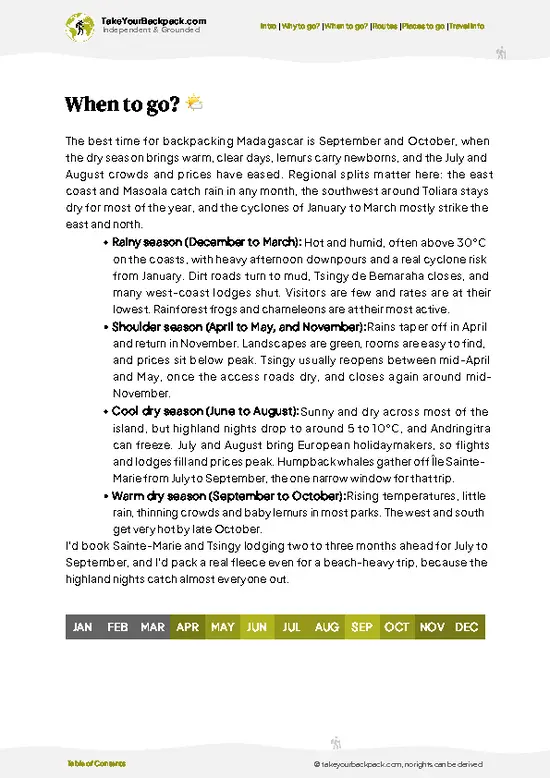
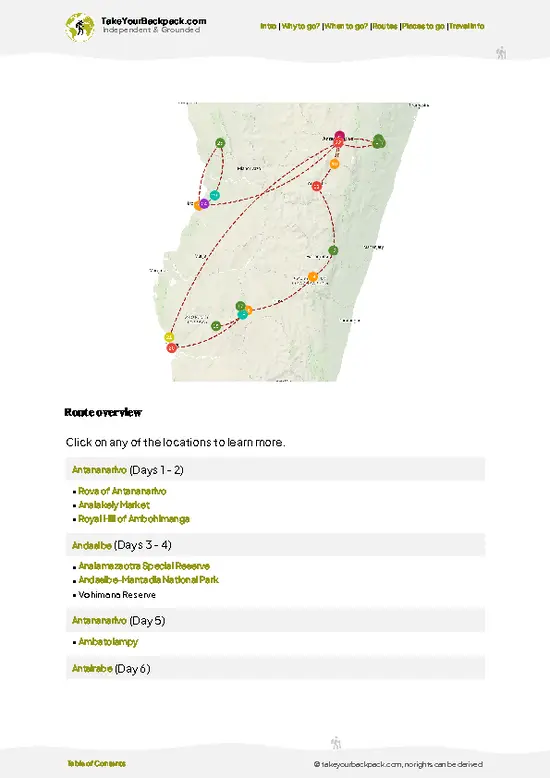
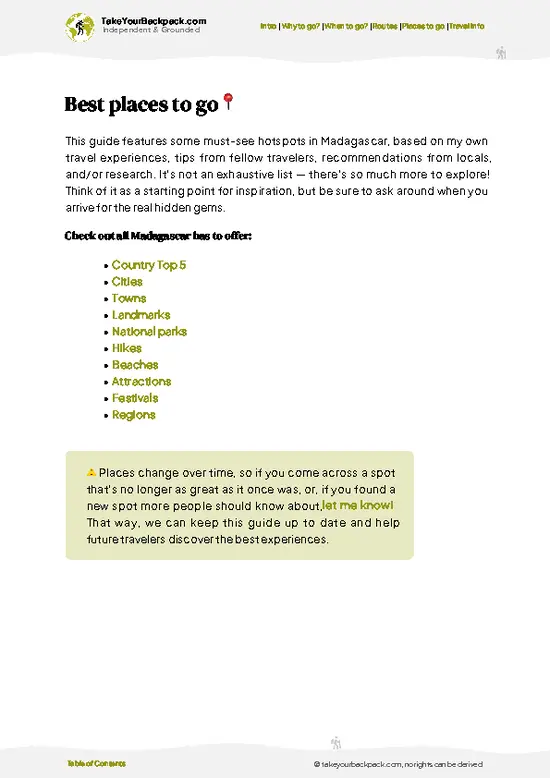
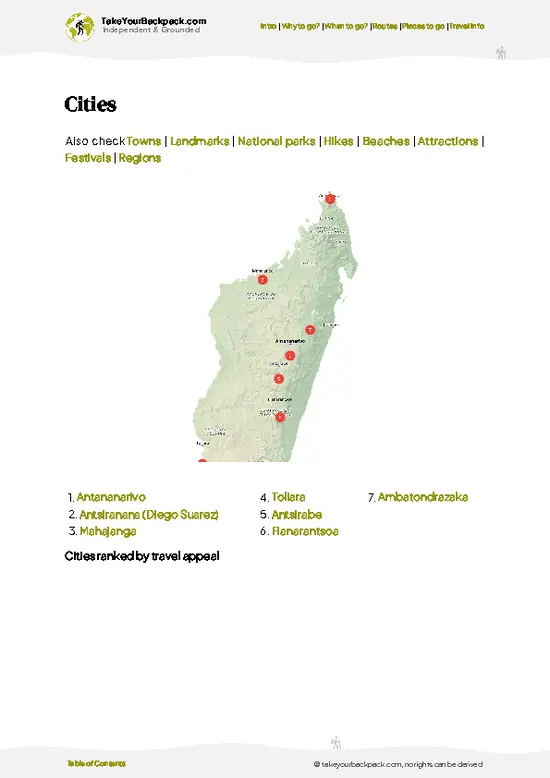
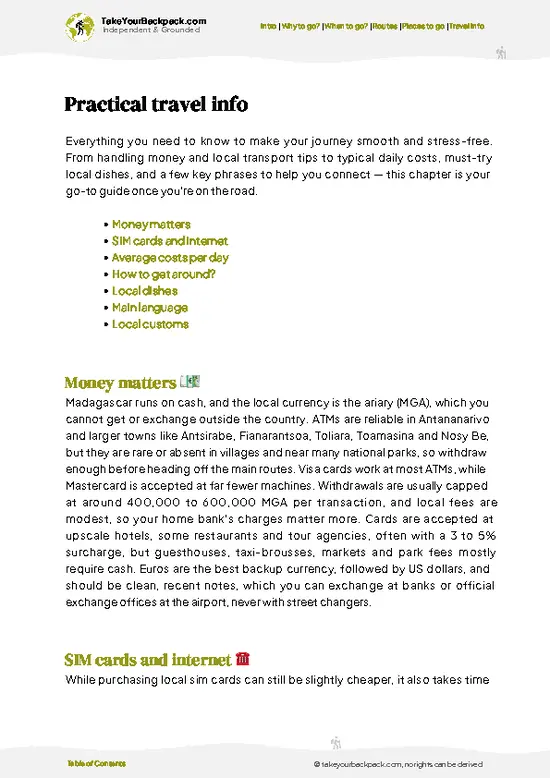
example page 0 from our offline Travel Guide for Madagascar
example page 1 from our offline Travel Guide for Madagascar
example page 2 from our offline Travel Guide for Madagascar
example page 3 from our offline Travel Guide for Madagascar
example page 4 from our offline Travel Guide for Madagascar
example page 5 from our offline Travel Guide for Madagascar
example page 6 from our offline Travel Guide for Madagascar
example page 7 from our offline Travel Guide for Madagascar
Loading the map 🌍
CLICK TO FILTER
cities
towns
landmarks
national parks
hikes
beaches
attractions
festivals
regions
SHOW COUNTRY’S BESTSHOW ALL

✨ Why go?
Ranked #6 attraction in Madagascar
What makes it a must-see attraction

The main reason is certainty. Wild lemur trips elsewhere in Madagascar mean long, rough drives and a gamble on what shows up. Here several lemur species roam free in a walkable garden, so you can watch behavior up close, from sunbathing ringtails to Coquerel’s sifakas leaping between trunks, and take photos without a telephoto lens. That makes it a sensible first stop on arrival, before you commit days to a remote reserve.

The second reason is context. Guides explain the differences between species, their diets, and why the island’s lemurs are so threatened by habitat loss. The park also runs a plant nursery and reforestation work, which gives you a clearer picture of conservation in Madagascar than a quick sighting alone. If you have a spare half day around a flight, it is an easy, rewarding … read more 👉
The main reason is certainty. Wild lemur trips elsewhere in Madagascar mean long, rough drives and a gamble on what shows up. Here several lemur species roam free in a walkable garden, so you can watch behavior up close, from sunbathing ringtails to Coquerel’s sifakas leaping between trunks, and take photos without a telephoto lens. That makes it a sensible first stop on arrival, before you commit days to a remote reserve.

The second reason is context. Guides explain the differences between species, their diets, and why the island’s lemurs are so threatened by habitat loss. The park also runs a plant nursery and reforestation work, which gives you a clearer picture of conservation in Madagascar than a quick sighting alone. If you have a spare half day around a flight, it is an easy, rewarding pick, and it suits travelers who are unsure about trekking.

💡 HighlightsDon't-miss highlights and experiences

  1. Ring-tailed lemurs: The park’s signature animals, with black-and-white striped tails held high as they walk. They often sunbathe upright with arms spread, and they are comfortable close to visitors.
  2. Coquerel’s sifakas: Cream-and-chestnut climbers that bound sideways between trunks. Watching one launch across a gap is the most athletic show in the park.
  3. Brown and red-fronted lemurs: Common, curious and quick to approach. Males and females look different, which guides point out.
  4. Bamboo lemurs: Look in the bamboo stands, where they chew stalks with surprising precision. They are quieter and easier to miss, so go slowly.
  5. Nocturnal lemur enclosures: Mouse lemurs and other night species can be seen in dim shelters. It is an unusual chance to see animals that normally appear only in the dark.
  6. Chameleons,
… read more 👉
  1. Ring-tailed lemurs: The park’s signature animals, with black-and-white striped tails held high as they walk. They often sunbathe upright with arms spread, and they are comfortable close to visitors.
  2. Coquerel’s sifakas: Cream-and-chestnut climbers that bound sideways between trunks. Watching one launch across a gap is the most athletic show in the park.
  3. Brown and red-fronted lemurs: Common, curious and quick to approach. Males and females look different, which guides point out.
  4. Bamboo lemurs: Look in the bamboo stands, where they chew stalks with surprising precision. They are quieter and easier to miss, so go slowly.
  5. Nocturnal lemur enclosures: Mouse lemurs and other night species can be seen in dim shelters. It is an unusual chance to see animals that normally appear only in the dark.
  6. Chameleons, tortoises and reptiles: Small collections of Malagasy reptiles sit along the paths. Spotting a camouflaged chameleon on a branch is a game in itself.
  7. Riverside gardens and picnic lawns: The grounds along the river hold orchids, medicinal plants and shaded benches. They are a calm place to stop and listen to the park.
  8. Plant nursery and craft stalls: A small nursery supports reforestation, and nearby stalls sell carvings, embroidery and vanilla. Buying here helps local makers.
A relaxed visit with a guide takes about two to three hours.
Spotted a mistake or missing something? Contact us.

Things to do near Lemurs’ Park

Ratings based on Tripadvisor reviews. When you book through this link, you support our work at no extra cost to you.

🌤️ When to go?Best time to visit Lemurs’ Park

  • Dry Season (May to October): Lemurs are active and visible in morning sun. Days reach 22 to 26°C (72 to 79°F), nights on the plateau drop to 8 to 12°C (46 to 54°F), so bring a fleece. Daylight runs roughly 5:45 am to 5:30 pm.
  • Hot, Wet Season (November to April): Afternoon downpours are common, with highs of 26 to 29°C (79 to 84°F) and lows of 15 to 18°C (59 to 64°F). Paths turn muddy, but the park is green and quiet. January to March brings cyclone-driven rain, and the road from the city can flood.
  • Breeding and Baby Season (September to December): Newborn lemurs cling to their mothers in the trees, which draws photographers.
  • Crowds and Prices: July, August and the December holidays bring tour groups and Malagasy families on weekends. Entry prices stay fixed all year, but taxis and guides cost
… read more 👉
  • Dry Season (May to October): Lemurs are active and visible in morning sun. Days reach 22 to 26°C (72 to 79°F), nights on the plateau drop to 8 to 12°C (46 to 54°F), so bring a fleece. Daylight runs roughly 5:45 am to 5:30 pm.
  • Hot, Wet Season (November to April): Afternoon downpours are common, with highs of 26 to 29°C (79 to 84°F) and lows of 15 to 18°C (59 to 64°F). Paths turn muddy, but the park is green and quiet. January to March brings cyclone-driven rain, and the road from the city can flood.
  • Breeding and Baby Season (September to December): Newborn lemurs cling to their mothers in the trees, which draws photographers.
  • Crowds and Prices: July, August and the December holidays bring tour groups and Malagasy families on weekends. Entry prices stay fixed all year, but taxis and guides cost more when demand is high.
Arrive at opening time on a weekday for cooler air, fewer people and lemurs at their most active.


source: climatestotravel.comJANJanuary: fair for travelingFEBFebruary: fair for travelingMARMarch: fair for travelingAPRApril: fair for travelingMAYMay: excellent for travelingJUNJune: highly recommended for travelingJULJuly: highly recommended for travelingAUGAugust: highly recommended for travelingSEPSeptember: excellent for travelingOCTOctober: highly recommended for travelingNOVNovember: fair for travelingDECDecember: fair for traveling
madagascar-attraction-lemurs-park v1
© Google |

✈️ The backpacker research shortcutMadagascar Travel Guide

An offline-friendly backpacking guide with optimized travel routes, ranked highlights, transport advice, and the best areas to stay.
example page 0 from our offline Travel Guide for Madagascar
example page 1 from our offline Travel Guide for Madagascar
example page 2 from our offline Travel Guide for Madagascar
example page 3 from our offline Travel Guide for Madagascar
example page 4 from our offline Travel Guide for Madagascar
example page 5 from our offline Travel Guide for Madagascar
example page 6 from our offline Travel Guide for Madagascar
example page 7 from our offline Travel Guide for Madagascar
The digital guide (301 pages) contains:
✅ 96 highlights, ranked by travel appeal
✅ Optimized 7, 14 & 21-day travel routes
✅ Cities, national parks, landmarks, beaches
✅ How to get around
✅ Offline-friendly for travel without Wi-Fi
👉 Click to see all 30+ guide features

📅 Plan smarter in minutes, not weeks
✅ Month by month travel advice
✅ Festivals & national holidays
✅ Budget expectations

🗺️ Go to the right places, skip the overrated ones
✅ Honest pros & cons of destinations
✅ Top hikes, parks & viewpoints
✅ Lesser-known places most travelers miss
✅ Clear “worth it vs skip it” guidance

🛏️ Travel smoothly without rookie mistakes
✅ Best areas to stay
✅ Transport systems explained simply
✅ Common scams & safety advice
✅ SIM cards, money & practical tips

🌍 Understand the country, not just visit it
✅ Culture & traditions
✅ 52 Essential phrases & customs
✅ Festivals worth planning around
✅ Traveler-friendly historical context
✅ Insights that make places more meaningful

📱 Built for real travel conditions
✅ Fully downloadable PDF
✅ Works completely offline
✅ Optimized for phone use
✅ Useful in remote areas & buses
✅ Everything in one place
Stop searching, start planning
Get instant access to your full guide. 30‑day money-back guarantee.
+ Add another guide for just

By proceeding you agree to our terms.
Sent to your inbox immediately after payment • 100% Secure Checkout
Best Backpacking Travel Advisor 2025 tourism awardBest Backpacking
Travel Advisor
2025
What others say about Take Your Backpack Guides:
⭐⭐⭐⭐⭐
Fantastic, amazing amount of information!
⭐⭐⭐⭐⭐
My goodness this is amazing, it's what I've been looking for hats off too you!
⭐⭐⭐⭐⭐
I think this is absolutely BRILLIANT
⭐⭐⭐⭐
Very complete and informative. It's still missing places, but I gotta to commend you
⭐⭐⭐⭐⭐
This is truly amazing, thank you, can't wait to explore it with my kids!
⭐⭐⭐⭐⭐
Awesome resource, thank you!
⭐⭐⭐⭐⭐
This is amazing! Can't wait to explore the ones I haven't seen
⭐⭐⭐⭐
I love this! Well done, great idea.
⭐⭐⭐⭐⭐
Thanks for taking the time to make this gem!
⭐⭐⭐⭐⭐
This might be the best website I've ever seen.
⭐⭐⭐⭐⭐
Congratulations, and thank you so much for your work; it's incredibly valuable.
⭐⭐⭐⭐
In all seriousness I think you did a great job pointing out the important spots
⭐⭐⭐⭐⭐
10/10 very good
⭐⭐⭐⭐⭐
As someone who's only just starting to visit regularly this is awesome, thank you.
⭐⭐⭐⭐
Thank you very much! I'm going to visit my dad, it's going to be very useful!
⭐⭐⭐⭐⭐
This is really cool! We'll be travelling for the first time and this definitely come in handy.
⭐⭐⭐⭐⭐
You are now our minister of culture, congratulations 👨‍💼
⭐⭐⭐⭐⭐
Just wanted to tell you that this is a pearl! Going to follow your recommendations.
⭐⭐⭐⭐⭐
This is so cool. I'll definitely be using the resource for my travels soon.
⭐⭐⭐⭐⭐
This is very impressive! Good work.
⭐⭐⭐⭐⭐
This is an amazing and informative site. Very well done!

🛏️ Where to stay?Choosing the right base

Stay in Antananarivo, since the park is a roughly 30 km drive southwest of the capital and has no hostel scene of its own. The best base for backpackers is the Analakely and Antaninarenina area in the lower town. It is walkable, close to the main market, cheap eateries and the taxi-be hubs, and several budget guesthouses and dorms there attract solo travelers who swap tour and driver contacts over breakfast. Isoraka, up the hill, is a calmer option with cafes, restaurants and a safer feel at night, and its small guesthouses suit people who want quiet after the capital’s traffic. Both districts … read more 👉
Stay in Antananarivo, since the park is a roughly 30 km drive southwest of the capital and has no hostel scene of its own. The best base for backpackers is the Analakely and Antaninarenina area in the lower town. It is walkable, close to the main market, cheap eateries and the taxi-be hubs, and several budget guesthouses and dorms there attract solo travelers who swap tour and driver contacts over breakfast. Isoraka, up the hill, is a calmer option with cafes, restaurants and a safer feel at night, and its small guesthouses suit people who want quiet after the capital’s traffic. Both districts make it easy to split a taxi or minivan to the park with other travelers, which cuts the cost sharply. Avoid sleeping near the main train station or the bus terminals late at night, as they are busy and poorly lit. Book ahead for July, August and December. If you want to stay closer, a few lodges and family-run guesthouses sit along the road toward the park, but options are limited and transport back to town in the evening is scarce.

👛 Costs (as of 15 October 2026)How expensive it really is

A day at Lemurs’ Park costs roughly US$32 to 60 per person, with the entrance fee and a round-trip ride making up most of it. The table below uses high-season prices and one dorm or budget room.
CategoryBudget RangeLocal Reality
Entry ticket and guideUS$10 to 15Entry includes a guided walk of about 1 to 1.5 hours; tipping the guide is customary.
Transport from AntananarivoUS$10 to 20A shared or hired taxi round trip, cheaper when split between several people. Public minibuses go part of the way only.
Food at the parkUS$4 to 8A restaurant on site serves Malagasy and simple Western dishes. Bring snacks and water to save money.
Accommodation (high season)US$6 to 12A dorm bed or basic guesthouse room in Antananarivo.
Extras and tipsUS$2 to 5Guide tip, camera fee or small souvenirs such as carved crafts.
… read more 👉
A day at Lemurs’ Park costs roughly US$32 to 60 per person, with the entrance fee and a round-trip ride making up most of it. The table below uses high-season prices and one dorm or budget room.
CategoryBudget RangeLocal Reality
Entry ticket and guideUS$10 to 15Entry includes a guided walk of about 1 to 1.5 hours; tipping the guide is customary.
Transport from AntananarivoUS$10 to 20A shared or hired taxi round trip, cheaper when split between several people. Public minibuses go part of the way only.
Food at the parkUS$4 to 8A restaurant on site serves Malagasy and simple Western dishes. Bring snacks and water to save money.
Accommodation (high season)US$6 to 12A dorm bed or basic guesthouse room in Antananarivo.
Extras and tipsUS$2 to 5Guide tip, camera fee or small souvenirs such as carved crafts.
Total Daily BudgetUS$32 to 60Lower end when sharing a taxi and bringing your own lunch.
⚠️ Prices can change and everyone travels differently, so take this as a rough guide. Hope it helps you plan your adventure!

FAQTraveler FAQ

Plan on a half day. The guided walk lasts about 1 to 1.5 hours, and with the 45 to 90 minute drive each way from Antananarivo you will be out roughly 4 to 5 hours. Add an hour if you stop for lunch at the on-site restaurant.
For most visitors, yes. Entry costs roughly US$10 to 15 including a guide, and you get close views of ring-tailed lemurs, sifakas and brown lemurs without paying for a trip to the remote national parks. If you plan to visit Andasibe or Isalo, you will see more wild animals there, but this is the easiest option from the capital.
Take a taxi or hired driver from Antananarivo, about 30 km southwest on the RN1 and RN7 road. Expect 45 to 90 minutes depending on traffic, and a round-trip fare of roughly US$10 to 20 if you negotiate and wait time is included. Public minibuses run along the main road but drop you some distance from the park gate, so a shared taxi is simpler.
⚠️ Things can change over time, so always validate details locally before you go.

Other Malagasy attractions near Lemurs’ Park

Explore more nearby:


💡 Not sure where to go next?
Create a personalized itinerary for Madagascar including Lemurs’ Park and the places that fit your trip.

Generate my itinerary

👉 Discover all attractions

Or checkout all Madagascar has to offer (think cities, towns, villages, national parks, hikes, beaches, festivals)
Country photo of Madagascar

We 💚 feedbackParting advice and final tips

Give it a relaxed half day, about three hours, and no more. That is enough for the lemurs, the nursery and a slow lap of the riverside lawns. I would go on a weekday morning, when the animals are active and the paths are quiet, then save your longer stays for the wild forests further east.

✈️ When did I visit Madagascar?
Madagascar I went backpacking in October 2019. With a friend I rented a 4WD and drove around the southern part of Madagascar.

✍️ Help improve this page!
The information on this page is based on my own backpacking experience in Madagascar, supplemented with up-to-date research and feedback from other travelers. Travel details can change, so if you notice anything outdated or incomplete, feel free to let me know.


🙋‍♂️ Give feedback

👋 Meet the founderWho’s Behind Take Your Backpack?

Johan, backpacker and founder of TakeYourBackpackHi, I’m Johan (Netherlands 🇳🇱), the creator of TakeYourBackpack. Over the past 3 decades, I’ve backpacked through 90+ countries across six continents, gaining extensive experience with independent travel, long-term trips, and overland routes.

This site is built on a combination of firsthand travel experience and carefully curated insights from other backpackers. Many guides are based on places I’ve personally visited, while others bring together tips, observations, and practical advice shared by trusted travelers I’ve met along the way.

The goal is to provide realistic, experience-driven guidance — not generic itineraries — so you can explore destinations with better context, clearer expectations, and more confidence.