×

Madagascar🇲🇬 | best attractionsExplore the 12 Best attractions in Madagascar

Madagascar’s attractions come in three flavors, and the island’s size (roughly 1,600 kilometers long) keeps them far apart. In the east, rainforest parks mean mud, dripping ferns and the whooping calls of lemurs at dawn, with modest crowds and entry fees paid park by park. The west is dry and open: baobab-lined dirt roads, red dust that coats your teeth, and sunsets worth planning a day around. The south brings spiny desert and limestone, sun-baked and nearly empty. The north and the islands offer beach time, sea breeze and clove-scented markets, at higher prices. Roads decide everything. A 200-kilometer hop can swallow a full day on potholed tarmac or a crowded minibus, so independent travel and backpacking here reward people who choose fewer regions and stay longer. Expect simple lodging, local guides at nearly every protected site, and a pace set by the road, not by your schedule.

By Johan Kruseman 🇳🇱 | Updated October 19, 2026
Explore the best festivals in Madagascar

Why go?Key Factors That Shape the Experience

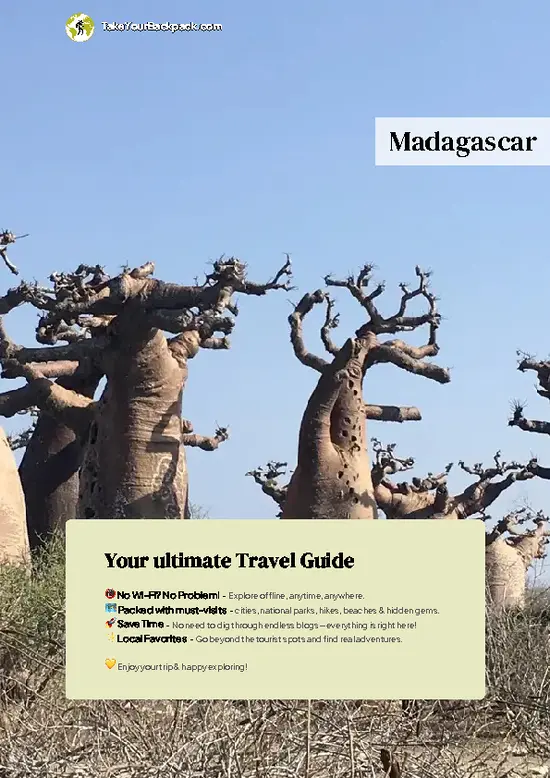
Madagascar split from the Indian subcontinent roughly 88 million years ago and the isolation shows. More than 80 percent of its plant and animal species exist nowhere else, which gives the country wildlife and landscapes with no true equivalent anywhere. Lemurs, chameleons and baobabs are the obvious examples, but the real point is range: one island holds humid rainforest, dry deciduous woodland, spiny scrub, granite massifs and coral reefs, each with its own smell, light and soundtrack. Culture adds another layer. Malagasy society blends Southeast Asian, African and Arab roots, and ancestor customs (fady, or local taboos, and famadihana reburial ceremonies) shape how many sites are used and respected.

The flip side is infrastructure. Roads are slow, rural electricity is patchy, and distances … read more 👉
Madagascar split from the Indian subcontinent roughly 88 million years ago and the isolation shows. More than 80 percent of its plant and animal species exist nowhere else, which gives the country wildlife and landscapes with no true equivalent anywhere. Lemurs, chameleons and baobabs are the obvious examples, but the real point is range: one island holds humid rainforest, dry deciduous woodland, spiny scrub, granite massifs and coral reefs, each with its own smell, light and soundtrack. Culture adds another layer. Malagasy society blends Southeast Asian, African and Arab roots, and ancestor customs (fady, or local taboos, and famadihana reburial ceremonies) shape how many sites are used and respected.

The flip side is infrastructure. Roads are slow, rural electricity is patchy, and distances in kilometers mislead; an 8-hour bush-taxi ride may cover only 250 kilometers. Almost every protected area requires a licensed local guide, which adds cost but also sharpens your eyes, since guides spot camouflaged chameleons that you would walk past. Facilities are basic outside the main towns: bucket showers, rice-and-zebu menus, cash-only payments. Domestic flights save time but cost real money and get delayed.

Travelers should also know that the island has a strong conservation story with real pressure. Deforestation is visible from the road, in burned hillsides and charcoal sacks stacked at roadside stalls, and park fees directly fund communities that otherwise depend on slash-and-burn farming. Madagascar suits patient, flexible people who value rare nature over comfort. It suits anyone who wants polish and speed far less.
Behind the Scenes of Selection
The list of best attractions in Madagascar is created based on cultural significance or entertainment value. If you feel a attraction is missing in this list, please let us know.

When to go?Optimal Periods for Travel

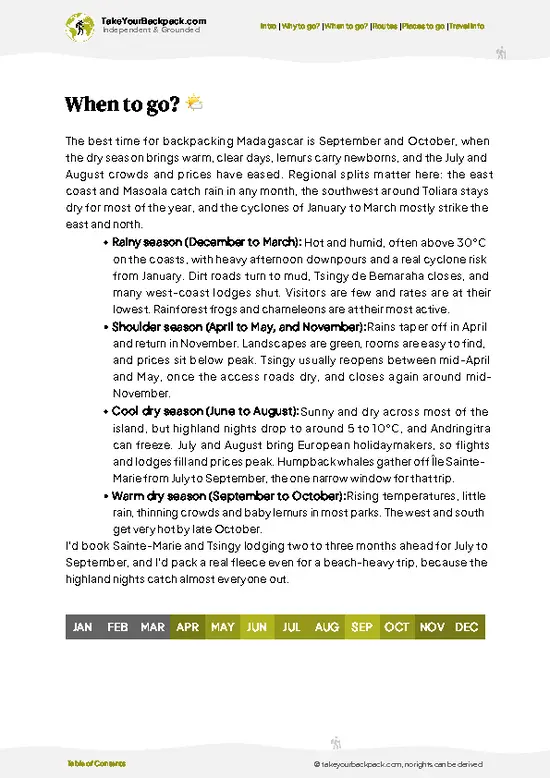
Best months for Madagascar’s attractions: The best months are April to November, the dry season, when roads in most regions are passable and skies stay clear, with the sweet spot being May to October. Days in the central highlands run around 20 to 25°C, but nights near Antananarivo and Antsirabe can drop to 5 to 10°C, so a warm layer matters. The coasts stay hot, roughly 25 to 32°C, with a dry, salty breeze.

Wet season and cyclones: From December to March the rain arrives. The east coast gets the worst of it, with some areas receiving several meters of rain a year, and cyclones can close roads, cancel flights and wash out bridges. In the northwest and west, the wet season brings heavy afternoon downpours and red dirt tracks that turn to slick paste. Many unpaved routes become impassable, … read more 👉
Best months for Madagascar’s attractions: The best months are April to November, the dry season, when roads in most regions are passable and skies stay clear, with the sweet spot being May to October. Days in the central highlands run around 20 to 25°C, but nights near Antananarivo and Antsirabe can drop to 5 to 10°C, so a warm layer matters. The coasts stay hot, roughly 25 to 32°C, with a dry, salty breeze.

Wet season and cyclones: From December to March the rain arrives. The east coast gets the worst of it, with some areas receiving several meters of rain a year, and cyclones can close roads, cancel flights and wash out bridges. In the northwest and west, the wet season brings heavy afternoon downpours and red dirt tracks that turn to slick paste. Many unpaved routes become impassable, and travelers can lose days waiting for water to drop. Rainforest trails turn muddy year-round in the east, but in the wet months leeches appear and humidity sits near saturation.

Shoulder seasons and crowds: April and November are shoulder months: green landscapes, fewer visitors and lower demand for rooms, though early rain showers can start in late November. July to September is the busiest period, and popular lodges and the best guides fill up, so booking domestic flights and rooms a few weeks ahead pays off. Prices at that time rise by perhaps 10 to 30 percent in tourist-oriented lodgings, especially on the coast and around the main parks. In the far south, the dry season is long and the heat milder in winter, while whale-watching on the east and northeast coasts peaks roughly from July to September. Cooler, drier months also give the clearest light for photography, with golden late-afternoon sun on red earth.

attraction hoppingPlanning Your Route Efficiently

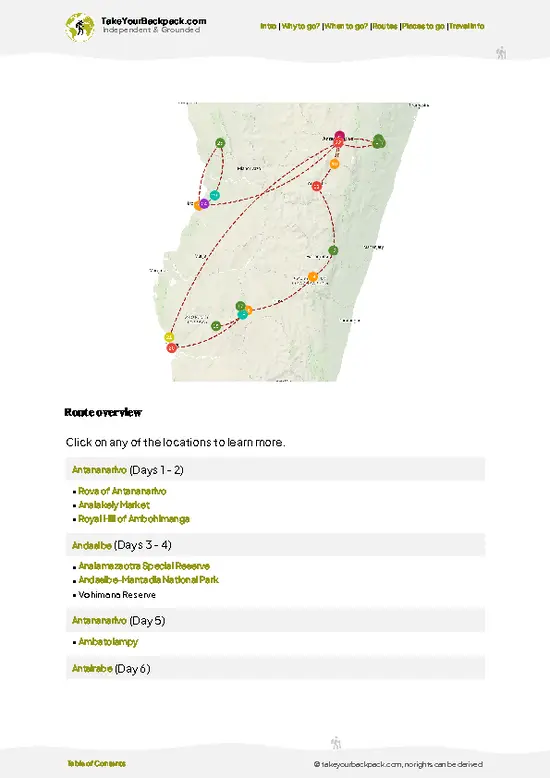
How many days to combine several regions: A trip linking several regions needs 14 to 21 days, because transit eats far more time than the map suggests. Anything under 10 days works best as a single-region trip.

Which regions group well: Antananarivo is the hub, and the island divides into clusters. The eastern rainforest belt sits a few hours from the capital by road, roughly 3 to 5 hours depending on the park. The highlands south (Antsirabe, Ambositra, Fianarantsoa) form a natural corridor on the RN7 highway, around 5 to 8 hours of driving between major towns. The west and southwest link through Tulear and Morondava. The north (Diego Suarez and Nosy Be) is best reached by flight. A sensible direction is from the capital south along the RN7, finishing on the coast, then flying back, since … read more 👉
How many days to combine several regions: A trip linking several regions needs 14 to 21 days, because transit eats far more time than the map suggests. Anything under 10 days works best as a single-region trip.

Which regions group well: Antananarivo is the hub, and the island divides into clusters. The eastern rainforest belt sits a few hours from the capital by road, roughly 3 to 5 hours depending on the park. The highlands south (Antsirabe, Ambositra, Fianarantsoa) form a natural corridor on the RN7 highway, around 5 to 8 hours of driving between major towns. The west and southwest link through Tulear and Morondava. The north (Diego Suarez and Nosy Be) is best reached by flight. A sensible direction is from the capital south along the RN7, finishing on the coast, then flying back, since a rainforest stop can be added at the start or end.

Time per stop and between regions: Allow 2 to 3 nights per major stop so that a long drive is followed by a rested day. Between regions, expect 6 to 12 hours on the road for each leg, or 1 to 2 hours by plane for the long jumps. Taxi-brousse (shared minibuses) are cheap but stop constantly, smell of diesel and fried dough, and leave only when full. Private drivers cost more yet allow photo stops and flexible starts.

Planning mistakes: The most common error is packing too many stops into a short window. Choose two or three regions and stay put. Another is trusting kilometer counts instead of road quality; plan on an average of 30 to 40 km/h. Travelers also schedule international flights tight after a long overland leg, when one washed-out bridge can wreck the plan. Leave a buffer day before departure, and leave one in the middle as well.

The ListThe Best attractions of Madagascar

1 Royal Hill of Ambohimanga

Rosewood royal houses, sacred pool, rolling gate stones, highland ridge

Follow a guide through spare wooden royal quarters, a ritual pool and disc-shaped gate stones, then look out over terraced rice fields.

madagascar-attraction-royal-hill-of-ambohimanga
© Google |

2 Rova of Antananarivo

Scorched palace shell, royal tombs, Besakana roof, capital panorama

Tour the gutted stone palace of Queen Ranavalona I, timber royal houses and tombs, then take in the red-brick city from the terrace walls.

3 Lemurs’ Park

Free-roaming ringtails, sifakas, night lemurs, riverside gardens

Walk shaded paths among lemurs that sit close enough to inspect you, then look for chameleons, tortoises and nocturnal species before browsing craft stalls.

madagascar-attraction-lemurs-park
© Google |

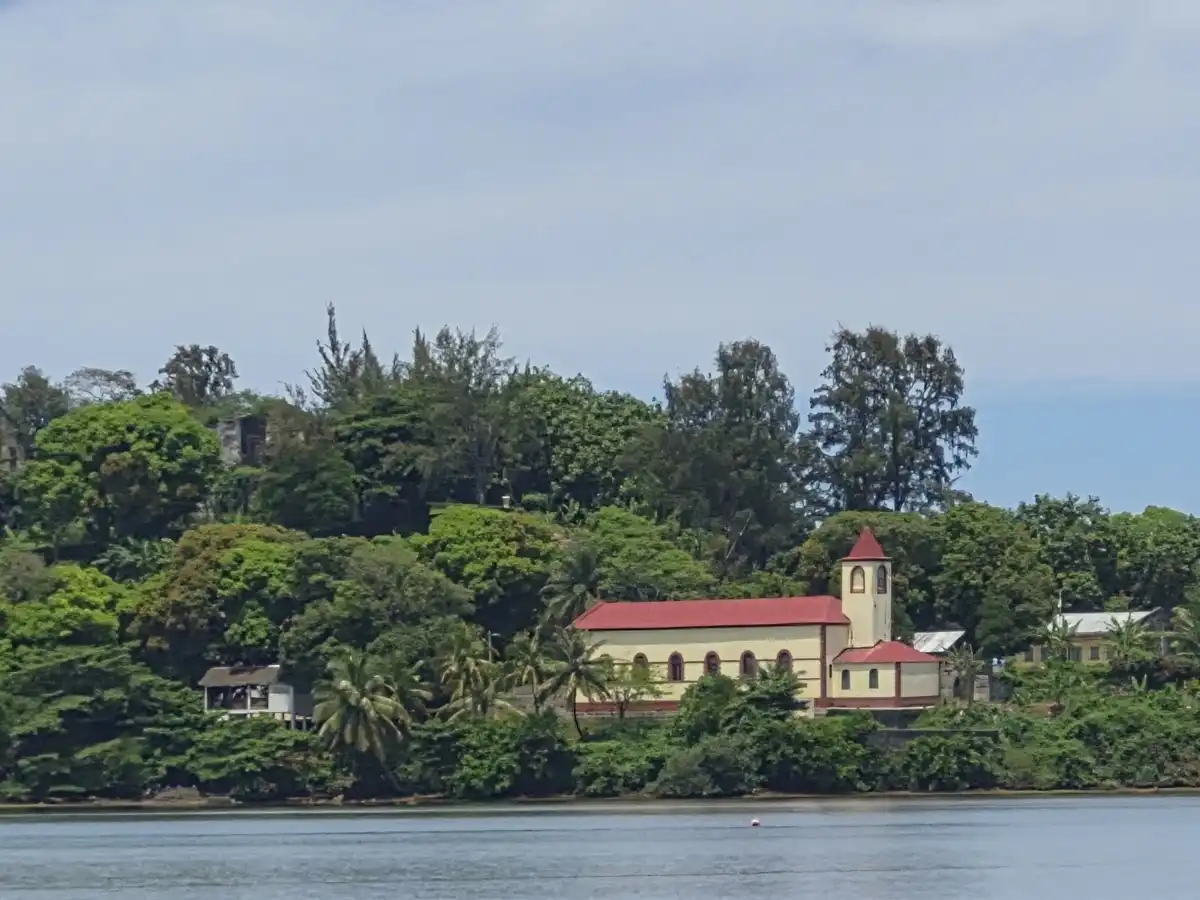
4 Pirate Cemetery of Île Sainte-Marie

Skull-carved slabs, Baie des Forbans, rusting wrecks, root-bound tombs

Find weathered pirate gravestones among roots and palms near a sheltered bay, then visit the old ship graveyard and the island capital’s church.

madagascar-attraction-pirate-cemetery-of-ile-sainte-marie
© Google |

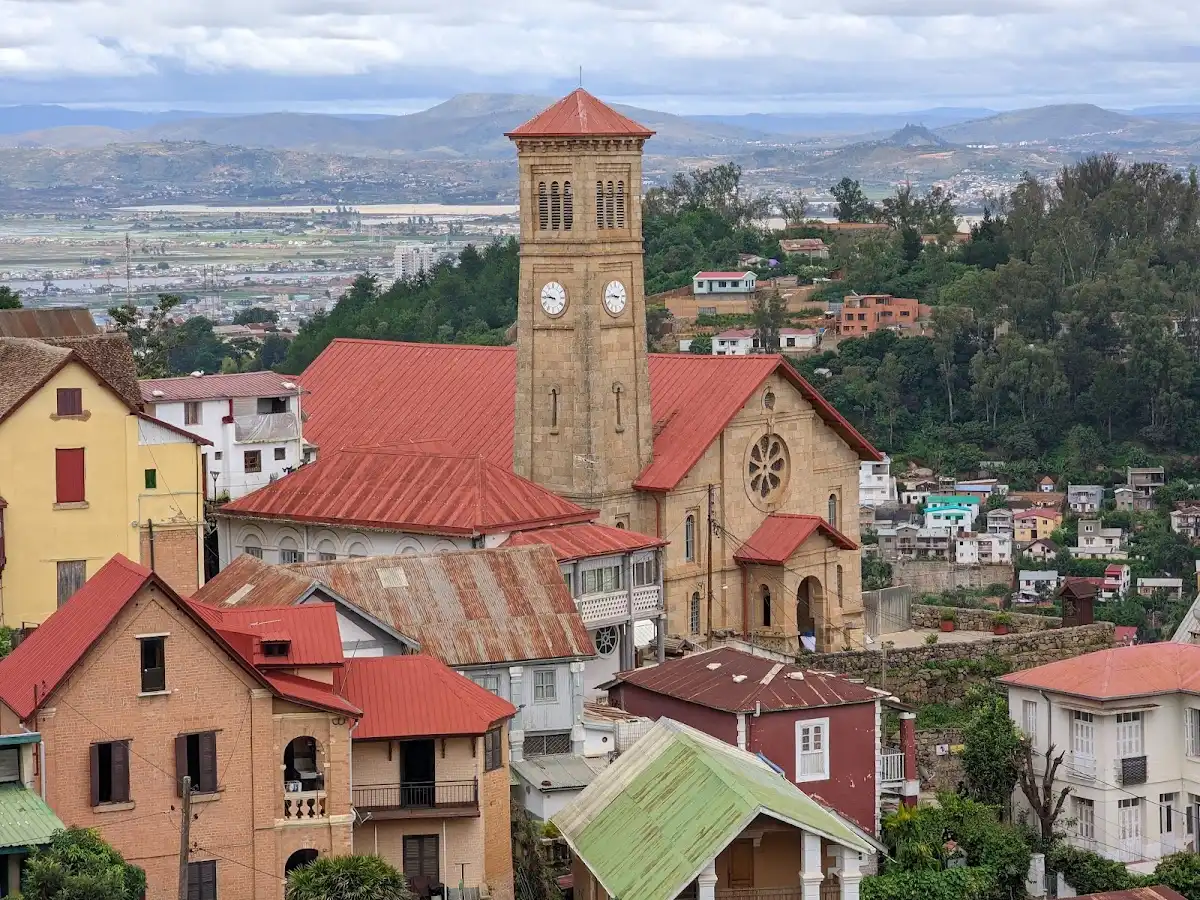
5 Andafiavaratra Palace Museum

1870s stone mansion, prime minister’s rooms, cobbled Haute-Ville climb

Climb cobbled lanes to a European-looking palace where a Merina prime minister once governed, and see period furniture, portraits and court objects.

madagascar-attraction-andafiavaratra-palace-museum
© Google |

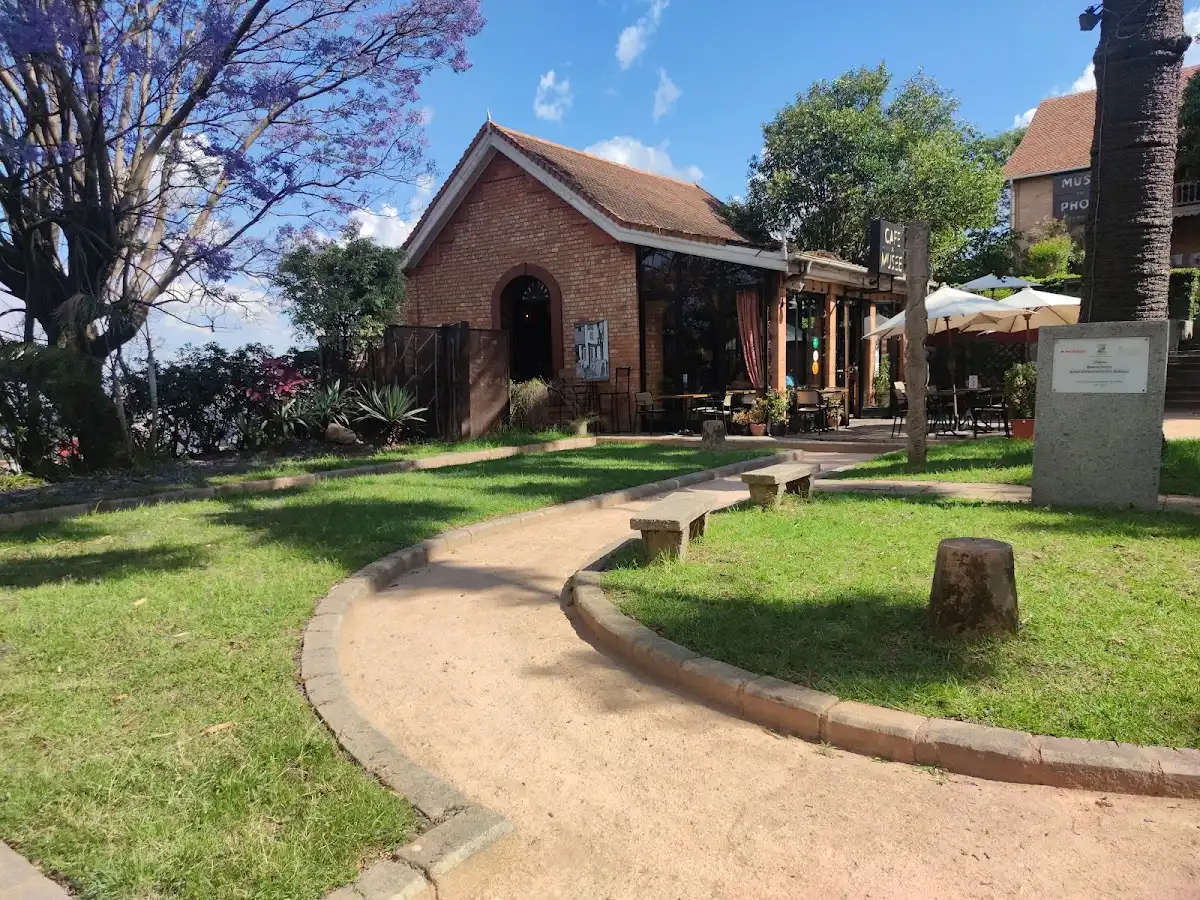
6 Musée de la Photographie de Madagascar

Royal portraits, archive prints, colonial street scenes, upper-town stairways

Compare old photographs of the Merina court and the capital’s streets with the hillside lanes outside, then continue to the Rova and Andohalo.

madagascar-attraction-musee-de-la-photographie-de-madagascar
© Google |

7 Musée d’Art et d’Archéologie d’Antananarivo

Aloalo grave posts, excavated pottery, valiha, regional textiles

Study carved funerary posts, ritual objects and musical instruments that explain the ancestor customs you will meet later in Malagasy villages.

madagascar-attraction-musee-dart-et-darcheologie-dantananarivo
© Google |

8 Ambalavao Zebu Market

Wednesday zebu herds, bark-pulp paper, silk looms, highland wine

Wander among bargaining drovers and cattle on market day, then watch paper, silk and carved crafts being made in workshops around town.

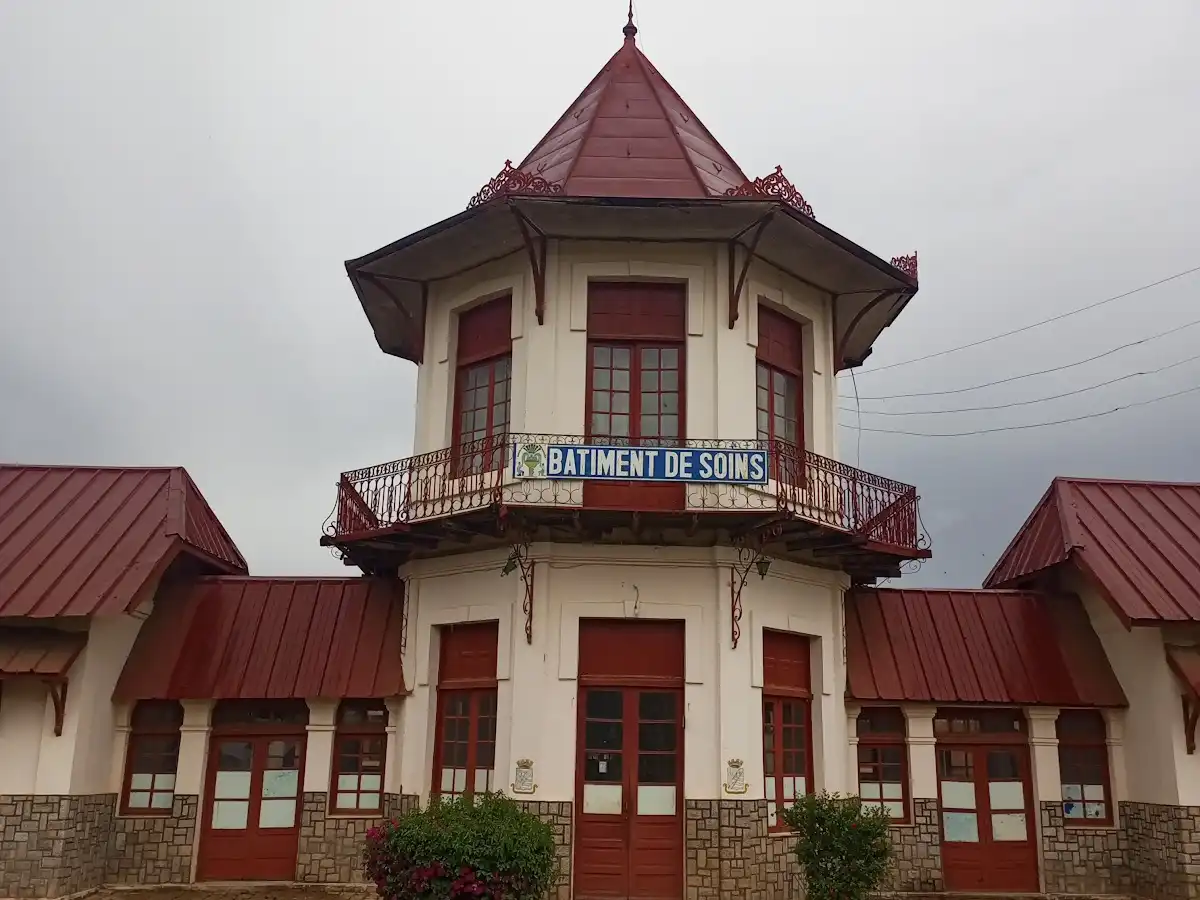
9 Antsirabe Thermal Baths

Mineral tubs, colonial arch, pousse-pousse avenues, tin-toy workshops

Book a private thermal soak, then ride a pousse-pousse past the old railway station, the cathedral and the crater lake on the edge of town.

madagascar-attraction-antsirabe-thermal-baths
© Google |

10 Analakely Market

Iron market halls, spice stalls, charcoal snacks, secondhand rows

Push through covered halls and pavement stalls for cloves, lychees, raffia hats and hot mofo gasy, then climb the steps for a rooftop view.

11 Tsimbazaza Zoo and Botanical Garden

Aye-aye house, elephant bird bones, ruffed lemur choruses, labeled spiny plants

Spot an aye-ayes in its dim house, view giant elephant bird skeletons and listen to ruffed lemurs, then read the botanical garden’s labeled plants.

12 La Teinturerie

Converted dye works, live salegy, courtyard bar, rotating exhibitions

Catch a concert night in a raw-walled former workshop, with Malagasy art on the walls, local rum in hand and artists between sets.

Loading the map 🌍

Expert viewInsights from Locals and Experts

How many attractions to visit: Three to five major sites in a trip of two to three weeks is the number I advise. Beyond that you spend your days in a vehicle with the windows rattling and red dust in your hair, and nothing sinks in. Fewer stops mean a second morning at a park, when the lemurs are active and the forest smells of wet earth and crushed leaves. That extra morning is where the good moments happen.

Prioritizing by travel style: Wildlife-focused travelers should put rainforest and dry forest parks first, since guides and night walks are where the island is truly unique. Those who prefer landscapes and long drives should focus on the west and south, with sunsets over open plains and tracks lined with enormous trees. Budget travelers who want coast time should pick one beach area … read more 👉
How many attractions to visit: Three to five major sites in a trip of two to three weeks is the number I advise. Beyond that you spend your days in a vehicle with the windows rattling and red dust in your hair, and nothing sinks in. Fewer stops mean a second morning at a park, when the lemurs are active and the forest smells of wet earth and crushed leaves. That extra morning is where the good moments happen.

Prioritizing by travel style: Wildlife-focused travelers should put rainforest and dry forest parks first, since guides and night walks are where the island is truly unique. Those who prefer landscapes and long drives should focus on the west and south, with sunsets over open plains and tracks lined with enormous trees. Budget travelers who want coast time should pick one beach area and skip the rest, because island-hopping adds boat costs quickly. If you have limited time, pick one wildlife region and one landscape region, then stop.

Budget per day and per visit: A frugal backpacker can manage on US$25 to 45 a day using guesthouses, local food and shared transport. Add more if you hire a private car, which usually runs about US$50 to 90 a day plus fuel and driver lodging. Park entry for foreigners is commonly around 55,000 to 80,000 ariary (about US$12 to 18) per day for popular sites, with some remote parks costing more. Guides are mandatory in most protected areas and cost roughly 40,000 to 100,000 ariary (US$9 to 22) per group per outing, with night walks and multi-day treks priced extra. Carry plenty of small ariary notes, since cards are rarely accepted and change is scarce. Tipping guides and porters is expected, and a few thousand ariary to 10,000 is a normal gesture for a good day.

Safety on the ground: Roads are the biggest risk. Avoid driving at night, when unlit trucks, cattle and pedestrians share the tarmac. In cities, pickpocketing is common, so keep phones and cameras out of sight in crowded markets, and use a hotel-arranged taxi after dark. Some remote areas have banditry concerns, particularly in the southwest and around certain rural routes, so ask your guesthouse for current conditions before setting off. Malaria is present, and rainforest trails mean leeches, mud and bites, so pack repellent, closed shoes and a rain jacket. Water should be filtered or bought sealed.

Cultural considerations: Respect fady, local taboos that vary between villages. Your guide will explain which are in force, whether it concerns pointing at a tomb, wearing certain colors or eating certain foods. Ask before photographing people and tombs, and always dress modestly in villages. Greeting everyone you pass with a friendly “salama” earns smiles and often invitations for tea or fruit. Buying crafts from local cooperatives, eating at family-run eateries (hot rice, zebu stew, coconut-laced sauces) and using community-run guide services put your money where it supports forest protection. That is the quiet reward: you go home having seen the island and left something behind that helps keep it standing.

✈️ The backpacker research shortcutMadagascar Travel Guide

An offline-friendly backpacking guide with optimized travel routes, ranked highlights, transport advice, and the best areas to stay.
example page 0 from our offline Travel Guide for Madagascar
example page 1 from our offline Travel Guide for Madagascar
example page 2 from our offline Travel Guide for Madagascar
example page 3 from our offline Travel Guide for Madagascar
example page 4 from our offline Travel Guide for Madagascar
example page 5 from our offline Travel Guide for Madagascar
example page 6 from our offline Travel Guide for Madagascar
example page 7 from our offline Travel Guide for Madagascar
The digital guide (301 pages) contains:
✅ 96 highlights, ranked by travel appeal
✅ Optimized 7, 14 & 21-day travel routes
✅ Cities, national parks, landmarks, beaches
✅ How to get around
✅ Offline-friendly for travel without Wi-Fi
👉 Click to see all 30+ guide features

📅 Plan smarter in minutes, not weeks
✅ Month by month travel advice
✅ Festivals & national holidays
✅ Budget expectations

🗺️ Go to the right places, skip the overrated ones
✅ Honest pros & cons of destinations
✅ Top hikes, parks & viewpoints
✅ Lesser-known places most travelers miss
✅ Clear “worth it vs skip it” guidance

🛏️ Travel smoothly without rookie mistakes
✅ Best areas to stay
✅ Transport systems explained simply
✅ Common scams & safety advice
✅ SIM cards, money & practical tips

🌍 Understand the country, not just visit it
✅ Culture & traditions
✅ 52 Essential phrases & customs
✅ Festivals worth planning around
✅ Traveler-friendly historical context
✅ Insights that make places more meaningful

📱 Built for real travel conditions
✅ Fully downloadable PDF
✅ Works completely offline
✅ Optimized for phone use
✅ Useful in remote areas & buses
✅ Everything in one place
Stop searching, start planning
Get instant access to your full guide. 30‑day money-back guarantee.
+ Add another guide for just

By proceeding you agree to our terms.
Sent to your inbox immediately after payment • 100% Secure Checkout
Best Backpacking Travel Advisor 2025 tourism awardBest Backpacking
Travel Advisor
2025
What others say about Take Your Backpack Guides:
⭐⭐⭐⭐⭐
Fantastic, amazing amount of information!
⭐⭐⭐⭐⭐
My goodness this is amazing, it's what I've been looking for hats off too you!
⭐⭐⭐⭐⭐
I think this is absolutely BRILLIANT
⭐⭐⭐⭐
Very complete and informative. It's still missing places, but I gotta to commend you
⭐⭐⭐⭐⭐
This is truly amazing, thank you, can't wait to explore it with my kids!
⭐⭐⭐⭐⭐
Awesome resource, thank you!
⭐⭐⭐⭐⭐
This is amazing! Can't wait to explore the ones I haven't seen
⭐⭐⭐⭐
I love this! Well done, great idea.
⭐⭐⭐⭐⭐
Thanks for taking the time to make this gem!
⭐⭐⭐⭐⭐
This might be the best website I've ever seen.
⭐⭐⭐⭐⭐
Congratulations, and thank you so much for your work; it's incredibly valuable.
⭐⭐⭐⭐
In all seriousness I think you did a great job pointing out the important spots
⭐⭐⭐⭐⭐
10/10 very good
⭐⭐⭐⭐⭐
As someone who's only just starting to visit regularly this is awesome, thank you.
⭐⭐⭐⭐
Thank you very much! I'm going to visit my dad, it's going to be very useful!
⭐⭐⭐⭐⭐
This is really cool! We'll be travelling for the first time and this definitely come in handy.
⭐⭐⭐⭐⭐
You are now our minister of culture, congratulations 👨‍💼
⭐⭐⭐⭐⭐
Just wanted to tell you that this is a pearl! Going to follow your recommendations.
⭐⭐⭐⭐⭐
This is so cool. I'll definitely be using the resource for my travels soon.
⭐⭐⭐⭐⭐
This is very impressive! Good work.
⭐⭐⭐⭐⭐
This is an amazing and informative site. Very well done!

🛏️ Where to stay?Where to Base Yourself

Dorm-style hostels are rare in Madagascar, but budget guesthouses and simple hotels with private rooms from roughly 40,000 to 110,000 ariary (US$9 to 25) a night are easy to find in every town on the main tourist routes. In Antananarivo, Isoraka has the densest cluster of traveler-friendly guesthouses within walking distance of restaurants and bars, the Haute-Ville (upper town) is quieter with city views but involves steep climbs, and Analakely puts you beside the market and taxi-be hubs at the cost of noise and pickpockets, especially after dark. On the coast, Ambatoloaka on Nosy Be is the liveliest and most convenient base for nightlife, while Ivato, next to the airport, is a dull but practical … read more 👉
Dorm-style hostels are rare in Madagascar, but budget guesthouses and simple hotels with private rooms from roughly 40,000 to 110,000 ariary (US$9 to 25) a night are easy to find in every town on the main tourist routes. In Antananarivo, Isoraka has the densest cluster of traveler-friendly guesthouses within walking distance of restaurants and bars, the Haute-Ville (upper town) is quieter with city views but involves steep climbs, and Analakely puts you beside the market and taxi-be hubs at the cost of noise and pickpockets, especially after dark. On the coast, Ambatoloaka on Nosy Be is the liveliest and most convenient base for nightlife, while Ivato, next to the airport, is a dull but practical choice for one night before or after a flight.

If you enjoy meeting fellow travelers, consider choosing hostels with high ratings for atmosphere. On the other hand, if you prefer having your own space, a hotel might be a better option.

MadagascarExpand Your Journey

👋 Meet the founderWho’s Behind Take Your Backpack?

Johan, backpacker and founder of TakeYourBackpackHi, I’m Johan (Netherlands 🇳🇱), the creator of TakeYourBackpack. Over the past 3 decades, I’ve backpacked through 90+ countries across six continents, gaining extensive experience with independent travel, long-term trips, and overland routes.

This site is built on a combination of firsthand travel experience and carefully curated insights from other backpackers. Many guides are based on places I’ve personally visited, while others bring together tips, observations, and practical advice shared by trusted travelers I’ve met along the way.

The goal is to provide realistic, experience-driven guidance — not generic itineraries — so you can explore destinations with better context, clearer expectations, and more confidence.