×

Madagascar🇲🇬 | beachesNosy IranjaTwo-kilometer sandbar, nesting turtles, lighthouse hill, island village | things to do and best time to go

Explore Ramena BeachExplore Foulpointe

Backpacking in Nosy Iranja
🏆 Top pickbeach ranked #1
By Johan Kruseman 🇳🇱 | Updated October 15, 2026

A sandbar about two kilometers long links the two islets of Nosy Iranja, and it only shows at low tide, running from the small island (Iranja Kely) to the larger one (Iranja Be). Iranja sits off the northwest coast of Madagascar, in the Nosy Be archipelago, and getting there means a boat from Nosy Be. That makes it pricey for a backpacker, and the day-trip boats arrive within the same couple of hours, so the midday sand can feel shared. Sleeping on the island costs far more than a night on Nosy Be, and food options are limited to what the lodge and boat crews serve. Still, the sand is white and squeaky, the water runs from pale jade to deep blue, and snorkeling off the shore is easy. I checked the tide table the night before and crossed the bar barefoot, sandals clipped to my pack, while the water was still ankle deep on both sides. By the end, the sand ridges were rippled hard under my soles, and tiny crabs were slipping into their holes.

Discover everything you want to know in the 📖 Madagascar Travel Guide.


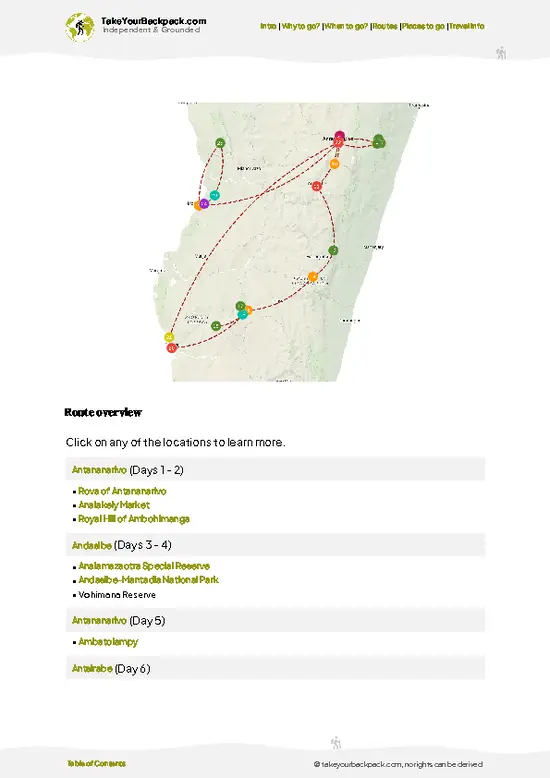
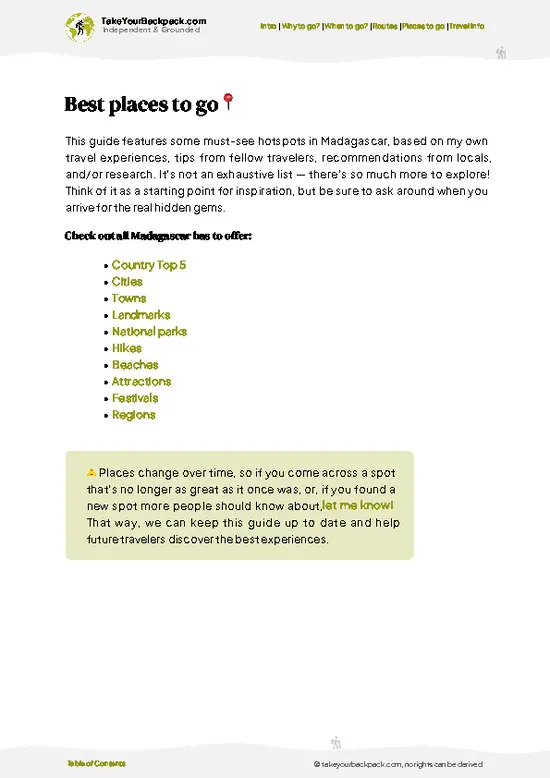
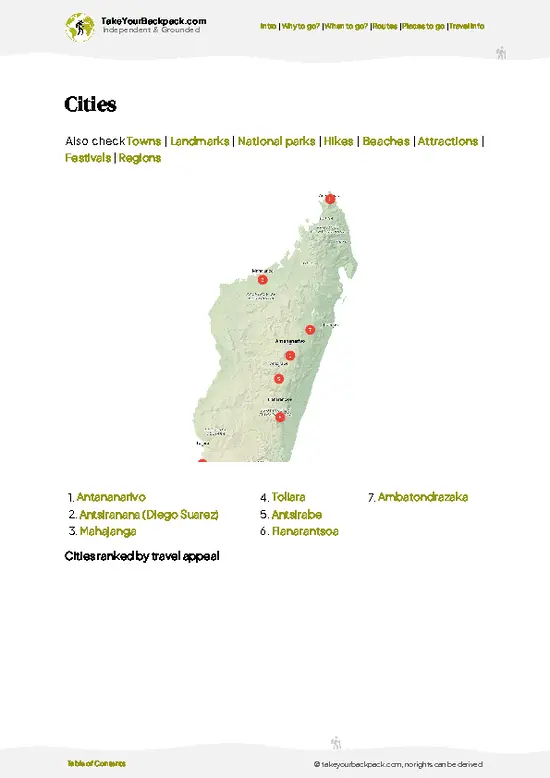
example page 0 from our offline Travel Guide for Madagascar
example page 1 from our offline Travel Guide for Madagascar
example page 2 from our offline Travel Guide for Madagascar
example page 3 from our offline Travel Guide for Madagascar
example page 4 from our offline Travel Guide for Madagascar
example page 5 from our offline Travel Guide for Madagascar
example page 6 from our offline Travel Guide for Madagascar
example page 7 from our offline Travel Guide for Madagascar
Loading the map 🌍
CLICK TO FILTER
cities
towns
landmarks
national parks
hikes
beaches
attractions
festivals
regions
SHOW COUNTRY’S BESTSHOW ALL

✨ Why go?
Ranked #1 beach in Madagascar
What sets this place apart

Backpackers stop here because Iranja gives you something the mainland coast rarely does: a place where the sandbar between Iranja Kely and Iranja Be appears twice a day and you can walk across a sea channel on foot. It is a strong reason to detour from Nosy Be, and it works as a clean break from the diesel and market noise of the island's main towns.

The second pull is the wildlife. The beaches are a protected nesting ground, and green and hawksbill turtles are the reason local guides will steer you away from certain stretches at certain hours. Even outside nesting, you can spot them grazing in the shallows while snorkeling.

It is not a cheap stop, and nobody should pretend it is. Most travelers come on a boat day from Nosy Be, bring a snack or two, and treat Iranja as a splurge. The reasoning … read more 👉
Backpackers stop here because Iranja gives you something the mainland coast rarely does: a place where the sandbar between Iranja Kely and Iranja Be appears twice a day and you can walk across a sea channel on foot. It is a strong reason to detour from Nosy Be, and it works as a clean break from the diesel and market noise of the island's main towns.

The second pull is the wildlife. The beaches are a protected nesting ground, and green and hawksbill turtles are the reason local guides will steer you away from certain stretches at certain hours. Even outside nesting, you can spot them grazing in the shallows while snorkeling.

It is not a cheap stop, and nobody should pretend it is. Most travelers come on a boat day from Nosy Be, bring a snack or two, and treat Iranja as a splurge. The reasoning is simple. A day here is better value than another round of overpriced hotel excursions, and it gives you the postcard beach without needing to book a week-long resort stay. If your budget stretches to one night at the lodge, you get the sandbar nearly to yourself after the boats leave.

💡 HighlightsThe experiences that define the visit

  1. The sandbar crossing: This is what Iranja is known for. At low tide a ridge of white sand about two kilometers long surfaces between the two islets, with shallow water on both sides. Walk it barefoot, and carry your shoes because the sand can be coarse near shell beds. Time it with the tide, as the bar floods back quickly.
  2. Turtle sanctuary and nesting beaches: Iranja is a nesting site for green and hawksbill turtles, and local staff protect the eggs and guide visitors. Seeing a turtle in the water is a real possibility on a snorkel. Keep your distance, never touch them, and follow your guide's instructions.
  3. Snorkeling off the beach: The water near the shore is clear and shallow, with patches of coral and reef fish close to the sand, so you do not need a boat to reach it. Bring your own mask
… read more 👉
  1. The sandbar crossing: This is what Iranja is known for. At low tide a ridge of white sand about two kilometers long surfaces between the two islets, with shallow water on both sides. Walk it barefoot, and carry your shoes because the sand can be coarse near shell beds. Time it with the tide, as the bar floods back quickly.
  2. Turtle sanctuary and nesting beaches: Iranja is a nesting site for green and hawksbill turtles, and local staff protect the eggs and guide visitors. Seeing a turtle in the water is a real possibility on a snorkel. Keep your distance, never touch them, and follow your guide's instructions.
  3. Snorkeling off the beach: The water near the shore is clear and shallow, with patches of coral and reef fish close to the sand, so you do not need a boat to reach it. Bring your own mask if you can, as rental gear quality varies.
  4. The lighthouse hill on Iranja Be: A short climb takes you to the island's old lighthouse, which locals say was designed by the Eiffel workshop. From the top you see the sandbar curving between the islets, and it is the best place to understand how the two pieces of land connect.
  5. The island village: A small community lives on Iranja Be, and a walk through it gives a quieter, more human view than the beach strip. Greet people first, ask before taking photos, and consider buying a handmade item or a drink from a local stall.
Cross the sandbar first, ideally at the start of low tide, because the bar is only available for a limited window and everything else on the island can wait until the water rises.
Spotted a mistake or missing something? Contact us.

🌤️ When to go?Weather, crowds, and seasonal trade-offs

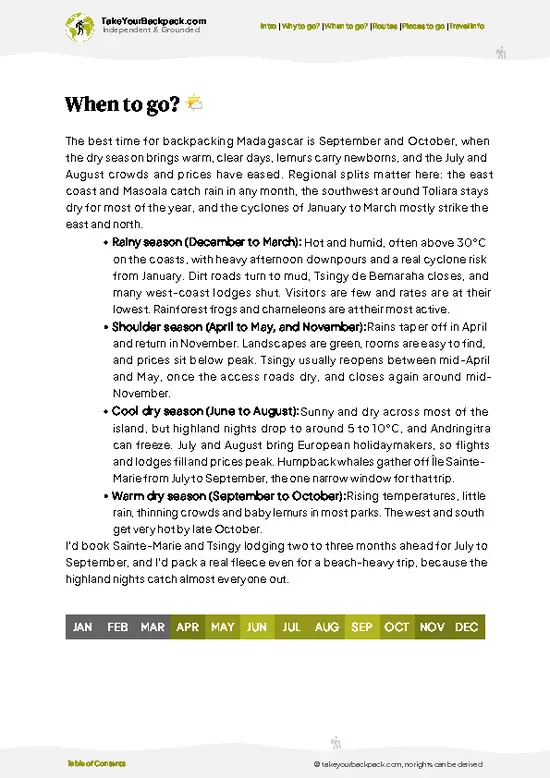
Dry season from late April to October is when day trips to Nosy Iranja run most reliably.
  • Cool Dry Season (June to August): Days reach 27 to 29°C (81 to 84°F) and nights drop to about 21 to 23°C (70 to 73°F). Rain is rare, the sea is calm in the mornings, and humpback whales often show up on the crossing from Nosy Be from July. Sunrise is around 6:00 and sunset around 17:30. Crowds and boat prices peak in July and August.
  • Hot Dry Months (September to November): Highs of 30 to 32°C (86 to 90°F), the clearest water, and fewer visitors. October is excellent value.
  • Wet Season (December to April): Humid, 29 to 33°C (84 to 91°F), with heavy afternoon downpours. January to March is the cyclone risk window, when boats are often canceled. Daylight stretches to about 13 hours, and turtle nesting and hatching
… read more 👉
Dry season from late April to October is when day trips to Nosy Iranja run most reliably.
  • Cool Dry Season (June to August): Days reach 27 to 29°C (81 to 84°F) and nights drop to about 21 to 23°C (70 to 73°F). Rain is rare, the sea is calm in the mornings, and humpback whales often show up on the crossing from Nosy Be from July. Sunrise is around 6:00 and sunset around 17:30. Crowds and boat prices peak in July and August.
  • Hot Dry Months (September to November): Highs of 30 to 32°C (86 to 90°F), the clearest water, and fewer visitors. October is excellent value.
  • Wet Season (December to April): Humid, 29 to 33°C (84 to 91°F), with heavy afternoon downpours. January to March is the cyclone risk window, when boats are often canceled. Daylight stretches to about 13 hours, and turtle nesting and hatching are most likely in these warmer months. Prices drop, apart from the Christmas week.
Check the tide table before booking, because the sandbar between the two islets is only walkable at low tide.


source: climatestotravel.comJANJanuary: below average for travelingFEBFebruary: below average for travelingMARMarch: below average for travelingAPRApril: fair for travelingMAYMay: highly recommended for travelingJUNJune: excellent for travelingJULJuly: excellent for travelingAUGAugust: excellent for travelingSEPSeptember: highly recommended for travelingOCTOctober: excellent for travelingNOVNovember: fair for travelingDECDecember: fair for traveling
when-to-go

✈️ The backpacker research shortcutMadagascar Travel Guide

An offline-friendly backpacking guide with optimized travel routes, ranked highlights, transport advice, and the best areas to stay.
example page 0 from our offline Travel Guide for Madagascar
example page 1 from our offline Travel Guide for Madagascar
example page 2 from our offline Travel Guide for Madagascar
example page 3 from our offline Travel Guide for Madagascar
example page 4 from our offline Travel Guide for Madagascar
example page 5 from our offline Travel Guide for Madagascar
example page 6 from our offline Travel Guide for Madagascar
example page 7 from our offline Travel Guide for Madagascar
The digital guide (305 pages) contains:
✅ 96 highlights, ranked by travel appeal
✅ Optimized 7, 14 & 21-day travel routes
✅ Cities, national parks, landmarks, beaches
✅ How to get around
✅ Offline-friendly for travel without Wi-Fi
👉 Click to see all 30+ guide features

📅 Plan smarter in minutes, not weeks
✅ Month by month travel advice
✅ Festivals & national holidays
✅ Budget expectations

🗺️ Go to the right places, skip the overrated ones
✅ Honest pros & cons of destinations
✅ Top hikes, parks & viewpoints
✅ Lesser-known places most travelers miss
✅ Clear “worth it vs skip it” guidance

🛏️ Travel smoothly without rookie mistakes
✅ Best areas to stay
✅ Transport systems explained simply
✅ Common scams & safety advice
✅ SIM cards, money & practical tips

🌍 Understand the country, not just visit it
✅ Culture & traditions
✅ 52 Essential phrases & customs
✅ Festivals worth planning around
✅ Traveler-friendly historical context
✅ Insights that make places more meaningful

📱 Built for real travel conditions
✅ Fully downloadable PDF
✅ Works completely offline
✅ Optimized for phone use
✅ Useful in remote areas & buses
✅ Everything in one place
Stop searching, start planning
Get instant access to your full guide. 30‑day money-back guarantee.
+ Add another guide for just

By proceeding you agree to our terms.
Sent to your inbox immediately after payment • 100% Secure Checkout
Best Backpacking Travel Advisor 2025 tourism awardBest Backpacking
Travel Advisor
2025
What others say about Take Your Backpack Guides:
⭐⭐⭐⭐⭐
Fantastic, amazing amount of information!
⭐⭐⭐⭐⭐
My goodness this is amazing, it's what I've been looking for hats off too you!
⭐⭐⭐⭐⭐
I think this is absolutely BRILLIANT
⭐⭐⭐⭐
Very complete and informative. It's still missing places, but I gotta to commend you
⭐⭐⭐⭐⭐
This is truly amazing, thank you, can't wait to explore it with my kids!
⭐⭐⭐⭐⭐
Awesome resource, thank you!
⭐⭐⭐⭐⭐
This is amazing! Can't wait to explore the ones I haven't seen
⭐⭐⭐⭐
I love this! Well done, great idea.
⭐⭐⭐⭐⭐
Thanks for taking the time to make this gem!
⭐⭐⭐⭐⭐
This might be the best website I've ever seen.
⭐⭐⭐⭐⭐
Congratulations, and thank you so much for your work; it's incredibly valuable.
⭐⭐⭐⭐
In all seriousness I think you did a great job pointing out the important spots
⭐⭐⭐⭐⭐
10/10 very good
⭐⭐⭐⭐⭐
As someone who's only just starting to visit regularly this is awesome, thank you.
⭐⭐⭐⭐
Thank you very much! I'm going to visit my dad, it's going to be very useful!
⭐⭐⭐⭐⭐
This is really cool! We'll be travelling for the first time and this definitely come in handy.
⭐⭐⭐⭐⭐
You are now our minister of culture, congratulations 👨‍💼
⭐⭐⭐⭐⭐
Just wanted to tell you that this is a pearl! Going to follow your recommendations.
⭐⭐⭐⭐⭐
This is so cool. I'll definitely be using the resource for my travels soon.
⭐⭐⭐⭐⭐
This is very impressive! Good work.
⭐⭐⭐⭐⭐
This is an amazing and informative site. Very well done!

🛏️ Where to stay?Best areas and accommodation options

Stay on Nosy Be, because Nosy Iranja itself has only a pricey private lodge and no budget beds, which makes the main island your base for a day trip of about two hours each way by speedboat. Ambatoloaka is the clear choice for backpackers. It has the densest cluster of guesthouses and dorm-style rooms, a strip of cheap restaurants and bars, and plenty of tour agents and boat captains who sell Iranja day trips to groups, so you can share the boat cost with other travelers. Walking the beach road in the evening is the easiest way to find people to split a boat with. Madirokely, a short ride away, … read more 👉
Stay on Nosy Be, because Nosy Iranja itself has only a pricey private lodge and no budget beds, which makes the main island your base for a day trip of about two hours each way by speedboat. Ambatoloaka is the clear choice for backpackers. It has the densest cluster of guesthouses and dorm-style rooms, a strip of cheap restaurants and bars, and plenty of tour agents and boat captains who sell Iranja day trips to groups, so you can share the boat cost with other travelers. Walking the beach road in the evening is the easiest way to find people to split a boat with. Madirokely, a short ride away, is calmer, with simple bungalows and a more relaxed, couple-friendly feel, and still close to the same operators. Hell-Ville, the main town, has the market, banks, ATMs and the port, and it suits you if you want a more local, less beach-resort atmosphere, though nightlife is thin. Staying at Ambatoloaka or Madirokely also puts you near pickup points for early departures, usually between 7:00 and 8:00. Book a bed for the night before your trip, because the boats leave early and the tide decides your schedule. In July, August and around Christmas, reserve ahead.

🛡️ SafetyScams, Hazards, and Annoyances

Nosy Iranja is a calm, low-risk beach, and most visitors spend the day swimming without incident. The water around the sandbar is shallow, clear and gentle, with little wave energy because the islets sit in a sheltered stretch of the Mozambique Channel. Currents can run along the sandbar channel as the tide turns, so swim near the beach rather than out across the gap. Reef edges and sea urchins sit in some rocky patches, so wear reef shoes or watch your footing when snorkeling. Green and hawksbill turtles feed and nest here, and they are protected, so keep your distance and never touch hatchlings. Sun is the biggest issue. There is almost no natural shade on the sandbar, and the equatorial midday glare burns skin in under an hour, so bring a rash guard, hat and reef-safe sunscreen. The boat … read more 👉
Nosy Iranja is a calm, low-risk beach, and most visitors spend the day swimming without incident. The water around the sandbar is shallow, clear and gentle, with little wave energy because the islets sit in a sheltered stretch of the Mozambique Channel. Currents can run along the sandbar channel as the tide turns, so swim near the beach rather than out across the gap. Reef edges and sea urchins sit in some rocky patches, so wear reef shoes or watch your footing when snorkeling. Green and hawksbill turtles feed and nest here, and they are protected, so keep your distance and never touch hatchlings. Sun is the biggest issue. There is almost no natural shade on the sandbar, and the equatorial midday glare burns skin in under an hour, so bring a rash guard, hat and reef-safe sunscreen. The boat crossing is the roughest part of the day, especially in the afternoon when wind picks up, so bring a dry bag for your phone and ask your captain about the life jackets. Theft is rare on the island, but keep valuables with your guide or boat crew.

FAQFrequently asked questions about Nosy Iranja

Take a speedboat from Nosy Be, which takes about 1.5 to 2.5 hours each way depending on the sea and engine. Most travelers book a day trip from Ambatoloaka or Hell-Ville, usually leaving around 7:00 to 8:00 and returning by mid-afternoon, and prices run roughly €50 to 90 per person with lunch, depending on group size. Sailing boutres take longer, about 4 to 5 hours each way, and are used for overnight trips. Nosy Be itself has flights from Antananarivo (about 1.5 hours).
Swimming and snorkeling are very good, while surfing is not an option. The water at the sandbar is shallow, clear and warm, about 26 to 29°C (79 to 84°F), and there is almost no wave energy, so it suits relaxed swimming. Snorkeling spots near the reef edge and the turtle area often turn up green turtles and reef fish, and gear is usually provided by your boat operator. Calm mornings give the best visibility, and low tide opens the sandbar between the two islets.
No, the island is not free to visit, because you need a boat and an access fee. Day trips from Nosy Be typically cost around €50 to 90 per person, with a local community or conservation fee, lunch and snorkeling gear often included in the price. Confirm what is covered before you pay, and bring some cash in Malagasy ariary for small extras such as drinks or a guide tip. Overnight stays are only at a private lodge on the island, which is much pricier than Nosy Be.
⚠️ Things can change over time, so always validate details locally before you go.

Other Malagasy beaches near Nosy Iranja

Explore more nearby:

  • Andilana Beach—Nosy Tanikely day trips, west-facing sunsets, shallow bay, beach huts| 55 km away
  • Ramena Beach—Emerald Sea trips, Sugar Loaf backdrop, dune bays, sand-side fried fish| 157 km away
  • Anjajavy—Private reserve, Coquerel’s sifakas, mangrove channels, lodge-only stay| 176 km away

💡 Not sure where to go next?
Create a personalized itinerary for Madagascar including Nosy Iranja and the places that fit your trip.

Generate my itinerary

👉 Discover all beaches

Or checkout all Madagascar has to offer (think cities, towns, villages, national parks, hikes, beaches, festivals)
Country photo of Madagascar

We 💚 feedbackWhat to keep in mind

Give Nosy Iranja one night if you can, and two if the tides and your budget agree. A day visit works, but the sandbar to Nosy Iranja Kely is best walked early or late, when the day boats have gone and the sand is quiet. I would sleep over, bring cash and snacks, and skip rushing the turtle beach so the afternoon stays slow. Three nights is plenty unless you simply want to read.

✈️ When did I visit Madagascar?
Madagascar I went backpacking in October 2019. With a friend I rented a 4WD and drove around the southern part of Madagascar.

✍️ Help improve this page!
The information on this page is based on my own backpacking experience in Madagascar, supplemented with up-to-date research and feedback from other travelers. Travel details can change, so if you notice anything outdated or incomplete, feel free to let me know.


🙋‍♂️ Give feedback

👋 Meet the founderWho’s Behind Take Your Backpack?

Johan, backpacker and founder of TakeYourBackpackHi, I’m Johan (Netherlands 🇳🇱), the creator of TakeYourBackpack. Over the past 3 decades, I’ve backpacked through 90+ countries across six continents, gaining extensive experience with independent travel, long-term trips, and overland routes.

This site is built on a combination of firsthand travel experience and carefully curated insights from other backpackers. Many guides are based on places I’ve personally visited, while others bring together tips, observations, and practical advice shared by trusted travelers I’ve met along the way.

The goal is to provide realistic, experience-driven guidance — not generic itineraries — so you can explore destinations with better context, clearer expectations, and more confidence.