×

Madagascar🇲🇬 | beachesAnjajavyPrivate reserve, Coquerel’s sifakas, mangrove channels, lodge-only stay | things to do and best time to go

Explore Antsanitia BeachExplore Antsiranana Bay

Backpacking in Anjajavy
👍 Recommendedbeach ranked #15
By Johan Kruseman 🇳🇱 | Updated October 15, 2026

Anjajavy is not a public beach with a village and guesthouses behind it; it sits inside a private nature reserve on the Anjajavy peninsula in the northwest of Madagascar, and the only lodging is a high-end lodge. Budget travelers should treat it as a splurge or a day-visit target, not a place to pitch a tent. I stepped off the small plane onto a red-dirt strip and heard lemurs crashing through the canopy before I saw any sand. The beach itself is clean, empty and calm, with warm, shallow water. Skip it if you want nightlife. Come for the dry forest, which ends in pale sand and drifts of dried mangrove leaves.

Discover everything you want to know in the 📖 Madagascar Travel Guide.


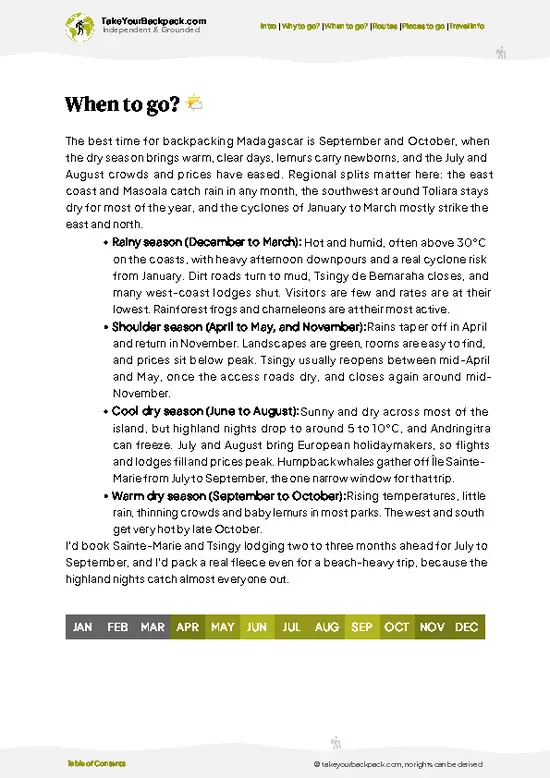
example page 0 from our offline Travel Guide for Madagascar
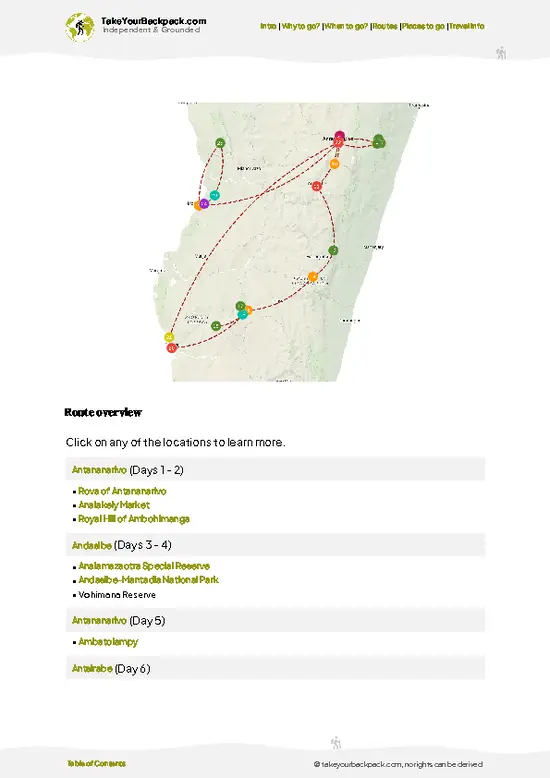
example page 1 from our offline Travel Guide for Madagascar
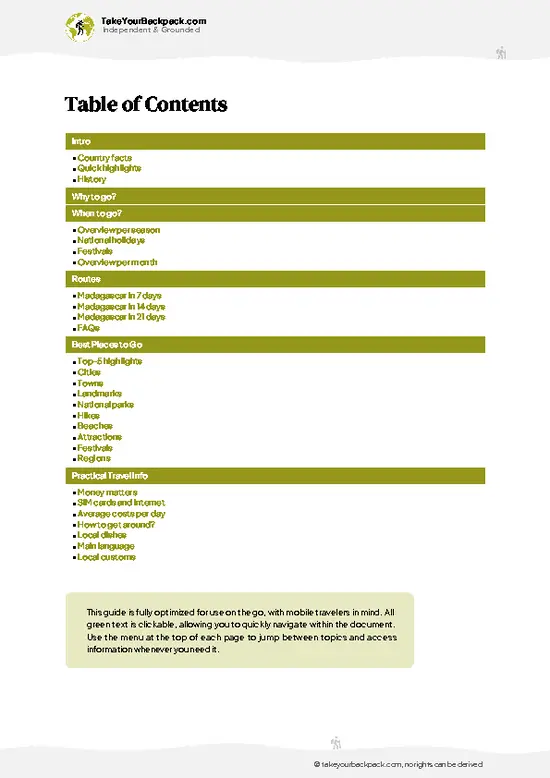
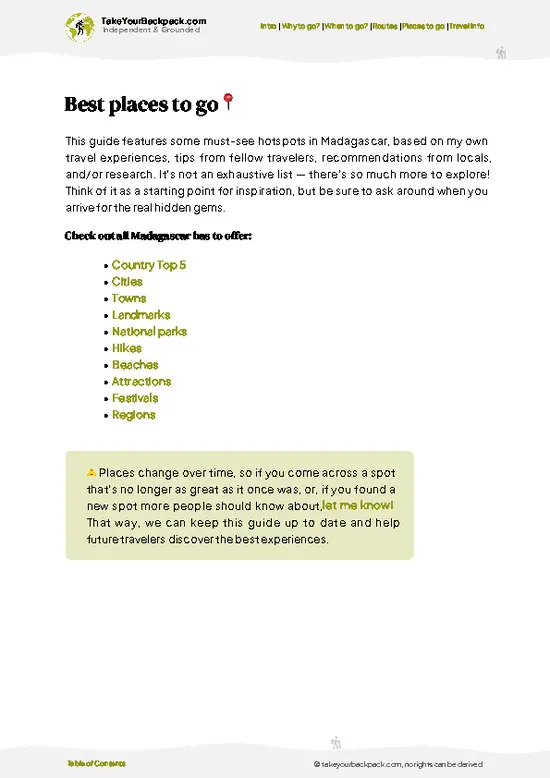
example page 2 from our offline Travel Guide for Madagascar
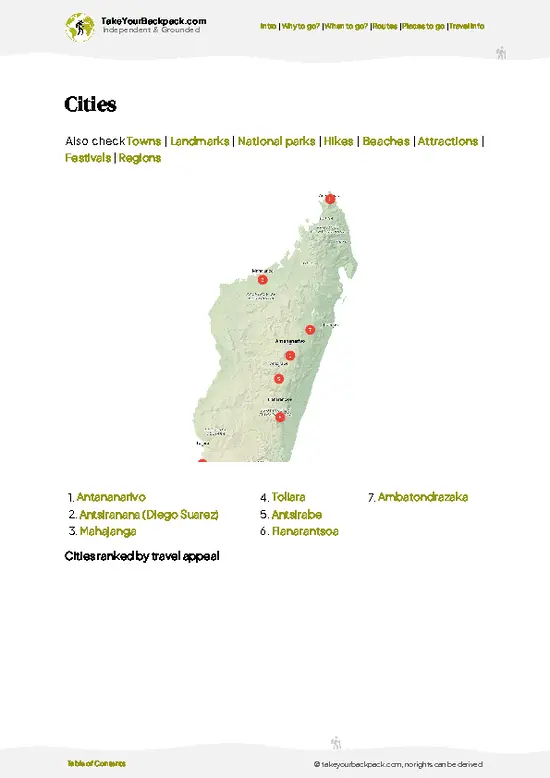
example page 3 from our offline Travel Guide for Madagascar
example page 4 from our offline Travel Guide for Madagascar
example page 5 from our offline Travel Guide for Madagascar
example page 6 from our offline Travel Guide for Madagascar
example page 7 from our offline Travel Guide for Madagascar
Loading the map 🌍
CLICK TO FILTER
cities
towns
landmarks
national parks
hikes
beaches
attractions
festivals
regions
SHOW COUNTRY’S BESTSHOW ALL

✨ Why go?
Ranked #15 beach in Madagascar
What sets this place apart

Backpackers do not usually arrive by accident. Anjajavy is a deliberate detour, reached by a flight or a long 4x4 push from the coast, and the reason is wildlife. The reserve protects Coquerel’s sifakas, which dance sideways across the sand, and the Anjajavy forest holds fossa, mouse lemurs and chameleons that you can meet on foot within minutes of the shoreline. The second reason is quiet. You share the beach with a handful of guests at most, so the sound is waves, cicadas and birds. Think of it as a one-off treat at the end of a rough northwest route, a place to exhale and see animals that most budget itineraries never touch.

💡 HighlightsThe experiences that define the visit

  1. Sifaka watching in the reserve: Coquerel’s sifakas leap between trees and sometimes cross open ground in their sideways bounce. Guides know where the groups feed, so sightings are close and reliable.
  2. Beach walk at low tide: Wide pale sand and rock pools open up, and you may find hermit crabs, shells and bird tracks with nobody else around.
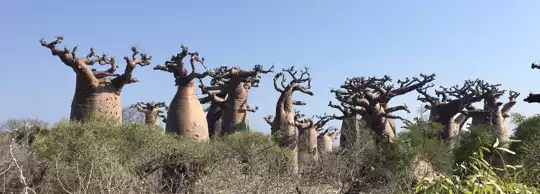
  3. Tsingy and forest hikes: Trails cut through dry deciduous forest and small limestone formations. Expect baobabs, chameleons and sleeping mouse lemurs on guided night walks.
  4. Mangrove pirogue trips: A local boatman paddles you through tidal channels where herons and kingfishers work the edges, quiet and shaded from the sun.
  5. Sunset on the bay: The water turns copper and the forest goes loud with insects. Stay on the sand until dark, then take a headlamp for the
… read more 👉
  1. Sifaka watching in the reserve: Coquerel’s sifakas leap between trees and sometimes cross open ground in their sideways bounce. Guides know where the groups feed, so sightings are close and reliable.
  2. Beach walk at low tide: Wide pale sand and rock pools open up, and you may find hermit crabs, shells and bird tracks with nobody else around.
  3. Tsingy and forest hikes: Trails cut through dry deciduous forest and small limestone formations. Expect baobabs, chameleons and sleeping mouse lemurs on guided night walks.
  4. Mangrove pirogue trips: A local boatman paddles you through tidal channels where herons and kingfishers work the edges, quiet and shaded from the sun.
  5. Sunset on the bay: The water turns copper and the forest goes loud with insects. Stay on the sand until dark, then take a headlamp for the walk back.
Start with the sifaka walk early in the morning, when the animals are active and the forest is still cool.
Spotted a mistake or missing something? Contact us.

🌤️ When to go?Choosing the right time of year

  • Dry Season (May to October): Rain is rare, days run 26 to 31°C (79 to 88°F) and nights dip to about 18 to 22°C (64 to 72°F). Sunrise and sunset sit near 6:00 and 17:30. This is peak time for sea kayaking and boat trips to the Anjajavy forest, and for spotting Coquerel’s sifaka.
  • Hot Wet Season (November to April): Expect 30 to 35°C (86 to 95°F), humid air and heavy downpours, with cyclone risk from January to March. Roads turn to mud, flights get disrupted, and lodges often drop rates.
  • Shoulder Weeks (late April, November): Fewer visitors, warm water, and mostly dry mornings.
Book transport early for July and August, when seats fill fast.

source: climatestotravel.comJANJanuary: below average for travelingFEBFebruary: below average for travelingMARMarch: below average for travelingAPRApril: fair for travelingMAYMay: highly recommended for travelingJUNJune: excellent for travelingJULJuly: excellent for travelingAUGAugust: excellent for travelingSEPSeptember: excellent for travelingOCTOctober: highly recommended for travelingNOVNovember: fair for travelingDECDecember: below average for traveling
when-to-go

✈️ The backpacker research shortcutMadagascar Travel Guide

An offline-friendly backpacking guide with optimized travel routes, ranked highlights, transport advice, and the best areas to stay.
example page 0 from our offline Travel Guide for Madagascar
example page 1 from our offline Travel Guide for Madagascar
example page 2 from our offline Travel Guide for Madagascar
example page 3 from our offline Travel Guide for Madagascar
example page 4 from our offline Travel Guide for Madagascar
example page 5 from our offline Travel Guide for Madagascar
example page 6 from our offline Travel Guide for Madagascar
example page 7 from our offline Travel Guide for Madagascar
The digital guide (305 pages) contains:
✅ 96 highlights, ranked by travel appeal
✅ Optimized 7, 14 & 21-day travel routes
✅ Cities, national parks, landmarks, beaches
✅ How to get around
✅ Offline-friendly for travel without Wi-Fi
👉 Click to see all 30+ guide features

📅 Plan smarter in minutes, not weeks
✅ Month by month travel advice
✅ Festivals & national holidays
✅ Budget expectations

🗺️ Go to the right places, skip the overrated ones
✅ Honest pros & cons of destinations
✅ Top hikes, parks & viewpoints
✅ Lesser-known places most travelers miss
✅ Clear “worth it vs skip it” guidance

🛏️ Travel smoothly without rookie mistakes
✅ Best areas to stay
✅ Transport systems explained simply
✅ Common scams & safety advice
✅ SIM cards, money & practical tips

🌍 Understand the country, not just visit it
✅ Culture & traditions
✅ 52 Essential phrases & customs
✅ Festivals worth planning around
✅ Traveler-friendly historical context
✅ Insights that make places more meaningful

📱 Built for real travel conditions
✅ Fully downloadable PDF
✅ Works completely offline
✅ Optimized for phone use
✅ Useful in remote areas & buses
✅ Everything in one place
Stop searching, start planning
Get instant access to your full guide. 30‑day money-back guarantee.
+ Add another guide for just

By proceeding you agree to our terms.
Sent to your inbox immediately after payment • 100% Secure Checkout
Best Backpacking Travel Advisor 2025 tourism awardBest Backpacking
Travel Advisor
2025
What others say about Take Your Backpack Guides:
⭐⭐⭐⭐⭐
Fantastic, amazing amount of information!
⭐⭐⭐⭐⭐
My goodness this is amazing, it's what I've been looking for hats off too you!
⭐⭐⭐⭐⭐
I think this is absolutely BRILLIANT
⭐⭐⭐⭐
Very complete and informative. It's still missing places, but I gotta to commend you
⭐⭐⭐⭐⭐
This is truly amazing, thank you, can't wait to explore it with my kids!
⭐⭐⭐⭐⭐
Awesome resource, thank you!
⭐⭐⭐⭐⭐
This is amazing! Can't wait to explore the ones I haven't seen
⭐⭐⭐⭐
I love this! Well done, great idea.
⭐⭐⭐⭐⭐
Thanks for taking the time to make this gem!
⭐⭐⭐⭐⭐
This might be the best website I've ever seen.
⭐⭐⭐⭐⭐
Congratulations, and thank you so much for your work; it's incredibly valuable.
⭐⭐⭐⭐
In all seriousness I think you did a great job pointing out the important spots
⭐⭐⭐⭐⭐
10/10 very good
⭐⭐⭐⭐⭐
As someone who's only just starting to visit regularly this is awesome, thank you.
⭐⭐⭐⭐
Thank you very much! I'm going to visit my dad, it's going to be very useful!
⭐⭐⭐⭐⭐
This is really cool! We'll be travelling for the first time and this definitely come in handy.
⭐⭐⭐⭐⭐
You are now our minister of culture, congratulations 👨‍💼
⭐⭐⭐⭐⭐
Just wanted to tell you that this is a pearl! Going to follow your recommendations.
⭐⭐⭐⭐⭐
This is so cool. I'll definitely be using the resource for my travels soon.
⭐⭐⭐⭐⭐
This is very impressive! Good work.
⭐⭐⭐⭐⭐
This is an amazing and informative site. Very well done!

🛏️ Where to stay?Choosing the right base

Anjajavy is a remote private-reserve peninsula, so the area to stay is the village and beach strip on the Anjajavy side of the bay, not a town with hostel rows. The nearest budget-friendly base is Mahajanga, a large port city on the northwest coast, where backpackers find the most social, inexpensive beds, restaurants, and transport connections. Stay there before and after the trip, then arrange a few nights close to the beach itself through simple bungalows or village homestays if available. The beach area is quiet, with no nightlife, so you meet other travelers over shared boat transfers and … read more 👉
Anjajavy is a remote private-reserve peninsula, so the area to stay is the village and beach strip on the Anjajavy side of the bay, not a town with hostel rows. The nearest budget-friendly base is Mahajanga, a large port city on the northwest coast, where backpackers find the most social, inexpensive beds, restaurants, and transport connections. Stay there before and after the trip, then arrange a few nights close to the beach itself through simple bungalows or village homestays if available. The beach area is quiet, with no nightlife, so you meet other travelers over shared boat transfers and forest walks instead of bar crawls. Solo travelers should book ahead, since options are very limited and the remoteness means few walk-in choices.

🛡️ SafetyScams, Hazards, and Annoyances

Anjajavy sits on a sheltered bay with calm, warm, shallow water, so swimming is easy for most of the day. Tides are large here, and the sea pulls back a long way at low tide, so plan swims around high water. Currents grow stronger near channel mouths, so stay close to the beach. Sun is the main hazard, with strong midday glare and little shade on open sand. Crime is rarely a concern in this remote area, though keep valuables out of sight and out of reach near boats. Walk the forest with a local guide.

FAQFrequently asked questions about Anjajavy

Most travelers fly from Antananarivo to Mahajanga (about 1 hour), then take a light-aircraft or boat transfer to Anjajavy. By road, Mahajanga to the area takes a long day over rough tracks, around 8 to 10 hours depending on conditions, and the final part is often by boat. The dry season from May to October is the easiest time to travel, and transfers usually need to be arranged in advance.
Swimming is the best use of the bay, with calm, warm, shallow water, especially at high tide. There are no surf breaks, so surfing is not an option. Snorkeling is possible around rocky points when the water is clear, usually in the dry season, but visibility varies. Kayaking and boat trips through the mangroves are more rewarding than reef diving here.
Reaching the beach itself usually costs nothing, since sand and shoreline are public. Anjajavy is a private reserve area, so forest walks and boat trips generally require paying a guide, typically in the range of Ar 50,000 to 150,000 (about US$11 to 33) per outing. Transfers are the main expense, so budget extra for a boat or flight.
⚠️ Things can change over time, so always validate details locally before you go.

Other Malagasy beaches near Anjajavy

Explore more nearby:

  • Antsanitia Beach—Casuarina shade, calm warm shallows, Mahajanga day-trip, thatched fish lunches| 101 km away
  • Nosy Iranja—Two-kilometer sandbar, nesting turtles, lighthouse hill, island village| 176 km away
  • Andilana Beach—Nosy Tanikely day trips, west-facing sunsets, shallow bay, beach huts| 227 km away

💡 Not sure where to go next?
Create a personalized itinerary for Madagascar including Anjajavy and the places that fit your trip.

Generate my itinerary

👉 Discover all beaches

Or checkout all Madagascar has to offer (think cities, towns, villages, national parks, hikes, beaches, festivals)
Country photo of Madagascar

We 💚 feedbackParting advice and final tips

Anjajavy suits wildlife lovers and couples ready to spend more than usual for a few days of near-total quiet. If you need cheap beds and a social scene, skip it. I would pack binoculars, a headlamp and insect repellent, and book guided walks first.

✈️ When did I visit Madagascar?
Madagascar I went backpacking in October 2019. With a friend I rented a 4WD and drove around the southern part of Madagascar.

✍️ Help improve this page!
The information on this page is based on my own backpacking experience in Madagascar, supplemented with up-to-date research and feedback from other travelers. Travel details can change, so if you notice anything outdated or incomplete, feel free to let me know.


🙋‍♂️ Give feedback

👋 Meet the founderWho’s Behind Take Your Backpack?

Johan, backpacker and founder of TakeYourBackpackHi, I’m Johan (Netherlands 🇳🇱), the creator of TakeYourBackpack. Over the past 3 decades, I’ve backpacked through 90+ countries across six continents, gaining extensive experience with independent travel, long-term trips, and overland routes.

This site is built on a combination of firsthand travel experience and carefully curated insights from other backpackers. Many guides are based on places I’ve personally visited, while others bring together tips, observations, and practical advice shared by trusted travelers I’ve met along the way.

The goal is to provide realistic, experience-driven guidance — not generic itineraries — so you can explore destinations with better context, clearer expectations, and more confidence.