×

Madagascar🇲🇬 | attractionsNosy Tanikely Marine Reserve Snorkeling Areacoral reefs, tropical fish, lighthouse island, shallow lagoons | things to do and best time to go

Explore Pirate Cemetery of Île Sainte-MarieExplore Nosy Komba Lemur and Craft Villages

Backpacking in Nosy Tanikely Marine Reserve Snorkeling Area
🌟 Highlightattraction ranked #4
By Johan Kruseman 🇳🇱 | Updated September 3, 2026

Forget the Instagram fantasy of Nosy Tanikely as a deserted, untouched Eden where you’ll have the reef to yourself. The reality? You’ll be sharing the water with day-trippers, snorkel-vested cruise groups, and the occasional drone enthusiast. Nosy Tanikely Marine Reserve sits just off the northwest coast of Madagascar, a quick boat hop from Nosy Be. For backpackers, it’s a double-edged sword: yes, the coral is alive and the fish are bold, but you’re not the only one who’s heard about it. The entry fee and boat ride aren’t dirt cheap by Madagascar standards, and you’ll need to negotiate hard to avoid the “tourist tax.” Still, the underwater spectacle is the real deal—turtles, technicolor parrotfish, and the kind of visibility that makes you forget the crowd above. Compared to the mainland’s rainforests or the tsingy stone forests, Tanikely is pure sensory overload, less about solitude, more about immersion—literally and figuratively.

Discover everything you want to know in the 📖 Madagascar Travel Guide.
Loading the map 🌍
CLICK TO FILTER
cities
towns
villages
landmarks
national parks
hikes
beaches
attractions
festivals
regions
SHOW COUNTRY’S BESTSHOW ALL

✨ Why go?
Ranked #4 attraction in Madagascar
What makes it a must-see attraction

Nosy Tanikely Marine Reserve is often hyped as a postcard-perfect snorkeling spot, and yes, it’s crowded—especially when the tourist boats roll in mid-morning. But here’s the real deal: this isn’t just about ticking off a checklist. It’s one of the few places in Madagascar where you can swim alongside vibrant coral reefs teeming with turtles, colorful fish, and even the occasional reef shark, all in crystal-clear water that feels like a private aquarium. The effort to get there—usually a bumpy boat ride from Nosy Be—filters out the casual day-trippers, leaving space for serious snorkelers who crave an immersive experience rather than a quick selfie.

Beyond the underwater spectacle, Nosy Tanikely holds cultural weight. The island’s marine reserve status reflects Madagascar’s growing commitment … read more 👉
Nosy Tanikely Marine Reserve is often hyped as a postcard-perfect snorkeling spot, and yes, it’s crowded—especially when the tourist boats roll in mid-morning. But here’s the real deal: this isn’t just about ticking off a checklist. It’s one of the few places in Madagascar where you can swim alongside vibrant coral reefs teeming with turtles, colorful fish, and even the occasional reef shark, all in crystal-clear water that feels like a private aquarium. The effort to get there—usually a bumpy boat ride from Nosy Be—filters out the casual day-trippers, leaving space for serious snorkelers who crave an immersive experience rather than a quick selfie.

Beyond the underwater spectacle, Nosy Tanikely holds cultural weight. The island’s marine reserve status reflects Madagascar’s growing commitment to preserving its unique biodiversity, a cause that resonates deeply with backpackers who want their travel to mean something. It’s a milestone on the northern Madagascar route, a natural checkpoint where you can reset, recharge, and witness firsthand why this island nation punches well above its weight in marine life. The cost and crowds might sting, but the payoff—a raw, unfiltered connection with one of the world’s richest ecosystems—is worth every minute and every ariary.
Want to include Nosy Tanikely Marine Reserve Snorkeling Area in your Madagascar route?
Create a personalized Madagascar itinerary that includes Nosy Tanikely Marine Reserve Snorkeling Area and the places that fit your trip — based on your travel style, budget, and available time. Get your route in seconds.

Generate my trip

💡 HighlightsDon't-miss highlights and experiences

1. The Coral Cathedral: Shallow Reef Snorkeling
Let’s get real: you will not have this reef to yourself. Nosy Tanikely is no secret, and you’ll see fins and GoPros everywhere. But here’s the kicker—this is one of the rare places where the hype is justified. The shallow reefs are a living kaleidoscope, with hard and soft corals so close you’ll feel like you’re floating above a psychedelic garden. Parrotfish, clownfish, and electric-blue damselfish dart around your mask. You don’t need to be Jacques Cousteau to appreciate it; even first-timers can drift over the reef and see more marine life in an hour than most people see in a lifetime. The sheer density and accessibility of the reef is the real magic, not the Instagram illusion of solitude.


2. Sea Turtle Encounters
Here’s the honest truth: … read more 👉
1. The Coral Cathedral: Shallow Reef Snorkeling
Let’s get real: you will not have this reef to yourself. Nosy Tanikely is no secret, and you’ll see fins and GoPros everywhere. But here’s the kicker—this is one of the rare places where the hype is justified. The shallow reefs are a living kaleidoscope, with hard and soft corals so close you’ll feel like you’re floating above a psychedelic garden. Parrotfish, clownfish, and electric-blue damselfish dart around your mask. You don’t need to be Jacques Cousteau to appreciate it; even first-timers can drift over the reef and see more marine life in an hour than most people see in a lifetime. The sheer density and accessibility of the reef is the real magic, not the Instagram illusion of solitude.


2. Sea Turtle Encounters
Here’s the honest truth: you’re not guaranteed a turtle sighting, but your odds here are better than almost anywhere else in Madagascar. Green and hawksbill turtles graze on the seagrass beds just off the beach. If you’re patient and keep your distance, you’ll watch them glide with a kind of prehistoric grace that makes every selfie stick around you fade into irrelevance. This is the moment that sticks with you—the slow, silent ballet of a wild turtle in its element. It’s not staged, it’s not filtered, and it’s worth every bit of the boat ride.


3. The Lighthouse Hike
Most people come for the snorkeling and never bother to climb the hill. Their loss. The old French lighthouse at the island’s summit is a relic from another era, and the sweaty, ten-minute hike up is rewarded with a 360-degree view that’s pure Madagascar: turquoise water, jungle canopy, and the volcanic silhouettes of neighboring islands. You’ll probably share the view with a few lemurs and maybe a handful of other hikers. This is the spot where you realize how small you are—and how wild this place still feels, crowds or not. This one’s my personal favorite.


4. Lemur Spotting in the Canopy
Yes, you came for the fish, but don’t skip the forest. Brown lemurs have made the island their home, and you’ll hear them before you see them—rustling in the branches, leaping from tree to tree with a kind of reckless joy. It’s a reminder that Madagascar’s magic isn’t just underwater. Watching a lemur munch on fruit, oblivious to the human circus below, is a dose of wildness you can’t fake.


5. The Beach Picnic (with a Side of Reality)
Let’s kill the fantasy: the beaches here are not deserted, and yes, you’ll see tour groups. But the sand is powdery, the water is bathtub-warm, and if you bring your own picnic (or buy grilled fish from a local boat), you can carve out your own slice of paradise between the crowds. The real win? Eating fresh seafood with salty hair and sandy feet, watching the tide roll in. It’s not exclusive, but it’s real, and it’s worth every crumb.
Spotted a mistake or missing something? Contact us.
🌤️ When to go?Seasonal considerations and timing


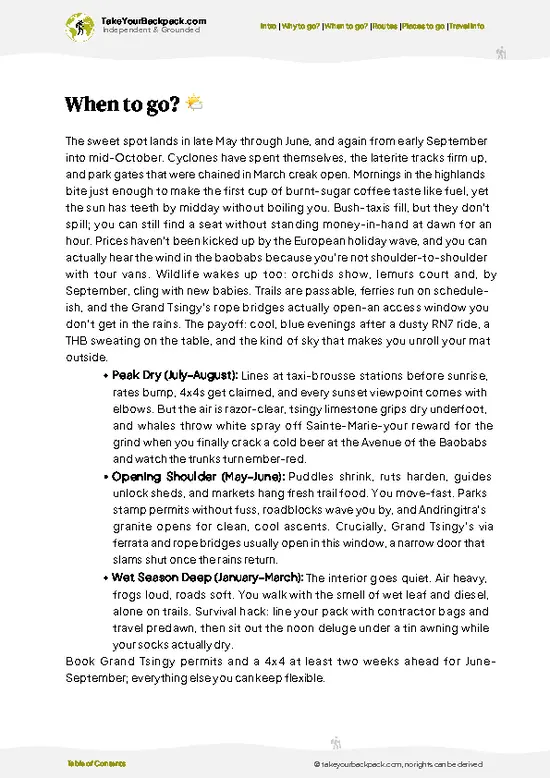
  • Weather: The best window is from April to November when Madagascar’s dry season kicks in. Expect less rain and clearer waters, perfect for snorkeling. December to March is the wet season, bringing heavy rains and choppy seas that can kill visibility and your vibe.

  • Temperature: During the dry months, daytime temps hover around 24-29°C (75-85°F), ideal for long swims without freezing or overheating. The wet season can push temps higher, but humidity spikes make it uncomfortable and sticky.

  • Daylight Hours: From May to August, daylight shrinks to about 10-11 hours, meaning shorter snorkeling windows. September to November offers longer days, closer to 12 hours, giving you more time to explore underwater.

  • Crowds: Peak tourist season aligns with the dry months, especially July and August,
read more 👉

  • Weather: The best window is from April to November when Madagascar’s dry season kicks in. Expect less rain and clearer waters, perfect for snorkeling. December to March is the wet season, bringing heavy rains and choppy seas that can kill visibility and your vibe.

  • Temperature: During the dry months, daytime temps hover around 24-29°C (75-85°F), ideal for long swims without freezing or overheating. The wet season can push temps higher, but humidity spikes make it uncomfortable and sticky.

  • Daylight Hours: From May to August, daylight shrinks to about 10-11 hours, meaning shorter snorkeling windows. September to November offers longer days, closer to 12 hours, giving you more time to explore underwater.

  • Crowds: Peak tourist season aligns with the dry months, especially July and August, so expect more boats and snorkelers. If you want a quieter experience, aim for April, May, or late October when fewer visitors show up but conditions remain solid.

  • Seasonal Activities: Turtle nesting happens from October to December, adding a rare wildlife bonus. However, this overlaps with the start of the rainy season, so balance your priorities carefully.

  • Price Fluctuations: Dry season means higher prices for boat trips and accommodation. Booking in shoulder months like April or October can save you money without sacrificing quality conditions.


Pro-tip: For the best combo of calm seas, fewer crowds, and wallet-friendly rates, hit Nosy Tanikely in late April or early October—snorkeling here then feels like your own secret slice of paradise.


source: climatestotravel.comJANJanuary: fair for travelingFEBFebruary: fair for travelingMARMarch: fair for travelingAPRApril: highly recommended for travelingMAYMay: highly recommended for travelingJUNJune: highly recommended for travelingJULJuly: good for travelingAUGAugust: good for travelingSEPSeptember: highly recommended for travelingOCTOctober: highly recommended for travelingNOVNovember: highly recommended for travelingDECDecember: fair for traveling
when-to-go

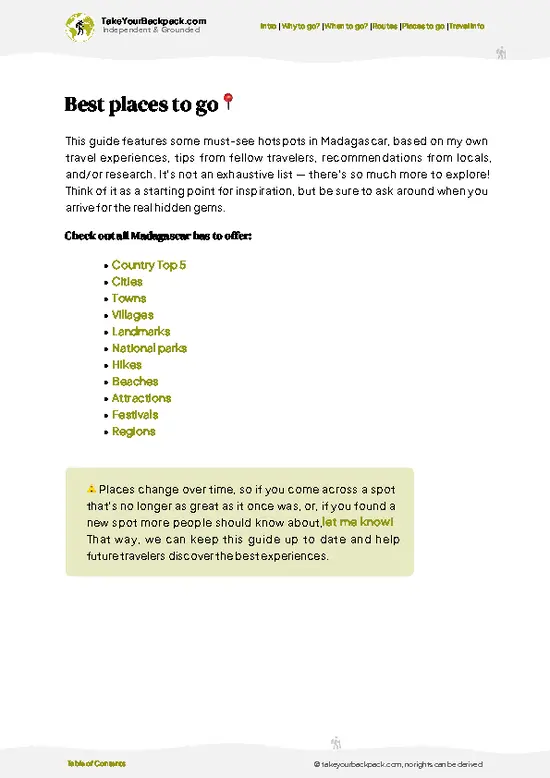
✈️ The backpacker research shortcutMadagascar Travel Guide

An offline-friendly backpacking guide with optimized travel routes, ranked highlights, transport advice, and the best areas to stay.
example page 0 from our offline Travel Guide for Madagascar
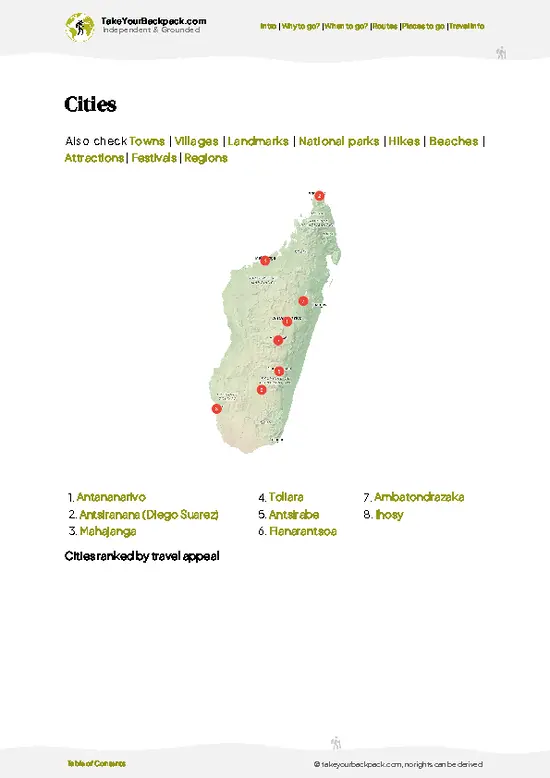
example page 1 from our offline Travel Guide for Madagascar
example page 2 from our offline Travel Guide for Madagascar
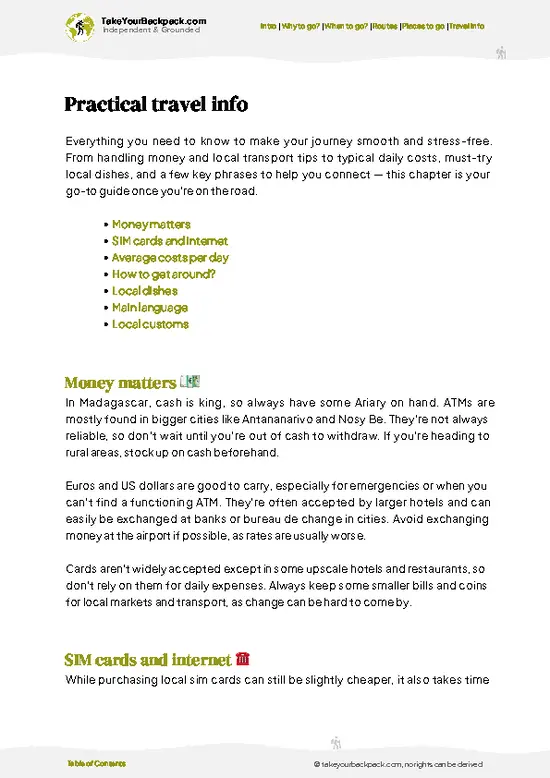
example page 3 from our offline Travel Guide for Madagascar
example page 4 from our offline Travel Guide for Madagascar
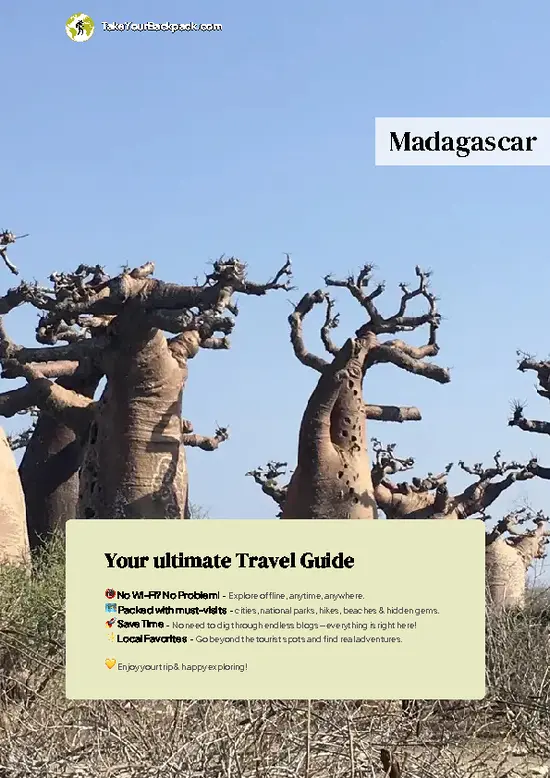
example page 5 from our offline Travel Guide for Madagascar
example page 6 from our offline Travel Guide for Madagascar
example page 7 from our offline Travel Guide for Madagascar
The digital guide (418 pages) contains:
110 highlights, ranked by travel appeal
Optimized 7, 14 & 21-day travel routes
Cities, national parks, landmarks, beaches
How to get around
Offline-friendly for travel without Wi-Fi
👉 Click to see all 30+ guide features

📅 Plan smarter in minutes, not weeks
Month by month travel advice
Festivals & national holidays
Budget expectations

🗺️ Go to the right places, skip the overrated ones
Honest pros & cons of destinations
Top hikes, parks & viewpoints
Lesser-known places most travelers miss
Clear “worth it vs skip it” guidance

🛏️ Travel smoothly without rookie mistakes
Best areas to stay
Transport systems explained simply
Common scams & safety advice
SIM cards, money & practical tips

🌍 Understand the country, not just visit it
Culture & traditions
52 Essential phrases & customs
Festivals worth planning around
Traveler-friendly historical context
Insights that make places more meaningful

📱 Built for real travel conditions
Fully downloadable PDF
Works completely offline
Optimized for phone use
Useful in remote areas & buses
Everything in one place
Save weeks of stressful planning
Get instant access to your full guide. 30‑day money-back guarantee.
+ Add another guide for just US$7.80

By proceeding you agree to our terms.
Sent to your inbox immediately after payment • 100% Secure Checkout
Best Backpacking Travel Advisor 2025 tourism awardBest Backpacking
Travel Advisor
2025
What others say about Take Your Backpack Guides:
⭐⭐⭐⭐⭐
Fantastic, amazing amount of information!
⭐⭐⭐⭐⭐
My goodness this is amazing, it's what I've been looking for hats off too you!
⭐⭐⭐⭐⭐
I think this is absolutely BRILLIANT
⭐⭐⭐⭐
Very complete and informative. It's still missing places, but I gotta to commend you
⭐⭐⭐⭐⭐
This is truly amazing, thank you, can't wait to explore it with my kids!
⭐⭐⭐⭐⭐
Awesome resource, thank you!
⭐⭐⭐⭐⭐
This is amazing! Can't wait to explore the ones I haven't seen
⭐⭐⭐⭐
I love this! Well done, great idea.
⭐⭐⭐⭐⭐
Thanks for taking the time to make this gem!
⭐⭐⭐⭐⭐
This might be the best website I've ever seen.
⭐⭐⭐⭐⭐
Congratulations, and thank you so much for your work; it's incredibly valuable.
⭐⭐⭐⭐
In all seriousness I think you did a great job pointing out the important spots
⭐⭐⭐⭐⭐
10/10 very good
⭐⭐⭐⭐⭐
As someone who's only just starting to visit regularly this is awesome, thank you.
⭐⭐⭐⭐
Thank you very much! I'm going to visit my dad, it's going to be very useful!
⭐⭐⭐⭐⭐
This is really cool! We'll be travelling for the first time and this definitely come in handy.
⭐⭐⭐⭐⭐
You are now our minister of culture, congratulations 👨‍💼
⭐⭐⭐⭐⭐
Just wanted to tell you that this is a pearl! Going to follow your recommendations.
⭐⭐⭐⭐⭐
This is so cool. I'll definitely be using the resource for my travels soon.
⭐⭐⭐⭐⭐
This is very impressive! Good work.
⭐⭐⭐⭐⭐
This is an amazing and informative site. Very well done!

🛏️ Where to stay?Where staying makes the most sense

Nosy Be is the obvious base camp for anyone aiming to dive into the Nosy Tanikely Marine Reserve. But let’s cut through the hype: Nosy Be isn’t a quiet hideaway. It’s a buzzing hub where tourists, locals, and traders collide. Expect crowds, especially during peak season, and prices that can spike accordingly. It’s not the cheapest spot in Madagascar, but it’s where you’ll find the social vibe backpackers crave—think lively markets, beachfront bars, and a mix of travelers swapping stories over cheap rum.

If you want to stay close to the action without breaking the bank, focus on the areas around … read more 👉
Nosy Be is the obvious base camp for anyone aiming to dive into the Nosy Tanikely Marine Reserve. But let’s cut through the hype: Nosy Be isn’t a quiet hideaway. It’s a buzzing hub where tourists, locals, and traders collide. Expect crowds, especially during peak season, and prices that can spike accordingly. It’s not the cheapest spot in Madagascar, but it’s where you’ll find the social vibe backpackers crave—think lively markets, beachfront bars, and a mix of travelers swapping stories over cheap rum.

If you want to stay close to the action without breaking the bank, focus on the areas around Hell-Ville and the smaller villages on the island’s west coast. These spots offer a more authentic slice of island life, with guesthouses and small bungalows that attract solo travelers and budget adventurers. Safety here is decent, but like anywhere popular, keep your wits about you after dark.

The real magic isn’t just the snorkeling itself—it’s the community you find on land. You’ll meet people who’ve been coming back for years, locals who know every coral and current, and fellow backpackers who are just as stoked about the underwater world. Skip the glossy resorts and dive into the neighborhoods where the vibe is real, the prices are fair, and the access to Nosy Tanikely is just a boat ride away. That’s where the trip turns from tourist checklist to genuine experience.

👛 Costs (as of 3 September 2026)Travel costs and budget guide for Nosy Tanikely Marine Reserve Snorkeling Area

As of January 1, 2025, the entrance fee for Nosy Tanikely Marine Park is 40,000 ariary (approximately €10) for international visitors. Additional costs may include snorkeling equipment rental, typically around €5 per person per day, and organized tours that can range from €50 to €60 per person, which may include transportation, meals, and guided snorkeling activities.

source: tanikely.com
⚠️ Prices can change and everyone travels differently, so take this as a rough guide. Hope it helps you plan your adventure!

FAQFrequently asked questions about Nosy Tanikely Marine Reserve Snorkeling Area

A half-day to a full day is sufficient to visit Nosy Tanikely Marine Reserve Snorkeling Area, allowing enough time to explore the snorkeling spots and relax on the beach. Most visitors spend around 4 to 6 hours here. Starting early in the morning is recommended to avoid crowds and enjoy clearer waters.
Yes, the entrance fee is worth it for the vibrant coral reefs, diverse marine life, and clear waters ideal for snorkeling. The fee is typically around 10,000 to 15,000 Malagasy Ariary (approximately 3 to 5 USD). The well-preserved environment and abundant sea turtles make it a valuable experience for nature lovers.
You get to Nosy Tanikely Marine Reserve by boat from Nosy Be, the nearest major island. The boat ride takes about 30 to 45 minutes, with several operators offering daily trips from Hell-Ville or other ports on Nosy Be. It is advisable to arrange transport through a local tour operator or your accommodation.
⚠️ Things can change over time, so always validate details locally before you go.

Other Malagasy attractions near Nosy Tanikely Marine Reserve Snorkeling Area

Explore more nearby:


💡 Not sure where to go next?
Create a personalized itinerary for Madagascar including Nosy Tanikely Marine Reserve Snorkeling Area and the places that fit your trip.

Generate my itinerary

👉 Discover all attractions

Or checkout all Madagascar has to offer (think cities, towns, villages, national parks, hikes, beaches, festivals)
Country photo of Madagascar

We 💚 feedbackFinal thoughts on visiting Nosy Tanikely Marine Reserve Snorkeling Area

Nosy Tanikely isn’t a secret sanctuary—expect crowds, especially midday, and the boat rides can jack up your budget more than you’d like. But here’s the kicker: the underwater world is a riot of color and life that feels like stepping into another planet. If you can stomach the tourist buzz and the price tag, the snorkeling here delivers a raw, pulse-quickening connection to Madagascar’s marine soul that’s hard to beat anywhere else.

✈️ When did I visit Madagascar?
Madagascar I went backpacking in October 2019. With a friend I rented a 4WD and drove around the southern part of Madagascar.

✍️ Help improve this page!
The information on this page is based on my own backpacking experience in Madagascar, supplemented with up-to-date research and feedback from other travelers. Travel details can change, so if you notice anything outdated or incomplete, feel free to let me know.


🙋‍♂️ Give feedback

👋 Meet the founderWho’s Behind Take Your Backpack?

Johan, backpacker and founder of TakeYourBackpackHi, I’m Johan (Netherlands 🇳🇱), the creator of TakeYourBackpack. Over the past decade, I’ve backpacked through 80+ countries across six continents, gaining extensive experience with independent travel, long-term trips, and overland routes.

This site is built on a combination of firsthand travel experience and carefully curated insights from other backpackers. Many guides are based on places I’ve personally visited, while others bring together tips, observations, and practical advice shared by trusted travelers I’ve met along the way.

The goal is to provide realistic, experience-driven guidance — not generic itineraries — so you can explore destinations with better context, clearer expectations, and more confidence.

Get full Madagascar guide •
Instant download • 110 highlights • Full Offline guide