×

Madagascar🇲🇬 | beachesVohémar Beachcoconut groves, quiet fishing port, gentle bay | things to do and best time to go

Explore Vinanibe BeachExplore Antananarivo

Backpacking in Vohémar Beach
👍 Recommendedbeach ranked #16
By Johan Kruseman 🇳🇱 | Updated September 3, 2026

Let’s clear the air: Vohémar Beach is not the untouched paradise your cousin’s Instagram filter would have you believe. Perched on Madagascar’s northeast coast, Vohémar is more “local fishing hub with sand” than “Robinson Crusoe fantasy.” The beach is broad, usually clean-ish, and rarely crowded—unless you count the goats. Swimming? Only if you like your waves with a side of undertow. The vibe is sleepy, with a few basic bungalows and rice-and-fish shacks, but don’t expect nightlife or coral reefs—snorkelers and surfers will be happier down the coast at Antalaha or Sambava. Vohémar’s charm is its authenticity, not its scenery.

Discover everything you want to know in the 📖 Madagascar Travel Guide.
Loading the map 🌍
CLICK TO FILTER
cities
towns
villages
landmarks
national parks
hikes
beaches
attractions
festivals
regions
SHOW COUNTRY’S BESTSHOW ALL

✨ Why go?
Ranked #16 beach in Madagascar
Why visitors keep coming back

Vohémar Beach is a must-stop for backpackers navigating Madagascar’s coast. Why? The laid-back atmosphere feels like a warm hug after a long trek. You can kick back with a cold drink without breaking the bank—affordability is the name of the game here. The social scene is lively, with fellow travelers swapping stories and laughter. Plus, the water access is a refreshing treat, perfect for a dip or just cooling your feet. Think of it as a connector on your journey, a place to pause, recharge, and soak in the local vibe before moving on.
Want to include Vohémar Beach in your Madagascar route?
Create a personalized Madagascar itinerary that includes Vohémar Beach and the places that fit your trip — based on your travel style, budget, and available time. Get your route in seconds.

Generate my trip

💡 HighlightsWhat this place is best known for

  • Mangrove canoe/estuary labyrinth — Paddle through tangled mangrove channels in a dugout or small boat to see crabs, kingfishers, and the weird little ecosystems where river water meets the sea. It’s intimate and surprisingly quiet; the shoreline here is more mangrove roots than tourist promenades, so you get a real “working coast” feel rather than postcard sand.
  • Snorkel trips to nearby coral patches and islets — Short boat rides put you on reef gardens that are often less crowded than other parts of Madagascar. Expect colorful reef fish, bommies and the odd reef turtle or ray if you’re lucky; the water clarity and shallow fringing reef make for easy, relaxed snorkeling — my personal favorite.
  • Harbor life and morning fish market — Early morning the beachfront doubles as a small port and
read more 👉
  • Mangrove canoe/estuary labyrinth — Paddle through tangled mangrove channels in a dugout or small boat to see crabs, kingfishers, and the weird little ecosystems where river water meets the sea. It’s intimate and surprisingly quiet; the shoreline here is more mangrove roots than tourist promenades, so you get a real “working coast” feel rather than postcard sand.
  • Snorkel trips to nearby coral patches and islets — Short boat rides put you on reef gardens that are often less crowded than other parts of Madagascar. Expect colorful reef fish, bommies and the odd reef turtle or ray if you’re lucky; the water clarity and shallow fringing reef make for easy, relaxed snorkeling — my personal favorite.
  • Harbor life and morning fish market — Early morning the beachfront doubles as a small port and market: fishermen land their catch, baskets of prawns and fish are traded, and you can watch traditional pirogues being repaired. It’s one of the best ways to see how the local economy revolves around the sea — practical, noisy, and very real.
  • Coastal forest day trips for wildlife and birds — A few kilometres inland the coastal dry forest and patchy woodland host endemic birds and shy primates. These are short, easily arranged excursions that contrast the beach: walking trails, birdcalls, and the odd glimpse of lemur-like creatures among the tamarinds make it feel like two ecosystems in one day.
  • Beach nights: starry skies, local fires and occasional bioluminescence — There’s almost no light pollution, so the Milky Way is bright and beach gatherings around small fires are common and friendly. On calm nights after warm spells you might spot faint bioluminescent blooms near the surf — not guaranteed, but unforgettable when it happens. You can also watch or join small-scale night fishing if you want a hands-on, local experience.
Spotted a mistake or missing something? Contact us.
🌤️ When to go?When to go for the best experience


  • Topic: Weather – The dry season from May to October is your best bet. Expect less rain, making beach days more reliable. The wet season (November to April) brings heavy showers and humidity that can turn your plans into a soggy mess.

  • Topic: Temperature – Temperatures hover between 24-30°C (75-86°F) during the dry months, perfect for swimming and sunbathing without melting into a puddle. The wet season heats up slightly but feels stickier thanks to humidity.

  • Topic: Daylight Hours – Around 11 to 12 hours of daylight year-round, but the dry season offers clearer skies, so you get more usable daylight for exploring and relaxing.

  • Topic: Crowds – Vohémar Beach isn’t exactly a tourist hotspot, but the dry season sees a modest bump in visitors. Still, you’re unlikely to feel like you’re in
read more 👉

  • Topic: Weather – The dry season from May to October is your best bet. Expect less rain, making beach days more reliable. The wet season (November to April) brings heavy showers and humidity that can turn your plans into a soggy mess.

  • Topic: Temperature – Temperatures hover between 24-30°C (75-86°F) during the dry months, perfect for swimming and sunbathing without melting into a puddle. The wet season heats up slightly but feels stickier thanks to humidity.

  • Topic: Daylight Hours – Around 11 to 12 hours of daylight year-round, but the dry season offers clearer skies, so you get more usable daylight for exploring and relaxing.

  • Topic: Crowds – Vohémar Beach isn’t exactly a tourist hotspot, but the dry season sees a modest bump in visitors. Still, you’re unlikely to feel like you’re in a sardine can.

  • Topic: Seasonal Activities – Dry months are prime for snorkeling and fishing. Wet season limits water activities due to rough seas and poor visibility.

  • Topic: Price Fluctuations – Expect slightly higher prices in the dry season, but nothing that breaks the bank. The wet season offers discounts but at the cost of less predictable weather.


Pro-tip: Aim for late May or early October—weather’s solid, crowds are thin, and prices haven’t hit their peak yet. It’s like catching the beach at its most cooperative mood.


source: climatestotravel.comJANJanuary: below average for travelingFEBFebruary: below average for travelingMARMarch: below average for travelingAPRApril: fair for travelingMAYMay: highly recommended for travelingJUNJune: excellent for travelingJULJuly: excellent for travelingAUGAugust: excellent for travelingSEPSeptember: excellent for travelingOCTOctober: highly recommended for travelingNOVNovember: fair for travelingDECDecember: below average for traveling
when-to-go

✈️ The backpacker research shortcutMadagascar Travel Guide

An offline-friendly backpacking guide with optimized travel routes, ranked highlights, transport advice, and the best areas to stay.
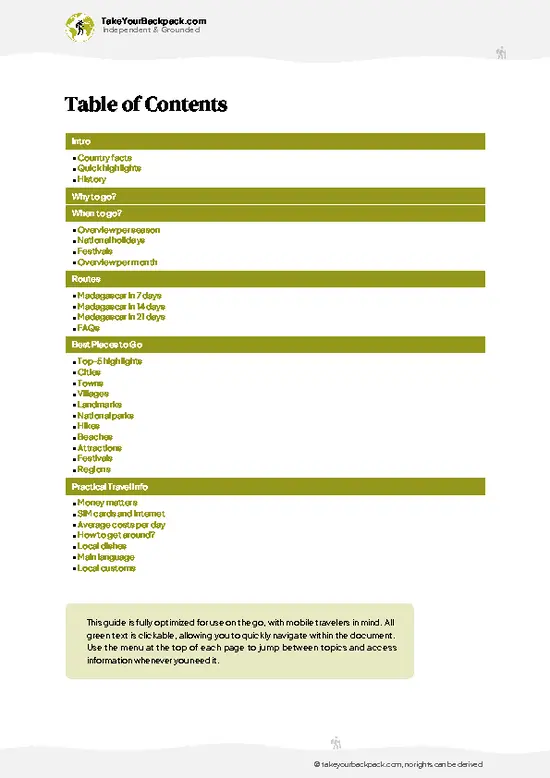
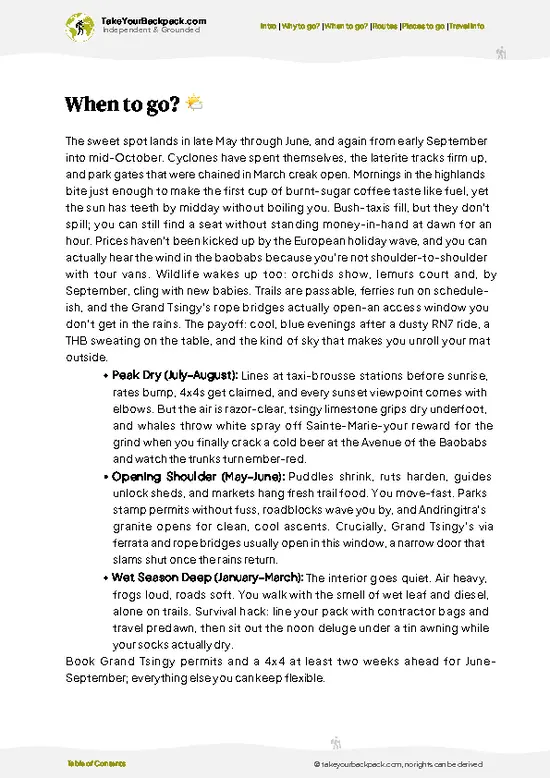
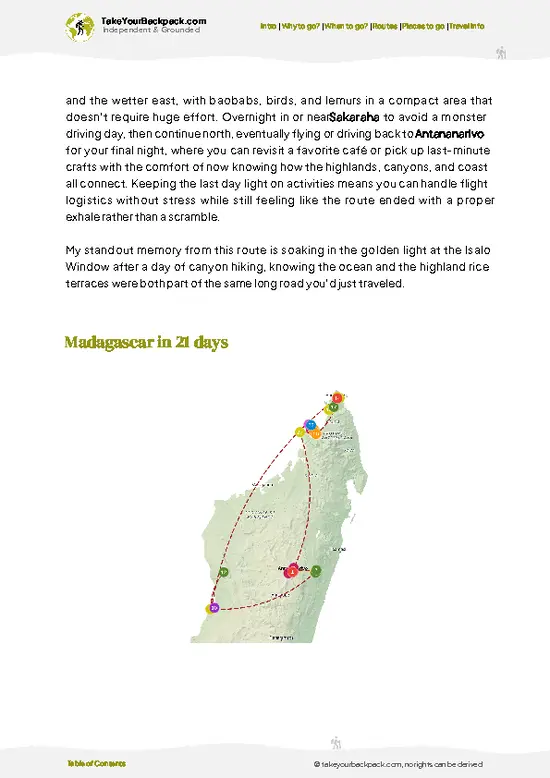
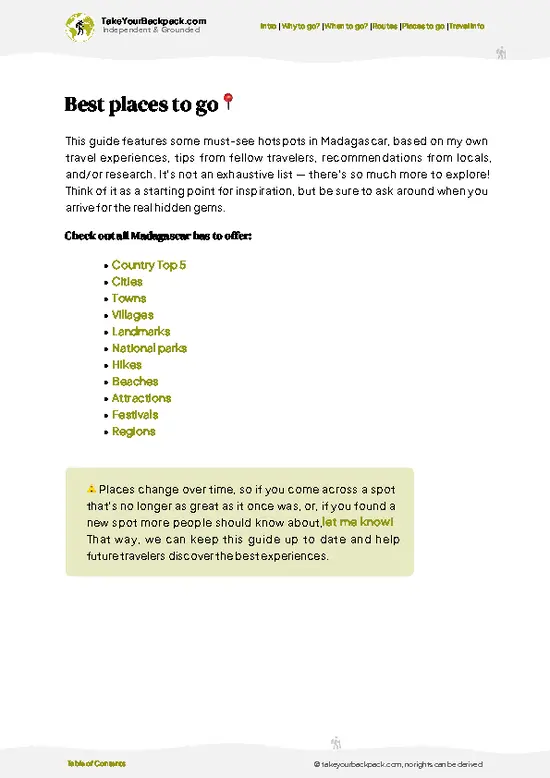
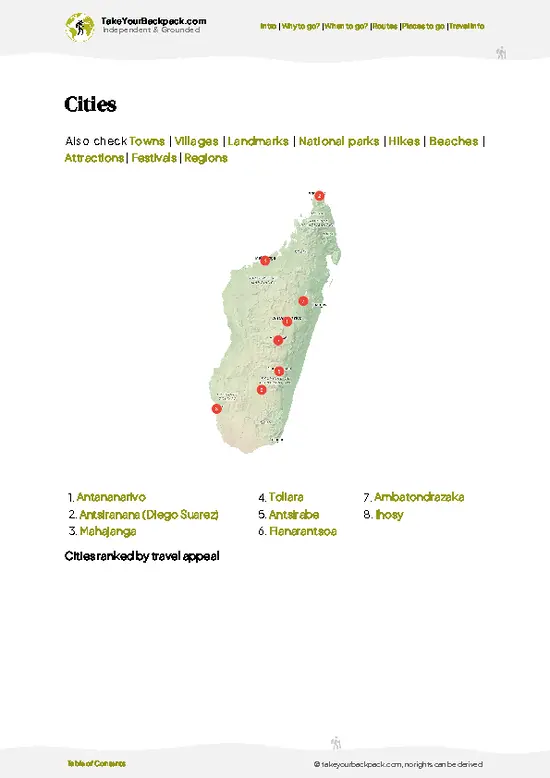
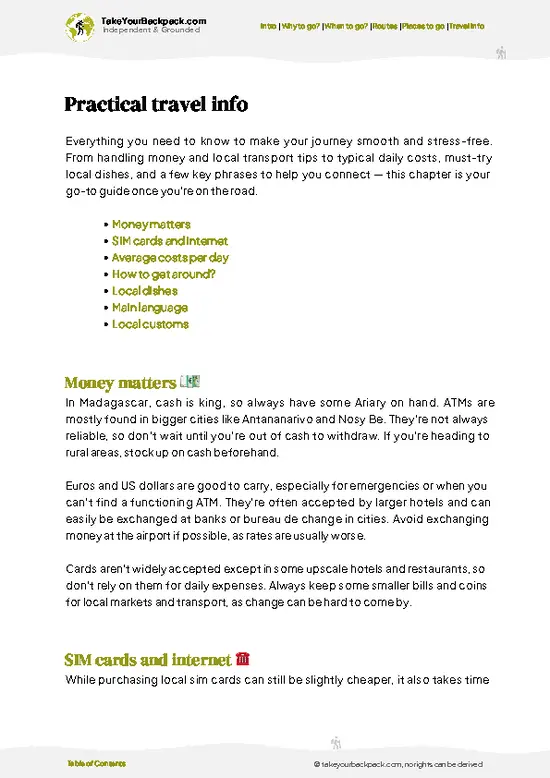
example page 0 from our offline Travel Guide for Madagascar
example page 1 from our offline Travel Guide for Madagascar
example page 2 from our offline Travel Guide for Madagascar
example page 3 from our offline Travel Guide for Madagascar
example page 4 from our offline Travel Guide for Madagascar
example page 5 from our offline Travel Guide for Madagascar
example page 6 from our offline Travel Guide for Madagascar
example page 7 from our offline Travel Guide for Madagascar
The digital guide (418 pages) contains:
110 highlights, ranked by travel appeal
Optimized 7, 14 & 21-day travel routes
Cities, national parks, landmarks, beaches
How to get around
Offline-friendly for travel without Wi-Fi
👉 Click to see all 30+ guide features

📅 Plan smarter in minutes, not weeks
Month by month travel advice
Festivals & national holidays
Budget expectations

🗺️ Go to the right places, skip the overrated ones
Honest pros & cons of destinations
Top hikes, parks & viewpoints
Lesser-known places most travelers miss
Clear “worth it vs skip it” guidance

🛏️ Travel smoothly without rookie mistakes
Best areas to stay
Transport systems explained simply
Common scams & safety advice
SIM cards, money & practical tips

🌍 Understand the country, not just visit it
Culture & traditions
52 Essential phrases & customs
Festivals worth planning around
Traveler-friendly historical context
Insights that make places more meaningful

📱 Built for real travel conditions
Fully downloadable PDF
Works completely offline
Optimized for phone use
Useful in remote areas & buses
Everything in one place
Save weeks of stressful planning
Get instant access to your full guide. 30‑day money-back guarantee.
+ Add another guide for just US$7.80

By proceeding you agree to our terms.
Sent to your inbox immediately after payment • 100% Secure Checkout
Best Backpacking Travel Advisor 2025 tourism awardBest Backpacking
Travel Advisor
2025
What others say about Take Your Backpack Guides:
⭐⭐⭐⭐⭐
Fantastic, amazing amount of information!
⭐⭐⭐⭐⭐
My goodness this is amazing, it's what I've been looking for hats off too you!
⭐⭐⭐⭐⭐
I think this is absolutely BRILLIANT
⭐⭐⭐⭐
Very complete and informative. It's still missing places, but I gotta to commend you
⭐⭐⭐⭐⭐
This is truly amazing, thank you, can't wait to explore it with my kids!
⭐⭐⭐⭐⭐
Awesome resource, thank you!
⭐⭐⭐⭐⭐
This is amazing! Can't wait to explore the ones I haven't seen
⭐⭐⭐⭐
I love this! Well done, great idea.
⭐⭐⭐⭐⭐
Thanks for taking the time to make this gem!
⭐⭐⭐⭐⭐
This might be the best website I've ever seen.
⭐⭐⭐⭐⭐
Congratulations, and thank you so much for your work; it's incredibly valuable.
⭐⭐⭐⭐
In all seriousness I think you did a great job pointing out the important spots
⭐⭐⭐⭐⭐
10/10 very good
⭐⭐⭐⭐⭐
As someone who's only just starting to visit regularly this is awesome, thank you.
⭐⭐⭐⭐
Thank you very much! I'm going to visit my dad, it's going to be very useful!
⭐⭐⭐⭐⭐
This is really cool! We'll be travelling for the first time and this definitely come in handy.
⭐⭐⭐⭐⭐
You are now our minister of culture, congratulations 👨‍💼
⭐⭐⭐⭐⭐
Just wanted to tell you that this is a pearl! Going to follow your recommendations.
⭐⭐⭐⭐⭐
This is so cool. I'll definitely be using the resource for my travels soon.
⭐⭐⭐⭐⭐
This is very impressive! Good work.
⭐⭐⭐⭐⭐
This is an amazing and informative site. Very well done!

🛏️ Where to stay?Best areas to stay in Madagascar

Vohémar Beach is a slice of paradise, but finding the right spot to crash can feel like a scavenger hunt. Stick to the areas near the beach where budget travelers gather. Look for local guesthouses or bungalows that offer a laid-back vibe and a chance to swap stories with fellow wanderers.

The beachfront spots are often buzzing with life, making it easy to meet new friends over a cold drink. Just be mindful of your surroundings; while it’s generally safe, a little caution goes a long way. Embrace the quirks of local accommodations—think charmingly rustic rather than five-star luxury. You’re here for the experience, not the amenities.

🛡️ SafetyScams, Hazards, and Annoyances

Vohémar Beach is generally a chill spot for swimming, but keep an eye on the tides. Currents can sneak up on you, especially when the wind picks up. Locals know the best swimming times—usually early morning or late afternoon—so follow their lead.

Watch for the occasional jellyfish; they’re not out to ruin your day, but a sting is no fun. As for theft, keep your valuables close. The sun can be relentless, so slather on the sunscreen and take breaks in the shade. Enjoy the waves, but stay aware; it’s all part of the adventure.

FAQFrequently asked questions about Vohémar Beach

You get to Vohémar Beach by first reaching the town of Vohémar in northeastern Madagascar, accessible by a regional flight from Antananarivo or by a long drive of about 600 km from the capital, which can take 12-15 hours on rough roads. From Vohémar town, the beach is a short local taxi or moto ride away.
Vohémar Beach is good for swimming and snorkeling due to its clear waters and coral reefs, but it is not known for surfing as the waves are generally mild. The best time for snorkeling is during the dry season from May to October when water visibility is highest.
Yes, Vohémar Beach is free to visit with no entrance fee. However, budget for local transport and possibly small fees for snorkeling gear rental or guided tours if you choose to explore the reefs.
⚠️ Things can change over time, so always validate details locally before you go.

Other Malagasy beaches near Vohémar Beach

Explore more nearby:

  • Ramena Beach—shallow lagoon, local seafood stalls, sunset views| 133 km away
  • Baie des Sakalava—steady trade winds, kitesurfing hub, open sand| 139 km away
  • Cap Diego—military ruins, panoramic cliffs, remote access| 146 km away

💡 Not sure where to go next?
Create a personalized itinerary for Madagascar including Vohémar Beach and the places that fit your trip.

Generate my itinerary

👉 Discover all beaches

Or checkout all Madagascar has to offer (think cities, towns, villages, national parks, hikes, beaches, festivals)
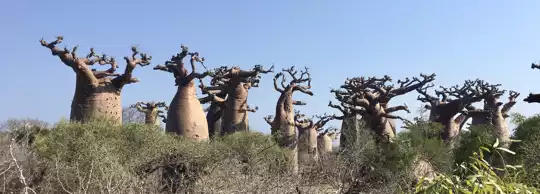
Country photo of Madagascar

We 💚 feedbackKey takeaways before you go

Vohémar Beach is a slice of paradise where the sand feels like powdered sugar and the sunsets are a daily spectacle. But getting there? It’s a trek that tests your patience—think bumpy roads and questionable transport. Worth it? Absolutely. Just pack your sense of humor along with your sunscreen.

✈️ When did I visit Madagascar?
Madagascar I went backpacking in October 2019. With a friend I rented a 4WD and drove around the southern part of Madagascar.

✍️ Help improve this page!
The information on this page is based on my own backpacking experience in Madagascar, supplemented with up-to-date research and feedback from other travelers. Travel details can change, so if you notice anything outdated or incomplete, feel free to let me know.


🙋‍♂️ Give feedback

👋 Meet the founderWho’s Behind Take Your Backpack?

Johan, backpacker and founder of TakeYourBackpackHi, I’m Johan (Netherlands 🇳🇱), the creator of TakeYourBackpack. Over the past decade, I’ve backpacked through 80+ countries across six continents, gaining extensive experience with independent travel, long-term trips, and overland routes.

This site is built on a combination of firsthand travel experience and carefully curated insights from other backpackers. Many guides are based on places I’ve personally visited, while others bring together tips, observations, and practical advice shared by trusted travelers I’ve met along the way.

The goal is to provide realistic, experience-driven guidance — not generic itineraries — so you can explore destinations with better context, clearer expectations, and more confidence.

Get full Madagascar guide •
Instant download • 110 highlights • Full Offline guide