×

Madagascar🇲🇬 | citiesAntananarivohilltop neighborhoods, colonial architecture, bustling markets, royal palace | things to do and best time to go

Explore Vohémar BeachExplore Antsiranana (Diego Suarez)

Backpacking in Antananarivo
🏆 Top pickcity ranked #1
By Johan Kruseman 🇳🇱 | Updated September 3, 2026

Antananarivo, or “Tana” if you want to sound like you’ve been around, used to be the kind of city where backpackers swapped stories about wild taxi-brousse rides and the thrill of feeling like you’d stumbled into a place the world forgot. Fast-forward: today’s Tana is still chaotic, but the edges are softer—there’s Wi-Fi in more cafés, and you’ll spot expats sipping espresso in colonial-era courtyards. The city sprawls across Madagascar’s central highlands, a tangle of hills and red-brick houses, with the Queen’s Palace watching over everything like a stern aunt. Tana’s got character: the Rova, the old stone staircases, the scent of street food grilling at Analakely Market, and a nightlife that’s lively if you know where to look (try Isoraka for jazz and rum). It’s not the easiest city—traffic is a test of patience, and pickpockets are opportunists—but it’s affordable, and you’ll meet other travelers, especially at hostels or the Alliance Française. Compared to beach towns like Nosy Be or the laid-back vibe of Fianarantsoa, Tana is gritty, unpredictable, and absolutely alive.

Discover everything you want to know in the 📖 Madagascar Travel Guide.
Loading the map 🌍
CLICK TO FILTER
cities
towns
villages
landmarks
national parks
hikes
beaches
attractions
festivals
regions
SHOW COUNTRY’S BESTSHOW ALL

✨ Why go?
Ranked #1 city in Madagascar
What sets this place apart

Antananarivo, or Tana as the locals call it, is a strategic hub for backpackers exploring Madagascar. It offers a unique blend of affordability and accessibility that makes it a solid base for your adventures. The hostels here are not just budget-friendly; they foster a sense of community, making it easy to connect with fellow travelers.

The city is walkable, with vibrant markets and street food stalls that invite you to dive into local culture without breaking the bank. You can savor a hearty meal for just a few bucks, which is a win for your wallet.

While Tana itself has its share of highlights, it’s also a launchpad for day trips to stunning landscapes and wildlife. The ease of onward travel from here—whether by taxi-brousse or domestic flights—means you can maximize your time exploring … read more 👉
Antananarivo, or Tana as the locals call it, is a strategic hub for backpackers exploring Madagascar. It offers a unique blend of affordability and accessibility that makes it a solid base for your adventures. The hostels here are not just budget-friendly; they foster a sense of community, making it easy to connect with fellow travelers.

The city is walkable, with vibrant markets and street food stalls that invite you to dive into local culture without breaking the bank. You can savor a hearty meal for just a few bucks, which is a win for your wallet.

While Tana itself has its share of highlights, it’s also a launchpad for day trips to stunning landscapes and wildlife. The ease of onward travel from here—whether by taxi-brousse or domestic flights—means you can maximize your time exploring rather than stressing over logistics.

If you’re after a taste of urban life before heading into Madagascar’s wild heart, Tana is worth more than just a pit stop. It’s a place where you can recharge, plan, and soak in the local vibe, all while keeping your budget intact.
Want to include Antananarivo in your Madagascar route?
Create a personalized Madagascar itinerary that includes Antananarivo and the places that fit your trip — based on your travel style, budget, and available time. Get your route in seconds.

Generate my trip

💡 HighlightsEssential experiences to have while visiting Antananarivo

  • Rova of Antananarivo (Manjakamiadana) — The hilltop royal compound is the city’s soul: rebuilt after the 1995-2009 fires, it’s where you get Madagascar’s royal history, sweeping city views, and the layered stories of Merina kings and queens. Go early to avoid the heat and crowds.
  • Palais d’Andafiavaratra — A short walk from the Rova, this former Prime Minister’s palace is now a museum holding many of the artifacts rescued from the Rova fire. Small, well-curated, and full of objects that actually explain how the capital’s elite lived.
  • Parc Botanique et Zoologique de Tsimbazaza — Part zoo, part natural-history museum, and surprisingly useful for seeing endemic species up close. It’s not a luxury park, but you’ll find lemurs, native plants, and displays that put Madagascar’s biodiversity into
read more 👉
  • Rova of Antananarivo (Manjakamiadana) — The hilltop royal compound is the city’s soul: rebuilt after the 1995-2009 fires, it’s where you get Madagascar’s royal history, sweeping city views, and the layered stories of Merina kings and queens. Go early to avoid the heat and crowds.
  • Palais d’Andafiavaratra — A short walk from the Rova, this former Prime Minister’s palace is now a museum holding many of the artifacts rescued from the Rova fire. Small, well-curated, and full of objects that actually explain how the capital’s elite lived.
  • Parc Botanique et Zoologique de Tsimbazaza — Part zoo, part natural-history museum, and surprisingly useful for seeing endemic species up close. It’s not a luxury park, but you’ll find lemurs, native plants, and displays that put Madagascar’s biodiversity into local context.
  • Avenue de l’Indépendance & La Digue craft market — The heart of downtown: colonial facades, cafés where locals meet, and the nearby La Digue market for fairly-priced handicrafts. Great for people-watching and finding authentic souvenirs without the tourist trinket nonsense.
  • Analakely Market (Grand Marché) — Raw, chaotic, and utterly useful. Fresh produce, tiny food stalls, second-hand clothes and household goods — this is where Antananarivo’s daily economy happens. Keep your wits, haggle lightly, and try some street snacks.
  • Lake Anosy and the War Memorial — A compact, photogenic spot: a heart-shaped lake with a small island and a French colonial-era war memorial. It’s especially pretty in jacaranda season and handy for a quiet walk after the busy markets.
  • Andohalo Hill & Andohalo Cathedral — Historic hill with one of the city’s oldest churches and excellent vantage points over Tana. The precinct is full of colonial-era houses and links to the city’s political past—good for a mellow, scenic wander.
  • Tsarasaotra Park (municipal bird sanctuary) — A surprising green pocket inside the city that’s a peaceful escape and a real birding spot for Madagascan species. Guides and locals visit for quick nature breaks — bring binoculars if you’ve got them.
  • Haute-Ville (Upper Town) lanes and viewpoints — Not a single site but a neighbourhood experience: winding streets, old wooden townhouses, small cafés and rooftop views. Walk slowly; the charm is in the alleys, local bakeries and unexpected viewpoints.
  • IS’Art Galerie (contemporary arts hub) — A working arts collective where you can catch rotating exhibitions, local film screenings, and studios of up-and-coming Malagasy artists. It’s where contemporary Tana culture feels alive and unfiltered.
A few nice day trips near Antananarivo are the Royal Hill of Ambohimanga (UNESCO) — my personal favorite for its atmosphere and history — the Lemurs’ Park (a small private reserve about 20-30 km out) and the Peyrieras Reptile/Butterfly Centre on the way toward Andasibe; all are easily reachable as full or half-day outings.
Spotted a mistake or missing something? Contact us.

Things to do in Antananarivo

Ratings based on Tripadvisor reviews. When you book through this link, you support our work at no extra cost to you.

🏘️ NeighborhoodsNeighborhood guide to Antananarivo

Antananarivo, Madagascar’s capital, is a vibrant mix of culture, history, and chaos. Each neighborhood offers a unique flavor, so let’s break down the options.

Analakely: This bustling area is the heart of the city. It’s where you’ll find the main market, street food stalls, and a lively atmosphere. Prices are reasonable, making it ideal for budget travelers. The walkability is decent, but be prepared for some steep hills. Nightlife is vibrant, with local bars and music. Perfect for short stays where you want to soak in the energy.

Isoraka: A quieter alternative, Isoraka is known for its charming streets and colonial architecture. It’s a bit more upscale, so expect higher prices, but the vibe is relaxed. Great for longer stays, as you can easily access cafes and parks. Walkability is good, … read more 👉
Antananarivo, Madagascar’s capital, is a vibrant mix of culture, history, and chaos. Each neighborhood offers a unique flavor, so let’s break down the options.

Analakely: This bustling area is the heart of the city. It’s where you’ll find the main market, street food stalls, and a lively atmosphere. Prices are reasonable, making it ideal for budget travelers. The walkability is decent, but be prepared for some steep hills. Nightlife is vibrant, with local bars and music. Perfect for short stays where you want to soak in the energy.

Isoraka: A quieter alternative, Isoraka is known for its charming streets and colonial architecture. It’s a bit more upscale, so expect higher prices, but the vibe is relaxed. Great for longer stays, as you can easily access cafes and parks. Walkability is good, and it’s close to public transport options. Ideal for those who want a balance of peace and proximity to the action.

Antaninarenina: This neighborhood is a mix of residential and commercial spaces. It’s less touristy, which means you’ll get a more authentic experience. Prices vary, but you can find affordable accommodations. The area is walkable, and you’ll find some hidden eateries. It’s quieter at night, making it suitable for longer stays focused on local life.

Tsaralalàna: Known for its artsy vibe, this area is home to galleries and craft shops. Prices are moderate, and it’s a great spot for creative souls. The walkability is excellent, and you can easily hop on public transport. Nightlife is low-key, perfect for those who prefer a chill evening. Great for both short and longer stays, especially if you’re into arts and culture.

⌛️ 1 dayA smart one-day plan

Antananarivo, or Tana as the locals call it, is a vibrant blend of history, culture, and a dash of chaos. The city sprawls across hills, offering a unique mix of colonial architecture and bustling markets. It’s a place where you can feel the pulse of Madagascar, and spending a day here can be both enriching and exhilarating.

Start your morning in the historic neighborhood of Haute-Ville. Stroll through the cobblestone streets and visit the Rova of Antananarivo, the former royal palace. The views from up there are breathtaking, giving you a panoramic glimpse of the city. Grab a coffee at a nearby café—try the local Malagasy coffee, which has a rich, earthy flavor that will kickstart your day.

As the sun climbs higher, head down to Analakely Market. This is where the real Tana comes alive. … read more 👉
Antananarivo, or Tana as the locals call it, is a vibrant blend of history, culture, and a dash of chaos. The city sprawls across hills, offering a unique mix of colonial architecture and bustling markets. It’s a place where you can feel the pulse of Madagascar, and spending a day here can be both enriching and exhilarating.

Start your morning in the historic neighborhood of Haute-Ville. Stroll through the cobblestone streets and visit the Rova of Antananarivo, the former royal palace. The views from up there are breathtaking, giving you a panoramic glimpse of the city. Grab a coffee at a nearby café—try the local Malagasy coffee, which has a rich, earthy flavor that will kickstart your day.

As the sun climbs higher, head down to Analakely Market. This is where the real Tana comes alive. The colors, the smells, the chatter—it’s a sensory overload in the best way. You can find everything from fresh produce to handmade crafts. Don’t miss the chance to sample some street food; the koba (a sweet rice cake) is a must-try. It’s not on the typical tourist route, but it’s a slice of local life that you won’t forget.

In the afternoon, make your way to the Tsimbazaza Zoo and Botanical Gardens. While zoos can be hit or miss, this one offers a chance to see Madagascar’s unique wildlife up close, including lemurs and chameleons. The gardens are a peaceful escape from the city’s hustle, perfect for a leisurely stroll.

As evening approaches, head to the neighborhood of Isoraka. Here, you’ll find a mix of trendy restaurants and local eateries. Enjoy dinner at a place that serves traditional Malagasy dishes, like romazava (a meat stew) paired with rice. The atmosphere is relaxed, and you might even catch some live music.

Wrap up your day by taking a walk along Avenue de l’Indépendance. The city lights twinkle, and you can reflect on the day’s adventures. Antananarivo may not be the typical tourist destination, but it’s a city that rewards those willing to dive into its rhythm. Each moment spent here feels like a small victory in the grand game of travel.
Turn your Antananarivo visit into an Madagascar adventure
Build a complete Madagascar route with Antananarivo, hidden gems, must-see destinations, and realistic travel times included.

Generate my trip

🌤️ When to go?Weather, crowds, and seasonal trade-offs


  • Topic: Weather – Antananarivo’s dry season runs from May to October, offering clear skies and minimal rain. The wet season, November to April, brings heavy showers and humidity, which can turn trails muddy and slow your pace.

  • Topic: Temperature – During the dry months, expect daytime highs around 20-25°C (68-77°F) and cooler nights dipping to 10-15°C (50-59°F). The wet season heats up to 25-30°C (77-86°F) with sticky humidity, making physical exertion tougher.

  • Topic: Daylight Hours – Daylight is fairly consistent year-round, roughly 11-12 hours daily. The dry season’s clearer skies mean you’ll get more reliable sunlight for early starts and late finishes.

  • Topic: Crowds – Peak tourist flow coincides with the dry season, especially July and August. Expect more fellow backpackers and higher
read more 👉

  • Topic: Weather – Antananarivo’s dry season runs from May to October, offering clear skies and minimal rain. The wet season, November to April, brings heavy showers and humidity, which can turn trails muddy and slow your pace.

  • Topic: Temperature – During the dry months, expect daytime highs around 20-25°C (68-77°F) and cooler nights dipping to 10-15°C (50-59°F). The wet season heats up to 25-30°C (77-86°F) with sticky humidity, making physical exertion tougher.

  • Topic: Daylight Hours – Daylight is fairly consistent year-round, roughly 11-12 hours daily. The dry season’s clearer skies mean you’ll get more reliable sunlight for early starts and late finishes.

  • Topic: Crowds – Peak tourist flow coincides with the dry season, especially July and August. Expect more fellow backpackers and higher prices, but also better infrastructure and guided options.

  • Topic: Seasonal Activities – The dry season is prime for hiking, wildlife spotting, and exploring markets without weather disruptions. The wet season limits outdoor activities but can be rewarding for birdwatchers chasing breeding seasons.

  • Topic: Price Fluctuations – Accommodation and tours spike in the dry season due to demand. The wet season offers lower prices and more bargaining power but at the cost of comfort and accessibility.


Pro-tip: Aim for the shoulder months of April or October to balance decent weather, fewer crowds, and better prices—your sweet spot for smart backpacking in Antananarivo.


source: climatestotravel.comJANJanuary: fair for travelingFEBFebruary: fair for travelingMARMarch: fair for travelingAPRApril: highly recommended for travelingMAYMay: excellent for travelingJUNJune: excellent for travelingJULJuly: highly recommended for travelingAUGAugust: highly recommended for travelingSEPSeptember: excellent for travelingOCTOctober: highly recommended for travelingNOVNovember: fair for travelingDECDecember: fair for traveling
madagascar-city-antananarivo
© Google |

✈️ The backpacker research shortcutMadagascar Travel Guide

An offline-friendly backpacking guide with optimized travel routes, ranked highlights, transport advice, and the best areas to stay.
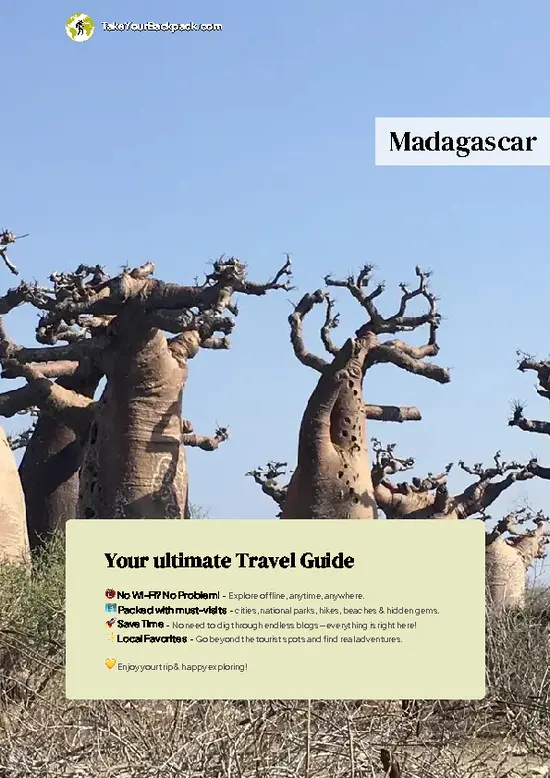
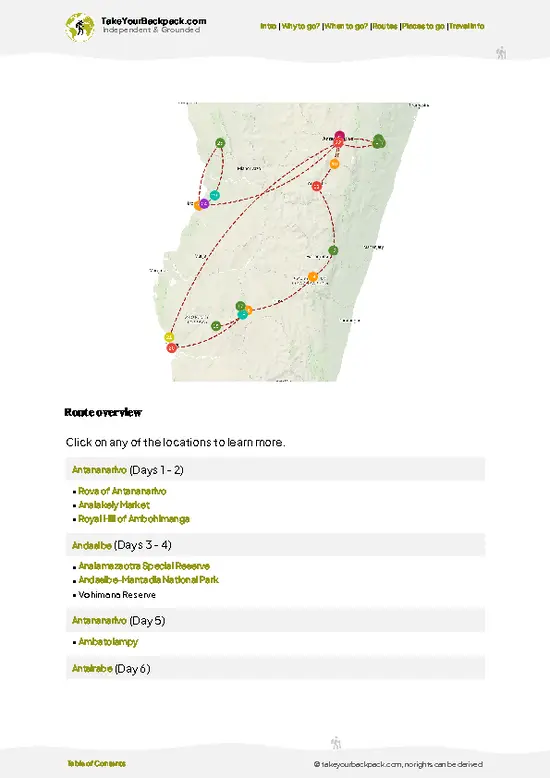
example page 0 from our offline Travel Guide for Madagascar
example page 1 from our offline Travel Guide for Madagascar
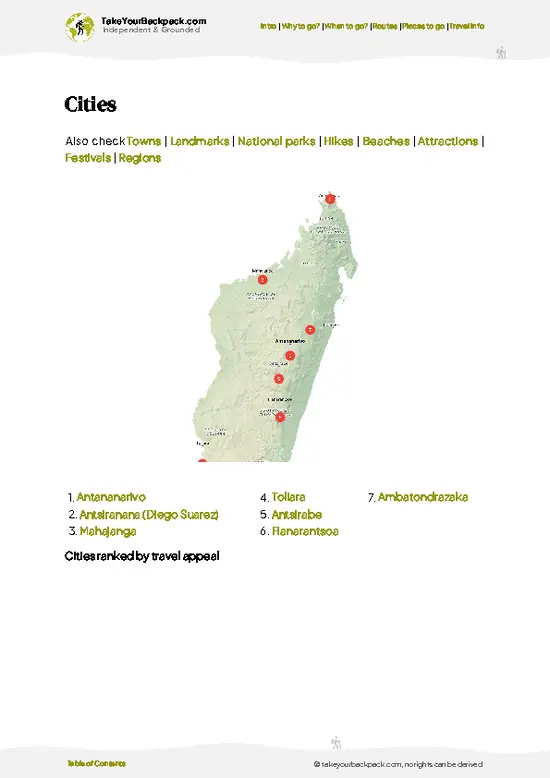
example page 2 from our offline Travel Guide for Madagascar
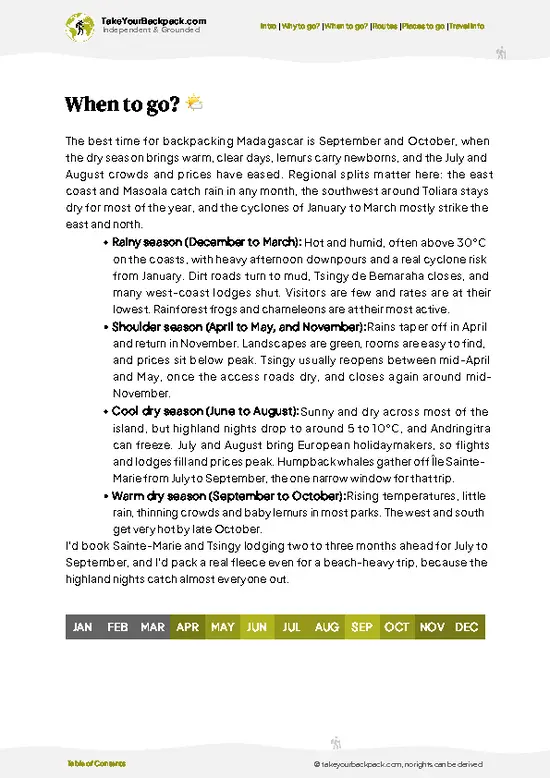
example page 3 from our offline Travel Guide for Madagascar
example page 4 from our offline Travel Guide for Madagascar
example page 5 from our offline Travel Guide for Madagascar
example page 6 from our offline Travel Guide for Madagascar
example page 7 from our offline Travel Guide for Madagascar
The digital guide (418 pages) contains:
110 highlights, ranked by travel appeal
Optimized 7, 14 & 21-day travel routes
Cities, national parks, landmarks, beaches
How to get around
Offline-friendly for travel without Wi-Fi
👉 Click to see all 30+ guide features

📅 Plan smarter in minutes, not weeks
Month by month travel advice
Festivals & national holidays
Budget expectations

🗺️ Go to the right places, skip the overrated ones
Honest pros & cons of destinations
Top hikes, parks & viewpoints
Lesser-known places most travelers miss
Clear “worth it vs skip it” guidance

🛏️ Travel smoothly without rookie mistakes
Best areas to stay
Transport systems explained simply
Common scams & safety advice
SIM cards, money & practical tips

🌍 Understand the country, not just visit it
Culture & traditions
52 Essential phrases & customs
Festivals worth planning around
Traveler-friendly historical context
Insights that make places more meaningful

📱 Built for real travel conditions
Fully downloadable PDF
Works completely offline
Optimized for phone use
Useful in remote areas & buses
Everything in one place
Save weeks of stressful planning
Get instant access to your full guide. 30‑day money-back guarantee.
+ Add another guide for just US$7.80

By proceeding you agree to our terms.
Sent to your inbox immediately after payment • 100% Secure Checkout
Best Backpacking Travel Advisor 2025 tourism awardBest Backpacking
Travel Advisor
2025
What others say about Take Your Backpack Guides:
⭐⭐⭐⭐⭐
Fantastic, amazing amount of information!
⭐⭐⭐⭐⭐
My goodness this is amazing, it's what I've been looking for hats off too you!
⭐⭐⭐⭐⭐
I think this is absolutely BRILLIANT
⭐⭐⭐⭐
Very complete and informative. It's still missing places, but I gotta to commend you
⭐⭐⭐⭐⭐
This is truly amazing, thank you, can't wait to explore it with my kids!
⭐⭐⭐⭐⭐
Awesome resource, thank you!
⭐⭐⭐⭐⭐
This is amazing! Can't wait to explore the ones I haven't seen
⭐⭐⭐⭐
I love this! Well done, great idea.
⭐⭐⭐⭐⭐
Thanks for taking the time to make this gem!
⭐⭐⭐⭐⭐
This might be the best website I've ever seen.
⭐⭐⭐⭐⭐
Congratulations, and thank you so much for your work; it's incredibly valuable.
⭐⭐⭐⭐
In all seriousness I think you did a great job pointing out the important spots
⭐⭐⭐⭐⭐
10/10 very good
⭐⭐⭐⭐⭐
As someone who's only just starting to visit regularly this is awesome, thank you.
⭐⭐⭐⭐
Thank you very much! I'm going to visit my dad, it's going to be very useful!
⭐⭐⭐⭐⭐
This is really cool! We'll be travelling for the first time and this definitely come in handy.
⭐⭐⭐⭐⭐
You are now our minister of culture, congratulations 👨‍💼
⭐⭐⭐⭐⭐
Just wanted to tell you that this is a pearl! Going to follow your recommendations.
⭐⭐⭐⭐⭐
This is so cool. I'll definitely be using the resource for my travels soon.
⭐⭐⭐⭐⭐
This is very impressive! Good work.
⭐⭐⭐⭐⭐
This is an amazing and informative site. Very well done!

🛏️ Where to stay?Where staying makes the most sense

Antananarivo’s backpacker sweet spot is the central neighborhoods around Isoraka and Analakely. These areas strike a smart balance between safety, social buzz, and budget options, making them the logical choice for solo travelers who want to plug into the city without getting lost in its chaos.

Isoraka offers a compact, walkable scene where you’ll find a cluster of hostels and guesthouses catering to budget travelers. It’s not just about cheap beds; this neighborhood pulses with cafés, street food stalls, and bars where backpackers naturally converge. The vibe here is relaxed but lively—perfect … read more 👉
Antananarivo’s backpacker sweet spot is the central neighborhoods around Isoraka and Analakely. These areas strike a smart balance between safety, social buzz, and budget options, making them the logical choice for solo travelers who want to plug into the city without getting lost in its chaos.

Isoraka offers a compact, walkable scene where you’ll find a cluster of hostels and guesthouses catering to budget travelers. It’s not just about cheap beds; this neighborhood pulses with cafés, street food stalls, and bars where backpackers naturally converge. The vibe here is relaxed but lively—perfect for meeting fellow travelers without the noise and hassle of the city’s busiest streets.

Analakely, just a short stroll away, is the commercial heart of Antananarivo. It’s busier and more hectic, but that’s part of its charm. Markets spill onto the sidewalks, and the energy is palpable. Hostels here tend to be affordable and functional, ideal if you want to dive into local life and have easy access to transport links for day trips or onward travel.

Compared to the southern or eastern districts, which can feel disconnected or less secure, Isoraka and Analakely offer a clear trade-off: you sacrifice some quiet for safety, social opportunities, and convenience. For backpackers, that’s a winning formula—comfort and connection without breaking the bank or risking your peace of mind.

🚌 Getting aroundGetting around like a local

Antananarivo moves to a rhythm that’s part improvisation, part stubborn routine. The city’s pulse isn’t dictated by strict timetables but by a blend of local hustle and the ebb and flow of daily life. You won’t find a clock everyone obeys, but you will find patterns—like the morning rush when the streets flood with people and the evening lull when the chaos softens. Navigating here means reading the cues: when the minibuses fill up, when the taxi-brousses line up, and when the city’s heartbeat slows enough to stroll without dodging scooters. Understanding this flow is your first win—because in Antananarivo, time, money, and comfort are a balancing act, not a fixed equation.


  • Walking: The most straightforward and cost-free way to explore the central neighborhoods. It’s slow but gives you
read more 👉
Antananarivo moves to a rhythm that’s part improvisation, part stubborn routine. The city’s pulse isn’t dictated by strict timetables but by a blend of local hustle and the ebb and flow of daily life. You won’t find a clock everyone obeys, but you will find patterns—like the morning rush when the streets flood with people and the evening lull when the chaos softens. Navigating here means reading the cues: when the minibuses fill up, when the taxi-brousses line up, and when the city’s heartbeat slows enough to stroll without dodging scooters. Understanding this flow is your first win—because in Antananarivo, time, money, and comfort are a balancing act, not a fixed equation.


  • Walking: The most straightforward and cost-free way to explore the central neighborhoods. It’s slow but gives you a real feel for the city’s texture—cobbled streets, street vendors, and the occasional unexpected hill. No schedule, no cost, but prepare for uneven sidewalks and steep climbs.


  • Taxi-Brousse: The backbone of intercity and suburban travel. These shared minibuses run from early morning (around 5:30 AM) until late afternoon (about 5 PM). Tickets cost a few dollars, making them the cheapest option for longer distances, but expect cramped seating and unpredictable departure times. Comfort is minimal, but the experience is authentic and efficient if you’re flexible.


  • City Taxis: Metered taxis are available but rare and often more expensive than locals pay. They run 24/7 but negotiate fares upfront to avoid surprises. They offer comfort and speed compared to public transport but at a higher price—expect to pay around 5,000 to 10,000 MGA ($1.25 to $2.50) for short trips within the city center. Ideal if you’re short on time and want a direct route without the hassle of transfers.


  • Bus Municipal: The official city buses are cheap (under $1) and run on fixed routes with rough schedules, mostly from 6 AM to 6 PM. They’re slower and less comfortable than taxi-brousse or taxis, often crowded and prone to delays, but they offer a genuine local experience and a way to stretch your budget if you have time to spare.


  • Motorcycle Taxis (Pousse-Pousse): These are quick and nimble for short distances, weaving through traffic with ease. Prices are negotiable but generally low, around 1,000 to 3,000 MGA ($0.25 to $0.75). They sacrifice comfort and safety for speed and convenience, perfect for when you want to save time but don’t mind a bit of a thrill.

👛 Costs (as of 3 September 2026)Typical daily expenses

Backpacking in Antananarivo, Madagascar, demands a clear-eyed view of where your money goes. Understanding the trade-offs between time, money, and comfort here means knowing exactly what each euro or dollar buys you in this unique urban landscape.
  • Dorm Accommodation (High Season): Expect to pay around €10-€15 per night. High season drives prices up due to demand, but you’ll find basic, clean hostels with shared facilities. Comfort is minimal but sufficient for a good rest.
  • Dorm Accommodation (Off-Season): Prices drop to about €6-€10 per night. Fewer tourists mean better bargaining power, and you might score a quieter spot with the same basic amenities.
  • Meals: Street food and local eateries offer meals for €1.50-€3.50. Western-style restaurants push that to €5-€10 per meal. Eating local
read more 👉
Backpacking in Antananarivo, Madagascar, demands a clear-eyed view of where your money goes. Understanding the trade-offs between time, money, and comfort here means knowing exactly what each euro or dollar buys you in this unique urban landscape.
  • Dorm Accommodation (High Season): Expect to pay around €10-€15 per night. High season drives prices up due to demand, but you’ll find basic, clean hostels with shared facilities. Comfort is minimal but sufficient for a good rest.
  • Dorm Accommodation (Off-Season): Prices drop to about €6-€10 per night. Fewer tourists mean better bargaining power, and you might score a quieter spot with the same basic amenities.
  • Meals: Street food and local eateries offer meals for €1.50-€3.50. Western-style restaurants push that to €5-€10 per meal. Eating local is not just cheaper but a direct line to authentic flavors.
  • Local Transport: Mini-bus taxis (taxi-be) cost roughly €0.15-€0.30 per ride. They’re slow and crowded but cheap and a real slice of city life.
  • City Transport Pass: Antananarivo doesn’t have a formal city transport pass system. Budget for individual taxi or taxi-be rides instead, which can add up if you move around a lot.
  • Basic Activities/Entry Fees: Museums and cultural sites typically charge €1-€3. National parks or reserves outside the city are pricier, but within the city, expect low-cost access to historical spots.
  • Miscellaneous Expenses: Budget around €2-€5 daily for water, snacks, and small essentials. Internet cafes or SIM cards for data run about €1-€3 per day depending on usage.

Total daily costs for a backpacker in Antananarivo hover between €15 and €30, depending on season and lifestyle choices. This range balances the bare essentials with a touch of comfort and flexibility. Knowing these numbers upfront lets you decide where to tighten the belt and where to loosen it, turning your trip into a strategic win rather than a scramble.


source: madagascar-tourisme.com
⚠️ Prices can change and everyone travels differently, so take this as a rough guide. Hope it helps you plan your adventure!

🚌 Day tripsBest day trips from Antananarivo

Antananarivo, Madagascar, is a fantastic launchpad for day trips that pack a punch. You can dive into the heart of Madagascar’s culture, wildlife, and landscapes without the hassle of overnight stays. Here are some top picks that will make your trip memorable.

Andasibe-Mantadia National Park
Just a three-hour drive from Antananarivo, this park is a biodiversity hotspot. You’ll encounter the famous indri lemurs, whose calls echo through the lush rainforest. The park offers well-marked trails, making it easy to explore on your own or with a guide. Expect to spend around $10 for park entry and another $10 for transport. The best time to visit is during the dry season from May to October. A common mistake is underestimating the weather; it can get chilly, so pack a light jacket.
👉 Explore read more 👉
Antananarivo, Madagascar, is a fantastic launchpad for day trips that pack a punch. You can dive into the heart of Madagascar’s culture, wildlife, and landscapes without the hassle of overnight stays. Here are some top picks that will make your trip memorable.

Andasibe-Mantadia National Park
Just a three-hour drive from Antananarivo, this park is a biodiversity hotspot. You’ll encounter the famous indri lemurs, whose calls echo through the lush rainforest. The park offers well-marked trails, making it easy to explore on your own or with a guide. Expect to spend around $10 for park entry and another $10 for transport. The best time to visit is during the dry season from May to October. A common mistake is underestimating the weather; it can get chilly, so pack a light jacket.
👉 Explore Andasibe-Mantadia National Park

Ambohimanga
This UNESCO World Heritage site is only about 30 minutes from the city. Ambohimanga is a royal hill and a significant cultural site for the Malagasy people. You can stroll through ancient ruins and enjoy panoramic views of the surrounding countryside. Entry is around $2, and you can easily grab a taxi-brousse for a couple of bucks. The ideal time to visit is early morning to avoid the heat and crowds. Many first-timers overlook the local guides who can enrich your experience with stories of the site’s history.


Lemurs’ Park
Located about 22 kilometers from Antananarivo, this private reserve is a sanctuary for rescued lemurs. It’s a great way to see these adorable creatures up close without trekking deep into the wild. The park is well-maintained, and you can expect to pay around $15 for entry and transport. The best time to visit is during the cooler months from May to September. A common pitfall is rushing through; take your time to enjoy the guided tour and learn about the species.


Antananarivo’s Markets
If you want to stay local, spend a day exploring the vibrant markets like Analakely. You can find everything from fresh produce to handmade crafts. It’s a sensory overload in the best way. Budget about $5 for food and souvenirs. Mornings are the best time to visit, as the markets are bustling with activity. First-timers often miss the chance to haggle; don’t be shy—negotiating is part of the fun!


Lake Anosy
A serene escape just a short walk from the city center, Lake Anosy is perfect for a leisurely afternoon. The lake is surrounded by jacaranda trees, and you can enjoy a picnic or rent a bike to explore the area. It’s free to visit, but budget a few dollars for snacks. The best time to go is during the jacaranda bloom in October. Many overlook this spot, thinking it’s just a lake, but it’s a lovely place to unwind.
Want to know what more Madagascar offers?
The Madagascar Travel Guide describes 110 highlights, from cities to national parks, from beaches to hikes

Get the Travel Guide -

🍲 FoodEating & Drinking in Antananarivo

In Antananarivo, the heart of Madagascar, food is a vibrant tapestry of flavors that tells stories of the land and its people. Start with romazava, a hearty beef stew simmered with greens and spices, often served with rice. The zebu meat is tender and flavorful, a must-try for any backpacker. Don’t miss ravitoto, a dish made from cassava leaves, which packs a punch of earthy goodness.

Street food is where the magic happens. Vendors line the streets, sizzling koba, a sweet treat made from rice flour, peanuts, and sugar, wrapped in banana leaves. The aroma wafts through the air, pulling you in. Grab a sambos, crispy pastries filled with spiced meat or vegetables, and enjoy them on the go. Markets are bustling with life; the Analakely Market is a sensory overload of colors, sounds, and smells, … read more 👉
In Antananarivo, the heart of Madagascar, food is a vibrant tapestry of flavors that tells stories of the land and its people. Start with romazava, a hearty beef stew simmered with greens and spices, often served with rice. The zebu meat is tender and flavorful, a must-try for any backpacker. Don’t miss ravitoto, a dish made from cassava leaves, which packs a punch of earthy goodness.

Street food is where the magic happens. Vendors line the streets, sizzling koba, a sweet treat made from rice flour, peanuts, and sugar, wrapped in banana leaves. The aroma wafts through the air, pulling you in. Grab a sambos, crispy pastries filled with spiced meat or vegetables, and enjoy them on the go. Markets are bustling with life; the Analakely Market is a sensory overload of colors, sounds, and smells, perfect for sampling local snacks.

When it comes to drinks, try toaka gasy, a local rum that’s potent and often enjoyed with friends. Sharing is key here; it’s customary to pass the bottle around. Etiquette is simple: respect the local pace. Meals can be leisurely, so savor each bite and engage in conversation. This isn’t just about food; it’s about connection. Embrace the experience, and let the flavors of Antananarivo linger long after your visit.

🛡️ SafetyStaying Safe: What Travelers Should Know

Antananarivo is generally safe for backpackers, but a few nuances can enhance your experience. Stick to well-trodden areas like Analakely and Isoraka, especially after dark. While the city has its charm, nighttime can bring out a few more opportunistic characters. If you’re solo, consider using rideshares instead of walking late at night.

Scams are rare but can happen. Be cautious around markets; some vendors might inflate prices for tourists. Always haggle, and don’t hesitate to walk away if a deal feels off. Keep your belongings close, especially in crowded areas. Pickpocketing isn’t rampant, but it’s smart to be aware of your surroundings.

Annoyances can include aggressive street vendors or taxi drivers who may not use meters. A firm but polite “no” usually suffices. Carry yourself confidently, … read more 👉
Antananarivo is generally safe for backpackers, but a few nuances can enhance your experience. Stick to well-trodden areas like Analakely and Isoraka, especially after dark. While the city has its charm, nighttime can bring out a few more opportunistic characters. If you’re solo, consider using rideshares instead of walking late at night.

Scams are rare but can happen. Be cautious around markets; some vendors might inflate prices for tourists. Always haggle, and don’t hesitate to walk away if a deal feels off. Keep your belongings close, especially in crowded areas. Pickpocketing isn’t rampant, but it’s smart to be aware of your surroundings.

Annoyances can include aggressive street vendors or taxi drivers who may not use meters. A firm but polite “no” usually suffices. Carry yourself confidently, and engage with locals; they often appreciate a friendly traveler. This approach not only keeps you safe but enriches your journey through this vibrant city.

FAQFrequently asked questions about Antananarivo

2 to 3 days are sufficient to explore Antananarivo, covering key sites like the Rova Palace and Analakely Market. This allows time for acclimatization and short day trips around the city.
Antananarivo is moderately safe for solo backpackers if basic precautions are taken, such as avoiding walking alone at night and securing valuables. Petty crime like pickpocketing is common, especially in crowded areas.
Antananarivo is known for its historic royal palaces, vibrant markets, and unique Malagasy culture. It serves as the political and economic hub of Madagascar, with landmarks like the Queen's Palace and Tsimbazaza Zoo.
⚠️ Things can change over time, so always validate details locally before you go.

Other Malagasy cities near Antananarivo

Explore more nearby:

  • Antsirabe—thermal springs, rickshaw traffic, colonial villas, volcanic lakes| 119 km away
  • Ambatondrazaka—rice paddies, Alaotra Lake, regional crossroads| 151 km away
  • Fianarantsoa—highland vineyards, old town alleys, Betsileo culture, railway terminus| 287 km away

💡 Not sure where to go next?
Create a personalized itinerary for Madagascar including Antananarivo and the places that fit your trip.

Generate my itinerary

👉 Discover all cities

Or checkout all Madagascar has to offer (think cities, towns, villages, national parks, hikes, beaches, festivals)
Country photo of Madagascar

We 💚 feedbackFinal thoughts on visiting Antananarivo

Antananarivo is a vibrant crossroads of culture and history, where the bustling markets pulse with life and the unique architecture tells stories of a rich past. But let’s be real: the traffic can be a nightmare. Expect delays and a bit of chaos as you navigate the city. Embrace it, though; it’s part of the experience. The energy here is infectious, and that’s what makes it worth the trip. Just plan accordingly!

✈️ When did I visit Madagascar?
Madagascar I went backpacking in October 2019. With a friend I rented a 4WD and drove around the southern part of Madagascar.

✍️ Help improve this page!
The information on this page is based on my own backpacking experience in Madagascar, supplemented with up-to-date research and feedback from other travelers. Travel details can change, so if you notice anything outdated or incomplete, feel free to let me know.


🙋‍♂️ Give feedback

👋 Meet the founderWho’s Behind Take Your Backpack?

Johan, backpacker and founder of TakeYourBackpackHi, I’m Johan (Netherlands 🇳🇱), the creator of TakeYourBackpack. Over the past decade, I’ve backpacked through 80+ countries across six continents, gaining extensive experience with independent travel, long-term trips, and overland routes.

This site is built on a combination of firsthand travel experience and carefully curated insights from other backpackers. Many guides are based on places I’ve personally visited, while others bring together tips, observations, and practical advice shared by trusted travelers I’ve met along the way.

The goal is to provide realistic, experience-driven guidance — not generic itineraries — so you can explore destinations with better context, clearer expectations, and more confidence.

Get full Madagascar guide •
Instant download • 110 highlights • Full Offline guide