×

Malawi🇲🇼 | attractionsChongoni Rock Art Area Interpretive Sitesancient rock paintings, UNESCO site, forested hills | things to do and best time to go

Explore Nkhoma Mission and Historical ChurchExplore Chifunda Cultural Village Experience

Backpacking in Chongoni Rock Art Area Interpretive Sites
🏆 Top pickattraction ranked #1
By Johan Kruseman 🇳🇱 | Updated September 3, 2026

Most travelers assume the Chongoni Rock Art Area is just another dusty UNESCO tick-box, but here’s the curveball: you’ll likely have the entire site to yourself, because almost nobody—locals included—actually visits. Tucked into the granite hills north of Dedza, in Malawi’s Central Region, Chongoni is the anti-Instagram: no crowds, no souvenir hawkers, no curated photo ops. The rock art itself is raw and intimate—painted by Chewa women over centuries, not for tourists, but for their own rituals and stories. This isn’t a place for adrenaline junkies or selfie-chasers; it’s for those who get goosebumps from ancient handprints and the hush of a forest that’s seen more history than most capitals. Getting here is a logistical puzzle—public transport is patchy, and you’ll need to negotiate with local guides, but the cost is refreshingly low compared to Malawi’s headline acts like Lake Malawi or Liwonde. If you crave authenticity over spectacle, Chongoni delivers the real magic—quiet, haunting, and defiantly off-script.

Discover everything you want to know in the 📖 Malawi Travel Guide.


Get your Malawi guide
82 ranked highlights, routes & tips, works offline (326 pages)
Loading the map 🌍
CLICK TO FILTER
cities
towns
villages
landmarks
national parks
hikes
beaches
attractions
festivals
regions
SHOW COUNTRY’S BESTSHOW ALL

✨ Why go?
Ranked #1 attraction in Malawi
Why Chongoni Rock Art Area Interpretive Sites should be on your travel list

The Chongoni Rock Art Area Interpretive Sites in Malawi aren’t just another tick on the backpacker’s checklist—they’re a raw, unfiltered dive into human history that demands your attention. Forget the polished, overhyped tourist traps; this place delivers authenticity in spades. These rock paintings, some dating back thousands of years, are a direct line to the minds and spirits of ancient hunter-gatherers and early farmers. That’s not just history—it’s a living conversation with the past, etched in pigment and stone.

Yes, it’s off the beaten path, and yes, you’ll likely share the experience with a handful of fellow travelers rather than hordes. That means no Instagram-perfect crowds, just the quiet hum of discovery. The effort to reach these sites is modest but rewarding—think gentle hikes … read more 👉
The Chongoni Rock Art Area Interpretive Sites in Malawi aren’t just another tick on the backpacker’s checklist—they’re a raw, unfiltered dive into human history that demands your attention. Forget the polished, overhyped tourist traps; this place delivers authenticity in spades. These rock paintings, some dating back thousands of years, are a direct line to the minds and spirits of ancient hunter-gatherers and early farmers. That’s not just history—it’s a living conversation with the past, etched in pigment and stone.

Yes, it’s off the beaten path, and yes, you’ll likely share the experience with a handful of fellow travelers rather than hordes. That means no Instagram-perfect crowds, just the quiet hum of discovery. The effort to reach these sites is modest but rewarding—think gentle hikes that let you soak in Malawi’s rural landscapes while your mind races through time. It’s a cultural milestone on any Malawi route, grounding your journey in something deeper than scenery or nightlife.

Backpackers come here because Chongoni isn’t about flash; it’s about substance. It’s a rare chance to witness a heritage site that’s both humbling and inspiring, a reminder that some stories are worth the trek.
Want to include Chongoni Rock Art Area Interpretive Sites in your Malawi route?
Create a personalized Malawi itinerary that includes Chongoni Rock Art Area Interpretive Sites and the places that fit your trip — based on your travel style, budget, and available time. Get your route in seconds.

Generate my trip

💡 HighlightsMust-see experiences and standout moments

Chentcherere Rock Art Site
Forget the Instagram filter—this is the real deal. Chentcherere is the largest cluster of rock art panels in Central Africa, and it’s not just about faded handprints. You’ll see human figures, animals, and geometric shapes painted in iron oxide by BaTwa hunter-gatherers and Chewa farmers, sometimes side by side. The panels are layered with centuries of stories, and the sense of standing where people have marked their beliefs, rituals, and daily life for thousands of years is electric. The site isn’t roped off or sanitized; you’re up close, breathing the same dust as the artists did. It’s raw, it’s humbling, and it’s a direct line to the ancient pulse of Malawi.

Namzeze Rock Shelter
Namzeze is where the myth of “just another cave painting” dies. The art here is less … read more 👉
Chentcherere Rock Art Site
Forget the Instagram filter—this is the real deal. Chentcherere is the largest cluster of rock art panels in Central Africa, and it’s not just about faded handprints. You’ll see human figures, animals, and geometric shapes painted in iron oxide by BaTwa hunter-gatherers and Chewa farmers, sometimes side by side. The panels are layered with centuries of stories, and the sense of standing where people have marked their beliefs, rituals, and daily life for thousands of years is electric. The site isn’t roped off or sanitized; you’re up close, breathing the same dust as the artists did. It’s raw, it’s humbling, and it’s a direct line to the ancient pulse of Malawi.

Namzeze Rock Shelter
Namzeze is where the myth of “just another cave painting” dies. The art here is less about pretty pictures and more about Chewa initiation rituals—think masked dancers, fertility symbols, and the kind of iconography that still echoes in local ceremonies today. The guides (if you’re lucky enough to get a good one) don’t just recite facts; they’ll point out how the art ties into living traditions. This is not a museum—it’s a living, breathing cultural crossroads, and you’ll feel it in your bones.

Mphunzi Rock Art Site
Mphunzi is a cluster of shelters, each with its own personality. Some are tucked away, requiring a scramble that’ll leave you grinning or gasping, depending on your fitness. The art here is a wild mix: red ochre figures, white clay overlays, and the occasional animal that looks like it’s about to leap off the wall. What sets Mphunzi apart is the sheer variety—different styles, different eras, all jostling for space. It’s a visual argument across centuries, and you’re the referee.

Guided Storytelling with Local Custodians
This isn’t a place for silent wandering. The real magic happens when a local Chewa guide starts weaving the stories behind the symbols. You’ll hear about rainmaking rituals, secret societies, and why some images are still considered sacred (and off-limits for photos). The guides aren’t just reciting—they’re translating a worldview. If you want to understand why these sites matter, this is where you get the keys to the kingdom.

Panoramic Hikes Through the Chongoni Hills
The art is only half the show. The Chongoni plateau is a patchwork of granite outcrops, miombo woodland, and villages where life hasn’t changed much in generations. The hikes between sites are a sensory reset—bird calls, the crunch of dry grass, the occasional goat herder giving you a wary nod. You’re not just ticking off UNESCO sites; you’re moving through a landscape that shaped the art and the people who made it. The views are honest, unfiltered Malawi—no crowds, no vendors, just you and the hills.
Spotted a mistake or missing something? Contact us.

Things to do near Chongoni Rock Art Area Interpretive Sites

Ratings based on Tripadvisor reviews. When you book through this link, you support our work at no extra cost to you.

🌤️ When to go?Best time to visit Chongoni Rock Art Area Interpretive Sites


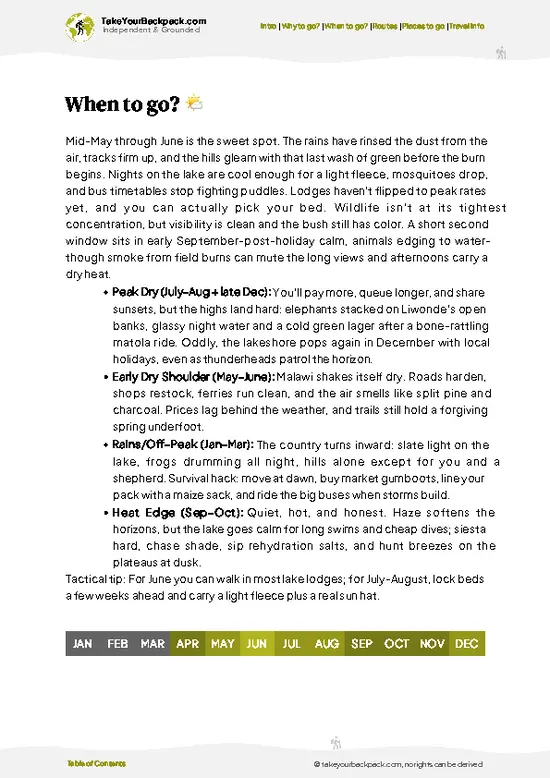
  • Weather: The best time to visit Chongoni Rock Art Area is during the dry season, from May to October. Expect clear skies and minimal rain, making trail conditions manageable. The wet season, November to April, brings heavy rains that can turn paths to mud and obscure the rock art.

  • Temperature: Daytime temps hover around 20-25°C (68-77°F) in the dry months, perfect for hiking without overheating. Nights can dip to 10°C (50°F), so pack layers. The wet season is warmer and more humid, often pushing 28-30°C (82-86°F), which can sap your energy on the trails.

  • Daylight Hours: From May to August, daylight lasts about 11-12 hours, giving you ample time to explore without rushing. The shorter days in June and July mean starting early is key to avoid hiking in fading light.

  • Crowds: This site
read more 👉

  • Weather: The best time to visit Chongoni Rock Art Area is during the dry season, from May to October. Expect clear skies and minimal rain, making trail conditions manageable. The wet season, November to April, brings heavy rains that can turn paths to mud and obscure the rock art.

  • Temperature: Daytime temps hover around 20-25°C (68-77°F) in the dry months, perfect for hiking without overheating. Nights can dip to 10°C (50°F), so pack layers. The wet season is warmer and more humid, often pushing 28-30°C (82-86°F), which can sap your energy on the trails.

  • Daylight Hours: From May to August, daylight lasts about 11-12 hours, giving you ample time to explore without rushing. The shorter days in June and July mean starting early is key to avoid hiking in fading light.

  • Crowds: This site isn’t a tourist magnet, but the dry season sees a modest uptick in visitors, mostly local groups and researchers. The wet season is quieter but less practical for trekking.

  • Seasonal Activities: Dry months offer better chances to join guided walks and cultural tours, which often pause during the rains. Some local festivals around August can add a cultural layer to your visit.

  • Price Fluctuations: Entry fees and guide costs remain stable year-round, but accommodation prices nearby can spike slightly in the dry season due to demand.


Pro-tip: Aim for June or September—cool, dry, fewer crowds, and the rock art stands out crisply against the clear skies.


source: climatestotravel.comJANJanuary: fair for travelingFEBFebruary: fair for travelingMARMarch: fair for travelingAPRApril: fair for travelingMAYMay: highly recommended for travelingJUNJune: excellent for travelingJULJuly: highly recommended for travelingAUGAugust: highly recommended for travelingSEPSeptember: excellent for travelingOCTOctober: highly recommended for travelingNOVNovember: fair for travelingDECDecember: fair for traveling
malawi-attraction-chongoni-rock-art-area-interpretive-sites
© Google |

✈️ The backpacker research shortcutMalawi Travel Guide

An offline-friendly backpacking guide with optimized travel routes, ranked highlights, transport advice, and the best areas to stay.
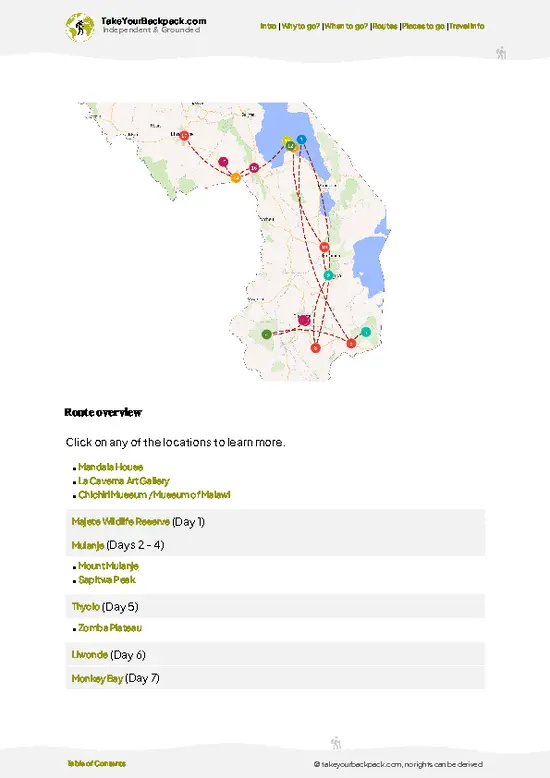
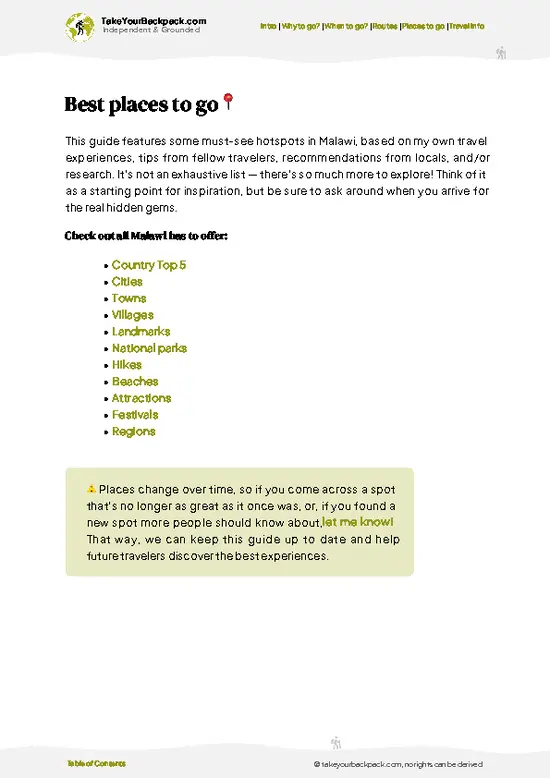
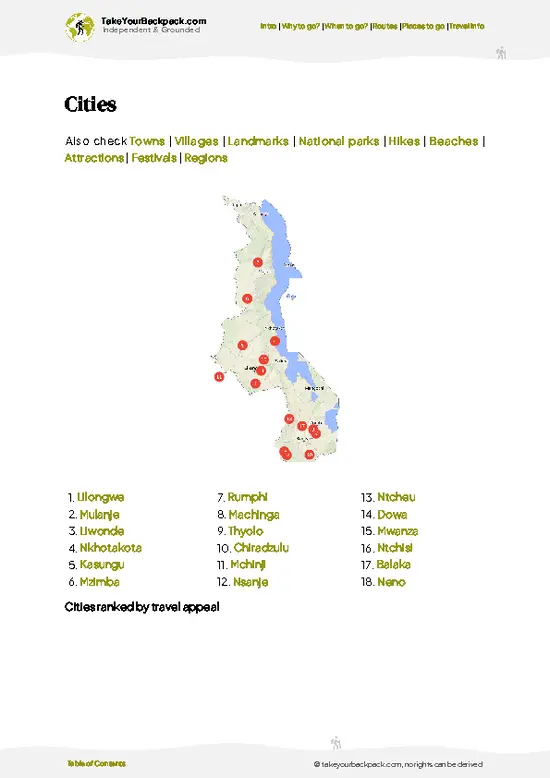
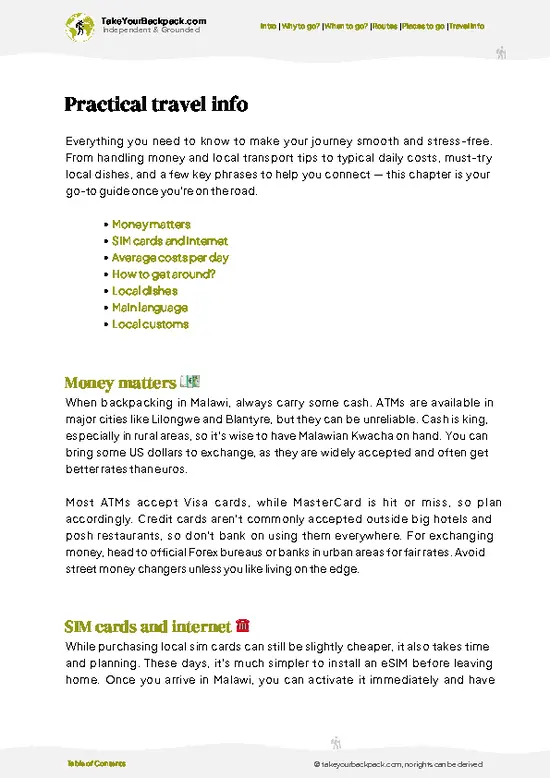
example page 0 from our offline Travel Guide for Malawi
example page 1 from our offline Travel Guide for Malawi
example page 2 from our offline Travel Guide for Malawi
example page 3 from our offline Travel Guide for Malawi
example page 4 from our offline Travel Guide for Malawi
example page 5 from our offline Travel Guide for Malawi
example page 6 from our offline Travel Guide for Malawi
example page 7 from our offline Travel Guide for Malawi
The digital guide (326 pages) contains:
82 highlights, ranked by travel appeal
Optimized 5, 10 & 15-day travel routes
Cities, national parks, landmarks, beaches
How to get around
Offline-friendly for travel without Wi-Fi
👉 Click to see all 30+ guide features

📅 Plan smarter in minutes, not weeks
Month by month travel advice
Festivals & national holidays
Budget expectations

🗺️ Go to the right places, skip the overrated ones
Honest pros & cons of destinations
Top hikes, parks & viewpoints
Lesser-known places most travelers miss
Clear “worth it vs skip it” guidance

🛏️ Travel smoothly without rookie mistakes
Best areas to stay
Transport systems explained simply
Common scams & safety advice
SIM cards, money & practical tips

🌍 Understand the country, not just visit it
Culture & traditions
52 Essential phrases & customs
Festivals worth planning around
Traveler-friendly historical context
Insights that make places more meaningful

📱 Built for real travel conditions
Fully downloadable PDF
Works completely offline
Optimized for phone use
Useful in remote areas & buses
Everything in one place
Save weeks of stressful planning
Get instant access to your full guide. 30‑day money-back guarantee.
+ Add another guide for just US$7.80

By proceeding you agree to our terms.
Sent to your inbox immediately after payment • 100% Secure Checkout
Best Backpacking Travel Advisor 2025 tourism awardBest Backpacking
Travel Advisor
2025
What others say about Take Your Backpack Guides:
⭐⭐⭐⭐⭐
Fantastic, amazing amount of information!
⭐⭐⭐⭐⭐
My goodness this is amazing, it's what I've been looking for hats off too you!
⭐⭐⭐⭐⭐
I think this is absolutely BRILLIANT
⭐⭐⭐⭐
Very complete and informative. It's still missing places, but I gotta to commend you
⭐⭐⭐⭐⭐
This is truly amazing, thank you, can't wait to explore it with my kids!
⭐⭐⭐⭐⭐
Awesome resource, thank you!
⭐⭐⭐⭐⭐
This is amazing! Can't wait to explore the ones I haven't seen
⭐⭐⭐⭐
I love this! Well done, great idea.
⭐⭐⭐⭐⭐
Thanks for taking the time to make this gem!
⭐⭐⭐⭐⭐
This might be the best website I've ever seen.
⭐⭐⭐⭐⭐
Congratulations, and thank you so much for your work; it's incredibly valuable.
⭐⭐⭐⭐
In all seriousness I think you did a great job pointing out the important spots
⭐⭐⭐⭐⭐
10/10 very good
⭐⭐⭐⭐⭐
As someone who's only just starting to visit regularly this is awesome, thank you.
⭐⭐⭐⭐
Thank you very much! I'm going to visit my dad, it's going to be very useful!
⭐⭐⭐⭐⭐
This is really cool! We'll be travelling for the first time and this definitely come in handy.
⭐⭐⭐⭐⭐
You are now our minister of culture, congratulations 👨‍💼
⭐⭐⭐⭐⭐
Just wanted to tell you that this is a pearl! Going to follow your recommendations.
⭐⭐⭐⭐⭐
This is so cool. I'll definitely be using the resource for my travels soon.
⭐⭐⭐⭐⭐
This is very impressive! Good work.
⭐⭐⭐⭐⭐
This is an amazing and informative site. Very well done!

🛏️ Where to stay?Choosing the right base

Forget the postcard-perfect image you might have seen of the Chongoni Rock Art Area—this isn’t a polished tourist trap. It’s raw, real, and yes, it can feel a bit off the beaten path in the best way. The crowds? They’re minimal, which means you won’t be elbowing through selfie sticks, but it also means you need to be smart about where you stay. The immediate vicinity of the rock art sites is rural and quiet, so don’t expect nightlife or bustling social scenes right next door.

For backpackers, the best move is to base yourself in the nearby town of Dedza. It’s about a 20-minute drive from the … read more 👉
Forget the postcard-perfect image you might have seen of the Chongoni Rock Art Area—this isn’t a polished tourist trap. It’s raw, real, and yes, it can feel a bit off the beaten path in the best way. The crowds? They’re minimal, which means you won’t be elbowing through selfie sticks, but it also means you need to be smart about where you stay. The immediate vicinity of the rock art sites is rural and quiet, so don’t expect nightlife or bustling social scenes right next door.

For backpackers, the best move is to base yourself in the nearby town of Dedza. It’s about a 20-minute drive from the sites, which is close enough to make early morning visits easy but far enough to offer a genuine community vibe. Dedza is where you’ll find safe, budget-friendly guesthouses and a handful of hostels that attract solo travelers and small groups. The town has a modest but lively market and a few spots where locals and travelers mingle, giving you a chance to swap stories and pick up practical tips.

Staying in Dedza means you’re not just a visitor passing through; you’re part of a small, welcoming scene that values authenticity over flash. It’s the kind of place where you can recharge, connect, and prepare for your next day exploring the ancient art without the tourist fluff.

👛 Costs (as of 3 September 2026)How expensive it really is

As of the most recent estimates, the entrance fee for the Chongoni Rock Art Area is approximately €2 to €3 per person. Guided tours are available, with prices varying based on duration and group size. Additional costs may include transportation to the site and any personal expenses during the visit.

source: malawitourism.com
⚠️ Prices can change and everyone travels differently, so take this as a rough guide. Hope it helps you plan your adventure!

FAQFrequently asked questions about Chongoni Rock Art Area Interpretive Sites

Visiting the Chongoni Rock Art Area Interpretive Sites typically requires about half a day to a full day, depending on how thoroughly you explore the various rock art sites and the interpretive center. Plan for at least 4 to 6 hours to fully appreciate the history and cultural significance.
Yes, the entrance fee is worth it. The fee, usually around 5 to 10 USD, grants access to well-preserved rock art that dates back thousands of years, offering a unique insight into Malawi's prehistoric cultures and traditions.
To get to Chongoni Rock Art Area, travel from Lilongwe or Dedza by road; it is about 70 kilometers from Lilongwe. The site is accessible by car or local minibuses heading towards Dedza, with a short walk from the main road to the interpretive sites.
⚠️ Things can change over time, so always validate details locally before you go.

Other Malawian attractions near Chongoni Rock Art Area Interpretive Sites

Explore more nearby:


💡 Not sure where to go next?
Create a personalized itinerary for Malawi including Chongoni Rock Art Area Interpretive Sites and the places that fit your trip.

Generate my itinerary

👉 Discover all attractions

Or checkout all Malawi has to offer (think cities, towns, villages, national parks, hikes, beaches, festivals)
Country photo of Malawi

We 💚 feedbackParting advice and final tips

Chongoni Rock Art Area isn’t some polished tourist magnet—expect a quiet, almost reverent vibe, not crowds or flashy signs. The real magic hits when you stand close to those ancient paintings, feeling the weight of thousands of years under your skin. It’s not about Instagram-perfect shots but about connecting with a culture that’s stubbornly alive in stone and color. Just know: the paths can be rough, and guides vary, so pick one who’s genuinely passionate. This place rewards patience and curiosity, not speed or convenience.

✍️ Help improve this page!
The information on this page is based on in-depth research, insights shared by experienced travelers, and feedback from the local travel community in Malawi. While every effort is made to keep the information accurate and current, conditions can change — so if you spot anything incorrect or outdated, please get in touch.


🙋‍♂️ Give feedback

👋 Meet the founderWho’s Behind Take Your Backpack?

Johan, backpacker and founder of TakeYourBackpackHi, I’m Johan (Netherlands 🇳🇱), the creator of TakeYourBackpack. Over the past decade, I’ve backpacked through 80+ countries across six continents, gaining extensive experience with independent travel, long-term trips, and overland routes.

This site is built on a combination of firsthand travel experience and carefully curated insights from other backpackers. Many guides are based on places I’ve personally visited, while others bring together tips, observations, and practical advice shared by trusted travelers I’ve met along the way.

The goal is to provide realistic, experience-driven guidance — not generic itineraries — so you can explore destinations with better context, clearer expectations, and more confidence.

Get full Malawi guide •
Instant download • 82 highlights • Full Offline guide