×

Malawi🇲🇼 | citiesLilongwegovernment center, sprawling layout, wildlife sanctuary, local markets | things to do and best time to go

Explore BlantyreExplore Mangochi

Backpacking in Lilongwe
🏆 Top pickcity ranked #2
By Johan Kruseman 🇳🇱 | Updated June 7, 2026

If you crave postcard-perfect colonial charm or a city that hums with backpacker hostels and bohemian cafés, Lilongwe will leave you cold. But here’s the twist: Lilongwe is where you see Malawi’s real gears turning. Set in the country’s central heart, this capital is a patchwork of government blocks, dusty markets, and green spaces like the Lilongwe Wildlife Centre—more practical crossroads than showpiece. You won’t find the lakeside buzz of Nkhata Bay or the historic pulse of Zomba, but you will find a city that’s easy to navigate, safe by African capital standards, and refreshingly low on tourist hustle. Costs are moderate; street food and minibus rides are cheap, but nightlife is subdued and hostels are thin on the ground. The city’s social scene is more about mingling with locals in Old Town markets than swapping stories with other travelers. Lilongwe rewards those who value authenticity over spectacle, and who see travel as a game of real-world connection, not just a highlight reel.

Discover everything you want to know in the 📖 Malawi Travel Guide.


Get your Malawi guide
87 ranked highlights, routes & tips, works offline (355 pages)
Loading the map 🌍
CLICK TO FILTER
cities
towns
villages
landmarks
national parks
hikes
beaches
attractions
festivals
regions
SHOW COUNTRY’S BESTSHOW ALL

✨ Why go?
Ranked #2 city in Malawi
What sets this place apart

Lilongwe, Malawi’s capital, is often seen as a gateway rather than a destination, but it has its own charm that can enrich your backpacking experience. For starters, the basecamp value here is solid. It’s a strategic point for day trips to nearby attractions, making it easy to explore without the hassle of constant travel. The hostels are budget-friendly and offer a sense of community, perfect for meeting fellow travelers.

When it comes to food, you’ll find a mix of local and international options that won’t break the bank. The city is walkable, allowing you to soak in the local vibe without needing a taxi for every errand. As for nightlife, it’s low-key but lively, with a few bars and local spots where you can unwind after a day of exploration.

If you’re planning to head to Zambia or … read more 👉
Lilongwe, Malawi’s capital, is often seen as a gateway rather than a destination, but it has its own charm that can enrich your backpacking experience. For starters, the basecamp value here is solid. It’s a strategic point for day trips to nearby attractions, making it easy to explore without the hassle of constant travel. The hostels are budget-friendly and offer a sense of community, perfect for meeting fellow travelers.

When it comes to food, you’ll find a mix of local and international options that won’t break the bank. The city is walkable, allowing you to soak in the local vibe without needing a taxi for every errand. As for nightlife, it’s low-key but lively, with a few bars and local spots where you can unwind after a day of exploration.

If you’re planning to head to Zambia or Tanzania, Lilongwe serves as an easy transit point, making onward travel a breeze. Ultimately, while it might not have the flashiest attractions, its practical advantages make it a worthwhile stop on your backpacking route.
Want to include Lilongwe in your Malawi route?
Create a personalized Malawi itinerary that includes Lilongwe and the places that fit your trip — based on your travel style, budget, and available time. Get your route in seconds.

Generate my trip

💡 HighlightsKey sights and experiences for travelers

  • Kamuzu Mausoleum — The memorial to Malawi’s first president, Hastings Kamuzu Banda: a compact museum, the mausoleum itself and surrounding lawns that give real historic context to Malawi’s independence and post-colonial story.
  • Old Town Market (Old Town / Sunday Market) — Where Lilongwe still feels like a riverside town: bustling stalls, fresh street food, basketry, woodcarvings and a true local atmosphere for photography and bargain hunting.
  • Lilongwe Wildlife Centre — A hands-on rescue and rehabilitation centre for orphaned wildlife (especially primates and birds). It’s small, educational and ethically run — great for close encounters and learning about conservation work in Malawi.
  • Kumbali Cultural Village — A community-run cultural centre showcasing traditional dance, crafts, storytelling
read more 👉
  • Kamuzu Mausoleum — The memorial to Malawi’s first president, Hastings Kamuzu Banda: a compact museum, the mausoleum itself and surrounding lawns that give real historic context to Malawi’s independence and post-colonial story.
  • Old Town Market (Old Town / Sunday Market) — Where Lilongwe still feels like a riverside town: bustling stalls, fresh street food, basketry, woodcarvings and a true local atmosphere for photography and bargain hunting.
  • Lilongwe Wildlife Centre — A hands-on rescue and rehabilitation centre for orphaned wildlife (especially primates and birds). It’s small, educational and ethically run — great for close encounters and learning about conservation work in Malawi.
  • Kumbali Cultural Village — A community-run cultural centre showcasing traditional dance, crafts, storytelling and workshops. It’s one of the best places in the city to meet artisans and see everyday Malawian cultural life presented respectfully.
  • Capital Hill / Parliament Buildings — The seat of government: striking modernist architecture and symbolic public sculptures. You may not get a full interior tour, but walking the grounds gives good perspective on Malawi’s political life and civic layout.
  • Bingu National Stadium — A major landmark for sport and large events; check the fixture list and you can catch a football match or a concert. Even outside events the scale and design make it worth a quick photo stop.
  • Lilongwe Golf Club — A green, surprisingly peaceful corner of the city with a colonial history; good for a relaxed walk, spotting local and visiting golfers, and getting a different slice of Lilongwe social life away from markets.
  • Lilongwe Riverfront / Old Town Riverside — The river and its banks are lined with daily life: fishermen, small vendors and birdlife. It’s low-key but authentic — best for morning walks, street food and watching how the city grew up around the water.
  • Central Craft Stalls & Workshops — Scattered around the city centre and Old Town are small workshops where woodcarvers, basketmakers and jewelry makers shape and sell their work. Visiting a stall or workshop is a short, hands-on way to support local makers and learn techniques.
  • Local cultural hubs (Alliance Française / cultural centres) — These small but lively venues host rotating art shows, language-led events, music nights and film screenings. They’re great places to catch contemporary Malawian art and meet local creatives without leaving the city.
A few real, visitable highlights just outside Lilongwe that make excellent day trips: Mount Michiru (forest reserve and hikes), Dzalanyama Forest Reserve (birding and trails) and the Lake Malawi shoreline around Salima/Nkhotakota for beaches and kayaking.
Spotted a mistake or missing something? Contact us.

Things to do in Lilongwe

Ratings based on Tripadvisor reviews. When you book through this link, you support our work at no extra cost to you.

🏘️ NeighborhoodsNeighborhood guide to Lilongwe

Lilongwe, Malawi’s capital, is a blend of urban energy and laid-back charm. Each neighborhood offers a unique flavor, making it essential to choose wisely based on your priorities.

City Centre: This is the heartbeat of Lilongwe. It’s bustling, with shops, markets, and eateries. Perfect for short stays, you can walk to most attractions. Costs are moderate, but you’ll find both budget and mid-range options. Nightlife is lively, with bars and music venues nearby, but it can get noisy.

Old Town: A bit quieter, Old Town has a more local vibe. It’s walkable and offers a glimpse into daily Malawian life. Accommodation here tends to be cheaper, making it ideal for longer stays. The nightlife is subdued, focusing more on cozy pubs than clubs. Transport options are available, but you might need to … read more 👉
Lilongwe, Malawi’s capital, is a blend of urban energy and laid-back charm. Each neighborhood offers a unique flavor, making it essential to choose wisely based on your priorities.

City Centre: This is the heartbeat of Lilongwe. It’s bustling, with shops, markets, and eateries. Perfect for short stays, you can walk to most attractions. Costs are moderate, but you’ll find both budget and mid-range options. Nightlife is lively, with bars and music venues nearby, but it can get noisy.

Old Town: A bit quieter, Old Town has a more local vibe. It’s walkable and offers a glimpse into daily Malawian life. Accommodation here tends to be cheaper, making it ideal for longer stays. The nightlife is subdued, focusing more on cozy pubs than clubs. Transport options are available, but you might need to walk a bit more.

Area 10: This neighborhood is known for its expat community. It’s a bit pricier but offers a range of amenities. Walkability is decent, though you may want to rely on taxis for longer distances. It’s quieter, making it suitable for those looking to recharge. The nightlife is limited, but you’ll find some great restaurants.

Area 3: A hidden treasure for budget backpackers. It’s affordable and has a friendly atmosphere. Walkability is good, with local markets and eateries close by. Nightlife is minimal, but you can find local hangouts. Transport options are accessible, making it easy to explore further afield. Perfect for longer stays if you want to immerse yourself in the local culture.

⌛️ 1 dayA smart one-day plan

Lilongwe, Malawi’s capital, is a city that blends the pulse of urban life with the warmth of its people. It’s not just a stopover; it’s a place where you can feel the rhythm of Malawian culture. The city is divided into Old Town and New Town, each offering a unique vibe. Old Town is where you’ll find bustling markets and local eateries, while New Town showcases modern amenities and green spaces.

Start your day in the Old Town at the vibrant Lilongwe Market. The air is rich with the scent of spices and fresh produce. Engage with local vendors selling everything from handmade crafts to fresh fruits. Grab a quick breakfast at one of the nearby stalls—try a chapati with a spicy relish. This is where you’ll feel the city’s heartbeat.

After soaking in the market’s energy, head to the nearby Kamuzu … read more 👉
Lilongwe, Malawi’s capital, is a city that blends the pulse of urban life with the warmth of its people. It’s not just a stopover; it’s a place where you can feel the rhythm of Malawian culture. The city is divided into Old Town and New Town, each offering a unique vibe. Old Town is where you’ll find bustling markets and local eateries, while New Town showcases modern amenities and green spaces.

Start your day in the Old Town at the vibrant Lilongwe Market. The air is rich with the scent of spices and fresh produce. Engage with local vendors selling everything from handmade crafts to fresh fruits. Grab a quick breakfast at one of the nearby stalls—try a chapati with a spicy relish. This is where you’ll feel the city’s heartbeat.

After soaking in the market’s energy, head to the nearby Kamuzu Central Hospital area. It’s not a typical tourist spot, but the local art scene thrives here. Check out the murals that tell stories of Malawian life. It’s a great way to connect with the community and appreciate the creativity that often goes unnoticed.

In the afternoon, make your way to New Town. Visit the Lilongwe Wildlife Centre, a sanctuary for rescued animals. It’s a peaceful escape where you can learn about conservation efforts in Malawi. Spend a couple of hours wandering the grounds, and don’t miss the chance to see the resident monkeys.

As evening approaches, return to Old Town for dinner. Try a local restaurant like the famous Kutchira, where you can savor traditional Malawian dishes like nsima and fish. The atmosphere is lively, and you might even catch some live music.

End your day with a stroll along the Lilongwe River. The sunset casts a golden hue over the water, a perfect way to reflect on a day well spent. Each moment in Lilongwe is a chance to connect, learn, and savor the essence of Malawi.
Turn your Lilongwe visit into an Malawi adventure
Build a complete Malawi route with Lilongwe, hidden gems, must-see destinations, and realistic travel times included.

Generate my trip

🌤️ When to go?Best time to visit Lilongwe


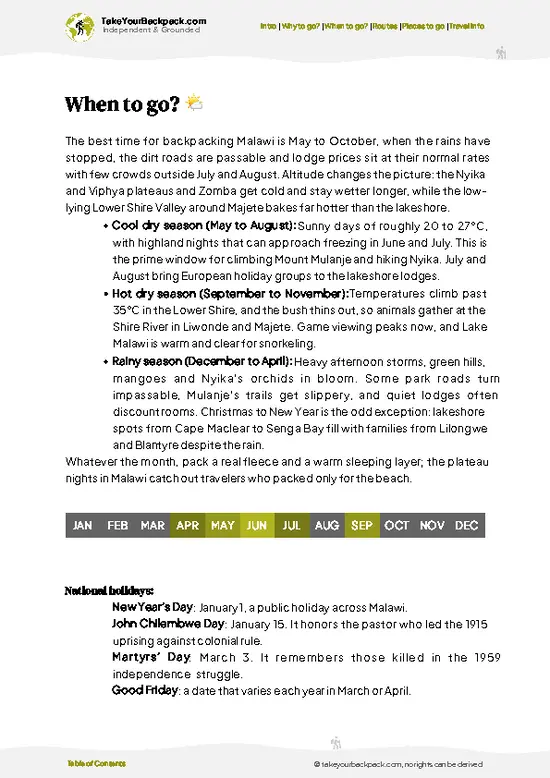
  • Topic: Weather – Lilongwe’s dry season from May to October offers clear skies and minimal rain, perfect for trekking and city exploration. The wet season, November to April, brings heavy rains that can turn dirt roads into mud traps, slowing you down and soaking your gear.

  • Topic: Temperature – During the dry months, expect comfortable highs around 24-27°C (75-81°F) and cooler nights dipping to 10-13°C (50-55°F). The wet season heats up to 28-30°C (82-86°F) with sticky humidity, which can sap your energy on long hikes.

  • Topic: Daylight Hours – Daylight stays fairly consistent year-round, roughly 11 to 12 hours daily, so you won’t lose precious trekking time no matter when you go. Early mornings and late afternoons are your best bets for cooler, less crowded outings.

  • Topic: Crowds
read more 👉

  • Topic: Weather – Lilongwe’s dry season from May to October offers clear skies and minimal rain, perfect for trekking and city exploration. The wet season, November to April, brings heavy rains that can turn dirt roads into mud traps, slowing you down and soaking your gear.

  • Topic: Temperature – During the dry months, expect comfortable highs around 24-27°C (75-81°F) and cooler nights dipping to 10-13°C (50-55°F). The wet season heats up to 28-30°C (82-86°F) with sticky humidity, which can sap your energy on long hikes.

  • Topic: Daylight Hours – Daylight stays fairly consistent year-round, roughly 11 to 12 hours daily, so you won’t lose precious trekking time no matter when you go. Early mornings and late afternoons are your best bets for cooler, less crowded outings.

  • Topic: Crowds – Peak tourist flow aligns with the dry season, especially July and August, when international travelers flock to Malawi. If you want fewer people and a more local vibe, shoulder months like May or September are smarter picks.

  • Topic: Seasonal Activities – Wildlife viewing peaks in the dry season as animals gather around shrinking water sources, making safaris more rewarding. The wet season bursts with lush greenery and birdlife but limits game visibility and outdoor excursions.

  • Topic: Price Fluctuations – Expect accommodation and tour prices to spike during the dry season’s peak months. Traveling just before or after this window can save you money without sacrificing too much on weather or experience quality.


Pro-tip: Aim for the shoulder dry months—May or September—to balance pleasant weather, manageable crowds, and better prices, turning your Lilongwe trip into a strategic win.


source: climatestotravel.comJANJanuary: fair for travelingFEBFebruary: fair for travelingMARMarch: fair for travelingAPRApril: fair for travelingMAYMay: highly recommended for travelingJUNJune: highly recommended for travelingJULJuly: excellent for travelingAUGAugust: excellent for travelingSEPSeptember: highly recommended for travelingOCTOctober: highly recommended for travelingNOVNovember: fair for travelingDECDecember: fair for traveling
when-to-go

✈️ The backpacker research shortcutMalawi Travel Guide

An offline-friendly backpacking guide with optimized travel routes, ranked highlights, transport advice, and the best areas to stay.
example page 0 from our offline Travel Guide for Malawi
example page 1 from our offline Travel Guide for Malawi
example page 2 from our offline Travel Guide for Malawi
example page 3 from our offline Travel Guide for Malawi
example page 4 from our offline Travel Guide for Malawi
example page 5 from our offline Travel Guide for Malawi
example page 6 from our offline Travel Guide for Malawi
example page 7 from our offline Travel Guide for Malawi
The digital guide (355 pages) contains:
87 highlights, ranked by travel appeal
Optimized 5, 10 & 15-day travel routes
Cities, national parks, landmarks, beaches
How to get around
Offline-friendly for travel without Wi-Fi
👉 Click to see all 30+ guide features

📅 Plan smarter in minutes, not weeks
Month by month travel advice
Festivals & national holidays
Budget expectations

🗺️ Go to the right places, skip the overrated ones
Honest pros & cons of destinations
Top hikes, parks & viewpoints
Lesser-known places most travelers miss
Clear “worth it vs skip it” guidance

🛏️ Travel smoothly without rookie mistakes
Best areas to stay
Transport systems explained simply
Common scams & safety advice
SIM cards, money & practical tips

🌍 Understand the country, not just visit it
Culture & traditions
52 Essential phrases & customs
Festivals worth planning around
Traveler-friendly historical context
Insights that make places more meaningful

📱 Built for real travel conditions
Fully downloadable PDF
Works completely offline
Optimized for phone use
Useful in remote areas & buses
Everything in one place
Save weeks of stressful planning
Get instant access to your full guide. 30‑day money-back guarantee.


By proceeding you agree to our terms.
Sent to your inbox immediately after payment • 100% Secure Checkout
Best Backpacking Travel Advisor 2025 tourism awardBest Backpacking
Travel Advisor
2025
What others say about Take Your Backpack Guides:
⭐⭐⭐⭐⭐
Fantastic, amazing amount of information!
⭐⭐⭐⭐⭐
My goodness this is amazing, it's what I've been looking for hats off too you!
⭐⭐⭐⭐⭐
I think this is absolutely BRILLIANT
⭐⭐⭐⭐
Very complete and informative. It's still missing places, but I gotta to commend you
⭐⭐⭐⭐⭐
This is truly amazing, thank you, can't wait to explore it with my kids!
⭐⭐⭐⭐⭐
Awesome resource, thank you!
⭐⭐⭐⭐⭐
This is amazing! Can't wait to explore the ones I haven't seen
⭐⭐⭐⭐
I love this! Well done, great idea.
⭐⭐⭐⭐⭐
Thanks for taking the time to make this gem!
⭐⭐⭐⭐⭐
This might be the best website I've ever seen.
⭐⭐⭐⭐⭐
Congratulations, and thank you so much for your work; it's incredibly valuable.
⭐⭐⭐⭐
In all seriousness I think you did a great job pointing out the important spots
⭐⭐⭐⭐⭐
10/10 very good
⭐⭐⭐⭐⭐
As someone who's only just starting to visit regularly this is awesome, thank you.
⭐⭐⭐⭐
Thank you very much! I'm going to visit my dad, it's going to be very useful!
⭐⭐⭐⭐⭐
This is really cool! We'll be travelling for the first time and this definitely come in handy.
⭐⭐⭐⭐⭐
You are now our minister of culture, congratulations 👨‍💼
⭐⭐⭐⭐⭐
Just wanted to tell you that this is a pearl! Going to follow your recommendations.
⭐⭐⭐⭐⭐
This is so cool. I'll definitely be using the resource for my travels soon.
⭐⭐⭐⭐⭐
This is very impressive! Good work.
⭐⭐⭐⭐⭐
This is an amazing and informative site. Very well done!

🛏️ Where to stay?How to pick the right area

In Lilongwe, the backpacker sweet spot is the Area 3 and Area 4 neighborhoods. These zones strike a smart balance between safety, social buzz, and budget-friendly options, making them the go-to for solo travelers and those watching their wallets. Area 3 is where you’ll find a cluster of hostels and guesthouses that cater specifically to backpackers, offering a chance to meet fellow travelers without the noise and chaos of a party district. It’s calm enough to recharge but lively enough to keep you connected.

Area 4 edges a bit closer to the city center, giving you easier access to markets, local … read more 👉
In Lilongwe, the backpacker sweet spot is the Area 3 and Area 4 neighborhoods. These zones strike a smart balance between safety, social buzz, and budget-friendly options, making them the go-to for solo travelers and those watching their wallets. Area 3 is where you’ll find a cluster of hostels and guesthouses that cater specifically to backpackers, offering a chance to meet fellow travelers without the noise and chaos of a party district. It’s calm enough to recharge but lively enough to keep you connected.

Area 4 edges a bit closer to the city center, giving you easier access to markets, local eateries, and transport hubs. This means you’re not just holed up in a tourist bubble—you’re plugged into the pulse of Lilongwe’s daily life. Safety here is generally solid, especially compared to the outskirts, which can feel sketchier after dark. Both areas offer a mix of paved streets and informal markets, so you get a genuine urban experience without the discomfort of dodging traffic or stray dogs constantly.

Compared to the more residential or industrial parts of Lilongwe, these neighborhoods provide a clear trade-off: you sacrifice some quiet and polished luxury for convenience, community, and a wallet-friendly stay. For backpackers, that’s a winning formula—comfort and connection without breaking the bank or risking your peace of mind.

🚌 Getting aroundMoving around without the hassle

Lilongwe moves at its own rhythm—neither a frantic rush nor a laid-back drift, but a blend of both that demands you read the room. The city’s pulse is set by a mix of informal hustle and official timetables, where punctuality is a flexible concept and local intuition often trumps rigid schedules. Here, your travel choices are a dance between saving time, cutting costs, and grabbing comfort when you can. Understanding this flow means you’re not just a tourist; you’re a player in Lilongwe’s daily game of movement.


  • Walking: The most straightforward and cost-free way to navigate Lilongwe’s central areas. Streets are generally safe during daylight, and walking lets you absorb the city’s texture—market chatter, street vendors, and the occasional stray dog. It’s slow but reliable, perfect for
read more 👉
Lilongwe moves at its own rhythm—neither a frantic rush nor a laid-back drift, but a blend of both that demands you read the room. The city’s pulse is set by a mix of informal hustle and official timetables, where punctuality is a flexible concept and local intuition often trumps rigid schedules. Here, your travel choices are a dance between saving time, cutting costs, and grabbing comfort when you can. Understanding this flow means you’re not just a tourist; you’re a player in Lilongwe’s daily game of movement.


  • Walking: The most straightforward and cost-free way to navigate Lilongwe’s central areas. Streets are generally safe during daylight, and walking lets you absorb the city’s texture—market chatter, street vendors, and the occasional stray dog. It’s slow but reliable, perfect for short hops or when you want to stretch your legs and save every kwacha.


  • Minibus Taxis (Local Kombis): These are the backbone of budget transit. They run from early morning around 6 AM until about 7 PM. Fares hover around 100-200 MWK ($0.10-$0.25), making them unbeatable on price. However, expect cramped conditions and unpredictable stops. Speed varies with traffic and how many passengers are squeezed in, but they’re your best bet for reaching neighborhoods beyond the city center without breaking the bank.


  • Shared Taxis: Slightly more expensive than minibuses, usually 300-500 MWK ($0.30-$0.50), but faster and more comfortable. They operate on flexible schedules, often waiting until full before departing, which can mean delays if you’re unlucky. Ideal if you want a bit more space and speed without the cost of a private taxi. Runs typically from 7 AM to 8 PM.


  • Private Taxis: The quickest and most comfortable option, but also the priciest. Expect to pay 2,000-3,000 MWK ($2-$3) for short trips within the city. No fixed schedule—available on demand 24/7. Great for late-night travel or when you’re carrying heavy gear, but it’s a clear trade-off: comfort and speed at a steep price.


  • Bicycle Rentals: A niche but growing choice for the adventurous budget traveler. Rentals cost about 1,000-1,500 MWK ($1-$1.50) per day. It’s faster than walking and gives you freedom to explore at your own pace. Roads can be rough, and traffic unpredictable, so it’s not for everyone, but it’s a clever way to balance cost, time, and a bit of comfort if you’re up for it.

👛 Costs (as of 27 February 2026)Money, prices, and spending tips

Backpacking in Lilongwe, Malawi, offers a clear trade-off between cost and comfort, with prices that reflect its status as a developing capital city. Here’s how the daily expenses typically break down for an independent traveler:
  • Dorm Accommodation (High Season): Expect to pay around $8 to $12 per night. High season pushes prices up slightly due to demand, but dorms remain basic, often with shared bathrooms and limited amenities.
  • Dorm Accommodation (Off-Season): Prices drop to about $5 to $8 per night. Fewer tourists mean more bargaining power and sometimes better deals on longer stays.
  • Meals: Local street food and casual eateries cost between $2 and $5 per meal. Western-style restaurants or tourist spots can push meals up to $8 or $10, but sticking to local fare keeps costs low and authentic.
read more 👉
Backpacking in Lilongwe, Malawi, offers a clear trade-off between cost and comfort, with prices that reflect its status as a developing capital city. Here’s how the daily expenses typically break down for an independent traveler:
  • Dorm Accommodation (High Season): Expect to pay around $8 to $12 per night. High season pushes prices up slightly due to demand, but dorms remain basic, often with shared bathrooms and limited amenities.
  • Dorm Accommodation (Off-Season): Prices drop to about $5 to $8 per night. Fewer tourists mean more bargaining power and sometimes better deals on longer stays.
  • Meals: Local street food and casual eateries cost between $2 and $5 per meal. Western-style restaurants or tourist spots can push meals up to $8 or $10, but sticking to local fare keeps costs low and authentic.
  • Local Transport: Minibus taxis and shared rides typically cost around $0.30 to $1 per trip within the city. They’re frequent but can be crowded and unpredictable in timing.
  • City Transport Pass: Lilongwe does not have a formal city transport pass system. Budgeting for daily minibus rides is more practical than expecting a pass.
  • Basic Activities/Entry Fees: Visiting local markets, museums, or small parks usually costs between $1 and $5. More specialized tours or cultural experiences can run higher but are optional.
  • Miscellaneous Expenses: This includes bottled water, snacks, occasional tips, or small purchases, generally around $2 to $4 daily.

Putting it all together, a backpacker in Lilongwe can expect to spend roughly $15 to $30 per day. The lower end means embracing dorms off-season, local meals, and minimal extras. The higher end allows for a bit more comfort or occasional splurges. Understanding these trade-offs lets you decide where to save and where to invest in your experience.


source: malawitourism.com
⚠️ Prices can change and everyone travels differently, so take this as a rough guide. Hope it helps you plan your adventure!

🚌 Day tripsExploring the surroundings

Lilongwe, Malawi, is a strategic launchpad for day trips that blend adventure with cultural immersion. Here are some standout options that make the most of your time and budget.

Lake Malawi National Park
Just a couple of hours from Lilongwe, this UNESCO World Heritage site is a paradise for nature lovers. You can swim, snorkel, or simply lounge on the sandy shores while soaking in the stunning views of the lake. The park is home to unique fish species, making it a diver’s delight. Expect to spend around $10 for transport and park fees. The best time to visit is during the dry season from May to October, when the weather is perfect for outdoor activities. A common mistake? Underestimating the sun—bring plenty of sunscreen.
👉 Explore Lake Malawi National Park

Kuti Wildlife Reserve
A … read more 👉
Lilongwe, Malawi, is a strategic launchpad for day trips that blend adventure with cultural immersion. Here are some standout options that make the most of your time and budget.

Lake Malawi National Park
Just a couple of hours from Lilongwe, this UNESCO World Heritage site is a paradise for nature lovers. You can swim, snorkel, or simply lounge on the sandy shores while soaking in the stunning views of the lake. The park is home to unique fish species, making it a diver’s delight. Expect to spend around $10 for transport and park fees. The best time to visit is during the dry season from May to October, when the weather is perfect for outdoor activities. A common mistake? Underestimating the sun—bring plenty of sunscreen.
👉 Explore Lake Malawi National Park

Kuti Wildlife Reserve
A mere hour’s drive from the city, Kuti offers a chance to see wildlife up close without the crowds. You can take a guided walk or bike ride through the reserve, where you might spot zebras, antelopes, and a variety of birds. The entrance fee is about $15, and you can easily spend half a day here. The dry season is ideal, but even during the rainy months, the lush landscape is captivating. First-timers often miss the chance to engage with local guides, who can enrich your experience with their knowledge.
👉 Explore Kuti Wildlife Reserve

Nkhoma Mountain
For a more challenging day, head to Nkhoma Mountain, about an hour from Lilongwe. The hike offers breathtaking views and a peek into local life in the surrounding villages. It’s a great way to stretch your legs and connect with the community. The trek is free, but consider hiring a local guide for around $10 to enhance your experience. The best time to hike is early morning to avoid the heat. Many newcomers underestimate the trail’s difficulty, so wear sturdy shoes and bring water.


Salima
Just over an hour away, Salima is a charming lakeside town perfect for a relaxed day trip. You can explore local markets, sample fresh fish, and enjoy the laid-back vibe. Costs are minimal—around $5 for transport and food. The dry season is best for enjoying the lakefront. A common oversight is not checking local transport schedules, which can be sparse.
👉 Explore Salima

Chimphanga
If you’re looking for a cultural experience, Chimphanga is a short drive from Lilongwe. This village offers a glimpse into traditional Malawian life, with opportunities to participate in local crafts and cooking. Expect to spend about $10 for transport and a small fee for activities. The dry season is ideal for visiting. First-timers often overlook the importance of engaging with locals, which can lead to richer experiences.
Want to know what more Malawi offers?
The Malawi Travel Guide describes 87 highlights, from cities to national parks, from beaches to hikes

Get the Travel Guide -

🍲 FoodLocal Cuisine & Drinks

In Lilongwe, the food scene is a vibrant tapestry of flavors that tells the story of Malawi. Start with nsima, a staple made from maize flour, often served with relish—a mix of vegetables or meat. It’s the heart of every meal, and you’ll find it everywhere, from bustling markets to casual eateries. Pair it with chambo, a local fish, grilled to perfection and seasoned simply, letting the freshness shine.

Street food is where the magic happens. Vendors line the streets, offering samosas and kondowole (a type of fried dough). The aroma wafts through the air, drawing you in. Grab a few and enjoy them on the go, mingling with locals who are always eager to share a smile or a story.

When it comes to drinks, don’t miss out on Chibuku, a traditional beer made from maize. It’s often served in large … read more 👉
In Lilongwe, the food scene is a vibrant tapestry of flavors that tells the story of Malawi. Start with nsima, a staple made from maize flour, often served with relish—a mix of vegetables or meat. It’s the heart of every meal, and you’ll find it everywhere, from bustling markets to casual eateries. Pair it with chambo, a local fish, grilled to perfection and seasoned simply, letting the freshness shine.

Street food is where the magic happens. Vendors line the streets, offering samosas and kondowole (a type of fried dough). The aroma wafts through the air, drawing you in. Grab a few and enjoy them on the go, mingling with locals who are always eager to share a smile or a story.

When it comes to drinks, don’t miss out on Chibuku, a traditional beer made from maize. It’s often served in large containers, encouraging communal sipping. Sharing a drink is a sign of friendship here, so don’t hesitate to join in.

Etiquette is relaxed; meals are often communal, and it’s customary to eat with your hands. Just remember to wash up before diving into that nsima. Embrace the flavors and the warmth of the people, and you’ll leave with more than just a full belly—you’ll carry a piece of Malawi with you.

🛡️ SafetyTraveler Safety Guide

Lilongwe is generally safe for backpackers, but a few situational awareness tips can enhance your experience. Stick to well-trodden areas like the Old Town and City Centre during the day. These spots are lively and have a friendly vibe, but as night falls, it’s wise to avoid wandering alone. If you’re out after dark, grab a local taxi instead of walking; it’s a small investment for peace of mind.

Common scams are rare, but be cautious around markets. Vendors may inflate prices for tourists, so don’t hesitate to negotiate. A friendly smile and a firm “no” can go a long way.

Annoyances can include persistent street vendors or people asking for money. A polite but firm response usually does the trick. Carry yourself confidently, and engage with locals; they’re often eager to share their culture. … read more 👉
Lilongwe is generally safe for backpackers, but a few situational awareness tips can enhance your experience. Stick to well-trodden areas like the Old Town and City Centre during the day. These spots are lively and have a friendly vibe, but as night falls, it’s wise to avoid wandering alone. If you’re out after dark, grab a local taxi instead of walking; it’s a small investment for peace of mind.

Common scams are rare, but be cautious around markets. Vendors may inflate prices for tourists, so don’t hesitate to negotiate. A friendly smile and a firm “no” can go a long way.

Annoyances can include persistent street vendors or people asking for money. A polite but firm response usually does the trick. Carry yourself confidently, and engage with locals; they’re often eager to share their culture. By staying aware and respectful, you’ll navigate Lilongwe smoothly and enjoy its unique charm.

Other Malawian cities near Lilongwe

Explore more nearby:

  • Dowa—District offices, rural market, tobacco warehouses, central hills| 38 km away
  • Ntchisi—Forest reserve, mission station, rural plateau, small market| 68 km away
  • Mchinji—Zambia border, customs post, grain markets, western farmlands| 99 km away

💡 Not sure where to go next?
Create a personalized itinerary for Malawi including Lilongwe and the places that fit your trip.

Generate my itinerary

👉 Discover all cities

Or checkout all Malawi has to offer (think cities, towns, villages, national parks, hikes, beaches, festivals)
Country photo of Malawi

We 💚 feedbackIs it worth it?

Lilongwe has a laid-back charm that sneaks up on you. The markets pulse with life, and the locals are genuinely warm. Don’t miss the Lilongwe Wildlife Centre; it’s a small but impactful surprise that showcases Malawi’s commitment to conservation. Just a heads-up: transport can be a bit chaotic, so plan ahead. Embrace the slower pace; it’s part of the experience. You’ll leave with a deeper appreciation for the people and their stories. Trust me, it’s worth it.

✍️ Help improve this page!
The information on this page is based on in-depth research, insights shared by experienced travelers, and feedback from the local travel community in Malawi. While every effort is made to keep the information accurate and current, conditions can change — so if you spot anything incorrect or outdated, please get in touch.


🙋‍♂️ Give feedback

👋 Meet the founderWho’s Behind Take Your Backpack?

Johan, backpacker and founder of TakeYourBackpackHi, I’m Johan (Netherlands 🇳🇱), the creator of TakeYourBackpack. Over the past decade, I’ve backpacked through 80+ countries across six continents, gaining extensive experience with independent travel, long-term trips, and overland routes.

This site is built on a combination of firsthand travel experience and carefully curated insights from other backpackers. Many guides are based on places I’ve personally visited, while others bring together tips, observations, and practical advice shared by trusted travelers I’ve met along the way.

The goal is to provide realistic, experience-driven guidance — not generic itineraries — so you can explore destinations with better context, clearer expectations, and more confidence.

Get full Malawi guide •
Instant download • 87 highlights • Full Offline guide