×

Malawi🇲🇼 | citiesMangochilakeshore town, fishing villages, ferry port, mosque skyline | things to do and best time to go

Explore LilongweExplore Mzuzu

Backpacking in Mangochi
🏆 Top pickcity ranked #3
By Johan Kruseman 🇳🇱 | Updated June 9, 2026

Most travelers only realize after leaving Mangochi that it’s the rare lakeside town in Malawi where you can actually get things done—banking, SIM cards, bus tickets—without the chaos or long waits you’ll find in Lilongwe or Blantyre. Mangochi sits at the southern tip of Lake Malawi, right where the Shire River peels away from the lake, making it a crossroads for anyone heading north to the beaches or south toward Mozambique. The town itself is no postcard, but it’s honest: a working hub with a faded colonial clocktower, a lively market, and a handful of mosques that hint at its trading past. Backpackers come for the access—boats to Cape Maclear, minibuses to Liwonde National Park, and cheap guesthouses that don’t try to charm you with fake “rustic” vibes. You’ll meet more locals than travelers, and that’s the point. Mangochi is safe by Malawian standards, affordable, and refreshingly unpretentious, but don’t expect a party scene or curated Instagram moments. It’s the place to reset, resupply, and see real Malawi before you chase the next adventure.

Discover everything you want to know in the 📖 Malawi Travel Guide.


Get your Malawi guide
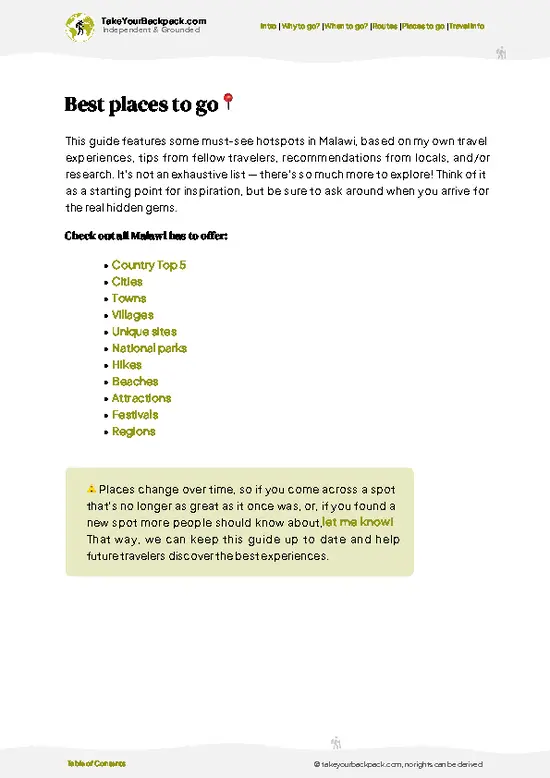
87 ranked highlights, routes & tips, works offline (355 pages)
Loading the map 🌍
CLICK TO FILTER
cities
towns
villages
landmarks
national parks
hikes
beaches
attractions
festivals
regions
SHOW COUNTRY’S BESTSHOW ALL

✨ Why go?
Ranked #3 city in Malawi
The unique appeal for travelers

Mangochi is a strategic hub for backpackers navigating Malawi. It’s not just a stopover; it’s a place where value meets adventure. The city offers a solid basecamp for day trips to nearby attractions, making it easy to explore without the hassle of constant packing.

Accommodations range from budget-friendly hostels to cozy guesthouses, ensuring you can find a spot that fits your wallet and vibe. The local food scene is a treat, with street vendors serving up hearty meals that won’t break the bank.

Walkability is a plus here; you can easily stroll through the city, soaking in the local culture and meeting fellow travelers. When the sun sets, the nightlife comes alive, offering a mix of laid-back bars and lively spots to unwind after a day of exploration.

Plus, Mangochi’s location makes … read more 👉
Mangochi is a strategic hub for backpackers navigating Malawi. It’s not just a stopover; it’s a place where value meets adventure. The city offers a solid basecamp for day trips to nearby attractions, making it easy to explore without the hassle of constant packing.

Accommodations range from budget-friendly hostels to cozy guesthouses, ensuring you can find a spot that fits your wallet and vibe. The local food scene is a treat, with street vendors serving up hearty meals that won’t break the bank.

Walkability is a plus here; you can easily stroll through the city, soaking in the local culture and meeting fellow travelers. When the sun sets, the nightlife comes alive, offering a mix of laid-back bars and lively spots to unwind after a day of exploration.

Plus, Mangochi’s location makes onward travel a breeze, whether you’re heading to the lakes or venturing deeper into Malawi. If you’re looking for a blend of comfort and convenience, this city is worth your time.
Want to include Mangochi in your Malawi route?
Create a personalized Malawi itinerary that includes Mangochi and the places that fit your trip — based on your travel style, budget, and available time. Get your route in seconds.

Generate my trip

💡 HighlightsPlaces and moments you shouldn't skip

  1. Mangochi Main Market (fish & produce) — The town’s beating heart: noisy stalls, blood-red chilies, huge piles of fresh tilapia and local smokefish. Go early, watch the informal auctions, and eat at a grill stall — it’s the fastest way to meet locals and understand daily life here.
  2. Mangochi Waterfront / Public Beach — A wide, sandy stretch on Lake Malawi where fishermen mend nets, children swim, and sunsets are spectacular. Not a luxury resort beach, but the real lakeside life: skimpy boats, shoreline vendors and easy swimming in warm water.
  3. Mangochi Jetty and Boat Landing — The working jetty is where small boats and launches tie up; it’s the gateway to lakeshore villages and islands nearby. Good place to catch a boat, haggle for a ride, or photograph the daily comings-and-goings.
  4. Shire
read more 👉
  1. Mangochi Main Market (fish & produce) — The town’s beating heart: noisy stalls, blood-red chilies, huge piles of fresh tilapia and local smokefish. Go early, watch the informal auctions, and eat at a grill stall — it’s the fastest way to meet locals and understand daily life here.
  2. Mangochi Waterfront / Public Beach — A wide, sandy stretch on Lake Malawi where fishermen mend nets, children swim, and sunsets are spectacular. Not a luxury resort beach, but the real lakeside life: skimpy boats, shoreline vendors and easy swimming in warm water.
  3. Mangochi Jetty and Boat Landing — The working jetty is where small boats and launches tie up; it’s the gateway to lakeshore villages and islands nearby. Good place to catch a boat, haggle for a ride, or photograph the daily comings-and-goings.
  4. Shire River Mouth & Riverside Walk — Where Lake Malawi feeds the Shire River — a short riverside stroll gives you quiet shade, river traffic and a glimpse of how river and lake life meet: fishermen, reed boats and small riverside settlements.
  5. Fort Johnston / Old Colonial Boma area — Mangochi was once called Fort Johnston; the old boma/administrative quarter still has colonial-era buildings and a different street feel. It’s useful for a short historical walk and to imagine the town’s past role in regional trade.
  6. Town Centre & Clock Tower area — The compact center is where government offices, shops and minibuses converge. Walk the trading streets to see everyday commerce, small cafés, and the informal economy that keeps Mangochi moving.
  7. Central Congregational Mosque — The mosque near town offers visible evidence of Mangochi’s strong Muslim community. If you’re respectful in visiting hours, the building and surrounding neighborhood are interesting for cultural observation and street food nearby.
  8. Smokehouses and Landing Bays — Follow the smell of smoked fish downshore to watch traditional fish-smoking methods and talk to fisherfolk about daily catches — an immersive, photogenic experience that’s unique to lakeside Malawi.
  9. Local Handicraft Stalls & Small Markets — Scattered around the center and waterfront are small vendors selling basketry, printed fabric and carved souvenirs. Not a fancy craft market, but authentic items made by local producers — a good place to practice bartering.
  10. Evening Eateries & Chamfered Bars — The modest joints along the main streets serve grilled fish, nsima and tea; local bars (known as “joints”) come alive after dark. Eat where locals eat for honest food, local beer, and conversation — far better than an anonymous tourist restaurant.
A few easy day trips outside town: Cape Maclear (Chembe) and its snorkeling beaches, the busy lakeside town of Monkey Bay, and Liwonde National Park for a classic Malawi safari.
Spotted a mistake or missing something? Contact us.
🏘️ NeighborhoodsUnderstanding the local layout

Mangochi, Malawi, is a vibrant hub for backpackers, offering a mix of local culture and access to stunning lakeside experiences. Here’s a breakdown of key neighborhoods to help you navigate your stay.

Central Mangochi: This area is the heartbeat of the city. It’s bustling, with markets and local eateries. Costs are low, making it ideal for budget travelers. Walkability is decent, but be prepared for some traffic. Nightlife is lively, with bars and music, perfect for those looking to socialize. Great for short stays, but longer visits can feel repetitive.

Lakeshore: If you’re after relaxation, this is your spot. The vibe is serene, with beautiful views of Lake Malawi. Accommodation ranges from budget hostels to mid-range lodges. It’s walkable, but you might want to rent a bike for exploring. … read more 👉
Mangochi, Malawi, is a vibrant hub for backpackers, offering a mix of local culture and access to stunning lakeside experiences. Here’s a breakdown of key neighborhoods to help you navigate your stay.

Central Mangochi: This area is the heartbeat of the city. It’s bustling, with markets and local eateries. Costs are low, making it ideal for budget travelers. Walkability is decent, but be prepared for some traffic. Nightlife is lively, with bars and music, perfect for those looking to socialize. Great for short stays, but longer visits can feel repetitive.

Lakeshore: If you’re after relaxation, this is your spot. The vibe is serene, with beautiful views of Lake Malawi. Accommodation ranges from budget hostels to mid-range lodges. It’s walkable, but you might want to rent a bike for exploring. Nightlife is quieter here, focusing more on sunset views than parties. Ideal for longer stays, especially if you enjoy water activities.

Chimwala: A bit off the beaten path, this neighborhood offers a more local experience. Costs are very low, and you’ll find fewer tourists. It’s less walkable, so public transport or taxis are necessary. The vibe is laid-back, with local markets and community interactions. Best for longer stays if you want to immerse yourself in local life.

Choose wisely based on your priorities, and you’ll unlock the best of Mangochi!

⌛️ 1 dayWhat you can realistically do in a day

Mangochi, Malawi, is a vibrant hub where the shores of Lake Malawi meet the pulse of local culture. It’s a place where you can feel the rhythm of daily life, from bustling markets to serene lakeside views. Spending a day here offers a delightful blend of relaxation and exploration.

Start your morning at the lively Mangochi Market. The air is rich with the scent of fresh produce and spices. Engage with local vendors selling everything from colorful fabrics to handwoven baskets. Grab a breakfast of nsima, a staple made from maize, paired with a side of fresh fish from the lake. This meal not only fuels you but connects you to the local culinary culture.

Afterward, head to the nearby Lake Malawi National Park. This UNESCO World Heritage site is a short drive away and offers stunning views and … read more 👉
Mangochi, Malawi, is a vibrant hub where the shores of Lake Malawi meet the pulse of local culture. It’s a place where you can feel the rhythm of daily life, from bustling markets to serene lakeside views. Spending a day here offers a delightful blend of relaxation and exploration.

Start your morning at the lively Mangochi Market. The air is rich with the scent of fresh produce and spices. Engage with local vendors selling everything from colorful fabrics to handwoven baskets. Grab a breakfast of nsima, a staple made from maize, paired with a side of fresh fish from the lake. This meal not only fuels you but connects you to the local culinary culture.

Afterward, head to the nearby Lake Malawi National Park. This UNESCO World Heritage site is a short drive away and offers stunning views and opportunities for swimming or snorkeling. The park is less crowded than other tourist spots, allowing you to enjoy the tranquility of the lake while observing the vibrant fish life beneath the surface.

In the afternoon, make your way to the nearby village of Makanjila. This area is often overlooked by tourists but is a treasure trove of authentic Malawian life. Spend time with the locals, learn about their crafts, and perhaps even participate in a traditional dance. This experience offers a genuine connection to the culture that many travelers miss.

As the sun sets, return to Mangochi and unwind at one of the lakeside lodges. Enjoy a cold Chibuku beer while watching the sunset paint the sky. This moment encapsulates the essence of your day: a blend of adventure, culture, and relaxation. By consciously choosing these experiences, you’ve crafted a day that’s not just about seeing but truly connecting with Mangochi.
Turn your Mangochi visit into an Malawi adventure
Build a complete Malawi route with Mangochi, hidden gems, must-see destinations, and realistic travel times included.

Generate my trip

🌤️ When to go?Choosing the right time of year


  • Topic: Weather – Mangochi’s climate swings between a wet season (November to April) and a dry season (May to October). The dry months are your best bet for backpacking—less mud, fewer mosquitoes, and clearer skies. Rain can turn trails into slippery messes and limit outdoor activities.

  • Topic: Temperature – Expect daytime highs around 25-30°C (77-86°F) during the dry season, with cooler nights dropping to 15-18°C (59-64°F). The wet season heats up a bit more, pushing highs to 32°C (90°F) or above, which can sap your energy on long hikes.

  • Topic: Daylight Hours – Near the equator, Mangochi enjoys fairly consistent daylight year-round, roughly 11 to 12 hours daily. This steady rhythm means you won’t lose precious trekking time to early sunsets, regardless of when you visit.

  • Topic: Crowds
read more 👉

  • Topic: Weather – Mangochi’s climate swings between a wet season (November to April) and a dry season (May to October). The dry months are your best bet for backpacking—less mud, fewer mosquitoes, and clearer skies. Rain can turn trails into slippery messes and limit outdoor activities.

  • Topic: Temperature – Expect daytime highs around 25-30°C (77-86°F) during the dry season, with cooler nights dropping to 15-18°C (59-64°F). The wet season heats up a bit more, pushing highs to 32°C (90°F) or above, which can sap your energy on long hikes.

  • Topic: Daylight Hours – Near the equator, Mangochi enjoys fairly consistent daylight year-round, roughly 11 to 12 hours daily. This steady rhythm means you won’t lose precious trekking time to early sunsets, regardless of when you visit.

  • Topic: Crowds – Peak tourist flow aligns with the dry season, especially July and August. If you want to dodge the handful of other backpackers and snag quieter campsites, aim for shoulder months like May or September.

  • Topic: Seasonal Activities – Dry months unlock lake activities on Lake Malawi—kayaking, snorkeling, and fishing thrive when the water is calm and clear. Wet season floods can disrupt these, so plan accordingly.

  • Topic: Price Fluctuations – Accommodation and tours spike in the dry season’s peak months. Traveling just before or after this window can save you money without sacrificing much on weather or experience quality.


Pro-tip: Target the shoulder dry months—May or September—for a smart balance of good weather, fewer crowds, and better prices. That’s how you win the timing game in Mangochi.


source: climatestotravel.comJANJanuary: fair for travelingFEBFebruary: fair for travelingMARMarch: fair for travelingAPRApril: fair for travelingMAYMay: highly recommended for travelingJUNJune: highly recommended for travelingJULJuly: good for travelingAUGAugust: good for travelingSEPSeptember: highly recommended for travelingOCTOctober: highly recommended for travelingNOVNovember: fair for travelingDECDecember: fair for traveling
when-to-go

✈️ The backpacker research shortcutMalawi Travel Guide

An offline-friendly backpacking guide with optimized travel routes, ranked highlights, transport advice, and the best areas to stay.
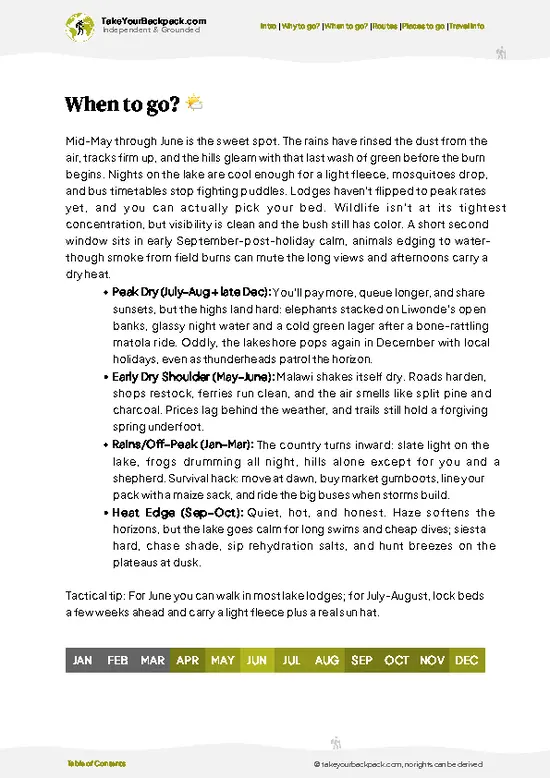
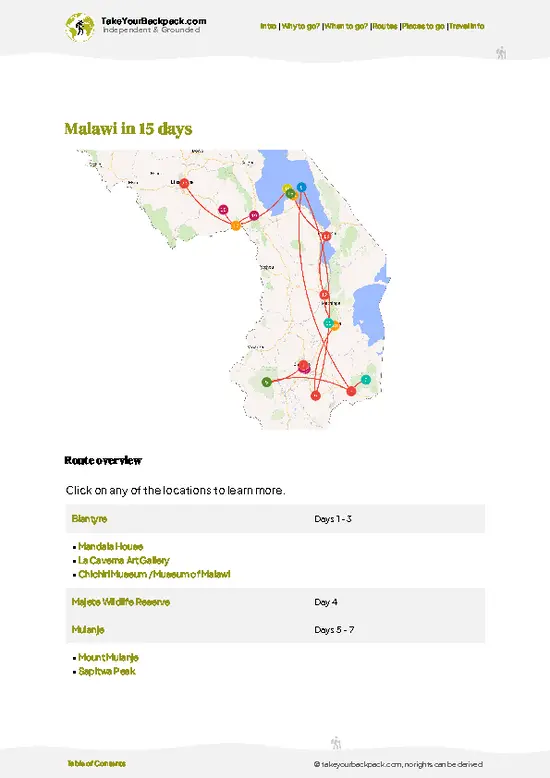
example page 0 from our offline Travel Guide for Malawi
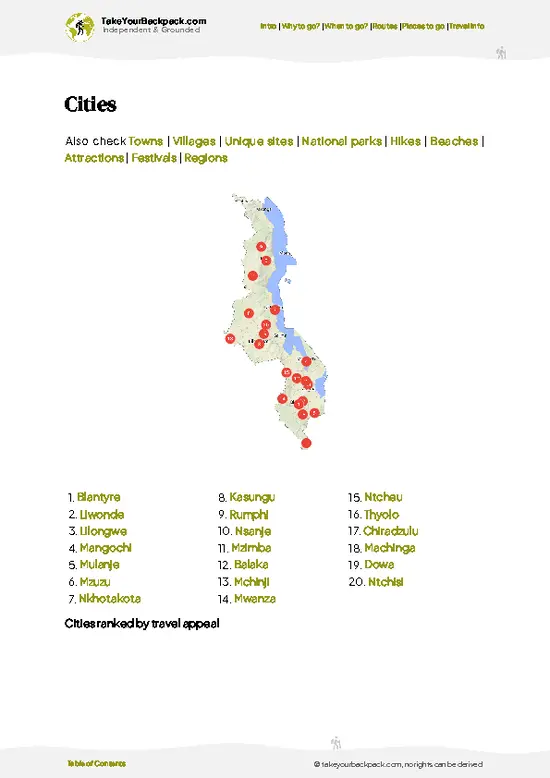
example page 1 from our offline Travel Guide for Malawi
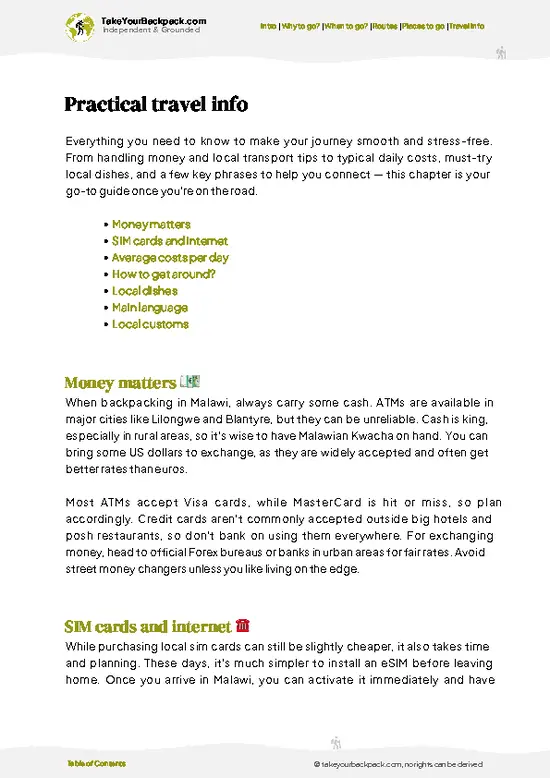
example page 2 from our offline Travel Guide for Malawi
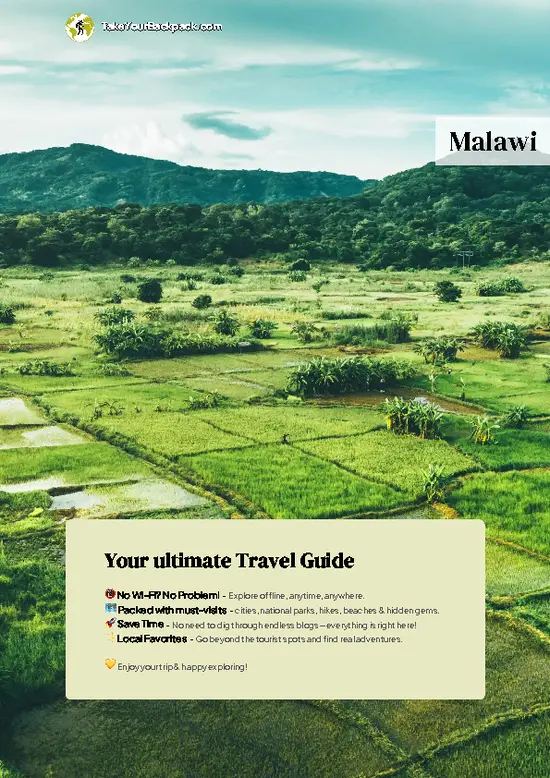
example page 3 from our offline Travel Guide for Malawi
example page 4 from our offline Travel Guide for Malawi
example page 5 from our offline Travel Guide for Malawi
example page 6 from our offline Travel Guide for Malawi
example page 7 from our offline Travel Guide for Malawi
The digital guide (355 pages) contains:
87 highlights, ranked by travel appeal
Optimized 5, 10 & 15-day travel routes
Cities, national parks, landmarks, beaches
How to get around
Offline-friendly for travel without Wi-Fi
👉 Click to see all 30+ guide features

📅 Plan smarter in minutes, not weeks
Month by month travel advice
Festivals & national holidays
Budget expectations

🗺️ Go to the right places, skip the overrated ones
Honest pros & cons of destinations
Top hikes, parks & viewpoints
Lesser-known places most travelers miss
Clear “worth it vs skip it” guidance

🛏️ Travel smoothly without rookie mistakes
Best areas to stay
Transport systems explained simply
Common scams & safety advice
SIM cards, money & practical tips

🌍 Understand the country, not just visit it
Culture & traditions
52 Essential phrases & customs
Festivals worth planning around
Traveler-friendly historical context
Insights that make places more meaningful

📱 Built for real travel conditions
Fully downloadable PDF
Works completely offline
Optimized for phone use
Useful in remote areas & buses
Everything in one place
Save weeks of stressful planning
Get instant access to your full guide. 30‑day money-back guarantee.


By proceeding you agree to our terms.
Sent to your inbox immediately after payment • 100% Secure Checkout
Best Backpacking Travel Advisor 2025 tourism awardBest Backpacking
Travel Advisor
2025
What others say about Take Your Backpack Guides:
⭐⭐⭐⭐⭐
Fantastic, amazing amount of information!
⭐⭐⭐⭐⭐
My goodness this is amazing, it's what I've been looking for hats off too you!
⭐⭐⭐⭐⭐
I think this is absolutely BRILLIANT
⭐⭐⭐⭐
Very complete and informative. It's still missing places, but I gotta to commend you
⭐⭐⭐⭐⭐
This is truly amazing, thank you, can't wait to explore it with my kids!
⭐⭐⭐⭐⭐
Awesome resource, thank you!
⭐⭐⭐⭐⭐
This is amazing! Can't wait to explore the ones I haven't seen
⭐⭐⭐⭐
I love this! Well done, great idea.
⭐⭐⭐⭐⭐
Thanks for taking the time to make this gem!
⭐⭐⭐⭐⭐
This might be the best website I've ever seen.
⭐⭐⭐⭐⭐
Congratulations, and thank you so much for your work; it's incredibly valuable.
⭐⭐⭐⭐
In all seriousness I think you did a great job pointing out the important spots
⭐⭐⭐⭐⭐
10/10 very good
⭐⭐⭐⭐⭐
As someone who's only just starting to visit regularly this is awesome, thank you.
⭐⭐⭐⭐
Thank you very much! I'm going to visit my dad, it's going to be very useful!
⭐⭐⭐⭐⭐
This is really cool! We'll be travelling for the first time and this definitely come in handy.
⭐⭐⭐⭐⭐
You are now our minister of culture, congratulations 👨‍💼
⭐⭐⭐⭐⭐
Just wanted to tell you that this is a pearl! Going to follow your recommendations.
⭐⭐⭐⭐⭐
This is so cool. I'll definitely be using the resource for my travels soon.
⭐⭐⭐⭐⭐
This is very impressive! Good work.
⭐⭐⭐⭐⭐
This is an amazing and informative site. Very well done!

🛏️ Where to stay?How to pick the right area

Mangochi’s backpacker sweet spot is the lakeside stretch near the town center. This area nails the balance between safety, social buzz, and budget-friendly options. It’s where you’ll find the most hostels and guesthouses geared toward solo travelers and small groups, so the vibe leans toward easy connections without the chaos of a party town. The proximity to Lake Malawi means you’re never far from water-based activities or relaxed evenings watching fishermen haul in their catch—simple pleasures that cost little but add layers to your experience.

Compared to the outskirts or more residential … read more 👉
Mangochi’s backpacker sweet spot is the lakeside stretch near the town center. This area nails the balance between safety, social buzz, and budget-friendly options. It’s where you’ll find the most hostels and guesthouses geared toward solo travelers and small groups, so the vibe leans toward easy connections without the chaos of a party town. The proximity to Lake Malawi means you’re never far from water-based activities or relaxed evenings watching fishermen haul in their catch—simple pleasures that cost little but add layers to your experience.

Compared to the outskirts or more residential neighborhoods, this central lakeside zone offers a clear advantage: walkability and a built-in community. You can stroll to markets, local eateries, and transport hubs without worrying about long, costly rides or unsafe streets after dark. The social scene here is low-key but genuine, with travelers swapping stories over shared meals or planning day trips together.

If you stray too far inland or into less tourist-oriented parts of Mangochi, you’ll save a few kwacha but lose the ease of meeting fellow backpackers and the safety net that comes with a well-trodden traveler’s path. In this city, time and comfort are tightly linked to location—choose the lakeside center, and you’re buying yourself both.

🚌 Getting aroundHow to get around Mangochi

Mangochi moves at its own rhythm—less a metronome and more a pulse you feel underfoot. The city’s flow isn’t about strict timetables or polished efficiency; it’s a dance of improvisation and local know-how. You won’t find a clock dictating every move here. Instead, you navigate a mesh of informal schedules, where patience and timing are your best allies. This is a place where the trade-offs between time, money, and comfort become a strategic game, and winning means understanding the subtle cues of local transit.


  • Walking: The most reliable and cost-free way to get around Mangochi’s compact center. Walking lets you absorb the city’s texture and pace without any schedule constraints. It’s slow but immersive, perfect for short distances and spontaneous detours. Expect to spend zero kwacha
read more 👉
Mangochi moves at its own rhythm—less a metronome and more a pulse you feel underfoot. The city’s flow isn’t about strict timetables or polished efficiency; it’s a dance of improvisation and local know-how. You won’t find a clock dictating every move here. Instead, you navigate a mesh of informal schedules, where patience and timing are your best allies. This is a place where the trade-offs between time, money, and comfort become a strategic game, and winning means understanding the subtle cues of local transit.


  • Walking: The most reliable and cost-free way to get around Mangochi’s compact center. Walking lets you absorb the city’s texture and pace without any schedule constraints. It’s slow but immersive, perfect for short distances and spontaneous detours. Expect to spend zero kwacha but invest time and energy.


  • Local Minibuses (Buses): These are the backbone of Mangochi’s public transit. They run roughly from 6 AM to 7 PM, with fares typically under 200 MWK for intra-city trips. Minibuses are cheap and frequent but can get crowded and uncomfortable during peak hours. They’re a solid choice if you want to save money and don’t mind sacrificing some comfort and speed.


  • Shared Taxis: Operating on fixed routes but without strict schedules, shared taxis fill up and leave. They’re faster than minibuses and offer more comfort, but fares jump to around 500-700 MWK depending on distance. If you’re short on time but still budget-conscious, this is your middle ground—pay a bit more to cut down waiting and travel time.


  • Motorcycle Taxis (Boda Bodas): The quickest way to weave through Mangochi’s traffic and reach destinations off the beaten path. Prices vary widely, starting at about 300 MWK for short hops. They offer maximum flexibility and speed but at the cost of safety and comfort. Ideal for urgent trips or when you’re carrying light gear and want to shave minutes off your schedule.


  • Private Car Hire: The luxury option for those who prioritize comfort and control over cost. Rates start around 10,000 MWK per day, making this a choice for travelers with a bigger budget or those in a group splitting costs. It’s the fastest and most comfortable way to explore beyond the city limits but comes with a steep price tag and less local interaction.


Understanding Mangochi’s transit options is about more than just getting from A to B. It’s a tactical decision where every kwacha saved or minute gained shifts your experience. Choose walking and you get intimacy with the city but lose speed. Opt for a shared taxi and you trade a bit of cash for time and comfort. The city’s pulse rewards those who read its signals and balance these trade-offs with savvy precision.

👛 Costs (as of 27 February 2026)How expensive it really is

Backpacking in Mangochi, Malawi, offers a clear trade-off between cost and comfort, with prices reflecting the city’s modest tourism infrastructure and local economy. Here’s the breakdown of what you’re likely to spend daily:
  • Dorm Accommodation (High Season): Expect to pay around $8 to $12 per night. High season sees a slight bump due to demand, but options remain basic, often with shared facilities and limited amenities.
  • Dorm Accommodation (Off-Season): Prices drop to about $5 to $8 per night. Fewer tourists mean better bargaining power, but some places may close or reduce services.
  • Meals: Local eateries serve filling meals for $2 to $4 each. Sticking to street food or small restaurants keeps costs low, while occasional splurges at tourist spots can push a meal to $6 or $7.
  • Local Transport:
read more 👉
Backpacking in Mangochi, Malawi, offers a clear trade-off between cost and comfort, with prices reflecting the city’s modest tourism infrastructure and local economy. Here’s the breakdown of what you’re likely to spend daily:
  • Dorm Accommodation (High Season): Expect to pay around $8 to $12 per night. High season sees a slight bump due to demand, but options remain basic, often with shared facilities and limited amenities.
  • Dorm Accommodation (Off-Season): Prices drop to about $5 to $8 per night. Fewer tourists mean better bargaining power, but some places may close or reduce services.
  • Meals: Local eateries serve filling meals for $2 to $4 each. Sticking to street food or small restaurants keeps costs low, while occasional splurges at tourist spots can push a meal to $6 or $7.
  • Local Transport: Minibus taxis and bicycle taxis dominate. A typical short ride costs between $0.30 and $0.70. Longer trips across town rarely exceed $1.50.
  • City Transport Pass: Mangochi doesn’t have a formal city transport pass system. Budgeting for individual rides is necessary, with daily transport costs usually under $3 if you move around moderately.
  • Basic Activities/Entry Fees: Entry to local attractions like beaches or cultural sites ranges from $1 to $5. Organized tours or boat trips can cost $10 to $20, but these are optional and often negotiable.
  • Miscellaneous Expenses: This includes bottled water, snacks, or small purchases, typically $1 to $3 daily. Internet cafes or SIM cards with data plans are affordable, around $2 to $5 for decent coverage.

In total, a backpacker in Mangochi can expect to spend roughly $15 to $30 per day, depending on season and lifestyle choices. This range balances basic comfort with the freedom to explore without breaking the bank, making it a manageable and rewarding destination for independent travelers.


source: malawitourism.com
⚠️ Prices can change and everyone travels differently, so take this as a rough guide. Hope it helps you plan your adventure!

🚌 Day tripsEasy escapes and nearby places

Using Mangochi as a base for day trips opens up a treasure trove of experiences that blend adventure with cultural immersion. Here’s how to maximize your time, money, and comfort while exploring the region.

Lake Malawi National Park
Just a short 30-minute ride from Mangochi, this UNESCO World Heritage site is a must-see. You’ll find pristine beaches and crystal-clear waters perfect for swimming and snorkeling. The park is home to unique fish species, making it a paradise for underwater enthusiasts. Expect to spend around $10 for entry and transport. The best time to visit is during the dry season from May to October, when the weather is pleasant. A common mistake? Underestimating the sun—bring sunscreen and a hat.
👉 Explore Lake Malawi National Park

Monkey Bay
About 45 minutes south … read more 👉
Using Mangochi as a base for day trips opens up a treasure trove of experiences that blend adventure with cultural immersion. Here’s how to maximize your time, money, and comfort while exploring the region.

Lake Malawi National Park
Just a short 30-minute ride from Mangochi, this UNESCO World Heritage site is a must-see. You’ll find pristine beaches and crystal-clear waters perfect for swimming and snorkeling. The park is home to unique fish species, making it a paradise for underwater enthusiasts. Expect to spend around $10 for entry and transport. The best time to visit is during the dry season from May to October, when the weather is pleasant. A common mistake? Underestimating the sun—bring sunscreen and a hat.
👉 Explore Lake Malawi National Park

Monkey Bay
About 45 minutes south of Mangochi, Monkey Bay offers a laid-back vibe and a chance to see local fishing culture in action. You can wander the beach, sample fresh fish from local vendors, or take a boat ride to explore nearby islands. Budget around $15 for transport and snacks. The ideal time to visit is early morning to catch the fishermen at work. Many first-timers miss the chance to interact with locals—don’t be shy; they love sharing stories.
👉 Explore Monkey Bay

Senga Bay
Roughly an hour’s drive from Mangochi, Senga Bay is famous for its vibrant market and stunning sunsets. Spend your day exploring the local stalls, where you can find handmade crafts and delicious street food. Expect to spend about $10 on transport and food. The best time to visit is during the late afternoon when the market is buzzing. A common pitfall is arriving too late—plan to leave early to soak in the atmosphere.
👉 Explore Senga Bay

Chintheche
Just over an hour away, Chintheche is known for its beautiful beaches and relaxed atmosphere. It’s a great spot for a picnic or simply lounging by the water. The cost for transport and snacks will be around $15. The dry season is ideal for a visit, as the beaches are less crowded. Many travelers overlook the local food options—try the nsima with fish for an authentic experience.
👉 Explore Chintheche

Nkhata Bay
A bit further at about two hours from Mangochi, Nkhata Bay is worth the trek for its stunning views and vibrant backpacker scene. You can dive, kayak, or just chill at a lakeside café. Budget around $20 for transport and a meal. The best time to go is during the dry season. A common mistake is not checking the bus schedules—plan ahead to avoid long waits.
👉 Explore Nkhata Bay
Want to know what more Malawi offers?
The Malawi Travel Guide describes 87 highlights, from cities to national parks, from beaches to hikes

Get the Travel Guide -

🍲 FoodWhat to Eat & Drink

In Mangochi, the food scene is a vibrant tapestry of local flavors and communal experiences. You can’t miss trying nsima, a staple made from maize flour, often served with sides like sautéed greens or spicy relish. It’s filling and a true taste of Malawian life. Pair it with chambo, a local fish, grilled to perfection and bursting with flavor.

Street food is where the magic happens. Vendors line the roads, offering samosas and grilled meat skewers that are both affordable and delicious. The aroma of spices wafts through the air, inviting you to indulge. Markets are bustling with energy, and you’ll find locals enjoying their meals right alongside you, creating a sense of community.

When it comes to drinks, don’t overlook Chibuku, a traditional beer made from fermented maize. It’s often served … read more 👉
In Mangochi, the food scene is a vibrant tapestry of local flavors and communal experiences. You can’t miss trying nsima, a staple made from maize flour, often served with sides like sautéed greens or spicy relish. It’s filling and a true taste of Malawian life. Pair it with chambo, a local fish, grilled to perfection and bursting with flavor.

Street food is where the magic happens. Vendors line the roads, offering samosas and grilled meat skewers that are both affordable and delicious. The aroma of spices wafts through the air, inviting you to indulge. Markets are bustling with energy, and you’ll find locals enjoying their meals right alongside you, creating a sense of community.

When it comes to drinks, don’t overlook Chibuku, a traditional beer made from fermented maize. It’s often served in large containers, perfect for sharing. Just remember, drinking is a social affair here; it’s common to toast and share stories over a round.

Etiquette is simple: eat with your right hand and embrace the communal spirit. This isn’t just about food; it’s about connection. Enjoy the flavors, the atmosphere, and the camaraderie that makes Mangochi truly special.

🛡️ SafetyTraveler Safety Guide

In Mangochi, safety is generally solid, but a few nuances can enhance your experience. Stay aware in crowded markets, where pickpockets might lurk. Keep your valuables close and avoid flashy displays of wealth.

If you’re traveling solo, especially at night, stick to well-lit areas and avoid wandering too far from your accommodation. The locals are friendly, but it’s wise to trust your instincts.

Common scams are minimal, but be cautious of overly eager guides offering unsolicited help. Politely decline and seek out official services when needed.

Everyday annoyances can include persistent vendors; a simple, firm “no, thank you” usually does the trick. Overall, approach Mangochi with a blend of openness and awareness, and you’ll navigate it like a pro.

Other Malawian cities near Mangochi

Explore more nearby:

  • Balaka—railway junction, roadside markets, rural surroundings, transit stop| 64 km away
  • Liwonde—Shire River, wildlife viewing, local markets, riverside lodges| 65 km away
  • Ntcheu—roadside town, agricultural center, border proximity, local produce| 76 km away

💡 Not sure where to go next?
Create a personalized itinerary for Malawi including Mangochi and the places that fit your trip.

Generate my itinerary

👉 Discover all cities

Or checkout all Malawi has to offer (think cities, towns, villages, national parks, hikes, beaches, festivals)
Country photo of Malawi

We 💚 feedbackSumming up the experience

Mangochi has a laid-back vibe that feels like a warm hug after a long trek. The best surprise? The local markets bursting with fresh produce and the infectious laughter of the vendors. It’s a slice of life that’s hard to find elsewhere. Just a heads-up: the roads can be rough, so don’t rush your journey. Embrace the slower pace; it’s part of the charm. You’ll leave with stories that linger long after you’ve gone.

✍️ Help improve this page!
The information on this page is based on in-depth research, insights shared by experienced travelers, and feedback from the local travel community in Malawi. While every effort is made to keep the information accurate and current, conditions can change — so if you spot anything incorrect or outdated, please get in touch.


🙋‍♂️ Give feedback

👋 Meet the founderWho’s Behind Take Your Backpack?

Johan, backpacker and founder of TakeYourBackpackHi, I’m Johan (Netherlands 🇳🇱), the creator of TakeYourBackpack. Over the past decade, I’ve backpacked through 80+ countries across six continents, gaining extensive experience with independent travel, long-term trips, and overland routes.

This site is built on a combination of firsthand travel experience and carefully curated insights from other backpackers. Many guides are based on places I’ve personally visited, while others bring together tips, observations, and practical advice shared by trusted travelers I’ve met along the way.

The goal is to provide realistic, experience-driven guidance — not generic itineraries — so you can explore destinations with better context, clearer expectations, and more confidence.

Get full Malawi guide •
Instant download • 87 highlights • Full Offline guide