×

Malawi🇲🇼 | townsLuchenzaMulanje skyline, railway tracks, minibus stage, tea-country market | things to do and best time to go

Explore EkwendeniExplore Liwonde

Backpacking in Luchenza
👍 Recommendedtown ranked #8
By Johan Kruseman 🇳🇱 | Updated October 22, 2026

A minibus conductor bangs the roof twice, and the stage fills with the smell of frying dough, diesel and ripe bananas while red dust settles on your boots. That is Luchenza at 7 a.m. The town sits in the south of Malawi, in the Thyolo District between Blantyre and Mulanje, with the blue bulk of Mulanje Massif standing over the tea country behind it. Luchenza has no monuments and no nightlife, so keep expectations modest. The market is worth an hour, and the road views of the mountain are free. Getting here is easy, since minibuses pass constantly, but hostels are scarce and you will rarely meet other backpackers. It suits slow travelers, hikers and anyone breaking up the road to Mulanje. It will bore anyone who wants sights or a social scene.

Discover everything you want to know in the 📖 Malawi Travel Guide.


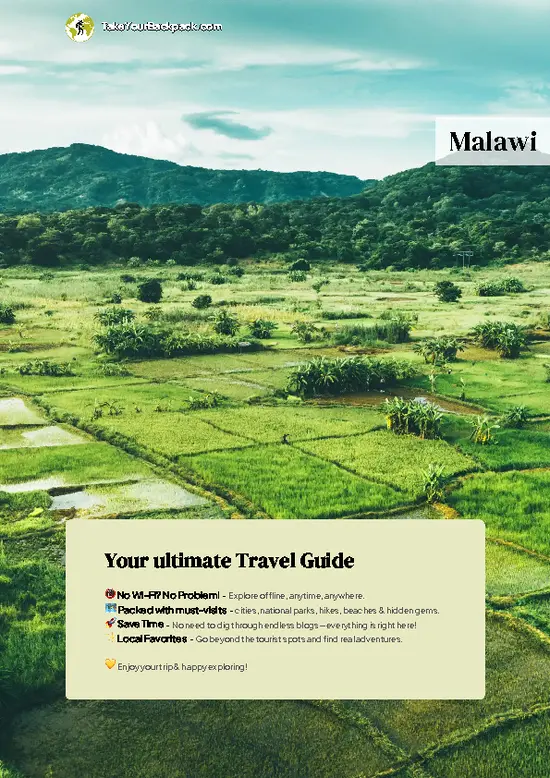
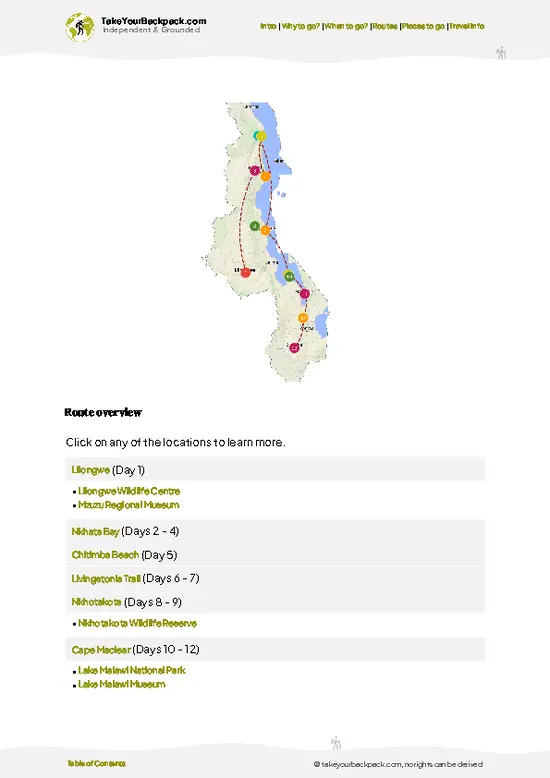
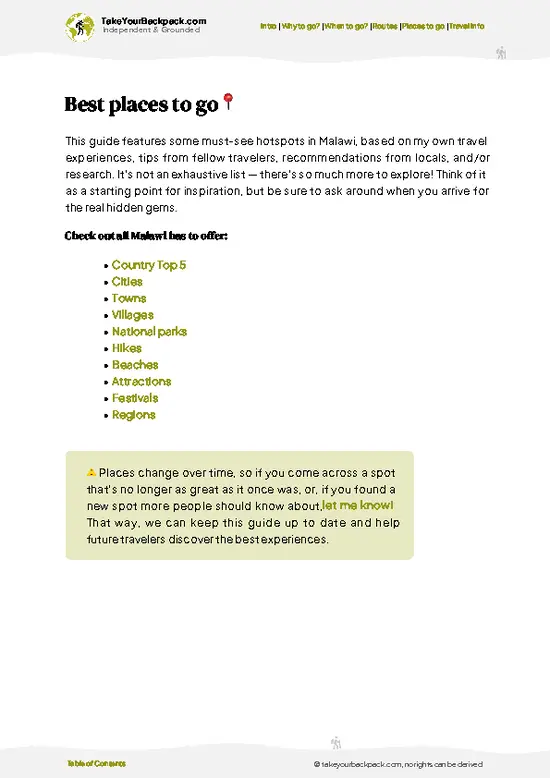
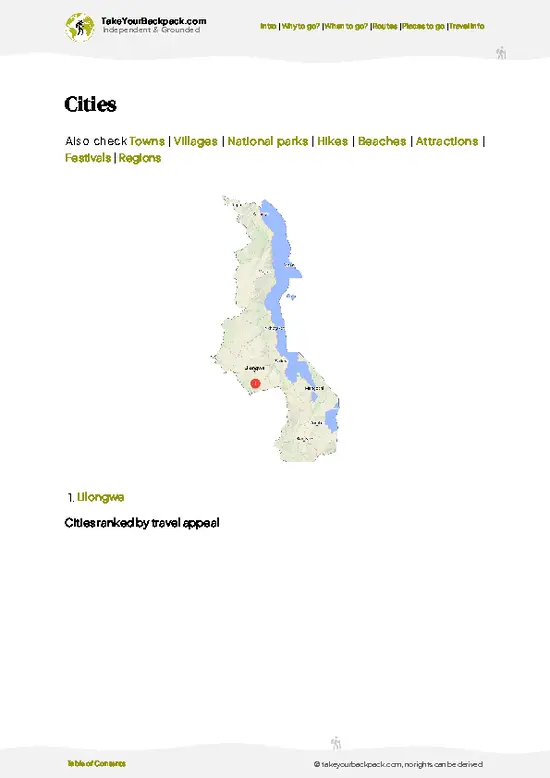
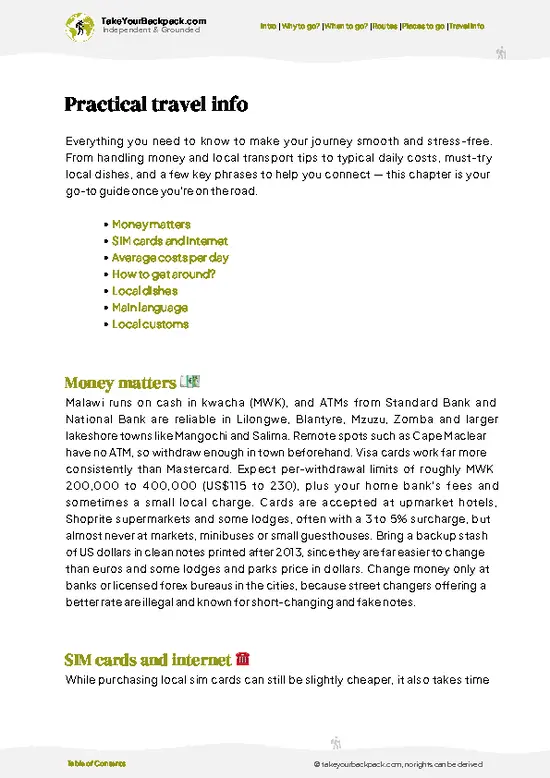
example page 0 from our offline Travel Guide for Malawi
example page 1 from our offline Travel Guide for Malawi
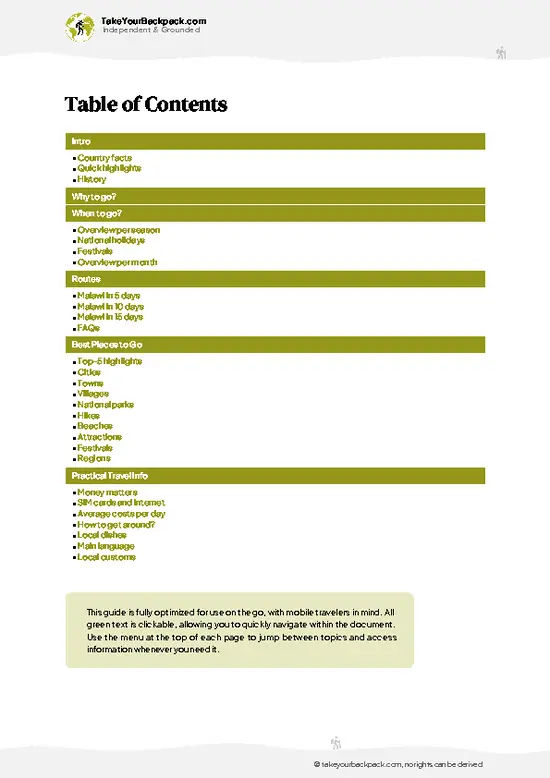
example page 2 from our offline Travel Guide for Malawi
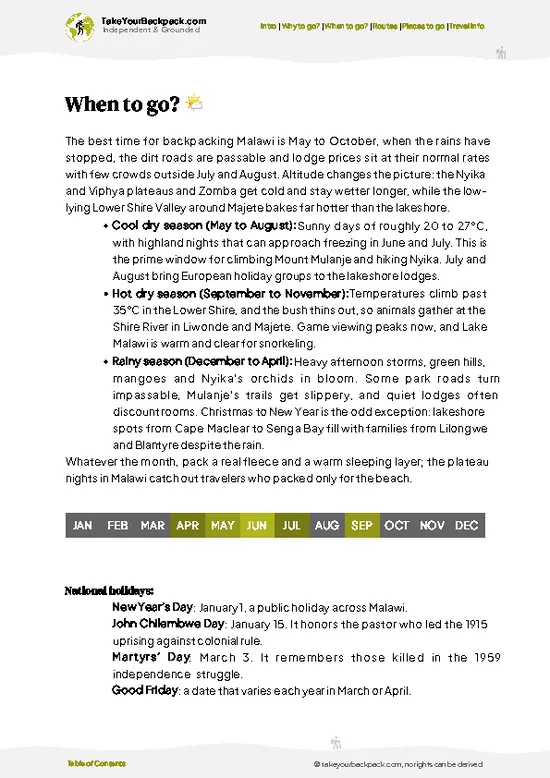
example page 3 from our offline Travel Guide for Malawi
example page 4 from our offline Travel Guide for Malawi
example page 5 from our offline Travel Guide for Malawi
example page 6 from our offline Travel Guide for Malawi
example page 7 from our offline Travel Guide for Malawi
Loading the map 🌍
CLICK TO FILTER
cities
towns
villages
national parks
hikes
beaches
attractions
festivals
regions
SHOW COUNTRY’S BESTSHOW ALL

✨ Why go?
Ranked #8 town in Malawi
Why Luchenza should be on your travel list

Luchenza earns its place on a route as a practical, low-key stop on the way to Mulanje Massif. You can sleep here, buy supplies at the market and leave early for the mountain or the tea country around Thyolo. Most travelers stay one night, two at most, because the town itself is small and the real draw lies outside it. What you get is ordinary Malawian life without a tourist layer: vendors selling tomatoes and fried cassava, the railway line cutting through town, and people who are curious about a foreigner on foot and happy to chat in a few words of Chichewa. Solo travelers will find it easy and calm. Hikers can use it as a staging point, especially when Mulanje accommodation is full. If you need hostels, cafés and other backpackers every evening, go on to Blantyre instead.

💡 HighlightsWhat this place is best known for

  1. Luchenza Market: The town’s center of gravity, with piles of tomatoes, rice, dried fish, secondhand clothes and phone-charging stalls under tarps. Go before 9 a.m. for the best produce and the most activity. Entry is free, and an hour is plenty. Bring small notes for snacks.
  2. The Railway Line and Station Area: Rails run right through the town, and walking beside them shows you where goods and people move. Late afternoon is calmer and good for photos of the line against the hills. Free, 30 minutes. Be careful on the tracks and ask before photographing officials or the station itself.
  3. Mulanje Massif Roadside Views: On a clear morning the mountain’s sheer granite wall appears over the town’s edge and the tea plantations. Early morning is best, before haze builds. Free, 15 to 30 minutes, with no
… read more 👉
  1. Luchenza Market: The town’s center of gravity, with piles of tomatoes, rice, dried fish, secondhand clothes and phone-charging stalls under tarps. Go before 9 a.m. for the best produce and the most activity. Entry is free, and an hour is plenty. Bring small notes for snacks.
  2. The Railway Line and Station Area: Rails run right through the town, and walking beside them shows you where goods and people move. Late afternoon is calmer and good for photos of the line against the hills. Free, 30 minutes. Be careful on the tracks and ask before photographing officials or the station itself.
  3. Mulanje Massif Roadside Views: On a clear morning the mountain’s sheer granite wall appears over the town’s edge and the tea plantations. Early morning is best, before haze builds. Free, 15 to 30 minutes, with no formal viewpoint, so find an open stretch of road.
  4. Minibus Stage: Loud, chaotic and honest. Watching minibuses load with sacks, chickens and passengers is the quickest way to understand how people here travel. Free, 20 to 30 minutes, best in the morning rush. Keep your bag in front of you.
From Luchenza, day trips are easy to Mulanje Mountain Forest Reserve for hiking and Likhubula waterfalls, the tea estates around Thyolo with their factory visits, and Thyolo Mountain for green views over the plantations.
Start with the market in the early morning, because it is at its busiest then and gives you the best sense of the town before the heat arrives.
Spotted a mistake or missing something? Contact us.

🏘️ NeighborhoodsUnderstanding the local layout

Luchenza is small enough to cover on foot in under an hour, and its character comes from three pockets that feel quite different.
  • Main road and trading center: This is where you spend most of your time. Minibuses idle with horns blaring, vendors stack tomatoes and bananas on cloth, and fried dough and roasted maize smoke along the tarmac. It is loud, dusty and entirely walkable. Come in the morning, before the midday heat flattens everything.
  • Central market: Worth a slow loop. Expect piles of dried fish, secondhand clothes, tea-estate workers buying soap and sugar, and the sharp smell of charcoal. Prices are negotiable, and a plate of nsima with beans costs little at the small food stalls around it.
  • Railway side: The old line and the quieter lanes behind it have a sleepy feel, with chickens,
… read more 👉
Luchenza is small enough to cover on foot in under an hour, and its character comes from three pockets that feel quite different.
  • Main road and trading center: This is where you spend most of your time. Minibuses idle with horns blaring, vendors stack tomatoes and bananas on cloth, and fried dough and roasted maize smoke along the tarmac. It is loud, dusty and entirely walkable. Come in the morning, before the midday heat flattens everything.
  • Central market: Worth a slow loop. Expect piles of dried fish, secondhand clothes, tea-estate workers buying soap and sugar, and the sharp smell of charcoal. Prices are negotiable, and a plate of nsima with beans costs little at the small food stalls around it.
  • Railway side: The old line and the quieter lanes behind it have a sleepy feel, with chickens, mud-brick houses and kids playing in the red dirt. Nothing to tick off, but a pleasant wander for an hour at dusk.
  • Outskirts and tea country: Skip nothing here if you have time. Green tea rows climb toward Thyolo and the Mulanje massif stands blue on the horizon. The edges are quiet at night, with crickets and little lighting, so go in daylight.

⌛️ 1 dayHow to make the most of one day

7:30 AM, Luchenza Market: Do not skip this. Arrive while stalls are still being set up and buy a bag of fried dough or fresh bananas for breakfast. Wander slowly, say hello, and note how produce is sorted by hand. It is easiest to understand the town here, and it is only a short walk to the next stop.
9:30 AM, Minibus Stage: Stand on the edge and watch the departures. Sacks are tied to roofs and routes are shouted out. It is noisy and entertaining, and it shows you how to catch a ride onward later.
11:00 AM, Roadside View of Mulanje: Walk to an open stretch on the edge of town where the massif is visible over the tea fields. Morning light is clearest, and the walk gives you a feel for the surrounding countryside.
1:00 PM, Lunch in town: Find a local eatery for nsima with beans, greens or fish. … read more 👉
7:30 AM, Luchenza Market: Do not skip this. Arrive while stalls are still being set up and buy a bag of fried dough or fresh bananas for breakfast. Wander slowly, say hello, and note how produce is sorted by hand. It is easiest to understand the town here, and it is only a short walk to the next stop.
9:30 AM, Minibus Stage: Stand on the edge and watch the departures. Sacks are tied to roofs and routes are shouted out. It is noisy and entertaining, and it shows you how to catch a ride onward later.
11:00 AM, Roadside View of Mulanje: Walk to an open stretch on the edge of town where the massif is visible over the tea fields. Morning light is clearest, and the walk gives you a feel for the surrounding countryside.
1:00 PM, Lunch in town: Find a local eatery for nsima with beans, greens or fish. Expect a plain room and a hearty plate, and ask what is freshly cooked.
3:00 PM, Estate Lanes on the Outskirts: This is the stop most travelers never make. Follow a quiet track toward the tea fields and smallholder plots, where rows of bushes run to the horizon and farmers work by hand. Keep to the paths, greet people politely, and ask before taking photos.
5:30 PM, Railway Line: End by walking beside the tracks as the light softens and the town winds down. Then buy a cold drink and call it a day.

🌤️ When to go?When to go for the best experience

The cool, dry months from May to August are the easiest for walking and day trips around Luchenza.
  • Cool Dry Season (May to August): Days reach 22 to 27°C (72 to 81°F), nights drop to 10 to 14°C (50 to 57°F), and mornings can bring mist off Mulanje. Roads are firm and crowds stay thin.
  • Hot Season (September to November): Heat builds to 30 to 35°C (86 to 95°F) before the rains. Dusty, but sunsets are long and fruit is plentiful.
  • Rainy Season (December to April): Warm, 24 to 30°C (75 to 86°F), with heavy afternoon downpours that turn dirt tracks to mud and cut Mulanje visibility. Transport fares can creep up when roads are poor.
Daylight runs roughly 11 to 13 hours across the year. Aim for June or July if you plan to hike Mulanje.

source: climatestotravel.comJANJanuary: fair for travelingFEBFebruary: fair for travelingMARMarch: fair for travelingAPRApril: fair for travelingMAYMay: highly recommended for travelingJUNJune: excellent for travelingJULJuly: excellent for travelingAUGAugust: excellent for travelingSEPSeptember: excellent for travelingOCTOctober: highly recommended for travelingNOVNovember: fair for travelingDECDecember: fair for traveling
when-to-go

✈️ The backpacker research shortcutMalawi Travel Guide

An offline-friendly backpacking guide with optimized travel routes, ranked highlights, transport advice, and the best areas to stay.
example page 0 from our offline Travel Guide for Malawi
example page 1 from our offline Travel Guide for Malawi
example page 2 from our offline Travel Guide for Malawi
example page 3 from our offline Travel Guide for Malawi
example page 4 from our offline Travel Guide for Malawi
example page 5 from our offline Travel Guide for Malawi
example page 6 from our offline Travel Guide for Malawi
example page 7 from our offline Travel Guide for Malawi
The digital guide (263 pages) contains:
✅ 65 highlights, ranked by travel appeal
✅ Optimized 5, 10 & 15-day travel routes
✅ Cities, national parks, landmarks, beaches
✅ How to get around
✅ Offline-friendly for travel without Wi-Fi
👉 Click to see all 30+ guide features

📅 Plan smarter in minutes, not weeks
✅ Month by month travel advice
✅ Festivals & national holidays
✅ Budget expectations

🗺️ Go to the right places, skip the overrated ones
✅ Honest pros & cons of destinations
✅ Top hikes, parks & viewpoints
✅ Lesser-known places most travelers miss
✅ Clear “worth it vs skip it” guidance

🛏️ Travel smoothly without rookie mistakes
✅ Best areas to stay
✅ Transport systems explained simply
✅ Common scams & safety advice
✅ SIM cards, money & practical tips

🌍 Understand the country, not just visit it
✅ Culture & traditions
✅ 52 Essential phrases & customs
✅ Festivals worth planning around
✅ Traveler-friendly historical context
✅ Insights that make places more meaningful

📱 Built for real travel conditions
✅ Fully downloadable PDF
✅ Works completely offline
✅ Optimized for phone use
✅ Useful in remote areas & buses
✅ Everything in one place
Stop searching, start planning
Get instant access to your full guide. 30‑day money-back guarantee.
+ Add another guide for just

By proceeding you agree to our terms.
Sent to your inbox immediately after payment • 100% Secure Checkout
Best Backpacking Travel Advisor 2025 tourism awardBest Backpacking
Travel Advisor
2025
What others say about Take Your Backpack Guides:
⭐⭐⭐⭐⭐
Fantastic, amazing amount of information!
⭐⭐⭐⭐⭐
My goodness this is amazing, it's what I've been looking for hats off too you!
⭐⭐⭐⭐⭐
I think this is absolutely BRILLIANT
⭐⭐⭐⭐
Very complete and informative. It's still missing places, but I gotta to commend you
⭐⭐⭐⭐⭐
This is truly amazing, thank you, can't wait to explore it with my kids!
⭐⭐⭐⭐⭐
Awesome resource, thank you!
⭐⭐⭐⭐⭐
This is amazing! Can't wait to explore the ones I haven't seen
⭐⭐⭐⭐
I love this! Well done, great idea.
⭐⭐⭐⭐⭐
Thanks for taking the time to make this gem!
⭐⭐⭐⭐⭐
This might be the best website I've ever seen.
⭐⭐⭐⭐⭐
Congratulations, and thank you so much for your work; it's incredibly valuable.
⭐⭐⭐⭐
In all seriousness I think you did a great job pointing out the important spots
⭐⭐⭐⭐⭐
10/10 very good
⭐⭐⭐⭐⭐
As someone who's only just starting to visit regularly this is awesome, thank you.
⭐⭐⭐⭐
Thank you very much! I'm going to visit my dad, it's going to be very useful!
⭐⭐⭐⭐⭐
This is really cool! We'll be travelling for the first time and this definitely come in handy.
⭐⭐⭐⭐⭐
You are now our minister of culture, congratulations 👨‍💼
⭐⭐⭐⭐⭐
Just wanted to tell you that this is a pearl! Going to follow your recommendations.
⭐⭐⭐⭐⭐
This is so cool. I'll definitely be using the resource for my travels soon.
⭐⭐⭐⭐⭐
This is very impressive! Good work.
⭐⭐⭐⭐⭐
This is an amazing and informative site. Very well done!

🛏️ Where to stay?Where staying makes the most sense

Luchenza has only a handful of basic guesthouses, so most backpackers sleep either in the town center or in Blantyre or Mulanje.
The center near the main road and bus stands is the practical choice for a night: you step off a minibus and walk to a simple room, with food stalls and shops close by. Expect a basic private room rather than dorms, and plenty of traffic noise from early morning, so earplugs help. Streets are safe enough to walk in the evening if you stay near the lit main road, though it is wise to be back before it gets late.
If you want more choice, Mulanje town to the south has more … read more 👉
Luchenza has only a handful of basic guesthouses, so most backpackers sleep either in the town center or in Blantyre or Mulanje.
The center near the main road and bus stands is the practical choice for a night: you step off a minibus and walk to a simple room, with food stalls and shops close by. Expect a basic private room rather than dorms, and plenty of traffic noise from early morning, so earplugs help. Streets are safe enough to walk in the evening if you stay near the lit main road, though it is wise to be back before it gets late.
If you want more choice, Mulanje town to the south has more guesthouses and an easier gateway to the mountain, and the minibus link takes under an hour. Blantyre has proper hostels with dorms, the widest options and better nightlife, about 1 to 1.5 hours away by minibus. Either lets you treat Luchenza as a day stop with reliable transport links in both directions.

🚌 Getting aroundMoving around without the hassle

Luchenza is a junction town, and the costliest error is boarding a long-distance bus in Blantyre or Limbe without checking that it stops here, since express services often skip it and charge you the full fare to a farther town. Ask the conductor before you pay. The center is compact, so most people walk, with a minibus or motorbike for anything beyond. Public transport is frequent but crowded and runs on a fill-up-and-go basis.
  • Walking: The market, bus stands and main road sit within a 10 to 15 minute stroll. Red dust coats your shoes in dry months and puddles pool in the wet season. Daylight is the best time for it.
  • Minibuses: Loud, packed and cheap, they link Luchenza with Blantyre, Limbe, Thyolo and Mulanje for roughly US$1.50 to 4, with the trip to Blantyre taking about 1 to 1.5 hours. They
… read more 👉
Luchenza is a junction town, and the costliest error is boarding a long-distance bus in Blantyre or Limbe without checking that it stops here, since express services often skip it and charge you the full fare to a farther town. Ask the conductor before you pay. The center is compact, so most people walk, with a minibus or motorbike for anything beyond. Public transport is frequent but crowded and runs on a fill-up-and-go basis.
  • Walking: The market, bus stands and main road sit within a 10 to 15 minute stroll. Red dust coats your shoes in dry months and puddles pool in the wet season. Daylight is the best time for it.
  • Minibuses: Loud, packed and cheap, they link Luchenza with Blantyre, Limbe, Thyolo and Mulanje for roughly US$1.50 to 4, with the trip to Blantyre taking about 1 to 1.5 hours. They leave when full, mostly from early morning until late afternoon. After dusk, services thin out fast.
  • Motorbike taxis: Quick for the tea estates and outlying villages, about US$0.50 to 2 per ride. Agree the price first, and pass on rides in the rain when the red clay turns slick.
  • Bicycle taxis: Seat pads over the rear wheel carry you short distances for around US$0.25 to 1. Slow, uphill rides are punishing, so they suit flat stretches.
  • Private hire: Occasional cars and pickups can be arranged for Mulanje or Thyolo at about US$25 to 50 for a day, worthwhile if you have luggage or are in a group.

👛 Costs (as of 22 October 2026)Money, prices, and spending tips

Luchenza costs roughly US$24 to 40 a day for a backpacker, and the table total below sits at US$34.
CategoryBudget RangeLocal Reality
Dorm accommodation (high season)US$8 to 14Dorms are rare locally, so expect a basic guesthouse room, or a dorm bed in Blantyre.
MealsUS$5 to 9Nsima with beans or fish, chips and eggs, and roadside snacks cost little, while restaurant meals cost more.
Local transportUS$2 to 5Minibuses and motorbike taxis cover most trips.
Basic activities and entry feesUS$5 to 10Market walks are free, while Mulanje guides and entry add up.
MiscellaneousUS$3 to 5Water, airtime and small tips.
Total Daily BudgetUS$34Lower if you cook or skip paid hikes.
Buy fruit and vegetables at the central market in the morning, when prices are lowest, and cook at a guesthouse that allows it.
⚠️ Prices can change and everyone travels differently, so take this as a rough guide. Hope it helps you plan your adventure!

🚌 Day tripsBest day trips from Luchenza

Luchenza sits on the road between Blantyre and Mulanje, so day trips are easy by minibus, and returning the same day just means leaving by mid-afternoon.
Mulanje Mountain Forest Reserve:
The granite massif rises abruptly to over 3,000 meters, with waterfalls, cool pools and day walks from the Likhubula and Phalombe sides. Reach Mulanje town by minibus in roughly 45 minutes to an hour for about US$1 to 2, then add a transfer to the trailhead. Entry and a guide cost about US$10 to 25. Go between May and August for clear views, and don’t underestimate how long a hike takes.

Thyolo Tea Estates:
Rows of tea cover the hills toward Thyolo, with cool air, mist in the morning and pickers working the bushes. Minibuses take around 30 to 45 minutes for US$1 to 2. Visit between April and October when picking … read more 👉
Luchenza sits on the road between Blantyre and Mulanje, so day trips are easy by minibus, and returning the same day just means leaving by mid-afternoon.
Mulanje Mountain Forest Reserve:
The granite massif rises abruptly to over 3,000 meters, with waterfalls, cool pools and day walks from the Likhubula and Phalombe sides. Reach Mulanje town by minibus in roughly 45 minutes to an hour for about US$1 to 2, then add a transfer to the trailhead. Entry and a guide cost about US$10 to 25. Go between May and August for clear views, and don’t underestimate how long a hike takes.

Thyolo Tea Estates:
Rows of tea cover the hills toward Thyolo, with cool air, mist in the morning and pickers working the bushes. Minibuses take around 30 to 45 minutes for US$1 to 2. Visit between April and October when picking is busy. First-timers often wander onto estate land without asking, so check with the staff before photographing workers.
👉 Explore Thyolo
Blantyre:
Malawi’s commercial hub offers museums, craft markets, cafes and the Mandala heritage area. The minibus takes about 1 to 1.5 hours and costs US$2 to 4, so a day trip with US$15 to 25 total spending is realistic. Start early to catch the markets, and leave before the evening rush.

Mulanje Town Market:
A lively trading point for tea, rice and cassava with a good view of the massif, easy as a half-day add-on to the mountain.
👉 Explore Mulanje

🛡️ SafetyScams, Hazards, and Annoyances

Luchenza is a working market town and generally calm, with petty theft the main issue. Keep your phone and wallet out of sight around the bus stands and market, where crowds make pickpocketing easy. After dark, street lighting is poor, so avoid walking the outskirts and railway lanes alone and take a motorbike taxi instead, agreeing the fare first. Solo travelers, including women, usually find people friendly, though persistent vendors and touts at the minibus stand can be tiring. Quote a firm price for your ticket and pay only the conductor. Overcharging of foreigners happens, so ask a local what the fare should be. Keep valuables in a daypack in front of you on crowded minibuses.

FAQTraveler FAQ

Luchenza is mainly a stopover, though a useful one. It sits on the road between Blantyre and Mulanje, with the tea estates of Thyolo and the Mulanje massif within about an hour by minibus. Its own sights are modest, a lively market and railway lanes, so use it for a night or an easy base rather than a destination.
One day is enough for Luchenza itself, since the market and center can be covered in two to three hours. Use two to three days if you want to add a Mulanje hike or the tea estates at Thyolo. Allow extra time in the rainy season, when roads slow transport.
Yes, Luchenza works well as a day trip from Blantyre. Minibuses take about 1 to 1.5 hours each way and cost roughly US$2 to 4, so you can arrive in the morning and return before dusk. Pair it with a stop at Thyolo or Mulanje, because Luchenza alone does not fill a whole day.
⚠️ Things can change over time, so always validate details locally before you go.

Other Malawian towns near Luchenza

Explore more nearby:

  • Thyolo—Satemwa tea estate, highland forest reserve, escarpment lookouts, misty valleys| 19 km away
  • Mulanje—Granite massif, Likhubula huts, Sapitwa climb, tea estate tracks| 21 km away
  • Chiradzulu—Forested mountain, Chilembwe memorial, Magomero estates, foothill villages| 37 km away

💡 Not sure where to go next?
Create a personalized itinerary for Malawi including Luchenza and the places that fit your trip.

Generate my itinerary

👉 Discover all towns

Or checkout all Malawi has to offer (think cities, towns, villages, national parks, hikes, beaches, festivals)
Country photo of Malawi

We 💚 feedbackWhat to keep in mind

Luchenza deserves one night, two if you are waiting on a Mulanje hike or want to explore the estate lanes slowly. Spend the evening at the market and be moving by early morning, when the mountain is clear and minibuses are plentiful. I would carry small notes and a headlamp, since power cuts happen.

✍️ Help improve this page!
The information on this page is based on in-depth research, insights shared by experienced travelers, and feedback from the local travel community in Malawi. While every effort is made to keep the information accurate and current, conditions can change — so if you spot anything incorrect or outdated, please get in touch.


🙋‍♂️ Give feedback

👋 Meet the founderWho’s Behind Take Your Backpack?

Johan, backpacker and founder of TakeYourBackpackHi, I’m Johan (Netherlands 🇳🇱), the creator of TakeYourBackpack. Over the past 3 decades, I’ve backpacked through 90+ countries across six continents, gaining extensive experience with independent travel, long-term trips, and overland routes.

This site is built on a combination of firsthand travel experience and carefully curated insights from other backpackers. Many guides are based on places I’ve personally visited, while others bring together tips, observations, and practical advice shared by trusted travelers I’ve met along the way.

The goal is to provide realistic, experience-driven guidance — not generic itineraries — so you can explore destinations with better context, clearer expectations, and more confidence.