
×

Malawi🇲🇼 | citiesLiwondeShire River, wildlife viewing, local markets, riverside lodges | things to do and best time to go

Explore MachingaExplore Mzimba

Backpacking in Liwonde
🏆 Top pickcity ranked #1
By Johan Kruseman 🇳🇱 | Updated June 10, 2026

A hippo’s grunt cuts through the early morning haze as you step off the battered minibus, the air thick with river mud and woodsmoke. This is Liwonde, a small, workaday village in southern Malawi, pressed up against the Shire River and the gates of Liwonde National Park. Most backpackers land here for one reason: the wild. The village itself is humble—dusty roads, a handful of stalls selling tomatoes and airtime, kids in faded uniforms weaving between goats. It’s not a destination for nightlife or urban buzz; evenings settle quietly, with the soft clatter of plates in guesthouse courtyards and the occasional burst of laughter from travelers swapping stories over Chambo fish and nsima. Meeting others is easy if you stay in the handful of backpacker lodges, but don’t expect a party scene—think early nights, sunrise walks, and the low hum of the bush. Compared to busier Blantyre or the lakeside sprawl of Mangochi, Liwonde feels raw and close to the wild, more about hippos than happy hour, more about the rhythm of river life than curated experiences.

Discover everything you want to know in the 📖 Malawi Travel Guide.


Get your Malawi guide
87 ranked highlights, routes & tips, works offline (355 pages)
Loading the map 🌍
CLICK TO FILTER
cities
towns
villages
landmarks
national parks
hikes
beaches
attractions
festivals
regions
SHOW COUNTRY’S BESTSHOW ALL

✨ Why go?
Ranked #1 city in Malawi
Reasons people choose to visit here

Liwonde, Malawi, is a breath of fresh air on the backpacking circuit. Nestled near the Shire River, the village offers a slower pace that feels like a warm hug after the hustle of busier destinations. The natural surroundings are captivating; you can hear the rustle of leaves and the distant calls of wildlife, inviting you to explore. This is a place where you can pause and soak in the atmosphere, whether you’re lounging by the river or sipping a local brew at a small café.

Backpackers often find themselves lingering here, drawn in by the local character and the chance to connect with residents. It’s not just a stopover; it’s a chance to engage. The village is a hub for hikes and cultural experiences, making it ideal for slow travelers and solo adventurers seeking a bit of calm. You’ll find … read more 👉
Liwonde, Malawi, is a breath of fresh air on the backpacking circuit. Nestled near the Shire River, the village offers a slower pace that feels like a warm hug after the hustle of busier destinations. The natural surroundings are captivating; you can hear the rustle of leaves and the distant calls of wildlife, inviting you to explore. This is a place where you can pause and soak in the atmosphere, whether you’re lounging by the river or sipping a local brew at a small café.

Backpackers often find themselves lingering here, drawn in by the local character and the chance to connect with residents. It’s not just a stopover; it’s a chance to engage. The village is a hub for hikes and cultural experiences, making it ideal for slow travelers and solo adventurers seeking a bit of calm. You’ll find a mix of hikers and couples enjoying the tranquility, often sharing stories around a campfire at night.

While some may only stay briefly, many discover that the serenity of Liwonde is worth the extra time. It’s a perfect balance of exploration and relaxation, making it a rewarding part of your journey.
Want to include Liwonde in your Malawi route?
Create a personalized Malawi itinerary that includes Liwonde and the places that fit your trip — based on your travel style, budget, and available time. Get your route in seconds.

Generate my trip

💡 HighlightsKey sights and experiences for travelers

  • Liwonde National Park (entrance area) — The town-side gateway to one of Malawi’s best riverine parks; easy access to game drives and sightings of elephants, buffalo and antelope that graze right along the town’s boundary.
  • Shire River & Liwonde jetty (boat safaris) — Boat launches for hippo- and bird-watching leave from the jetty in Liwonde, offering close-up wildlife views and calm sunset cruises along the slow-moving Shire.
  • Liwonde Central Market — Bustling, colourful market where local farmers and fishers sell fresh produce, river fish and everyday goods; the best place to taste street food and watch real Malawian town life.
  • Liwonde Park Headquarters / Visitor Centre — The practical starting point for permits, ranger briefings and guided walks; you’ll meet the rangers who run the
read more 👉
  • Liwonde National Park (entrance area) — The town-side gateway to one of Malawi’s best riverine parks; easy access to game drives and sightings of elephants, buffalo and antelope that graze right along the town’s boundary.
  • Shire River & Liwonde jetty (boat safaris) — Boat launches for hippo- and bird-watching leave from the jetty in Liwonde, offering close-up wildlife views and calm sunset cruises along the slow-moving Shire.
  • Liwonde Central Market — Bustling, colourful market where local farmers and fishers sell fresh produce, river fish and everyday goods; the best place to taste street food and watch real Malawian town life.
  • Liwonde Park Headquarters / Visitor Centre — The practical starting point for permits, ranger briefings and guided walks; you’ll meet the rangers who run the conservation work and arrange safaris from here.
  • Riverside fishing villages and community visits — Short, walkable visits to nearby riverside settlements let you see traditional fishing on the Shire, local boatbuilding and handicraft stalls—authentic village life a few minutes from town.
Lake Malombe, the nearby Majete Wildlife Reserve, and the chain of riverside fishing villages along the lower Shire are all real, visitable highlights just outside Liwonde that work well as day trips.
Spotted a mistake or missing something? Contact us.

🏘️ NeighborhoodsUnderstanding the local layout

Liwonde is a compact town, but its neighborhoods offer distinct trade-offs between convenience, cost, and atmosphere. Knowing where to base yourself can turn your stay from a logistical headache into a smooth, enjoyable experience.

Liwonde Township
This is the heart of the town—busy, noisy, and full of local life. It’s where you’ll find the cheapest guesthouses and street food stalls. Walkability is decent if you don’t mind sharing sidewalks with motorbikes and market crowds. Nightlife is minimal but authentic; expect early evenings and casual hangouts rather than bars. Ideal for short stays if you want to dive into local culture without splurging on transport.

Parkside Area
Just a few kilometers from the township, this quieter zone offers a more relaxed vibe with a handful of mid-range … read more 👉
Liwonde is a compact town, but its neighborhoods offer distinct trade-offs between convenience, cost, and atmosphere. Knowing where to base yourself can turn your stay from a logistical headache into a smooth, enjoyable experience.

Liwonde Township
This is the heart of the town—busy, noisy, and full of local life. It’s where you’ll find the cheapest guesthouses and street food stalls. Walkability is decent if you don’t mind sharing sidewalks with motorbikes and market crowds. Nightlife is minimal but authentic; expect early evenings and casual hangouts rather than bars. Ideal for short stays if you want to dive into local culture without splurging on transport.

Parkside Area
Just a few kilometers from the township, this quieter zone offers a more relaxed vibe with a handful of mid-range lodges and guesthouses. It’s a better pick for longer stays if you want to balance comfort with budget. Transport options are limited but manageable—mostly shared minibuses or tuk-tuks. Nightlife is almost nonexistent, so plan for early nights or bring your own entertainment.

Along the Shire River
If you’re here for the wildlife and nature, this stretch is your base camp. Accommodations range from rustic campsites to pricier lodges with river views. It’s less walkable and requires arranging transport, but the trade-off is proximity to Liwonde National Park and a peaceful atmosphere. Perfect for those prioritizing comfort and experience over cost and nightlife.

Market Road Corridor
This narrow strip connects the township to the busier transport hubs. It’s noisy and crowded but offers quick access to buses heading out of town. Budget travelers who need to catch early rides or want to stay close to transport will appreciate this area. Not ideal for relaxation or nightlife, but unbeatable for logistical convenience.

Each area in Liwonde demands a choice: hustle and local immersion, quiet and comfort, or strategic access to transport and nature. Your pick shapes not just where you sleep, but how you experience the town’s pulse.

⌛️ 1 dayA smart one-day plan

Liwonde, Malawi, is a gateway to raw African wilderness, where the pulse of the wild beats just beyond the city limits. It’s not a sprawling metropolis but a compact town with a rugged charm, best known as the jumping-off point for Liwonde National Park. The city itself offers a quiet, grounded experience that contrasts the adrenaline of safari life, making it a perfect place to balance adventure with local culture.

Start your morning with a stroll through the town center, where the market hums with life. Here, you’ll find vendors selling fresh produce, handmade crafts, and the occasional street snack that’s worth sampling—think roasted maize or fried fish. This is where you get a real sense of daily life, away from the safari crowds. From there, head to the banks of the Shire River. The … read more 👉
Liwonde, Malawi, is a gateway to raw African wilderness, where the pulse of the wild beats just beyond the city limits. It’s not a sprawling metropolis but a compact town with a rugged charm, best known as the jumping-off point for Liwonde National Park. The city itself offers a quiet, grounded experience that contrasts the adrenaline of safari life, making it a perfect place to balance adventure with local culture.

Start your morning with a stroll through the town center, where the market hums with life. Here, you’ll find vendors selling fresh produce, handmade crafts, and the occasional street snack that’s worth sampling—think roasted maize or fried fish. This is where you get a real sense of daily life, away from the safari crowds. From there, head to the banks of the Shire River. The riverside area is peaceful in the morning light, and you can watch fishermen casting nets or locals washing clothes—a simple scene that feels timeless. If you’re up for it, a quick boat ride on the Shire offers a glimpse of hippos and birds without the need for a full safari.

By afternoon, shift gears and explore the nearby Machinga neighborhood. It’s often overlooked by visitors but offers a slice of authentic Malawian urban life. Grab lunch at a local eatery—go for nsima with fish or goat stew—and soak in the slower pace. The streets here are a patchwork of small shops and homes, where you can chat with locals and maybe pick up a few souvenirs that aren’t mass-produced. It’s a low-key way to connect with the city’s soul.

As the day winds down, make your way back toward the main road and visit the Liwonde Cultural Center. It’s a modest spot but packed with history and art that tell stories of the Chewa and Yao peoples. This detour is a quiet counterpoint to the wild landscapes you’ll see in the park and a reminder that Liwonde’s identity is as much about its people as its wildlife. Finish your evening with a sunset drink at a riverside lodge or café, where the light softens the landscape and the sounds of the night begin to stir. This is where the city’s pulse slows, and you can reflect on a day well spent—balanced between nature, culture, and the rhythms of everyday life.
Turn your Liwonde visit into an Malawi adventure
Build a complete Malawi route with Liwonde, hidden gems, must-see destinations, and realistic travel times included.

Generate my trip

🌤️ When to go?Best time to visit Liwonde


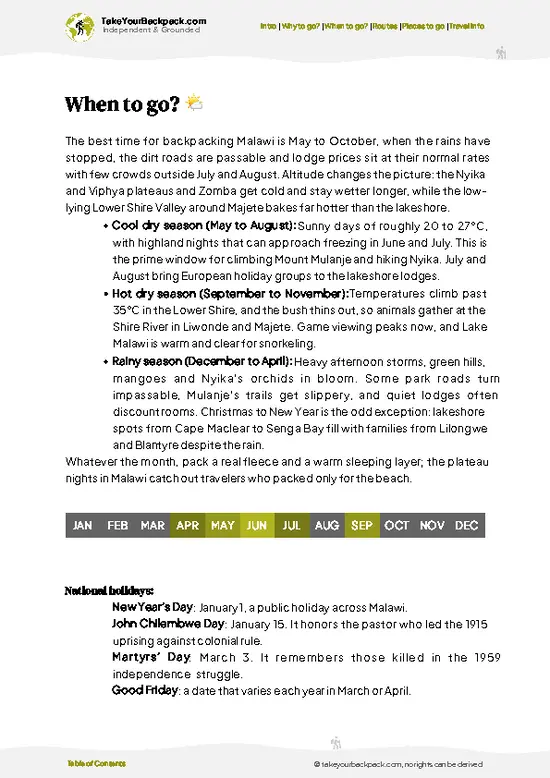
  • Weather: Liwonde’s dry season from May to October is your best bet. The skies clear, the air dries out, and the relentless heat of the wet season gives way to comfortable warmth. Expect daytime highs around 25-30°C (77-86°F), perfect for trekking and wildlife spotting without the oppressive humidity or sudden downpours.

  • Temperature: Nights can get surprisingly cool, dipping to 10-15°C (50-59°F), so pack layers. The contrast between warm days and crisp evenings sharpens your senses, making the bush sounds and scents more vivid.

  • Daylight Hours: With roughly 11 to 12 hours of daylight, you get ample time to explore without rushing. Early mornings and late afternoons are golden—literally—for game drives and photography, as the sun casts long shadows and wildlife is most active.

  • Crowds:
read more 👉

  • Weather: Liwonde’s dry season from May to October is your best bet. The skies clear, the air dries out, and the relentless heat of the wet season gives way to comfortable warmth. Expect daytime highs around 25-30°C (77-86°F), perfect for trekking and wildlife spotting without the oppressive humidity or sudden downpours.

  • Temperature: Nights can get surprisingly cool, dipping to 10-15°C (50-59°F), so pack layers. The contrast between warm days and crisp evenings sharpens your senses, making the bush sounds and scents more vivid.

  • Daylight Hours: With roughly 11 to 12 hours of daylight, you get ample time to explore without rushing. Early mornings and late afternoons are golden—literally—for game drives and photography, as the sun casts long shadows and wildlife is most active.

  • Crowds: Peak dry season draws more visitors, especially July and August. The park feels alive but not overwhelmed. If you want quieter trails, aim for May or September when the crowds thin but conditions remain excellent.

  • Seasonal Activities: Dry months open up boat safaris on the Shire River and walking safaris through the bush. The wet season (November to April) floods parts of the park, limiting access but turning the landscape lush and green—ideal only if you’re after birdwatching or fewer tourists.

  • Price Fluctuations: Expect higher rates during the dry season’s peak months. Booking ahead can snag better deals. The wet season offers lower prices but comes with trade-offs in accessibility and comfort.


Pro-tip: Time your visit for the shoulder months of May or September to enjoy near-perfect weather, manageable crowds, and better prices—giving you the full Liwonde experience without the usual trade-offs.


source: climatestotravel.comJANJanuary: fair for travelingFEBFebruary: fair for travelingMARMarch: fair for travelingAPRApril: fair for travelingMAYMay: excellent for travelingJUNJune: highly recommended for travelingJULJuly: highly recommended for travelingAUGAugust: highly recommended for travelingSEPSeptember: excellent for travelingOCTOctober: highly recommended for travelingNOVNovember: fair for travelingDECDecember: fair for traveling
when-to-go

✈️ The backpacker research shortcutMalawi Travel Guide

An offline-friendly backpacking guide with optimized travel routes, ranked highlights, transport advice, and the best areas to stay.
example page 0 from our offline Travel Guide for Malawi
example page 1 from our offline Travel Guide for Malawi
example page 2 from our offline Travel Guide for Malawi
example page 3 from our offline Travel Guide for Malawi
example page 4 from our offline Travel Guide for Malawi
example page 5 from our offline Travel Guide for Malawi
example page 6 from our offline Travel Guide for Malawi
example page 7 from our offline Travel Guide for Malawi
The digital guide (355 pages) contains:
87 highlights, ranked by travel appeal
Optimized 5, 10 & 15-day travel routes
Cities, national parks, landmarks, beaches
How to get around
Offline-friendly for travel without Wi-Fi
👉 Click to see all 30+ guide features

📅 Plan smarter in minutes, not weeks
Month by month travel advice
Festivals & national holidays
Budget expectations

🗺️ Go to the right places, skip the overrated ones
Honest pros & cons of destinations
Top hikes, parks & viewpoints
Lesser-known places most travelers miss
Clear “worth it vs skip it” guidance

🛏️ Travel smoothly without rookie mistakes
Best areas to stay
Transport systems explained simply
Common scams & safety advice
SIM cards, money & practical tips

🌍 Understand the country, not just visit it
Culture & traditions
52 Essential phrases & customs
Festivals worth planning around
Traveler-friendly historical context
Insights that make places more meaningful

📱 Built for real travel conditions
Fully downloadable PDF
Works completely offline
Optimized for phone use
Useful in remote areas & buses
Everything in one place
Save weeks of stressful planning
Get instant access to your full guide. 30‑day money-back guarantee.


By proceeding you agree to our terms.
Sent to your inbox immediately after payment • 100% Secure Checkout
Best Backpacking Travel Advisor 2025 tourism awardBest Backpacking
Travel Advisor
2025
What others say about Take Your Backpack Guides:
⭐⭐⭐⭐⭐
Fantastic, amazing amount of information!
⭐⭐⭐⭐⭐
My goodness this is amazing, it's what I've been looking for hats off too you!
⭐⭐⭐⭐⭐
I think this is absolutely BRILLIANT
⭐⭐⭐⭐
Very complete and informative. It's still missing places, but I gotta to commend you
⭐⭐⭐⭐⭐
This is truly amazing, thank you, can't wait to explore it with my kids!
⭐⭐⭐⭐⭐
Awesome resource, thank you!
⭐⭐⭐⭐⭐
This is amazing! Can't wait to explore the ones I haven't seen
⭐⭐⭐⭐
I love this! Well done, great idea.
⭐⭐⭐⭐⭐
Thanks for taking the time to make this gem!
⭐⭐⭐⭐⭐
This might be the best website I've ever seen.
⭐⭐⭐⭐⭐
Congratulations, and thank you so much for your work; it's incredibly valuable.
⭐⭐⭐⭐
In all seriousness I think you did a great job pointing out the important spots
⭐⭐⭐⭐⭐
10/10 very good
⭐⭐⭐⭐⭐
As someone who's only just starting to visit regularly this is awesome, thank you.
⭐⭐⭐⭐
Thank you very much! I'm going to visit my dad, it's going to be very useful!
⭐⭐⭐⭐⭐
This is really cool! We'll be travelling for the first time and this definitely come in handy.
⭐⭐⭐⭐⭐
You are now our minister of culture, congratulations 👨‍💼
⭐⭐⭐⭐⭐
Just wanted to tell you that this is a pearl! Going to follow your recommendations.
⭐⭐⭐⭐⭐
This is so cool. I'll definitely be using the resource for my travels soon.
⭐⭐⭐⭐⭐
This is very impressive! Good work.
⭐⭐⭐⭐⭐
This is an amazing and informative site. Very well done!

🛏️ Where to stay?Choosing the right base

Liwonde’s charm isn’t just in its wildlife but in how close you can get to it without sacrificing comfort—or your budget. For backpackers, the key is to balance proximity to Liwonde National Park with a vibe that’s both welcoming and practical.

Start with Campfire Backpackers. It’s not just a place to crash; it’s where you meet fellow travelers swapping stories under a sky so dark the Milky Way feels like a spotlight. The tents and dorms are basic but clean, and the communal kitchen means you can cook your own meals, saving cash and giving you a chance to try local ingredients. The scent of wood … read more 👉
Liwonde’s charm isn’t just in its wildlife but in how close you can get to it without sacrificing comfort—or your budget. For backpackers, the key is to balance proximity to Liwonde National Park with a vibe that’s both welcoming and practical.

Start with Campfire Backpackers. It’s not just a place to crash; it’s where you meet fellow travelers swapping stories under a sky so dark the Milky Way feels like a spotlight. The tents and dorms are basic but clean, and the communal kitchen means you can cook your own meals, saving cash and giving you a chance to try local ingredients. The scent of wood smoke and fresh earth lingers here, grounding you after dusty park drives.

If you want something a bit more structured but still affordable, Liwonde Safari Lodge offers dorms and budget rooms right on the park’s edge. The early morning light filters through acacia trees, and waking up to the distant calls of hippos is a reminder why you’re here. Booking a guided safari from the lodge is smoother than piecing it together yourself—local guides know the best spots to catch elephants or elusive leopards.

For those who want to stretch their legs after a day in the bush, Chikoko Trails Camp blends rustic camping with a touch of comfort. It’s a bit off the beaten path, so you get quiet nights and the smell of riverine forest. The camp’s layout encourages lingering—hammocks strung between trees, a fire pit that draws everyone in.

Choosing where to stay in Liwonde isn’t just about price; it’s about syncing your rhythm with the park’s pulse. The right spot turns the rough edges of travel into part of the story, making every sunset and night chorus feel earned.

🚌 Getting aroundHow to get around Liwonde

Liwonde’s rhythm is a dance between the slow pulse of nature and the sporadic beats of human hustle. It’s not a city where you’ll find strict timetables etched in stone or a grid of punctual buses humming on the dot. Instead, it moves with a laid-back, almost improvisational flow. People and vehicles appear when they’re ready, not when a clock demands it. This means your travel plans here are less about rigid schedules and more about reading the room—or in this case, the road. You’ll find that patience and flexibility are your best allies, and understanding the trade-offs between time, money, and comfort will turn you from a frustrated tourist into a savvy local in no time.


  • Walking: The most reliable and cost-free way to get around Liwonde, especially within the town center and nearby
read more 👉
Liwonde’s rhythm is a dance between the slow pulse of nature and the sporadic beats of human hustle. It’s not a city where you’ll find strict timetables etched in stone or a grid of punctual buses humming on the dot. Instead, it moves with a laid-back, almost improvisational flow. People and vehicles appear when they’re ready, not when a clock demands it. This means your travel plans here are less about rigid schedules and more about reading the room—or in this case, the road. You’ll find that patience and flexibility are your best allies, and understanding the trade-offs between time, money, and comfort will turn you from a frustrated tourist into a savvy local in no time.


  • Walking: The most reliable and cost-free way to get around Liwonde, especially within the town center and nearby markets. It’s slow but gives you unmatched access to the city’s textures and sounds. Expect to spend 10-30 minutes between key spots. No schedules, no fares, just your own pace and curiosity.


  • Local Minibus Taxis: These are the backbone of budget travel here. They run roughly from 6 AM to 7 PM, though don’t expect strict adherence to these times. Fares hover around 200-500 Malawian kwacha depending on distance. They’re cheap and relatively quick but can get crowded and bumpy. Comfort is minimal, but the speed gain over walking is significant if you catch one early or mid-day.


  • Bicycle Rentals: A sweet middle ground between walking and motorized transport. Renting a bike costs about 1,500-2,000 kwacha per day. It gives you freedom to explore beyond the town without the noise and congestion of traffic. You control your speed and stops, but be ready for some sweat and the occasional rough patch of road.


  • Motorcycle Taxis (Boda Bodas): These are the fastest way to dart through Liwonde’s streets, especially when time is tight. They operate from dawn till dusk, with fares starting around 500 kwacha for short trips. Comfort is minimal—think open air and wind—but they’re unbeatable for quick hops. Negotiate fares upfront to avoid surprises.


  • Private Car Hire: If you’re willing to spend more for comfort and flexibility, private cars can be arranged through local lodges or tour operators. Prices start at roughly 15,000 kwacha per day. This option saves time and spares you the unpredictability of public transport, but it’s a clear trade-off: you pay a premium for control and ease.

👛 Costs (as of 28 February 2026)What things cost and how to budget

Backpacking in Liwonde, Malawi, presents a clear trade-off map between cost and comfort, with prices leaning toward the budget-friendly but varying by season and choice of activities.
  • Dorm Accommodation (High Season): Expect to pay around $10 to $15 per night. High season drives prices up due to demand, especially near Liwonde National Park, where lodges and hostels cater to safari-goers.
  • Dorm Accommodation (Off-Season): Prices drop to about $6 to $10 per night. Fewer tourists mean better deals, but some places may close or reduce services.
  • Meals: Local eateries offer meals for $2 to $5. Street food and market stalls are the cheapest, while small restaurants serving traditional Malawian dishes hover around the higher end of this range.
  • Local Transport: Minibus taxis and shared rides cost
read more 👉
Backpacking in Liwonde, Malawi, presents a clear trade-off map between cost and comfort, with prices leaning toward the budget-friendly but varying by season and choice of activities.
  • Dorm Accommodation (High Season): Expect to pay around $10 to $15 per night. High season drives prices up due to demand, especially near Liwonde National Park, where lodges and hostels cater to safari-goers.
  • Dorm Accommodation (Off-Season): Prices drop to about $6 to $10 per night. Fewer tourists mean better deals, but some places may close or reduce services.
  • Meals: Local eateries offer meals for $2 to $5. Street food and market stalls are the cheapest, while small restaurants serving traditional Malawian dishes hover around the higher end of this range.
  • Local Transport: Minibus taxis and shared rides cost roughly $0.50 to $1 per trip within town. They’re frequent but can be crowded and less predictable.
  • City Transport Pass: Liwonde doesn’t have a formal city transport pass system. Budget for individual fares or occasional private taxi hires, which can be $3 to $5 depending on distance and negotiation.
  • Basic Activities/Entry Fees: Entry to Liwonde National Park is about $20 to $25 per day for independent travelers. Guided walks or boat safaris add $10 to $30 depending on the activity and group size.
  • Miscellaneous Expenses: This covers water, snacks, tips, and small purchases, typically around $2 to $5 daily. Internet access and phone credit are affordable but can add up if used heavily.

In total, a backpacker in Liwonde can expect to spend between $20 and $45 per day, depending on season, accommodation choice, and activity level. This range balances basic comfort with access to the area’s key attractions, making it a manageable and rewarding destination for independent travelers.


source: malawitourism.com
⚠️ Prices can change and everyone travels differently, so take this as a rough guide. Hope it helps you plan your adventure!

🚌 Day tripsExploring the surroundings

Liwonde, Malawi, is a backpacker’s dream base, offering a blend of adventure and cultural immersion. With its vibrant local life and proximity to stunning natural landscapes, you can easily explore the best of the region without the hassle of moving your gear around.

Liwuzi River Canoe Trip
Paddle along the Liwuzi River, where the gentle lapping of water and the calls of birds create a serene soundtrack. This trip typically takes about three hours, allowing you to soak in the lush banks and spot hippos lounging in the shallows. Expect to pay around $15 for a canoe rental, which includes a guide who knows the river like the back of their hand. Early mornings are best, as the light filters through the trees, casting a golden glow on the water. A common mistake is underestimating the sun; … read more 👉
Liwonde, Malawi, is a backpacker’s dream base, offering a blend of adventure and cultural immersion. With its vibrant local life and proximity to stunning natural landscapes, you can easily explore the best of the region without the hassle of moving your gear around.

Liwuzi River Canoe Trip
Paddle along the Liwuzi River, where the gentle lapping of water and the calls of birds create a serene soundtrack. This trip typically takes about three hours, allowing you to soak in the lush banks and spot hippos lounging in the shallows. Expect to pay around $15 for a canoe rental, which includes a guide who knows the river like the back of their hand. Early mornings are best, as the light filters through the trees, casting a golden glow on the water. A common mistake is underestimating the sun; bring sunscreen and a hat to avoid a painful burn. 👉 Explore Liwonde

Chimphanga Village Visit
Immerse yourself in local culture with a visit to Chimphanga Village, just a 30-minute drive from Liwonde. Here, you’ll witness traditional Malawian life, from cooking to crafts. The experience costs about $10, which supports the community directly. Aim for a weekday visit when villagers are more likely to be engaged in daily activities. The vibrant colors of the mud huts and the scent of wood smoke create an atmosphere that feels alive. First-timers often miss the chance to interact; don’t be shy—ask questions and share stories. 👉 Explore Liwonde

Liwonde National Park Safari
A safari in Liwonde National Park is a must. It’s a short 20-minute drive to the park entrance, where you can join a guided game drive for around $30. The best time to go is during the dry season (May to October), when animals gather around water sources. The thrill of spotting elephants and crocodiles is palpable, and the golden hour light makes for stunning photos. Many newcomers think they can do it alone; however, a guide enhances the experience with insights about the wildlife and ecosystem. 👉 Explore Liwonde

Malombe Lake Fishing Expedition
Fishing on Lake Malombe offers a peaceful escape. It’s about a 45-minute trip from Liwonde, and you can rent a boat for around $20. The best time is early morning when the mist hangs over the water, creating an ethereal scene. You might catch tilapia or catfish, but even if you don’t, the tranquility is worth it. A common pitfall is forgetting to bring snacks and water; the sun can be relentless, and you’ll want to stay hydrated while soaking in the views. 👉 Explore Liwonde
Want to know what more Malawi offers?
The Malawi Travel Guide describes 87 highlights, from cities to national parks, from beaches to hikes

Get the Travel Guide -

🍲 FoodWhat to Eat & Drink

Liwonde’s food scene is a playground for your taste buds if you’re ready to dive into Malawi’s heart through its flavors. The star on your plate is undoubtedly nsima, a thick, creamy maize porridge that’s the backbone of every meal. It’s not just food; it’s a cultural anchor, usually paired with chambo—a freshwater fish that’s grilled or fried to smoky perfection—or a hearty vegetable relish bursting with local greens and peanuts. This isn’t about fancy plating; it’s about bold, honest flavors that stick with you.

Backpackers will find themselves drawn to the markets and street stalls, where the air is thick with the scent of roasting fish and simmering stews. These spots are social hubs, where locals gather and stories flow as freely as the malawian beer—a crisp, refreshing brew that pairs … read more 👉
Liwonde’s food scene is a playground for your taste buds if you’re ready to dive into Malawi’s heart through its flavors. The star on your plate is undoubtedly nsima, a thick, creamy maize porridge that’s the backbone of every meal. It’s not just food; it’s a cultural anchor, usually paired with chambo—a freshwater fish that’s grilled or fried to smoky perfection—or a hearty vegetable relish bursting with local greens and peanuts. This isn’t about fancy plating; it’s about bold, honest flavors that stick with you.

Backpackers will find themselves drawn to the markets and street stalls, where the air is thick with the scent of roasting fish and simmering stews. These spots are social hubs, where locals gather and stories flow as freely as the malawian beer—a crisp, refreshing brew that pairs perfectly with the heat of the day. Don’t expect formal menus; here, the experience is in the exchange, the shared smiles, and the communal plates.

Eating in Liwonde is casual but respectful. It’s common to eat with your right hand, scooping nsima and savoring every bite. Sharing food is a sign of friendship, so don’t be shy to join in. The rhythm of meals here is unhurried, a chance to slow down and sync with local life. This is food that feeds more than hunger—it feeds connection.

🛡️ SafetySafety Tips and Common Scams in Liwonde

Liwonde is generally a calm place, where the biggest safety challenge is staying alert to everyday nuisances rather than serious crime. The town’s main streets and markets are safe during the day, but like anywhere, keep an eye on your belongings—pickpockets aren’t a major problem, but opportunists do exist, especially in crowded spots. Solo travelers should avoid wandering too far off the beaten path after dark; street lighting is limited, and unfamiliar alleys can feel isolating. Stick to well-traveled routes and consider joining a group or using a trusted local guide for evening outings.

Scams here are subtle rather than aggressive. You might encounter inflated prices if you don’t negotiate or if you appear unsure—haggling is expected, so approach it confidently. Vendors sometimes offer … read more 👉
Liwonde is generally a calm place, where the biggest safety challenge is staying alert to everyday nuisances rather than serious crime. The town’s main streets and markets are safe during the day, but like anywhere, keep an eye on your belongings—pickpockets aren’t a major problem, but opportunists do exist, especially in crowded spots. Solo travelers should avoid wandering too far off the beaten path after dark; street lighting is limited, and unfamiliar alleys can feel isolating. Stick to well-traveled routes and consider joining a group or using a trusted local guide for evening outings.

Scams here are subtle rather than aggressive. You might encounter inflated prices if you don’t negotiate or if you appear unsure—haggling is expected, so approach it confidently. Vendors sometimes offer “special” deals that vanish once you commit, so keep your wits about you. Overall, Liwonde rewards travelers who move with quiet confidence and respect local rhythms. Blend in, stay aware, and you’ll find the city’s pace easy to navigate without drama.

Other Malawian cities near Liwonde

Explore more nearby:

  • Machinga—District headquarters, Liwonde proximity, rural market, eastern hills| 13 km away
  • Balaka—railway junction, roadside markets, rural surroundings, transit stop| 31 km away
  • Mangochi—lakeshore town, fishing villages, ferry port, mosque skyline| 65 km away

💡 Not sure where to go next?
Create a personalized itinerary for Malawi including Liwonde and the places that fit your trip.

Generate my itinerary

👉 Discover all cities

Or checkout all Malawi has to offer (think cities, towns, villages, national parks, hikes, beaches, festivals)
Country photo of Malawi

We 💚 feedbackFinal thoughts on visiting Liwonde

Liwonde is a place where the air hums with life, especially at dawn when the sun spills golden light over the Shire River. You’ll hear the distant calls of hippos and the rustle of elephants in the brush. The best surprise? The local guides—they’re not just knowledgeable; they’re passionate storytellers who make every safari feel personal. Just a heads-up: the heat can be relentless, so hydrate and take breaks. Embrace the slow pace; it’s part of the magic here.

✍️ Help improve this page!
The information on this page is based on in-depth research, insights shared by experienced travelers, and feedback from the local travel community in Malawi. While every effort is made to keep the information accurate and current, conditions can change — so if you spot anything incorrect or outdated, please get in touch.


🙋‍♂️ Give feedback

👋 Meet the founderWho’s Behind Take Your Backpack?

Johan, backpacker and founder of TakeYourBackpackHi, I’m Johan (Netherlands 🇳🇱), the creator of TakeYourBackpack. Over the past decade, I’ve backpacked through 80+ countries across six continents, gaining extensive experience with independent travel, long-term trips, and overland routes.

This site is built on a combination of firsthand travel experience and carefully curated insights from other backpackers. Many guides are based on places I’ve personally visited, while others bring together tips, observations, and practical advice shared by trusted travelers I’ve met along the way.

The goal is to provide realistic, experience-driven guidance — not generic itineraries — so you can explore destinations with better context, clearer expectations, and more confidence.

Get full Malawi guide •
Instant download • 87 highlights • Full Offline guide