×

Malawi🇲🇼 | citiesMulanjeMountain base, tea plantations, hiking gateway, cool streams | things to do and best time to go

Explore NkhotakotaExplore Balaka

Backpacking in Mulanje
🏆 Top pickcity ranked #3
By Johan Kruseman 🇳🇱 | Updated June 10, 2026

Everyone comes to Mulanje for the mountain—Chambe’s hulking granite face, the promise of mist and altitude—but the real secret is how the town itself shapes your experience. Mulanje sits in Malawi’s deep south, a few hours’ ride from Blantyre, and it’s less a destination than a launchpad: a place where red-dust roads meet the green foothills, and the air smells faintly of tea and woodsmoke. The town is practical, not pretty—think a handful of shops, a market, a couple of guesthouses, and the constant shuffle of hikers prepping for the massif. Don’t expect a lively café scene or nightlife; evenings are slow, with the best conversations happening over cheap rice and beans at your hostel. It’s easy to reach by minibus, but you’ll need to walk or grab a bike-taxi to get anywhere interesting. Compared to Blantyre, Mulanje is quieter, more relaxed, and far more about the landscape than the town itself. Costs are low, safety is decent if you keep your wits, and you’ll meet other travelers—just not in droves. This is a basecamp, not a destination, and that’s exactly its charm.

Discover everything you want to know in the 📖 Malawi Travel Guide.


Get your Malawi guide
87 ranked highlights, routes & tips, works offline (355 pages)
Loading the map 🌍
CLICK TO FILTER
cities
towns
villages
landmarks
national parks
hikes
beaches
attractions
festivals
regions
SHOW COUNTRY’S BESTSHOW ALL

✨ Why go?
Ranked #3 city in Malawi
Why Mulanje should be on your travel list

Backpackers flock to Mulanje for its strategic position as a gateway to hiking adventures and cultural experiences. The towering Mulanje Mountain looms nearby, offering trails that range from challenging to accessible, making it a haven for both seasoned trekkers and casual walkers. The town itself is a friendly hub, where small-scale hostels and guesthouses provide a cozy base. You’ll find local food stalls serving up spicy nsima and fresh vegetables, filling the air with tantalizing aromas that invite you to linger.

The streets are walkable, encouraging spontaneous conversations with fellow travelers and locals alike. This isn’t a place for wild nightlife; instead, it’s perfect for slow travelers and solo adventurers looking to soak in the atmosphere. Many choose to stay a few days, soaking … read more 👉
Backpackers flock to Mulanje for its strategic position as a gateway to hiking adventures and cultural experiences. The towering Mulanje Mountain looms nearby, offering trails that range from challenging to accessible, making it a haven for both seasoned trekkers and casual walkers. The town itself is a friendly hub, where small-scale hostels and guesthouses provide a cozy base. You’ll find local food stalls serving up spicy nsima and fresh vegetables, filling the air with tantalizing aromas that invite you to linger.

The streets are walkable, encouraging spontaneous conversations with fellow travelers and locals alike. This isn’t a place for wild nightlife; instead, it’s perfect for slow travelers and solo adventurers looking to soak in the atmosphere. Many choose to stay a few days, soaking up the community vibe and exploring nearby cultural sites. If you’re seeking a blend of nature and authenticity, Mulanje is more than a stopover; it’s a chance to connect deeply with Malawi’s heart.
Want to include Mulanje in your Malawi route?
Create a personalized Malawi itinerary that includes Mulanje and the places that fit your trip — based on your travel style, budget, and available time. Get your route in seconds.

Generate my trip

💡 HighlightsEssential experiences to have while visiting Mulanje

  • Lujeri Tea Estate — One of the most accessible and scenic tea estates at the foot of the Mulanje Massif; offers plantation walks, a working tea factory you can observe from the outside, great birding along estate tracks, and simple estate accommodation that makes a nice base before heading into the mountains.
  • Likhubula Falls — A dramatic waterfall flowing off the Mulanje escarpment within easy reach of town; popular for short walks, photos and picnics, with natural pools and sweeping views of the massif that give a real sense of why people come to Mulanje.
  • Mulanje Mountain Conservation Trust (MMCT) Visitor Centre — The on-the-ground conservation and trekking hub for the massif located in Mulanje town; the centre issues maps and permits, arranges local guides and porters, and has straightforward
read more 👉
  • Lujeri Tea Estate — One of the most accessible and scenic tea estates at the foot of the Mulanje Massif; offers plantation walks, a working tea factory you can observe from the outside, great birding along estate tracks, and simple estate accommodation that makes a nice base before heading into the mountains.
  • Likhubula Falls — A dramatic waterfall flowing off the Mulanje escarpment within easy reach of town; popular for short walks, photos and picnics, with natural pools and sweeping views of the massif that give a real sense of why people come to Mulanje.
  • Mulanje Mountain Conservation Trust (MMCT) Visitor Centre — The on-the-ground conservation and trekking hub for the massif located in Mulanje town; the centre issues maps and permits, arranges local guides and porters, and has straightforward info and local exhibits about the mountain’s ecology and communities.
  • Mulanje Central Market — Bustling, colourful daily market where locals sell fresh produce, tea leaf bundles, wood carvings, baskets and street food; the best place in town to feel the local rhythm, sample Malawian snacks and pick up affordable souvenirs made by nearby villages.
A few real, visitable highlights just outside town that make perfect day trips are the Mulanje Massif hikes (Chambe Plateau and Sapitwa routes), the nearby Satemwa Tea Estate for a formal tea tour, and the wider Mulanje foothills and valleys for short guided walks and rural village visits.
Spotted a mistake or missing something? Contact us.

🏘️ NeighborhoodsNeighborhood guide to Mulanje

Mulanje is a captivating blend of lush landscapes and vibrant local life, perfect for backpackers seeking both adventure and authenticity. Here’s how to navigate its neighborhoods:

Mulanje Town
This is the heartbeat of the area. You’ll find bustling markets, local eateries, and a friendly vibe. It’s walkable, making it easy to explore on foot. Prices are reasonable, with budget accommodations available. The nightlife is low-key, perfect for unwinding after a day of hiking. Ideal for short stays, you can easily access transport to the mountains.

Chitakale
Just a stone’s throw from Mulanje Town, Chitakale offers a quieter atmosphere. It’s less touristy, giving you a more local experience. The cost of living is slightly lower here, with homestays and guesthouses that feel like home. Walkability … read more 👉
Mulanje is a captivating blend of lush landscapes and vibrant local life, perfect for backpackers seeking both adventure and authenticity. Here’s how to navigate its neighborhoods:

Mulanje Town
This is the heartbeat of the area. You’ll find bustling markets, local eateries, and a friendly vibe. It’s walkable, making it easy to explore on foot. Prices are reasonable, with budget accommodations available. The nightlife is low-key, perfect for unwinding after a day of hiking. Ideal for short stays, you can easily access transport to the mountains.

Chitakale
Just a stone’s throw from Mulanje Town, Chitakale offers a quieter atmosphere. It’s less touristy, giving you a more local experience. The cost of living is slightly lower here, with homestays and guesthouses that feel like home. Walkability is decent, though you might want to grab a bike for longer distances. This area suits longer stays, especially if you want to immerse yourself in the community.

Thuchila
A bit further out, Thuchila is where nature meets serenity. It’s less developed, so expect fewer amenities but stunning views of the mountains. The vibe is peaceful, perfect for those looking to escape the hustle. Transport options are limited, so plan ahead. This area is best for longer stays, especially if you’re keen on trekking and soaking in the natural beauty.

Each neighborhood offers a unique slice of Mulanje, ensuring you find the right fit for your backpacking adventure.

⌛️ 1 dayHow to make the most of one day

Mulanje, Malawi, is a town that hums with life, cradled by the majestic Mulanje Mountain. The air is thick with the scent of fresh earth and the chatter of locals. This is a place where the rhythm of daily life dances with the backdrop of stunning landscapes, making it a perfect spot for a day of exploration.

Start your morning with a visit to the bustling Mulanje Market. The vibrant stalls overflow with fresh produce, spices, and handmade crafts. The colors are vivid, and the sounds of bargaining fill the air. Grab a local breakfast of nsima (a staple maize dish) paired with a spicy relish. It’s hearty and will fuel your adventures ahead.

After breakfast, head to the nearby Mulanje Mountain Forest Reserve. The trails here are less trodden, offering a chance to connect with nature away from … read more 👉
Mulanje, Malawi, is a town that hums with life, cradled by the majestic Mulanje Mountain. The air is thick with the scent of fresh earth and the chatter of locals. This is a place where the rhythm of daily life dances with the backdrop of stunning landscapes, making it a perfect spot for a day of exploration.

Start your morning with a visit to the bustling Mulanje Market. The vibrant stalls overflow with fresh produce, spices, and handmade crafts. The colors are vivid, and the sounds of bargaining fill the air. Grab a local breakfast of nsima (a staple maize dish) paired with a spicy relish. It’s hearty and will fuel your adventures ahead.

After breakfast, head to the nearby Mulanje Mountain Forest Reserve. The trails here are less trodden, offering a chance to connect with nature away from the usual tourist paths. The cool, crisp air invigorates your senses as you hike through towering eucalyptus trees. Keep an eye out for the rare Mulanje cedar, a tree that’s as unique as the experience itself.

In the afternoon, make your way to the quaint village of Likhubula. This area is often overlooked but offers a glimpse into local life. Visit a traditional tea plantation, where you can learn about the tea-making process and sip on some of the freshest brews you’ll ever taste. The gentle breeze carries the sweet aroma of tea leaves, making this a serene spot to unwind.

As evening approaches, return to Mulanje town and find a local eatery. Try some grilled fish or chicken, seasoned with local spices. The atmosphere is warm, filled with laughter and the sounds of conversation.

End your day with a stroll through the town, where the sunset casts a golden hue over the mountains. The day may have been packed, but the connections you’ve made and the sights you’ve seen will linger long after you leave.
Turn your Mulanje visit into an Malawi adventure
Build a complete Malawi route with Mulanje, hidden gems, must-see destinations, and realistic travel times included.

Generate my trip

🌤️ When to go?When to go for the best experience


  • Topic: Weather – The dry season from May to October is your best bet. Expect clear skies and minimal rain, which means trails stay firm and rivers don’t swell unexpectedly. The wet season, November to April, brings heavy rains that can turn paths into slippery mudslides and obscure views with mist.

  • Topic: Temperature – Daytime highs hover around 20-25°C (68-77°F) during the dry months, perfect for hiking without overheating. Nights can dip to 5-10°C (41-50°F), so pack layers. The wet season is warmer but muggy, pushing highs to 28-30°C (82-86°F), which can sap your energy on the trail.

  • Topic: Daylight Hours – Mulanje enjoys roughly 11 to 12 hours of daylight year-round, but the dry season’s clearer skies make those hours feel longer and more usable for trekking and exploring.

  • Topic:
read more 👉

  • Topic: Weather – The dry season from May to October is your best bet. Expect clear skies and minimal rain, which means trails stay firm and rivers don’t swell unexpectedly. The wet season, November to April, brings heavy rains that can turn paths into slippery mudslides and obscure views with mist.

  • Topic: Temperature – Daytime highs hover around 20-25°C (68-77°F) during the dry months, perfect for hiking without overheating. Nights can dip to 5-10°C (41-50°F), so pack layers. The wet season is warmer but muggy, pushing highs to 28-30°C (82-86°F), which can sap your energy on the trail.

  • Topic: Daylight Hours – Mulanje enjoys roughly 11 to 12 hours of daylight year-round, but the dry season’s clearer skies make those hours feel longer and more usable for trekking and exploring.

  • Topic: Crowds – Peak trekking season aligns with the dry months, so expect more hikers on popular routes. However, Mulanje’s remote vibe means crowds never feel overwhelming—just plan ahead for accommodation.

  • Topic: Seasonal Activities – Dry season opens up opportunities for summit climbs and exploring waterfalls without the risk of flash floods. The wet season is better for birdwatching and lush, green landscapes but less reliable for serious hiking.

  • Topic: Price Fluctuations – Accommodation and guide fees tend to rise during the dry season when demand peaks. Booking early can lock in better rates, while the wet season offers bargains but with trade-offs in trail conditions.


Pro-tip: Aim for late May or early June—trails are dry, temperatures are mild, and the landscape still holds a touch of green from the recent rains, giving you the best of both worlds.


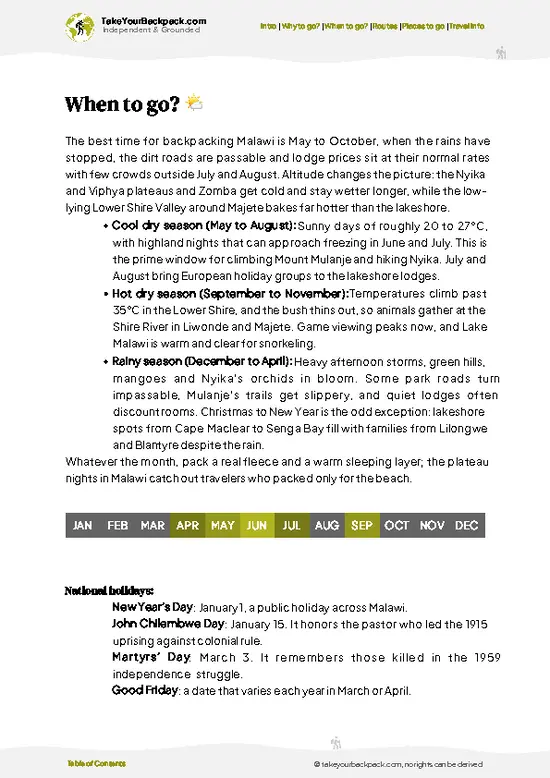
source: climatestotravel.comJANJanuary: fair for travelingFEBFebruary: fair for travelingMARMarch: fair for travelingAPRApril: fair for travelingMAYMay: highly recommended for travelingJUNJune: excellent for travelingJULJuly: excellent for travelingAUGAugust: excellent for travelingSEPSeptember: excellent for travelingOCTOctober: excellent for travelingNOVNovember: fair for travelingDECDecember: fair for traveling
when-to-go

✈️ The backpacker research shortcutMalawi Travel Guide

An offline-friendly backpacking guide with optimized travel routes, ranked highlights, transport advice, and the best areas to stay.
example page 0 from our offline Travel Guide for Malawi
example page 1 from our offline Travel Guide for Malawi
example page 2 from our offline Travel Guide for Malawi
example page 3 from our offline Travel Guide for Malawi
example page 4 from our offline Travel Guide for Malawi
example page 5 from our offline Travel Guide for Malawi
example page 6 from our offline Travel Guide for Malawi
example page 7 from our offline Travel Guide for Malawi
The digital guide (355 pages) contains:
87 highlights, ranked by travel appeal
Optimized 5, 10 & 15-day travel routes
Cities, national parks, landmarks, beaches
How to get around
Offline-friendly for travel without Wi-Fi
👉 Click to see all 30+ guide features

📅 Plan smarter in minutes, not weeks
Month by month travel advice
Festivals & national holidays
Budget expectations

🗺️ Go to the right places, skip the overrated ones
Honest pros & cons of destinations
Top hikes, parks & viewpoints
Lesser-known places most travelers miss
Clear “worth it vs skip it” guidance

🛏️ Travel smoothly without rookie mistakes
Best areas to stay
Transport systems explained simply
Common scams & safety advice
SIM cards, money & practical tips

🌍 Understand the country, not just visit it
Culture & traditions
52 Essential phrases & customs
Festivals worth planning around
Traveler-friendly historical context
Insights that make places more meaningful

📱 Built for real travel conditions
Fully downloadable PDF
Works completely offline
Optimized for phone use
Useful in remote areas & buses
Everything in one place
Save weeks of stressful planning
Get instant access to your full guide. 30‑day money-back guarantee.


By proceeding you agree to our terms.
Sent to your inbox immediately after payment • 100% Secure Checkout
Best Backpacking Travel Advisor 2025 tourism awardBest Backpacking
Travel Advisor
2025
What others say about Take Your Backpack Guides:
⭐⭐⭐⭐⭐
Fantastic, amazing amount of information!
⭐⭐⭐⭐⭐
My goodness this is amazing, it's what I've been looking for hats off too you!
⭐⭐⭐⭐⭐
I think this is absolutely BRILLIANT
⭐⭐⭐⭐
Very complete and informative. It's still missing places, but I gotta to commend you
⭐⭐⭐⭐⭐
This is truly amazing, thank you, can't wait to explore it with my kids!
⭐⭐⭐⭐⭐
Awesome resource, thank you!
⭐⭐⭐⭐⭐
This is amazing! Can't wait to explore the ones I haven't seen
⭐⭐⭐⭐
I love this! Well done, great idea.
⭐⭐⭐⭐⭐
Thanks for taking the time to make this gem!
⭐⭐⭐⭐⭐
This might be the best website I've ever seen.
⭐⭐⭐⭐⭐
Congratulations, and thank you so much for your work; it's incredibly valuable.
⭐⭐⭐⭐
In all seriousness I think you did a great job pointing out the important spots
⭐⭐⭐⭐⭐
10/10 very good
⭐⭐⭐⭐⭐
As someone who's only just starting to visit regularly this is awesome, thank you.
⭐⭐⭐⭐
Thank you very much! I'm going to visit my dad, it's going to be very useful!
⭐⭐⭐⭐⭐
This is really cool! We'll be travelling for the first time and this definitely come in handy.
⭐⭐⭐⭐⭐
You are now our minister of culture, congratulations 👨‍💼
⭐⭐⭐⭐⭐
Just wanted to tell you that this is a pearl! Going to follow your recommendations.
⭐⭐⭐⭐⭐
This is so cool. I'll definitely be using the resource for my travels soon.
⭐⭐⭐⭐⭐
This is very impressive! Good work.
⭐⭐⭐⭐⭐
This is an amazing and informative site. Very well done!

🛏️ Where to stay?Choosing the right base

Mulanje’s heart for backpackers beats strongest in the town center, where the pulse of daily life hums just right. This area is your launchpad—safe enough to wander after dark, with a steady flow of fellow travelers and locals who know the mountain trails like the back of their hand. The streets here carry the scent of fresh maize and wood smoke, grounding you in the rhythm of Malawian small-town life.

Why settle here? Because it’s where you’ll find the best mix of budget-friendly guesthouses and hostels that cater to solo adventurers. These spots aren’t just places to crash; they’re hubs for … read more 👉
Mulanje’s heart for backpackers beats strongest in the town center, where the pulse of daily life hums just right. This area is your launchpad—safe enough to wander after dark, with a steady flow of fellow travelers and locals who know the mountain trails like the back of their hand. The streets here carry the scent of fresh maize and wood smoke, grounding you in the rhythm of Malawian small-town life.

Why settle here? Because it’s where you’ll find the best mix of budget-friendly guesthouses and hostels that cater to solo adventurers. These spots aren’t just places to crash; they’re hubs for swapping stories, sharing tips, and finding hiking partners. The vibe is relaxed but lively, with a communal spirit that makes the hard climb up Mulanje Massif feel like a shared quest rather than a solo grind.

Contrast this with the outskirts or more residential neighborhoods, where options thin out and the social scene dries up. You’ll miss the easy access to local markets, eateries, and the informal networks that make your stay richer. Staying central means you’re steps away from the town’s modest but essential amenities, and every morning starts with the soft glow of sunrise hitting the mountain’s granite face—an unbeatable wake-up call for any backpacker.

🚌 Getting aroundHow to get from A to B

Mulanje moves at its own pace, a rhythm shaped by the mountain’s shadow and the slow churn of daily life. It’s not a place where you’ll find strict timetables or polished transit hubs. Instead, expect a blend of informal hustle and patient waiting, where the scent of wood smoke mingles with the earthy dampness of the forest, and the sun’s angle dictates when the town wakes and winds down. The flow here is intuitive—locals know when the minibuses will fill up, when the market buzz peaks, and when the last ride out of town will rattle down the dirt roads. For a budget traveler, understanding this ebb and flow is your ticket to moving smart, not just moving fast.


  • Walking: The heart of Mulanje is compact enough to explore on foot. Streets are uneven and dust kicks up in the dry season, so
read more 👉
Mulanje moves at its own pace, a rhythm shaped by the mountain’s shadow and the slow churn of daily life. It’s not a place where you’ll find strict timetables or polished transit hubs. Instead, expect a blend of informal hustle and patient waiting, where the scent of wood smoke mingles with the earthy dampness of the forest, and the sun’s angle dictates when the town wakes and winds down. The flow here is intuitive—locals know when the minibuses will fill up, when the market buzz peaks, and when the last ride out of town will rattle down the dirt roads. For a budget traveler, understanding this ebb and flow is your ticket to moving smart, not just moving fast.


  • Walking: The heart of Mulanje is compact enough to explore on foot. Streets are uneven and dust kicks up in the dry season, so sturdy shoes are a must. Walking lets you soak in the smells of fresh maize roasting and the chatter from open-air markets. It’s free, flexible, and the best way to catch the town’s pulse.


  • Local Minibuses (Buses or Matolas): These are the lifeblood of Mulanje’s transit—cheap (around 100-200 MWK per ride) and frequent during daylight hours, roughly from 6 AM to 6 PM. They don’t run on a strict schedule; instead, they leave when full, so timing your departure means hanging out where locals gather—usually near the main market or bus stand. Expect a bumpy ride on narrow, potholed roads, but it’s the fastest way to reach nearby villages or the base of Mulanje Mountain.


  • Bicycle Taxis (Zebras): For short hops around town or to nearby spots, zebras offer a quick, affordable option (about 200-400 MWK depending on distance). They’re nimble on the narrow paths and can weave through traffic jams that minibuses can’t escape. Negotiate the fare upfront—drivers expect it—and hold on tight; the ride is often lively and open to the elements.


  • Shared Taxis: For longer distances, especially trips to Blantyre or Limbe, shared taxis provide a more comfortable and faster alternative to minibuses. They leave once full, usually between 7 AM and 5 PM, and cost around 1,500-2,000 MWK. The seats are tighter but less jarring than minibuses, and the drivers tend to stick to main roads, making the journey smoother.


  • Private Car Hire: If your budget allows, hiring a private car or arranging a ride through your lodge can save hours and hassle. This is the only option if you want to start early for mountain hikes or return late after sunset, as public transit shuts down early and walking in the dark isn’t safe. Prices vary widely, so negotiate firmly and confirm the vehicle’s condition before setting off.

👛 Costs (as of 28 February 2026)Travel costs and budget guide for Mulanje

Backpacking in Mulanje, Malawi, offers a raw, earthy experience where your money stretches but the environment demands respect—and a bit of savvy planning.
  • Dorm Accommodation: Expect to pay around $5 to $10 per night for a bed in a basic guesthouse dorm. These places are simple, often with shared bathrooms and limited hot water, but they put you close to the mountain trails and local life.
  • Meals: Local eateries serve hearty meals for $2 to $5. Think nshima (a maize staple) with vegetables or fish, filling and straightforward. Western-style meals or snacks at lodges can push closer to $7 or $8, but sticking to street food keeps your budget lean and your taste buds grounded in Malawi’s flavors.
  • Local Transport: Minibuses and shared taxis are the norm, costing about $0.50 to $1 per short trip within
read more 👉
Backpacking in Mulanje, Malawi, offers a raw, earthy experience where your money stretches but the environment demands respect—and a bit of savvy planning.
  • Dorm Accommodation: Expect to pay around $5 to $10 per night for a bed in a basic guesthouse dorm. These places are simple, often with shared bathrooms and limited hot water, but they put you close to the mountain trails and local life.
  • Meals: Local eateries serve hearty meals for $2 to $5. Think nshima (a maize staple) with vegetables or fish, filling and straightforward. Western-style meals or snacks at lodges can push closer to $7 or $8, but sticking to street food keeps your budget lean and your taste buds grounded in Malawi’s flavors.
  • Local Transport: Minibuses and shared taxis are the norm, costing about $0.50 to $1 per short trip within town or nearby villages. For longer hauls, like getting to trailheads or nearby towns, budget $3 to $5. Walking is often the best way to soak in the atmosphere and save cash.
  • Basic Activities/Entry Fees: Entry to Mulanje Mountain Forest Reserve is roughly $5 to $10. Hiring a local guide, which is highly recommended for safety and insight, can cost around $15 to $20 per day, often split if you join a group. This fee supports conservation and local livelihoods.
  • Miscellaneous Expenses: Bottled water, snacks, and occasional small tips add up to about $2 to $4 daily. Internet access is patchy and usually costs extra at lodges or cafes, so plan accordingly if you need to stay connected.

Altogether, you’re looking at a daily budget between $15 and $35. This range covers the essentials without cutting corners on safety or experience. Mulanje’s rugged charm rewards those who come prepared to embrace its pace and simplicity.


source: malawitourism.com
⚠️ Prices can change and everyone travels differently, so take this as a rough guide. Hope it helps you plan your adventure!

🚌 Day tripsShort trips worth adding

Mulanje is a backpacker’s dream, offering a vibrant base for unforgettable day trips into Malawi’s stunning landscapes. The town itself buzzes with life, from the scent of street food wafting through the air to the sound of laughter echoing off the mountains. Here are some must-do day trips that will elevate your experience.

Mulanje Mountain Hike
This is the crown jewel of the area. A day hike up to the plateau rewards you with breathtaking views and a chance to immerse yourself in the local flora and fauna. The trek takes about 6-8 hours round trip, depending on your pace and how often you stop to soak in the scenery. Expect to pay around $10 for a guide, which is essential for safety and navigation. The best time to go is during the dry season, from May to September, when the trails are … read more 👉
Mulanje is a backpacker’s dream, offering a vibrant base for unforgettable day trips into Malawi’s stunning landscapes. The town itself buzzes with life, from the scent of street food wafting through the air to the sound of laughter echoing off the mountains. Here are some must-do day trips that will elevate your experience.

Mulanje Mountain Hike
This is the crown jewel of the area. A day hike up to the plateau rewards you with breathtaking views and a chance to immerse yourself in the local flora and fauna. The trek takes about 6-8 hours round trip, depending on your pace and how often you stop to soak in the scenery. Expect to pay around $10 for a guide, which is essential for safety and navigation. The best time to go is during the dry season, from May to September, when the trails are less muddy. A common mistake is underestimating the mountain’s weather; pack layers to stay comfortable.


Thuchila Waterfall
A short, scenic drive from Mulanje, this waterfall is a refreshing escape. The hike to the falls is about 2 hours, and the sound of rushing water will keep your spirits high. Total costs are minimal—around $5 for transport and entry. The best time to visit is early morning when the sun casts a golden glow on the water. Many first-timers miss the turnoff; keep an eye out for local signs to avoid wandering off course.


Chambe Plateau
For those craving a challenge, the Chambe Plateau hike is a must. It’s a steep ascent, taking about 4-6 hours, but the panoramic views are worth every drop of sweat. You’ll need a guide, costing around $15, and it’s best tackled in the cooler months, from May to August. A common pitfall is not bringing enough water; pack at least 2 liters to stay hydrated.


Mulanje Tea Estates
Take a leisurely stroll through the lush tea plantations surrounding Mulanje. This trip is more about soaking in the atmosphere than strenuous activity. You can spend a couple of hours wandering the fields, with costs being negligible—just a few kwacha for transport. The best time to visit is during the harvest season, from June to August, when the fields are alive with activity. First-timers often overlook the local tea tastings; don’t miss this chance to sip some of the freshest brews you’ll ever have.


Each of these trips offers a unique slice of Malawi’s beauty, making Mulanje not just a stopover, but a gateway to adventure.
Want to know what more Malawi offers?
The Malawi Travel Guide describes 87 highlights, from cities to national parks, from beaches to hikes

Get the Travel Guide -

🍲 FoodWhat to Eat & Drink

In Mulanje, food is a straightforward, honest affair that mirrors the rugged landscape surrounding it. The real star on your plate is nsima, a thick maize porridge that’s the backbone of every meal. It’s not just filler—it’s the canvas for rich, flavorful relishes made from local greens, beans, or fish from nearby rivers. Don’t miss trying chambo, a freshwater fish that’s often grilled or fried, delivering a smoky, satisfying bite that pairs perfectly with nsima.

Backpackers will find the pulse of Mulanje’s eating scene in the markets and street stalls. Here, food is fresh, cheap, and served with a side of local chatter. It’s casual but authentic—no menus, just the daily catch or harvest. Grab a plate from a vendor and eat standing or sitting on a crate, soaking in the rhythm of daily life. … read more 👉
In Mulanje, food is a straightforward, honest affair that mirrors the rugged landscape surrounding it. The real star on your plate is nsima, a thick maize porridge that’s the backbone of every meal. It’s not just filler—it’s the canvas for rich, flavorful relishes made from local greens, beans, or fish from nearby rivers. Don’t miss trying chambo, a freshwater fish that’s often grilled or fried, delivering a smoky, satisfying bite that pairs perfectly with nsima.

Backpackers will find the pulse of Mulanje’s eating scene in the markets and street stalls. Here, food is fresh, cheap, and served with a side of local chatter. It’s casual but authentic—no menus, just the daily catch or harvest. Grab a plate from a vendor and eat standing or sitting on a crate, soaking in the rhythm of daily life. For drinks, the local malwa (a traditional beer made from millet) offers a slightly sour, earthy taste that’s a social glue in evening gatherings. It’s less about fancy cocktails and more about community.

Etiquette is simple: sharing food is common, and refusing an offer can feel like turning down friendship. Expect to eat with your hands, using nsima as a utensil, which is part of the tactile joy of dining here. Mulanje’s food scene isn’t about comfort or luxury—it’s about connection, flavor, and the kind of meals that root you in place.

🛡️ SafetyScams, Hazards, and Annoyances

Mulanje is generally safe, but a few practical tips can enhance your experience. The town has a relaxed vibe, but stay aware in crowded markets, especially around the bus station. Keep your belongings close; petty theft can happen when you least expect it.

If you’re traveling solo, avoid wandering too far after dark. The streets can feel deserted, and it’s best to stick to well-lit areas. Engage with locals during the day; they’re friendly and can offer valuable insights.

Scams are rare, but be cautious of overly eager guides offering tours. Always negotiate prices upfront and consider asking for recommendations from your accommodation.

Annoyances may include persistent vendors, but a polite “no, thank you” usually does the trick. Carry yourself confidently, and you’ll blend in seamlessly. … read more 👉
Mulanje is generally safe, but a few practical tips can enhance your experience. The town has a relaxed vibe, but stay aware in crowded markets, especially around the bus station. Keep your belongings close; petty theft can happen when you least expect it.

If you’re traveling solo, avoid wandering too far after dark. The streets can feel deserted, and it’s best to stick to well-lit areas. Engage with locals during the day; they’re friendly and can offer valuable insights.

Scams are rare, but be cautious of overly eager guides offering tours. Always negotiate prices upfront and consider asking for recommendations from your accommodation.

Annoyances may include persistent vendors, but a polite “no, thank you” usually does the trick. Carry yourself confidently, and you’ll blend in seamlessly. The beauty of Mulanje unfolds with every step, and being mindful of these nuances will help you savor the journey.

Other Malawian cities near Mulanje

Explore more nearby:

  • Thyolo—Tea estates, colonial-era buildings, cool highlands, plantation town| 40 km away
  • Chiradzulu—District center, Chiradzulu Mountain, rural clinics, southern hills| 55 km away
  • Blantyre—colonial-era buildings, business district, craft markets, hillside neighborhoods| 60 km away

💡 Not sure where to go next?
Create a personalized itinerary for Malawi including Mulanje and the places that fit your trip.

Generate my itinerary

👉 Discover all cities

Or checkout all Malawi has to offer (think cities, towns, villages, national parks, hikes, beaches, festivals)
Country photo of Malawi

We 💚 feedbackWhat to keep in mind

Mulanje has a raw, earthy vibe that pulls you in. The air is thick with the scent of wildflowers and the distant sound of waterfalls. Don’t miss the sunrise from Sapitwa Peak; it’s a moment that feels like a secret shared between you and the mountain. Just be ready for the rain—it’s unpredictable. Embrace the mud; it’s part of the journey. The locals are warm and welcoming, adding a layer of richness to your experience. Trust me, it’s worth every step.

✍️ Help improve this page!
The information on this page is based on in-depth research, insights shared by experienced travelers, and feedback from the local travel community in Malawi. While every effort is made to keep the information accurate and current, conditions can change — so if you spot anything incorrect or outdated, please get in touch.


🙋‍♂️ Give feedback

👋 Meet the founderWho’s Behind Take Your Backpack?

Johan, backpacker and founder of TakeYourBackpackHi, I’m Johan (Netherlands 🇳🇱), the creator of TakeYourBackpack. Over the past decade, I’ve backpacked through 80+ countries across six continents, gaining extensive experience with independent travel, long-term trips, and overland routes.

This site is built on a combination of firsthand travel experience and carefully curated insights from other backpackers. Many guides are based on places I’ve personally visited, while others bring together tips, observations, and practical advice shared by trusted travelers I’ve met along the way.

The goal is to provide realistic, experience-driven guidance — not generic itineraries — so you can explore destinations with better context, clearer expectations, and more confidence.

Get full Malawi guide •
Instant download • 87 highlights • Full Offline guide