×

Malawi🇲🇼 | festivalsMulhako wa AlhomweLhomwe heritage, traditional dance, rural village setting | things to do and best time to go

Explore Tumaini FestivalExplore Likoma Summer Festival

Backpacking in Mulhako wa Alhomwe
👀 For curious travelersfestival ranked #10
By Johan Kruseman 🇳🇱 | Updated May 31, 2026

A drumbeat rattles your ribs before you even see the dancers—bare feet pounding dust, sweat flinging, ululations slicing through the air like thrown stones. You’re in the foothills of Mulanje, southern Malawi, where Mulhako wa Alhomwe erupts every October. This isn’t a tourist sideshow; it’s a full-blooded celebration of the Lomwe people, with hypnotic ngoma rhythms, call-and-response singing, and a crowd thick with locals and Malawian diaspora. The festival runs for a single, feverish weekend, drawing thousands to a rural clearing that feels more like a family reunion than a commercial event. If you crave raw, communal energy and don’t mind rough edges—dust, queues, and zero pretense—Mulhako wa Alhomwe rewards you with pure, unfiltered Malawi.

Discover everything you want to know in the 📖 Malawi Travel Guide.


Get your Malawi guide
87 ranked highlights, routes & tips, works offline (355 pages)
Loading the map 🌍
CLICK TO FILTER
cities
towns
villages
landmarks
national parks
hikes
beaches
attractions
festivals
regions
SHOW COUNTRY’S BESTSHOW ALL

✨ Why go?
Ranked #10 festival in Malawi
Why visitors keep coming back

Backpackers flock to Mulhako wa Alhomwe in Malawi for a reason: it’s a social energy powerhouse. This festival isn’t just an event; it’s a temporary community where you can dive headfirst into local culture. Imagine dancing to traditional music, tasting authentic dishes, and connecting with locals who share their stories.

It’s an affordable experience compared to similar festivals worldwide, allowing you to stretch your budget while soaking up rich traditions. Planning your route around this festival means you’re not just passing through; you’re immersing yourself in the heart of Malawian life.

Plus, it fits seamlessly into longer travel plans. You can explore stunning landscapes and vibrant towns before or after the festival, making every moment count. Don’t miss this chance to feel the … read more 👉
Backpackers flock to Mulhako wa Alhomwe in Malawi for a reason: it’s a social energy powerhouse. This festival isn’t just an event; it’s a temporary community where you can dive headfirst into local culture. Imagine dancing to traditional music, tasting authentic dishes, and connecting with locals who share their stories.

It’s an affordable experience compared to similar festivals worldwide, allowing you to stretch your budget while soaking up rich traditions. Planning your route around this festival means you’re not just passing through; you’re immersing yourself in the heart of Malawian life.

Plus, it fits seamlessly into longer travel plans. You can explore stunning landscapes and vibrant towns before or after the festival, making every moment count. Don’t miss this chance to feel the pulse of Malawi while preserving your energy and budget for the experiences that truly matter.
Want to include Mulhako wa Alhomwe in your Malawi route?
Create a personalized Malawi itinerary that includes Mulhako wa Alhomwe and the places that fit your trip — based on your travel style, budget, and available time. Get your route in seconds.

Generate my trip

💡 HighlightsWhat this place is best known for

  • Traditional Lomwe dance and costume displays — Huge, energetic group dances in bright, hand-made regalia that you won’t see on a stage back home; the rhythms, choreography and intricate cloth tell local stories, and watching (or joining) is the fastest way to feel the place.
  • Ceremonial gatherings and ancestral rites — Public blessings, speeches by community elders and ritual moments that connect the festival to Lomwe history and identity; it’s the sober, meaningful backbone to the louder celebrations and gives real cultural context.
  • Mash-up of traditional and contemporary music — Live drums, traditional song forms and modern Malawian acts blend side-by-side, so one minute you’re hearing age-old chants and the next a crowd-pleasing set—great for seeing how culture evolves in real time.
read more 👉
  • Traditional Lomwe dance and costume displays — Huge, energetic group dances in bright, hand-made regalia that you won’t see on a stage back home; the rhythms, choreography and intricate cloth tell local stories, and watching (or joining) is the fastest way to feel the place.
  • Ceremonial gatherings and ancestral rites — Public blessings, speeches by community elders and ritual moments that connect the festival to Lomwe history and identity; it’s the sober, meaningful backbone to the louder celebrations and gives real cultural context.
  • Mash-up of traditional and contemporary music — Live drums, traditional song forms and modern Malawian acts blend side-by-side, so one minute you’re hearing age-old chants and the next a crowd-pleasing set—great for seeing how culture evolves in real time.
  • Local food stalls and craft markets — Homemade meals, street snacks and artisans selling woven goods, beadwork and carvings; you get authentic tastes and can buy directly from makers, which supports locals and makes for better souvenirs.
  • Interactive workshops and storytelling — Hands-on drumming, dance lessons, oral history sessions and proverbs shared by elders; these small, intimate moments let you actually learn something instead of just observing, and they’re usually the memories you take home.
Spotted a mistake or missing something? Contact us.
🌤️ When to go?When is the celebration of Mulhako wa Alhomwe?


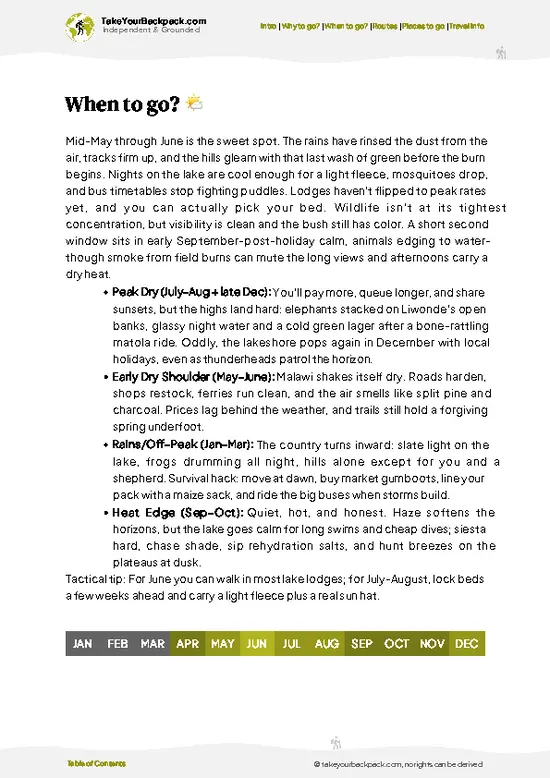
  • Weather: Aim for late June to early July when Malawi’s dry season kicks in. Expect clear skies and minimal rain, perfect for outdoor festival activities without mud or soggy gear.

  • Temperature: Daytime temps hover around 20-25°C (68-77°F), cool enough to stay energized but warm enough to avoid bulky layers. Nights can dip to 10-15°C (50-59°F), so pack a light jacket.

  • Daylight Hours: With roughly 11 to 12 hours of daylight, you get ample time to soak in the festival and explore nearby sights without rushing.

  • Crowds: The festival draws locals and regional visitors, but it’s not overrun by tourists. Arriving early in the dry season helps you dodge the peak influx and secure better accommodations.

  • Seasonal Activities: This period aligns with traditional harvest celebrations, so you’ll
read more 👉

  • Weather: Aim for late June to early July when Malawi’s dry season kicks in. Expect clear skies and minimal rain, perfect for outdoor festival activities without mud or soggy gear.

  • Temperature: Daytime temps hover around 20-25°C (68-77°F), cool enough to stay energized but warm enough to avoid bulky layers. Nights can dip to 10-15°C (50-59°F), so pack a light jacket.

  • Daylight Hours: With roughly 11 to 12 hours of daylight, you get ample time to soak in the festival and explore nearby sights without rushing.

  • Crowds: The festival draws locals and regional visitors, but it’s not overrun by tourists. Arriving early in the dry season helps you dodge the peak influx and secure better accommodations.

  • Seasonal Activities: This period aligns with traditional harvest celebrations, so you’ll catch authentic dances, rituals, and fresh local produce—no staged tourist fluff here.

  • Price Fluctuations: Prices for lodging and transport rise slightly during the festival but remain reasonable if you book ahead. Avoid last-minute deals that drain your budget and energy.


Pro-tip: Lock in your trip for late June—weather, culture, and crowd balance perfectly to keep your backpack light and your spirit high.


source: climatestotravel.comJANJanuary: not recommended for travelingFEBFebruary: not recommended for travelingMARMarch: not recommended for travelingAPRApril: not recommended for travelingMAYMay: not recommended for travelingJUNJune: excellent for travelingJULJuly: not recommended for travelingAUGAugust: not recommended for travelingSEPSeptember: not recommended for travelingOCTOctober: not recommended for travelingNOVNovember: not recommended for travelingDECDecember: not recommended for traveling

✈️ The backpacker research shortcutMalawi Travel Guide

An offline-friendly backpacking guide with optimized travel routes, ranked highlights, transport advice, and the best areas to stay.
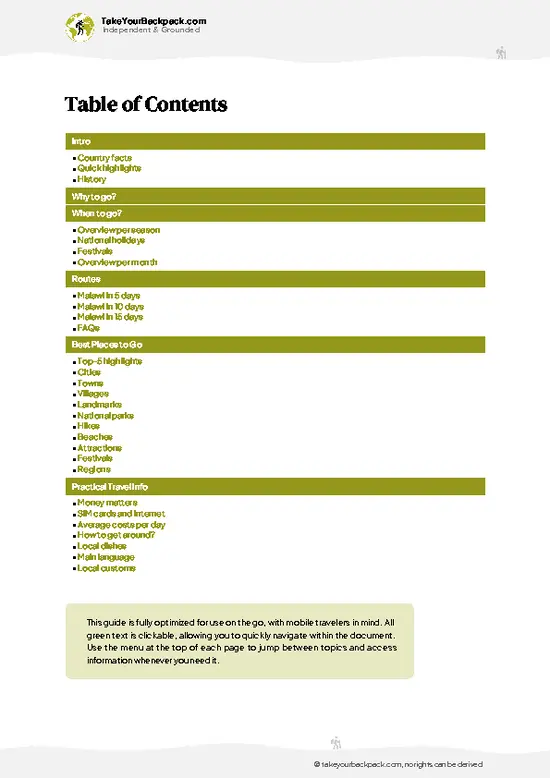
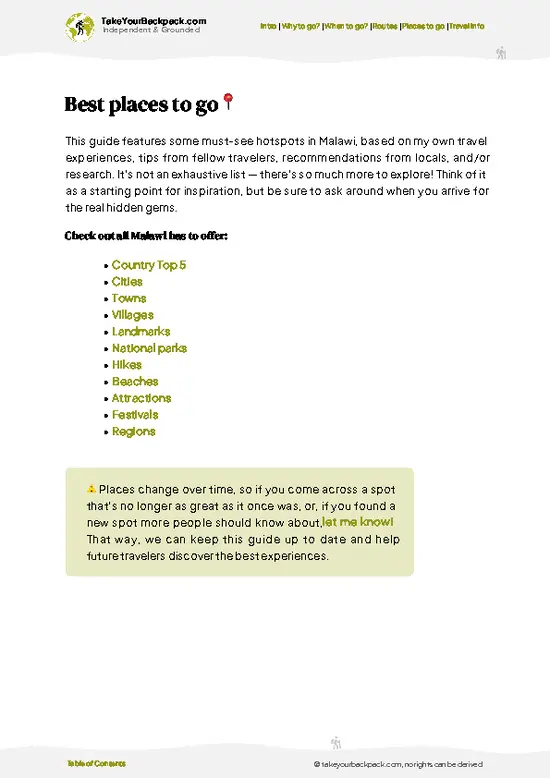
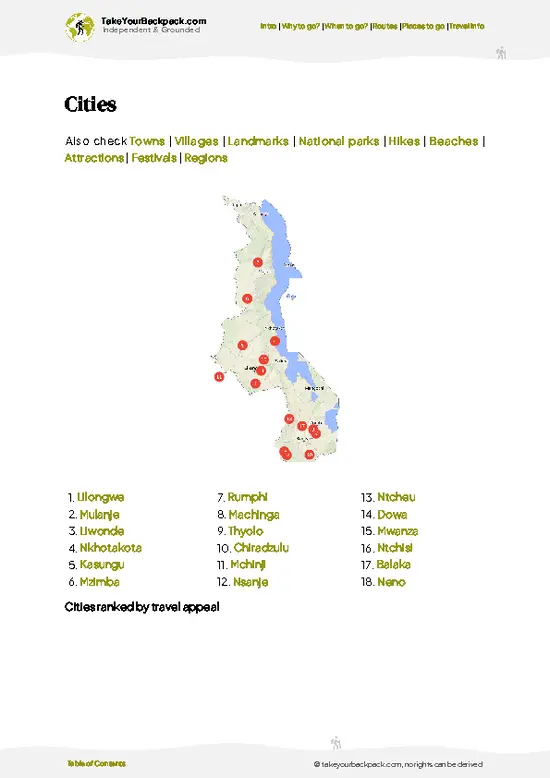
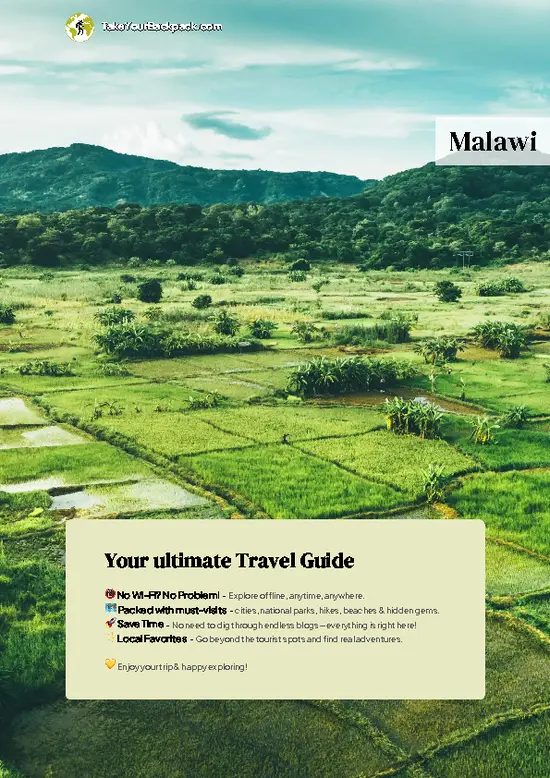
example page 0 from our offline Travel Guide for Malawi
example page 1 from our offline Travel Guide for Malawi
example page 2 from our offline Travel Guide for Malawi
example page 3 from our offline Travel Guide for Malawi
example page 4 from our offline Travel Guide for Malawi
example page 5 from our offline Travel Guide for Malawi
example page 6 from our offline Travel Guide for Malawi
example page 7 from our offline Travel Guide for Malawi
The digital guide (355 pages) contains:
87 highlights, ranked by travel appeal
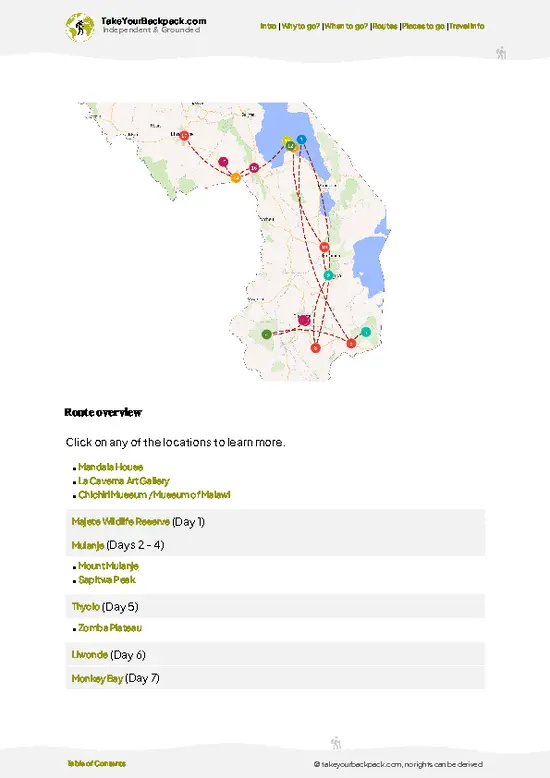
Optimized 5, 10 & 15-day travel routes
Cities, national parks, landmarks, beaches
How to get around
Offline-friendly for travel without Wi-Fi
👉 Click to see all 30+ guide features

📅 Plan smarter in minutes, not weeks
Month by month travel advice
Festivals & national holidays
Budget expectations

🗺️ Go to the right places, skip the overrated ones
Honest pros & cons of destinations
Top hikes, parks & viewpoints
Lesser-known places most travelers miss
Clear “worth it vs skip it” guidance

🛏️ Travel smoothly without rookie mistakes
Best areas to stay
Transport systems explained simply
Common scams & safety advice
SIM cards, money & practical tips

🌍 Understand the country, not just visit it
Culture & traditions
52 Essential phrases & customs
Festivals worth planning around
Traveler-friendly historical context
Insights that make places more meaningful

📱 Built for real travel conditions
Fully downloadable PDF
Works completely offline
Optimized for phone use
Useful in remote areas & buses
Everything in one place
Save weeks of stressful planning
Get instant access to your full guide. 30‑day money-back guarantee.


By proceeding you agree to our terms.
Sent to your inbox immediately after payment • 100% Secure Checkout
Best Backpacking Travel Advisor 2025 tourism awardBest Backpacking
Travel Advisor
2025
What others say about Take Your Backpack Guides:
⭐⭐⭐⭐⭐
Fantastic, amazing amount of information!
⭐⭐⭐⭐⭐
My goodness this is amazing, it's what I've been looking for hats off too you!
⭐⭐⭐⭐⭐
I think this is absolutely BRILLIANT
⭐⭐⭐⭐
Very complete and informative. It's still missing places, but I gotta to commend you
⭐⭐⭐⭐⭐
This is truly amazing, thank you, can't wait to explore it with my kids!
⭐⭐⭐⭐⭐
Awesome resource, thank you!
⭐⭐⭐⭐⭐
This is amazing! Can't wait to explore the ones I haven't seen
⭐⭐⭐⭐
I love this! Well done, great idea.
⭐⭐⭐⭐⭐
Thanks for taking the time to make this gem!
⭐⭐⭐⭐⭐
This might be the best website I've ever seen.
⭐⭐⭐⭐⭐
Congratulations, and thank you so much for your work; it's incredibly valuable.
⭐⭐⭐⭐
In all seriousness I think you did a great job pointing out the important spots
⭐⭐⭐⭐⭐
10/10 very good
⭐⭐⭐⭐⭐
As someone who's only just starting to visit regularly this is awesome, thank you.
⭐⭐⭐⭐
Thank you very much! I'm going to visit my dad, it's going to be very useful!
⭐⭐⭐⭐⭐
This is really cool! We'll be travelling for the first time and this definitely come in handy.
⭐⭐⭐⭐⭐
You are now our minister of culture, congratulations 👨‍💼
⭐⭐⭐⭐⭐
Just wanted to tell you that this is a pearl! Going to follow your recommendations.
⭐⭐⭐⭐⭐
This is so cool. I'll definitely be using the resource for my travels soon.
⭐⭐⭐⭐⭐
This is very impressive! Good work.
⭐⭐⭐⭐⭐
This is an amazing and informative site. Very well done!

🛏️ Where to stay?Best areas and accommodation options

When you’re gearing up for the Mulhako wa Alhomwe festival in Malawi, the right base can amplify your experience. Head to the vibrant town of Mulanje. It’s buzzing with energy, and you’ll find a mix of local charm and backpacker-friendly spots. The community vibe here is infectious, making it easy to connect with fellow travelers and locals alike.

Consider staying near the market area. It’s a hub of activity, where you can grab fresh produce and local snacks. Plus, the proximity to the festival means you won’t miss a beat.

Another solid option is the outskirts of the town, where you can find … read more 👉
When you’re gearing up for the Mulhako wa Alhomwe festival in Malawi, the right base can amplify your experience. Head to the vibrant town of Mulanje. It’s buzzing with energy, and you’ll find a mix of local charm and backpacker-friendly spots. The community vibe here is infectious, making it easy to connect with fellow travelers and locals alike.

Consider staying near the market area. It’s a hub of activity, where you can grab fresh produce and local snacks. Plus, the proximity to the festival means you won’t miss a beat.

Another solid option is the outskirts of the town, where you can find quieter lodgings. This area offers a more laid-back atmosphere, perfect for recharging after a day of festivities. Just be mindful of transport options; having a local contact can save you from unexpected delays.

Stay smart, stay social, and let the rhythm of the festival fuel your adventure!

👛 Costs (as of 17 February 2026)Typical daily expenses

The Mulhako wa Alhomwe festival in Malawi is a vibrant celebration of culture, but it’s essential to navigate the costs wisely to keep your adventure on track.
  • Festival Tickets: Expect to pay around $5 to $10 for entry. This is a steal for a full day of music, dance, and cultural showcases. Buy your tickets at the gate to avoid any online fees.
  • Accommodation: Options range from budget hostels at about $10 to $20 per night to mid-range hotels costing $30 to $60. Booking in advance can save you from last-minute price hikes, especially during the festival.
  • Local Transport: Public transport is your best bet. Minibus fares typically run between $1 to $3 for short distances. If you’re feeling adventurous, consider a bike rental for about $5 a day to explore the area at your own pace.
  • Food & Drinks:
read more 👉
The Mulhako wa Alhomwe festival in Malawi is a vibrant celebration of culture, but it’s essential to navigate the costs wisely to keep your adventure on track.
  • Festival Tickets: Expect to pay around $5 to $10 for entry. This is a steal for a full day of music, dance, and cultural showcases. Buy your tickets at the gate to avoid any online fees.
  • Accommodation: Options range from budget hostels at about $10 to $20 per night to mid-range hotels costing $30 to $60. Booking in advance can save you from last-minute price hikes, especially during the festival.
  • Local Transport: Public transport is your best bet. Minibus fares typically run between $1 to $3 for short distances. If you’re feeling adventurous, consider a bike rental for about $5 a day to explore the area at your own pace.
  • Food & Drinks: Street food is both delicious and affordable. Budget around $3 to $7 per meal. Local beers and soft drinks will set you back about $1 to $2. Eating where the locals eat not only saves money but also enhances your experience.
  • Miscellaneous Expenses: Set aside $10 to $20 for souvenirs or unexpected costs. This covers anything from local crafts to tips for guides. It’s always good to have a little extra for those spontaneous moments.

Being aware of these costs helps you allocate your budget effectively. Focus on the experiences that matter, and keep your energy high for the festival’s vibrant atmosphere.


source: malawitourism.com
⚠️ Prices can change and everyone travels differently, so take this as a rough guide. Hope it helps you plan your adventure!

🍲 FoodLocal Cuisine & Drinks

At the Mulhako wa Alhomwe festival in Malawi, food and drink are not just sustenance; they’re a celebration of culture. Dive into nsima, a staple made from maize, often served with rich, savory stews like chambo (tilapia) or nyama (meat). The festival stalls buzz with energy, offering local specialties that burst with flavor. Don’t miss the chance to try kondowole, a sweet treat made from ground nuts and sugar, perfect for a quick pick-me-up.

When it comes to drinks, malawi beer is a must. It’s refreshing and pairs perfectly with the spicy dishes. If you’re feeling adventurous, grab a local sorghum brew for a taste of tradition.

Etiquette is key here. Sharing is part of the experience, so don’t hesitate to offer a taste of your dish to a fellow festival-goer. Lines can get long, so be patient … read more 👉
At the Mulhako wa Alhomwe festival in Malawi, food and drink are not just sustenance; they’re a celebration of culture. Dive into nsima, a staple made from maize, often served with rich, savory stews like chambo (tilapia) or nyama (meat). The festival stalls buzz with energy, offering local specialties that burst with flavor. Don’t miss the chance to try kondowole, a sweet treat made from ground nuts and sugar, perfect for a quick pick-me-up.

When it comes to drinks, malawi beer is a must. It’s refreshing and pairs perfectly with the spicy dishes. If you’re feeling adventurous, grab a local sorghum brew for a taste of tradition.

Etiquette is key here. Sharing is part of the experience, so don’t hesitate to offer a taste of your dish to a fellow festival-goer. Lines can get long, so be patient and enjoy the chatter around you. Cash is king, so keep some on hand; card payments might not fly. Serving sizes can be generous, so pace yourself to savor every bite!

Other Malawian festivals near Mulhako wa Alhomwe

Explore more nearby:


💡 Not sure where to go next?
Create a personalized itinerary for Malawi including Mulhako wa Alhomwe and the places that fit your trip.

Generate my itinerary

👉 Discover all festivals

Or checkout all Malawi has to offer (think cities, towns, villages, national parks, hikes, beaches, festivals)
Country photo of Malawi

We 💚 feedbackParting advice and final tips

Mulhako wa Alhomwe is a vibrant celebration of culture, but don’t get swept away in the festivities without a plan. The best surprise? The warmth of the locals; they’ll pull you into their dances and stories. Just watch your wallet—some vendors can be a bit aggressive. Embrace the chaos, but keep your budget in check. It’s all part of the adventure!

✍️ Help improve this page!
The information on this page is based on in-depth research, insights shared by experienced travelers, and feedback from the local travel community in Malawi. While every effort is made to keep the information accurate and current, conditions can change — so if you spot anything incorrect or outdated, please get in touch.


🙋‍♂️ Give feedback

👋 Meet the founderWho’s Behind Take Your Backpack?

Johan, backpacker and founder of TakeYourBackpackHi, I’m Johan (Netherlands 🇳🇱), the creator of TakeYourBackpack. Over the past decade, I’ve backpacked through 80+ countries across six continents, gaining extensive experience with independent travel, long-term trips, and overland routes.

This site is built on a combination of firsthand travel experience and carefully curated insights from other backpackers. Many guides are based on places I’ve personally visited, while others bring together tips, observations, and practical advice shared by trusted travelers I’ve met along the way.

The goal is to provide realistic, experience-driven guidance — not generic itineraries — so you can explore destinations with better context, clearer expectations, and more confidence.

Get full Malawi guide •
Instant download • 87 highlights • Full Offline guide