×

Malawi🇲🇼 | best festivalsBest 9 festivals in Malawi

Festivals in Malawi are mostly village and lakeshore gatherings, not ticketed spectacles. Expect drums thudding through red dust, smoke from maize-meal fires, and Chichewa songs carrying across fields. Along Lake Malawi, music events draw a young, mixed crowd, with beach camping and cheap Chibuku and Carlsberg. In the Central and Southern regions, cultural ceremonies and chiefs’ gatherings are rooted in Chewa, Ngoni and Yao traditions, with crowds measured in hundreds or thousands. Roads are rough, minibuses fill slowly, and signage is thin. That suits independent travel, where a local contact opens doors, and entry is often free or a few dollars.

By Johan Kruseman 🇳🇱 | Updated October 19, 2026
Explore the best regions in Malawi

Why go?Understanding Their Importance

Malawi packs distinct ethnic traditions into a small, narrow country, so ceremonies change within a day’s ride. The Chewa Gule Wamkulu masked tradition is recognized by UNESCO, and Ngoni, Yao, Tumbuka and Tonga communities each keep their own dances, drums and harvest rites. Gatherings tend to be organized around chiefs, the agricultural calendar and the lake, so the atmosphere is communal and unpolished rather than staged for visitors. That is the draw: you stand close, hear ululating and rattles, smell woodsmoke and roasting maize, and feel dust settle on your skin.

The trade-off is infrastructure. Dates can shift with chiefs’ decisions, rainfall or funding, and official calendars are patchy. Information travels by word of mouth, Facebook pages and local tourism offices in Lilongwe, Mzuzu … read more 👉
Malawi packs distinct ethnic traditions into a small, narrow country, so ceremonies change within a day’s ride. The Chewa Gule Wamkulu masked tradition is recognized by UNESCO, and Ngoni, Yao, Tumbuka and Tonga communities each keep their own dances, drums and harvest rites. Gatherings tend to be organized around chiefs, the agricultural calendar and the lake, so the atmosphere is communal and unpolished rather than staged for visitors. That is the draw: you stand close, hear ululating and rattles, smell woodsmoke and roasting maize, and feel dust settle on your skin.

The trade-off is infrastructure. Dates can shift with chiefs’ decisions, rainfall or funding, and official calendars are patchy. Information travels by word of mouth, Facebook pages and local tourism offices in Lilongwe, Mzuzu and Mangochi. Public transport means crowded minibuses and long waits, and fuel shortages and power cuts happen. Accommodation near rural events can be basic or absent, so plan to camp, use a guesthouse in the nearest town, or arrange a homestay. Photography of masked dancers and sacred sites needs permission. Cash is king, because ATMs are scarce outside the main towns. Go for access and warmth, not polish.
Why These Made the Cut
The list of best festivals in Malawi is created based on energy, traditions, crowd experience, activities, and overall excitement. If you feel a festival is missing in this list, please let us know.

When to go?Optimal Periods for Travel

Best months: The best months for festivals in Malawi are May to October, the dry season, when roads are passable and ceremonies are held in open ground under clear, hard blue skies. Days run 22 to 28°C, and mornings are crisp enough for a jacket, especially on highlands like Nyika and Mulanje, where nights can drop to 5 to 10°C. Rainfall is close to zero between June and September, and the dust is fine, orange and everywhere.
Shoulder seasons: September to November brings heat, with lakeshore afternoons reaching 30 to 35°C, and the Shire Valley is hotter still. Cultural ceremonies cluster around harvest and the dry months, while lake music events draw the largest crowds from around September to October and during holiday weeks, when beach lodges fill and rates rise by perhaps 20 to 40 percent. … read more 👉
Best months: The best months for festivals in Malawi are May to October, the dry season, when roads are passable and ceremonies are held in open ground under clear, hard blue skies. Days run 22 to 28°C, and mornings are crisp enough for a jacket, especially on highlands like Nyika and Mulanje, where nights can drop to 5 to 10°C. Rainfall is close to zero between June and September, and the dust is fine, orange and everywhere.
Shoulder seasons: September to November brings heat, with lakeshore afternoons reaching 30 to 35°C, and the Shire Valley is hotter still. Cultural ceremonies cluster around harvest and the dry months, while lake music events draw the largest crowds from around September to October and during holiday weeks, when beach lodges fill and rates rise by perhaps 20 to 40 percent. Book ahead then.
Wet season: November to April brings 700 to 1,600 mm of rain depending on altitude, with the heaviest falls from December to March. Dirt roads turn to red mud, minibuses stall, and rural gatherings become hard to reach. Humidity is thick, and malaria risk climbs. Plan festival trips for the cool, dry months, and leave the rainy months for a different kind of travel.

festival hoppingOptimizing Your Multi-Stop Itinerary

Trip length: A trip combining several festivals in Malawi needs 10 to 16 days, because distances look short on a map but travel is slow. The country is about 900 km long, and main roads between hubs often take 4 to 6 hours, with delays at police checks and when minibuses wait to fill.
Regions that group well: Cluster by region. The Central hub of Lilongwe links with Dedza, Kasungu and the lakeshore at Salima and Nkhotakota, usually 2 to 4 hours apart. The Southern hub of Blantyre connects with Zomba, Mulanje and Mangochi, around 1 to 3 hours by road. The North around Mzuzu, Nkhata Bay and Karonga is a separate trip; Lilongwe to Mzuzu takes about 5 to 6 hours, and Mzuzu to Karonga another 4 to 5. A sensible direction is south to north, ending by the lake, where you can rest on a quiet beach … read more 👉
Trip length: A trip combining several festivals in Malawi needs 10 to 16 days, because distances look short on a map but travel is slow. The country is about 900 km long, and main roads between hubs often take 4 to 6 hours, with delays at police checks and when minibuses wait to fill.
Regions that group well: Cluster by region. The Central hub of Lilongwe links with Dedza, Kasungu and the lakeshore at Salima and Nkhotakota, usually 2 to 4 hours apart. The Southern hub of Blantyre connects with Zomba, Mulanje and Mangochi, around 1 to 3 hours by road. The North around Mzuzu, Nkhata Bay and Karonga is a separate trip; Lilongwe to Mzuzu takes about 5 to 6 hours, and Mzuzu to Karonga another 4 to 5. A sensible direction is south to north, ending by the lake, where you can rest on a quiet beach with the sound of small waves.
Pacing and mistakes: Allow 2 to 3 days per stop, including a buffer for late starts. The common mistakes are booking back-to-back dates across regions, trusting a single calendar, and arriving the night of an event with no bed. Confirm dates locally, leave a spare day between regions, and travel in daylight, since dusk roads are dark and busy with cyclists and unlit trucks.

The ListTop festivals of Malawi

1 Lake of Stars

International acts, lakeside stages, camping experience

Camp on the beach and listen to global and local musicians perform on scenic stages, with workshops and art installations throughout.

2 Sand Music Festival

Beach concerts, Malawian pop, dance parties

Dance on sandy shores to a lineup of Malawian and regional artists, with late-night parties and daytime activities by the lake.

3 Tumaini Festival

Dzaleka Refugee Camp, multicultural performances, community workshops

Support refugee-led initiatives through music, dance, and storytelling, as artists from diverse backgrounds gather in Dzaleka for cultural exchange.

4 Blantyre Arts Festival

Urban venues, visual arts, spoken word

Engage with Blantyre’s creative community through gallery exhibitions, poetry readings, and multidisciplinary performances across the city.

5 Zomba City Festival

Colonial architecture, mountain hikes, jazz sessions

Stroll through Zomba’s historic streets, enjoy live jazz, and take in panoramic views from the plateau during this citywide event.

6 Mwezi Wawala Festival

Open-air theatre, international troupes, night performances

Attend open-air plays and dance shows under the stars, featuring artists from across Africa and beyond in a lively, inclusive setting.

7 Likoma Festival

Island beaches, lakefront camping, Malawian DJs

Join a lakeside celebration on Likoma Island, where music, water sports, and open-air parties create a relaxed, communal atmosphere.

8 Mzuzu Fashion Week

Northern designers, runway shows, contemporary style

Discover Malawi’s emerging fashion scene as local designers present new collections, creative workshops, and networking events in Mzuzu.

9 Mulhako wa Alhomwe

Lhomwe heritage, traditional dance, rural village setting

Experience a gathering where Lhomwe communities share ancestral rituals, local cuisine, and music in a remote southern Malawi landscape.

Loading the map 🌍

Expert viewInsights from Locals and Experts

How many to attend: Two to three festivals is the right number for most backpackers in Malawi. Roads are slow, dates can shift, and each gathering rewards a full day or more of standing in the dust, listening and eating whatever the village women are frying. More than three turns a trip into a transport exercise. Two festivals in different regions give contrast without exhaustion.
Which kind to prioritize: If you want culture, choose a traditional ceremony in the Central or Southern highlands: drums, masks, chiefs in regalia, and a crowd of locals. Go early, because the best dancing happens in the morning light before the heat flattens the day. If you want company and nightlife, pick a lakeshore music event, where the crowd is younger, the beach is warm, and you can camp on sand. Budget travelers … read more 👉
How many to attend: Two to three festivals is the right number for most backpackers in Malawi. Roads are slow, dates can shift, and each gathering rewards a full day or more of standing in the dust, listening and eating whatever the village women are frying. More than three turns a trip into a transport exercise. Two festivals in different regions give contrast without exhaustion.
Which kind to prioritize: If you want culture, choose a traditional ceremony in the Central or Southern highlands: drums, masks, chiefs in regalia, and a crowd of locals. Go early, because the best dancing happens in the morning light before the heat flattens the day. If you want company and nightlife, pick a lakeshore music event, where the crowd is younger, the beach is warm, and you can camp on sand. Budget travelers with limited time should favor the lake, where access is simplest and lodging clusters near the venue.
Costs: Expect US$25 to 50 a day, or roughly MWK 45,000 to 90,000, including a dorm bed or campsite, local meals and minibus fares. Traditional ceremonies are often free or ask a small contribution, around MWK 2,000 to 10,000. Music events usually charge MWK 5,000 to 30,000 at the gate. A local guide or translator costs US$15 to 30 for the day, and a private car between towns US$60 to 120. Carry cash in small notes, because change is scarce.
Safety and etiquette: Keep valuables close in crowds and avoid walking alone after dark; a taxi or a lodge ride costs a few dollars and saves trouble. Greet elders and the chief’s representative first, ask before photographing masked dancers or sacred spaces, and accept that some rites are closed to outsiders. Dress modestly, with shoulders and knees covered. Bring water, sunscreen and a headscarf against dust, and take malaria prophylaxis. Buy food from busy stalls where the maize porridge nsima is hot and fresh. Tip dancers or musicians modestly if invited to join, and you will likely be welcomed with laughter.

✈️ The backpacker research shortcutMalawi Travel Guide

An offline-friendly backpacking guide with optimized travel routes, ranked highlights, transport advice, and the best areas to stay.
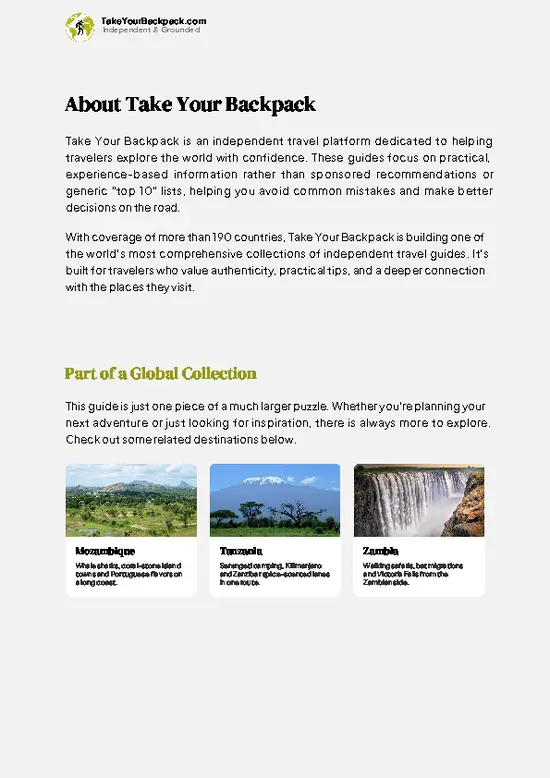
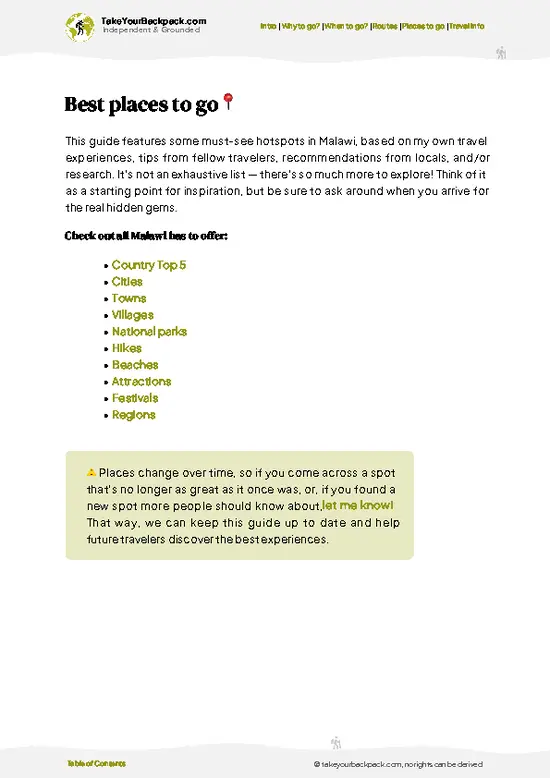
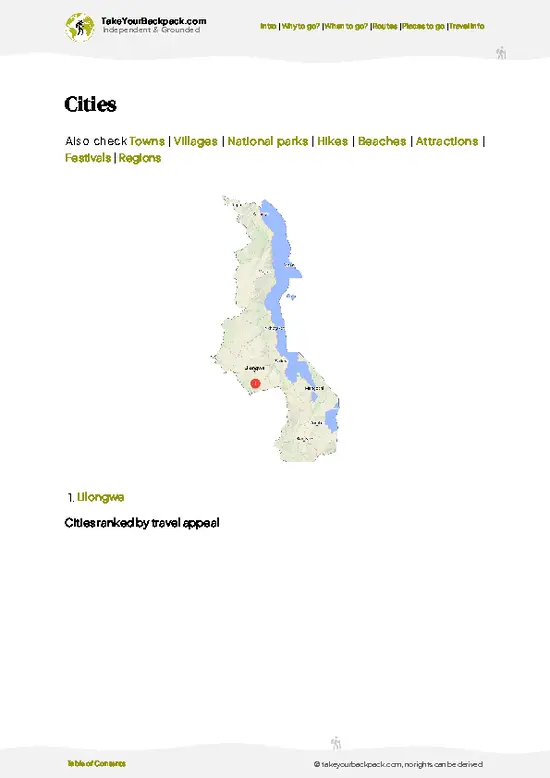
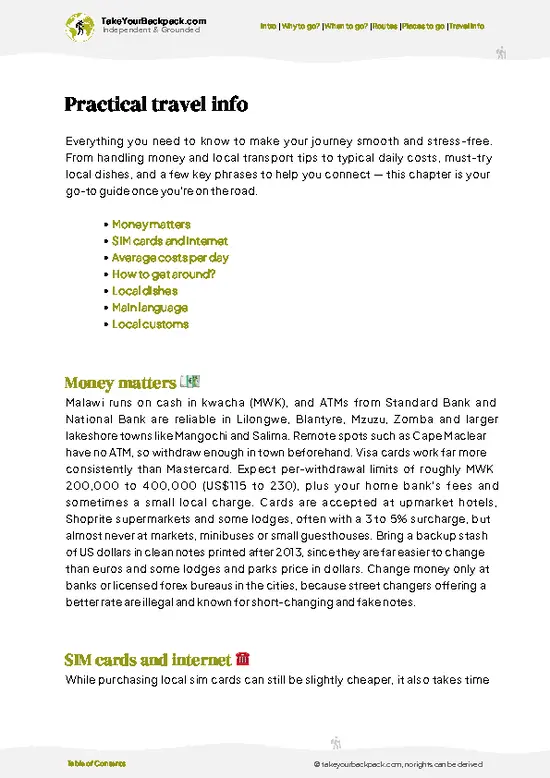
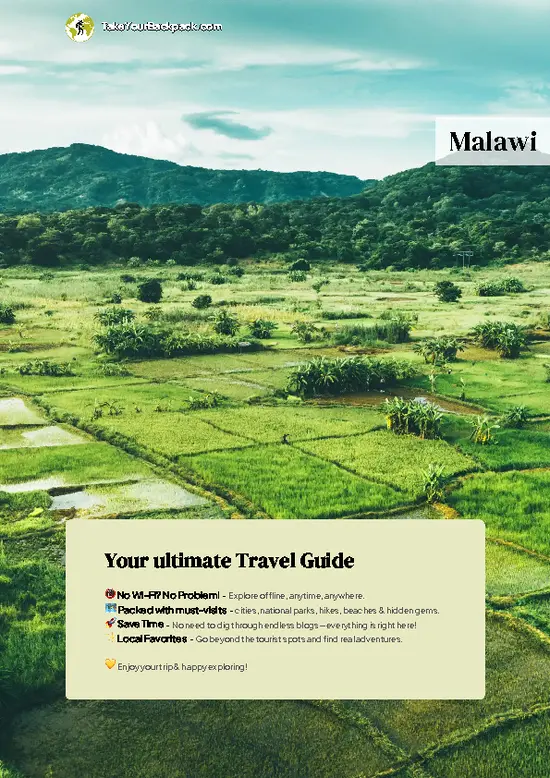
example page 0 from our offline Travel Guide for Malawi
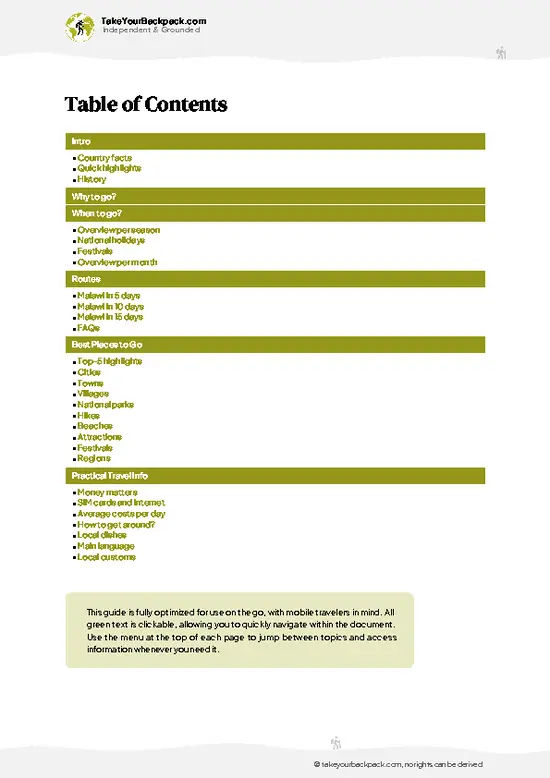
example page 1 from our offline Travel Guide for Malawi
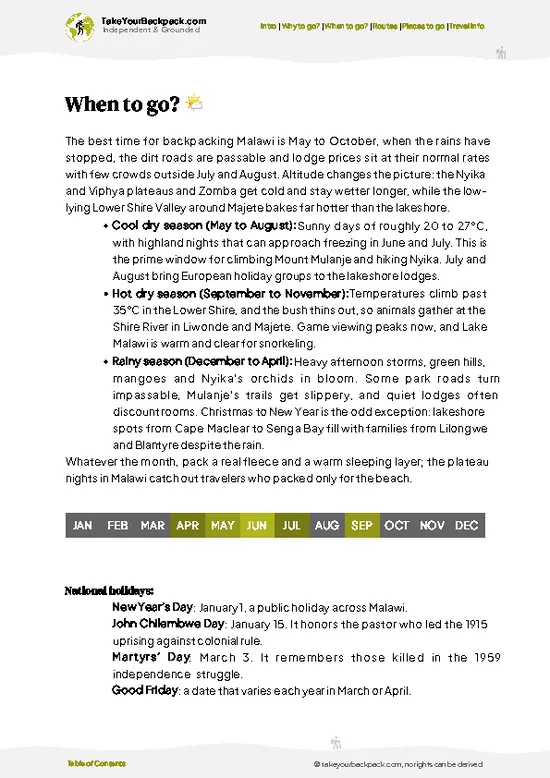
example page 2 from our offline Travel Guide for Malawi
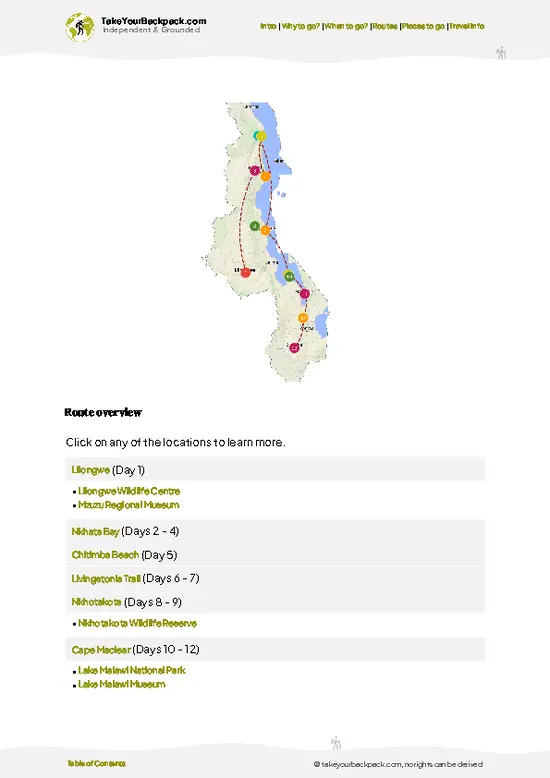
example page 3 from our offline Travel Guide for Malawi
example page 4 from our offline Travel Guide for Malawi
example page 5 from our offline Travel Guide for Malawi
example page 6 from our offline Travel Guide for Malawi
example page 7 from our offline Travel Guide for Malawi
The digital guide (263 pages) contains:
✅ 65 highlights, ranked by travel appeal
✅ Optimized 5, 10 & 15-day travel routes
✅ Cities, national parks, landmarks, beaches
✅ How to get around
✅ Offline-friendly for travel without Wi-Fi
👉 Click to see all 30+ guide features

📅 Plan smarter in minutes, not weeks
✅ Month by month travel advice
✅ Festivals & national holidays
✅ Budget expectations

🗺️ Go to the right places, skip the overrated ones
✅ Honest pros & cons of destinations
✅ Top hikes, parks & viewpoints
✅ Lesser-known places most travelers miss
✅ Clear “worth it vs skip it” guidance

🛏️ Travel smoothly without rookie mistakes
✅ Best areas to stay
✅ Transport systems explained simply
✅ Common scams & safety advice
✅ SIM cards, money & practical tips

🌍 Understand the country, not just visit it
✅ Culture & traditions
✅ 52 Essential phrases & customs
✅ Festivals worth planning around
✅ Traveler-friendly historical context
✅ Insights that make places more meaningful

📱 Built for real travel conditions
✅ Fully downloadable PDF
✅ Works completely offline
✅ Optimized for phone use
✅ Useful in remote areas & buses
✅ Everything in one place
Stop searching, start planning
Get instant access to your full guide. 30‑day money-back guarantee.
+ Add another guide for just

By proceeding you agree to our terms.
Sent to your inbox immediately after payment • 100% Secure Checkout
Best Backpacking Travel Advisor 2025 tourism awardBest Backpacking
Travel Advisor
2025
What others say about Take Your Backpack Guides:
⭐⭐⭐⭐⭐
Fantastic, amazing amount of information!
⭐⭐⭐⭐⭐
My goodness this is amazing, it's what I've been looking for hats off too you!
⭐⭐⭐⭐⭐
I think this is absolutely BRILLIANT
⭐⭐⭐⭐
Very complete and informative. It's still missing places, but I gotta to commend you
⭐⭐⭐⭐⭐
This is truly amazing, thank you, can't wait to explore it with my kids!
⭐⭐⭐⭐⭐
Awesome resource, thank you!
⭐⭐⭐⭐⭐
This is amazing! Can't wait to explore the ones I haven't seen
⭐⭐⭐⭐
I love this! Well done, great idea.
⭐⭐⭐⭐⭐
Thanks for taking the time to make this gem!
⭐⭐⭐⭐⭐
This might be the best website I've ever seen.
⭐⭐⭐⭐⭐
Congratulations, and thank you so much for your work; it's incredibly valuable.
⭐⭐⭐⭐
In all seriousness I think you did a great job pointing out the important spots
⭐⭐⭐⭐⭐
10/10 very good
⭐⭐⭐⭐⭐
As someone who's only just starting to visit regularly this is awesome, thank you.
⭐⭐⭐⭐
Thank you very much! I'm going to visit my dad, it's going to be very useful!
⭐⭐⭐⭐⭐
This is really cool! We'll be travelling for the first time and this definitely come in handy.
⭐⭐⭐⭐⭐
You are now our minister of culture, congratulations 👨‍💼
⭐⭐⭐⭐⭐
Just wanted to tell you that this is a pearl! Going to follow your recommendations.
⭐⭐⭐⭐⭐
This is so cool. I'll definitely be using the resource for my travels soon.
⭐⭐⭐⭐⭐
This is very impressive! Good work.
⭐⭐⭐⭐⭐
This is an amazing and informative site. Very well done!

🛏️ Where to stay?Where to Stay in Malawi

Malawi has a solid spread of hostels, backpacker lodges and lakeside campsites, with dorm beds typically around US$10 to 20 a night (paid in Malawian kwacha or US dollars). In Lilongwe, Area 3 in the Old Town is the easiest base, with walkable cafés, ATMs and the main minibus depot nearby, while Area 10 is greener, quieter and safer after dark but needs taxis to get anywhere. Along the lake, Nkhata Bay and Cape Maclear (Chembe village) have the most lodges and the liveliest bar scene, though both empty out in the rainy season, and Blantyre’s Sunnyside and Mandala areas suit a calm overnight stop near the city’s colonial sights rather than a party.

If you enjoy meeting fellow travelers, consider … read more 👉
Malawi has a solid spread of hostels, backpacker lodges and lakeside campsites, with dorm beds typically around US$10 to 20 a night (paid in Malawian kwacha or US dollars). In Lilongwe, Area 3 in the Old Town is the easiest base, with walkable cafés, ATMs and the main minibus depot nearby, while Area 10 is greener, quieter and safer after dark but needs taxis to get anywhere. Along the lake, Nkhata Bay and Cape Maclear (Chembe village) have the most lodges and the liveliest bar scene, though both empty out in the rainy season, and Blantyre’s Sunnyside and Mandala areas suit a calm overnight stop near the city’s colonial sights rather than a party.

If you enjoy meeting fellow travelers, consider choosing hostels with high ratings for atmosphere. On the other hand, if you prefer having your own space, a hotel might be a better option.

MalawiMore of Malawi

👋 Meet the founderWho’s Behind Take Your Backpack?

Johan, backpacker and founder of TakeYourBackpackHi, I’m Johan (Netherlands 🇳🇱), the creator of TakeYourBackpack. Over the past 3 decades, I’ve backpacked through 90+ countries across six continents, gaining extensive experience with independent travel, long-term trips, and overland routes.

This site is built on a combination of firsthand travel experience and carefully curated insights from other backpackers. Many guides are based on places I’ve personally visited, while others bring together tips, observations, and practical advice shared by trusted travelers I’ve met along the way.

The goal is to provide realistic, experience-driven guidance — not generic itineraries — so you can explore destinations with better context, clearer expectations, and more confidence.