×

Malaysia🇲🇾 | citiesKota Kinabaluseafront sunsets, island ferries, mountain backdrop | things to do and best time to go

Explore Kota BharuExplore Kota Tinggi

Backpacking in Kota Kinabalu
🏆 Top pickcity ranked #6
By Johan Kruseman 🇳🇱 | Updated May 30, 2026

Your shirt sticks to your back as the night market smoke wraps around you, chili and charcoal in every breath, vendors chanting prices over the hiss of woks while the call to prayer drifts in from somewhere behind the neon. This is Kota Kinabalu, on the northwestern edge of Borneo in Malaysia’s Sabah state, where the sea, jungle, and city all crash into each other. For backpackers, it’s a launchpad more than a showpiece: cheap hostels, easy buses, simple airport access, and tours hawked on every corner to islands, coral, and Mount Kinabalu. It’s social without being a party zoo, safer and calmer than many peninsular cities, but also a bit mall-heavy and charmless in daylight. You trade big-city culture for sunsets on the waterfront, island-hopping, and that “base camp before the adventure” energy.

Discover everything you want to know in the 📖 Malaysia Travel Guide.
Loading the map 🌍
CLICK TO FILTER
cities
towns
villages
landmarks
national parks
hikes
beaches
attractions
festivals
regions
SHOW COUNTRY’S BESTSHOW ALL

✨ Why go?
Ranked #6 city in Malaysia
What makes this city worth visiting

Kota Kinabalu is a strategic basecamp for backpackers, balancing time, money, and comfort in a way that makes it hard to resist. The city offers a wealth of highlights and activities that cater to various interests, from vibrant markets to stunning coastal views. You’ll find affordable hostels that foster a community vibe, making it easy to meet fellow travelers. The food scene is a delightful mix of local flavors and international options, allowing you to indulge without breaking the bank.

Kota Kinabalu is also incredibly walkable, so you can explore at your own pace, soaking in the local culture. When the sun sets, the nightlife comes alive, offering everything from laid-back bars to lively night markets. Plus, it’s a convenient jump-off point for day trips to nearby natural wonders. Whether … read more 👉
Kota Kinabalu is a strategic basecamp for backpackers, balancing time, money, and comfort in a way that makes it hard to resist. The city offers a wealth of highlights and activities that cater to various interests, from vibrant markets to stunning coastal views. You’ll find affordable hostels that foster a community vibe, making it easy to meet fellow travelers. The food scene is a delightful mix of local flavors and international options, allowing you to indulge without breaking the bank.

Kota Kinabalu is also incredibly walkable, so you can explore at your own pace, soaking in the local culture. When the sun sets, the nightlife comes alive, offering everything from laid-back bars to lively night markets. Plus, it’s a convenient jump-off point for day trips to nearby natural wonders. Whether you’re planning a longer stay or just a quick stop, this city fits seamlessly into your backpacking route, offering a satisfying blend of adventure and relaxation.
Want to include Kota Kinabalu in your Malaysia route?
Create a personalized Malaysia itinerary that includes Kota Kinabalu and the places that fit your trip — based on your travel style, budget, and available time. Get your route in seconds.

Generate my trip

💡 HighlightsThe experiences that define the visit

  1. Gaya Street Sunday Market — The heartbeat of old KK on a Sunday: stalls selling fresh produce, local snacks, handmade crafts and antiques. Great for people-watching, picking up unique Sabah souvenirs and feeling how locals start their weekend.
  2. Jesselton Point Ferry Terminal & Waterfront Esplanade — More than a departure point for islands; the esplanade is lively at sunset with seafood stalls, ferry bustle and fishermen coming ashore. It’s where the sea and city meet, and you’ll get the best sense of KK’s maritime rhythm.
  3. Atkinson Clock Tower — One of Kota Kinabalu’s oldest surviving landmarks. It’s tiny but packed with history (pre-war and WWII stories) and makes a quiet contrast to the busy streets nearby — good for a reflective photo stop.
  4. Kota Kinabalu City Mosque (Masjid Bandaraya)
read more 👉
  1. Gaya Street Sunday Market — The heartbeat of old KK on a Sunday: stalls selling fresh produce, local snacks, handmade crafts and antiques. Great for people-watching, picking up unique Sabah souvenirs and feeling how locals start their weekend.
  2. Jesselton Point Ferry Terminal & Waterfront Esplanade — More than a departure point for islands; the esplanade is lively at sunset with seafood stalls, ferry bustle and fishermen coming ashore. It’s where the sea and city meet, and you’ll get the best sense of KK’s maritime rhythm.
  3. Atkinson Clock Tower — One of Kota Kinabalu’s oldest surviving landmarks. It’s tiny but packed with history (pre-war and WWII stories) and makes a quiet contrast to the busy streets nearby — good for a reflective photo stop.
  4. Kota Kinabalu City Mosque (Masjid Bandaraya) — The “floating” mosque on Likas Bay is beautiful at golden hour. Visitors are welcome outside prayer times; the architecture and peaceful grounds give real insight into local Muslim life.
  5. Sabah State Museum & Heritage Village — The museum covers Sabah’s natural history and ethnography, and the outdoor heritage village displays traditional longhouses and native crafts. It’s one of the best places to understand the state’s cultural layers without leaving the city.
  6. Filipino Market / Handicraft Market — Laid out along the waterfront, this market is the place for carved wood, beadwork, pearls and quick, loud bargaining. It’s touristy but genuinely useful for local handicrafts and cheap eats if you know how to pick.
  7. Tanjung Aru Beach — The classic KK sunset spot where locals gather with picnic mats, kids play and hawker stalls fire up. It’s not a secluded paradise, but the vibe—sand, coconut trees and sun sinking into the South China Sea—is pure Kota Kinabalu.
  8. Signal Hill Observatory Platform & Pu Tuo Si Temple — A short climb (or drive) gives panoramic views over the city and islands; the small temple nearby is a quiet slice of Chinese-Buddhist life. Good either sunrise or late afternoon for light and local flavor.
  9. Kota Kinabalu Wetland Centre / Likas Mangrove Boardwalk — A surprising green lung inside the city: boardwalks through mangroves, birdwatching and a chance to see mudskippers and shorebirds up close. Packs a lot of nature into a short visit.
  10. St. Michael and All Angels Church — A colonial-era wooden church with a simple, evocative atmosphere and historical ties to the town’s early days. It’s peaceful, photogenic and offers a different facet of KK’s multicultural past.
For day trips outside the city but close by, try the Tunku Abdul Rahman Marine Park islands for snorkeling and beaches, Kinabalu Park (and Poring Hot Springs) for mountain rainforest and hot springs, or the Mari Mari Cultural Village for hands-on indigenous cultural experiences — my personal favorite for a quick escape is the Tunku Abdul Rahman Marine Park.
Spotted a mistake or missing something? Contact us.

Things to do in Kota Kinabalu

Ratings based on Tripadvisor reviews. When you book through this link, you support our work at no extra cost to you.

🏘️ NeighborhoodsUnderstanding the local layout

Kota Kinabalu is a vibrant hub for backpackers, blending urban energy with natural beauty. Here’s how the neighborhoods stack up:

City Centre: This is the heartbeat of Kota Kinabalu. It’s bustling, with plenty of budget accommodations and street food options. Walkability is high; you can easily explore markets and waterfronts on foot. Nightlife thrives here, with bars and live music venues. Perfect for short stays, but the noise might wear on you if you linger too long.

Gaya Street: Known for its Sunday market, Gaya Street offers a laid-back vibe during the week. Accommodations are affordable, and you’re close to local eateries. It’s walkable, but a bit quieter at night compared to the City Centre. Ideal for those wanting a taste of local life without the constant buzz.

Jalan Pantai: This … read more 👉
Kota Kinabalu is a vibrant hub for backpackers, blending urban energy with natural beauty. Here’s how the neighborhoods stack up:

City Centre: This is the heartbeat of Kota Kinabalu. It’s bustling, with plenty of budget accommodations and street food options. Walkability is high; you can easily explore markets and waterfronts on foot. Nightlife thrives here, with bars and live music venues. Perfect for short stays, but the noise might wear on you if you linger too long.

Gaya Street: Known for its Sunday market, Gaya Street offers a laid-back vibe during the week. Accommodations are affordable, and you’re close to local eateries. It’s walkable, but a bit quieter at night compared to the City Centre. Ideal for those wanting a taste of local life without the constant buzz.

Jalan Pantai: This area is a bit more upscale, with beachfront views and higher-end hostels. It’s less walkable, but you can catch public transport easily. The nightlife is more relaxed, making it suitable for longer stays if you prefer a chill atmosphere.

Inanam: A bit further out, Inanam offers a glimpse into local life. It’s budget-friendly and less touristy, but you’ll need to rely on public transport. This area is quieter, making it great for longer stays if you want to escape the hustle.

⌛️ 1 dayWhat you can realistically do in a day

Kota Kinabalu, the capital of Sabah, Malaysia, is a vibrant blend of cultures, stunning coastal views, and a gateway to Borneo’s natural wonders. It’s a city where the mountains meet the sea, and the local markets pulse with life. You can easily spend a day here, soaking in the sights and flavors without feeling rushed.

Start your morning at the bustling Filipino Market. Grab a breakfast of fresh seafood or a traditional nasi lemak from one of the stalls. The aroma of grilled fish mingles with the scent of coconut rice, creating an energizing start to your day. Afterward, stroll along the waterfront promenade, where you can catch a glimpse of the majestic Mount Kinabalu in the distance.

In the afternoon, head to the nearby Tunku Abdul Rahman Marine Park. A quick boat ride from Jesselton … read more 👉
Kota Kinabalu, the capital of Sabah, Malaysia, is a vibrant blend of cultures, stunning coastal views, and a gateway to Borneo’s natural wonders. It’s a city where the mountains meet the sea, and the local markets pulse with life. You can easily spend a day here, soaking in the sights and flavors without feeling rushed.

Start your morning at the bustling Filipino Market. Grab a breakfast of fresh seafood or a traditional nasi lemak from one of the stalls. The aroma of grilled fish mingles with the scent of coconut rice, creating an energizing start to your day. Afterward, stroll along the waterfront promenade, where you can catch a glimpse of the majestic Mount Kinabalu in the distance.

In the afternoon, head to the nearby Tunku Abdul Rahman Marine Park. A quick boat ride from Jesselton Point will take you to one of the islands, like Manukan or Sapi. Spend a few hours snorkeling in crystal-clear waters, surrounded by vibrant coral reefs. This is where you can truly appreciate the natural beauty of Borneo, away from the typical tourist traps.

As evening approaches, return to the city and explore the lively streets of Kampung Air, a traditional water village. Here, you can wander through stilted houses and experience local life. For dinner, try a seafood feast at a local eatery, where the catch of the day is grilled to perfection.

Wrap up your day at the Signal Hill Observatory. The panoramic views of the sunset over the South China Sea are breathtaking. This spot is often overlooked by tourists, but it’s a perfect way to reflect on your day in Kota Kinabalu, feeling both satisfied and inspired.
Turn your Kota Kinabalu visit into an Malaysia adventure
Build a complete Malaysia route with Kota Kinabalu, hidden gems, must-see destinations, and realistic travel times included.

Generate my trip

🌤️ When to go?Weather, crowds, and seasonal trade-offs


  • Weather: Kota Kinabalu’s tropical climate means it’s hot and humid year-round, but the dry season from March to early October offers the best backpacking conditions. Expect less rain, making outdoor activities like hiking and island hopping more enjoyable.

  • Temperature: Daily highs hover around 31-33°C (88-91°F) during the dry months, cooling slightly at night to 23-25°C (73-77°F). The wet season (November to February) brings similar temperatures but with frequent heavy showers that can disrupt plans.

  • Daylight Hours: Roughly 12 hours of daylight year-round, with sunrise around 6:30 AM and sunset near 6:30 PM. This consistency means you can plan your days without worrying about drastic changes in daylight.

  • Crowds: Peak tourist season aligns with the dry months, especially July and August,
read more 👉

  • Weather: Kota Kinabalu’s tropical climate means it’s hot and humid year-round, but the dry season from March to early October offers the best backpacking conditions. Expect less rain, making outdoor activities like hiking and island hopping more enjoyable.

  • Temperature: Daily highs hover around 31-33°C (88-91°F) during the dry months, cooling slightly at night to 23-25°C (73-77°F). The wet season (November to February) brings similar temperatures but with frequent heavy showers that can disrupt plans.

  • Daylight Hours: Roughly 12 hours of daylight year-round, with sunrise around 6:30 AM and sunset near 6:30 PM. This consistency means you can plan your days without worrying about drastic changes in daylight.

  • Crowds: Peak tourist season aligns with the dry months, especially July and August, when locals and international visitors flock here. Expect busier trails and higher accommodation prices.

  • Seasonal Activities: The dry season is prime for climbing Mount Kinabalu, diving, and exploring the islands. The wet season limits outdoor options but can be a good time for cultural festivals and fewer tourists.

  • Price Fluctuations: Accommodation and flights spike during the dry season and school holidays. Traveling just before or after this period can save money without sacrificing much on weather or activities.


Pro-tip: Aim for shoulder months like March or September to balance good weather, manageable crowds, and better prices—smart timing turns your trip from a gamble into a calculated win.


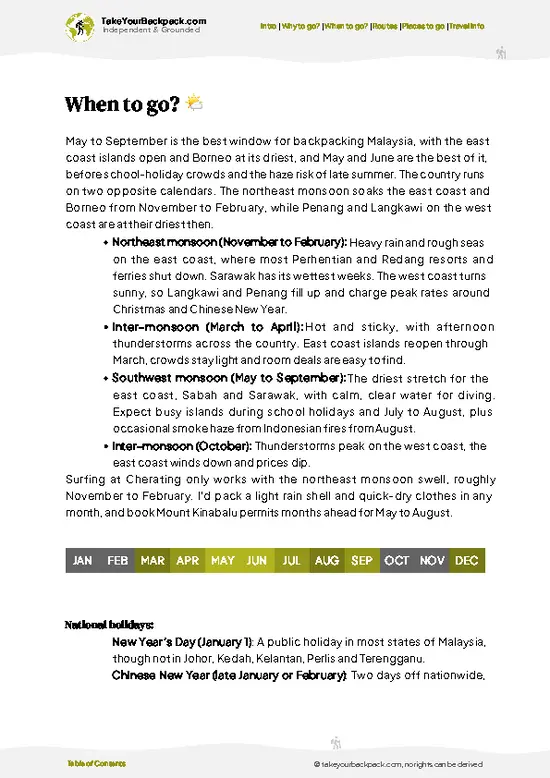
source: climatestotravel.comJANJanuary: fair for travelingFEBFebruary: fair for travelingMARMarch: highly recommended for travelingAPRApril: highly recommended for travelingMAYMay: highly recommended for travelingJUNJune: highly recommended for travelingJULJuly: excellent for travelingAUGAugust: excellent for travelingSEPSeptember: highly recommended for travelingOCTOctober: highly recommended for travelingNOVNovember: fair for travelingDECDecember: fair for traveling
when-to-go

✈️ The backpacker research shortcutMalaysia Travel Guide

An offline-friendly backpacking guide with optimized travel routes, ranked highlights, transport advice, and the best areas to stay.
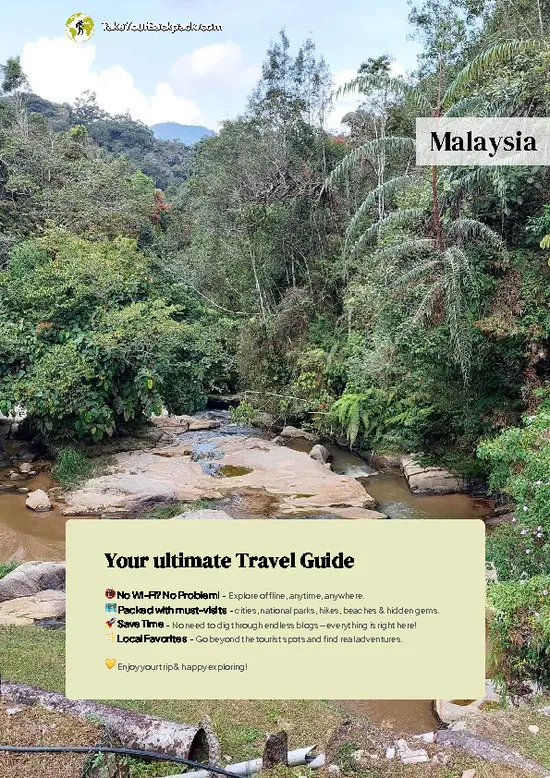
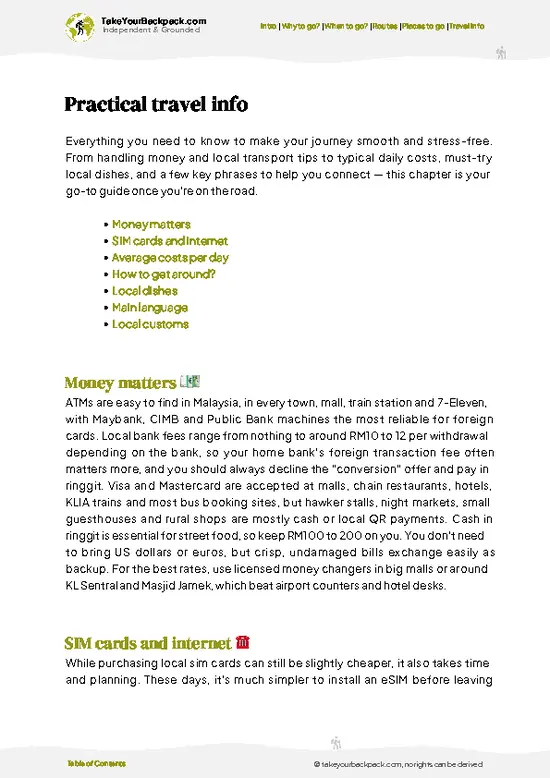
example page 0 from our offline Travel Guide for Malaysia
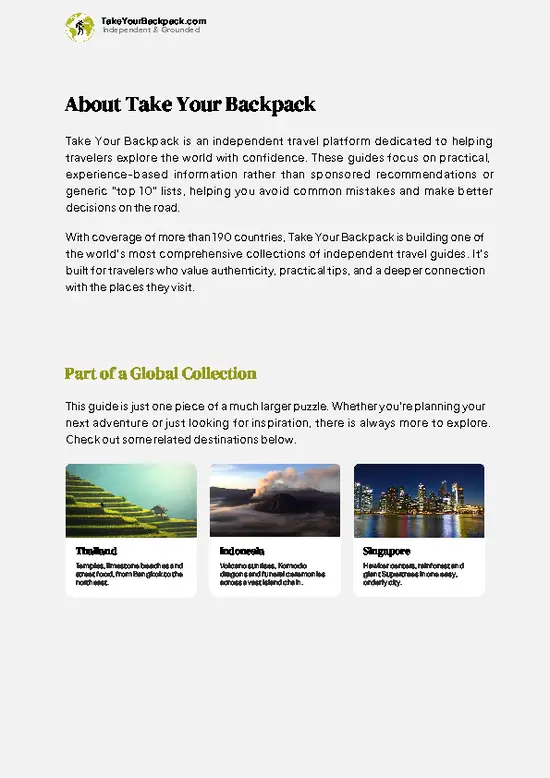
example page 1 from our offline Travel Guide for Malaysia
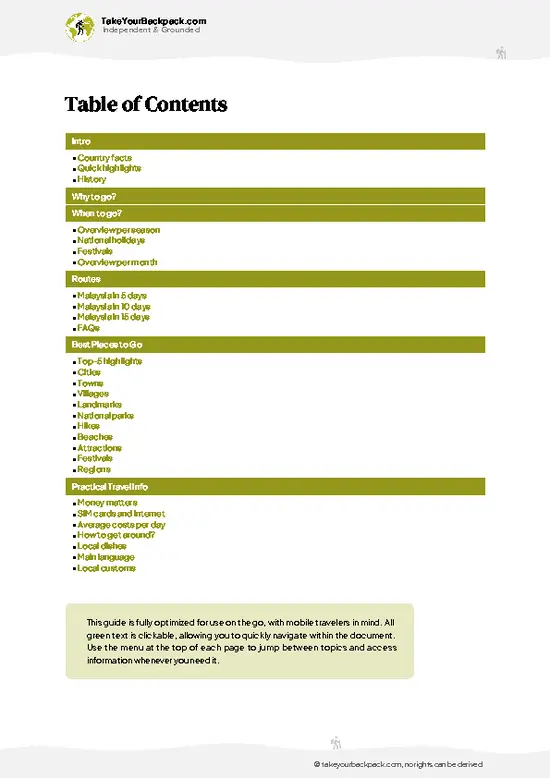
example page 2 from our offline Travel Guide for Malaysia
example page 3 from our offline Travel Guide for Malaysia
example page 4 from our offline Travel Guide for Malaysia
example page 5 from our offline Travel Guide for Malaysia
example page 6 from our offline Travel Guide for Malaysia
example page 7 from our offline Travel Guide for Malaysia
The digital guide (407 pages) contains:
107 highlights, ranked by travel appeal
Optimized 5, 10 & 15-day travel routes
Cities, national parks, landmarks, beaches
How to get around
Offline-friendly for travel without Wi-Fi
👉 Click to see all 30+ guide features

📅 Plan smarter in minutes, not weeks
Month by month travel advice
Festivals & national holidays
Budget expectations

🗺️ Go to the right places, skip the overrated ones
Honest pros & cons of destinations
Top hikes, parks & viewpoints
Lesser-known places most travelers miss
Clear “worth it vs skip it” guidance

🛏️ Travel smoothly without rookie mistakes
Best areas to stay
Transport systems explained simply
Common scams & safety advice
SIM cards, money & practical tips

🌍 Understand the country, not just visit it
Culture & traditions
52 Essential phrases & customs
Festivals worth planning around
Traveler-friendly historical context
Insights that make places more meaningful

📱 Built for real travel conditions
Fully downloadable PDF
Works completely offline
Optimized for phone use
Useful in remote areas & buses
Everything in one place
Save weeks of stressful planning
Get instant access to your full guide. 30‑day money-back guarantee.


By proceeding you agree to our terms.
Sent to your inbox immediately after payment • 100% Secure Checkout
Best Backpacking Travel Advisor 2025 tourism awardBest Backpacking
Travel Advisor
2025
What others say about Take Your Backpack Guides:
⭐⭐⭐⭐⭐
Fantastic, amazing amount of information!
⭐⭐⭐⭐⭐
My goodness this is amazing, it's what I've been looking for hats off too you!
⭐⭐⭐⭐⭐
I think this is absolutely BRILLIANT
⭐⭐⭐⭐
Very complete and informative. It's still missing places, but I gotta to commend you
⭐⭐⭐⭐⭐
This is truly amazing, thank you, can't wait to explore it with my kids!
⭐⭐⭐⭐⭐
Awesome resource, thank you!
⭐⭐⭐⭐⭐
This is amazing! Can't wait to explore the ones I haven't seen
⭐⭐⭐⭐
I love this! Well done, great idea.
⭐⭐⭐⭐⭐
Thanks for taking the time to make this gem!
⭐⭐⭐⭐⭐
This might be the best website I've ever seen.
⭐⭐⭐⭐⭐
Congratulations, and thank you so much for your work; it's incredibly valuable.
⭐⭐⭐⭐
In all seriousness I think you did a great job pointing out the important spots
⭐⭐⭐⭐⭐
10/10 very good
⭐⭐⭐⭐⭐
As someone who's only just starting to visit regularly this is awesome, thank you.
⭐⭐⭐⭐
Thank you very much! I'm going to visit my dad, it's going to be very useful!
⭐⭐⭐⭐⭐
This is really cool! We'll be travelling for the first time and this definitely come in handy.
⭐⭐⭐⭐⭐
You are now our minister of culture, congratulations 👨‍💼
⭐⭐⭐⭐⭐
Just wanted to tell you that this is a pearl! Going to follow your recommendations.
⭐⭐⭐⭐⭐
This is so cool. I'll definitely be using the resource for my travels soon.
⭐⭐⭐⭐⭐
This is very impressive! Good work.
⭐⭐⭐⭐⭐
This is an amazing and informative site. Very well done!

🛏️ Where to stay?Best areas and accommodation options

Kota Kinabalu’s best backpacker zones cluster around the city center and the waterfront, where safety, social buzz, and budget options intersect smartly. The city center, especially near Gaya Street and Jalan Tun Fuad Stephens, is a no-brainer for solo travelers. It’s compact, walkable, and packed with affordable hostels that double as social hubs. You’re close to markets, street food stalls, and transport links without the noise or chaos of busier commercial districts. This area strikes a solid balance between comfort and cost—hostels here often have communal spaces that make meeting fellow travelers … read more 👉
Kota Kinabalu’s best backpacker zones cluster around the city center and the waterfront, where safety, social buzz, and budget options intersect smartly. The city center, especially near Gaya Street and Jalan Tun Fuad Stephens, is a no-brainer for solo travelers. It’s compact, walkable, and packed with affordable hostels that double as social hubs. You’re close to markets, street food stalls, and transport links without the noise or chaos of busier commercial districts. This area strikes a solid balance between comfort and cost—hostels here often have communal spaces that make meeting fellow travelers effortless, which is gold when you’re solo.

Then there’s the waterfront area, which offers a slightly quieter vibe but still keeps you connected to the pulse of the city. It’s a bit more relaxed, with easy access to ferries for island hopping, a major draw for backpackers. The trade-off here is a touch more walking or a short ride to the city center, but you gain a scenic backdrop and a calmer atmosphere at night.

Avoid the sprawling suburbs or industrial zones—they’re cheaper but isolate you from the social scene and add transport hassles. In Kota Kinabalu, staying central or near the waterfront means you’re investing in time saved and connections gained, not just a bed. That’s the real value play.

🚌 Getting aroundHow to get from A to B

Kota Kinabalu moves at a pace that’s neither frantic nor sluggish—it’s a city where the rhythm bends to the tropical heat and local habits rather than strict timetables. You won’t find a clock dictating every step, but there’s an underlying order in the way people navigate the streets, markets, and coastlines. It’s a blend of laid-back intuition and bursts of activity, especially around dawn and dusk when the city wakes or winds down. Understanding this flow is your first win: it means your transit choices aren’t just about getting from A to B, but about syncing with the city’s pulse to maximize your experience without wasting time or money.


  • Walking: The most straightforward and cost-free way to absorb Kota Kinabalu’s character. The city center is compact, with many attractions, markets,
read more 👉
Kota Kinabalu moves at a pace that’s neither frantic nor sluggish—it’s a city where the rhythm bends to the tropical heat and local habits rather than strict timetables. You won’t find a clock dictating every step, but there’s an underlying order in the way people navigate the streets, markets, and coastlines. It’s a blend of laid-back intuition and bursts of activity, especially around dawn and dusk when the city wakes or winds down. Understanding this flow is your first win: it means your transit choices aren’t just about getting from A to B, but about syncing with the city’s pulse to maximize your experience without wasting time or money.


  • Walking: The most straightforward and cost-free way to absorb Kota Kinabalu’s character. The city center is compact, with many attractions, markets, and eateries within a 20-30 minute stroll. Walking lets you control your pace and take in the sensory details—street food aromas, local chatter, and the occasional sea breeze. It’s slow but priceless for immersion.


  • Public Buses (Minibuses): These are the budget traveler’s backbone, with fares typically under 2 MYR (less than 50 cents USD). They run from early morning around 6:30 AM until about 7 PM. Expect basic comfort—no air conditioning, packed during rush hours, and routes that cover most suburbs and tourist spots. They’re slow compared to taxis but unbeatable for cost-efficiency if you’re not in a rush.


  • Grab (Ride-Hailing): The local equivalent of Uber, Grab offers a middle ground between cost and comfort. Prices vary but expect around 10-20 MYR for short to medium trips within the city. It’s faster and more comfortable than buses, with air-conditioned cars and door-to-door service. The trade-off is spending more money and sometimes waiting a few minutes for a driver, especially during peak times.


  • Motorcycle Taxis (Ojek): For the adventurous and time-conscious, motorcycle taxis weave through traffic with ease. They’re cheap—usually 5-10 MYR for short trips—and quick, but comfort and safety take a backseat. Not ideal for heavy luggage or bad weather, but perfect for solo travelers who want to shave off travel time in tight spots.


  • Ferries to Nearby Islands: While not daily city transit, ferries are essential for budget travelers aiming to explore beyond Kota Kinabalu. Prices range from 20 to 50 MYR depending on the island and speedboat vs. slow ferry. Departures are generally morning to early afternoon, so planning ahead is key. Comfort varies—speedboats are faster but bumpier, slow ferries are steadier but take longer.


Mastering Kota Kinabalu’s transit means balancing your priorities: save money by embracing the slower, less comfortable options or invest a bit more for speed and ease. Either way, knowing the trade-offs lets you play the system smartly, turning every trip into a strategic win rather than a logistical headache.

👛 Costs (as of 5 May 2025)How expensive it really is

Backpacking in Kota Kinabalu, Malaysia, offers a clear trade-off between cost and comfort, with a surprisingly affordable price tag for independent travelers who know where to look.
  • Dorm Accommodation (High Season): Expect to pay around $8 to $12 per night in popular hostels during peak travel months. These dorms are basic but clean, often with air conditioning and communal areas that make meeting other travelers easy.
  • Dorm Accommodation (Off-Season): Prices drop to about $5 to $8 per night when the crowds thin out. You might sacrifice some amenities or location, but the savings are worth it if you’re flexible.
  • Meals: Street food and local eateries dominate the scene, with meals typically costing between $1.50 and $3.50. For three meals a day, budget around $5 to $10. Western-style cafes
read more 👉
Backpacking in Kota Kinabalu, Malaysia, offers a clear trade-off between cost and comfort, with a surprisingly affordable price tag for independent travelers who know where to look.
  • Dorm Accommodation (High Season): Expect to pay around $8 to $12 per night in popular hostels during peak travel months. These dorms are basic but clean, often with air conditioning and communal areas that make meeting other travelers easy.
  • Dorm Accommodation (Off-Season): Prices drop to about $5 to $8 per night when the crowds thin out. You might sacrifice some amenities or location, but the savings are worth it if you’re flexible.
  • Meals: Street food and local eateries dominate the scene, with meals typically costing between $1.50 and $3.50. For three meals a day, budget around $5 to $10. Western-style cafes and restaurants push this higher, but sticking to local fare keeps costs low and authentic.
  • Local Transport: Short rides on minibusses or shared taxis usually cost $0.50 to $1.50. These are the go-to for quick hops around town, though they can be crowded and less predictable.
  • City Transport Pass: Kota Kinabalu doesn’t have a formal city transport pass system. Instead, budgeting about $2 to $4 daily for a mix of buses, taxis, or Grab rides covers most urban travel needs.
  • Basic Activities/Entry Fees: Many natural attractions, like parks or beaches, have minimal or no entry fees, but budget $3 to $7 for occasional guided tours or entry to cultural sites. Diving or island hopping trips start higher, but those are optional splurges.
  • Miscellaneous Expenses: This includes bottled water, snacks, occasional coffee, or small souvenirs. Around $2 to $5 daily is a safe estimate to avoid surprises.

Summing it up, a daily budget for backpacking in Kota Kinabalu comfortably sits between $15 and $30. This range balances basic comfort with the freedom to enjoy local flavors and experiences without feeling pinched. Knowing these trade-offs lets you decide where to tighten the belt and where to loosen it, turning your trip into a smart, well-played game of value.
⚠️ Prices can change and everyone travels differently, so take this as a rough guide. Hope it helps you plan your adventure!

🚌 Day tripsBest day trips from Kota Kinabalu

Kota Kinabalu is a backpacker’s dream base for day trips, offering a mix of adventure, culture, and natural beauty. Here are some top picks that make the most of your time and money.

Mount Kinabalu
This iconic peak is a must for any serious hiker. The journey from Kota Kinabalu takes about two hours by bus. While summiting requires an overnight stay, you can still enjoy the stunning views and trails around the base. Expect to spend around RM 50 for transportation and park fees. The best time to visit is during the dry season, from March to September. A common mistake is underestimating the weather; it can get chilly at higher altitudes, so pack layers.


Tunku Abdul Rahman Marine Park
Just a short boat ride away, this marine park is perfect for snorkeling and relaxing on the beach. … read more 👉
Kota Kinabalu is a backpacker’s dream base for day trips, offering a mix of adventure, culture, and natural beauty. Here are some top picks that make the most of your time and money.

Mount Kinabalu
This iconic peak is a must for any serious hiker. The journey from Kota Kinabalu takes about two hours by bus. While summiting requires an overnight stay, you can still enjoy the stunning views and trails around the base. Expect to spend around RM 50 for transportation and park fees. The best time to visit is during the dry season, from March to September. A common mistake is underestimating the weather; it can get chilly at higher altitudes, so pack layers.


Tunku Abdul Rahman Marine Park
Just a short boat ride away, this marine park is perfect for snorkeling and relaxing on the beach. You can reach the islands in about 15 minutes, and a day trip will cost around RM 100, including boat fare and gear rental. The best time to go is early in the morning to avoid crowds and catch the best marine life. Many first-timers forget to bring snacks; the islands have limited food options, so pack your own.


Klias River Cruise
For a unique wildlife experience, the Klias River Cruise is a fantastic option. It takes about 2.5 hours to reach the river, where you can spot proboscis monkeys and fireflies. The total cost is around RM 150, including transportation and the cruise. The ideal time for this trip is during the late afternoon, as the sunset adds magic to the experience. A common pitfall is not bringing a camera; you’ll want to capture those monkeys in action!


Mari Mari Cultural Village
Dive into the local culture at this living museum, just 30 minutes from the city. The entrance fee is about RM 100, which includes a guided tour and traditional meals. Visiting in the morning is best, as it gets busier later in the day. First-timers often overlook the importance of asking questions during the tour; the guides are eager to share stories that enrich your experience.
Want to know what more Malaysia offers?
The Malaysia Travel Guide describes 107 highlights, from cities to national parks, from beaches to hikes

Get the Travel Guide -

🍲 FoodLocal Flavors for Backpackers

Kota Kinabalu is a **food lover’s paradise** where local flavors burst with life. Dive into **nasi lemak**, fragrant rice cooked in coconut milk, served with spicy sambal, crispy anchovies, and boiled eggs. Don’t miss **soto**, a savory soup that warms the soul, often packed with chicken or beef and a medley of spices.

Street food is where the magic happens. Head to the **night markets** for a sensory overload. The air is thick with the scent of grilled seafood and satay skewers sizzling over charcoal. You’ll find locals gathered around, sharing laughter and stories, creating a vibrant atmosphere that’s hard to resist.

When it comes to drinks, try **teh tarik**, a frothy pulled tea that’s both sweet and creamy. It’s a social drink, often enjoyed while chatting with friends at roadside stalls. … read more 👉
Kota Kinabalu is a **food lover’s paradise** where local flavors burst with life. Dive into **nasi lemak**, fragrant rice cooked in coconut milk, served with spicy sambal, crispy anchovies, and boiled eggs. Don’t miss **soto**, a savory soup that warms the soul, often packed with chicken or beef and a medley of spices.

Street food is where the magic happens. Head to the **night markets** for a sensory overload. The air is thick with the scent of grilled seafood and satay skewers sizzling over charcoal. You’ll find locals gathered around, sharing laughter and stories, creating a vibrant atmosphere that’s hard to resist.

When it comes to drinks, try **teh tarik**, a frothy pulled tea that’s both sweet and creamy. It’s a social drink, often enjoyed while chatting with friends at roadside stalls.

Etiquette here is relaxed. Don’t be surprised if you’re invited to share a table or if locals offer you a taste of their dishes. Embrace the communal spirit; it’s all part of the experience. In Kota Kinabalu, every bite and sip tells a story, making your culinary journey as rich as the culture itself.

🛡️ SafetyStaying Safe: What Travelers Should Know

Kota Kinabalu is generally safe, but a few areas require a sharper eye. Stick to well-lit streets at night, especially around the waterfront and markets. Solo travelers should be mindful of their surroundings, particularly in quieter spots.

Scams are rare, but be cautious with overly friendly locals offering unsolicited help. If someone approaches you with a deal that sounds too good to be true—like discounted tours—trust your instincts.

Everyday annoyances include aggressive hawkers at markets. A polite but firm “no, thank you” usually does the trick. Keep your belongings secure, especially in crowded areas, and use a crossbody bag to deter pickpockets.

Overall, stay aware, be confident, and enjoy the vibrant life of Kota Kinabalu without unnecessary stress.

Other Malaysian cities near Kota Kinabalu

Explore more nearby:

  • Ranau—mountain foothills, hot springs, Dusun culture| 65 km away
  • Sandakan—orangutan sanctuary, WWII memorials, seafood markets| 221 km away
  • Lahad Datu—palm oil estates, wildlife corridor, gateway to Danum| 271 km away

💡 Not sure where to go next?
Create a personalized itinerary for Malaysia including Kota Kinabalu and the places that fit your trip.

Generate my itinerary

👉 Discover all cities

Or checkout all Malaysia has to offer (think cities, towns, villages, national parks, hikes, beaches, festivals)
Country photo of Malaysia

We 💚 feedbackParting advice and final tips

Kota Kinabalu is a feast for the senses, especially if you love fresh seafood. The night markets are a culinary adventure that’ll make your taste buds dance. But here’s the catch: it can get hot and humid, which might zap your energy. Embrace the sweat, though—it’s part of the experience. Just plan your outdoor activities for the cooler parts of the day, and you’ll be golden.

✈️ When did I visit Malaysia?
As part of my 1.5 year travel around the world trip, I visited Malaysia in January 2016.

✍️ Help improve this page!
The information on this page is based on my own backpacking experience in Malaysia, supplemented with up-to-date research and feedback from other travelers. Travel details can change, so if you notice anything outdated or incomplete, feel free to let me know.


🙋‍♂️ Give feedback

👋 Meet the founderWho’s Behind Take Your Backpack?

Johan, backpacker and founder of TakeYourBackpackHi, I’m Johan (Netherlands 🇳🇱), the creator of TakeYourBackpack. Over the past decade, I’ve backpacked through 80+ countries across six continents, gaining extensive experience with independent travel, long-term trips, and overland routes.

This site is built on a combination of firsthand travel experience and carefully curated insights from other backpackers. Many guides are based on places I’ve personally visited, while others bring together tips, observations, and practical advice shared by trusted travelers I’ve met along the way.

The goal is to provide realistic, experience-driven guidance — not generic itineraries — so you can explore destinations with better context, clearer expectations, and more confidence.

Get full Malaysia guide •
Instant download • 107 highlights • Full Offline guide