×

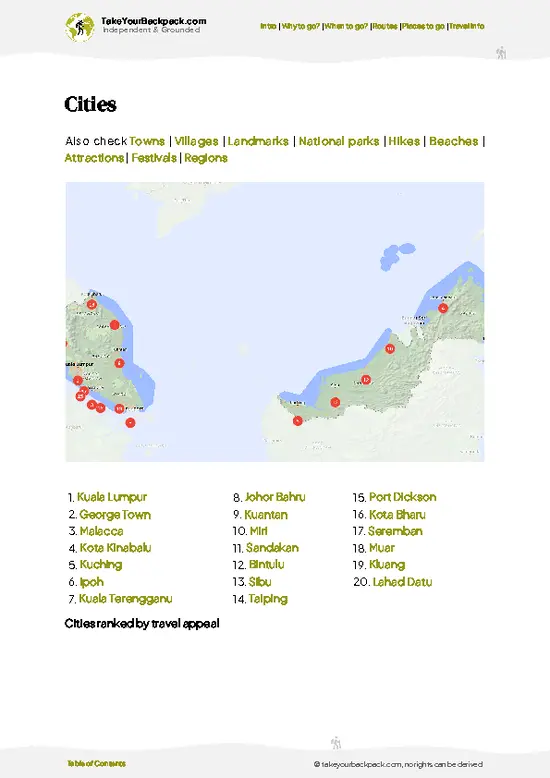
Malaysia🇲🇾 | citiesLahad Datu
palm oil estates, wildlife corridor, gateway to Danum | things to do and best time to go

Explore SibuExplore Ranau

Backpacking in Lahad Datu
👀 For curious travelerscity ranked #27
By Johan Kruseman 🇳🇱 | Updated May 10, 2026

Most people realize too late that Lahad Datu is the cheapest, calmest launchpad for Danum Valley and Tabin, with far fewer tour markups than Kota Kinabalu or Sandakan. It sits on Sabah’s east coast in Malaysian Borneo, a scruffy port town more functional than pretty. As a backpacker base it’s cheap, walkable, and very local; nightlife is minimal, other travelers are thin on the ground, and security can feel tense compared with Sandakan, but for rainforest access and raw, everyday Borneo, it punches far above its looks.

Discover everything you want to know in the 📖 Malaysia Travel Guide.
Loading the map 🌍
CLICK TO FILTER
city
town
village
unique site
national park
hike
beach
attraction
festival
region
SHOW COUNTRY‘S BESTSHOW ALL

✨ Why go?
Ranked #27 city in Malaysia
Why visitors keep coming back

Lahad Datu is a strategic basecamp for backpackers, balancing affordability with a surprising array of activities. The hostels here are budget-friendly and often buzzing with fellow travelers, making it easy to swap stories and tips. The food scene is a delightful mix of local flavors, perfect for fueling your adventures. Plus, the city is walkable, allowing you to explore without the hassle of transport. When it’s time to move on, easy onward travel options connect you to nearby highlights. Whether you linger or just stop for a night, Lahad Datu offers a practical pit stop on your journey.
Get the complete Travel Guide for Malaysia
Everything organized for offline planning — routes, highlights, costs & tips

See what’s inside 👉

Get the Travel Guide -

💡 HighlightsPlaces and moments you shouldn't skip

  • Pasar Besar Lahad Datu (Lahad Datu Central Market) — The beating heart of town in the early morning: buckets of fresh seafood, tropical fruit stalls, cheap cooked food and handy spots to practice bargaining and try local Sabah snacks. Great for budget meals and seeing everyday life up close.
  • Lahad Datu Waterfront & Fishing Jetty (Tanjung Batu area) — Working harbor, fishing boats and a simple shoreline where locals unload catches and you can buy fresh seafood or shoot sunset photos. The atmosphere is raw and authentic, a clear contrast to polished tourist piers.
  • Masjid Pekan Lahad Datu (Main Town Mosque) — The main mosque is a community focal point with attractive local mosque architecture and quiet times for respectful visitors to observe prayer life and neighborhood rhythms. It’s useful
read more 👉
  • Pasar Besar Lahad Datu (Lahad Datu Central Market) — The beating heart of town in the early morning: buckets of fresh seafood, tropical fruit stalls, cheap cooked food and handy spots to practice bargaining and try local Sabah snacks. Great for budget meals and seeing everyday life up close.
  • Lahad Datu Waterfront & Fishing Jetty (Tanjung Batu area) — Working harbor, fishing boats and a simple shoreline where locals unload catches and you can buy fresh seafood or shoot sunset photos. The atmosphere is raw and authentic, a clear contrast to polished tourist piers.
  • Masjid Pekan Lahad Datu (Main Town Mosque) — The main mosque is a community focal point with attractive local mosque architecture and quiet times for respectful visitors to observe prayer life and neighborhood rhythms. It’s useful for learning about the town’s Muslim community and culture.
Nearby visitable highlights outside the town that make excellent day trips are Danum Valley Conservation Area, Tabin Wildlife Reserve, and Deramakot Forest Reserve — my personal favorite is Danum Valley.
Spotted a mistake or missing something? Contact us.

🏘️ NeighborhoodsNeighborhood guide to Lahad Datu

Lahad Datu offers a unique blend of nature and culture, making it a fascinating stop for backpackers.

Central Lahad Datu: This area buzzes with local life. Affordable eateries and shops line the streets. It’s walkable, with easy access to transport hubs. Perfect for short stays, you can soak in the local vibe without breaking the bank.

Danum Valley: A bit further out, this is a nature lover’s paradise. While it’s pricier due to eco-lodges, the experience is worth it. Ideal for longer stays, you’ll find tranquility and adventure in the rainforest. Transport options are limited, so plan ahead.

Silam: A quieter neighborhood, great for those seeking a peaceful retreat. It’s less touristy, with budget accommodations. Walkable, but nightlife is minimal. Best for longer stays if you want to unwind and explore at your own pace.

⌛️ 1 day1-day itinerary for Lahad Datu

Lahad Datu, a gateway to Borneo’s wild heart, is a blend of rich culture and nature’s wonders. Start your day at the bustling Pasar Tani, where local vendors showcase fresh produce and traditional snacks. Grab a cup of kopi and a few kuih for a true taste of the region.

After fueling up, head to the nearby Danum Valley Conservation Area. This isn’t just a tourist stop; it’s a chance to immerse yourself in Borneo’s lush rainforest. Spend a few hours hiking the trails, listening to the symphony of wildlife, and maybe even spotting an orangutan.

As the sun dips, return to town and stroll through the charming streets of Lahad Datu. Stop by the local night market for dinner. Try the grilled seafood—it’s a local favorite.

End your evening at a cozy café, reflecting on the day’s adventures. … read more 👉
Lahad Datu, a gateway to Borneo’s wild heart, is a blend of rich culture and nature’s wonders. Start your day at the bustling Pasar Tani, where local vendors showcase fresh produce and traditional snacks. Grab a cup of kopi and a few kuih for a true taste of the region.

After fueling up, head to the nearby Danum Valley Conservation Area. This isn’t just a tourist stop; it’s a chance to immerse yourself in Borneo’s lush rainforest. Spend a few hours hiking the trails, listening to the symphony of wildlife, and maybe even spotting an orangutan.

As the sun dips, return to town and stroll through the charming streets of Lahad Datu. Stop by the local night market for dinner. Try the grilled seafood—it’s a local favorite.

End your evening at a cozy café, reflecting on the day’s adventures. Lahad Datu may not be on every traveler’s radar, but its authentic experiences make it a rewarding stop.
Build the Right Itinerary
Use the Malaysia Travel Guide’s 5, 10 & 15-day routes as a starting point to plan a trip that actually works on the ground.

Get the Travel Guide -

🌤️ When to go?Choosing the right time of year


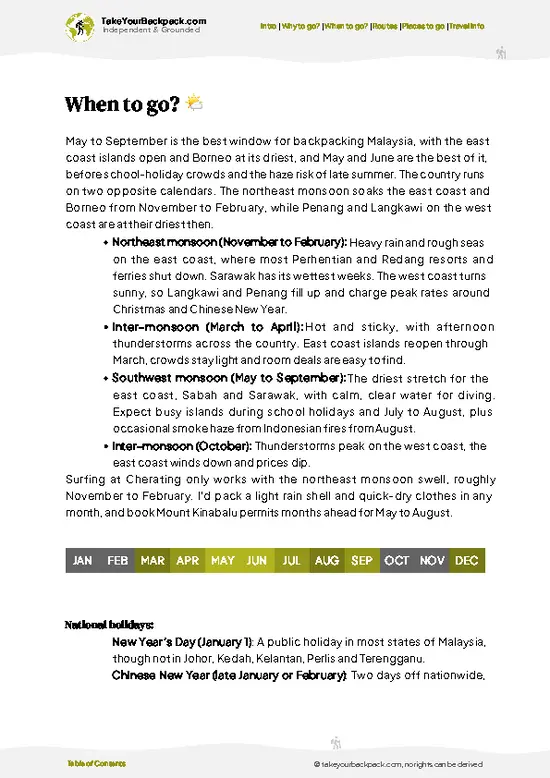
  • Topic: Weather – Lahad Datu’s tropical climate means heavy rain from November to February, making trails slippery and outdoor plans tricky. The drier months, March to October, offer more reliable sunshine and less humidity.

  • Topic: Temperature – Expect steady warmth year-round, around 27-32°C (81-90°F). Nights cool slightly but rarely drop below 24°C (75°F), so pack light but prepare for humidity.

  • Topic: Daylight Hours – Roughly 12 hours of daylight all year, sunrise near 6:30 AM and sunset around 6:30 PM, giving you a consistent window for exploration.

  • Topic: Crowds – Peak tourist season aligns with the dry months, especially July and August, so expect more visitors and higher prices then.

  • Topic: Seasonal Activities – Wildlife spotting and diving are best in the dry season when
read more 👉

  • Topic: Weather – Lahad Datu’s tropical climate means heavy rain from November to February, making trails slippery and outdoor plans tricky. The drier months, March to October, offer more reliable sunshine and less humidity.

  • Topic: Temperature – Expect steady warmth year-round, around 27-32°C (81-90°F). Nights cool slightly but rarely drop below 24°C (75°F), so pack light but prepare for humidity.

  • Topic: Daylight Hours – Roughly 12 hours of daylight all year, sunrise near 6:30 AM and sunset around 6:30 PM, giving you a consistent window for exploration.

  • Topic: Crowds – Peak tourist season aligns with the dry months, especially July and August, so expect more visitors and higher prices then.

  • Topic: Seasonal Activities – Wildlife spotting and diving are best in the dry season when visibility is clear and animals are more active.

  • Topic: Price Fluctuations – Accommodation and tours spike during dry season and holidays; off-peak months offer better deals but risk rain interruptions.


Pro-tip: Aim for shoulder months like March or October—good weather, fewer crowds, and smarter prices.


source: climatestotravel.comJANJanuary: fair for travelingFEBFebruary: fair for travelingMARMarch: highly recommended for travelingAPRApril: highly recommended for travelingMAYMay: highly recommended for travelingJUNJune: highly recommended for travelingJULJuly: good for travelingAUGAugust: good for travelingSEPSeptember: highly recommended for travelingOCTOctober: highly recommended for travelingNOVNovember: fair for travelingDECDecember: fair for traveling
when-to-go

✈️ The backpacker research shortcutMalaysia Travel Guide

An offline-friendly backpacking guide with optimized travel routes, ranked highlights, transport advice, and the best areas to stay.
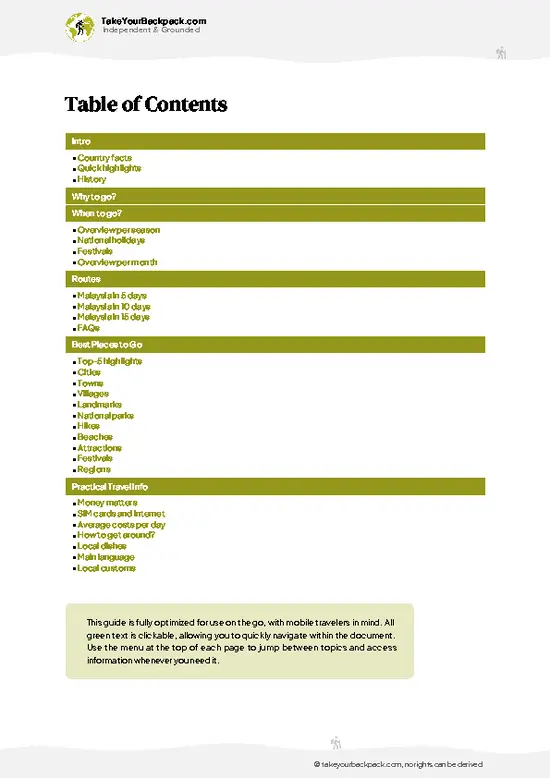
example page 0 from our offline Travel Guide for Malaysiaexample page 1 from our offline Travel Guide for Malaysiaexample page 2 from our offline Travel Guide for Malaysiaexample page 3 from our offline Travel Guide for Malaysiaexample page 4 from our offline Travel Guide for Malaysiaexample page 5 from our offline Travel Guide for Malaysiaexample page 6 from our offline Travel Guide for Malaysiaexample page 7 from our offline Travel Guide for Malaysia
The digital guide (407 pages) contains:
107 highlights, ranked by travel appeal
Optimized 5, 10 & 15-day travel routes
Best neighborhoods to stay
How to get around
Offline-friendly for travel without Wi-Fi
👉 See all 30+ guide features

📅 Plan smarter in minutes, not weeks
Month by month travel advice
Festivals & national holidays
Budget expectations

🗺️ Go to the right places, skip the overrated ones
Honest pros & cons of destinations
Top hikes, parks & viewpoints
Lesser-known places most travelers miss
Clear “worth it vs skip it” guidance

🛏️ Travel smoothly without rookie mistakes
Best areas to stay
Transport systems explained simply
Common scams & safety advice
SIM cards, money & practical tips

🌍 Understand the country, not just visit it
Culture & traditions
52 Essential phrases & customs
Festivals worth planning around
Traveler-friendly historical context
Insights that make places more meaningful

📱 Built for real travel conditions
Fully downloadable PDF
Works completely offline
Optimized for phone use
Useful in remote areas & buses
Everything in one place
Save weeks of stressful planning
Get instant access to the full guide directly. 30-day money-back guarantee.


Sent to your inbox immediately after payment • 100% Secure Checkout
Best Backpacking Travel Advisor 2025 tourism awardBest Backpacking
Travel Advisor
2025
What others say about Take Your Backpack Guides:
⭐⭐⭐⭐⭐
Fantastic, amazing amount of information!
⭐⭐⭐⭐⭐
My goodness this is amazing, it's what I've been looking for hats off too you!
⭐⭐⭐⭐⭐
I think this is absolutely BRILLIANT
⭐⭐⭐⭐
Very complete and informative. It's still missing places, but I gotta to commend you
⭐⭐⭐⭐⭐
This is truly amazing, thank you, can't wait to explore it with my kids!
⭐⭐⭐⭐⭐
Awesome resource, thank you!
⭐⭐⭐⭐⭐
This is amazing! Can't wait to explore the ones I haven't seen
⭐⭐⭐⭐
I love this! Well done, great idea.
⭐⭐⭐⭐⭐
Thanks for taking the time to make this gem!
⭐⭐⭐⭐⭐
This might be the best website I've ever seen.
⭐⭐⭐⭐⭐
Congratulations, and thank you so much for your work; it's incredibly valuable.
⭐⭐⭐⭐
In all seriousness I think you did a great job pointing out the important spots
⭐⭐⭐⭐⭐
10/10 very good
⭐⭐⭐⭐⭐
As someone who's only just starting to visit regularly this is awesome, thank you.
⭐⭐⭐⭐
Thank you very much! I'm going to visit my dad, it's going to be very useful!
⭐⭐⭐⭐⭐
This is really cool! We'll be travelling for the first time and this definitely come in handy.
⭐⭐⭐⭐⭐
You are now our minister of culture, congratulations 👨‍💼
⭐⭐⭐⭐⭐
Just wanted to tell you that this is a pearl! Going to follow your recommendations.
⭐⭐⭐⭐⭐
This is so cool. I'll definitely be using the resource for my travels soon.
⭐⭐⭐⭐⭐
This is very impressive! Good work.
⭐⭐⭐⭐⭐
This is an amazing and informative site. Very well done!

🛏️ Where to stay?Best areas and accommodation options

In Lahad Datu, the best spot for backpackers is the town center near Jalan Utara. It’s where the pulse of daily life beats strongest—safe, walkable, and packed with affordable eateries and small shops. This area draws budget travelers and solo adventurers because it’s social without being overwhelming, offering a genuine slice of local life. Hostels here are modest but reliable, perfect for meeting fellow travelers without the touristy gloss. Compared to the quieter outskirts or industrial zones, staying central means cutting transit time and maximizing your experience. You trade a bit of quiet … read more 👉
In Lahad Datu, the best spot for backpackers is the town center near Jalan Utara. It’s where the pulse of daily life beats strongest—safe, walkable, and packed with affordable eateries and small shops. This area draws budget travelers and solo adventurers because it’s social without being overwhelming, offering a genuine slice of local life. Hostels here are modest but reliable, perfect for meeting fellow travelers without the touristy gloss. Compared to the quieter outskirts or industrial zones, staying central means cutting transit time and maximizing your experience. You trade a bit of quiet for connection and convenience—a smart move when time and budget are tight.

🚌 Getting aroundTransportation options and practical tips

Lahad Datu moves at its own pace—neither frantic nor sluggish, but a steady rhythm that blends local intuition with pockets of structure. It’s not a city where you’ll find a clock dictating every step, but neither is it a free-for-all chaos. Instead, it’s a dance between waiting patiently and seizing the moment when transport shows up. Understanding this flow means you’re not just a passenger—you’re playing the game with eyes wide open, choosing when to save time, spend money, or accept a bit of discomfort.


  • Walking: The ultimate budget choice. Lahad Datu’s town center is compact enough to explore on foot, giving you freedom and zero cost. It’s slow but lets you absorb the local vibe and spot street food stalls or markets that buses miss.

  • Local Buses: Runs roughly from 6:00 AM to 7:00
read more 👉
Lahad Datu moves at its own pace—neither frantic nor sluggish, but a steady rhythm that blends local intuition with pockets of structure. It’s not a city where you’ll find a clock dictating every step, but neither is it a free-for-all chaos. Instead, it’s a dance between waiting patiently and seizing the moment when transport shows up. Understanding this flow means you’re not just a passenger—you’re playing the game with eyes wide open, choosing when to save time, spend money, or accept a bit of discomfort.


  • Walking: The ultimate budget choice. Lahad Datu’s town center is compact enough to explore on foot, giving you freedom and zero cost. It’s slow but lets you absorb the local vibe and spot street food stalls or markets that buses miss.

  • Local Buses: Runs roughly from 6:00 AM to 7:00 PM with fares around 1-2 MYR. They’re cheap and cover main routes but expect basic comfort and occasional delays. Ideal if you’re not in a rush and want to stretch your travel budget.

  • Shared Vans (Van Sewa): These minibuses fill up before departure, usually between 7:00 AM and 6:00 PM. They cost a bit more (around 5-7 MYR) but are faster and more direct than buses. Comfort is modest, but you gain time—perfect for balancing budget and speed.

  • Motorcycle Taxis (Ojek): Available all day, these are the fastest way through traffic and can go anywhere. Prices vary but expect 5-10 MYR for short trips. They’re less comfortable and riskier but unbeatable if you need to save time and don’t mind the adrenaline.

👛 Costs (as of 8 May 2025)Travel costs and budget guide for Lahad Datu

Backpacking in Lahad Datu, Malaysia, offers a clear trade-off between cost and comfort, with prices leaning toward the budget-friendly side but varying by season and choice of services.
  • Dorm Accommodation (High Season): Expect to pay around $10 to $15 USD per night. High season drives prices up slightly due to demand, but options remain basic and functional rather than luxurious.
  • Dorm Accommodation (Off-Season): Prices drop to about $7 to $10 USD per night. Off-season is the sweet spot for budget travelers who don’t mind fewer crowds and simpler amenities.
  • Meals: Street food and local eateries dominate here, with meals typically costing between $2 and $5 USD. You can eat well on a tight budget, but opting for more tourist-oriented restaurants will push costs higher.
  • Local Transport: Short
read more 👉
Backpacking in Lahad Datu, Malaysia, offers a clear trade-off between cost and comfort, with prices leaning toward the budget-friendly side but varying by season and choice of services.
  • Dorm Accommodation (High Season): Expect to pay around $10 to $15 USD per night. High season drives prices up slightly due to demand, but options remain basic and functional rather than luxurious.
  • Dorm Accommodation (Off-Season): Prices drop to about $7 to $10 USD per night. Off-season is the sweet spot for budget travelers who don’t mind fewer crowds and simpler amenities.
  • Meals: Street food and local eateries dominate here, with meals typically costing between $2 and $5 USD. You can eat well on a tight budget, but opting for more tourist-oriented restaurants will push costs higher.
  • Local Transport: Short rides on local buses or shared vans usually cost under $1 USD. It’s slow but reliable if you’re patient and flexible with timing.
  • City Transport Pass: Lahad Datu doesn’t have a formal city transport pass system. Budget travelers rely on individual fares or occasional taxi rides, which can run $3 to $5 USD for short distances.
  • Basic Activities/Entry Fees: Nature reserves and cultural sites typically charge between $2 and $7 USD. These fees support conservation and local communities, so they’re worth budgeting for.
  • Miscellaneous Expenses: Think snacks, bottled water, small souvenirs, or occasional internet cafes. Around $2 to $4 USD daily covers these extras without stretching your budget.

Add it all up, and you’re looking at a daily budget roughly between $15 and $30 USD. This range lets you balance comfort and economy without sacrificing the authentic experience. Knowing when to splurge on a guided nature tour or when to save by eating street food is the key to winning the Lahad Datu game.
⚠️ Prices can change and everyone travels differently, so take this as a rough guide. Hope it helps you plan your adventure!

🚌 Day tripsEasy escapes and nearby places

Lahad Datu is a strategic launchpad for unforgettable day trips that blend adventure with cultural immersion.

Borneo Rainforest Lodge
Just a short drive from Lahad Datu, this lodge offers guided treks through the ancient rainforest. You’ll spot orangutans and rare birds while soaking in the lush surroundings. The trip takes about an hour, and for around RM 50, you can join a group tour. Best visited during the dry season from March to October, when trails are more accessible. Many first-timers underestimate the importance of good footwear; don’t skimp on your hiking boots!


Danum Valley Conservation Area
A bit further afield, this pristine area is a paradise for nature lovers. Expect a 2-hour journey, but the RM 100 entrance fee is worth every ringgit. You’ll hike through dense jungle, … read more 👉
Lahad Datu is a strategic launchpad for unforgettable day trips that blend adventure with cultural immersion.

Borneo Rainforest Lodge
Just a short drive from Lahad Datu, this lodge offers guided treks through the ancient rainforest. You’ll spot orangutans and rare birds while soaking in the lush surroundings. The trip takes about an hour, and for around RM 50, you can join a group tour. Best visited during the dry season from March to October, when trails are more accessible. Many first-timers underestimate the importance of good footwear; don’t skimp on your hiking boots!


Danum Valley Conservation Area
A bit further afield, this pristine area is a paradise for nature lovers. Expect a 2-hour journey, but the RM 100 entrance fee is worth every ringgit. You’ll hike through dense jungle, spot wildlife, and even take a dip in a natural pool. The best time to visit is during the cooler months, from June to September. A common mistake is not budgeting enough time; plan for a full day to soak it all in.


Klias River Cruise
For a different vibe, head to the Klias River for a sunset cruise. It’s about 90 minutes from Lahad Datu, and for RM 70, you’ll glide through mangroves, spotting proboscis monkeys and fireflies. The experience is magical, especially from March to October. Many backpackers miss out by not booking in advance; these cruises can fill up quickly!
Want to know what more Malaysia offers?
The Malaysia Travel Guide describes 107 highlights, from cities to national parks, from beaches to hikes

Get the Travel Guide -

🍲 FoodWhat to Eat & Drink

In **Lahad Datu**, the food scene is a vibrant tapestry of flavors. Dive into **Nasi Kandar**, a rice dish drenched in rich curries, or savor **Soto**, a fragrant soup loaded with spices and tender meat. Street food stalls are your best bet; the air is thick with the aroma of grilled skewers and fried snacks.

Don’t miss the local **teh tarik**, a frothy pulled tea that’s a social staple. Eating here is communal; share dishes and enjoy the chatter. Remember, it’s customary to eat with your right hand, a nod to local etiquette. Embrace the chaos of the markets, where every bite tells a story.

🛡️ SafetyTraveler Safety Guide

Lahad Datu is generally safe, but awareness is key. Stick to well-lit areas at night, especially if you’re solo. The local vibe is friendly, but be cautious around crowded markets where pickpockets might lurk.

Common scams are rare, but always confirm prices before accepting services, like taxis or tours. Carry yourself confidently; a relaxed demeanor can deter unwanted attention. Trust your instincts—if something feels off, it probably is. Enjoy the city, but stay alert, and you’ll navigate it just fine.

Other Malaysian cities near Lahad Datu

Explore more nearby:

  • Sandakan—orangutan sanctuary, WWII memorials, seafood markets| 97 km away
  • Ranau—mountain foothills, hot springs, Dusun culture| 212 km away
  • Kota Kinabalu—seafront sunsets, island ferries, mountain backdrop| 271 km away

👉 Discover all cities

Or checkout all Malaysia has to offer (think cities, towns, villages, national parks, hikes, beaches, festivals)
Country photo of Malaysia
film
0
0
0a
Kuala Lumpur
Pixabay
film
1
1
1a
Malacca
film
2
2
2a
Kuching
film
3
3
3a
Ipoh
film
4
4
4a
Kuantan
film
5
5
5a
Kuala Selangor
film
6
6
6a
Kota Bharu

We 💚 feedbackFinal thoughts on visiting Lahad Datu

Lahad Datu is a gateway to Borneo’s wild side, where you can dive into lush rainforests and spot unique wildlife. Just know that the infrastructure can be a bit rough around the edges. Embrace the adventure, but be ready for some bumps along the way.

✈️ When did I visit Malaysia?
As part of my 1.5 year travel around the world trip, I visited Malaysia in January 2016.

✍️ Help improve this page!
The information on this page is based on my own backpacking experience in Malaysia, supplemented with up-to-date research and feedback from other travelers. Travel details can change, so if you notice anything outdated or incomplete, feel free to let me know.


🙋‍♂️ Give feedback

👋 Meet the founderWho’s Behind Take Your Backpack?

Johan, backpacker and founder of TakeYourBackpackHi, I’m Johan (Netherlands 🇳🇱), the creator of TakeYourBackpack. Over the past decade, I’ve backpacked through 80+ countries across six continents, gaining extensive experience with independent travel, long-term trips, and overland routes.

This site is built on a combination of firsthand travel experience and carefully curated insights from other backpackers. Many guides are based on places I’ve personally visited, while others bring together tips, observations, and practical advice shared by trusted travelers I’ve met along the way.

The goal is to provide realistic, experience-driven guidance — not generic itineraries — so you can explore destinations with better context, clearer expectations, and more confidence.

Get Full Country Guide |
Instant download • 107 highlights • Full Offline guide