×

Malaysia🇲🇾 | best citiesBest 10 cities in Malaysia

Cities in Malaysia come in flavors that have little in common beyond the humidity. The west coast of the peninsula packs colonial shophouses, hawker stalls and glass towers into a short train ride, so logistics are easy and the food is cheap and absurdly good. Borneo’s cities are smaller, pricier to reach and built around rivers, rainforest and orangutans rather than malls. The east coast of the peninsula is quieter and more conservative, with fewer crowds and fewer hostels. For backpacking and independent travel, the real choice is between convenience and elbow room, and between air-conditioned comfort and an extra flight.

By Johan Kruseman 🇳🇱 | Updated October 18, 2026
Explore the best towns in Malaysia

Why go?Understanding Their Importance

Malaysia’s cities exist because of trade. Strategic ports on the Strait of Malacca drew Malay, Chinese, Indian, Portuguese, Dutch and British influence over centuries, and the result is a country where one street can hold a mosque, a Taoist temple and a Hindu shrine, with a kopitiam on the corner serving all three congregations breakfast. That mix is the main reason to come, and it shows up most clearly in food, festivals and architecture rather than in monuments.

Infrastructure is the second advantage. Malaysia has some of Southeast Asia’s best intercity buses, electric trains and cheap domestic flights, plus ride-hailing apps that take most of the haggling out of getting around. English is widely understood, which makes first-timers relax within a day.

The geography has quirks. The peninsula … read more 👉
Malaysia’s cities exist because of trade. Strategic ports on the Strait of Malacca drew Malay, Chinese, Indian, Portuguese, Dutch and British influence over centuries, and the result is a country where one street can hold a mosque, a Taoist temple and a Hindu shrine, with a kopitiam on the corner serving all three congregations breakfast. That mix is the main reason to come, and it shows up most clearly in food, festivals and architecture rather than in monuments.

Infrastructure is the second advantage. Malaysia has some of Southeast Asia’s best intercity buses, electric trains and cheap domestic flights, plus ride-hailing apps that take most of the haggling out of getting around. English is widely understood, which makes first-timers relax within a day.

The geography has quirks. The peninsula and Borneo are separated by the South China Sea, so they are two different trips with separate flights and immigration checks for Sabah and Sarawak. The climate is hot and humid year-round, which means city sightseeing is a series of dashes between shade and air conditioning. Cities are also car-oriented, so walking can mean crossing highways without crossings.

Islam is the official religion and shapes daily rhythms, from prayer calls to alcohol prices. Cities here reward travelers who plan around heat, distance and local customs.
How the List Was Created
The list of best cities in Malaysia is created based on culture, vibe, attractions, transport ease, and local charm. If you feel a city is missing in this list, please let us know.

When to go?Seasonal Guide to Visiting

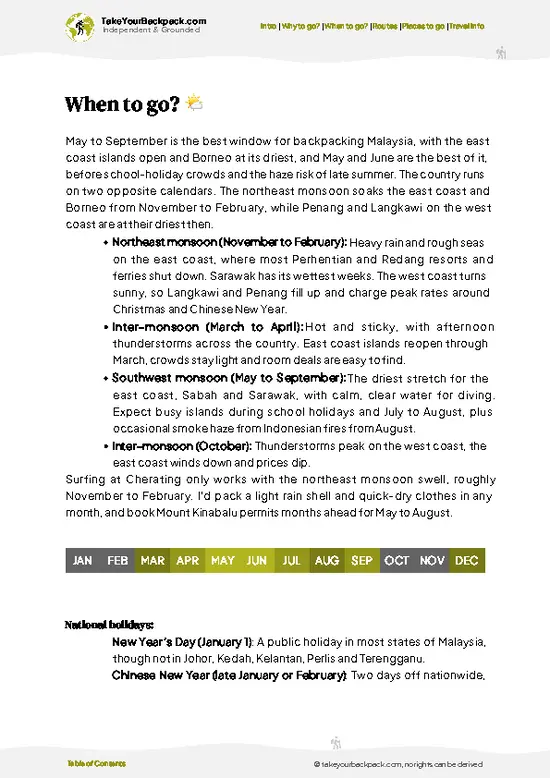
Best months for city travel: The best months for Malaysia’s cities are May to September on the west coast of the peninsula, when rainfall is lighter and there are fewer afternoon downpours, though temperatures still sit around 31 to 33°C by day and 24 to 26°C at night. Humidity hovers near 80 percent, so nobody walks anywhere without sweating, and nobody will judge you for it.

Monsoons and regional differences: The northeast monsoon runs roughly November to March. It hits the east coast of the peninsula hardest, with heavy rain, rough seas and some seasonal closures of guesthouses and ferries. Borneo’s cities, in Sabah and Sarawak, also get their wettest weather from about November to February, when rain can be heavy and daily. The west coast has its own wet stretch from October to November, … read more 👉
Best months for city travel: The best months for Malaysia’s cities are May to September on the west coast of the peninsula, when rainfall is lighter and there are fewer afternoon downpours, though temperatures still sit around 31 to 33°C by day and 24 to 26°C at night. Humidity hovers near 80 percent, so nobody walks anywhere without sweating, and nobody will judge you for it.

Monsoons and regional differences: The northeast monsoon runs roughly November to March. It hits the east coast of the peninsula hardest, with heavy rain, rough seas and some seasonal closures of guesthouses and ferries. Borneo’s cities, in Sabah and Sarawak, also get their wettest weather from about November to February, when rain can be heavy and daily. The west coast has its own wet stretch from October to November, with short, loud thunderstorms that usually clear in an hour or two. Carry a compact umbrella and treat it as a schedule, not an insult.

Crowds and prices: Peak periods change decisions. Chinese New Year (January or February), Hari Raya Aidilfitri and school holidays in December and mid-year push up bus, train and flight fares by roughly 20 to 50 percent and fill budget beds. During Hari Raya, many locals travel home and some small shops close for a few days. During Ramadan, daytime eateries in Muslim-majority areas may be quieter, but evening bazaars are excellent. Shoulder months like April and October offer cheaper beds and thinner crowds.

city hoppingHow to Combine cities Into One Trip

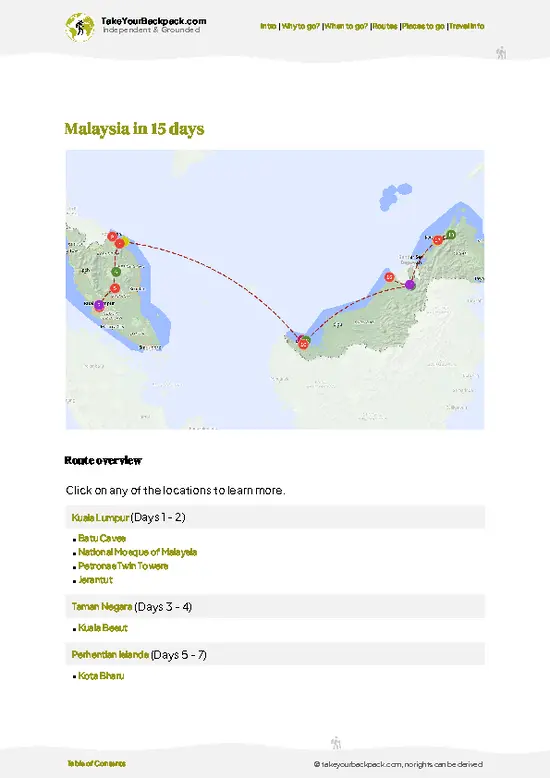
How long to allow: A trip linking several cities in Malaysia needs 10 to 16 days, and 12 to 14 is comfortable if you also want to sit down occasionally. Plan 2 to 3 nights per stop on the peninsula and 3 to 4 in Borneo, where getting in and out eats half a day.

Grouping and direction: The west coast of the peninsula clusters neatly. Kuala Lumpur is the main hub, with frequent buses and the ETS train reaching the north in roughly 3 to 4 hours, and the south in about 4 to 5 hours by bus. A north to south or south to north line works well, ending where your onward flight leaves. Singapore’s border at Johor Bahru is the natural southern exit or entry point. The east coast needs a detour of 5 to 8 hours overland, so keep it as a separate leg. Borneo is its own chapter: flights from Kuala Lumpur … read more 👉
How long to allow: A trip linking several cities in Malaysia needs 10 to 16 days, and 12 to 14 is comfortable if you also want to sit down occasionally. Plan 2 to 3 nights per stop on the peninsula and 3 to 4 in Borneo, where getting in and out eats half a day.

Grouping and direction: The west coast of the peninsula clusters neatly. Kuala Lumpur is the main hub, with frequent buses and the ETS train reaching the north in roughly 3 to 4 hours, and the south in about 4 to 5 hours by bus. A north to south or south to north line works well, ending where your onward flight leaves. Singapore’s border at Johor Bahru is the natural southern exit or entry point. The east coast needs a detour of 5 to 8 hours overland, so keep it as a separate leg. Borneo is its own chapter: flights from Kuala Lumpur take about 2 to 2.5 hours, and the Sabah and Sarawak regions are connected by shorter flights or long, slow buses.

Planning mistakes: The classic error is squeezing in too many stops, then spending the trip in transit stations eating sad sandwiches. Another is booking flights between Borneo and the peninsula without padding for delays. Instead, pick one region per week, book trains early for holidays, and leave a buffer day before any international flight.

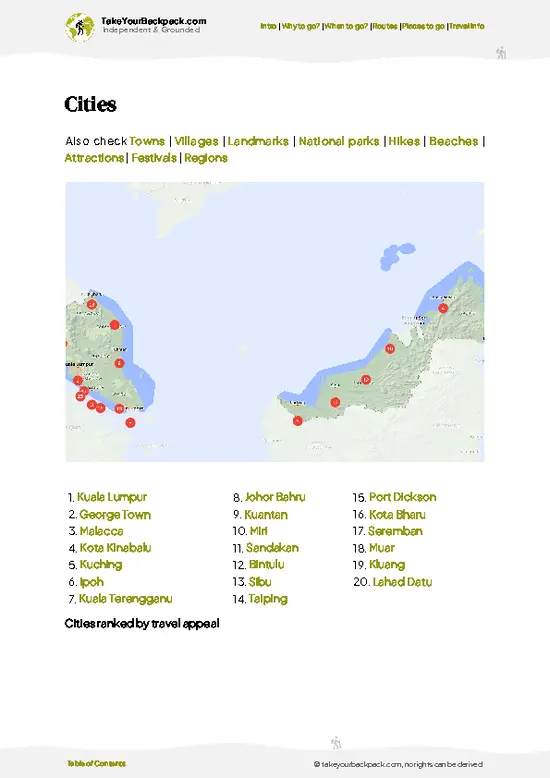
The ListMust-Visit cities in Malaysia

1 Kuala Lumpur

skyscrapers, street food lanes, multicultural districts

Navigate a city where modern towers rise above bustling markets, and neighborhoods reveal Malaysia’s diverse urban identity.

Malaysia - Kuala Lumpur

2 George Town

UNESCO streets, clan jetties, hawker food

Trace layered histories through street art and temples, then eat your way through a city famous for its multicultural food scene.

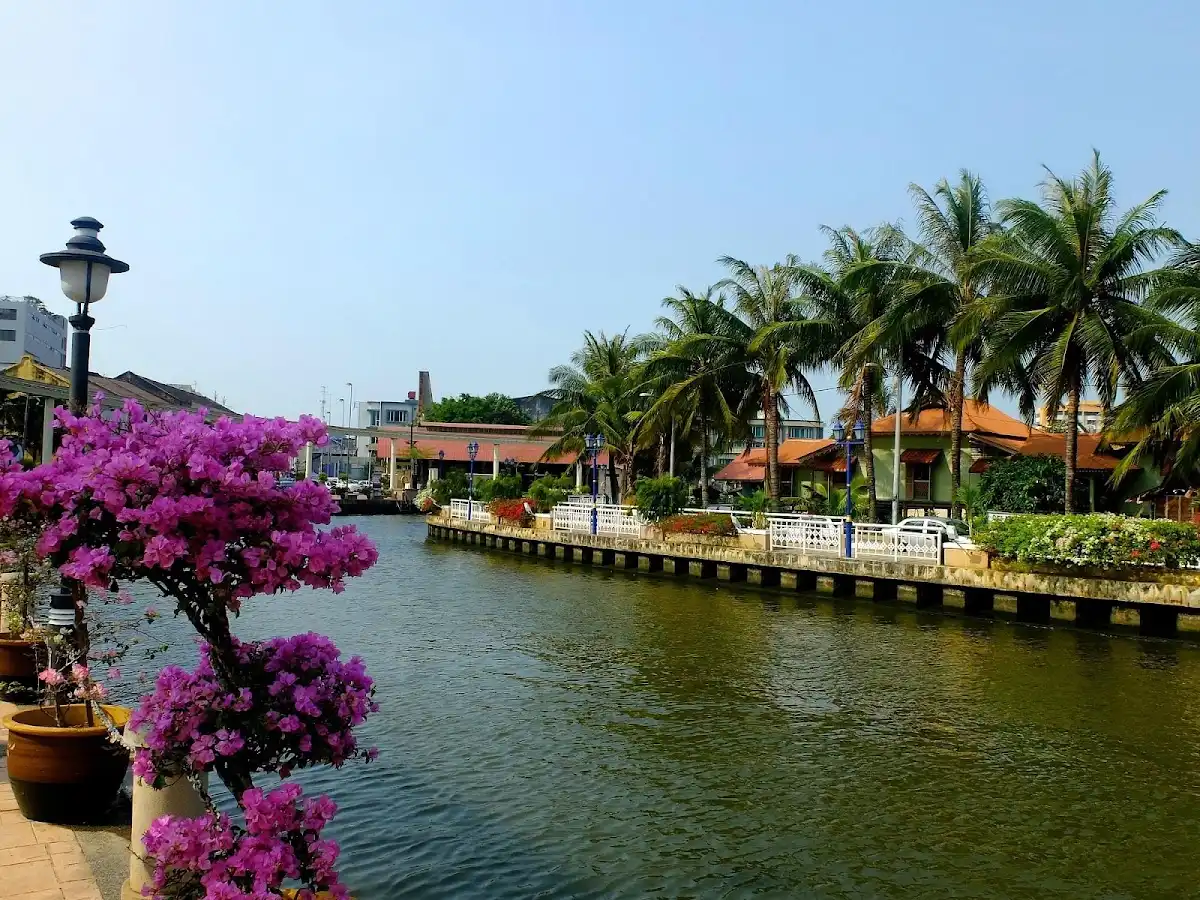
3 Malacca

river cruises, red Dutch square, Peranakan mansions

Cruise past centuries-old buildings, explore layered cultural influences, and visit museums housed in ornate heritage homes.

malaysia-city-malacca
© Google |

4 Kota Kinabalu

seafront sunsets, island ferries, mountain backdrop

Catch ferries to nearby islands, hike forested trails, and enjoy city life framed by sea and the peaks of Borneo.

5 Kuching

riverfront promenade, cat statues, Sarawak cuisine

Walk along the Sarawak River, sample layered laksa, and browse lively markets in a city that blends indigenous and colonial influences.

malaysia-city-kuching
© Google |

6 Ipoh

limestone hills, cave temples, kopitiam breakfast

Sample white coffee in old shophouses, wander among colonial facades, and discover temples carved into dramatic karst outcrops.

malaysia-city-ipoh
© Google |

7 Kuala Terengganu

floating mosque, batik workshops, coastal villages

Experience traditional crafts, explore stilted fishing communities, and see Islamic architecture reflected in the city’s waterways.

8 Johor Bahru

border city, shopping malls, street murals

Cross from Singapore to discover a city of contrasts, where modern malls meet old neighborhoods and street art colors the alleys.

9 Kuantan

beachfront, riverfront park, satay stalls

Relax on long sandy beaches, enjoy riverside evenings, and taste local specialties in a city that connects sea and hinterland.

malaysia-city-kuantan
© Google |

10 Miri

oil heritage, coastal parks, gateway to caves

Use Miri as a launchpad for rainforest adventures, explore petroleum-era relics, and relax on beaches before venturing inland.

11 Sandakan

orangutan sanctuary, WWII memorials, seafood markets

Visit wildlife centers, reflect at poignant historical sites, and eat fresh seafood in a city shaped by migration and resilience.

12 Bintulu

industrial port, Similajau park, Melanau culture

Balance urban industry with nature by hiking coastal trails, visiting local markets, and learning about indigenous river life.

13 Sibu

rejang river, night markets, Foochow heritage

Travel upriver to a city shaped by migration, taste unique noodle dishes, and experience vibrant evening markets.

14 Taiping

rainy climate, lake gardens, colonial cemeteries

Stroll beneath rain-soaked trees, observe wildlife in tranquil parks, and trace the city’s layered history through its quiet streets.

15 Port Dickson

beach resorts, army museum, lighthouse views

Swim or picnic along the coast, climb to a historic lighthouse, and explore military history in this accessible seaside town.

16 Kota Bharu

traditional markets, Islamic museums, shadow puppetry

Experience Kelantanese culture through crafts, performances, and daily life centered around the city’s bustling central market.

malaysia-city-kota-bharu
© Google |

17 Seremban

minangkabau roofs, lake gardens, siew pau bakeries

Notice unique architecture, picnic by the lake, and sample flaky pastries in a city with strong Minangkabau heritage.

18 Muar

riverside esplanade, art deco facades, otak-otak stalls

Wander along the river, admire pastel buildings, and try local snacks in a town known for its relaxed pace and food traditions.

19 Kluang

railway station, mural alleys, coffee shops

Ride the train into town, sip local brews, and spot colorful murals in a compact center with a strong sense of community.

20 Lahad Datu

palm oil estates, wildlife corridor, gateway to Danum

Base yourself here for rainforest treks, spot rare wildlife, and see how industry and conservation intersect in Sabah.

21 Teluk Intan

leaning clock tower, riverside market, heritage shophouses

Photograph the iconic tower, browse bustling markets, and walk through streets lined with reminders of the town’s trading past.

22 Temerloh

Pahang River, freshwater fish, Sunday market

Sample river fish dishes, browse a lively weekly market, and enjoy slow mornings by the water in this central town.

Think you know Malaysia?

Prove you’re a true local — uncover 12 lesser-known cities in Malaysia that locals tend to keep to themselves.
Loading the map 🌍

Expert viewInsights from Locals and Experts

How many cities: Three to four cities on a two-week trip is the number I would advise. Less than that and you are not using the transport network. More than that and you spend the budget and the energy on transfers, since each move eats a half day once you add check-out, terminal waits and check-in. Staying 3 nights gives you time for markets, food and one day trip without feeling like a courier.

Which kind to prioritize: For first-timers and food-focused travelers, the west coast peninsular cities give the most value: they cost the least in transfers, deliver the greatest variety and have the best hostels. Nature-minded travelers should accept the extra flight cost for Borneo’s cities, which work as gateways to rivers, caves and wildlife. The east coast suits slow travelers who want quiet … read more 👉
How many cities: Three to four cities on a two-week trip is the number I would advise. Less than that and you are not using the transport network. More than that and you spend the budget and the energy on transfers, since each move eats a half day once you add check-out, terminal waits and check-in. Staying 3 nights gives you time for markets, food and one day trip without feeling like a courier.

Which kind to prioritize: For first-timers and food-focused travelers, the west coast peninsular cities give the most value: they cost the least in transfers, deliver the greatest variety and have the best hostels. Nature-minded travelers should accept the extra flight cost for Borneo’s cities, which work as gateways to rivers, caves and wildlife. The east coast suits slow travelers who want quiet and do not need nightlife. If you only have one week, skip Borneo entirely, because the flights consume time and money for little city time.

What it costs: Budget about US$25 to 40 a day (RM110 to 180) for a dorm bed at RM30 to 70, hawker meals at RM6 to 15, local transport and a few attractions. Mid-range comfort with private rooms and some air-conditioned cafes runs US$50 to 80 a day. Entry fees are modest: temples and museums are often free or RM5 to 25, towers and viewing decks RM50 to 100 and well worth skipping if you have limited funds. City rides with apps cost RM8 to 25. Intercity buses are RM20 to 60 for most routes, and flights to Borneo can be US$30 to 100 if booked early. The money-saving move is the hawker stall: you eat better for less than a mall food court.

Safety and culture: Malaysia’s cities are generally safe, but bag snatching from passing motorbikes happens, so carry your phone on the side away from traffic. Use ride-hailing apps instead of unmetered taxis. Pedestrian crossings are suggestions, and drivers are not always sold on them.

Dress modestly in mosques and rural neighborhoods: cover shoulders and knees, and remove shoes before entering homes and prayer halls. Use your right hand to give and receive things. Alcohol is taxed heavily, so a beer can cost RM15 to 30. Public displays of affection raise eyebrows, and drug laws are severe, including the death penalty for trafficking. Carry a copy of your passport, and drink bottled or filtered water.

✈️ The backpacker research shortcutMalaysia Travel Guide

An offline-friendly backpacking guide with optimized travel routes, ranked highlights, transport advice, and the best areas to stay.
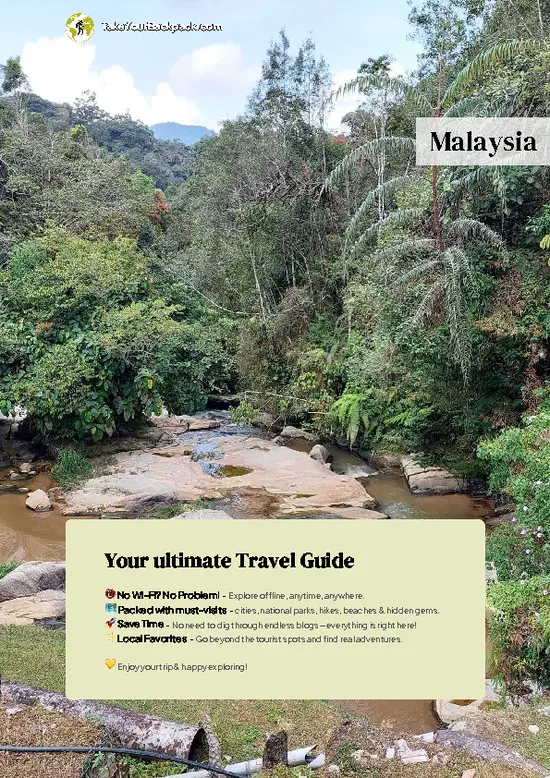
example page 0 from our offline Travel Guide for Malaysia
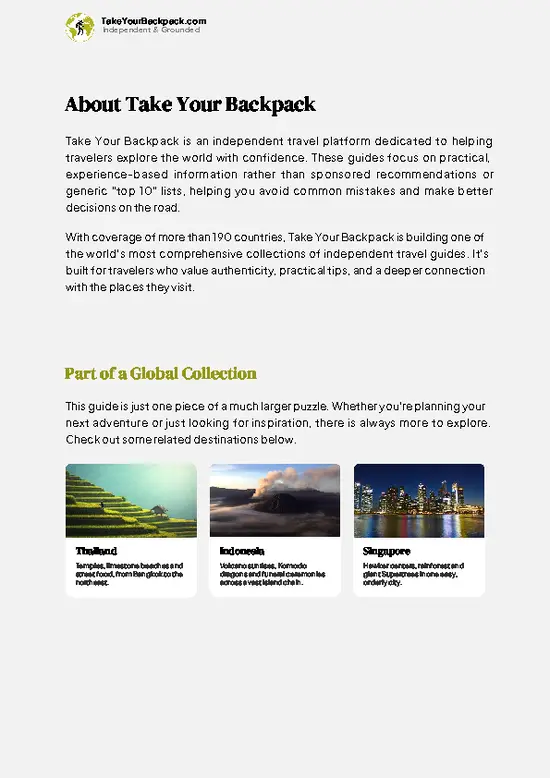
example page 1 from our offline Travel Guide for Malaysia
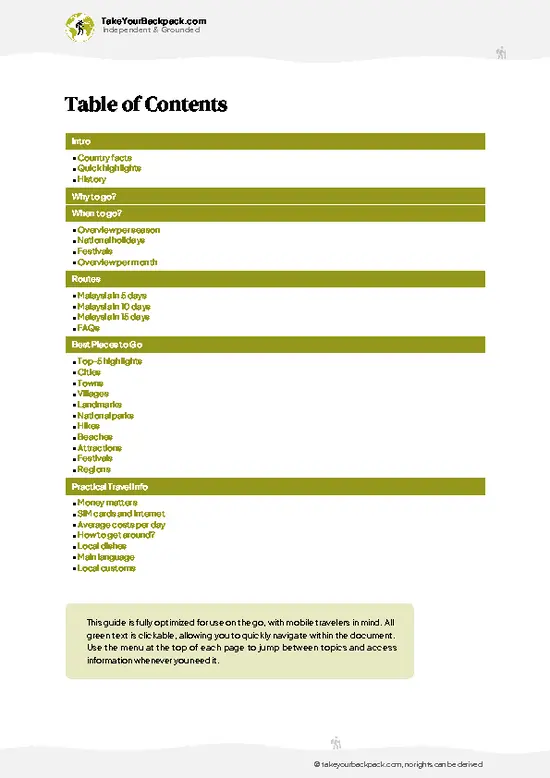
example page 2 from our offline Travel Guide for Malaysia
example page 3 from our offline Travel Guide for Malaysia
example page 4 from our offline Travel Guide for Malaysia
example page 5 from our offline Travel Guide for Malaysia
example page 6 from our offline Travel Guide for Malaysia
example page 7 from our offline Travel Guide for Malaysia
The digital guide (400 pages) contains:
✅ 106 highlights, ranked by travel appeal
✅ Optimized 5, 10 & 15-day travel routes
✅ Cities, national parks, landmarks, beaches
✅ How to get around
✅ Offline-friendly for travel without Wi-Fi
👉 Click to see all 30+ guide features

📅 Plan smarter in minutes, not weeks
✅ Month by month travel advice
✅ Festivals & national holidays
✅ Budget expectations

🗺️ Go to the right places, skip the overrated ones
✅ Honest pros & cons of destinations
✅ Top hikes, parks & viewpoints
✅ Lesser-known places most travelers miss
✅ Clear “worth it vs skip it” guidance

🛏️ Travel smoothly without rookie mistakes
✅ Best areas to stay
✅ Transport systems explained simply
✅ Common scams & safety advice
✅ SIM cards, money & practical tips

🌍 Understand the country, not just visit it
✅ Culture & traditions
✅ 52 Essential phrases & customs
✅ Festivals worth planning around
✅ Traveler-friendly historical context
✅ Insights that make places more meaningful

📱 Built for real travel conditions
✅ Fully downloadable PDF
✅ Works completely offline
✅ Optimized for phone use
✅ Useful in remote areas & buses
✅ Everything in one place
Stop searching, start planning
Get instant access to your full guide. 30‑day money-back guarantee.
+ Add another guide for just

By proceeding you agree to our terms.
Sent to your inbox immediately after payment • 100% Secure Checkout
Best Backpacking Travel Advisor 2025 tourism awardBest Backpacking
Travel Advisor
2025
What others say about Take Your Backpack Guides:
⭐⭐⭐⭐⭐
Fantastic, amazing amount of information!
⭐⭐⭐⭐⭐
My goodness this is amazing, it's what I've been looking for hats off too you!
⭐⭐⭐⭐⭐
I think this is absolutely BRILLIANT
⭐⭐⭐⭐
Very complete and informative. It's still missing places, but I gotta to commend you
⭐⭐⭐⭐⭐
This is truly amazing, thank you, can't wait to explore it with my kids!
⭐⭐⭐⭐⭐
Awesome resource, thank you!
⭐⭐⭐⭐⭐
This is amazing! Can't wait to explore the ones I haven't seen
⭐⭐⭐⭐
I love this! Well done, great idea.
⭐⭐⭐⭐⭐
Thanks for taking the time to make this gem!
⭐⭐⭐⭐⭐
This might be the best website I've ever seen.
⭐⭐⭐⭐⭐
Congratulations, and thank you so much for your work; it's incredibly valuable.
⭐⭐⭐⭐
In all seriousness I think you did a great job pointing out the important spots
⭐⭐⭐⭐⭐
10/10 very good
⭐⭐⭐⭐⭐
As someone who's only just starting to visit regularly this is awesome, thank you.
⭐⭐⭐⭐
Thank you very much! I'm going to visit my dad, it's going to be very useful!
⭐⭐⭐⭐⭐
This is really cool! We'll be travelling for the first time and this definitely come in handy.
⭐⭐⭐⭐⭐
You are now our minister of culture, congratulations 👨‍💼
⭐⭐⭐⭐⭐
Just wanted to tell you that this is a pearl! Going to follow your recommendations.
⭐⭐⭐⭐⭐
This is so cool. I'll definitely be using the resource for my travels soon.
⭐⭐⭐⭐⭐
This is very impressive! Good work.
⭐⭐⭐⭐⭐
This is an amazing and informative site. Very well done!

🛏️ Where to stay?Top Areas to Stay

Malaysia has plenty of hostels and budget guesthouses, with dorm beds typically running RM30 to 70 (about US$7 to 16) and basic private rooms from around RM80 (US$18). In Kuala Lumpur, Chinatown around Petaling Street is the cheapest central base and sits a short walk from Pasar Seni and Merdeka Square, though some older buildings feel worn, while Bukit Bintang puts you next to Jalan Alor’s night food stalls and the city’s best nightlife at the cost of street noise until late. In George Town on Penang, the hostels cluster around Chulia Street and Love Lane, steps from the heritage core and backpacker bars, and in Melaka the area around Jonker Street keeps you close to the old town but gets crowded … read more 👉
Malaysia has plenty of hostels and budget guesthouses, with dorm beds typically running RM30 to 70 (about US$7 to 16) and basic private rooms from around RM80 (US$18). In Kuala Lumpur, Chinatown around Petaling Street is the cheapest central base and sits a short walk from Pasar Seni and Merdeka Square, though some older buildings feel worn, while Bukit Bintang puts you next to Jalan Alor’s night food stalls and the city’s best nightlife at the cost of street noise until late. In George Town on Penang, the hostels cluster around Chulia Street and Love Lane, steps from the heritage core and backpacker bars, and in Melaka the area around Jonker Street keeps you close to the old town but gets crowded and loud during the weekend night market.

If you enjoy meeting fellow travelers, consider choosing hostels with high ratings for atmosphere. On the other hand, if you prefer having your own space, a hotel might be a better option.

MalaysiaDiscover the Country

👋 Meet the founderWho’s Behind Take Your Backpack?

Johan, backpacker and founder of TakeYourBackpackHi, I’m Johan (Netherlands 🇳🇱), the creator of TakeYourBackpack. Over the past 3 decades, I’ve backpacked through 90+ countries across six continents, gaining extensive experience with independent travel, long-term trips, and overland routes.

This site is built on a combination of firsthand travel experience and carefully curated insights from other backpackers. Many guides are based on places I’ve personally visited, while others bring together tips, observations, and practical advice shared by trusted travelers I’ve met along the way.

The goal is to provide realistic, experience-driven guidance — not generic itineraries — so you can explore destinations with better context, clearer expectations, and more confidence.