×
Kuala Lumpur

Malaysia🇲🇾 | citiesKuala Lumpurskyscrapers, street food lanes, multicultural districts | things to do and best time to go

Explore Kota TinggiExplore Kuala Selangor

Backpacking in Kuala Lumpur
🏆 Top pickcity ranked #1
By Johan Kruseman 🇳🇱 | Updated June 3, 2026

Your shirt sticks to your back as the monorail doors hiss open at Bukit Bintang. Chili, exhaust, and sweet condensed milk hang in the air. A wok slams. Someone shouts in Malay. Neon from a dozen bubble tea shops bounces off puddles while the call to prayer threads in from a side street mosque. You dodge a family, step past a durian stall, and a skyscraper of glass and steel suddenly fills your entire sky.

Kuala Lumpur sits in peninsular Malaysia, roughly in the middle of the west coast, and it feels like the country’s control room. For backpackers, it’s easy mode: cheap hostels, simple metro lines, and buses radiating to everywhere else. Petronas Towers, Batu Caves, and the Islamic Arts Museum are genuinely worth your time; Chinatown and Little India keep you fed for pocket change. It’s safer and more orderly than many Southeast Asian capitals, but also more mall-heavy and polished than, say, Penang or Melaka. You’ll meet other travelers without trying, especially around Changkat’s bars, but KL’s vibe is more “urban layover hub” than “soulful long-stay city,” which is either perfect or forgettable depending on what you’re chasing.

Discover everything you want to know in the 📖 Malaysia Travel Guide.
Loading the map 🌍
CLICK TO FILTER
cities
towns
villages
landmarks
national parks
hikes
beaches
attractions
festivals
regions
SHOW COUNTRY’S BESTSHOW ALL

✨ Why go?
Ranked #1 city in Malaysia
What sets this place apart

Kuala Lumpur is a backpacker’s hub that strikes a balance between affordability and accessibility. It’s a city where you can stretch your budget without sacrificing experience. The hostel scene is vibrant, offering everything from social atmospheres to quiet retreats, making it easy to meet fellow travelers or recharge solo.

The food is a culinary adventure, with street stalls serving up authentic dishes that won’t break the bank. You can feast like a king for just a few bucks. Plus, the city’s walkability allows you to explore diverse neighborhoods, each with its own character, without needing to rely heavily on public transport.

Kuala Lumpur also serves as a basecamp for day trips to nearby attractions, making it a strategic stop on your journey. The nightlife is lively, with options … read more 👉
Kuala Lumpur is a backpacker’s hub that strikes a balance between affordability and accessibility. It’s a city where you can stretch your budget without sacrificing experience. The hostel scene is vibrant, offering everything from social atmospheres to quiet retreats, making it easy to meet fellow travelers or recharge solo.

The food is a culinary adventure, with street stalls serving up authentic dishes that won’t break the bank. You can feast like a king for just a few bucks. Plus, the city’s walkability allows you to explore diverse neighborhoods, each with its own character, without needing to rely heavily on public transport.

Kuala Lumpur also serves as a basecamp for day trips to nearby attractions, making it a strategic stop on your journey. The nightlife is lively, with options ranging from laid-back bars to bustling night markets.

If you’re looking for a city that offers a mix of highlights and convenience, Kuala Lumpur fits the bill. It’s not just a stopover; it’s a place to immerse yourself in the local culture while planning your next adventure.
Want to include Kuala Lumpur in your Malaysia route?
Create a personalized Malaysia itinerary that includes Kuala Lumpur and the places that fit your trip — based on your travel style, budget, and available time. Get your route in seconds.

Generate my trip

💡 HighlightsWhat this place is best known for

  1. Petronas Twin Towers (KLCC) — The skyline icon: walk the park, surf the Suria KLCC mall for affordable eats, and book the skybridge/observation deck for dramatic city-and-mountains views at sunset.
  2. Menara Kuala Lumpur (KL Tower) — A higher vantage than most buildings, with a rotating restaurant and observation deck; great for wide panoramas and watching the city light up after dark.
  3. Bukit Nanas / KL Forest Eco Park — A tiny remnant of rainforest in the middle of the city with short trails and a canopy walk — an unexpectedly green, noisy-bird-laden break from the concrete.
  4. Merdeka Square & Sultan Abdul Samad Building — The colonial heart where independence was declared; lovely Moorish façades, wide lawns, and good photo ops that connect KL’s past with its present.
  5. Central Market (Pasar
read more 👉
  1. Petronas Twin Towers (KLCC) — The skyline icon: walk the park, surf the Suria KLCC mall for affordable eats, and book the skybridge/observation deck for dramatic city-and-mountains views at sunset.
  2. Menara Kuala Lumpur (KL Tower) — A higher vantage than most buildings, with a rotating restaurant and observation deck; great for wide panoramas and watching the city light up after dark.
  3. Bukit Nanas / KL Forest Eco Park — A tiny remnant of rainforest in the middle of the city with short trails and a canopy walk — an unexpectedly green, noisy-bird-laden break from the concrete.
  4. Merdeka Square & Sultan Abdul Samad Building — The colonial heart where independence was declared; lovely Moorish façades, wide lawns, and good photo ops that connect KL’s past with its present.
  5. Central Market (Pasar Seni) — A restored art-deco market for batik, crafts and cheap local treats; more than souvenir shopping, it’s a hub for makers and live cultural performances.
  6. Petaling Street (Chinatown) — Bustling market alleys packed with street food, herbal shops and bargain stalls — a sensory primer on KL’s hawker and mercantile culture.
  7. Sri Mahamariamman Temple — The oldest Hindu temple in KL, right by Chinatown; its ornate gopuram and colourful ceremonies give a close-up on the city’s Tamil heritage.
  8. Masjid Negara (National Mosque) — A striking modern mosque with a dramatic umbrella roof and reflecting pool; visitors are welcome outside prayer times (modest dress required) and it’s great for learning about Malaysia’s Muslim life.
  9. Islamic Arts Museum Malaysia — One of Southeast Asia’s best museums for Islamic art: carpets, ceramics, calligraphy and scaled mosque models that explain styles across the Muslim world and Malaysia’s place in it.
  10. Kampung Baru — A working Malay village tucked inside the city: wooden houses, traditional food stalls and a relaxed pace that show a side of KL that modern towers don’t.
Good day trips just outside the city: Batu Caves, the lakeside architecture of Putrajaya, Genting Highlands up in the hills, and FRIM (Forest Research Institute Malaysia) — my personal favorite for a quick canopy-and-trail escape.
Spotted a mistake or missing something? Contact us.

Things to do in Kuala Lumpur

Ratings based on Tripadvisor reviews. When you book through this link, you support our work at no extra cost to you.

🏘️ NeighborhoodsHow different areas shape the experience

Kuala Lumpur is a vibrant hub where modernity meets tradition, making it a playground for backpackers. Here’s a breakdown of key neighborhoods to help you navigate your choices.

Bukit Bintang: This is the heart of Kuala Lumpur’s nightlife. Expect a lively atmosphere filled with bars, restaurants, and shopping. It’s walkable, with plenty of budget-friendly hostels. Perfect for short stays if you want to soak up the energy, but it can get noisy at night.

Chinatown (Petaling Street): A cultural hotspot with a rich history. Street food stalls and bustling markets define the vibe here. It’s affordable and offers a unique experience, making it ideal for longer stays if you want to dive into local life. The area is walkable, but transport options are limited.

Bangsar: A trendy neighborhood popular … read more 👉
Kuala Lumpur is a vibrant hub where modernity meets tradition, making it a playground for backpackers. Here’s a breakdown of key neighborhoods to help you navigate your choices.

Bukit Bintang: This is the heart of Kuala Lumpur’s nightlife. Expect a lively atmosphere filled with bars, restaurants, and shopping. It’s walkable, with plenty of budget-friendly hostels. Perfect for short stays if you want to soak up the energy, but it can get noisy at night.

Chinatown (Petaling Street): A cultural hotspot with a rich history. Street food stalls and bustling markets define the vibe here. It’s affordable and offers a unique experience, making it ideal for longer stays if you want to dive into local life. The area is walkable, but transport options are limited.

Bangsar: A trendy neighborhood popular with locals and expats. It has a mix of cafes, bars, and boutiques. While slightly pricier, it’s worth it for the laid-back vibe. Good for both short and longer stays, but you’ll need to rely on public transport or rideshares to get around.

KL Sentral: The transport hub of the city. If you’re planning to explore beyond the city, this is your best bet. It’s less about nightlife and more about convenience. Accommodations range from budget to mid-range, making it suitable for short stays focused on travel logistics.

Little India (Brickfields): A colorful area filled with Indian culture, food, and shops. It’s affordable and offers a quieter experience compared to Bukit Bintang. Great for longer stays if you want a taste of local life, but be prepared for some walking. Transport access is decent, with the monorail nearby.

⌛️ 1 dayWhat you can realistically do in a day

Kuala Lumpur is a vibrant blend of cultures, where modern skyscrapers stand shoulder to shoulder with colonial architecture. The city pulses with energy, offering a feast for the senses. You can taste the rich flavors of street food, hear the hum of diverse languages, and see the colorful chaos of markets. It’s a place where every corner has a story, and you can dive deep in just one day.

Start your morning in the historic heart of the city, around Merdeka Square. Grab a traditional Malaysian breakfast at a nearby café—nasi lemak is a must. The fragrant rice, spicy sambal, and crispy anchovies will fuel your day. After breakfast, stroll through the square, taking in the stunning Sultan Abdul Samad Building and the nearby Kuala Lumpur City Gallery, where you can learn about the city’s history. … read more 👉
Kuala Lumpur is a vibrant blend of cultures, where modern skyscrapers stand shoulder to shoulder with colonial architecture. The city pulses with energy, offering a feast for the senses. You can taste the rich flavors of street food, hear the hum of diverse languages, and see the colorful chaos of markets. It’s a place where every corner has a story, and you can dive deep in just one day.

Start your morning in the historic heart of the city, around Merdeka Square. Grab a traditional Malaysian breakfast at a nearby café—nasi lemak is a must. The fragrant rice, spicy sambal, and crispy anchovies will fuel your day. After breakfast, stroll through the square, taking in the stunning Sultan Abdul Samad Building and the nearby Kuala Lumpur City Gallery, where you can learn about the city’s history.

As the sun climbs, head to the nearby Bukit Bintang area. This is where the city’s pulse quickens. Explore the bustling streets, and don’t miss the iconic Petronas Twin Towers. If you’re feeling adventurous, take the sky bridge for a breathtaking view. But here’s a tip: skip the long lines and instead, wander through the lush KLCC Park right below. It’s a perfect spot to catch your breath and enjoy the greenery.

In the afternoon, make your way to the lesser-known neighborhood of Kampung Baru. This traditional Malay village is a hidden treasure amidst the urban sprawl. Grab lunch at one of the local stalls—try the satay, grilled to perfection and served with a rich peanut sauce. Afterward, take a leisurely walk through the narrow lanes, soaking in the authentic atmosphere.

As evening approaches, head to the vibrant Jalan Alor for dinner. This street food haven comes alive at night, with sizzling woks and the aroma of grilled seafood filling the air. Sample everything from char kway teow to durian, if you’re feeling brave.

End your day at the rooftop bar of a nearby hotel. Sip a cocktail while gazing at the illuminated skyline. This is Kuala Lumpur—a city that invites you to savor every moment, balancing time, money, and comfort in a way that feels just right.
Turn your Kuala Lumpur visit into an Malaysia adventure
Build a complete Malaysia route with Kuala Lumpur, hidden gems, must-see destinations, and realistic travel times included.

Generate my trip

🌤️ When to go?Weather, crowds, and seasonal trade-offs


  • Topic: Weather – Kuala Lumpur is hot and humid year-round, but the monsoon seasons shape your experience. The Southwest Monsoon (May to September) brings less rain, making it the drier, more predictable window. The Northeast Monsoon (November to March) means heavy, frequent downpours that can disrupt outdoor plans.

  • Topic: Temperature – Expect daily highs around 31–33°C (88–91°F) and lows near 23–25°C (73–77°F). The temperature barely fluctuates, so your comfort depends more on humidity and rain than heat swings.

  • Topic: Daylight Hours – Kuala Lumpur sits near the equator, so daylight is steady year-round, roughly 12 hours daily. Sunrise around 7 AM, sunset close to 7 PM, giving you consistent time to explore without worrying about early nightfall.

  • Topic: Crowds – Peak tourist influx
read more 👉

  • Topic: Weather – Kuala Lumpur is hot and humid year-round, but the monsoon seasons shape your experience. The Southwest Monsoon (May to September) brings less rain, making it the drier, more predictable window. The Northeast Monsoon (November to March) means heavy, frequent downpours that can disrupt outdoor plans.

  • Topic: Temperature – Expect daily highs around 31–33°C (88–91°F) and lows near 23–25°C (73–77°F). The temperature barely fluctuates, so your comfort depends more on humidity and rain than heat swings.

  • Topic: Daylight Hours – Kuala Lumpur sits near the equator, so daylight is steady year-round, roughly 12 hours daily. Sunrise around 7 AM, sunset close to 7 PM, giving you consistent time to explore without worrying about early nightfall.

  • Topic: Crowds – Peak tourist influx aligns with the drier months and major holidays like Chinese New Year (January/February) and Hari Raya (dates vary). Expect busier streets and higher prices during these festive spikes.

  • Topic: Seasonal Activities – Festivals like Thaipusam (January/February) offer cultural immersion but bring crowds and logistical challenges. The drier months favor outdoor markets, rooftop bars, and hiking nearby.

  • Topic: Price Fluctuations – Accommodation and flights peak during dry season and holidays. The wet season sees discounts but at the cost of unpredictable weather, so you trade money savings for potential downtime.


Pro-tip: Aim for shoulder months like April or October—less rain than monsoon peaks, fewer tourists, and better prices. You’ll hack the system for maximum value and comfort.


source: climatestotravel.comJANJanuary: fair for travelingFEBFebruary: fair for travelingMARMarch: fair for travelingAPRApril: highly recommended for travelingMAYMay: excellent for travelingJUNJune: excellent for travelingJULJuly: excellent for travelingAUGAugust: excellent for travelingSEPSeptember: excellent for travelingOCTOctober: highly recommended for travelingNOVNovember: fair for travelingDECDecember: fair for traveling
Malaysia - Kuala Lumpur

✈️ The backpacker research shortcutMalaysia Travel Guide

An offline-friendly backpacking guide with optimized travel routes, ranked highlights, transport advice, and the best areas to stay.
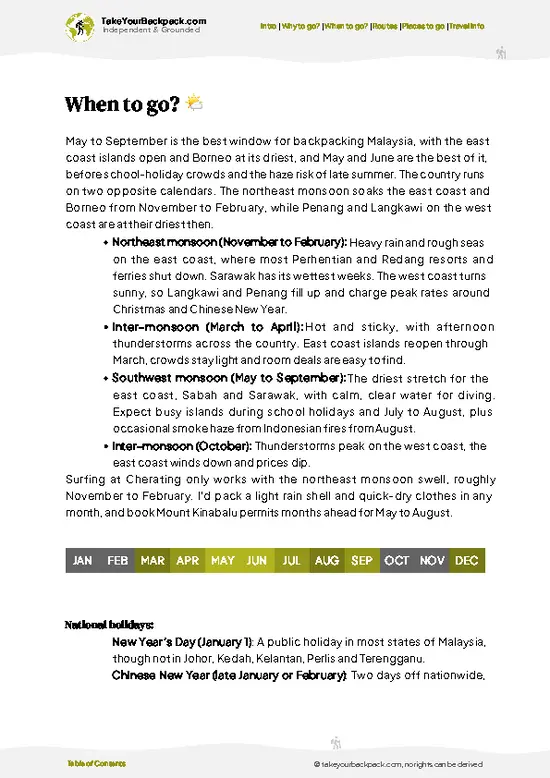
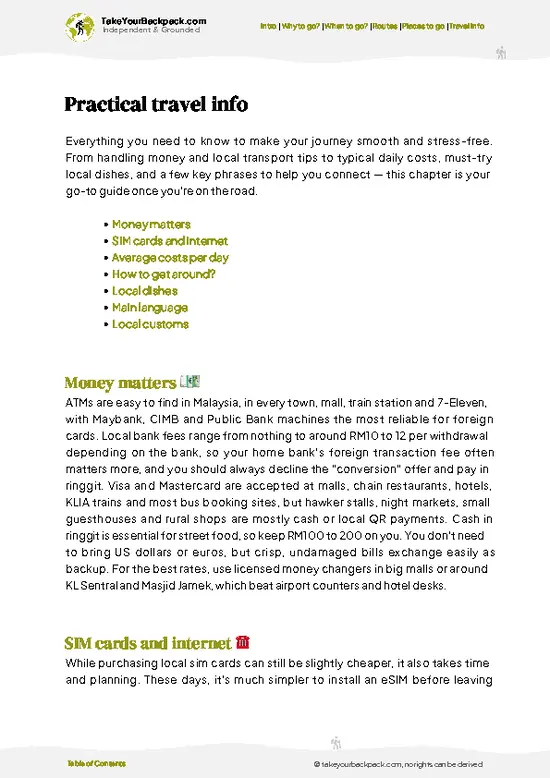
example page 0 from our offline Travel Guide for Malaysia
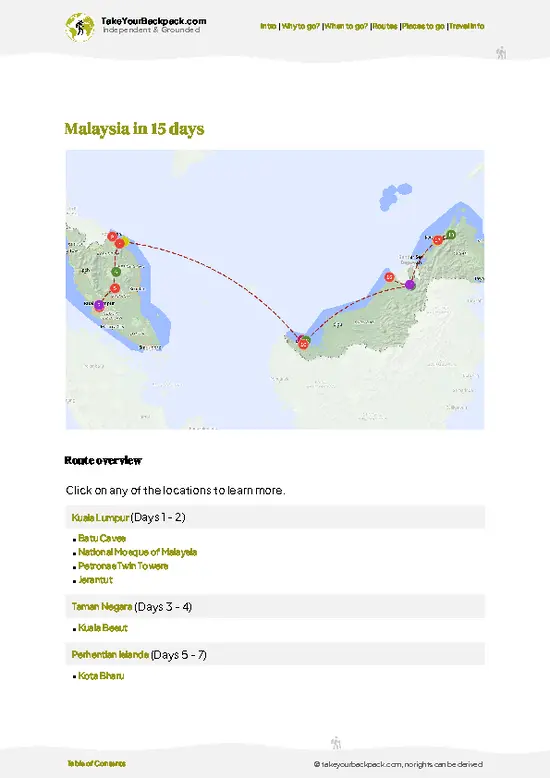
example page 1 from our offline Travel Guide for Malaysia
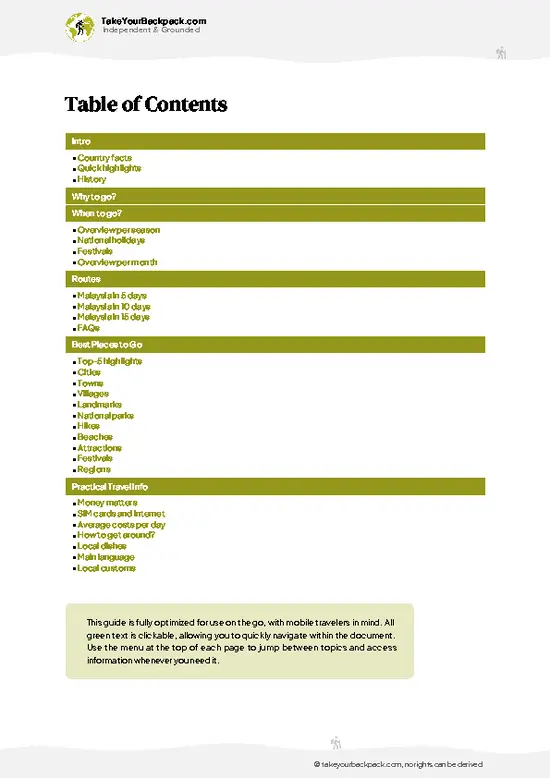
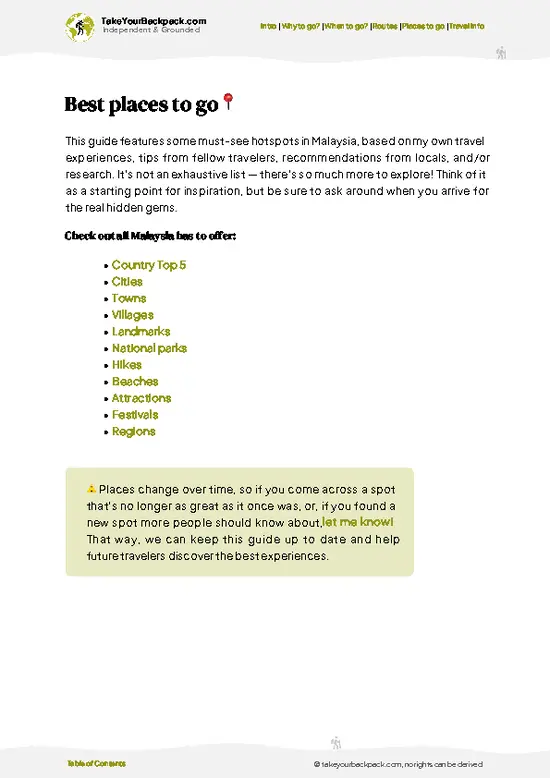
example page 2 from our offline Travel Guide for Malaysia
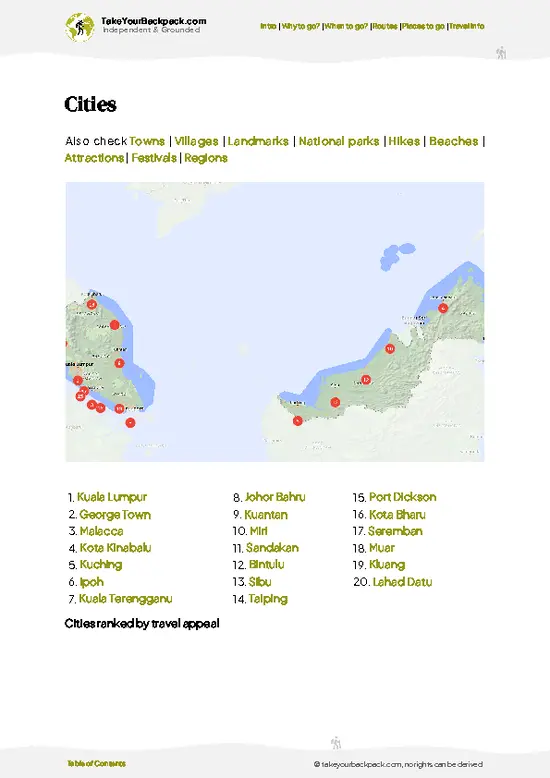
example page 3 from our offline Travel Guide for Malaysia
example page 4 from our offline Travel Guide for Malaysia
example page 5 from our offline Travel Guide for Malaysia
example page 6 from our offline Travel Guide for Malaysia
example page 7 from our offline Travel Guide for Malaysia
The digital guide (407 pages) contains:
107 highlights, ranked by travel appeal
Optimized 5, 10 & 15-day travel routes
Cities, national parks, landmarks, beaches
How to get around
Offline-friendly for travel without Wi-Fi
👉 Click to see all 30+ guide features

📅 Plan smarter in minutes, not weeks
Month by month travel advice
Festivals & national holidays
Budget expectations

🗺️ Go to the right places, skip the overrated ones
Honest pros & cons of destinations
Top hikes, parks & viewpoints
Lesser-known places most travelers miss
Clear “worth it vs skip it” guidance

🛏️ Travel smoothly without rookie mistakes
Best areas to stay
Transport systems explained simply
Common scams & safety advice
SIM cards, money & practical tips

🌍 Understand the country, not just visit it
Culture & traditions
52 Essential phrases & customs
Festivals worth planning around
Traveler-friendly historical context
Insights that make places more meaningful

📱 Built for real travel conditions
Fully downloadable PDF
Works completely offline
Optimized for phone use
Useful in remote areas & buses
Everything in one place
Save weeks of stressful planning
Get instant access to your full guide. 30‑day money-back guarantee.


By proceeding you agree to our terms.
Sent to your inbox immediately after payment • 100% Secure Checkout
Best Backpacking Travel Advisor 2025 tourism awardBest Backpacking
Travel Advisor
2025
What others say about Take Your Backpack Guides:
⭐⭐⭐⭐⭐
Fantastic, amazing amount of information!
⭐⭐⭐⭐⭐
My goodness this is amazing, it's what I've been looking for hats off too you!
⭐⭐⭐⭐⭐
I think this is absolutely BRILLIANT
⭐⭐⭐⭐
Very complete and informative. It's still missing places, but I gotta to commend you
⭐⭐⭐⭐⭐
This is truly amazing, thank you, can't wait to explore it with my kids!
⭐⭐⭐⭐⭐
Awesome resource, thank you!
⭐⭐⭐⭐⭐
This is amazing! Can't wait to explore the ones I haven't seen
⭐⭐⭐⭐
I love this! Well done, great idea.
⭐⭐⭐⭐⭐
Thanks for taking the time to make this gem!
⭐⭐⭐⭐⭐
This might be the best website I've ever seen.
⭐⭐⭐⭐⭐
Congratulations, and thank you so much for your work; it's incredibly valuable.
⭐⭐⭐⭐
In all seriousness I think you did a great job pointing out the important spots
⭐⭐⭐⭐⭐
10/10 very good
⭐⭐⭐⭐⭐
As someone who's only just starting to visit regularly this is awesome, thank you.
⭐⭐⭐⭐
Thank you very much! I'm going to visit my dad, it's going to be very useful!
⭐⭐⭐⭐⭐
This is really cool! We'll be travelling for the first time and this definitely come in handy.
⭐⭐⭐⭐⭐
You are now our minister of culture, congratulations 👨‍💼
⭐⭐⭐⭐⭐
Just wanted to tell you that this is a pearl! Going to follow your recommendations.
⭐⭐⭐⭐⭐
This is so cool. I'll definitely be using the resource for my travels soon.
⭐⭐⭐⭐⭐
This is very impressive! Good work.
⭐⭐⭐⭐⭐
This is an amazing and informative site. Very well done!

🛏️ Where to stay?How to pick the right area

Kuala Lumpur’s backpacker scene gravitates toward two main neighborhoods that balance safety, social buzz, and budget-friendly options: Bukit Bintang and Chinatown (Petaling Street). Each offers a distinct flavor, so your choice boils down to what you value most in your stay.

Bukit Bintang is the city’s entertainment and shopping hub. It’s packed with hostels that cater to solo travelers and groups alike, making it easy to meet people. The vibe here is lively but not overwhelming—think street food stalls, night markets, and neon-lit streets buzzing until late. It’s safe, well-policed, and connected … read more 👉
Kuala Lumpur’s backpacker scene gravitates toward two main neighborhoods that balance safety, social buzz, and budget-friendly options: Bukit Bintang and Chinatown (Petaling Street). Each offers a distinct flavor, so your choice boils down to what you value most in your stay.

Bukit Bintang is the city’s entertainment and shopping hub. It’s packed with hostels that cater to solo travelers and groups alike, making it easy to meet people. The vibe here is lively but not overwhelming—think street food stalls, night markets, and neon-lit streets buzzing until late. It’s safe, well-policed, and connected by multiple transit lines, so you’re never far from anywhere else in the city. The trade-off? It’s a bit pricier than other areas, and the comfort level can vary widely depending on the hostel you pick.

Chinatown, on the other hand, is a backpacker classic for a reason. It’s cheaper, more laid-back, and drenched in local culture. Hostels here tend to be smaller, fostering a tight-knit social atmosphere. You get easy access to street food, markets, and temples, all within walking distance. The neighborhood feels authentic without sacrificing safety, though it’s a bit noisier at night. The trade-off is fewer modern amenities and a slightly less polished vibe compared to Bukit Bintang.

Both areas offer a solid base for backpackers who want to maximize social interaction and budget without sacrificing safety. Your choice hinges on whether you want the electric pulse of Bukit Bintang or the cultural immersion of Chinatown. Either way, you’re plugged into the city’s heart and ready to play the Kuala Lumpur game smart.

🚌 Getting aroundHow to get from A to B

Kuala Lumpur moves with a pulse that’s part clockwork, part improvisation. The city’s rhythm is a blend of sharp, efficient bursts and stretches where you just have to roll with the flow. It’s not a place where everything runs like clockwork, but it’s not chaos either. Instead, it’s a dance between the two: some transit options stick to strict schedules, while others rely on intuition and local know-how. Understanding this balance is your secret weapon. You’re not just getting from A to B—you’re mastering the city’s tempo, choosing when to save time, when to save money, and when to grab a bit of comfort without breaking the bank.


  • RapidKL LRT (Light Rail Transit): Runs roughly from 6 AM to midnight, with trains every 3-7 minutes during peak hours. Tickets cost between RM1.20 and RM3.40
read more 👉
Kuala Lumpur moves with a pulse that’s part clockwork, part improvisation. The city’s rhythm is a blend of sharp, efficient bursts and stretches where you just have to roll with the flow. It’s not a place where everything runs like clockwork, but it’s not chaos either. Instead, it’s a dance between the two: some transit options stick to strict schedules, while others rely on intuition and local know-how. Understanding this balance is your secret weapon. You’re not just getting from A to B—you’re mastering the city’s tempo, choosing when to save time, when to save money, and when to grab a bit of comfort without breaking the bank.


  • RapidKL LRT (Light Rail Transit): Runs roughly from 6 AM to midnight, with trains every 3-7 minutes during peak hours. Tickets cost between RM1.20 and RM3.40 depending on distance. It’s fast, reliable, and air-conditioned—perfect for zipping across the city without sweating the traffic jams. Ideal when you want to maximize your sightseeing time without splurging on taxis.


  • MRT (Mass Rapid Transit): Operational from 6 AM to midnight, MRT trains come every 7-10 minutes. Fares range from RM1.30 to RM4.50. It covers newer parts of the city and suburbs, offering a smooth, comfortable ride. The MRT is your go-to for longer distances where walking isn’t practical but you still want to avoid the unpredictability of road traffic.


  • GoKL Free Bus: Runs from 6 AM to 11 PM on several routes covering key tourist and shopping districts. Completely free. It’s slower and less frequent than rail, but the zero cost makes it a no-brainer for budget travelers who aren’t in a rush and want to soak in street-level views without spending a dime.


  • Walking: Kuala Lumpur’s city center is surprisingly walkable, especially around Bukit Bintang, Chinatown, and KLCC. Walking costs nothing and lets you catch the city’s texture—street food stalls, local markets, and unexpected alleyway discoveries. It’s slower and can be hot, but the trade-off is immersion and zero transit cost.


  • Grab (Ride-Hailing App): Available 24/7, prices fluctuate based on demand but generally start around RM4 for short rides. Offers door-to-door convenience and air-conditioned comfort. It’s the flexible option when you’re carrying gear, traveling late, or just want to save time without the hassle of public transit schedules. Worth the splurge for tight timelines or off-peak hours.


Mastering Kuala Lumpur’s transit is about reading the clock and the street. The LRT and MRT are your backbone—fast, affordable, and predictable. The GoKL bus and walking fill in the gaps when you want to stretch your budget or slow down the pace. Grab is your wildcard, the comfort zone when time is tight or the heat is relentless. Knowing these trade-offs means you’re not just surviving the city’s flow—you’re playing it like a pro.

👛 Costs (as of 6 May 2025)What things cost and how to budget

Kuala Lumpur offers a compelling mix of affordability and convenience, making it a playground for backpackers who want to stretch their dollars without sacrificing too much comfort or experience. Here’s how the daily costs typically break down for an independent traveler navigating this vibrant city.
  • Dorm Accommodation (High Season): Expect to pay around $8 to $12 per night for a bed in a well-maintained hostel dorm. High season pushes prices up slightly due to demand, especially around major holidays or festivals.
  • Dorm Accommodation (Off-Season): Drop to about $5 to $8 per night when the tourist flow slows down. You can snag deals if you book last minute or stay longer.
  • Meals: Street food and local eateries dominate the scene, with meals ranging from $1.50 to $4. A typical day’s worth
read more 👉
Kuala Lumpur offers a compelling mix of affordability and convenience, making it a playground for backpackers who want to stretch their dollars without sacrificing too much comfort or experience. Here’s how the daily costs typically break down for an independent traveler navigating this vibrant city.
  • Dorm Accommodation (High Season): Expect to pay around $8 to $12 per night for a bed in a well-maintained hostel dorm. High season pushes prices up slightly due to demand, especially around major holidays or festivals.
  • Dorm Accommodation (Off-Season): Drop to about $5 to $8 per night when the tourist flow slows down. You can snag deals if you book last minute or stay longer.
  • Meals: Street food and local eateries dominate the scene, with meals ranging from $1.50 to $4. A typical day’s worth of food—think nasi lemak, roti canai, and fresh fruit—can comfortably fit under $10 if you avoid tourist traps.
  • Local Transport: Single rides on buses or the LRT (light rail transit) cost between $0.30 and $0.70. It’s cheap, efficient, and covers most tourist areas.
  • City Transport Pass: A daily pass for unlimited rides on public transport runs about $3 to $4. This is a smart buy if you plan to move around a lot in one day.
  • Basic Activities/Entry Fees: Many cultural sites and museums charge between $1 and $5. Some attractions are free or ask for a small donation, so you can pick and choose based on your interests.
  • Miscellaneous Expenses: This covers bottled water, snacks, occasional coffee, or small souvenirs. Budget around $2 to $5 daily to stay comfortable without overspending.

Add it all up, and you’re looking at a daily budget roughly between $20 and $35. This range balances the essentials with a bit of room for comfort and exploration. Kuala Lumpur rewards those who know where to look—spending a little more on a good hostel or a city pass can unlock smoother logistics and better experiences, turning your trip from just affordable to genuinely enjoyable.
⚠️ Prices can change and everyone travels differently, so take this as a rough guide. Hope it helps you plan your adventure!

🚌 Day tripsShort trips worth adding

Kuala Lumpur is a fantastic launchpad for day trips that offer a taste of Malaysia’s diverse landscapes and cultures. Let’s dive into some high-value excursions that won’t break the bank.

**Batu Caves**
Just a 30-minute train ride from KL, Batu Caves is a must-see. The towering limestone cliffs and the massive golden statue of Lord Murugan are striking. You’ll climb 272 colorful steps to reach the main cave, where Hindu shrines await. The best time to visit is early morning to avoid the crowds and the heat. A round-trip train ticket costs around RM 4, making it a budget-friendly outing. A common mistake? Forgetting to wear comfortable shoes; those steps can be a workout!
👉 Explore Batu Caves

**Genting Highlands**
About an hour’s bus ride from the city, Genting Highlands offers a cool … read more 👉
Kuala Lumpur is a fantastic launchpad for day trips that offer a taste of Malaysia’s diverse landscapes and cultures. Let’s dive into some high-value excursions that won’t break the bank.

**Batu Caves**
Just a 30-minute train ride from KL, Batu Caves is a must-see. The towering limestone cliffs and the massive golden statue of Lord Murugan are striking. You’ll climb 272 colorful steps to reach the main cave, where Hindu shrines await. The best time to visit is early morning to avoid the crowds and the heat. A round-trip train ticket costs around RM 4, making it a budget-friendly outing. A common mistake? Forgetting to wear comfortable shoes; those steps can be a workout!
👉 Explore Batu Caves

**Genting Highlands**
About an hour’s bus ride from the city, Genting Highlands offers a cool escape from the tropical heat. This hill resort is known for its theme parks and casinos, but the real draw is the stunning views and fresh air. You can take a cable car ride for a breathtaking panorama. Expect to spend around RM 50 for transport and entrance fees. The best time to go is during weekdays to dodge the weekend crowds. Many first-timers overlook the hiking trails; don’t miss the chance to explore the lush surroundings!


**Putrajaya**
Just 30 kilometers from KL, Putrajaya is Malaysia’s administrative capital, showcasing modern architecture and beautiful parks. The stunning pink Putra Mosque and the picturesque Putrajaya Lake are highlights. You can rent a bike to explore the area, which adds a fun twist to your visit. Total costs can be around RM 30 for transport and bike rental. Weekdays are ideal for a quieter experience. A common pitfall is rushing through; take your time to appreciate the unique design of the buildings.


**Malacca**
A bit further afield, about two hours by bus, Malacca is rich in history and culture. The UNESCO World Heritage site is famous for its colonial architecture and vibrant street food scene. Explore Jonker Street for local delicacies and visit the historic A Famosa fort. Budget around RM 50 for transport and meals. The best time to visit is during the cooler months from November to February. First-timers often miss the night market; it’s a lively experience you won’t want to skip!
👉 Explore Malacca

**Taman Negara**
For nature lovers, Taman Negara is a fantastic day trip, roughly three hours from KL. This ancient rainforest is home to diverse wildlife and offers canopy walks and jungle treks. While it’s a bit pricier at around RM 100 for transport and entrance, the experience is worth it. The dry season from March to October is best for trekking. A common mistake is underestimating the time needed for hikes; plan accordingly to soak it all in!
👉 Explore Taman Negara
Want to know what more Malaysia offers?
The Malaysia Travel Guide describes 107 highlights, from cities to national parks, from beaches to hikes

Get the Travel Guide -

🍲 FoodLocal Cuisine & Drinks

Kuala Lumpur is a **food lover’s paradise**, where every corner bursts with flavors and aromas that tell stories of its diverse culture. You can’t miss **nasi lemak**, the national dish, featuring fragrant rice cooked in coconut milk, served with sambal, fried anchovies, peanuts, and a hard-boiled egg. It’s a breakfast staple, but you’ll find it at any hour, often wrapped in banana leaves for that extra touch.

Street food is the heartbeat of the city. Head to bustling **night markets** where sizzling woks and smoky grills create a symphony of sounds. Try **char kway teow**, a stir-fried noodle dish with prawns and Chinese sausage, or **roti canai**, a flaky flatbread served with curry. Each bite is a celebration of local ingredients and culinary traditions.

When it comes to drinks, **teh … read more 👉
Kuala Lumpur is a **food lover’s paradise**, where every corner bursts with flavors and aromas that tell stories of its diverse culture. You can’t miss **nasi lemak**, the national dish, featuring fragrant rice cooked in coconut milk, served with sambal, fried anchovies, peanuts, and a hard-boiled egg. It’s a breakfast staple, but you’ll find it at any hour, often wrapped in banana leaves for that extra touch.

Street food is the heartbeat of the city. Head to bustling **night markets** where sizzling woks and smoky grills create a symphony of sounds. Try **char kway teow**, a stir-fried noodle dish with prawns and Chinese sausage, or **roti canai**, a flaky flatbread served with curry. Each bite is a celebration of local ingredients and culinary traditions.

When it comes to drinks, **teh tarik** is a must. This pulled tea, frothy and sweet, is a social drink, often enjoyed in cafés where locals gather to chat. Don’t forget to embrace the custom of sharing; it’s common to order a few dishes to share among friends, creating a communal dining experience.

In KL, food is more than sustenance; it’s a way to connect. So dive in, savor every bite, and let the city’s culinary tapestry unfold around you.

🛡️ SafetySafety Tips and Common Scams in Kuala Lumpur

Kuala Lumpur is generally safe for backpackers, but a few smart strategies can enhance your experience. Stick to well-lit areas at night, especially in neighborhoods like Bukit Bintang and Chinatown. While these spots are lively, they can attract petty crime, so keep your belongings close and your wits about you.

Solo travelers should be particularly mindful when using public transport late at night. The trains and buses are reliable, but avoid empty carriages. If you’re in a taxi, use a reputable app like Grab to sidestep potential overcharging.

Scams do exist, though they’re often more annoying than harmful. Be wary of overly friendly locals offering unsolicited help or guiding you to shops where they receive a commission. A common one is the “tourist ticket” scam at major attractions; … read more 👉
Kuala Lumpur is generally safe for backpackers, but a few smart strategies can enhance your experience. Stick to well-lit areas at night, especially in neighborhoods like Bukit Bintang and Chinatown. While these spots are lively, they can attract petty crime, so keep your belongings close and your wits about you.

Solo travelers should be particularly mindful when using public transport late at night. The trains and buses are reliable, but avoid empty carriages. If you’re in a taxi, use a reputable app like Grab to sidestep potential overcharging.

Scams do exist, though they’re often more annoying than harmful. Be wary of overly friendly locals offering unsolicited help or guiding you to shops where they receive a commission. A common one is the “tourist ticket” scam at major attractions; always buy your tickets directly from official sources.

Overall, a confident demeanor and a little awareness will keep you cruising smoothly through this vibrant city. Enjoy the journey!

Other Malaysian cities near Kuala Lumpur

Explore more nearby:

  • Bentong—hot springs, ginger farms, weekend markets| 48 km away
  • Kuala Selangor—mangrove park, firefly colonies, hilltop fort| 53 km away
  • Seremban—minangkabau roofs, lake gardens, siew pau bakeries| 57 km away

💡 Not sure where to go next?
Create a personalized itinerary for Malaysia including Kuala Lumpur and the places that fit your trip.

Generate my itinerary

👉 Discover all cities

Or checkout all Malaysia has to offer (think cities, towns, villages, national parks, hikes, beaches, festivals)
Country photo of Malaysia

We 💚 feedbackWhat to keep in mind

Kuala Lumpur is a melting pot of cultures, and the food scene is a delicious testament to that. Street vendors serve up everything from spicy nasi lemak to sweet cendol, making every meal an adventure. But be prepared: the city’s traffic can be a nightmare. If you’re not careful, you might spend more time stuck in a cab than exploring. Balance your itinerary wisely, and you’ll savor the best of both worlds.

✈️ When did I visit Malaysia?
As part of my 1.5 year travel around the world trip, I visited Malaysia in January 2016.

✍️ Help improve this page!
The information on this page is based on my own backpacking experience in Malaysia, supplemented with up-to-date research and feedback from other travelers. Travel details can change, so if you notice anything outdated or incomplete, feel free to let me know.


🙋‍♂️ Give feedback

👋 Meet the founderWho’s Behind Take Your Backpack?

Johan, backpacker and founder of TakeYourBackpackHi, I’m Johan (Netherlands 🇳🇱), the creator of TakeYourBackpack. Over the past decade, I’ve backpacked through 80+ countries across six continents, gaining extensive experience with independent travel, long-term trips, and overland routes.

This site is built on a combination of firsthand travel experience and carefully curated insights from other backpackers. Many guides are based on places I’ve personally visited, while others bring together tips, observations, and practical advice shared by trusted travelers I’ve met along the way.

The goal is to provide realistic, experience-driven guidance — not generic itineraries — so you can explore destinations with better context, clearer expectations, and more confidence.

Get full Malaysia guide •
Instant download • 107 highlights • Full Offline guide