×

Maldives🇲🇻 | regionsFuvahmulahSingle-island atoll, freshwater lakes, tiger shark dives | things to do and best time to go

Explore Baa AtollExplore Gan

Backpacking in Fuvahmulah
🌟 Highlightregion ranked #2
By Johan Kruseman 🇳🇱 | Updated October 22, 2026

Most people only realize on the flight home that Fuvahmulah quietly saved them a fortune on the Maldives costs: you get world-class shark dives and wild island life for local-guesthouse prices instead of resort-island robbery. It sits way down in the deep south of the Maldives, a lone atoll-island by itself, far from the classic honeymoon ring of islands around Malé. For backpackers, it’s a weirdly perfect trade: fewer beaches-that-look-like-a-screensaver, more raw edge. You’ve got tiger shark dives, freshwater lakes, black-rock beaches, and proper neighborhoods where kids bike past and aunties side-eye you at the corner shop. It’s cheaper than resort atolls but pricier than ultra-local northern islands, and flights add up, so you’re paying in transport what you save on daily life. There’s almost no bar scene, no big-town hopping, and zero polished glamour—but compared with Maafushi or Hulhumalé, it feels far more real, less curated for Instagram.

Discover everything you want to know in the 📖 Maldives Travel Guide.


example page 0 from our offline Travel Guide for Maldives
example page 1 from our offline Travel Guide for Maldives
example page 2 from our offline Travel Guide for Maldives
example page 3 from our offline Travel Guide for Maldives
example page 4 from our offline Travel Guide for Maldives
example page 5 from our offline Travel Guide for Maldives
example page 6 from our offline Travel Guide for Maldives
example page 7 from our offline Travel Guide for Maldives
Loading the map 🌍
CLICK TO FILTER
cities
towns
villages
landmarks
national parks
beaches
attractions
festivals
regions
SHOW COUNTRY’S BESTSHOW ALL

✨ Why go?
Ranked #2 region in Maldives
What sets this place apart

Fuvahmulah is a backpacker’s paradise in the Maldives, and here’s why savvy travelers flock here. First off, the variety of landscapes is mind-blowing. You’ve got lush jungles, stunning beaches, and even freshwater lakes, all within a stone’s throw. This means you can soak in multiple experiences without the hassle of constant relocation.

Transport is a breeze. You can hop on a local bus or rent a bike to explore at your own pace. This flexibility lets you dive into the local culture, whether it’s chatting with fishermen or sampling street food.

What really sets Fuvahmulah apart is the chance to mix nature and culture seamlessly. You can spend your morning snorkeling with vibrant marine life and your afternoon wandering through traditional villages. This blend of experiences encourages … read more 👉
Fuvahmulah is a backpacker’s paradise in the Maldives, and here’s why savvy travelers flock here. First off, the variety of landscapes is mind-blowing. You’ve got lush jungles, stunning beaches, and even freshwater lakes, all within a stone’s throw. This means you can soak in multiple experiences without the hassle of constant relocation.

Transport is a breeze. You can hop on a local bus or rent a bike to explore at your own pace. This flexibility lets you dive into the local culture, whether it’s chatting with fishermen or sampling street food.

What really sets Fuvahmulah apart is the chance to mix nature and culture seamlessly. You can spend your morning snorkeling with vibrant marine life and your afternoon wandering through traditional villages. This blend of experiences encourages slow travel, allowing you to savor each moment instead of rushing through a checklist.

So, if you’re looking for a place that offers rich experiences without breaking the bank or your spirit, Fuvahmulah is your ticket.

💡 HighlightsWhat this place is best known for

  1. Thoondu Beach — That crescent of white, shell-sorted sand on the eastern shore is unlike the powdery beaches you see on postcards; it’s compact, squeaky, and locally loved for swimming, sunset walks, and watching fishermen mend nets. It feels very Fuvahmulah — small, social and effortlessly photogenic.
  2. Dhadimagi Kilhi — The island’s largest freshwater wetland: a surprising inland lake with reed beds, lots of birds and shaded walking paths. It’s a peaceful place for a picnic, birdwatching or just to notice how different this single-island atoll is compared with the usual coral flats.
  3. Bandaara Kilhi — The quieter freshwater lake that many visitors miss. Fewer people, lots of dragonflies and great early-morning light for photos. Locals use the shoreline for small family outings and seasonal
… read more 👉
  1. Thoondu Beach — That crescent of white, shell-sorted sand on the eastern shore is unlike the powdery beaches you see on postcards; it’s compact, squeaky, and locally loved for swimming, sunset walks, and watching fishermen mend nets. It feels very Fuvahmulah — small, social and effortlessly photogenic.
  2. Dhadimagi Kilhi — The island’s largest freshwater wetland: a surprising inland lake with reed beds, lots of birds and shaded walking paths. It’s a peaceful place for a picnic, birdwatching or just to notice how different this single-island atoll is compared with the usual coral flats.
  3. Bandaara Kilhi — The quieter freshwater lake that many visitors miss. Fewer people, lots of dragonflies and great early-morning light for photos. Locals use the shoreline for small family outings and seasonal fishing — a calm counterpoint to the busier spots.
  4. Fuvahmulah Harbor & Morning Fish Market — Go just after dawn: tuna and reef catches arrive, boats get sorted, and the market hums with real island life. Great for watching how seafood gets sold and for sampling super-fresh grilled fish from a neighbor’s stall.
  5. Tiger-shark and Big-Shark Dive Sites — Fuvahmulah is one of the Maldives’ rare spots for regular close encounters with tiger sharks (and other big sharks). It’s not a theme-park thrill — it’s raw, local diving with operators who know the island’s deep drop-offs and seasonal patterns.
  6. Interior Mangrove Channels and Freshwater Ponds — Hidden waterways and small mangrove stands tucked inside the island make for an unusual walk. Expect frogs, wading birds and a different smell of the Maldives — more green and swampy than coral-salt.
  7. Coral-stone Tombs and Old Graveyards (Dhadimagu/Maadhadu areas) — Scattered historic graveyards with carved coral tombstones and family mausoleums give a tangible sense of local history. They’re quiet, photogenic and tell the human story of the island if you pause and listen.
  8. Traditional Boat-building Yards — Small local yards where craftsmen still build and repair dhonis. Watching the timber work, old techniques and practical island engineering is oddly addictive — and a real insight into Fuvahmulah’s fishing culture. (Hidden gem: most tourists don’t think to look.)
  9. Village Trails and Agricultural Patches — Walk through neighborhood lanes past fruit gardens, banana and guava plots, and small-scale farms. You’ll see everyday island life, meet people selling home-grown produce and taste things you won’t find in resort buffets. (Hidden gem: best when you ask a local for a route.)
  10. Local Snack Stalls and Home-run Eateries — Tiny cafés and street stalls that serve fihunu mas (grilled fish), short-eats and coconut-sweet treats. They’re where the island eats and chats — skip the polished restaurants for at least one real meal here. (Hidden gem: the best places are unmarked and recommended by locals.)
Spotted a mistake or missing something? Contact us.

⌛️ 5 daysA smart one-week plan

Day 1: Fuvahmulah

Start your journey by landing at Fuvahmulah Airport. The island is small, so getting around is straightforward. Rent a bicycle or grab a scooter; both are affordable and give you the freedom to explore at your own pace. The local transport system is limited, but that’s part of the charm. You’ll find that the slower pace allows you to soak in the island’s unique vibe. Spend your first day acclimating, visiting the local markets, and tasting fresh seafood.

Day 2: Diving into the Blue

This is where the magic happens. Book a diving trip with a local operator. Fuvahmulah is famous for its diverse marine life, including whale sharks. The dive shops are well-connected, and they’ll handle the logistics. You’ll spend the day underwater, experiencing a world that feels like a different … read more 👉
Day 1: Fuvahmulah

Start your journey by landing at Fuvahmulah Airport. The island is small, so getting around is straightforward. Rent a bicycle or grab a scooter; both are affordable and give you the freedom to explore at your own pace. The local transport system is limited, but that’s part of the charm. You’ll find that the slower pace allows you to soak in the island’s unique vibe. Spend your first day acclimating, visiting the local markets, and tasting fresh seafood.

Day 2: Diving into the Blue

This is where the magic happens. Book a diving trip with a local operator. Fuvahmulah is famous for its diverse marine life, including whale sharks. The dive shops are well-connected, and they’ll handle the logistics. You’ll spend the day underwater, experiencing a world that feels like a different planet. The thrill of swimming alongside these gentle giants is worth every penny.

Day 3: Cultural Immersion

Dedicate this day to exploring the island’s culture. Visit the local mosques and the Fuvahmulah Museum. Engage with locals; they’re eager to share their stories. This is where you’ll feel the heart of the island. The transport here is easy—just walk or bike. The slower pace allows for spontaneous conversations and connections that enrich your experience.

Day 4: Off-Path Reward: The Waterfalls

Take a detour to the island’s hidden waterfalls. It’s a bit of a trek, but the lush scenery and tranquility are worth it. Pack a picnic and spend a few hours here. This is a chance to escape the usual tourist spots and enjoy nature in its raw form.

Day 5: Chill and Reflect

Wrap up your trip by lounging on the beach. The local beaches are less crowded, offering a serene environment to reflect on your adventures. Grab a coconut and watch the sunset. This day is about savoring the moments you’ve collected.

The must-do day? Day 2, diving with whale sharks. It’s the highlight that justifies your trip, a once-in-a-lifetime experience that encapsulates the essence of Fuvahmulah.

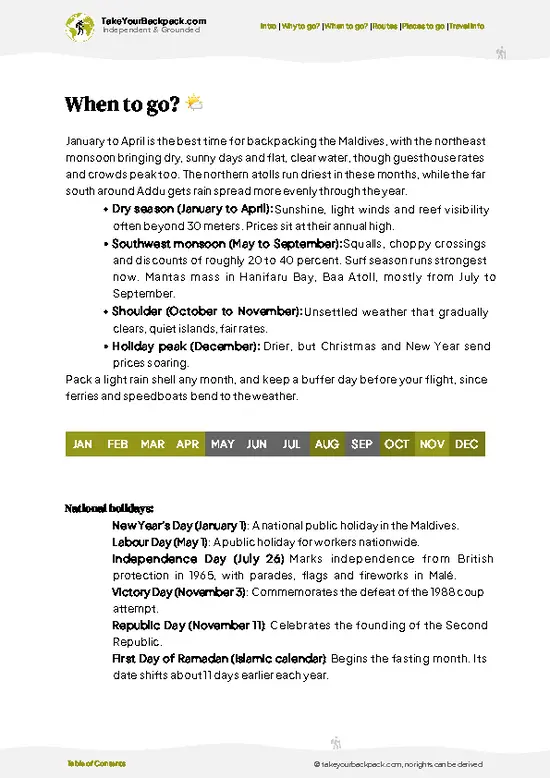
🌤️ When to go?Choosing the right time of year

  • Weather: The sweet spot is December to April—dry season with minimal rain and calm seas. Outside this window, especially May to November, expect heavy monsoon showers and rough waters that can kill your vibe and your plans.
  • Temperature: Fuvahmulah stays warm year-round, hovering between 27°C and 31°C (81°F to 88°F). No surprise chills here, but humidity spikes during the wet season can make it feel hotter and stickier than you want.
  • Daylight Hours: Consistent year-round, roughly 11 to 12 hours of daylight. Sunrise around 6:30 AM, sunset near 6:30 PM. Perfect for early starts and late swims without losing daylight to jet lag.
  • Crowds: Fuvahmulah is off the beaten path, so crowds are never overwhelming. Still, the dry season attracts more divers and anglers, so expect a livelier scene from
… read more 👉
  • Weather: The sweet spot is December to April—dry season with minimal rain and calm seas. Outside this window, especially May to November, expect heavy monsoon showers and rough waters that can kill your vibe and your plans.
  • Temperature: Fuvahmulah stays warm year-round, hovering between 27°C and 31°C (81°F to 88°F). No surprise chills here, but humidity spikes during the wet season can make it feel hotter and stickier than you want.
  • Daylight Hours: Consistent year-round, roughly 11 to 12 hours of daylight. Sunrise around 6:30 AM, sunset near 6:30 PM. Perfect for early starts and late swims without losing daylight to jet lag.
  • Crowds: Fuvahmulah is off the beaten path, so crowds are never overwhelming. Still, the dry season attracts more divers and anglers, so expect a livelier scene from December to April.
  • Seasonal Activities: Dive season peaks in the dry months—clear visibility and calmer seas make spotting sharks and manta rays easier. Wet season limits water activities but offers lush greenery and fewer tourists.
  • Price Fluctuations: Expect prices to spike during the dry season when demand is highest. Booking early can snag better deals, but last-minute travelers in the wet season might score discounts if you’re flexible and ready to embrace the rain.
Pro-tip: Aim for late April or early December—just before or after peak season—to dodge crowds, catch decent weather, and enjoy better rates. It’s the insider’s sweet spot.


source: climatestotravel.comJANJanuary: excellent for travelingFEBFebruary: excellent for travelingMARMarch: excellent for travelingAPRApril: highly recommended for travelingMAYMay: fair for travelingJUNJune: fair for travelingJULJuly: fair for travelingAUGAugust: fair for travelingSEPSeptember: fair for travelingOCTOctober: fair for travelingNOVNovember: fair for travelingDECDecember: highly recommended for traveling
when-to-go

✈️ The backpacker research shortcutMaldives Travel Guide

An offline-friendly backpacking guide with optimized travel routes, ranked highlights, transport advice, and the best areas to stay.
example page 0 from our offline Travel Guide for Maldives
example page 1 from our offline Travel Guide for Maldives
example page 2 from our offline Travel Guide for Maldives
example page 3 from our offline Travel Guide for Maldives
example page 4 from our offline Travel Guide for Maldives
example page 5 from our offline Travel Guide for Maldives
example page 6 from our offline Travel Guide for Maldives
example page 7 from our offline Travel Guide for Maldives
The digital guide (177 pages) contains:
✅ 42 highlights, ranked by travel appeal
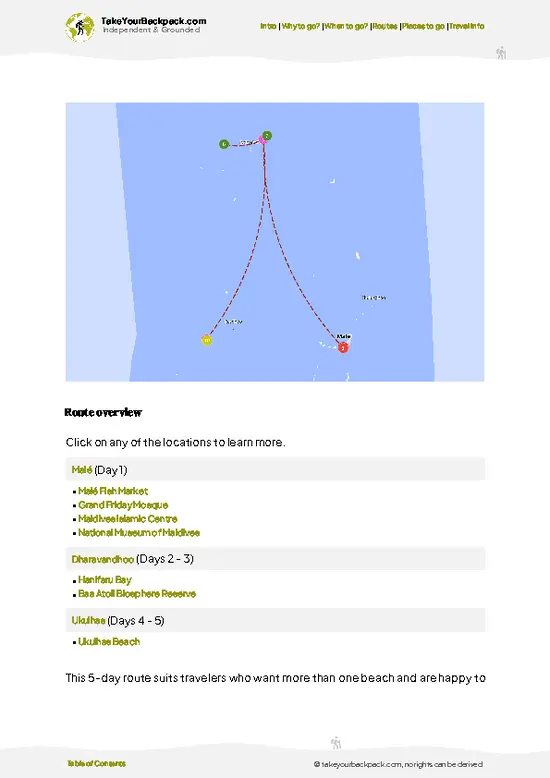
✅ Optimized 2, 3 & 5-day travel routes
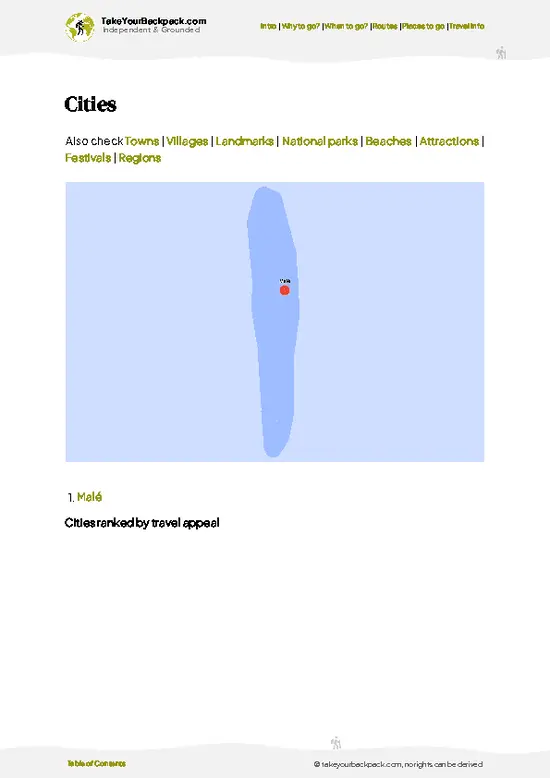
✅ Cities, national parks, landmarks, beaches
✅ How to get around
✅ Offline-friendly for travel without Wi-Fi
👉 Click to see all 30+ guide features

📅 Plan smarter in minutes, not weeks
✅ Month by month travel advice
✅ Festivals & national holidays
✅ Budget expectations

🗺️ Go to the right places, skip the overrated ones
✅ Honest pros & cons of destinations
✅ Top hikes, parks & viewpoints
✅ Lesser-known places most travelers miss
✅ Clear “worth it vs skip it” guidance

🛏️ Travel smoothly without rookie mistakes
✅ Best areas to stay
✅ Transport systems explained simply
✅ Common scams & safety advice
✅ SIM cards, money & practical tips

🌍 Understand the country, not just visit it
✅ Culture & traditions
✅ 52 Essential phrases & customs
✅ Festivals worth planning around
✅ Traveler-friendly historical context
✅ Insights that make places more meaningful

📱 Built for real travel conditions
✅ Fully downloadable PDF
✅ Works completely offline
✅ Optimized for phone use
✅ Useful in remote areas & buses
✅ Everything in one place
Stop searching, start planning
Get instant access to your full guide. 30‑day money-back guarantee.
+ Add another guide for just

By proceeding you agree to our terms.
Sent to your inbox immediately after payment • 100% Secure Checkout
Best Backpacking Travel Advisor 2025 tourism awardBest Backpacking
Travel Advisor
2025
What others say about Take Your Backpack Guides:
⭐⭐⭐⭐⭐
Fantastic, amazing amount of information!
⭐⭐⭐⭐⭐
My goodness this is amazing, it's what I've been looking for hats off too you!
⭐⭐⭐⭐⭐
I think this is absolutely BRILLIANT
⭐⭐⭐⭐
Very complete and informative. It's still missing places, but I gotta to commend you
⭐⭐⭐⭐⭐
This is truly amazing, thank you, can't wait to explore it with my kids!
⭐⭐⭐⭐⭐
Awesome resource, thank you!
⭐⭐⭐⭐⭐
This is amazing! Can't wait to explore the ones I haven't seen
⭐⭐⭐⭐
I love this! Well done, great idea.
⭐⭐⭐⭐⭐
Thanks for taking the time to make this gem!
⭐⭐⭐⭐⭐
This might be the best website I've ever seen.
⭐⭐⭐⭐⭐
Congratulations, and thank you so much for your work; it's incredibly valuable.
⭐⭐⭐⭐
In all seriousness I think you did a great job pointing out the important spots
⭐⭐⭐⭐⭐
10/10 very good
⭐⭐⭐⭐⭐
As someone who's only just starting to visit regularly this is awesome, thank you.
⭐⭐⭐⭐
Thank you very much! I'm going to visit my dad, it's going to be very useful!
⭐⭐⭐⭐⭐
This is really cool! We'll be travelling for the first time and this definitely come in handy.
⭐⭐⭐⭐⭐
You are now our minister of culture, congratulations 👨‍💼
⭐⭐⭐⭐⭐
Just wanted to tell you that this is a pearl! Going to follow your recommendations.
⭐⭐⭐⭐⭐
This is so cool. I'll definitely be using the resource for my travels soon.
⭐⭐⭐⭐⭐
This is very impressive! Good work.
⭐⭐⭐⭐⭐
This is an amazing and informative site. Very well done!

🛏️ Where to stay?How to pick the right area

Fuvahmulah is a unique spot in the Maldives, and it’s not just about the beaches. For backpackers, the island offers a few key areas that strike the right balance between safety, social vibes, and budget-friendliness.

Start with the main town area. This is where the action is. You’ll find local eateries serving up fresh fish curry and roshi, and the atmosphere is friendly. It’s easy to strike up conversations with locals and fellow travelers. Plus, you’re close to the ferry terminal, making day trips to nearby islands a breeze.

Next, consider the southern beaches. These spots are quieter but … read more 👉
Fuvahmulah is a unique spot in the Maldives, and it’s not just about the beaches. For backpackers, the island offers a few key areas that strike the right balance between safety, social vibes, and budget-friendliness.

Start with the main town area. This is where the action is. You’ll find local eateries serving up fresh fish curry and roshi, and the atmosphere is friendly. It’s easy to strike up conversations with locals and fellow travelers. Plus, you’re close to the ferry terminal, making day trips to nearby islands a breeze.

Next, consider the southern beaches. These spots are quieter but still social. You can chill out, soak up the sun, and meet other backpackers. The vibe here is laid-back, perfect for unwinding after a day of exploring.

Lastly, check out the cultural sites around the island. Staying near these areas not only enriches your experience but also gives you a chance to engage with the local community.

Timing is key. Visit during the off-peak season for lower prices and fewer crowds. This way, you can enjoy the best of Fuvahmulah without breaking the bank.

🚌 Getting aroundHow to get around Fuvahmulah

Fuvahmulah is a world apart from the hustle of Malé. Here, the rhythm is dictated by the tides and the whims of the wind, not rigid schedules. You’ll find that the locals move with a laid-back ease, where time feels more like a suggestion than a rule. This isn’t a place where you’ll be herded onto a bus or crammed into a taxi. Instead, it’s about embracing the chaos and spontaneity. You might wait a bit longer for a boat or hop on a bike to explore the island’s hidden corners. The beauty lies in the journey itself, where every twist and turn reveals a new slice of life in this unique atoll.
  • Local Ferries: These are your lifeline to the surrounding islands. They typically run from 6 AM to 4 PM, with prices around $2 to $5. Expect a ride of about 30 minutes to an hour, depending on your destination.
… read more 👉
Fuvahmulah is a world apart from the hustle of Malé. Here, the rhythm is dictated by the tides and the whims of the wind, not rigid schedules. You’ll find that the locals move with a laid-back ease, where time feels more like a suggestion than a rule. This isn’t a place where you’ll be herded onto a bus or crammed into a taxi. Instead, it’s about embracing the chaos and spontaneity. You might wait a bit longer for a boat or hop on a bike to explore the island’s hidden corners. The beauty lies in the journey itself, where every twist and turn reveals a new slice of life in this unique atoll.
  • Local Ferries: These are your lifeline to the surrounding islands. They typically run from 6 AM to 4 PM, with prices around $2 to $5. Expect a ride of about 30 minutes to an hour, depending on your destination. While not luxurious, they offer a genuine local experience.
  • Speedboats: For a quicker option, speedboats zip between islands, taking about 15 to 30 minutes. Prices range from $15 to $30, depending on the distance. They’re more comfortable than ferries, but you’ll want to check the schedule, as they can be less frequent.
  • Bicycles: Renting a bike is a fantastic way to explore Fuvahmulah at your own pace. Rentals cost about $5 per day. You can cover the island in a couple of hours, soaking in the sights and sounds without the pressure of a timetable.
  • Taxis: While not as common, taxis are available for hire. Fares are negotiable, typically starting around $10 for short trips. They’re a good option if you’re in a hurry or traveling with a group.
  • Walking: Don’t underestimate the power of your own two feet. The island is small, and many attractions are within walking distance. It’s free, and you’ll stumble upon local life in a way that no vehicle can offer.

For a smooth experience, always ask locals about the best times to catch ferries or speedboats. They often know the unspoken schedules that can save you time and frustration. Embrace the flow, and let the island reveal its secrets at its own pace.

🍲 FoodEating & Drinking in Fuvahmulah

In Fuvahmulah, the culinary scene is a delightful mix of Maldivian flavors and local charm. Dive into mas huni, a breakfast staple made of tuna, coconut, and onion, served with flatbread. The spicy fish curry is another must-try, simmered to perfection with local spices that dance on your palate. Don’t miss out on garudhiya, a fish soup that’s as comforting as a hug after a long day of exploring.

For a true local experience, head to the markets where vendors sell fresh seafood and tropical fruits. The air is thick with the scent of grilled fish and fried snacks. Street food stalls are your best bet for a quick bite; grab a samosa or bajiya (fried snacks) and enjoy them with a cold coconut water.

Dining here is casual and communal. Expect to share tables and engage in friendly banter with … read more 👉
In Fuvahmulah, the culinary scene is a delightful mix of Maldivian flavors and local charm. Dive into mas huni, a breakfast staple made of tuna, coconut, and onion, served with flatbread. The spicy fish curry is another must-try, simmered to perfection with local spices that dance on your palate. Don’t miss out on garudhiya, a fish soup that’s as comforting as a hug after a long day of exploring.

For a true local experience, head to the markets where vendors sell fresh seafood and tropical fruits. The air is thick with the scent of grilled fish and fried snacks. Street food stalls are your best bet for a quick bite; grab a samosa or bajiya (fried snacks) and enjoy them with a cold coconut water.

Dining here is casual and communal. Expect to share tables and engage in friendly banter with locals. When you’re invited to join a meal, it’s customary to accept—hospitality is a big deal. Just remember to eat with your right hand; it’s a sign of respect.

So, embrace the flavors and the warmth of the people. Each bite is a story waiting to be savored.

FAQCommon questions from travelers

3 to 4 days are sufficient to explore Fuvahmulah thoroughly. This allows time to visit key sites like the freshwater lakes, wetlands, and unique geological formations. It also provides a chance to experience local culture and beaches without rushing.
You can get around Fuvahmulah by renting a bicycle or using local motorbike taxis. Walking is also feasible for short distances, as the island is about 5 km long and 1 km wide. Public transport options are limited, so planning ahead is essential.
Fuvahmulah is known for its unique freshwater lakes, rare bird species, and being the only island in the Maldives with a diverse ecosystem including wetlands and dense vegetation. It is also famous for excellent diving spots with sharks and rich marine life.
⚠️ Things can change over time, so always validate details locally before you go.

Other Maldivian regions near Fuvahmulah

Explore more nearby:

  • Addu Atoll—mangrove forests, WWII relics, southernmost islands| 45 km away
  • Baa Atoll—UNESCO biosphere, manta gatherings, remote reefs| 612 km away

💡 Not sure where to go next?
Create a personalized itinerary for Maldives including Fuvahmulah and the places that fit your trip.

Generate my itinerary

👉 Discover all regions

Or checkout all Maldives has to offer (think cities, towns, villages, national parks, hikes, beaches, festivals)
Country photo of Maldives

We 💚 feedbackSumming up the experience

Fuvahmulah is a breath of fresh air in the Maldives. It’s not just about the beaches; it’s the vibe of the locals that gets you. You’ll find yourself chatting with fishermen over a cup of strong coffee, learning about their day-to-day life. The best surprise? The incredible biodiversity—manta rays and whale sharks are just a boat ride away. Just a heads-up: the island’s laid-back pace might feel slow if you’re used to the hustle. Embrace it; that’s where the magic lies.

✍️ Help improve this page!
The information on this page is based on in-depth research, insights shared by experienced travelers, and feedback from the local travel community in Maldives. While every effort is made to keep the information accurate and current, conditions can change — so if you spot anything incorrect or outdated, please get in touch.


🙋‍♂️ Give feedback

👋 Meet the founderWho’s Behind Take Your Backpack?

Johan, backpacker and founder of TakeYourBackpackHi, I’m Johan (Netherlands 🇳🇱), the creator of TakeYourBackpack. Over the past 3 decades, I’ve backpacked through 90+ countries across six continents, gaining extensive experience with independent travel, long-term trips, and overland routes.

This site is built on a combination of firsthand travel experience and carefully curated insights from other backpackers. Many guides are based on places I’ve personally visited, while others bring together tips, observations, and practical advice shared by trusted travelers I’ve met along the way.

The goal is to provide realistic, experience-driven guidance — not generic itineraries — so you can explore destinations with better context, clearer expectations, and more confidence.