×

Maldives🇲🇻 | best regionsYour Guide to the 3 Best regions in Maldives

Maldives splits into atoll regions that differ sharply in price and feel. The resort-heavy atolls near Malé cost the most, while local-island atolls farther out run quieter and cheaper. For independent travel, public ferries and guesthouses are the key. Book boats a day ahead, and expect alcohol-free islands outside resorts.

By Johan Kruseman 🇳🇱 | Updated October 23, 2026
Explore the best cities in Maldives

Why go?Why Travelers Love These Spots

Maldives is a nation of 26 atolls spread over roughly 90,000 square kilometers, and over 99 percent of that is sea. That geography shapes everything. Distance and boat schedules decide how far you go, not roads. Since local guesthouses were legalized in 2009, independent travel has become realistic, so you no longer need a resort package. Know that Maldives is a Muslim country: alcohol is sold only at resorts and safari boats, and beachwear rules apply on inhabited islands, where most guesthouses sit near a designated bikini beach. Ferries run on fixed, sometimes thin timetables, and some skip Fridays. Atoll life also means sandbank, reef and lagoon access mostly by small boat, so budget for excursions. Spend on snorkeling trips, not on transfers you can do by ferry.
Behind the Scenes of Selection
The list of best regions in Maldives is created based on landscapes, local culture, attractions, vibes, and overall appeal. If you feel a region is missing in this list, please let us know.

When to go?Best Time to Visit Maldives for regions

Best months and weather: The best months are December to April, the dry northeast monsoon (iruvai), with sunshine, calm seas and 28 to 31°C days. Visibility for snorkeling is at its best then. Shoulder and wet season: May to November brings the southwest monsoon (hulhangu), with more rain, wind and choppier crossings, though showers often pass within an hour. Rates at guesthouses can drop roughly 20 to 40 percent, and resorts discount more. May and October to November are good compromise months. Peak periods: Christmas to New Year and Chinese New Year push prices up sharply, so book ferries and rooms weeks ahead. Ramadan shifts each year and quietens daytime dining on local islands, with some cafes closed until sunset. In the wetter months, the southern atolls tend to see rain more often than the north.

region hoppingSuggested Travel Strategies

Days needed: A trip linking several regions needs 10 to 14 days. Two to three stops is plenty. Give each stop 3 to 5 nights, since a single night barely covers the transfer and a snorkel trip. Direction and transport: Start and finish at Malé (Velana airport), then work outward in one direction so you never double back. Nearby atolls connect by speedboat in 30 to 90 minutes or public ferry in 1.5 to 3 hours. Farther regions need a domestic flight of 45 to 75 minutes plus a boat. Cluster atolls that share ferry lines. Common mistakes: Travelers often cram in too many islands and lose days to waiting. Another is booking a morning ferry after a late international landing, or flying out the same day as a ferry arrival. Build in a buffer night in Malé before departures, and confirm schedules with your guesthouse a day ahead.

The ListThe Best regions of Maldives

1 Baa Atoll

UNESCO biosphere, manta gatherings, remote reefs

Witness seasonal marine migrations and discover isolated islands where conservation shapes both underwater life and the rhythm of daily existence.

2 Fuvahmulah

Single-island atoll, freshwater lakes, tiger shark dives

Experience a rare Maldivian landscape with unique wildlife, black pebble beaches, and encounters with large pelagics just offshore.

3 Addu Atoll

mangrove forests, WWII relics, southernmost islands

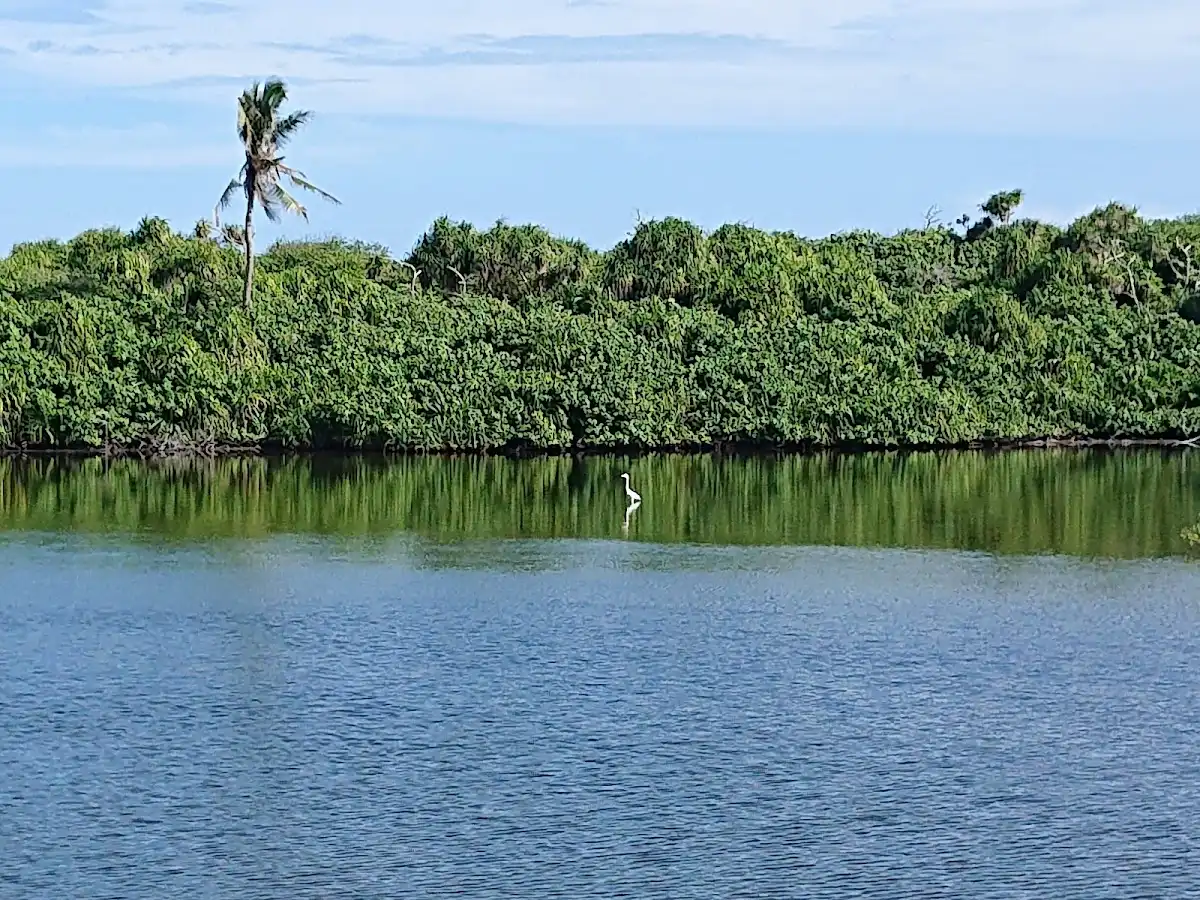
Discover a region where dense mangroves meet historic British outposts, offering cycling routes and glimpses of local island life beyond the resorts.

maldives-region-addu-atoll
© Google |
Loading the map 🌍

Expert viewExpert Commentary on regions

How many regions: I advise two regions, three at most, in a trip of up to two weeks. Each hop costs half a day and US$15 to 60 in boat fares, or US$100 to 200 by domestic flight, so a third region only pays off if you have 12 days or more. Two lets you spend your time in the water instead of on a jetty. Which kind to prioritize: Local-island atolls suit most backpackers, since guesthouses run US$60 to 120 a night for a double, against several hundred at resorts. Resort atolls only make sense as a one-night splurge or day visit, where a day-use pass can cost US$100 to 200. Dive-focused travelers should favor atolls with big channel dives, where a two-tank dive runs roughly US$80 to 120. If you want quiet, pick less-visited atolls over those nearest Malé. Budget: Plan US$100 to 170 a day on … read more 👉
How many regions: I advise two regions, three at most, in a trip of up to two weeks. Each hop costs half a day and US$15 to 60 in boat fares, or US$100 to 200 by domestic flight, so a third region only pays off if you have 12 days or more. Two lets you spend your time in the water instead of on a jetty. Which kind to prioritize: Local-island atolls suit most backpackers, since guesthouses run US$60 to 120 a night for a double, against several hundred at resorts. Resort atolls only make sense as a one-night splurge or day visit, where a day-use pass can cost US$100 to 200. Dive-focused travelers should favor atolls with big channel dives, where a two-tank dive runs roughly US$80 to 120. If you want quiet, pick less-visited atolls over those nearest Malé. Budget: Plan US$100 to 170 a day on a lean independent trip: guesthouse US$60 to 120, meals at local cafes US$15 to 30, and a snorkeling excursion US$25 to 60. Tourism taxes and green tax add a few dollars per night, and a speedboat transfer is typically US$20 to 60 each way. Bring cash in US dollars or rufiyaa for small islands, as ATMs are scarce away from main islands. Safety and culture: Maldives is a Muslim country. Swim in bikini beach zones only, and cover shoulders and knees in village streets. Alcohol and pork are not available on local islands, and importing them is illegal. Respect prayer times and Friday closures. Currents in channels can be strong, so snorkel with a guide and a flotation vest, and never touch coral. Pack reef-safe sunscreen and a rash guard, because the equatorial sun burns fast.

✈️ The backpacker research shortcutMaldives Travel Guide

An offline-friendly backpacking guide with optimized travel routes, ranked highlights, transport advice, and the best areas to stay.
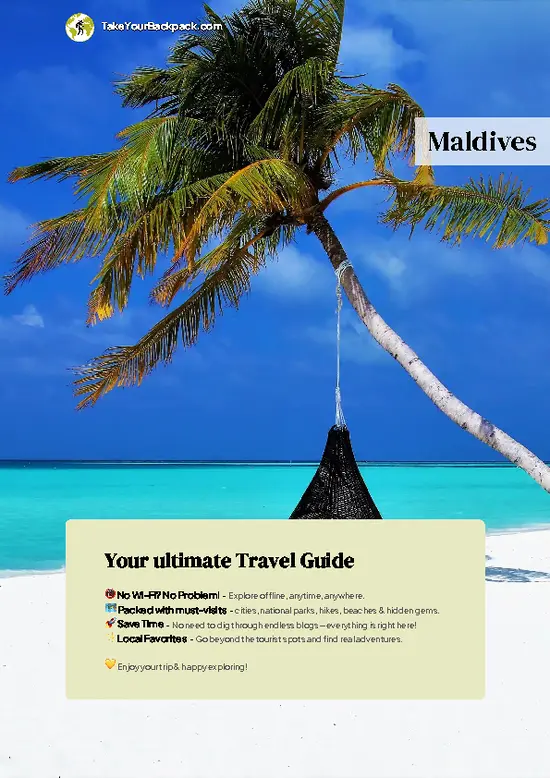
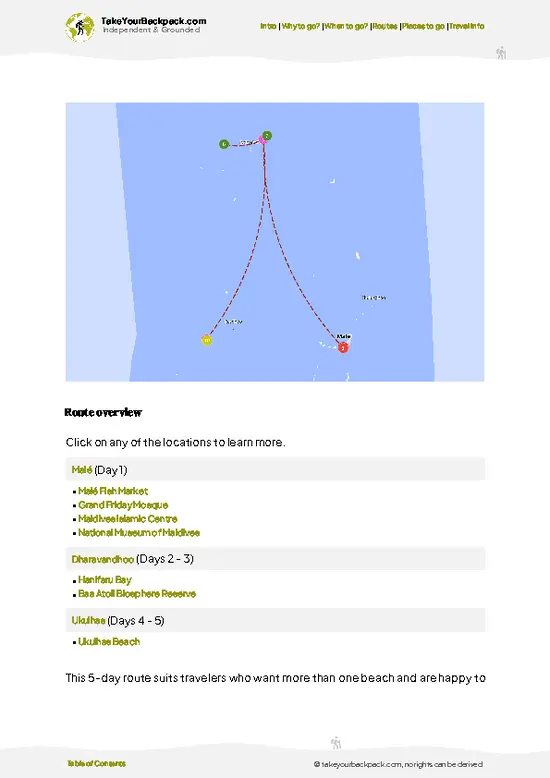
example page 0 from our offline Travel Guide for Maldives
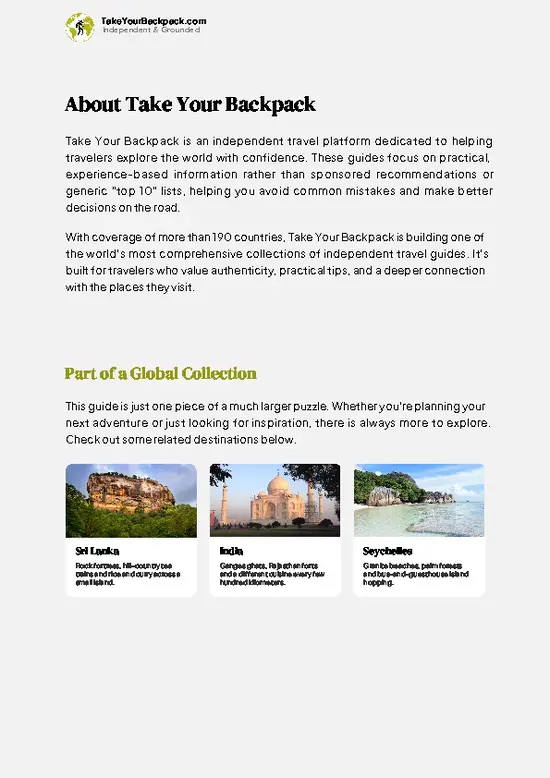
example page 1 from our offline Travel Guide for Maldives
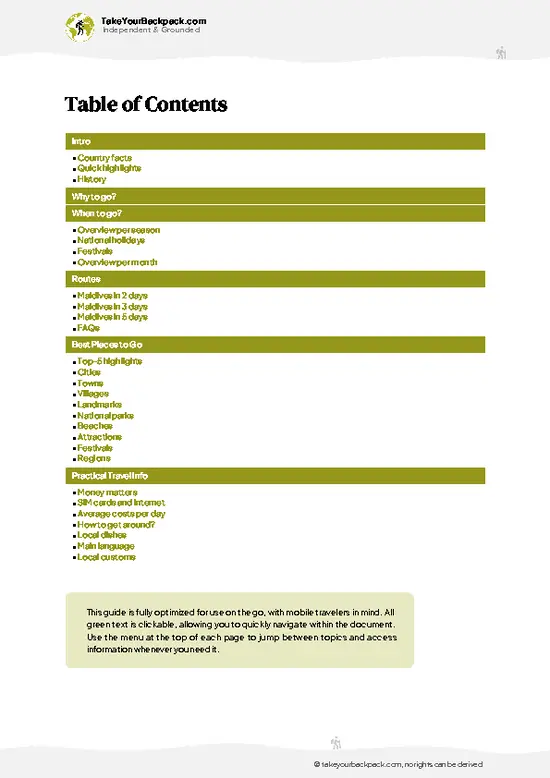
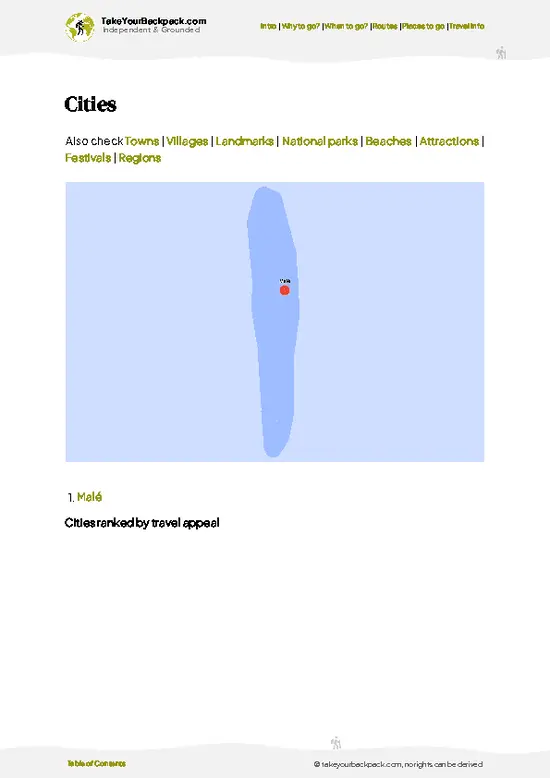
example page 2 from our offline Travel Guide for Maldives
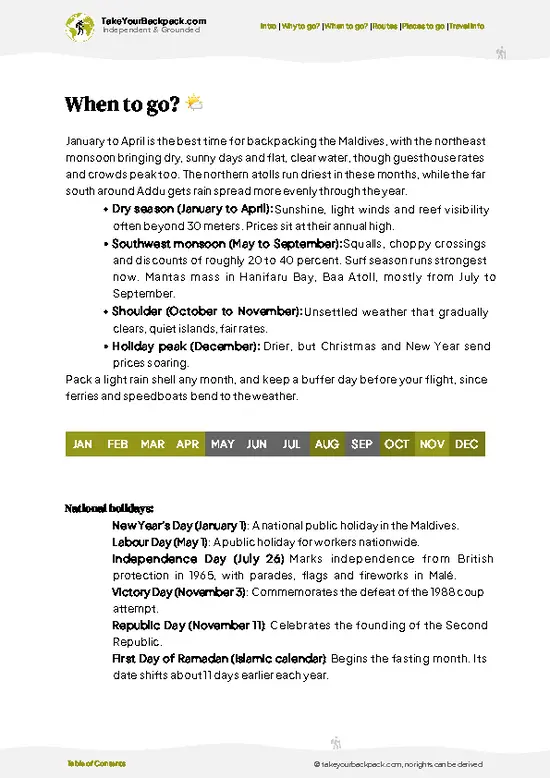
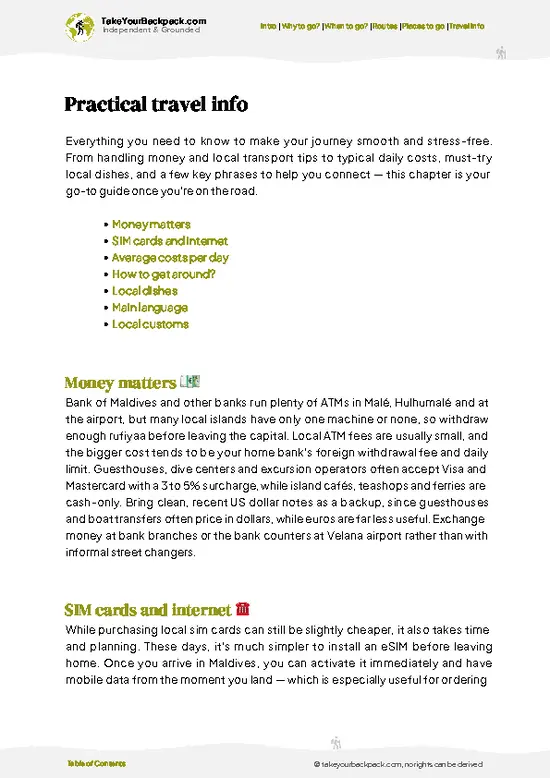
example page 3 from our offline Travel Guide for Maldives
example page 4 from our offline Travel Guide for Maldives
example page 5 from our offline Travel Guide for Maldives
example page 6 from our offline Travel Guide for Maldives
example page 7 from our offline Travel Guide for Maldives
The digital guide (177 pages) contains:
✅ 42 highlights, ranked by travel appeal
✅ Optimized 2, 3 & 5-day travel routes
✅ Cities, national parks, landmarks, beaches
✅ How to get around
✅ Offline-friendly for travel without Wi-Fi
👉 Click to see all 30+ guide features

📅 Plan smarter in minutes, not weeks
✅ Month by month travel advice
✅ Festivals & national holidays
✅ Budget expectations

🗺️ Go to the right places, skip the overrated ones
✅ Honest pros & cons of destinations
✅ Top hikes, parks & viewpoints
✅ Lesser-known places most travelers miss
✅ Clear “worth it vs skip it” guidance

🛏️ Travel smoothly without rookie mistakes
✅ Best areas to stay
✅ Transport systems explained simply
✅ Common scams & safety advice
✅ SIM cards, money & practical tips

🌍 Understand the country, not just visit it
✅ Culture & traditions
✅ 52 Essential phrases & customs
✅ Festivals worth planning around
✅ Traveler-friendly historical context
✅ Insights that make places more meaningful

📱 Built for real travel conditions
✅ Fully downloadable PDF
✅ Works completely offline
✅ Optimized for phone use
✅ Useful in remote areas & buses
✅ Everything in one place
Stop searching, start planning
Get instant access to your full guide. 30‑day money-back guarantee.
+ Add another guide for just

By proceeding you agree to our terms.
Sent to your inbox immediately after payment • 100% Secure Checkout
Best Backpacking Travel Advisor 2025 tourism awardBest Backpacking
Travel Advisor
2025
What others say about Take Your Backpack Guides:
⭐⭐⭐⭐⭐
Fantastic, amazing amount of information!
⭐⭐⭐⭐⭐
My goodness this is amazing, it's what I've been looking for hats off too you!
⭐⭐⭐⭐⭐
I think this is absolutely BRILLIANT
⭐⭐⭐⭐
Very complete and informative. It's still missing places, but I gotta to commend you
⭐⭐⭐⭐⭐
This is truly amazing, thank you, can't wait to explore it with my kids!
⭐⭐⭐⭐⭐
Awesome resource, thank you!
⭐⭐⭐⭐⭐
This is amazing! Can't wait to explore the ones I haven't seen
⭐⭐⭐⭐
I love this! Well done, great idea.
⭐⭐⭐⭐⭐
Thanks for taking the time to make this gem!
⭐⭐⭐⭐⭐
This might be the best website I've ever seen.
⭐⭐⭐⭐⭐
Congratulations, and thank you so much for your work; it's incredibly valuable.
⭐⭐⭐⭐
In all seriousness I think you did a great job pointing out the important spots
⭐⭐⭐⭐⭐
10/10 very good
⭐⭐⭐⭐⭐
As someone who's only just starting to visit regularly this is awesome, thank you.
⭐⭐⭐⭐
Thank you very much! I'm going to visit my dad, it's going to be very useful!
⭐⭐⭐⭐⭐
This is really cool! We'll be travelling for the first time and this definitely come in handy.
⭐⭐⭐⭐⭐
You are now our minister of culture, congratulations 👨‍💼
⭐⭐⭐⭐⭐
Just wanted to tell you that this is a pearl! Going to follow your recommendations.
⭐⭐⭐⭐⭐
This is so cool. I'll definitely be using the resource for my travels soon.
⭐⭐⭐⭐⭐
This is very impressive! Good work.
⭐⭐⭐⭐⭐
This is an amazing and informative site. Very well done!

🛏️ Where to stay?Best Stay Options in Maldives

Budget accommodation in the Maldives means guesthouses on inhabited local islands, where doubles typically run US$40 to 90 a night plus the US$6 green tax, while true dorm beds are rare and mostly found in Malé and Hulhumalé. Maafushi has the biggest cluster of guesthouses and the easiest snorkel and sandbank trips, with a designated bikini beach and floating bars offshore (local islands are alcohol-free), but it gets crowded; Hulhumalé is quiet, safe and 10 minutes from the airport with a long city beach, making it the obvious pick for first and last nights. Malé itself puts you next to the public ferry terminals and cheap local cafés, though it is dense, noisy and has no nightlife to speak … read more 👉
Budget accommodation in the Maldives means guesthouses on inhabited local islands, where doubles typically run US$40 to 90 a night plus the US$6 green tax, while true dorm beds are rare and mostly found in Malé and Hulhumalé. Maafushi has the biggest cluster of guesthouses and the easiest snorkel and sandbank trips, with a designated bikini beach and floating bars offshore (local islands are alcohol-free), but it gets crowded; Hulhumalé is quiet, safe and 10 minutes from the airport with a long city beach, making it the obvious pick for first and last nights. Malé itself puts you next to the public ferry terminals and cheap local cafés, though it is dense, noisy and has no nightlife to speak of, while Thoddoo, Dhigurah and Fulidhoo trade convenience for empty beaches and slow evenings.

If you enjoy meeting fellow travelers, consider choosing hostels with high ratings for atmosphere. On the other hand, if you prefer having your own space, a hotel might be a better option.

MaldivesWhere to Go Next

👋 Meet the founderWho’s Behind Take Your Backpack?

Johan, backpacker and founder of TakeYourBackpackHi, I’m Johan (Netherlands 🇳🇱), the creator of TakeYourBackpack. Over the past 3 decades, I’ve backpacked through 90+ countries across six continents, gaining extensive experience with independent travel, long-term trips, and overland routes.

This site is built on a combination of firsthand travel experience and carefully curated insights from other backpackers. Many guides are based on places I’ve personally visited, while others bring together tips, observations, and practical advice shared by trusted travelers I’ve met along the way.

The goal is to provide realistic, experience-driven guidance — not generic itineraries — so you can explore destinations with better context, clearer expectations, and more confidence.