×

Maldives🇲🇻 | villagesKudahuvadhooancient mounds, archaeological sites, quiet beaches | things to do and best time to go

Explore FelidhooExplore Fulidhoo

Backpacking in Kudahuvadhoo
👍 Recommendedvillage ranked #6
By Johan Kruseman 🇳🇱 | Updated October 16, 2026

Most people only realize after leaving that Kudahuvadhoo Island Nature Park is one of the few Maldivian nature spots where you can wander for hours without paying resort prices or fighting for space on a jet-ski beach. It sits on Kudahuvadhoo in Dhaalu Atoll, a local island south of the main tourist atolls, reachable by domestic flight and short transfer. As a backpacker destination, it’s low-key: simple trails, coastal scrub, mangroves, and reef views rather than big “wow” peaks. Wildlife is more about birds, crabs, and marine life offshore than large animals. Access is decent but not effortless, and there may be a small or informal entrance fee. Crowds are light; facilities and camping options are minimal, so you rely on local guesthouses. Compared with more polished reserves near Malé, this feels rougher, quieter, and cheaper—but also less dramatic.

Discover everything you want to know in the 📖 Maldives Travel Guide.


example page 0 from our offline Travel Guide for Maldives
example page 1 from our offline Travel Guide for Maldives
example page 2 from our offline Travel Guide for Maldives
example page 3 from our offline Travel Guide for Maldives
example page 4 from our offline Travel Guide for Maldives
example page 5 from our offline Travel Guide for Maldives
example page 6 from our offline Travel Guide for Maldives
example page 7 from our offline Travel Guide for Maldives
Loading the map 🌍
CLICK TO FILTER
cities
towns
villages
landmarks
national parks
beaches
attractions
festivals
regions
SHOW COUNTRY’S BESTSHOW ALL

✨ Why go?
Ranked #6 village in Maldives
What makes this village worth visiting

Kudahuvadhoo Island Nature Park attracts backpackers for several compelling reasons. First, independent exploration is a major draw. The park’s layout allows you to wander at your own pace, soaking in the lush landscapes and diverse wildlife without the constraints of a guided tour.

Budget-conscious travelers appreciate the camping and hostel options nearby, which keep costs low while providing a chance to connect with fellow adventurers. The park offers a variety of trails, catering to different skill levels, from easy strolls to more challenging hikes. This variety ensures you can tailor your experience based on your energy and interests.

Self-guided travelers thrive here, as the park is designed for those who prefer to set their own itinerary. You won’t find the usual tourist traps; … read more 👉
Kudahuvadhoo Island Nature Park attracts backpackers for several compelling reasons. First, independent exploration is a major draw. The park’s layout allows you to wander at your own pace, soaking in the lush landscapes and diverse wildlife without the constraints of a guided tour.

Budget-conscious travelers appreciate the camping and hostel options nearby, which keep costs low while providing a chance to connect with fellow adventurers. The park offers a variety of trails, catering to different skill levels, from easy strolls to more challenging hikes. This variety ensures you can tailor your experience based on your energy and interests.

Self-guided travelers thrive here, as the park is designed for those who prefer to set their own itinerary. You won’t find the usual tourist traps; instead, you’ll encounter genuine beauty and tranquility. Just be mindful of the weather and plan accordingly, as conditions can change quickly. This preparation will help you maximize your time and budget for the moments that truly matter.

💡 HighlightsWhat this place is best known for

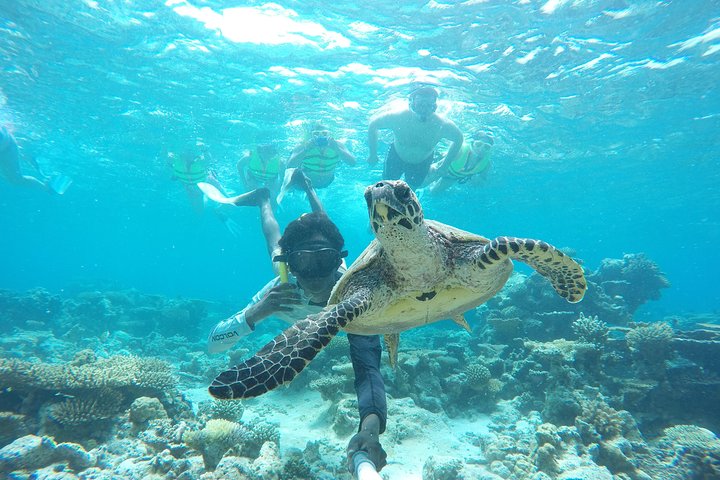
  • House reef snorkeling — A shallow, easily accessible reef right off the shore, perfect for lazy snorkel sessions. The coral gardens here are colorful and compact, so you don’t need a boat to see plenty of reef fish, occasional rays and turtles — great for photographers and anyone who hates schlepping gear far.
  • Coral bommies and thilas (dive pinnacles) — Underwater bommies that rise from the lagoon floor create dramatic swim-throughs and currents that attract schooling fish. For divers this is where the action is: concentrated life on small features, good macro critters and interesting drop-offs without long travel times.
  • Sandbanks and shallow lagoons — Little white sandbanks that appear with the tide feel like private islands for a couple of hours. Calm, warm water and shallow flats make
… read more 👉
  • House reef snorkeling — A shallow, easily accessible reef right off the shore, perfect for lazy snorkel sessions. The coral gardens here are colorful and compact, so you don’t need a boat to see plenty of reef fish, occasional rays and turtles — great for photographers and anyone who hates schlepping gear far.
  • Coral bommies and thilas (dive pinnacles) — Underwater bommies that rise from the lagoon floor create dramatic swim-throughs and currents that attract schooling fish. For divers this is where the action is: concentrated life on small features, good macro critters and interesting drop-offs without long travel times.
  • Sandbanks and shallow lagoons — Little white sandbanks that appear with the tide feel like private islands for a couple of hours. Calm, warm water and shallow flats make them ideal for sunrise photos, casual wading, or a picnic — the kind of effortless tropical moment that sticks with you.
  • Turtle nesting and foraging beaches — Quiet stretches of sand are used by sea turtles for nesting and by juveniles foraging in nearby seagrass. Visit respectfully at dusk or dawn and you might glimpse a nesting female or hatchlings making their way to the sea — a small, real slice of wild life-cycle drama.
  • Mangrove fringes and sheltered creeks — Where mangroves cling to the shoreline you’ll find a different kind of reef life: juvenile fish, crabs, and an up-close look at coastal ecology. These shaded, quiet channels are great for slow paddles or a bug-aware stroll while watching how the lagoon connects to land.
  • Shorebird and seabird roosts — The low, flat coasts attract terns, noddies and migratory shorebirds, especially on exposed sandbars and mangrove edges. Bring binoculars — bird activity can be surprisingly lively for such a small island.
  • Short island nature walks and local flora — Nothing hardcore, but gentle trails and village paths through native coastal vegetation give a good feel for the island’s ecology and human-nature balance. It’s where you notice endemic plants, coconut groves, and local conservation efforts up close.
Spotted a mistake or missing something? Contact us.

Things to do near Kudahuvadhoo

Ratings based on Tripadvisor reviews. When you book through this link, you support our work at no extra cost to you.

🌤️ When to go?Weather, crowds, and seasonal trade-offs

  • Topic: Weather - The Maldives has a tropical climate, but the best time to visit Kudahuvadhoo Island Nature Park is during the dry season from November to April. Expect minimal rain and plenty of sunshine. The wet season, May to October, brings heavy monsoons that can disrupt outdoor plans and reduce visibility for snorkeling or diving.
  • Topic: Temperature - Temperatures hover between 27°C and 32°C (81°F to 90°F) year-round. The heat is consistent, but humidity spikes during the wet season, making it feel hotter and stickier. Dry months offer more comfortable conditions for hiking and exploring.
  • Topic: Daylight Hours - Daylight remains fairly steady, around 11 to 12 hours daily. Sunrise is roughly 6 AM, sunset near 6 PM, giving you a solid window for activities without the need for early
… read more 👉
  • Topic: Weather - The Maldives has a tropical climate, but the best time to visit Kudahuvadhoo Island Nature Park is during the dry season from November to April. Expect minimal rain and plenty of sunshine. The wet season, May to October, brings heavy monsoons that can disrupt outdoor plans and reduce visibility for snorkeling or diving.
  • Topic: Temperature - Temperatures hover between 27°C and 32°C (81°F to 90°F) year-round. The heat is consistent, but humidity spikes during the wet season, making it feel hotter and stickier. Dry months offer more comfortable conditions for hiking and exploring.
  • Topic: Daylight Hours - Daylight remains fairly steady, around 11 to 12 hours daily. Sunrise is roughly 6 AM, sunset near 6 PM, giving you a solid window for activities without the need for early starts or late finishes.
  • Topic: Crowds - Peak season (December to March) sees a surge in tourists, especially around holidays. This means higher prices and busier trails. Off-peak months offer solitude but come with the risk of rain.
  • Topic: Seasonal Activities - Dry months are prime for snorkeling, diving, and wildlife spotting. The wet season limits water clarity and can close some trails due to flooding or erosion.
  • Topic: Price Fluctuations - Accommodation and transport costs spike during the dry season, particularly December to February. Booking early can save money, but traveling shoulder months like November or April balances cost and conditions well.
Pro-tip: Aim for late November or early April to dodge crowds and rain while keeping your budget intact—perfect for stretching your energy on the experiences that count.


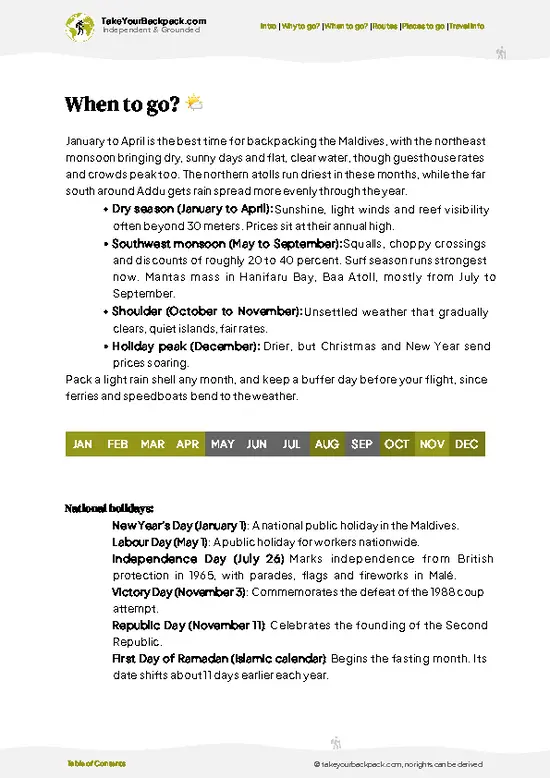
source: climatestotravel.comJANJanuary: excellent for travelingFEBFebruary: excellent for travelingMARMarch: excellent for travelingAPRApril: highly recommended for travelingMAYMay: fair for travelingJUNJune: fair for travelingJULJuly: fair for travelingAUGAugust: fair for travelingSEPSeptember: fair for travelingOCTOctober: fair for travelingNOVNovember: highly recommended for travelingDECDecember: excellent for traveling
when-to-go

✈️ The backpacker research shortcutMaldives Travel Guide

An offline-friendly backpacking guide with optimized travel routes, ranked highlights, transport advice, and the best areas to stay.
example page 0 from our offline Travel Guide for Maldives
example page 1 from our offline Travel Guide for Maldives
example page 2 from our offline Travel Guide for Maldives
example page 3 from our offline Travel Guide for Maldives
example page 4 from our offline Travel Guide for Maldives
example page 5 from our offline Travel Guide for Maldives
example page 6 from our offline Travel Guide for Maldives
example page 7 from our offline Travel Guide for Maldives
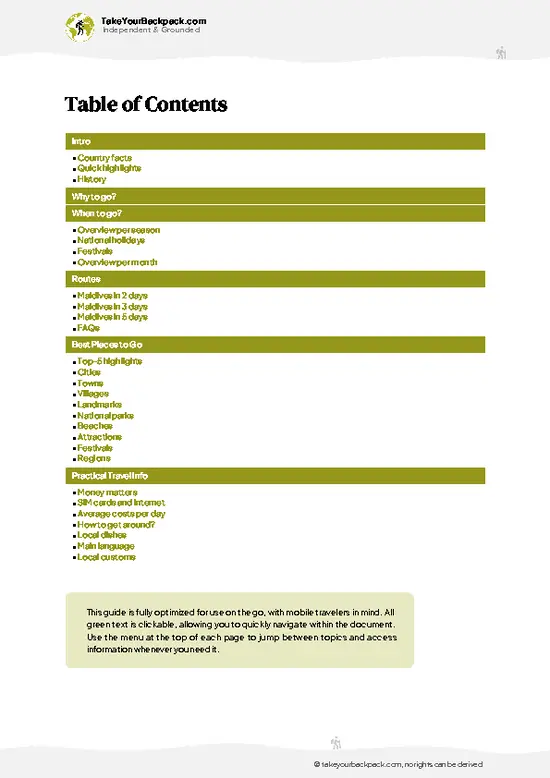
The digital guide (177 pages) contains:
✅ 42 highlights, ranked by travel appeal
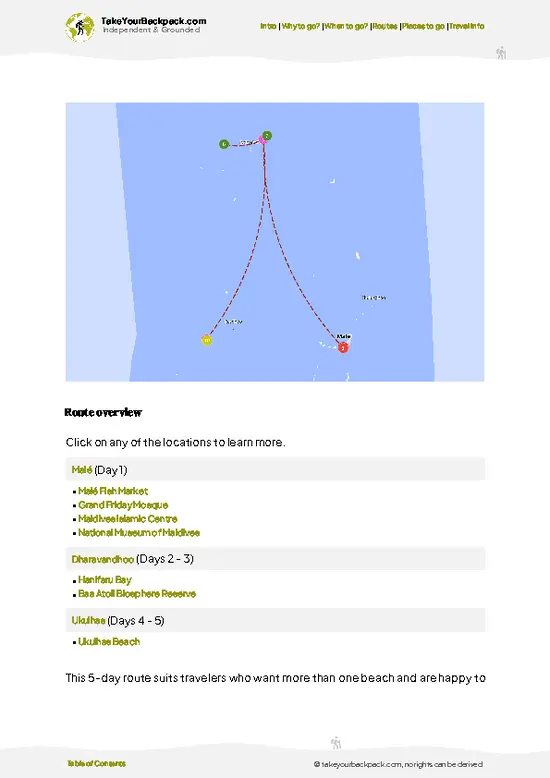
✅ Optimized 2, 3 & 5-day travel routes
✅ Cities, national parks, landmarks, beaches
✅ How to get around
✅ Offline-friendly for travel without Wi-Fi
👉 Click to see all 30+ guide features

📅 Plan smarter in minutes, not weeks
✅ Month by month travel advice
✅ Festivals & national holidays
✅ Budget expectations

🗺️ Go to the right places, skip the overrated ones
✅ Honest pros & cons of destinations
✅ Top hikes, parks & viewpoints
✅ Lesser-known places most travelers miss
✅ Clear “worth it vs skip it” guidance

🛏️ Travel smoothly without rookie mistakes
✅ Best areas to stay
✅ Transport systems explained simply
✅ Common scams & safety advice
✅ SIM cards, money & practical tips

🌍 Understand the country, not just visit it
✅ Culture & traditions
✅ 52 Essential phrases & customs
✅ Festivals worth planning around
✅ Traveler-friendly historical context
✅ Insights that make places more meaningful

📱 Built for real travel conditions
✅ Fully downloadable PDF
✅ Works completely offline
✅ Optimized for phone use
✅ Useful in remote areas & buses
✅ Everything in one place
Stop searching, start planning
Get instant access to your full guide. 30‑day money-back guarantee.
+ Add another guide for just

By proceeding you agree to our terms.
Sent to your inbox immediately after payment • 100% Secure Checkout
Best Backpacking Travel Advisor 2025 tourism awardBest Backpacking
Travel Advisor
2025
What others say about Take Your Backpack Guides:
⭐⭐⭐⭐⭐
Fantastic, amazing amount of information!
⭐⭐⭐⭐⭐
My goodness this is amazing, it's what I've been looking for hats off too you!
⭐⭐⭐⭐⭐
I think this is absolutely BRILLIANT
⭐⭐⭐⭐
Very complete and informative. It's still missing places, but I gotta to commend you
⭐⭐⭐⭐⭐
This is truly amazing, thank you, can't wait to explore it with my kids!
⭐⭐⭐⭐⭐
Awesome resource, thank you!
⭐⭐⭐⭐⭐
This is amazing! Can't wait to explore the ones I haven't seen
⭐⭐⭐⭐
I love this! Well done, great idea.
⭐⭐⭐⭐⭐
Thanks for taking the time to make this gem!
⭐⭐⭐⭐⭐
This might be the best website I've ever seen.
⭐⭐⭐⭐⭐
Congratulations, and thank you so much for your work; it's incredibly valuable.
⭐⭐⭐⭐
In all seriousness I think you did a great job pointing out the important spots
⭐⭐⭐⭐⭐
10/10 very good
⭐⭐⭐⭐⭐
As someone who's only just starting to visit regularly this is awesome, thank you.
⭐⭐⭐⭐
Thank you very much! I'm going to visit my dad, it's going to be very useful!
⭐⭐⭐⭐⭐
This is really cool! We'll be travelling for the first time and this definitely come in handy.
⭐⭐⭐⭐⭐
You are now our minister of culture, congratulations 👨‍💼
⭐⭐⭐⭐⭐
Just wanted to tell you that this is a pearl! Going to follow your recommendations.
⭐⭐⭐⭐⭐
This is so cool. I'll definitely be using the resource for my travels soon.
⭐⭐⭐⭐⭐
This is very impressive! Good work.
⭐⭐⭐⭐⭐
This is an amazing and informative site. Very well done!

🛏️ Where to stay?Where staying makes the most sense

Kudahuvadhoo Island Nature Park offers a unique experience, but options for backpackers are limited. There aren’t accommodations directly within the park itself. Instead, you’ll find a few guesthouses and budget-friendly hotels on Kudahuvadhoo Island, which is your best bet for a base.

Look for places like the Kudahuvadhoo Inn or Kudahuvadhoo Guesthouse. They provide basic amenities and a chance to connect with locals. Prices are reasonable, but be aware that some places may charge extra for meals or activities. Always confirm what’s included in your stay to avoid surprises.

For a broader range … read more 👉
Kudahuvadhoo Island Nature Park offers a unique experience, but options for backpackers are limited. There aren’t accommodations directly within the park itself. Instead, you’ll find a few guesthouses and budget-friendly hotels on Kudahuvadhoo Island, which is your best bet for a base.

Look for places like the Kudahuvadhoo Inn or Kudahuvadhoo Guesthouse. They provide basic amenities and a chance to connect with locals. Prices are reasonable, but be aware that some places may charge extra for meals or activities. Always confirm what’s included in your stay to avoid surprises.

For a broader range of options, consider nearby islands like Dhaalu Atoll or Thaa Atoll. They have more guesthouses and resorts, but they can be pricier. If you’re willing to travel a bit, you can find better deals and more vibrant local scenes.

Transportation between islands can add up, so factor that into your budget. Ferries are cheaper than speedboats, but they operate on a limited schedule. Plan accordingly to maximize your time exploring the park and minimize unnecessary costs.

👛 Costs (as of 16 October 2026)How expensive it really is

Kudahuvadhoo Island Nature Park in the Maldives offers a unique experience, but it’s essential to be aware of the costs involved to avoid surprises.

Entry fees typically range from €3 to €5 (about $3 to $5). This is a small price for access to the natural beauty and biodiversity of the park. However, if you’re planning to engage in activities like snorkeling or diving, expect to pay extra. Rental gear can cost around €10 to €20 ($10 to $20) per day.

Transportation is another factor. If you’re coming from Malé, a speedboat transfer might set you back between €50 and €100 ($50 to $100) each way, depending on the operator. Always confirm the price beforehand, as it can vary.

Food options within the park are limited. Budget around €10 to €15 ($10 to $15) for a meal at local eateries. If you’re … read more 👉
Kudahuvadhoo Island Nature Park in the Maldives offers a unique experience, but it’s essential to be aware of the costs involved to avoid surprises.

Entry fees typically range from €3 to €5 (about $3 to $5). This is a small price for access to the natural beauty and biodiversity of the park. However, if you’re planning to engage in activities like snorkeling or diving, expect to pay extra. Rental gear can cost around €10 to €20 ($10 to $20) per day.

Transportation is another factor. If you’re coming from Malé, a speedboat transfer might set you back between €50 and €100 ($50 to $100) each way, depending on the operator. Always confirm the price beforehand, as it can vary.

Food options within the park are limited. Budget around €10 to €15 ($10 to $15) for a meal at local eateries. If you’re looking for more variety, consider bringing snacks or a packed lunch.

Lastly, keep in mind that the Maldives has a service charge and tax that can add about 10% to your total bill. This is common across many establishments, so factor that into your budget.

Being aware of these costs will help you enjoy your visit without worrying about unexpected expenses.


source: visitmaldives.com
⚠️ Prices can change and everyone travels differently, so take this as a rough guide. Hope it helps you plan your adventure!

🛡️ SafetyStaying Safe: What Travelers Should Know

Kudahuvadhoo Island Nature Park is generally straightforward for backpackers, but a few practical considerations can enhance your experience. The weather can shift quickly; expect sudden rain showers, especially during the monsoon season. Lightweight, waterproof gear is essential.

The terrain is mostly flat, but some trails can be uneven, so good footwear is a must. Navigation is usually clear, but keep a map handy—cell service can be spotty.

Wildlife encounters are rare, but if you spot a sea turtle or a dolphin, maintain a respectful distance. Avoid feeding any animals; it disrupts their natural behavior.

Timing matters; early mornings or late afternoons are ideal for cooler temperatures and fewer crowds. Stay hydrated and pace yourself to enjoy the scenery without overexertion. These … read more 👉
Kudahuvadhoo Island Nature Park is generally straightforward for backpackers, but a few practical considerations can enhance your experience. The weather can shift quickly; expect sudden rain showers, especially during the monsoon season. Lightweight, waterproof gear is essential.

The terrain is mostly flat, but some trails can be uneven, so good footwear is a must. Navigation is usually clear, but keep a map handy—cell service can be spotty.

Wildlife encounters are rare, but if you spot a sea turtle or a dolphin, maintain a respectful distance. Avoid feeding any animals; it disrupts their natural behavior.

Timing matters; early mornings or late afternoons are ideal for cooler temperatures and fewer crowds. Stay hydrated and pace yourself to enjoy the scenery without overexertion. These small preparations can save you energy and keep your focus on the beauty around you.

FAQCommon questions from travelers

2 to 3 days is sufficient to explore Kudahuvadhoo Island Nature Park thoroughly, allowing time for hiking, birdwatching, and snorkeling activities.
Yes, you can visit Kudahuvadhoo Island Nature Park without a car as the island is small and walkable. Local boats and bicycles are common alternatives for getting around.
Yes, there is an entrance fee of approximately 10 USD per person, and a permit is required to enter the park. These fees help support conservation efforts.
⚠️ Things can change over time, so always validate details locally before you go.

Other Maldivian villages near Kudahuvadhoo

Explore more nearby:

  • Dhigurah—long sandbank, whale shark encounters, village gardens| 96 km away
  • Felidhoo—remote atoll, fishing harbor, quiet alleys| 115 km away
  • Fulidhoo—Small local island, traditional bodu beru, nurse shark sites| 126 km away

💡 Not sure where to go next?
Create a personalized itinerary for Maldives including Kudahuvadhoo and the places that fit your trip.

Generate my itinerary

👉 Discover all villages

Or checkout all Maldives has to offer (think cities, towns, villages, national parks, hikes, beaches, festivals)
Country photo of Maldives

We 💚 feedbackKey takeaways before you go

Kudahuvadhoo Island Nature Park has a laid-back vibe that invites you to breathe deeply and soak in the surroundings. The best surprise? The vibrant marine life just off the shore—snorkeling here feels like stepping into a living aquarium. But a heads-up: the park can get crowded during peak times, so aim for early mornings or late afternoons to snag some solitude. Trust me, those quiet moments are where the magic happens.

✍️ Help improve this page!
The information on this page is based on in-depth research, insights shared by experienced travelers, and feedback from the local travel community in Maldives. While every effort is made to keep the information accurate and current, conditions can change — so if you spot anything incorrect or outdated, please get in touch.


🙋‍♂️ Give feedback

👋 Meet the founderWho’s Behind Take Your Backpack?

Johan, backpacker and founder of TakeYourBackpackHi, I’m Johan (Netherlands 🇳🇱), the creator of TakeYourBackpack. Over the past 3 decades, I’ve backpacked through 90+ countries across six continents, gaining extensive experience with independent travel, long-term trips, and overland routes.

This site is built on a combination of firsthand travel experience and carefully curated insights from other backpackers. Many guides are based on places I’ve personally visited, while others bring together tips, observations, and practical advice shared by trusted travelers I’ve met along the way.

The goal is to provide realistic, experience-driven guidance — not generic itineraries — so you can explore destinations with better context, clearer expectations, and more confidence.